

Note: This article contains affiliate links. If you click on these links and make a purchase, I may earn a small commission at no extra cost to you. This helps support my research and content. Read my full affiliate disclosure here.
Choosing the right coolant for a 2022-present Honda Civic matters because the cooling system is critical to engine longevity, fuel efficiency, and heater performance. Using an inappropriate formulation can accelerate corrosion, harm aluminum components, or shorten coolant service intervals. This guide focuses on the Civic 2022-present models, covering recommended coolant types and what works best for the FE and FL family chassis.Below you will find our shortlist of seven top coolants selected for their corrosion protection, thermal stability, and compatibility with Civic materials. We also outline the evaluation criteria we used so you can match a coolant to your driving habits and maintenance plan.
Looking for other parts? See all Honda Civic parts & accessories.
Top Picks at a Glance
| Best Overall Coolant The top pick balancing performance, longevity, and ease of use | Honda Type 2 Extended Life Antifreeze/Coolant 50/50 Pre‑Diluted, 1 Gallon |  |
| Best Budget Coolant A low-cost coolant that still meets basic protection needs | Zerex Asian Vehicle Blue 50/50 Prediluted Antifreeze/Coolant 1 gal |  |
| Best Premium Coolant Higher-end formulation with superior additives and extended protection | Mishimoto Liquid Chill OE Coolant, Blue, 1 Gallon |  |
| Best Long-Life Coolant Formulated for extended service intervals and reduced maintenance frequency | Honda Long Life Antifreeze/Coolant Type PZ (Pre-Diluted 50/50) |  |
| Best Concentrated Coolant Full-strength concentrate requires mixing to achieve correct freeze/boil protection | Zerex Asian Vehicle Green Antifreeze/Coolant Concentrate 1 Gallon |  |
| Best OAT Coolant Organic acid technology formula focused on aluminum and long-term protection | PEAK OET Extended Life Purple 50/50 Prediluted Antifreeze/Coolant (1 Gal) |  |
| Best Pre-Mixed Coolant Ready-to-use coolant for convenience and correct dilution out of the bottle | Valvoline Multi-Vehicle 50/50 Ready-to-Use Antifreeze Coolant, 1 Gallon |  |
1. Honda Type 2 Extended Life Antifreeze/Coolant 50/50 Pre‑Diluted, 1 Gallon
Best Overall Coolant

| Formula | Ethylene glycol, Type 2 |
|---|---|
| Mix | 50/50 pre-diluted |
| Container size | 1 gallon |
| Service interval | Up to 5 years or 60,000 miles |
This genuine Honda Type 2 coolant is a pre-mixed 50/50 ethylene glycol formula intended to match the factory fill used in Honda vehicles. It protects metal and non-metal cooling system components from corrosion and rust while providing freeze protection and boil-over resistance for year-round use. Because it is pre-diluted you can pour it straight into the cooling system without measuring, making routine service or a do-it-yourself drain and fill quick and simple. The long-life formulation is rated for up to five years or about 60,000 miles under normal conditions, so it reduces service frequency compared with conventional coolants. Being a factory-approved product, it maximizes compatibility with Honda seals, radiators, and plastics and avoids mixing issues that can arise with other chemistries. The one limitation is that this is a single-vehicle brand OEM coolant, so buyers looking for a universal or low-cost aftermarket alternative may find cheaper options; still, for Honda Civics from 2022 onward this provides the most straightforward compatibility and long-term protection.
Best for: Buyers who prioritize straightforward compatibility and long-term protection for 2022‑present Honda Civic cooling systems and want a ready-to-use OEM match that minimizes service frequency.
Less Ideal for: Shoppers looking for a budget multi-vehicle universal coolant or an aftermarket coolant formulated for non-Honda-specific chemistries should consider alternatives.
- Factory-approved formula designed to match Honda factory fill and component compatibility
- Pre-diluted 50/50 ready to use, simplifying DIY coolant changes
- Long-life protection rated up to 5 years or ~60,000 miles
- Protects both metal and non-metal parts against corrosion and rust
- Only available as Honda Type 2 chemistry so not a universal coolant replacement option
Verdict: The best overall coolant for most buyers, offering the right mix of corrosion protection, freeze/boil performance, compatibility, and ease of maintenance.
2. Zerex Asian Vehicle Blue 50/50 Prediluted Antifreeze/Coolant 1 gal
Best Budget Coolant

| Formulation | 50/50 prediluted HOAT |
|---|---|
| Free of | Silicates and borates |
| Contains | Phosphate additive |
| Meets | Hyundai/KIA MS 591-08; Mitsubishi ES-64217; JIS K 2234; Ford WSS-M97B55-A; ASTM 3306; ASTM D4985 |
Zerex Asian Vehicle Blue is a ready-to-use 50/50 antifreeze/coolant formulated with Hybrid Organic Acid Technology and a phosphate additive to protect aluminum and other cooling-system metals. It is typically used when topping off the reservoir or performing a full flush on vehicles that call for a blue, silicate- and borate-free formula. In practice the premixed gallon makes service quick and mess free, and the HOAT chemistry targets corrosion, scale and deposits so radiators, water pumps and hoses stay cleaner longer. The product meets several OEM and industry specifications common to many Asian makes and is free of amines, nitrites and 2‑EHA. The main limitation for buyers focused on a strict budget is that a preblended, brand-name coolant can cost more per gallon than concentrated bulk options that require mixing, and color-specific formulations must match the Civic’s required coolant type to avoid compatibility issues. For 2022‑present Civic models that specify a blue HOAT coolant, this provides a convenient, factory-quality alternative without extra additives to manage.
Best for: Buyers who want a hassle-free coolant that matches the blue HOAT specification common to many Asian-designed engines and prefer a factory-quality, ready-to-pour option when servicing 2022‑present Civic cooling systems.
Less Ideal for: Shoppers who want the lowest possible cost per gallon or who need a concentrate to store long term for multiple services should consider bulk concentrated coolants instead.
- Ready-to-use 50/50 mix saves time and eliminates measuring errors
- HOAT formula with phosphate protects aluminum and other metals from corrosion
- Silicate- and borate-free chemistry reduces risk of scale and deposits
- Meets multiple OEM and industry specifications for Asian vehicles
- Prediluted gallon is pricier per gallon than concentrated coolants that you mix yourself
Verdict: The best budget coolant for cost-conscious buyers who need reliable freeze and corrosion protection without paying for premium additive packages.
3. Mishimoto Liquid Chill OE Coolant, Blue, 1 Gallon
Best Premium Coolant

| Unit Count | 128.0 Fluid Ounces |
|---|---|
| Material | Ethylene Glycol |
| Liquid Volume | 1 Gallons |
| Service Interval | 5 year / 150,000 miles |
Mishimoto Liquid Chill arrives ready to use as a 50/50 premix and is intended for topping off or servicing European and Asian vehicles that call for blue long-life coolant. The formula is ethylene-glycol based with additives aimed at improved heat transfer, corrosion protection, cavitation resistance, and lubrication for water pump components. It claims boil protection to 265F and freeze protection to about -34F and carries a 5 year or 150,000 mile service interval, which appeals to buyers who want extended maintenance intervals. Because it is labeled equivalent to several factory coolants including Honda Type 2 and Porsche G11, it simplifies parts-compatibility decisions for DIYers working on compatible Civics. The one-gallon jug pours cleanly and removes the need to mix concentrate. Limitations to note are the single color option and that it is a universal aftermarket formula rather than an OEM-branded fluid, so always confirm compatibility with your vehicle's specified coolant type before use.
Best for: DIYers who prioritize a premium, long-life coolant with enhanced anti-corrosion and cavitation additives and prefer a ready-to-use solution to simplify flushing and topping off.
Less Ideal for: Anyone who must use a manufacturer-specific colored concentrate or a non-ethylene-glycol chemistry should choose the exact factory-specified fluid instead.
- Premixed 50/50 ready to pour so no dilution errors
- Formulated to meet common long-life specs for many European and Asian manufacturers
- Extended service interval of up to 5 years or 150,000 miles reduces maintenance frequency
- Additives target corrosion and cavitation protection for longer component life
- Offered only in a single blue formula which may not match every manufacturer's color coding
Verdict: The best premium coolant for DIYers willing to pay more for advanced additives, longer service intervals, and stronger corrosion and cavitation resistance.
4. Honda Long Life Antifreeze/Coolant Type PZ (Pre-Diluted 50/50)
Best Long-Life Coolant
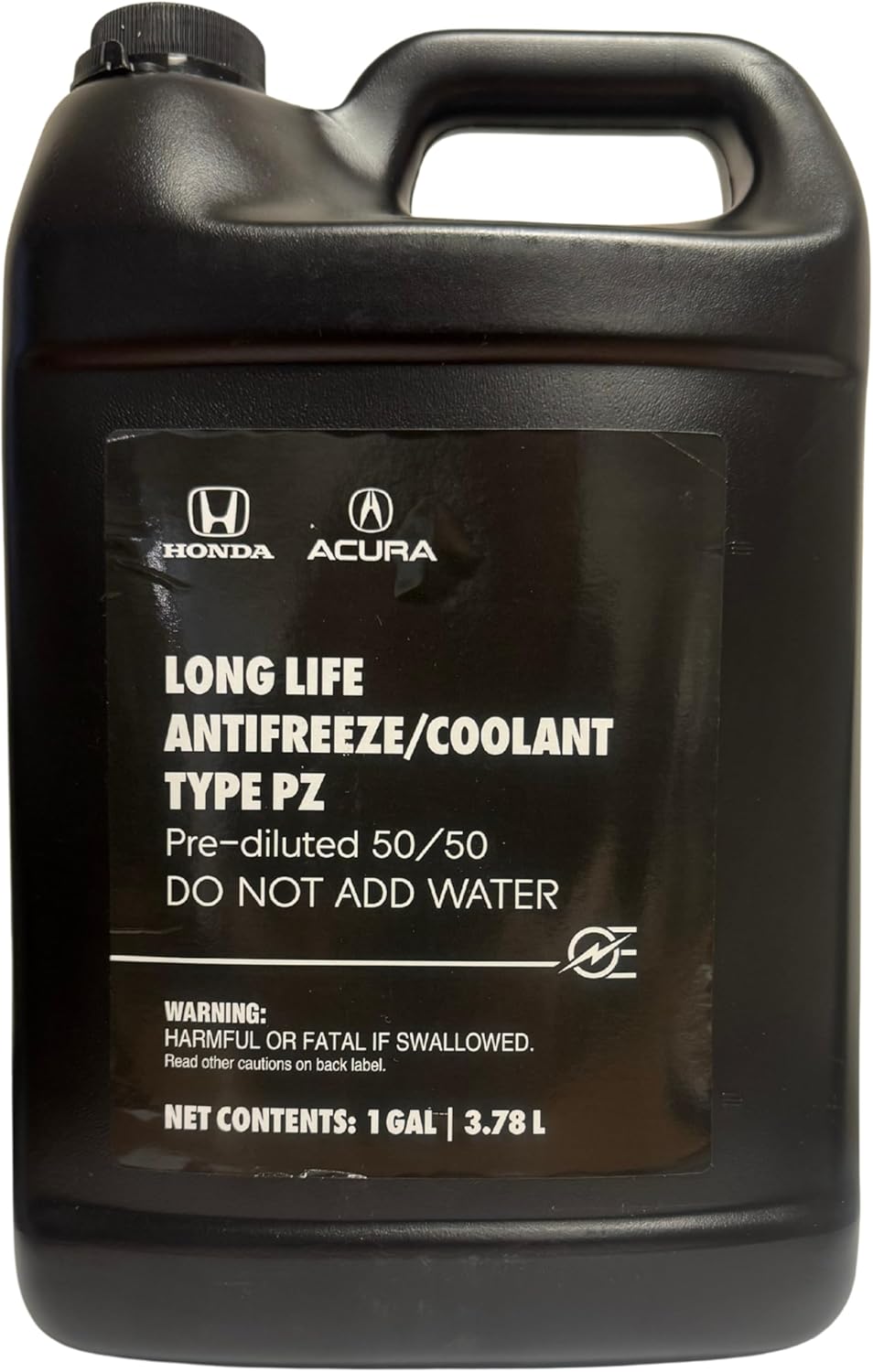
| Manufacturer | American Honda Motor Co., Inc. |
|---|---|
| Brand | Honda |
| Model | Long Life Antifreeze/Coolant Type PZ |
| Item model number | OL999-9033 |
This Honda Long Life Antifreeze/Coolant Type PZ is a ready-to-use 50/50 formula formulated for extended corrosion protection and stable heat transfer in modern Honda cooling systems. It is typically used as a direct replacement during scheduled coolant service or when topping off the system, and it eliminates the need to mix concentrate and water. The formula claims boil-over protection to 265°F at 15 PSI and freeze protection to -34°F, which covers a broad range of climates. Its anti-corrosion inhibitors are designed for long-term protection of aluminum and other cooling system metals, supporting longer drain intervals compared with conventional coolants. Practical benefits include factory-compatible chemistry and compliance with ASTM D3306 and D4985 performance requirements. The main limitation is that it is specific to vehicles that require Honda Type PZ chemistry and comes pre-mixed so you cannot adjust concentration for extreme climates or specific service procedures.
Best for: Drivers who prioritize fewer coolant changes and factory-compatible chemistry for Honda vehicles and want a ready-made solution that supports extended service intervals.
Less Ideal for: Drivers who need to adjust coolant concentration for extreme climates or who require a different coolant specification than Honda Type PZ should consider other options.
- Ready-to-use 50/50 mix removes need to add distilled water or measure concentrate
- Long-life corrosion inhibitors designed for extended drain intervals
- Rated for boil-over protection to 265°F at 15 PSI and freeze protection to -34°F
- Meets ASTM D3306 and D4985 performance standards for automotive and heavy-duty service
- Formulated specifically to Honda Type PZ chemistry so not suitable for vehicles requiring different coolant types
Verdict: The best long-life coolant for owners who prefer longer drain intervals and fewer coolant changes thanks to stabilized chemistry and durable inhibitors.
5. Zerex Asian Vehicle Green Antifreeze/Coolant Concentrate 1 Gallon
Best Concentrated Coolant

| Brand | Zerex |
|---|---|
| Model | Asian Vehicle Green |
| Manufacturer | Valvoline |
| Form | Concentrate |
| Volume | 1 gallon |
Zerex Asian Vehicle Green is a concentrated HOAT antifreeze designed for Asian-manufacturer engines and intended for users who mix coolant to spec. You dilute the 1-gallon concentrate with tap or demineralized water to the ratio that matches seasonal needs or performance targets, for example 50/50 for general protection or stronger mixes for extreme cold/heat. The formula is phosphate-enhanced and free of silicates, borates, amines and nitrites, which helps reduce corrosion, scale and deposits in aluminum and mixed-metal cooling systems. Practical benefits include long-term corrosion protection, compatibility with components like radiators and water pumps, and high freeze/boil protection when mixed correctly. Because it is a concentrate, it gives control over freeze point and coolant strength but requires careful measuring and proper mixing; improper dilution or using hard water can reduce effectiveness. It is formulated for Asian vehicle cooling chemistries, so buyers should follow Honda Civic coolant specifications and mixing guidance when using this in 2022-present Civics to ensure compatibility.
Best for: Buyers who want full-strength coolant they can dilute to precise ratios for seasonal tuning or higher-performance cooling management in 2022–present Honda Civics.
Less Ideal for: Drivers who prefer ready-to-use premixed coolant or who do not want to handle measuring and diluting concentrates themselves.
- Concentrated formula lets you mix exact ratios for seasonal or performance needs.
- HOAT chemistry with phosphate additive protects mixed-metal systems including aluminum.
- Free of silicates, borates, amines and nitrites to reduce deposit formation.
- Provides strong freeze and boil protection when mixed to recommended ratios.
- Requires accurate mixing and appropriate water quality to achieve specified protection levels.
Verdict: The best concentrated coolant for buyers who want full-strength chemistry they can mix to exact ratios for seasonal or performance tuning.
6. PEAK OET Extended Life Purple 50/50 Prediluted Antifreeze/Coolant (1 Gal)
Best OAT Coolant

| Formula type | Organic Acid Technology (OAT) |
|---|---|
| Mixture | 50/50 prediluted |
| Vehicle target | North American vehicles |
| Volume | 1 Gal. |
PEAK OET Extended Life Purple is a ready-to-use OAT antifreeze intended for modern North American engines. As a prediluted 50/50 mix it removes the need to add water, making top-offs and full coolant changes quick and clean for a DIY mechanic. The formula uses organic acid corrosion inhibitors that target aluminum and other cooling-system metals, which helps prevent rust and scale formation over long service intervals. PEAK claims extended protection when installed after a complete flush and fill, and many users report stable temperatures and no residues after service. Practical benefits include easy application, clear color identification for service, and compatibility with systems that specify a purple OAT coolant. Limitations are that it is tailored to North American OAT systems and should not be mixed with other coolant chemistries, so a full drain is recommended before switching. Also the prediluted gallon size may not suit vehicles needing larger volumes for a complete fill without purchasing additional containers.
Best for: DIY mechanics who prioritize a factory-style OAT formula that protects aluminum components and want a no-mix, ready-to-pour coolant for routine maintenance and flushes.
Less Ideal for: People who need a concentrate to custom-mix to specific ratios or those servicing vehicles that require non-OAT or manufacturer-specific coolants should look elsewhere.
- Ready-to-use 50/50 mix eliminates the need to add distilled water before topping off or refilling.
- Organic acid technology formulated to protect aluminum and other cooling-system metals over long intervals.
- Prediluted color makes it easy to identify during maintenance and reduces mixing errors.
- Manufacturer warranty for extended life when used after a proper flush and fill supports long service intervals.
- Designed specifically for North American OAT systems and not intended to be mixed with different coolant chemistries.
Verdict: The best OAT coolant for DIY mechanics seeking an organic-acid-based formula that excels at protecting aluminum components and providing long-term corrosion control.
7. Valvoline Multi-Vehicle 50/50 Ready-to-Use Antifreeze Coolant, 1 Gallon
Best Pre-Mixed Coolant

| Size | 1 Gallon |
|---|---|
| Vehicle Service Type | Automobiles and light duty trucks |
| Flash Point | 250 Degrees Fahrenheit |
| Model | Multi-Vehicle |
Valvoline Multi-Vehicle 50/50 Ready-to-Use is a premixed ethylene glycol coolant formulated for simple top-offs and full system fills without any measuring. It is designed to meet ASTM D3306 requirements for automobiles and light duty trucks and includes Valvoline’s Alugard Plus additive to improve compatibility with other ethylene glycol coolants and protect aluminum and other cooling system metals. In practical use you can pour it straight into the radiator or overflow bottle after cooling the engine, which makes quick maintenance and roadside topping-up much faster and less error prone than mixing concentrates. The premix protects against corrosion, scaling, freezing to -34F and boiling to 265F and is safe on gaskets, hoses, and plastics according to the label. The main limitation is the fixed 50/50 concentration, which removes mixing mistakes but prevents adjusting freeze/boil protection for extreme climates or specific service procedures that require a custom mix.
Best for: Drivers who want a straightforward, no-mix coolant for fast top-offs or complete fills and prefer convenience and compatibility over adjusting concentration.
Less Ideal for: Users who need to customize freeze or boil protection for extreme climates or who prefer to mix concentrate to stretch supply or control inhibitor levels.
- Ready-to-use 50/50 formulation eliminates measuring and mixing errors
- Alugard Plus additive for compatibility with other ethylene glycol coolants
- Protects against freezing, boiling, corrosion, and scaling
- Safe for cooling system components including aluminum, hoses, plastics, and gaskets
- Fixed premix concentration does not allow tailoring coolant strength for extreme conditions
Verdict: The best pre-mixed coolant for users who want a ready-to-pour solution that eliminates mixing errors and is convenient for quick top-offs and refills.
Choosing the Right 2022-Present Honda Civic Coolant: Key Factors to Consider
Coolant Chemistry and Compatibility
Coolant chemistry determines how the fluid prevents corrosion and interacts with metal, plastic, and rubber components in the Civic cooling system. Honda commonly specifies certain inhibitor packages for its aluminum engines and mixed-metal radiators. Choosing a coolant with a compatible chemistry helps avoid accelerated corrosion of the water pump, cylinder head passages, and radiator tubes.
Some chemistries provide longer service life but may require careful mixing or a complete system flush before switching. If you replace coolant with a different formulation, be mindful of compatibility to prevent additive reactions that can create sludge or reduce inhibitor effectiveness.
Service Life and Maintenance Interval
Service life is how long the coolant maintains its protective properties before needing replacement. Longer-life formulas reduce the frequency of coolant flushes, which is convenient for owners with low to moderate mileage. However, extended-life coolants often require precise concentration control and monitoring to remain effective.
Consider your driving pattern and whether you prefer less frequent maintenance or regular checks. If you routinely track coolant condition and concentration, you can take advantage of long-life options safely. For infrequent DIYers, a coolant with clear, conservative replacement intervals may be a better choice.
Corrosion and Cavitation Protection
Corrosion inhibitors protect metal surfaces from rust and electrochemical attack, while cavitation protection guards against pitting in high-pressure areas like the water pump. The Civic's aluminum components and mixed-metal construction make both forms of protection important for long-term reliability.
Review how a coolant addresses aluminum corrosion and whether it includes cavitation-resistant additives or recommendations for use with water pump materials. Good protection reduces the risk of leaks, reduced heat transfer, and premature component failure.
Freeze and Boilover Performance
Coolant must prevent freezing in cold climates and provide boilover protection under heavy load or high ambient temperatures. The freeze point and boiling point are functions of coolant concentration and the base formulation. Proper mix ratios maintain adequate protection across seasons.
Assess local climate and typical operating conditions for the Civic. If you live in an area with extreme winter cold or frequent hot driving, prioritize formulations and mixing instructions that maintain safe freeze and boilover margins when diluted to the recommended concentration.
Compatibility With OEM Materials and Warranty Considerations
Some coolant formulations are specifically designed to meet automaker recommendations or to be safe with factory-installed seals, hoses, and pumps. Using a coolant that aligns with OEM material compatibility can reduce the risk of seal swelling, shrinkage, or premature hose degradation.
Check maintenance documentation and service guidelines for any mention of approved coolant types. While changing coolant typically does not void a valid warranty when done per manufacturer guidance, matching material compatibility helps avoid post-service failures that could lead to warranty disputes.
Ease of Use and Mixing Instructions
Clear mixing instructions, concentration markers, and labeling simplify maintenance and reduce the chance of user error. Some coolants come pre-diluted to the correct concentration, while others require mixing with distilled water to meet freeze/boil targets.
Consider whether you will top up between services or replace the system fluid entirely. A miscible, clearly marked product reduces the risk of incorrect dilution, which can impact freeze protection and inhibitor effectiveness.
Why the 2022-Present Civic Needs the Right Coolant
The 2022-present Honda Civic, often referenced with the FE and FL chassis codes, uses modern aluminum engine components and lightweight radiators that are sensitive to coolant chemistry. The correct coolant formulation helps preserve heat transfer efficiency and limits electrochemical corrosion in tight passages.
Selecting the right fluid also supports the longevity of wearable parts like the water pump and thermostat. Using a coolant that matches material compatibility and concentration recommendations lowers the likelihood of premature failures and keeps the cooling system operating at designed temperatures.
- Aluminum engine passages need inhibitors that prevent pitting and galvanic corrosion.
- Mixed-metal systems require formulations that protect all metals present.
- Proper concentration maintains both freeze protection and boilover resistance.
When to Do a Coolant Flush on Your Civic
A coolant flush is warranted when the fluid is discolored, contains deposits, or when you are changing coolant chemistries. For the Civic, follow maintenance intervals in the owner documentation, but also monitor coolant condition visually and via test strips if available.
If you plan to switch to a different type of inhibitor package, perform a full flush to clear old additives. Regular checks of pH and specific gravity can indicate declining inhibitor performance even before visible signs appear.
- Inspect coolant color and clarity every oil change or service interval.
- Flush before switching chemistry types to avoid additive interactions.
- Test strips or a hydrometer can help determine remaining protection.
Mixing Ratios and Seasonal Considerations
Most automotive coolants require a 50/50 mix with distilled water to balance freeze protection and boiling point. For the Civic, maintain the manufacturer-recommended concentration and adjust only when climate conditions demand it. Avoid over-concentrating, which can reduce heat transfer efficiency.
Pre-mixed formulations reduce dilution errors and are convenient for DIY maintenance. If you live in very cold regions, increase concentration slightly within manufacturer limits for lower freeze points, but be mindful of any impacts on boilover protection in hot weather.
- Standard mix: 50% coolant and 50% distilled water for most climates.
- Pre-mixed options simplify maintenance and prevent dilution mistakes.
- Consult the owner manual or product directions before altering concentrations.
Tools and Supplies for a Proper Coolant Service
Performing a coolant service on a Civic requires a few basic tools to ensure a clean job. You will need a drain pan, funnel, appropriate coolant hoses or fittings for refilling, and possibly a vacuum fill tool to eliminate air pockets. Proper disposal containers for old coolant are also important for environmental compliance.
If you are flushing old inhibitors, use a manufacturer-approved flush agent only when necessary and according to instructions. After refill, bleed the cooling system to remove trapped air and verify heater performance and stable operating temperature on a test drive.
- Basic toolkit: drain pan, funnel, gloves, and safety glasses.
- Optional: vacuum fill tool to prevent air pockets when refilling.
- Always bleed the system per service manual recommendations after refilling.
Signs of Cooling System Trouble in the Civic
Watch for persistent overheating, unexplained coolant loss, white exhaust smoke, or a sweet odor in the cabin as indicators of cooling system problems. A failing coolant with degraded inhibitors can accelerate component wear and lead to more serious failures.
Low heater performance during cold weather or foamy coolant in the reservoir are also early signs that the fluid may be contaminated or that air is trapped in the system. Addressing these indicators promptly reduces the risk of overheating and engine damage.
- Overheating or frequent high-temperature readings during normal driving.
- Sweet smell or visible leakage of coolant around hose connections.
- Foamy or sludgy coolant in the reservoir indicates contamination.
Still looking for the perfect fit?
Select your Honda Civic configuration to see the most relevant Coolants recommendations
How We Chose the Best 2022-Present Honda Civic Coolant
We shortlisted products based on a mix of chemistry compatibility, longevity, and real-world maintenance considerations that matter for the 2022-present Honda Civic. Key evaluation criteria included: corrosion protection performance on aluminum and mixed-metal systems; recommended service intervals and expected lifespan under typical highway and city driving; freeze and boilover protection across expected temperature ranges; additive compatibility with OEM seals, hoses, and water pump materials; clarity around dilution and mixing ratios; and manufacturer guidance about suitability for Honda cooling systems. We prioritized coolants that explicitly document compatibility with Honda material specifications or that follow phosphate- or organic-acid-based formulations known to be safe for mixed-metal automotive systems.We excluded general-purpose heavy-duty coolants formulated only for medium- and heavy-duty diesel applications, industrial heat-transfer fluids, and products that lack clear mixing instructions or have ambiguous compatibility notes. We also filtered out options with insufficient manufacturer data on corrosion testing or recommended service intervals. The resulting list reflects products that balance protection, service life, and straightforward maintenance for Civic owners.
Our full evaluation process is outlined in our review methodology.
FAQ
Can I use any engine coolant in my 2022-present Honda Civic?
Not all coolants are suitable. The Civic requires a coolant chemistry compatible with aluminum and mixed-metal systems. Choose a formula that specifies compatibility with Honda materials or uses inhibitors known to be safe for modern passenger-car aluminum engines.
How often should I replace coolant in my Civic?
Replacement intervals vary by coolant type and driving conditions. Many long-life formulas recommend multi-year service intervals, while traditional formulations may need more frequent changes. Follow manufacturer guidance and inspect coolant condition regularly.
Is a 50/50 coolant mix always the best choice?
A 50/50 mix is the standard starting point because it balances freeze and boilover protection with heat-transfer efficiency. In extreme climates you might adjust concentration within manufacturer limits, but avoid over-concentrating, which can reduce cooling effectiveness.
Do I need to flush the system before switching coolants?
Yes, performing a complete flush is recommended before changing coolant chemistries. Flushing removes incompatible inhibitors and contaminants that could react with the new formulation and reduce protection.
Can degraded coolant cause water pump failure?
Degraded coolant with insufficient inhibitors or corrosive byproducts can accelerate cavitation and pitting on the water pump, increasing the chance of leakage or reduced pump life. Maintaining proper inhibitor levels helps protect the pump.
Should I use distilled water for mixing coolant?
Yes, distilled water is recommended because it lacks minerals that contribute to scale and deposits. Using tap water can introduce minerals that reduce heat-transfer efficiency and encourage corrosion over time.
Final Verdict
When choosing coolant for a 2022-present Honda Civic, prioritize chemistry compatibility, corrosion protection, and realistic service intervals that match your driving patterns. Long-life formulas can reduce maintenance frequency but require attention to mixing and compatibility when switching types. Always follow dilution guidance, monitor coolant condition, and perform a full flush before changing chemistries to maintain cooling efficiency and protect aluminum components.Focus on solutions that clearly document compatibility with Honda materials and provide measured protection against corrosion and cavitation. That approach gives you the best balance of performance and reliability for the Civic FE and FL family chassis.
Explore More:
- Check out all Honda Civic parts & accessories
- Explore Fluids & Chemicals
- Browse all Accessories
