

Looking for the perfect fit?
Select your Honda Civic configuration to see the most relevant Coolants recommendations
Note: This article contains affiliate links. If you click on these links and make a purchase, I may earn a small commission at no extra cost to you. This helps support my research and content. Read my full affiliate disclosure here.
Picking the right coolant for your Honda Civic matters because it directly affects engine temperature control, corrosion prevention, and long-term reliability. Using an appropriate coolant helps maintain proper operating temperatures, reduces the risk of overheating, and protects cooling system components from surface damage.This guide highlights the top shortlisted coolants for Honda Civic owners, with selections based on corrosion resistance, thermal stability, and service interval expectations. Below you will find concise reasons why each option made the list and the evaluation criteria used to narrow the field.
Looking for other parts? See all Honda Civic parts & accessories.
Top Picks at a Glance
| Best Overall The best all-around choice for most situations | Zerex Asian Vehicle Red 50/50 Prediluted Antifreeze/Coolant (1 gallon) | 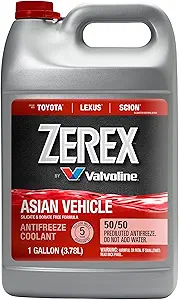 |
| Best Quality Built to a higher standard if you want something more solid | Genuine 00272 SLLC2 Engine Coolant / Antifreeze |  |
| Best Value The sweet spot between price and what you get | PEAK OET Extended Life Orange 50/50 Prediluted Antifreeze/Coolant, 1 Gal |  |
| Best Budget The cheapest option that still gets the job done reliably | Zerex Original Green 50/50 Prediluted Antifreeze/Coolant 1 gal |  |
| Highest Rated A top-rated pick with lots of positive feedback | Valvoline Multi-Vehicle 50/50 Ready-to-Use Antifreeze/Coolant (1 Gallon) |  |
| Most Popular A crowd favorite that many people choose with confidence | PEAK Global Lifetime Concentrate Antifreeze and Coolant, 1 gal |  |
| Best Seller A high-volume bestseller chosen again and again | Valvoline Zerex Dex-Cool 50/50 Ready-to-Use Antifreeze/Coolant, 1 Gallon |  |
Zerex Asian Vehicle Red 50/50 Prediluted Antifreeze/Coolant (1 gallon)

| Formulation | Hybrid Organic Acid Technology (HOAT) with phosphate |
|---|---|
| Mix | 50/50 prediluted ready-to-use |
| Compatibility note | Designed for Asian vehicles requiring red, silicate-free coolant |
| Volume | 1 gallon |
Zerex Asian Vehicle Red is a ready-to-use, 50/50 prediluted antifreeze designed to replace factory coolant in Asian-brand engines that specify a red, silicate-free HOAT formula. You pour it straight into the cooling system for top-offs or full flushes without mixing, and the patented chemistry combines organic acids and phosphate to protect metals from corrosion while minimizing scale and deposits. Because it meets several OEM and industry specs, it is a practical match when the vehicle manufacturer calls for a red, silicate- and borate-free coolant. The long-life formula is aimed at extended service intervals and offers steady temperature control in everyday driving and highway use. Limitations are that it is specific to vehicles requiring this chemistry and color, so it is not a universal coolant replacement, and buyers should confirm Honda Civic model-year coolant requirements before use. The product comes from an established brand with a long track record, which helps when you want a direct replacement that mirrors factory-quality coolant behavior.
Best for: Balanced owners focused on maintaining their Civic with a factory-quality replacement coolant who prefer the convenience of a ready-to-use product and longer service intervals.
Less Ideal for: Drivers who prioritize a single coolant to cover multiple makes or who need concentrated coolant to custom-mix for nonstandard service procedures should consider other options.
- Prediluted 50/50 ready-to-use formula so no mixing is required
- Formulated to match Asian manufacturer specifications for red HOAT coolants
- Silicate-free and borate-free chemistry reduces risk of deposits on cooling-system components
- Long-life hybrid organic acid technology provides extended protection against rust and corrosion
- Meets multiple industry and OEM specifications for reliable compatibility when matched to the correct vehicle requirement
- Not suitable for vehicles that call for a different coolant chemistry or color
- Sold as a single formula so it will not work where concentrated coolant or alternative inhibitor packages are required
Verdict: A convenient, factory-aligned red HOAT coolant that is a strong choice for Honda Civic owners who need a ready-to-use, long-life replacement when their model specifies this chemistry.
Genuine 00272 SLLC2 Engine Coolant / Antifreeze

| Manufacturer | Genuine |
|---|---|
| Manufacturer Part Number | 00272SLLC2 |
| Is Discontinued By Manufacturer | No |
| ASIN | B0071N5DM4 |
This Genuine 00272 SLLC2 engine coolant is a factory-quality antifreeze designed to regulate engine temperature and protect cooling-system components. It is typically used as a direct replacement coolant during scheduled service or when topping off the reservoir; the product comes in a single-quantity container with an easy-pour design. Notable features include a manufacturer-formulated blend intended for corrosion protection and consistent thermal performance, and a distinctive pink color that helps when monitoring fluid level. For a performance-focused Civic owner, it provides predictable temperature control under load and long-term protection against rust and scale, which helps maintain head gasket and water pump health. The main limitations are that this is a branded, vehicle-specific formula so you should verify compatibility with your Civic model and cooling system requirements before use, and the unit cost is higher than many aftermarket concentrates. Use according to Honda coolant recommendations and replace as part of routine maintenance to get the intended benefits.
Best for: Performance-oriented buyers who prioritize manufacturer-spec cooling stability and long-term engine protection for spirited driving and regular highway use.
Less Ideal for: Drivers seeking the lowest-cost coolant option or those who prefer a universal concentrate that can be mixed across multiple vehicle makes.
- Factory-formulated blend intended for reliable thermal regulation and corrosion protection
- Easy-to-pour single-quantity packaging simplifies service and refills
- Consistent pink color makes fluid level checks straightforward
- Widely used by vehicle owners and reviewers who report stable performance under varied conditions
- Higher cost compared with generic aftermarket coolants
- Requires confirmation of compatibility with a specific Honda Civic model before use
Verdict: A factory-formulated coolant that delivers dependable thermal control and corrosion protection for performance-minded Civic owners who want manufacturer-spec fluids, but at a premium cost.
PEAK OET Extended Life Orange 50/50 Prediluted Antifreeze/Coolant, 1 Gal

| Dilution | 50/50 Prediluted |
|---|---|
| Intended market | North American vehicles |
| Fluid type | Extended life OAT (orange) |
This PEAK OET extended life coolant is a ready‑to‑use 1‑gallon 50/50 prediluted formula designed to protect engine cooling systems in vehicles that call for an orange OAT coolant. In practice you pour it straight into the overflow or radiator during a top‑off or use it for a full flush and fill without mixing. The formula is marketed to prevent rust and corrosion across cooling system components and is backed by a long service life claim when installed as part of a complete flush. Predilution saves time and reduces mixing errors, and the orange color makes it easier to spot leaks. For a Honda Civic, this product is useful only if the Civic model year and coolant specification call for an orange OAT extended life formula; in that case it matches the convenience and long‑service aim of DIY maintenance. Limitations include color and chemistry compatibility requirements and the fact that a single gallon may not be enough for a full coolant exchange on some vehicles, so verify Honda's coolant spec and required volume before use.
Best for: Practical owners who prioritize straightforward, cost‑effective maintenance and want a long‑life prediluted coolant that reduces shop visits and mixing mistakes.
Less Ideal for: Do not choose this if your Honda Civic requires a different coolant chemistry or if you need enough fluid for a complete system overhaul without buying multiple gallons.
- Ready to use 50/50 prediluted formula eliminates mixing and speeds top‑offs
- Extended‑life organic acid technology aims to reduce corrosion and extend service intervals
- Orange color improves leak visibility during inspections
- 1 gallon size covers common maintenance needs for topping off or partial fills
- Not universally compatible with all coolant chemistries so must match Honda's specified coolant type
- One gallon may be insufficient for a full flush and refill on some vehicles
Verdict: A convenient, budget‑minded extended‑life orange coolant for DIY Civic owners—only if it matches Honda's specified coolant chemistry.
Zerex Original Green 50/50 Prediluted Antifreeze/Coolant 1 gal

| Brand | Zerex |
|---|---|
| Model | Original Green |
| Prediluted | 50/50 ready-to-use |
| Suitable for | Older passenger cars and light trucks |
Zerex Original Green is a ready-to-use 50/50 prediluted antifreeze/coolant designed to protect cooling systems in older cars that specify a low-silicate green formula. You pour it straight into the radiator or overflow during a top-off or after a coolant flush; there is no mixing required. The formula uses inorganic additive technology to inhibit rust, scale and corrosion on metal cooling system parts including aluminum while also providing freeze and boilover protection to about -34F. For a budget-focused buyer it offers OEM-style chemistry commonly recommended for older vehicles and is simple to use for DIY maintenance. Limitations: it is an IAT-style coolant intended for vehicles that call for a low-silicate green product, so it is not suitable for Civics that require long-life or silicate-free formulations specified by newer Honda service intervals. It also does not have extended organic acid technology life spans, so plan on standard interval changes.
Best for: Budget-conscious DIYers who maintain older Honda Civics and prioritize a simple, factory-style green coolant for routine top-offs and flushes.
Less Ideal for: Owners of newer Honda Civics that specify long-life or silicate-free coolants should choose a Honda-recommended long-life formula instead.
- Prediluted 50/50 formula for easy, no-mix top-offs or refills
- Low-silicate IAT formula provides corrosion protection for older cooling systems
- Contains inhibitors that help prevent rust, scale and deposits on metal parts
- Ready-to-use gallon packaging covers multiple small top-offs or a full system service
- Not a long-life OAT formulation so it may require more frequent coolant changes
Verdict: A simple, budget-friendly prediluted green coolant that provides straightforward corrosion and freeze protection for older Honda Civic cooling systems.
Valvoline Multi-Vehicle 50/50 Ready-to-Use Antifreeze/Coolant (1 Gallon)

| Size | 1 Gallon |
|---|---|
| Flash Point | 250 Degrees Fahrenheit |
| Vehicle Service Type | Automobiles and light duty trucks (multi-vehicle) |
| Automotive Fit Type | Universal Fit |
Valvoline Multi-Vehicle 50/50 Ready-to-Use Antifreeze/Coolant is a pre-diluted coolant intended for topping off or refilling a Civic’s cooling system without the need to mix concentrate. It contains Valvoline’s Alugard Plus additive for compatibility with other ethylene glycol-based formulas and claims protection against corrosion, deposits, freezing and boiling. Typical use is simple: drain and refill during a coolant service or add to the overflow to maintain the factory-recommended level and protection. The ready-to-use mix removes measuring errors and is convenient for DIY maintenance or quick shop top-offs. Practical benefits include broad material compatibility that reduces the risk of mixing incompatible colors and a freeze/boil protection range suitable for most climates. Limitations are that it is pre-mixed so you cannot adjust concentration for extreme climates, and being a universal formula it may not match every factory-specified coolant formulation exactly for some limited Honda service procedures.
Best for: Reliability-focused buyers who prioritize a straightforward, low-risk coolant option for routine maintenance and want a ready-to-use product to minimize service errors.
Less Ideal for: Those who need to match a specific Honda factory coolant specification for warranty or dealer-level service protocols, or who require custom concentrate mixing for extreme climates.
- Pre-mixed 50/50 ready-to-use eliminates the need to dilute and reduces mixing errors.
- Alugard Plus additive formulated for compatibility with other ethylene glycol-based coolants.
- Protects against corrosion, scaling and aluminum corrosion common in modern engines.
- Includes bittering agent to discourage accidental ingestion.
- Cannot change concentration for very cold or very hot environments since it is pre-diluted.
- Universal formulation may differ from specific factory coolant chemistry used in some Honda service recommendations.
Verdict: A convenient, compatibility-focused ready-to-use coolant good for routine Civic maintenance but not for owners who must match a specific factory coolant formulation.
PEAK Global Lifetime Concentrate Antifreeze and Coolant, 1 gal

| Brand | PEAK |
|---|---|
| Type | Concentrate antifreeze and coolant |
| Technology | Phosphate-enhanced Organic Acid Technology |
| Compatibility | All vehicle cooling systems |
This PEAK Global Lifetime concentrate is a universal antifreeze and coolant intended as a factory-quality cooling system fill for a wide range of vehicles, including the Honda Civic when diluted per instructions. It uses phosphate-enhanced Organic Acid Technology to protect cooling system metals, including aluminum, and is free of silicates, borates, nitrites and amines so it can be used for top-offs without changing the existing coolant color. Typical use is a full flush and fill or topping off after mixing the concentrate to the correct 50/50 ratio with water. The practical benefits are long-lasting corrosion protection designed to cover the life of the vehicle with proper maintenance and easy compatibility with other coolant types for convenient servicing. Limitations are that it is a concentrate that must be mixed correctly before use and that some vehicle manufacturers specify proprietary formulas, so you should confirm Honda Civic coolant recommendations before switching products.
Best for: Convenience-driven buyers who want a single, broadly compatible coolant they can use for flushes and top-offs and prefer a product that simplifies maintenance across different vehicles.
Less Ideal for: Buyers who strictly follow Honda factory-specified coolant formulations or who prefer ready-to-use premixed coolant without any mixing.
- Wide compatibility across American, Asian, and European passenger cars including Honda Civic when mixed correctly
- Phosphate-enhanced organic acid corrosion inhibitors protect aluminum and other cooling system metals
- Safe for top-offs and will not alter the color of existing coolant
- Available as a concentrate for economical storage and 50/50 mixing flexibility
- Must be diluted to the correct ratio before use, which adds a step compared with pre-diluted options
- Not a vehicle-specific OEM formula so check Honda Civic recommended coolant specifications if you prefer manufacturer-specific fluids
Verdict: A convenient, broadly compatible concentrate that delivers long-lasting corrosion protection if mixed and used according to Honda Civic coolant recommendations.
Valvoline Zerex Dex-Cool 50/50 Ready-to-Use Antifreeze/Coolant, 1 Gallon

| Brand | Valvoline |
|---|---|
| Model | Dex-Cool |
| Pre-mix | 50/50 ready-to-use |
| Technology | Organic Acid Technology (OAT) |
Valvoline Zerex Dex-Cool is a ready-to-use, 50/50 antifreeze formulated with organic acid technology to protect cooling system metals and prevent corrosion, scale, and deposits. It is typically used to top off or refill a radiator during routine maintenance or after a coolant flush. The premixed gallon removes the need to measure concentrate and distilled water, so installation is straightforward for DIYers and technicians working on a Honda Civic that requires an orange OAT coolant. Notable features include a silicate- and phosphate-free formula, protection for aluminum components, and resistance to the common causes of coolant failure. In practice that means longer service intervals and cleaner water pumps and radiators when the coolant is changed according to the vehicle schedule. Limitations to consider are that Dex-Cool is an OAT-specific coolant and should only be used in Civics that call for this type of orange OAT fluid, and mixing it with incompatible coolant chemistries can reduce protection and require a system flush.
Best for: A risk-averse mainstream buyer who prioritizes factory-quality, manufacturer-approved fluids and wants a simple, pre-mixed solution for routine coolant service on a Honda Civic.
Less Ideal for: Drivers who have Civics that require a different coolant chemistry or those planning to blend custom concentrate mixes should choose a product matched to their vehicle’s specified coolant type.
- Ready-to-use 50/50 mix eliminates measuring and reduces installation errors
- Organic acid technology protects aluminum and other cooling system metals from corrosion
- Silicate- and phosphate-free formulation reduces deposit formation
- Proven brand with wide OEM approvals for vehicles that specify orange OAT coolant
- Only appropriate for vehicles that require orange OAT antifreeze and must not be mixed with incompatible coolants
- Sold as a single-gallon container which may be more than needed for partial top-offs
Verdict: A convenient, OEM-approved orange OAT coolant for Civics that require Dex-Cool chemistry, best chosen only when your Civic specifies this type.
Choosing the Right Honda Civic Coolant: Key Factors to Consider
Compatibility With Honda Specifications
Compatibility dictates how well a coolant interacts with the Honda Civic cooling system materials. Honda systems often use aluminum components and specific seal materials, so a coolant that meets or aligns with manufacturer specifications reduces the risk of seal swelling, gasket degradation, and accelerated corrosion.
Using a coolant that is flagged as compatible or meets equivalent standards helps maintain warranty and ensures predictable performance. If compatibility information is unclear, plan to consult service documentation or a technician before switching fluids.
Corrosion Inhibitors and Additives
Corrosion inhibitors are the primary defense against rust and electrochemical damage inside the radiator, water pump, and engine passages. Effective additive packages target multiple metal types common in the Civic, including aluminum, iron, and brass, helping to extend component life.
Look for formulations with robust, long-lasting inhibitor chemistry. Over time these additives deplete, so understanding expected inhibitor life helps you schedule timely maintenance and avoid component pitting or degradation.
Thermal Stability and Heat Transfer
A coolant must manage heat effectively during normal driving and higher-load conditions. Thermal stability affects how well the fluid resists breaking down when exposed to elevated temperatures, which in turn preserves protective additives and maintains heat-transfer efficiency.
Coolants that remain stable at higher temperatures reduce the risk of varnish or deposit formation that can insulate heat-exchange surfaces. This factor influences engine operating temperatures and can help prevent localized overheating.
Freeze and Boil Protection
Freeze point and boil-over protection determine how a coolant performs in extreme temperatures. Proper freeze protection prevents expansion damage in cold climates, while a raised boiling point helps guard against vapor lock and localized overheating during heavy use.
Assess the recommended concentration and local climate to ensure the selected coolant offers adequate margin. Remember that mixing with the correct water type and maintaining proper mixture ratios is essential to achieve published freeze and boil specifications.
Service Interval and Longevity
Service interval expectations tell you how often coolant should be changed to maintain protection. Long-life formulations often advertise extended intervals thanks to stabilized inhibitor packages, which can reduce maintenance frequency when managed properly.
However, longer intervals depend on following dilution guidelines and monitoring system condition. Choosing a coolant with predictable longevity helps plan maintenance and budget for periodic coolant replacement or system flushing.
Compatibility With Hoses and Seals
Coolant chemistry can interact with rubber hoses and elastomer seals, causing swelling, hardening, or softening over time. Selecting a fluid designed to be compatible with common automotive hose materials reduces the chance of leaks and premature failure.
Confirming material compatibility is especially important if the vehicle has older hoses or aftermarket components. Maintaining hose condition and inspecting for deterioration should accompany any coolant change.
Why the Right Honda Civic Coolant Matters Beyond Temperature Control
Using the correct Honda Civic coolant is about more than preventing overheating. The fluid circulates through tight passages, reacts with different metal alloys, and contacts rubber and plastic components. A formulation that matches your vehicle's needs helps preserve gasket integrity, minimizes corrosion in cast aluminum and steel parts, and supports efficient heat transfer under varied driving conditions.
Poorly matched fluid can accelerate wear, cause softening or swelling of seals, and lead to premature component failure. For Civic owners who want dependable daily driving and minimized repair risks, selecting a coolant that meets Honda's material compatibility and additive balance is an essential preventive step.
Think of the coolant as part of routine engine care rather than a one-off fill. Proper fluid selection reduces the chance of localized hot spots, maintains thermostat and sensor reliability, and helps keep the cabin heating system operating as intended. That contributes to overall engine longevity and a more predictable ownership experience.
- Protects metals and engine internals from corrosion
- Maintains seal and hose material integrity
- Supports efficient temperature regulation and heater performance
Coolant Formulations and Which Ones Suit the Civic
Coolants come in different base chemistries and additive packages. The major categories are conventional inorganic acid technology, organic acid technology, and hybrid formulations. Each type has trade offs in service life, additive depletion patterns, and how they interact with the metals and elastomers used in Honda engines. Understanding these differences helps you match a formulation to your Civic's service expectations and the level of maintenance you prefer.
Conventional formulations usually require more frequent changes but are straightforward for older systems. Organic acid based fluids tend to offer longer life and more stable inhibitor packages. Hybrid formulas combine aspects of both to provide extended protection while maintaining compatibility with a wider range of materials. For many Civic models, long life coolant options are designed to deliver multi-year protection that reduces the frequency of top-ups.
When assessing options, look for fluids that explicitly state compatibility with Honda cooling system chemistry. That ensures the inhibitors present will protect the specific metallurgy and elastomers used in the Civic without causing adverse reactions or sludge formation.
- Conventional: effective but shorter service intervals
- Organic acid: extended life and stable inhibitors
- Hybrid: balance of longevity and broad compatibility
Signs Your Civic Needs a Coolant Service or Inspection
Not all coolant issues are dramatic. Early signs include inconsistent cabin heat, a sweet odor from the engine bay, unexplained low coolant level without visible leaks, and a coolant color change or cloudiness when you inspect the overflow reservoir. Any of these indicators merit a closer look by a technician or a careful DIY inspection.
More advanced symptoms include engine overheating, visible deposits in the radiator or expansion tank, or flaky rust like material in the fluid. If you notice persistent temperature gauge swings during normal driving, avoid prolonged operation and have the system checked. Catching problems early limits the scope of repair and can prevent head gasket or water pump damage.
Regular visual checks are a simple way to detect issues before they escalate. Look at the expansion tank level and condition, check hoses for softness or bulging, and note any colored coolant residue near hose clamps or around the radiator. These quick inspections let you decide whether a coolant flush or targeted repair is needed.
- Inconsistent cabin heat or temperature gauge swings
- Low coolant level without visible external leak
- Cloudy, discolored, or particulate-laden fluid in the overflow tank
Mixing Coolants and Compatibility Guidelines for Honda Civic Owners
Mixing different coolant chemistries is a common source of problems. Combining incompatible formulations can neutralize corrosion inhibitors or create gels and sludges that restrict coolant flow. For a Civic, the safest approach is to avoid mixing different base technologies whenever possible and to follow Honda's guidance for fluid type if available.
If a top-up is needed and the exact original fluid is not available, choose a product labeled as compatible with Honda systems or a universal formula that specifically states compatibility across multiple chemistries. When in doubt, perform a complete drain and refill with a single, compatible product to restore predictable inhibitor performance.
If you suspect an incompatible mix has already occurred, a thorough system flush is often recommended to remove degraded additives before refilling. That reduces the risk of deposits and restores the intended protective balance in the new coolant.
- Avoid mixing different base chemistries without confirmation of compatibility
- Use a fluid explicitly marked compatible with Honda systems when topping up
- If compatibility is uncertain, prefer a full drain and refill
Practical Maintenance Steps: How to Handle Coolant Flushing and Top-ups
A coolant flush restores system cleanliness and removes spent inhibitors. For many Civic owners, scheduled maintenance might include a coolant flush when recommended by service intervals or when diagnostics indicate contamination. A proper coolant flush process involves draining the old fluid, flushing the system with water or a manufacturer-approved flush solution, refilling with the correct coolant concentration, and bleeding air from the system to avoid hot spots and poor heater performance.
When performing routine maintenance, always use the correct concentration of coolant and distilled water to maintain freeze and boil protection. Follow safe handling practices. Avoid opening the radiator or pressure cap when the engine is hot. Dispose of used fluid responsibly in accordance with local regulations.
If you prefer to leave flushing or complex bleeding procedures to professionals, document the current fluid condition and have a technician perform a coolant flush when symptoms appear or at the next scheduled major service. The term coolant flush often appears in service schedules and is the recommended remedy if contamination, color change, or debris is present.
- Drain the old fluid and flush the system thoroughly
- Refill to the correct coolant to distilled water ratio
- Bleed trapped air to prevent localized overheating
Cooling System Care Beyond Fluid Selection
Maintaining radiator and peripheral components extends the effectiveness of any coolant you choose. Inspect radiator fins for damage, verify the radiator cap seals properly, and check the condition of the water pump for signs of seepage or bearing wear. A mechanically sound system allows the coolant to perform as intended and reduces the chance of premature failure.
Also monitor hose condition and clamp security. While Factors to Consider covers compatibility with hoses and seals, routine checks for soft spots, bulges, and clamp corrosion are a separate maintenance task that prevents leaks and air ingress. Replace components that show age related degradation.
Finally, documentation helps. Note the date, mileage, and type of fluid used at each service. That makes future decisions about long life coolant options or an OEM coolant replacement easier. Clear records also help technicians diagnose issues faster and ensure continuity in cooldown maintenance over the life of the vehicle.
- Inspect radiator fins, cap, and water pump for leaks or damage
- Check hoses and clamps regularly and replace aged components
- Record fluid type and service dates to guide future maintenance
How We Chose the Best Honda Civic Coolant
We focused on attributes that matter for Honda Civic cooling systems and for owners who want dependable, long-term protection. Key criteria included corrosion inhibition performance in mixed-metal cooling systems, thermal stability under normal and high-load driving, and freeze and boil-over protection to match varied climates. We also weighed recommended service intervals and whether the coolant is compatible with typical Honda coolant specifications. Material compatibility with hoses, seals, and aluminum radiators was evaluated to reduce the chance of premature component wear. Ease of use and clarity of mixing instructions were considered because proper dilution affects performance. We excluded products that lacked clear formulation data, those intended exclusively for heavy-duty commercial engines, and fluids with ambiguous compatibility notes. The goal was to surface coolants that balance corrosion control, thermal protection, and predictable service life for Honda Civic owners.
Our full evaluation process is outlined in our review methodology.
FAQ
How often should I change the coolant in my Honda Civic?
Recommended intervals vary by coolant formulation, but many modern long-life coolants are designed to last several years or tens of thousands of miles. Check your Civic service recommendations and the coolant manufacturer guidance, and inspect condition periodically. If the fluid looks discolored or there are signs of corrosion, plan for a flush and fill sooner.
Can I mix different types of coolant in my Honda Civic?
Mixing coolant chemistries is usually discouraged because incompatible additive packages can reduce corrosion protection or form gels. If you are unsure of the current fluid type, a full system flush and refill with a single, compatible formulation is the safest approach. When in doubt, follow Honda specification guidance.
Is distilled water required when mixing coolant?
Using distilled or demineralized water is recommended because it minimizes mineral deposits and electrochemical activity that can accelerate corrosion. Tap water with high mineral content can affect freeze and boil points and may leave deposits inside the cooling system over time.
Do I need a coolant flush or just a drain and refill?
Whether to flush depends on system condition and service history. A simple drain and refill may be adequate if the fluid is relatively clean and the system has no contamination. If there is sludge, heavy discoloration, or evidence of corrosion, a full flush helps remove deposits and restore effective heat transfer and inhibitor performance.
What signs indicate the coolant needs attention?
Common indicators include coolant that is discolored or cloudy, a sweet odor, overheating, persistent low coolant level, or visible rust or sediment in the reservoir. Any unexplained temperature spikes or leaks should prompt a cooling system inspection and possible fluid service.
Final Verdict
Choosing the right coolant for a Honda Civic comes down to matching compatibility with the car's materials, selecting a formulation with reliable corrosion inhibitors, and ensuring adequate thermal and freeze/boil protection for your climate. Balance the benefits of longer service intervals against the need for clear compatibility data and proper mixing to preserve cooling system components.Prioritize compatibility and stable inhibitor chemistry, monitor fluid condition periodically, and perform a system flush when signs of contamination appear. That approach helps maintain reliable engine cooling and reduces the risk of component damage over time.
Explore More:
- Check out all Honda Civic parts & accessories
- Explore Fluids & Chemicals
- Browse all Accessories
