

Note: This article contains affiliate links. If you click on these links and make a purchase, I may earn a small commission at no extra cost to you. This helps support my research and content. Read my full affiliate disclosure here.
If your 2007-2011 Honda CR-V is showing handling vagueness or clunks over bumps, worn sway bar links are a common, fixable culprit. The right sway bar link restores lateral stability, reduces body roll in turns, and cuts out the rattles and clunks that develop as bushings and ball joints age.This guide covers seven shortlisted sway bar link options chosen for fitment and durability across the 2007–2011 CR-V range. We evaluate structural strength, bushing and joint quality, and ease of installation so you can pick the option that best matches your driving style and maintenance plans. Read on to see which choices suit routine replacement, a DIY install, or a tougher road-use setup.
Looking for other parts? See all Honda CR-V parts & accessories.
Top Picks at a Glance
| Best Overall The best all-around choice for most situations | XOPIYAO Front Sway Bar Stabilizer Link Kit (51320STKA01) for 2007–2016 CR-V / 2007–2012 RDX |  |
| Best Quality Built to a higher standard if you want something more solid | Metrix Premium Chassis Parts Rear Stabilizer Sway Bar Link Kit (Rear Left & Right) |  |
| Best Value The sweet spot between price and what you get | TOVASTY Front Sway Bar Links, 2-Pack (Compatible with 2007–2016 Honda CR-V) |  |
| Best Budget The cheapest option that still gets the job done reliably | HCPAUELP Sway Bar Link Kit K750297, 2-Pack |  |
| Highest Rated A top-rated pick with lots of positive feedback | MOOG K750297 Suspension Stabilizer Bar Link (right) |  |
| Most Popular A crowd favorite that many people choose with confidence | Detroit Axle 8‑Piece Complete Strut and Sway Bar Link Suspension Kit for 2007–2011 Honda CR-V |  |
| Best Seller A high-volume bestseller chosen again and again | X4XZ Zinc-Nickel Stabilizer Sway Bar Link Kit (Front) |  |
1. XOPIYAO Front Sway Bar Stabilizer Link Kit (51320STKA01) for 2007–2016 CR-V / 2007–2012 RDX

| Position | Front |
|---|---|
| Item model number | 51320STKA01 |
| Manufacturer | XOPIYAO |
| Manufacturer Part Number | XOP-LK-024 |
These XOPIYAO front sway bar links are a straightforward replacement for worn factory links on 2007–2016 CR-V and 2007–2012 RDX applications. They connect the stabilizer bar to the suspension to reduce body roll, eliminate knocking over bumps, and help maintain steering stability. The kit ships as a pair with metal link bodies and plastic terminals and includes hardware for a typical DIY swap; reviewers report the parts bolt up to factory mounting points without modification. In use the links firm the front end and remove clunks common with failing original links, and the heavier feel suggests improved durability compared with brittle factory plastic pieces. Expect a quick installation if you relieve sway bar tension and have basic hand tools. Limitations: some listings show mixed fitment across many vehicles so confirm the OEM part number match before ordering, and while many users report long service life a few reports mention early noise on certain units. For a budget-friendly repair that restores steering feel and ride confidence the XOPIYAO links are a practical choice.
Best for: Drivers seeking a reliable, cost-effective repair to eliminate front-end clunks and restore steady handling on a 2007–2011 CR-V, prioritizing a balanced mix of value and durability.
Less Ideal for: Anyone wanting a lifetime-performance or heavy-duty off-road upgrade should consider premium or reinforced aftermarket links instead.
- Direct-fit replacement for specified CR-V and RDX front mount locations with included hardware
- Sturdy metal construction that feels more robust than common factory plastic links
- Ships as a pair so both sides can be replaced at once to restore balanced handling
- Many buyers report elimination of front-end clunks and improved ride stability
- Some buyers report early noise on isolated units indicating inconsistent quality control
- Fitment must be verified against OEM part numbers because the listing covers multiple vehicles
Verdict: A budget-friendly, direct-fit front sway bar link kit that restores steering stability and removes clunks for mid-2000s Honda CR-V drivers who want solid everyday performance.
2. Metrix Premium Chassis Parts Rear Stabilizer Sway Bar Link Kit (Rear Left & Right)

| Compatible models | 2007-2016 Honda CR-V |
|---|---|
| Quantity in kit | 2 |
| Position | Rear |
| Material Type | Carbon Steel |
| Warranty | 3 Year / 36,000 miles Limited Warranty |
This Metrix rear sway bar link kit replaces both left and right links and is aimed at restoring rear-end stability and reducing body roll on a Honda CR-V. The kit arrives pre-greased with the correct bolts and bushings for a straightforward swap, so it is suitable for DIY installation or quick shop work. Notable features include a greasable design for maintenance, machined finish hardware, and carbon steel construction with corrosion-resistant coating intended to extend service life. In use the links firm up rear handling and eliminate clunks caused by worn joints; reviewers report fast installs and OEM-like fit. The kit is vehicle-specific so fitment is precise for the CR-V range listed, but buyers should still expect the usual challenge of loosening rusted factory fasteners during replacement. While the parts are built to last and backed by a 3 year/36,000 mile limited warranty, users seeking upgraded stiffness for track use may prefer heavier-duty or poly-bushed aftermarket options instead of this mostly factory-replacement style kit.
Best for: Drivers who want a direct-fit replacement to restore factory handling and eliminate rear-end clunks on a 2007–2011 Honda CR-V with an emphasis on reliability and ease of installation.
Less Ideal for: Buyers seeking firmer, track-oriented suspension tuning or those who want poly bushing upgrades should consider heavy-duty aftermarket sway links instead.
- Pre-greased and greasable design for easier maintenance and longer joint life
- Vehicle-specific fit for 2007–2016 Honda CR-V which simplifies installation
- Carbon steel construction with corrosion-resistant coating for durability
- Includes correct bolts and bushings so no additional hardware is typically required
- Designed as a factory-style replacement so it is not a performance-stiffening or poly-bushed upgrade
Verdict: A precise, durable rear sway bar link kit that restores factory handling on 2007–2011 Honda CR-Vs while keeping installation simple and maintenance straightforward.
3. TOVASTY Front Sway Bar Links, 2-Pack (Compatible with 2007–2016 Honda CR-V)

| Auto Part Position | Front |
|---|---|
| Compatible with Vehicle Type | Car |
| Automotive Fit Type | Universal Fit |
| Material Type | Alloy Steel |
These TOVASTY front sway bar links are a direct-replacement style part intended to restore front anti-roll bar connection and handling for compatible Honda CR-V models. They come as a two-piece set made from alloy steel with an anti-corrosion finish and housings included, so installation is straightforward for anyone swapping worn or noisy links. In normal use they reinforce chassis rigidity and reduce play between the sway bar and suspension, which improves turn-in response and reduces clunking over bumps. The design emphasizes high tensile strength and precision fit to run quietly under load, and the universal-fit labeling plus factory-dimension manufacturing makes them a simple fit for the listed model years without modifications. The main compromises are that this is an aftermarket replacement rather than a branded factory part and long-term durability depends on driving conditions despite the protective coating. For routine street driving and periodic maintenance these links offer an economical way to restore handling and eliminate noise from failing link ends.
Best for: Buyers who prioritize restoring solid, quiet steering feel and eliminating sway-bar noise on a 2007–2016 Honda CR-V with a practical, cost-conscious replacement part.
Less Ideal for: Shoppers seeking an OEM-branded component with an extended proven service record or who need a part engineered for heavy-duty or high-performance off-road use.
- Sold as a complete two-piece front link kit for both sides so installation is quick.
- Alloy steel construction with anti-corrosion finish for improved resistance to rust.
- Engineered to factory dimensions for in-place replacement without modification.
- Designed to reduce vibration and abnormal noise for a quieter ride.
- Aftermarket part with no long-term performance history compared with OEM branded parts.
- Universal-fit labeling could require double-checking exact fit for specific submodels despite claimed compatibility.
Verdict: A straightforward, corrosion-resistant two-piece front sway bar link kit that restores handling and removes noise for compatible CR-Vs without requiring modifications.
4. HCPAUELP Sway Bar Link Kit K750297, 2-Pack

| Compatible models | 2007–2016 Honda CR-V, 2007–2012 Acura RDX |
|---|---|
| Replaces | OEM 51320STKA01 |
| Material | High-strength steel |
| Coating | Corrosion-resistant protective coating |
| Package | 2-pack |
This 2-pack sway bar link kit replaces factory links (OEM 51320STKA01) to restore antiroll performance on compatible Honda CR-V and Acura RDX models. Each link is made from high-strength steel with a corrosion-resistant coating intended to reduce noise and resist rust, which is helpful if you drive in wet or salted-road conditions. Installation is straightforward and meant to be done with basic hand tools, so a DIYer can usually swap the worn links in one afternoon without specialty equipment. The kit’s construction should return steering stability and reduce clunking from loose links, but it is a straightforward replacement part rather than an upgraded performance component. Expect factory-level fit and function for routine street driving; drivers seeking stiffer handling or motorsport durability may prefer aftermarket performance links. The listing notes a 1-year warranty from the maker, which adds some reassurance if a part fails early.
Best for: Buyers who need an affordable, reliable replacement to eliminate sway-bar noise and restore factory handling on their CR-V and prefer a simple DIY install over performance modifications.
Less Ideal for: Drivers looking for upgraded, stiffer sway bar links for aggressive handling or motorsport use should choose performance-specific options instead.
- Made from high-strength steel for durable, stable linkage
- Corrosion-resistant coating helps reduce rust and squeaks over time
- Direct-fit design replaces factory part number for straightforward installation
- Sold as a 2-pack so both sides can be serviced together
- Designed as a factory-style replacement and not intended for upgraded track or competition use
Verdict: A budget-friendly, factory-fit 2-pack that reliably restores steering stability and eliminates worn-link noise on 2007–2016 CR-V models.
5. MOOG K750297 Suspension Stabilizer Bar Link (right)

| Auto Part Position | Right |
|---|---|
| Compatible with Vehicle Type | Car, Truck |
| Automotive Fit Type | Vehicle Specific Fit |
| Material Type | Rubber |
The MOOG K750297 is a right-side stabilizer bar link engineered as a direct replacement for 2007–2016 Honda CR‑V fitments that need a stronger, longer‑lasting link. It replaces a worn or noisy sway bar link and is typically used when steering feels loose or you hear clunks over bumps. Notable features include grease fittings for both joints so you can service the bearings, a sealed boot to keep dirt and water out, and a thicker connecting rod for added strength. In practice that means easier maintenance and fewer premature failures compared with thinner factory pieces. Installation is straightforward for anyone with basic hand tools and the integrated wrench flats and opposing nut reduce the chance of spinning the stud during tightening. The part arrives largely preassembled but may not come fully greased so a quick lube before and after installation is recommended. This is a vehicle-specific replacement rather than an upgraded performance link, so expect improved durability and quieter operation rather than changed handling dynamics.
Best for: Buyers who prioritize a reliable, serviceable replacement that reduces suspension noise and requires less frequent replacement; good for DIY installers and technicians focused on longevity.
Less Ideal for: Drivers seeking performance-oriented sway bar components or changes to handling characteristics should look at dedicated performance links or adjustable aftermarket options.
- Greaseable socket on both ends extends service life and allows periodic maintenance
- Sealed boot shields internal components from dirt and water to reduce wear
- Thicker connecting rod and metal bearing components increase durability over many OEM links
- Wrench flats and opposing nut design simplify installation and prevent stud spinning
- May not arrive fully pre-greased requiring initial lubrication before use
Verdict: Choose the MOOG K750297 when you want a durable, serviceable right-side sway bar link that quiets rattles and extends service life on 2007–2011 Honda CR‑V models.
6. Detroit Axle 8‑Piece Complete Strut and Sway Bar Link Suspension Kit for 2007–2011 Honda CR-V

| Fitment | 2007–2011 Honda CR-V |
|---|---|
| Kit contents | 4 strut assemblies with coil springs + 4 sway bar links |
| Brand | Detroit Axle |
| Warranty | 10-Year Warranty |
This Detroit Axle 8-piece kit bundles four complete strut and coil spring assemblies with four sway bar links so you can replace the vehicle's front and rear wearing suspension parts in one job. It is supplied ready to install, which speeds up a DIY swap or a quick shop install without needing press tools for spring assembly. Buyers report tighter handling and a noticeably firmer ride after installation, and the included sway bar links are beefier than some factory parts which helps reduce body roll. Fitment is targeted to 2007–2011 CR-Vs, and the kit undergoes impact and fatigue testing. Expect mixed long-term durability: many users praise build quality and fit, but a minority report noise or premature wear on small components. Also the ride can feel on the firm side compared with worn original parts, and a professional alignment after installation is recommended to avoid uneven tire wear. The package is a good value for someone replacing multiple suspension components at once but plan for post-install checks and possible small part swaps.
Best for: Buyers who want a single purchase to refresh all four struts and associated sway bar links on a 2007–2011 CR-V and prefer a ready-to-install kit to limit parts sourcing and shop time.
Less Ideal for: Drivers seeking a plush, factory-soft ride or a long-term OEM-level rebuild may prefer to source individual premium components or have suspension tailored by a specialist.
- Complete kit includes four strut assemblies with coil springs plus four sway bar links for a one‑stop suspension refresh
- Struts are shipped fully assembled so installation can be completed with common garage tools
- Beefier sway bar links than stock help reduce body roll and improve handling
- Undergoes impact, wear, and fatigue testing and carries a long manufacturer warranty
- Some buyers report a stiffer-than-factory ride and occasional noise over bumps
- A few users experienced minor fitment or fastener quality issues that required small replacements
Verdict: This ready-to-install 8-piece kit is the most convenient way to refresh all struts and sway bar links on a 2007–2011 CR-V for improved handling and a single-shop replacement.
7. X4XZ Zinc-Nickel Stabilizer Sway Bar Link Kit (Front)
| Auto Part Position | Front |
|---|---|
| Material | Carbon Steel, Metal, Rubber, Zinc |
| OEM Part Number | 51320STKA01 & 51320T0AA01 |
| Automotive Fit Type | Vehicle Specific Fit |
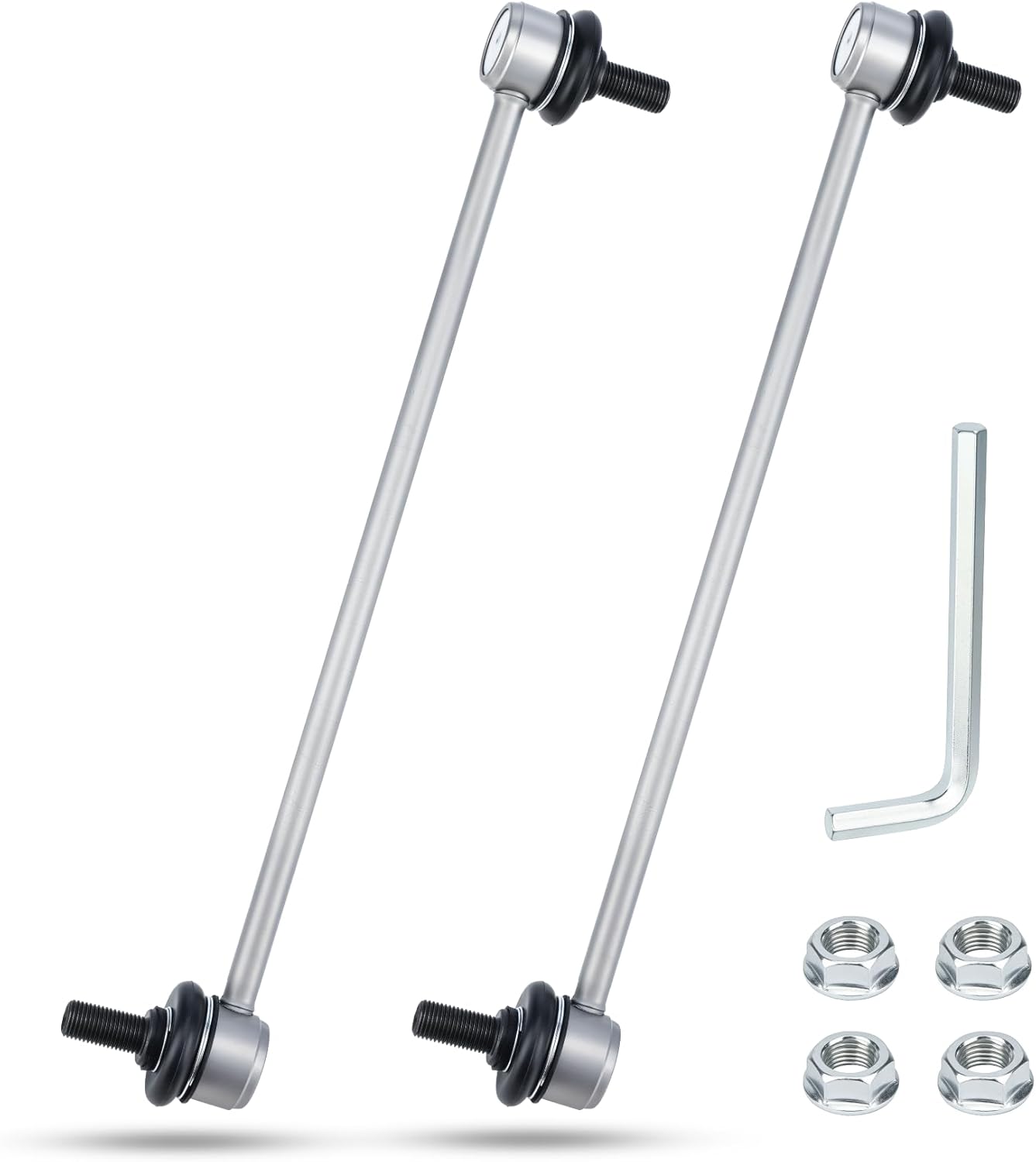
These X4XZ front sway bar links are a direct-fit replacement designed to restore steering feel and stop front-end clunking on compatible vehicles. The kit uses carbon steel ball studs with Zn-Ni alloy coating to resist rust and neoprene boots to protect the joints from dirt and moisture, which helps the links last in wet or salted-road conditions. Installation is straightforward for a competent DIYer or tech — wrench flats and an Allen hold allow the studs to be tightened without special tools. In use the links firm up lateral control and reduce body roll and suspension noise, improving confidence in turns. The construction and reported salt-spray resistance suggest better corrosion resistance than untreated replacements. Limitations: these are vehicle-specific parts so fitment must be checked carefully and occasional stubborn factory nuts can make removal harder than reinstall. The kit focuses on the link itself and does not address other suspension components that could also cause noise or handling issues.
Best for: Buyers who want a reliable, factory-style front sway bar link replacement that prioritizes corrosion resistance and quiet, predictable handling for daily driving on older CR-V models.
Less Ideal for: If you are upgrading for aggressive performance handling or seeking heavy-duty off-road suspension components, this direct-fit replacement is not aimed at track or extreme off-road use.
- Direct vehicle-specific fit for front sway bar replacement on supported models
- Zn-Ni alloy coating rated for high corrosion resistance in salt-spray testing
- Neoprene boots protect joints from contaminants to extend service life
- Wrench flats and Allen-hold design simplify installation and torqueing
- Fitment is specific so wrong fitment will not work and requires careful part-number matching
- Removal of seized factory studs can be difficult and may require penetrating oil or extra tools
Verdict: A corrosion-resistant, direct-fit front sway bar link kit that restores factory handling and eliminates front-end clunks on compatible CR-V models.
Choosing the Right 2007-2011 Honda CR-V Sway Bar Link: Key Factors to Consider
Fitment and Mounting Compatibility
Correct fitment is the single most important factor for 2007–2011 Honda CR-V sway bar links because attachment point spacing, stud diameter, and thread pitch must match the factory sway bar and control arm or strut mount. Mismatched hardware can lead to stripped threads, improper preload, or accelerated wear of the mating components.
When a sway bar link is designed to the CR-V's factory geometry it ensures correct articulation, avoids binding during suspension travel, and maintains predictable handling. Verify whether the link is specified for front or rear positions and whether any supplemental washers or spacers are required to achieve the correct ride height and alignment.
Joint and Bushing Type
The joint or bushing type determines how the link transmits forces and how much noise or vibration is isolated. Ball-joint style links provide smooth articulation and a tighter steering feel but can be noisier if not properly sealed. Rubber bushings isolate vibration well and are quiet, but they tend to wear faster and compress under heavy loads. Polyurethane bushings improve longevity and responsiveness at the cost of transmitting more road feedback into the cabin.
For a CR-V used primarily for commuting, sealed rubber or quality bonded bushings balance NVH and service life. For drivers seeking firmer handling with acceptable tradeoffs in ride harshness, polyurethane or upgraded joint designs may be appropriate.
Corrosion Resistance and Coatings
Sway bar links live in a harsh environment where road salt, water, and grit accelerate corrosion. Coatings and material choice significantly affect how long a sway bar link remains serviceable before freeing, pitting, or seizing occurs. Zinc plating, nickel finishes, or e-coatings help protect shafts and fasteners, while stainless-steel hardware reduces the risk of thread corrosion.
For 2007–2011 CR-Vs that see winter roads or coastal exposure, favor links with robust corrosion protection and replaceable hardware to simplify future servicing. Poorly protected links can lead to seized nuts and damaged mounting holes over time, complicating what should be a routine repair.
Durability Under Load
Durability is about how well the link resists wear from repeated articulation, exposure, and road shock. Look at build features such as hardened shafts, reinforced mounting eyes, and sealed joints that reduce contamination ingress. For a CR-V that carries occasional cargo or passengers, the loads are modest, but durability still matters because worn links degrade handling quickly.
A durable link maintains geometry and does not develop excessive play that causes looseness or clunking. Longevity matters for reducing repeat labor and maintaining consistent steering feel over many miles.
Noise and Ride Quality
Sway bar links influence both handling and the level of noise or clunking transmitted into the cabin. Loose or degraded links produce audible knocks and a vague feel on turns. The material choices for bushings and the precision of joint tolerances determine whether a link will remain quiet throughout its life.
If minimizing NVH is a priority, choose links with well-sealed joints and vibration-damping bushings. For drivers who prioritize a sporty response, accept that firmer components may transmit more road noise but improve roll control.
Serviceability and Installation
Ease of installation affects both DIYers and professional shops. For the 2007–2011 CR-V, links that include correct-length studs, compatible nuts, and clear torque guidance simplify replacement and reduce the chance of rework. Replaceable hardware is preferred because it avoids forcing extraction of corroded factory nuts.
Consider whether the link allows installation without special tools or suspension disassembly. Links that can be installed with common wrenches and a torque wrench reduce labor time and the chance of improper installation. Also check whether the product comes as a kit with both left and right or front and rear pieces when applicable.
Common Symptoms of Failing Sway Bar Links
Worn sway bar links on the 2007–2011 CR-V present in predictable ways. You may notice a clunking or knocking noise when driving over bumps, especially at low speeds. The noise often comes from play in the ball joint or deteriorated bushings that no longer hold the sway bar firmly.
Handling changes are another symptom. If the vehicle feels loose through corners or there is increased body roll compared with normal behavior, the stabilizer link wear has likely progressed to the point where the sway bar is not transferring loads effectively. Visual inspection will often show torn boots, separated bushings, or excessive axial play.
- Clunking over bumps or during steering input
- Increased body roll during cornering
- Uneven handling left to right
- Visible torn rubber boots or separated bushings
Front Vs Rear Sway Bar Link Considerations
The 2007–2011 CR-V uses sway bar links in both front and rear positions but they experience different loads and mounting environments. Front links typically see more steering-related articulation and road input from the front tires, while rear links may be shorter and subject to different attachment geometries.
When choosing replacement links, confirm whether the listing or kit specifies front or rear application for the CR-V years. Even when links look similar, small differences in length, stud orientation, and hardware can affect fit and function.
- Front links generally handle more steering-related articulation
- Rear links may be shorter with differing mount angles
- Always match front or rear specification to avoid binding
DIY Replacement Tips for CR-V Owners
Replacing sway bar links on a 2007–2011 Honda CR-V is commonly done by owners with basic tools. Work on level ground with the vehicle securely supported on jack stands. Remove wheel and access the link mounting points on the sway bar and the control arm or strut. Some installs require holding the stud stationary while loosening the nut; using an appropriately sized hex or Allen key in the stud can prevent joint rotation.
Follow torque guidance for the CR-V when tightening the mounting nuts to ensure proper preload and avoid premature wear. If you encounter seized hardware, penetrating lubricant and proper heat techniques may be needed, but avoid hammer strikes that could damage mounting holes.
- Use jack stands and chock the wheels before starting
- Hold the stud to prevent joint rotation while loosening
- Follow torque specs and replace corroded hardware
Maintenance Intervals and Inspection
There is no fixed mileage for replacing sway bar links because wear depends on driving conditions, climate, and how the vehicle is used. As part of routine suspension checks, inspect links every oil change or during tire rotations for play, torn boots, or rusted fasteners. Early detection prevents secondary wear to sway bar bushings or attachment points.
If you encounter noise or handling changes, prioritize a visual and hands-on check. Grasp the sway bar near the link and attempt to move the link by hand; any noticeable looseness indicates service is required.
- Inspect links during tire rotation or major service visits
- Check for torn boots, play, and rusted fasteners
- Address symptoms promptly to avoid broader suspension damage
When To Replace Links Versus Other Suspension Parts
Sway bar link symptoms can mimic other suspension issues, such as worn control arm bushings or strut mounts. Use a process of elimination: confirm link play first, then check adjacent components. Replacing only the worn links is common when the rest of the suspension shows normal wear.
If multiple suspension components show age-related deterioration, consider addressing them together to restore consistent geometry and handling. However, replacing worn links alone often yields a major improvement in noise and body control for the CR-V.
- Start by verifying play at the link before replacing other parts
- Replace adjacent worn components when multiple failures are present
- Single-link replacement often restores most handling issues
Torque and Fastening Guidance
Proper torque matters to ensure the sway bar link is preloaded correctly and the joint does not bear undue stress. While exact torque specs can vary by attachment point, follow manufacturer guidance for the 2007–2011 CR-V when available. Using a calibrated torque wrench prevents over-tightening and thread damage.
If a link kit includes new nuts or lock washers, fit them as supplied and torque to specified values. For DIY installs, note the torque values for both the stud nut and any through-bolts so the link functions without binding as the suspension moves through its travel.
- Always use a torque wrench and follow documented specs
- Replace corroded nuts and bolts rather than reusing damaged hardware
- Recheck torque after a short break-in distance following installation
Still looking for the perfect fit?
Select your Honda CR-V configuration to see the most relevant Sway Bar Links recommendations
How We Chose the Best 2007-2011 Honda CR-V Sway Bar Link
We prioritized items that meet the physical and use demands of the 2007–2011 Honda CR-V chassis. Selection criteria included correct OEM-style fitment and mounting hardware compatibility for the CR-V suspension geometry, material and construction quality for long-term wear resistance, and the type of joint or bushing used since that directly affects NVH and steering feedback. We also considered corrosion protection for components exposed under the vehicle and whether complete kits include both fasteners and dust boots.Practical serviceability was another core filter: products that allow straightforward replacement with common hand tools or use standard torque values were favored. Durability markers such as hardened steel shafts, sealed ball joints, or high-grade polyurethane bushings were weighed against ride comfort concerns.Excluded from consideration were products that required major suspension modification, nonstandard steering geometry changes, or those lacking clear fitment for 2007–2011 CR-V specifications. We did not include items with known fitment reports that conflict with factory mounting points. The final list emphasizes correct fit, robust materials, and real-world serviceability for CR-V owners.
Our full evaluation process is outlined in our review methodology.
FAQ
What causes a sway bar link to make a clunking noise on a 2007–2011 CR-V?
Clunks usually come from worn ball joints or bushings in the link that allow axial or lateral play. Dirt ingress or torn boots accelerate wear, and loose or corroded fasteners can also produce audible knocks when the suspension moves.
Can I replace a sway bar link myself on a 2007–2011 Honda CR-V?
Yes, many owners can perform the replacement with common hand tools, jack stands, and a torque wrench. Some links require holding the stud to prevent rotation while loosening the nut, and seized hardware may add complexity.
How long do sway bar links typically last on these CR-Vs?
Lifespan varies widely with driving conditions and exposure to road salt. They often last many tens of thousands of miles in mild climates but may require replacement sooner if roads are rough or winter salt is common. Regular inspections reveal wear before failure.
Should I replace both front sway bar links at the same time?
Replacing both sides at once is recommended for balanced handling because the new component will match the opposite side. If one link fails and the other shows no wear, you can replace only the failed side, but monitor the remaining link closely.
Are there specific torque specs I should use for CR-V sway bar link installation?
Exact torque specs depend on the mounting location and fastener size. Use the factory torque values for the 2007–2011 CR-V where available and follow kit instructions. Using a calibrated torque wrench and rechecking after a short drive is good practice.
Will replacing sway bar links improve steering response on my CR-V?
Yes, replacing worn links removes play in the stabilizer system, which often tightens steering feel and reduces body roll. The degree of improvement depends on the condition of the other suspension components.
Final Verdict
When selecting sway bar links for a 2007–2011 Honda CR-V, prioritize correct fitment, durable joint design, and corrosion protection to restore handling and eliminate noise. Balance the choice of bushing or joint material against your tolerance for road feedback and anticipated service life.For routine commuting, choose parts that favor quiet operation and sealed construction. For firmer handling or heavier use, opt for reinforced joints or higher-grade bushings while accepting a bit more NVH. Follow proper torque guidance and inspect hardware periodically to maintain predictable steering and ride quality.
Explore More:
- Check out all Honda CR-V parts & accessories
- Explore Sway Bar Links Maintenance & Repair Guides
- Explore Suspension & Steering
- Browse all Auto Parts
