

Note: This article contains affiliate links. If you click on these links and make a purchase, I may earn a small commission at no extra cost to you. This helps support my research and content. Read my full affiliate disclosure here.
If you own a 1997-2006 Jeep Wrangler, maintaining transmission temperature is one of the most effective ways to extend the life of the gearbox and reduce shifting problems under load. Wrangler owners who tow, run larger tires, or do frequent trail work often see higher transmission fluid temperatures that accelerate wear. This guide focuses on the top transmission coolers suited to the 1997-2006 Wrangler chassis from the TJ, LJ, and TJU generation and explains why capacity, mounting, and fluid routing matter. We shortlisted six transmission coolers that balance cooling performance, compatibility with the Wrangler's factory plumbing, and straightforward installation. Below you will find decision-focused evaluations and the criteria we used to choose these options, plus practical advice on installation, maintenance, and common warning signs to watch for.
Looking for other parts? See all Jeep Wrangler parts & accessories.
Top Picks at a Glance
| Best Overall The best all-around choice for most situations | Sawyer Auto Replacement Automatic Transmission Oil Cooler for 1997–2006 Jeep TJ |  |
| Best Quality Built to a higher standard if you want something more solid | Derale 20561 Direct-Fit Transmission Cooler Kit with Thermostatic Fan |  |
| Best Value The sweet spot between price and what you get | Four Seasons 53001 Ultra-Cool Transmission Oil Cooler |  |
| Best Budget The cheapest option that still gets the job done reliably | WOOTON 8-Row Transmission Oil Cooler Kit (Universal) |  |
| Highest Rated A top-rated pick with lots of positive feedback | Hayden Automotive Rapid-Cool 678 Universal Add-On Transmission Cooler |  |
| Best Seller A high-volume bestseller chosen again and again | KOROP LPD47391 40k Low-Pressure-Drop Transmission Oil Cooler Kit |  |
1. Sawyer Auto Replacement Automatic Transmission Oil Cooler for 1997–2006 Jeep TJ

| Fitment | 1997-2006 Jeep TJ |
|---|---|
| Core type | Tube-and-fin |
| Inlet/outlet | Metal fittings |
| Manufacturer | Sawyer Auto |
This Sawyer Auto transmission oil cooler is a direct-fit replacement for 1997–2006 Jeep TJ models and is built with a tube-and-fin core and metal inlet/outlet fittings. It installs using existing mounting points and lines, so the typical use is to swap it in when a factory cooler is corroded, leaking, or damaged. The cooler is inspected for leaks and dimensional fit before shipping, and its construction aims to provide reliable heat dissipation for normal transmission operation. In real-world use you can expect improved fluid temperature control compared with a failing OEM cooler, which helps extend transmission life during street driving and light towing. Limitations include a nominal core size that may not offer the extra cooling capacity required for heavy-duty towing or extended off-road abuse, and it lacks integrated mounting brackets or performance upgrades beyond the factory replacement design. Overall it is a practical, no-frills replacement that focuses on fit and reliability rather than high-performance cooling.
Best for: Buyers who want a straightforward, factory-style replacement to restore transmission cooling on a 1997–2006 Jeep TJ and prioritize reliable fit and easy installation over performance upgrades.
Less Ideal for: Drivers planning frequent heavy towing, competitive off-roading, or those who want a high-capacity aftermarket cooler for extreme thermal loads should consider performance-oriented options instead.
- Direct-fit design uses existing mounting points and lines for straightforward installation
- Tube-and-fin core with metal fittings provides reliable heat transfer and durable connections
- Inspected for leaks and dimensional fit prior to shipping to reduce fitment issues
- Designed specifically for 1997–2006 Jeep TJ to simplify compatibility checks
- Nominal core size may not provide enough extra cooling for heavy towing or extreme off-road use
Verdict: A reliable, direct-fit replacement that restores proper transmission cooling on 1997–2006 Jeep TJ models without modifying factory mounting or lines.
2. Derale 20561 Direct-Fit Transmission Cooler Kit with Thermostatic Fan

| Model Name | Trans Cooler Kit (87-06 Jeep Wrangler TJ/YJ) |
|---|---|
| Material | Aluminum |
| Power Source | DC power supply |
| Voltage | 12 Volts |
This Derale kit is a vehicle-specific transmission cooler designed to lower ATF temps on Jeep Wranglers using a plate-and-fin cooler combined with a Tornado blower fan. It mounts to the frame without drilling and the assembly can rotate nearly 90 degrees so you can position the cooler for highway airflow or tuck it horizontal for off-road protection. The thermostatic fan only runs when needed, which helps control temperatures during slow-speed rock crawling where airflow is limited. The kit includes hoses, fittings, mounting brackets and wiring so a competent DIYer can complete the install, though some installations require minor line extensions or adapter fittings depending on your radiator quick-connect style. Reported benefits include 30 to 40 degree drops in fluid temperature and more consistent shift performance on demanding trails. Possible downsides are the occasional fitment quirk with certain model years, a fan wiring label that has caused confusion for some installers, and the fact individual replacement parts are not sold separately from the kit.
Best for: Jeep owners who push their Wranglers off road or tow occasionally and want a vehicle-specific cooler that keeps transmission temps down during low-speed, high-load use while remaining relatively simple to install.
Less Ideal for: Buyers who prefer modular serviceability or who need a universal cooler that fits multiple vehicle platforms should consider other options that sell replacement parts separately.
- Direct-fit design for Wrangler TJ/YJ frames with no drilling required
- Plate-and-fin cooler plus thermostatic fan reduces transmission fluid temps significantly
- Rotating frame mount lets you position the unit for highway or off-road clearance
- Complete kit includes hoses, fittings, brackets and wiring for DIY installation
- Some model years need adapter fittings or hose extensions for a fully trouble-free install
- Replacement parts for the cooler lines are not available separately from Derale
Verdict: If you drive a 1997–2006 Wrangler hard on trails or tow occasionally, this direct-fit kit is an effective, vehicle-specific way to cut transmission temperatures and protect shifting under load.
3. Four Seasons 53001 Ultra-Cool Transmission Oil Cooler

| Model | 53001 |
|---|---|
| Product Dimensions | 12.5 x 0.75 x 7.5 inches |
| Exterior | Machined |
The Four Seasons 53001 Ultra-Cool is a compact add-on transmission oil cooler that mounts in front of the radiator or condenser to lower transmission fluid temperatures during towing or extended driving. It ships with basic mounting hardware, a small length of hose and nylon straps so a home mechanic can install it without major modifications. The machined aluminum core and slim profile make it easy to tuck into tight spaces behind the grille on older Wrangler models without blocking airflow to the radiator. In practice it provides measurable cooling for CVT and conventional automatics, helping keep fluid viscosity stable under load. Downsides are modest build and kit completeness issues reported by users — the supplied hose or adapters may be too short or generic for some vehicle-specific fittings, and you might need to source additional hose, clamps, or a vehicle-specific adapter. Still, for someone looking to lower trans temps on a budget this cooler is functional, straightforward to install, and effective when mounted correctly.
Best for: Owners who want an affordable, easy-to-fit transmission cooler to reduce fluid temperature for towing or heavy use and prefer a practical DIY install.
Less Ideal for: Those seeking a vehicle-specific plug-and-play kit with purpose-built adapters and longer hoses should consider dedicated Wrangler-fit coolers from specialty brands.
- Compact, slim core fits tight radiator grille areas common on Jeep Wranglers
- Machined aluminum construction transfers heat effectively
- Includes basic mounting hardware for DIY installation
- Proven to lower transmission fluid temperatures during towing or long drives
- Kit uses generic hose and fittings that may not fit all vehicle-specific connections
- Mounting straps and instructions can be fiddly and may require extra fasteners or zip-ties
Verdict: A compact, budget-friendly transmission cooler that delivers real temperature reduction and is easy for a practical DIYer to install on a TJ or LJ Wrangler.
4. WOOTON 8-Row Transmission Oil Cooler Kit (Universal)

| Material | T-6061 Aluminum |
|---|---|
| Rows | 8 Rows |
| Inlet/Outlet Port O.D. | 10mm |
| Hose length | 47.2 inches |
| Hose test pressure | 145 PSI |
The WOOTON 8-row transmission oil cooler is a universal add-on designed to lower transmission fluid temperature by routing oil through a dense tube-and-fin aluminum core placed in a high-airflow spot. It is typically mounted ahead of the radiator or in another area with good airflow and connected to existing 5/16" cooler lines; the kit includes a length of hose, clamps, mounting rods, clips, foam pads, and an adapter to simplify installation. The T-6061 aluminum core and eight rows give this cooler solid heat transfer for towing, trail use, or repeated heavy driving that can overheat an automatic transmission. Practical benefits are lower fluid temps, improved lubrication under load, and a straightforward bolt-on install for someone comfortable with basic vehicle plumbing. Limitations: the unit is universal rather than vehicle-specific, so you may need to fabricate or adjust mounting points, and several reviewers note the included hoses and some mounting parts are lower grade and might be upgraded for long-term reliability.
Best for: A buyer looking for an affordable way to reduce transmission temperatures on an older Jeep for towing, trail use, or frequent heavy driving and who is willing to do light fabrication or basic install work.
Less Ideal for: People who want a vehicle-specific plug-and-play cooler with guaranteed fitment or those unwilling to replace supplied hoses or modify mounts should consider purpose-made fitment kits instead.
- High-capacity 8-row aluminum core for effective heat dissipation
- Includes basic hose and full mounting kit for a one-purchase install
- Tube-and-fin design promotes airflow and fast cooling during driving
- T-6061 aluminum construction resists corrosion and conducts heat well
- Universal fit requires custom mounting on some vehicles and may need fabrication
- Included hose quality is inconsistent and some buyers replace it with heavier-duty lines
Verdict: A cost-conscious, high-capacity 8-row aluminum kit that reliably lowers transmission fluid temperatures for heavy use when you accept simple mounting or hose upgrades.
5. Hayden Automotive Rapid-Cool 678 Universal Add-On Transmission Cooler
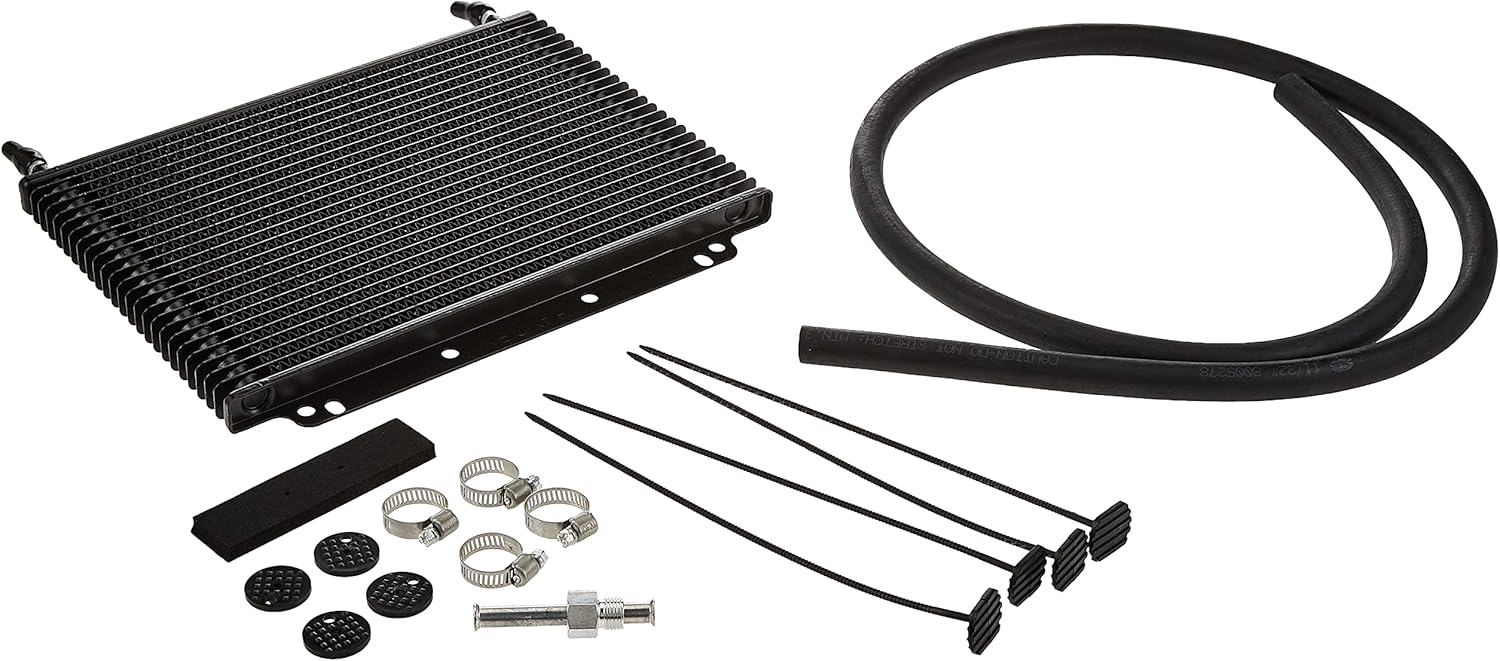
| Connector Type | Hose Barb |
|---|---|
| Contact Material | Aluminum |
| Mounting Type | Surface Mount |
| Core Style | Plate and fin |
The Hayden Rapid-Cool 678 is a universal add-on transmission cooler intended to reduce transmission fluid temperatures for towing and heavy city driving. It uses a compact plate-and-fin core with patented internal turbulation to improve heat transfer while keeping pressure drop low. The kit ships with hose, mounting hardware and 3/4 inch hose barb fittings for straightforward surface-mount installs behind the grille or to a frame-mounted bracket. In practice it is most often used as an auxiliary cooler for vehicles that run hot under load or do occasional towing; users report clear temperature drops of 20 to 40 degrees after installation. The cooler is well built with thicker fins and machined aluminum fittings, though some installers replace the supplied hose or fittings with heavier-duty parts for long-term durability. Installation can be simple on Jeep Wrangler-style front ends but may require custom brackets or minor routing work depending on bumper and grille access. This is a practical, reliability-minded choice for anyone looking to extend transmission life by controlling operating temperature.
Best for: Buyers who prioritize long-term transmission reliability and want a proven auxiliary cooler to lower fluid temps during towing, heavy city driving, or frequent stop-and-go use.
Less Ideal for: If you need a direct factory-replacement cooler or a vehicle-specific plug-and-play part, this universal add-on kit is not the best choice and may require fabricating mount points.
- Plate-and-fin core with internal turbulation for efficient heat transfer
- Compact size fits behind grille or mounts to frame for flexible installation
- Includes hose and mounting hardware for a mostly complete kit
- Secure 3/4 inch hose barb fittings reduce the chance of leaks when clamped properly
- Hose and aluminum fittings in the kit may be lower grade and some users replace them with heavier-duty parts
Verdict: Choose this compact Hayden add-on cooler if you want a reliable, well-built auxiliary unit that noticeably lowers transmission temperatures to protect the transmission during towing and heavy use.
6. KOROP LPD47391 40k Low-Pressure-Drop Transmission Oil Cooler Kit

| Material | Alloy Steel, Aluminum |
|---|---|
| Connector Type | Flare |
| Thread Size | 3/8 |
| Thread Type | NPT |
The KOROP LPD47391 is a brazed-aluminum 40k transmission cooler built to lower transmission temperatures for towing and heavy-duty use. It uses low-pressure-drop technology to increase cooling capacity by about 30 percent versus basic plate coolers and ships with a full set of brackets, bolts, and fittings so you can mount it under the bumper or in front of the condenser. Typical use is for vehicles that tow or see repeated high-load driving where added cooling reduces fluid temperatures and stress on the transmission. Practical benefits include durable aluminum construction, multiple fitting options, and a kit that simplifies installation without sourcing extra hardware. Users report meaningful temperature drops after installation, though some buyers have experienced short-lived hose failures and may prefer to swap in higher-grade lines during installation. The cooler uses 3/8 inverted-flare/NPT fittings, which can require adapting if your Wrangler plumbing differs, and finding a neat mounting location on a 1997–2006 Wrangler can take extra effort because of space constraints.
Best for: A cautious buyer who wants a proven, hardware-complete cooler to reduce transmission temperatures during towing or frequent heavy use on a 1997–2006 Wrangler and prefers a kit that minimizes parts hunting.
Less Ideal for: Those who want a plug-and-play drop-in that uses factory fittings without any adapters or drivers who need an ultra-compact cooler for very tight custom installs.
- Brazed aluminum construction for strong, corrosion-resistant heat transfer.
- Low-pressure-drop design increases cooling capacity for towing and heavy loads.
- Includes mounting hardware and a variety of fittings to simplify installation.
- Multiple user reports of large drops in transmission operating temperature after installation.
- Supplied hoses have had isolated failures in some units so replacing lines with higher-grade hose may be advisable.
- Uses 3/8 inverted-flare/NPT fittings that might need adapters to match Wrangler plumbing.
Verdict: If you need reliable extra cooling for a 1997–2006 Wrangler while towing or doing heavy-duty driving, this complete low-pressure-drop aluminum kit delivers significant temperature reduction and a straightforward install.
Choosing the Right 1997-2006 Jeep Wrangler Transmission Cooler: Key Factors to Consider
Cooling Capacity and Core Size
Cooling capacity determines how effectively a cooler reduces transmission fluid temperature under sustained loads. Larger cores and multi-pass designs increase surface area and air contact, which helps pull heat out of the fluid more quickly. For the TJ, LJ, and TJU-chassis Wrangler driven off-road or used for towing, a cooler with higher BTU or thermal dissipation rating will better resist heat soak during long climbs or low-speed technical driving. Core thickness and fin density matter because too thick a core may not receive adequate airflow in the Wrangler's front end without relocating the cooler. Conversely, an undersized core will barely lower temperatures. Also consider whether the core is single-pass or multi-pass; multi-pass designs usually give more cooling but can add complexity and slight pressure drop in the line.
Fitment and Mounting Location
Proper fitment ensures the cooler can be mounted where it receives sufficient airflow while clearing the bumper, winch, or skid plates common on modified Wranglers. The TJ, LJ, and TJU chassis has limited space behind the grille and in front of the radiator, so check bracket locations and mounting hardware compatibility. Many owners prefer mounting the cooler ahead of the radiator or on the bumper for maximum airflow and protection. Mounting position affects both airflow and vulnerability to trail damage. Consider whether the kit includes a dedicated mounting bracket or if you will use custom hardware. Low-mounted installations may need a protective guard, while high-mounted units may require longer transmission cooler lines to reach the transmission fluid circuit.
Connection Type and Hose Compatibility
The ease of hooking a cooler into the Wrangler's transmission circuit depends on the connection type and hose diameter. Factory transmission cooler lines on 1997-2006 Wranglers typically use specific fittings and hose sizes; a compatible transmission cooler kit or adapter fittings reduce leak risk and simplify installation. Universal coolers can work but often require adapters or new cooler lines to match the transmission output and return ports. Also consider whether the cooler uses barbed hose fittings, AN-style fittings, or threaded fittings. Barbed fittings with high-quality clamps are fine for most installations, but AN fittings provide a more robust, leak-resistant connection. Ensure replacement hoses are rated for transmission fluid and operating pressure and routed to avoid heat sources and chafing points.
Durability and Construction Material
Durability is critical for Wranglers exposed to rough trails, road salt, and debris. Look for coolers made from corrosion-resistant materials such as aluminum cores with protective coatings or stainless-steel tanks. Brazed cores generally offer better leak resistance than soldered seams, and welded fittings withstand vibration and impacts better. Consider the protective features offered: braided stainless steel lines, rubber isolation mounts, and a durable finish can all extend service life in harsh conditions. A sturdier cooler may weigh more but pays dividends in longevity when used off-road or in coastal environments where corrosion is a concern.
Installation Complexity and Tools Required
Installation difficulty varies from simple clamp-on connections that take under an hour to more involved retrofits requiring new lines, brackets, or fluid evacuation. For owners planning to install their own cooler, verify whether the kit includes fittings, clamps, and hoses to avoid multiple trips to the parts store. A typical DIY install on a TJ, LJ, and TJU Wrangler requires basic hand tools, hose cutters, and possibly a jack and jack stands for access. Also plan for fluid handling and disposal. Installing a cooler usually involves draining some transmission fluid and purging air from the system after connection. If the installation route requires removing fascia or bumper pieces, count that time into your plan. Professional installation is a reasonable option when adapters or custom routing are needed.
Serviceability and Replacement Parts
A cooler that is easy to service reduces long-term maintenance hassle. Check whether replacement lines, fittings, or mounting brackets are readily available. Some designs let you replace just the core while keeping the original frame and mounts, which lowers future maintenance cost. Also consider how easy it will be to inspect for leaks and clean the fins after trail use. Accessible mounting and removable guards make it simpler to flush mud and debris from the core. If the cooler uses economy hoses or specialized fittings, confirm availability of compatible parts before finalizing the purchase.
Why Transmission Cooling Matters for TJ, LJ, and TJU Wrangler Owners
The 1997-2006 Wrangler TJ, LJ, and TJU was built for rugged use, but higher loads from towing, rock crawling, or larger tires increase the stress on the transmission. Excessive heat accelerates internal wear and can break down fluid additives, reducing lubrication and valve body performance.
An external transmission cooler helps manage peak temperatures by increasing fluid volume and providing a dedicated heat exchanger. For TJ, LJ, and TJU owners who push their rigs, even a modest reduction in operating temperature can extend component life and improve shift consistency during repeated hard use.
- Reduces transmission fluid temperature during sustained low-speed climbs
- Extends life of transmission seals and clutch packs
- Helps maintain consistent shift performance under load
Mounting Options and Protection Strategies
Common mounting choices on the TJ, LJ, and TJU include ahead-of-radiator mounts, bumper mounts, and behind-bumper locations. Ahead-of-radiator locations maximize airflow but may require relocation if you run a winch or aftermarket bumper. Bumper-mounted coolers are more protected from direct impacts but may see reduced airflow.
To protect a cooler from trail hazards, use a guard or skid plate and position the unit behind the bumper beam when possible. Ensure airflow is not blocked by auxiliary lighting or grille inserts to preserve cooling performance.
- Ahead-of-radiator: best airflow, moderate exposure
- Bumper-mounted: better protection, potentially less airflow
- Behind-bumper: safest from debris, requires longer lines
Do You Need a Dedicated Cooler or a Transmission Cooler Kit?
A dedicated external transmission cooler increases fluid capacity and cooling surface area compared with relying only on the radiator's integrated cooler. A transmission cooler kit typically bundles the cooler with hoses, clamps, and fittings sized for vehicle installation and reduces the need for aftermarket adapters.
If you prefer a straightforward install on the TJ, LJ, and TJU, a kit that includes vehicle-appropriate fittings and a bracket can cut installation time and lower the chance of leaks. However, kits vary in quality, so prioritize those that include properly rated hoses and durable fasteners.
- Dedicated cooler: larger core, greater capacity
- Cooler kit: simplified installation with included hoses and brackets
- Universal options: adaptable but may require custom fittings
Common Installation Steps for TJ, LJ, and TJU Wranglers
Typical installation involves locating the transmission cooler lines, disconnecting the return and supply lines, and inserting the cooler in-line or routing new hoses to the cooler. Many TJ, LJ, and TJU installations use quick-disconnect points near the radiator; others require removal of a hose clamp and cutting line to insert the cooler kit components.
After plumbing the cooler, top off the transmission fluid and cycle the transmission through gears to purge air. Check for leaks at operating temperature and re-torque clamps if necessary. Allow time for fluids to stabilize and confirm shifting behavior before towing or heavy use.
- Drain or capture fluid before disconnecting lines
- Use transmission-rated hoses and quality clamps
- Bleed air from the system and recheck fluid level
Maintaining Your Transmission Cooler
Regular inspection helps catch issues early. Look for fin damage, fluid residue indicating leaks, and corrosion at fittings. Cleaning the fins with compressed air or a gentle stream of water can restore airflow after muddy outings, but avoid bending fins during cleaning.
Replace deteriorated hoses and clamps promptly. If you frequently encounter heavy dust or mud, consider installing a protective screen in front of the cooler that preserves airflow while stopping larger debris.
- Inspect fins and fittings after off-road trips
- Clean debris without bending fins
- Replace damaged hoses with transmission-rated parts
Recognizing Transmission Cooler Failure Symptoms
Failing coolers or line leaks produce visible signs such as wet spots beneath the vehicle, low transmission fluid level, or burnt-smelling fluid. Drivers may notice slipping gears, delayed downshifts, or higher than normal transmission temperatures on any after-market gauge.
Air trapped in the system due to improper installation can cause overheating and erratic shifting as well. If you observe these symptoms, inspect the cooler and lines for leaks or restrictions and address fluid contamination immediately.
- Wet transmission lines or pools of fluid under the Jeep
- Burnt odor from transmission fluid
- Intermittent slipping or inconsistent shifts
Still looking for the perfect fit?
Select your Jeep Wrangler configuration to see the most relevant Transmission Coolers recommendations
How We Chose the Best 1997-2006 Jeep Wrangler Transmission Cooler
We evaluated candidates using criteria tailored to the demands of the 1997-2006 Jeep Wrangler and typical TJ, LJ, and TJU use cases such as trail driving and occasional towing. Cooling performance was assessed by rated heat dissipation and core size to ensure the unit can lower transmission fluid temperatures under sustained load. Fitment and plumbing compatibility were checked for straightforward connection to the Wrangler's existing cooler lines and space constraints behind the grille or behind the bumper. Durability criteria included core construction, corrosion resistance, and whether the cooler used brazed or welded joints that tolerate vibration. Ease of installation was judged by whether the cooler came with a transmission cooler kit or required only basic hose and clamp connections, and by how accessible common mounting points are on the TJ, LJ, and TJU chassis. Serviceability and parts availability were noted for replacement lines or fittings. We excluded options that required major transmission or radiator modification, or that lacked documented fitment for the 1997-2006 Wrangler. Units aimed only at universal off-road chassis without clear vehicle-specific guidance were deprioritized unless they offered easy-to-adapt fittings. The final list favors balanced performance, durability, and owner-installable design.
Our full evaluation process is outlined in our review methodology.
FAQ
How much will a transmission cooler lower operating temperature on a TJ, LJ, and TJU Wrangler?
The exact reduction depends on core size, mounting location, and airflow, but a properly sized external cooler typically lowers transmission fluid temps by a noticeable margin during sustained loads. The benefit is greatest during towing or prolonged low-speed climbing where factory cooling is insufficient.
Can I install a transmission cooler myself on a 1997-2006 Wrangler?
Many owners install coolers themselves using a transmission cooler kit with vehicle-appropriate fittings. The job usually requires basic hand tools, safe vehicle support, handling of transmission fluid, and bleeding the system afterward. If custom lines or modifications are needed, professional help is advisable.
Where is the best place to mount the cooler on my TJ, LJ, and TJU?
Mount ahead of the radiator for maximum airflow when you do not have a winch or heavy bumper in the way. If you need more protection from trail damage, a bumper-mounted or behind-bumper location with a protective guard is preferable, understanding it may reduce raw airflow.
Will adding an external cooler change my transmission fluid capacity?
Yes. An external cooler adds fluid volume to the system which can slightly alter fill recommendations. After installing a cooler, check fluid level according to the vehicle procedure with the engine warm and follow the bleeding steps to remove trapped air for an accurate level.
How do I know if my cooler is leaking or failing?
Look for drips or wet spots near cooler lines and fittings, a drop in fluid level, or a burnt smell from the transmission fluid. Also watch for higher than normal operating temperatures and inconsistent shifting, which often coincide with leaks or restricted coolers.
Are universal coolers a good option for the 1997-2006 Wrangler?
Universal coolers can work when a vehicle-specific kit is not available, but they may require adapter fittings or custom hose routing to match the TJ, LJ, and TJU's transmission ports. Choose universal options with clear instructions and compatible fittings to avoid leaks and excessive installation time.
Final Verdict
For 1997-2006 Jeep Wrangler owners, especially those driving TJ, LJ, and TJU chassis rigs on trails or towing, prioritizing cooling capacity and durable construction will yield the most reliable results. Balance core size and mounting location so the cooler receives adequate airflow without exposing it to unnecessary trail hazards. Ensure connections match the Wrangler's line sizes or come with compatible fittings to avoid leaks. Finally, weigh ease of installation and availability of replacement parts when choosing a cooler. Prioritizing these tradeoffs will help you pick a transmission cooling solution that keeps shift quality steady and reduces long-term transmission wear.
Explore More:
- Check out all Jeep Wrangler parts & accessories
- Explore Transmission Coolers Maintenance & Repair Guides
- Explore Transmission & Drivetrain
- Browse all Auto Parts
