

Note: This article contains affiliate links. If you click on these links and make a purchase, I may earn a small commission at no extra cost to you. This helps support my research and content. Read my full affiliate disclosure here.
If your Jeep Wrangler 3.8L is showing rough idle, hesitations, or reduced fuel economy, the injectors are a likely place to inspect. Choosing the right fuel injectors matters because they directly control spray pattern, flow rate, and sealing at the intake—elements that affect drivability, emissions, and long-term engine health. This guide covers six shortlisted fuel injectors suited for the 3.8L Wrangler, selected for fitment, flow consistency, and durability. We evaluate each option against real-world concerns like sealing, electrical compatibility, and expected contamination resilience. Read on for the top choices and the criteria we used to narrow them down so you can pick the injector that matches your restoration or upgrade goals.
Looking for other parts? See all Jeep Wrangler parts & accessories.
Top Picks at a Glance
| Best Overall The best all-around choice for most situations | TRQ 6-Piece Fuel Injector Set for 3.8L Engines |  |
| Best Quality Built to a higher standard if you want something more solid | Omix-Ada 17714.14 Fuel Injector (replaces 4861667AA) |  |
| Best Value The sweet spot between price and what you get | YLB.&co Fuel Injectors 0280158119 (6-Pack) |  |
| Best Budget The cheapest option that still gets the job done reliably | X AUTOHAUX Fuel Injector (0280158119) for Jeep Wrangler 3.8L |  |
| Highest Rated A top-rated pick with lots of positive feedback | PartsFlow Set of 6 Fuel Injectors FJ1029 for 3.8L Jeep Wrangler and Compatible Chrysler/Dodge 3.3L–4.0L |  |
| Most Popular A crowd favorite that many people choose with confidence | HiSport Fuel Injectors 0280158119 — 6-Pack, 4-Hole |  |
1. TRQ 6-Piece Fuel Injector Set for 3.8L Engines

| Brand Name | TRQ |
|---|---|
| Set Name | 6 Piece Fuel Injector Set |
| Manufacturer Warranty Description | 2 years |
| Included Components | 6 Fuel Injectors |
| Model Number | FIA60745 |
This TRQ 6-piece fuel injector set is a direct-replacement kit intended to restore fuel delivery and smooth running for 3.8L V6 engines such as the Jeep Wrangler 2007–2011. The kit includes six injectors sold together so you can replace the entire bank at once, which helps eliminate uneven flow between cylinders and reduces misfires. TRQ positions these as pre-assembled, machined-finish injectors and provides installation videos to guide DIYers. Practical benefits include improved throttle response and more consistent combustion when compared with worn injectors, and a full-bank replacement avoids diagnosing individual units under load. Reported drawbacks in user feedback include occasional fitment issues, missing seals or O-rings requiring separate purchase, and a small number of early failures that required warranty interaction. Installation can be moderately challenging depending on access to the rail and connectors, so expect to allow extra time or shop labor if needed. For a balanced buyer seeking to replace all injectors at once on a 3.8L Wrangler, this kit offers convenience and mostly reliable performance with typical caveats of aftermarket parts.
Best for: Buyers who want a practical, full-bank replacement to fix misfires and uneven running on a 3.8L Wrangler and prefer a kit that simplifies a single-service repair.
Less Ideal for: If you need a one-off injector for diagnostics, extreme performance upgrades, or guaranteed factory-service backing, consider sourcing a single OEM-style injector or a performance-specific alternative.
- Complete 6-injector set lets you replace the entire bank in one job
- Pre-assembled direct-fit design aims to simplify installation
- Machined finish and brand support include step-by-step installation videos
- Can restore throttle response and eliminate misfires when original injectors are worn
- O-rings and seals may not be included and could require separate purchase
- Some users report occasional early failures or inconsistent quality
Verdict: If you want to replace all six injectors on a 3.8L Wrangler in one job for improved running and throttle response, this TRQ kit is a convenient, mostly reliable option.
2. Omix-Ada 17714.14 Fuel Injector (replaces 4861667AA)
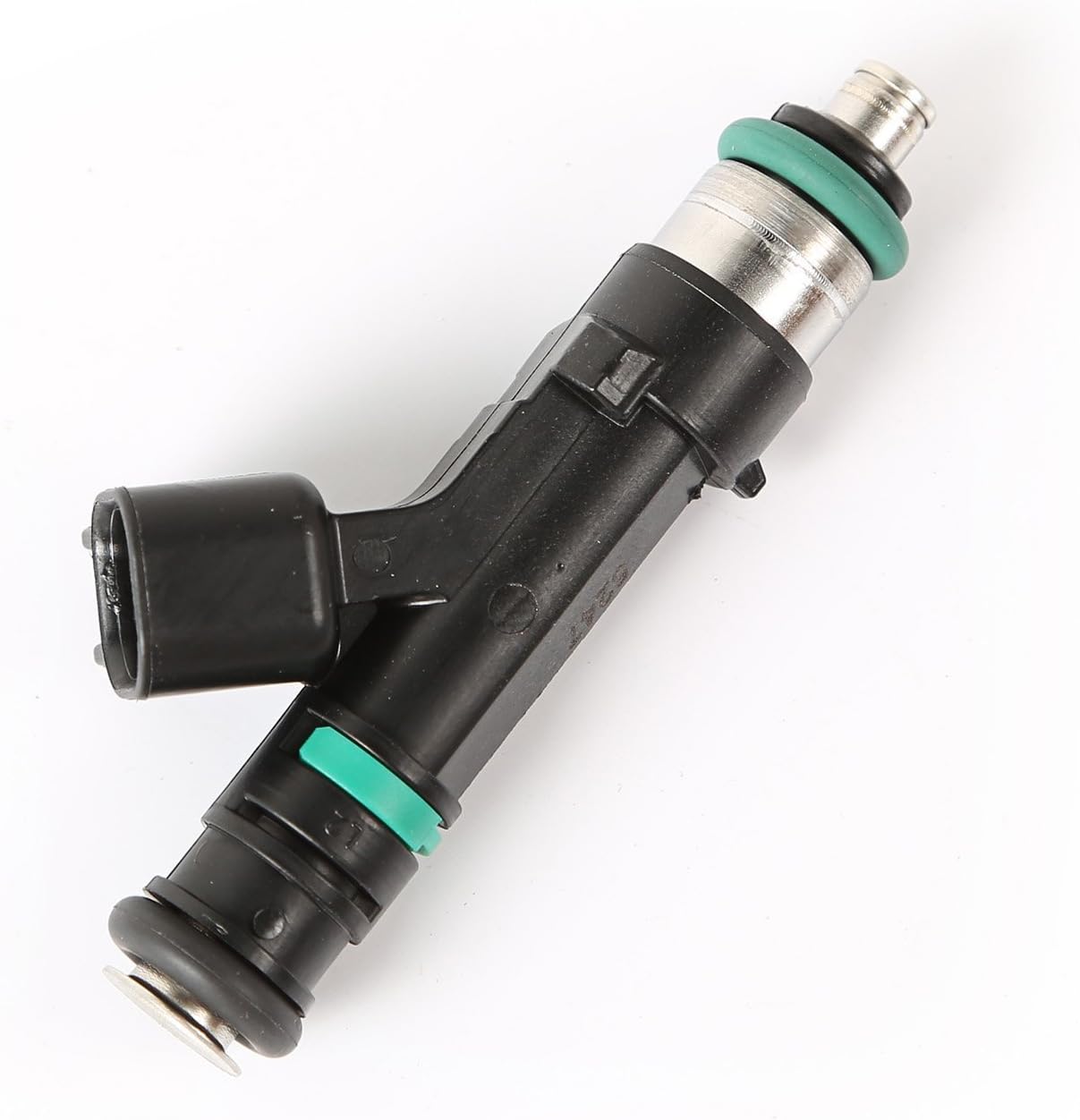
| Fits | 2007-2011 Jeep Wrangler JK 3.8L |
|---|---|
| OE reference | 4861667AA |
| Valve type | electromechanical |
| Inlet/Outlet connection | Barb |
| Warranty | 5 Year Limited |
This Omix-Ada 17714.14 is a direct replacement fuel injector intended for the 3.8L Wrangler JK (2007–2011). Sold one at a time (six required for a full engine rebuild), it uses an electromechanical valve with barb-style inlet and outlet connections and is built to match factory-spec performance. In practice it installs like a standard injector—lubricate the O-rings and seat it into the rail—then operates as the engine management system expects to restore proper fuel metering. The metal construction and stated factory-spec compliance mean it is a practical option for repairing a failed injector or clearing a misfire/diagnostic code. Some buyers report long-term durability issues beyond the warranty period and price is higher than some aftermarket alternatives, so cost-conscious owners may prefer lower-cost options when replacing multiple units. For performance tuning, this part is a like-for-like replacement rather than an upgraded high-flow injector, so it will not increase fuel flow for modified engines.
Best for: Buyers who prioritize restoring factory-level fuel delivery and drivability on a 3.8L Wrangler and want a straightforward, direct-fit replacement without changing engine tuning.
Less Ideal for: Owners seeking increased fuel flow for tuned or modified engines or shoppers replacing all six injectors on a tight budget should consider high-flow performance injectors or lower-cost aftermarket sets instead.
- Designed to meet or exceed factory specifications for 2007–2011 Jeep Wrangler JK 3.8L fitment
- Electromechanical valve design compatible with standard engine control signals
- Metal construction and factory-style connections for straightforward installation
- Sold individually so you can replace only the failed injector without buying a full set
- Higher-priced than some alternative aftermarket injectors and not a high-flow performance upgrade
Verdict: A factory-spec direct-fit injector that restores stock fuel delivery for the 3.8L Wrangler JK without changing performance.
3. YLB.&co Fuel Injectors 0280158119 (6-Pack)

| Replaces part | 0280158119 / 4861667AA / FJ1029 |
|---|---|
| Valve type | Fuel Injector |
| Inlet connection | Threaded |
| Outlet connection | Threaded |
| Included components | 6 Fuel Injectors |
These YLB.&co fuel injectors are built as direct-fit replacements for several 3.8L V6 Chrysler-family engines and come as a six-pack to replace an entire bank at once. They use a multi-porous, laser-drilled tip meant to produce fine fuel atomization for smoother idle and crisper throttle response, and the seller notes fluororubber seals for improved oil and heat resistance. The injectors are threaded at both inlet and outlet and are sized to match the original electrical and mechanical interfaces for plug-and-play installation when fitment is correct. Buyers report successful restores of performance, though some users found the supplied O-rings did not fit their application and replaced them. For a practical optimizer working on a Wrangler 3.8L, these deliver a cost-effective route to refreshed fueling and potential fuel-economy improvement, but expect to verify seal fitment and have replacement O-rings on hand if needed.
Best for: A Jeep Wrangler 3.8L owner focused on practical, cost-conscious repairs who wants a full set of direct-fit injectors to restore fueling and throttle response without expensive upgrades.
Less Ideal for: Drivers seeking premium, long-term high-mileage injectors or a tuned performance upgrade should consider higher-end branded options or remanufactured units with verified seal compatibility.
- Sold as a full six-pack for replacing all cylinders at once
- Laser-drilled, multi-porous tip intended for finer fuel atomization
- Designed to match factory electrical and mechanical interfaces for direct fit
- Fluororubber sealing rings specified for oil and heat resistance
- Some customers reported incorrect or poorly sized O-rings requiring replacement
Verdict: A budget-conscious full set of direct-fit injectors that can reliably refresh fueling and throttle feel on a Wrangler 3.8L when you verify or update the O-rings.
4. X AUTOHAUX Fuel Injector (0280158119) for Jeep Wrangler 3.8L

| Part number | 0280158119 |
|---|---|
| Voltage | DC 12V |
| Pin number | 2 |
| Orifice type | 4 Holes Disc |
| Flow rate | 20.6 lb/hr at 43.5 psi |
This X AUTOHAUX fuel injector is sold as a single direct-replacement unit that matches the listed OEM part number and is intended for the 3.8L Jeep Wrangler. It installs like a factory injector and comes with preinstalled O-rings and a two-pin electrical connector for plug-and-play fitment. The injector uses a high-impedance coil and a four-hole disc orifice to provide consistent spray and flow characteristics claimed to match factory specs, which helps restore proper air/fuel ratio and engine performance after a faulty injector. It is useful for budget repairs where replacing a single failed injector is needed rather than buying a full factory assembly. Important limitations are that this is a non-OEM aftermarket part and results can vary; professional installation and a post-install tune or fuel trim reset may be required. Some buyers reported occasional units arriving defective, so expect to verify operation immediately after install.
Best for: A Jeep Wrangler owner working on a budget who needs a single replacement injector to restore running condition without replacing an entire rail assembly.
Less Ideal for: Drivers seeking guaranteed factory-quality longevity or those who prefer to replace all injectors at once as part of a motorsport or long-term reliability build should consider OEM or higher-end options.
- Direct-replacement design with preinstalled O-rings for straightforward installation
- High-impedance coil and four-hole orifice intended to match factory flow and spray pattern
- Plug-and-play two-pin connector compatible with factory wiring
- Metal and plastic construction common to replacement injectors
- Aftermarket unit so quality and reliability can vary between samples
Verdict: A cost-conscious, plug-and-play replacement that restores injector flow and spray for 3.8L Jeep Wranglers without complex modifications.
5. PartsFlow Set of 6 Fuel Injectors FJ1029 for 3.8L Jeep Wrangler and Compatible Chrysler/Dodge 3.3L–4.0L

| Manufacturer | PartsFlow |
|---|---|
| Item model number | FJ1029 |
| Manufacturer Part Number | ATP902-223-K6 |
| Compatibility note | Fits 2007–2010 Jeep Wrangler 3.8L and select 2008–2010 Chrysler/Dodge V6 |
These PartsFlow injectors come as a set of six intended to replace worn or leaking units on 3.8L Jeep Wrangler engines and compatible Chrysler and Dodge V6 applications. They are built from metal and plastic to mirror factory-style components and include new O-rings for a straightforward swap without modifications. Typical use is a full-bank replacement to restore smooth idle, eliminate fuel smell, and recover throttle response after long service life or damaged injectors. Customers report easy installation, good fitment, and immediate drivability improvement once the system primes. The kit is positioned as a value alternative to dealer parts and includes a one-year warranty. Important limitations are that long-term durability is not proven in the listing and that installers should confirm injector calibration and fuel system condition before expecting optimal mileage gains. Overall, this kit is practical for owners who want a direct-fit replacement to restore reliable running without upgrading to performance injectors.
Best for: Owners prioritizing a reliable, direct-fit replacement to restore smooth idle and eliminate fuel-related drivability issues on a 3.8L Jeep Wrangler without paying dealer prices.
Less Ideal for: Drivers seeking upgraded flow rates, tuning capability, or performance injectors should consider purpose-built aftermarket options instead.
- Sold as a complete set of six for full-bank replacement to avoid mixing new and old units
- Factory-style construction with metal/plastic body and supplied O-rings for direct fit
- Reportedly straightforward installation with good fit and immediate drivability improvements
- Includes a one-year warranty for purchaser reassurance
- Long-term durability beyond initial months is not documented in the listing
Verdict: A budget-friendly, direct-fit six-injector kit that restores reliable running and drivability for 3.8L Jeep Wrangler engines.
6. HiSport Fuel Injectors 0280158119 — 6-Pack, 4-Hole

| Set | 6 PCS |
|---|---|
| Hole count | 4-hole |
| Material type | Metal, Composite Plastic |
| Manufacturer part number | HSFI58119-6NEW |
These HiSport injectors are sold as a 6-piece replacement set intended for 3.3L and 3.8L Chrysler, Dodge, and Jeep V6 engines including the Jeep Wrangler 3.8L (2007–2010). They are metal and composite-plastic 4-hole injectors designed to restore fuel delivery when stock units wear or fail. Installation is the typical swap-in process for direct-fit injectors and the set is useful when replacing all six cylinders at once. Reported benefits include smoother idling, improved cold starts, and more consistent spray compared with very old injectors. Because they are aftermarket parts you should verify plug and connector compatibility before ordering; mismatches or emissions-sensitive vehicles can produce check-engine codes. Build quality and fit vary by unit according to user feedback, so expect to inspect and possibly bench-test injectors before installation. For drivers who need a full-set replacement and are comfortable confirming fitment, this offers a cost-effective option, but cautious buyers who prioritize guaranteed emissions compliance may prefer factory-quality replacements.
Best for: Buyers who want an affordable full-set replacement for a worn injector bank and who will double-check electrical and emissions compatibility before installing.
Less Ideal for: Drivers who need guaranteed factory-spec emissions compliance or prefer buying only OEM factory-quality parts without testing or verification.
- Sold as a complete 6-piece set so all cylinders can be replaced at once
- 4-hole design and metal/composite construction aimed at consistent spray and smoother idle
- Multiple user reports of improved starting and drivability after install
- Direct-fit listing for Jeep Wrangler 3.8L 2007–2010 simplifies selection when connectors match
- Aftermarket fit and emissions behavior can vary and may trigger check-engine codes on some vehicles
- Mixed user reports of occasional defective units requiring inspection or replacement
Verdict: A budget-friendly full 6‑injector replacement for Jeep Wrangler 3.8L owners who will confirm connector and emissions fit before installation.
Choosing the Right Jeep Wrangler 3.8L Fuel Injector: Key Factors to Consider
Flow Rate And Metering Accuracy
Flow rate directly affects air/fuel ratio and the injector's ability to meet engine demand under load. For the 3.8L Wrangler, an injector with consistent flow across multiple units helps avoid cylinder-to-cylinder fueling imbalance that causes rough idle and uneven power.
Metering accuracy matters during part-throttle and transient throttle events. An injector that drifts in flow or shows variability from unit to unit will complicate tuning and can trigger adaptive fueling corrections that mask underlying issues. Look for specifications or test data that show deviation tolerances and rated flow at standard fuel pressure.
Spray Pattern And Atomization
Spray pattern influences how well fuel mixes with intake air and how evenly it coats the back of the intake valves and port surfaces. A focused, consistent spray reduces pooling and improves combustion stability, which is especially important on naturally aspirated 3.8L engines where intake geometry can make mixing less forgiving.
Good atomization helps with cold starts and low-speed drivability. Poor patterns can increase hydrocarbon emissions and cause hotspots or misfires. Consider the nozzle type, number of holes, and intended spray cone when evaluating an injector for street-driven Wranglers.
Electrical Compatibility And Connector Fit
Injectors must match the vehicle's OEM electrical characteristics, including coil resistance and connector shape. Mismatched coil resistance can affect injector opening time and duty cycle, altering fueling calculations used by the engine control module. The 3.8L wiring harness uses a specific connector style and pin spacing, so plug-and-play fitment avoids cutting or splicing that can introduce new failure points.
Ensuring correct polarity and connector latching also prevents intermittent connections that lead to misfires. If a harness adapter is required, plan for its mechanical routing and sealing against moisture.
Seal Materials And Leak Resistance
Injector seals are the primary barrier against fuel leaks and vacuum leaks at the intake manifold. The 3.8L intake port can be prone to minor surface irregularities, so O-ring material and profile matter. Viton or high-grade fluorocarbon seals offer improved chemical resistance compared with basic elastomers when exposed to ethanol-blended fuels and higher operating temperatures.
A leaking injector can cause hard starting, rich-running conditions, or a smell of fuel. Inspect material specifications and recommended installation practices to reduce the risk of leaks after installation.
Clogging Resistance And Serviceability
Road dirt, varnish from old fuel, and small particulates are common causes of partial injector blockage. Features that help resist clogging include internal filter screens, robust internal tolerances, and nozzle designs that discourage deposits. For the 3.8L owner, an injector that tolerates periodic fuel quality variance will maintain smoother operation between service intervals.
Serviceability matters when cleaning or replacing filters and seals. Consider whether the injector can be removed and reinstalled without specialized tools and whether replacement seal kits are readily available.
Durability And Material Quality
Durability covers both internal components and external housing that must withstand vibration, heat, and chemical exposure in the engine bay. Metal components should resist corrosion and the body finish should prevent galvanic reactions with the fuel rail.
Longevity also depends on manufacturing tolerances and quality control. For the 3.8L, choose injectors made from materials and assembled to standards that reduce the likelihood of electrical failures, internal leaks, or drift in flow characteristics over time.
When To Replace Fuel Injectors On The 3.8L
Replace or inspect fuel injectors when you experience persistent rough idle, consistent misfires on one or more cylinders, or a strong fuel odor near the intake. These symptoms can indicate internal leakage, clogged nozzles, or electrical failures that simple tune-ups will not fix.
A scheduled inspection is also wise when you restore an older Wrangler or after running contaminated fuel. Visual checks of O-rings, connector corrosion, and spray testing during bench diagnostics help determine whether cleaning will suffice or a full replacement is necessary.
- Rough idle or cylinder-specific misfires
- Fuel smell in engine bay or near intake
- Poor cold start performance or extended crank time
- Visible degradation of O-rings or connector corrosion
DIY Fuel Injector Removal And Basic Checks
Removing injectors from the 3.8L requires basic hand tools and attention to safe fuel system depressurization. Start by relieving fuel pressure, disconnecting the battery, and labeling any vacuum or electrical connectors to avoid reassembly errors. Inspect the injector tips, O-rings, and connector terminals for obvious damage.
Perform a basic bench spray check by activating the injector with a pulsed 12 V source at low duty to observe spray shape. Do not force cleaning on injectors with damaged tips or severely degraded seals. For many owners, replacing worn seals and performing an ultrasonic cleaning can restore function, but ensure you follow safe handling and reinstallation torque values to avoid intake damage.
- Depressurize the fuel system before disconnecting the rail
- Label connectors to avoid misrouting
- Inspect O-rings and terminals before reinstallation
- Use proper pulsing when bench-testing spray pattern
How Injector Flow Affects Tuning And Adaptation
Uneven injector flow complicates fueling adaptation because the engine control module uses short-term and long-term fuel trims to compensate. On the 3.8L, persistent imbalances can result in one cylinder running consistently lean or rich, which can hide the root cause and make diagnostics more difficult.
If you are installing higher-flow injectors as part of a performance upgrade, recalibration of fueling maps is required. Even when replacing like-for-like units, a flow-matched set improves idle stability and reduces the need for the ECU to push compensating trim values.
- Flow variation increases long-term fuel trim corrections
- Flow-matched sets simplify tuning and idle stability
- Higher-flow upgrades require fuel system and ECU adjustments
Common Injector-Related Driveability Symptoms
Symptoms of bad fuel injector function often include hesitation under acceleration, stumbling at part throttle, and a rough or lumpy idle. Fuel injector leak symptoms can present as fuel odor, poor startup, or flooding during cranking.
Intermittent electrical failures may cause sporadic misfires that do not follow a clear mechanical pattern. Documenting when symptoms occur, such as hot versus cold starts and steady cruise versus acceleration, helps narrow whether the issue is mechanical, electrical, or related to fuel quality.
- Hesitation or stumbling under load
- Lumpy or rough idle
- Fuel odor or strong smell near intake
- Intermittent misfires not tied to ignition components
Maintaining Injectors To Extend Service Life
Regular use of high-quality fuel and timely fuel filter replacement reduces contaminant load reaching the injectors. For the 3.8L, inspect injector seals during routine tune-ups and replace O-rings if they show signs of hardening or cracking.
Periodic professional cleaning or an ultrasonic service can remove varnish and deposits that affect spray patterns. However, aggressive chemical cleaning or nozzle scraping can damage fine tolerances, so follow recommended service intervals and methods.
- Change fuel filter at recommended intervals
- Inspect and replace O-rings during service
- Use conservative cleaning methods to avoid nozzle damage
Still looking for the perfect fit?
Select your Jeep Wrangler configuration to see the most relevant Fuel Injectors recommendations
How We Chose the Best Jeep Wrangler 3.8L Fuel Injector
We focused on decision factors that matter specifically for Jeep Wrangler 3.8L owners and filtered out options that lacked clear fitment data or mechanical compatibility. Our evaluation prioritized measured flow consistency under typical operating voltages, nozzle spray pattern quality, and factory-matching electrical connectors to avoid wiring or harness changes. Corrosion resistance and seal material were included because the 3.8L intake environment and fuel blends can accelerate O-ring degradation. Response time and internal hydraulics were considered to assess transient throttle behavior and idle stability. We also looked at serviceability and availability of replacement valve filters and seals. Items lacking clear technical specs, ambiguous fitment claims for the 3.8L configuration, or poor reported sealing performance were excluded. In short, we selected injectors that balance accurate metering, robust sealing, and plug-and-play compatibility for Jeep Wrangler 3.8L installations.
Our full evaluation process is outlined in our review methodology.
FAQ
How can I tell if a fuel injector is clogged on my Wrangler 3.8L?
A clogged injector often causes a rough or uneven idle, reduced power, or a lean condition on the affected cylinder. You may also notice poor throttle response and increased fuel trim corrections when diagnosing with a scan tool.
Is it possible to clean injectors instead of replacing them?
Often injectors with light to moderate deposits can be restored using professional ultrasonic cleaning and safe chemical soak methods. Severe damage to the tip, internal valve, or electrical coil usually requires replacement.
Will changing injectors affect engine tuning on the 3.8L?
Replacing like-for-like injectors typically has minimal effect, but flow-mismatched units can force the ECU to adjust trims. Upgrading to higher-flow injectors will require fuel system and ECU adjustments to maintain correct air/fuel ratios.
What are common signs of an injector leak on the 3.8L?
Injector leak symptoms include the smell of fuel in the engine bay, fuel pooling around the intake, hard starting, and elevated fuel pressure when the engine is off. Visual inspection of seals and the intake area often reveals wetness.
Can I test injector electrical function without removing them?
Yes. You can check connector voltage and pulse with a noid light to verify the injector driver is working. Measuring coil resistance at the connector is a quick check, but bench-testing the injector itself gives a clearer picture of mechanical operation.
How often should I replace injector O-rings on a Jeep Wrangler 3.8L?
Inspect O-rings at every major service interval and replace them if they show hardening, cracking, or deformation. Many owners replace seals whenever injectors are removed to ensure leak-free reassembly.
Final Verdict
When selecting fuel injectors for the Jeep Wrangler 3.8L, prioritize consistent flow, proper spray pattern, and OEM-style electrical and sealing compatibility. Those elements have the biggest impact on idle quality, throttle response, and long-term reliability. Consider whether cleaning will restore performance or if replacement is the safer path when seals or nozzle tips are compromised. Focus on a solution that minimizes installation changes to the wiring and fuel system unless you are intentionally upgrading flow. That approach simplifies tuning, reduces potential leak points, and delivers the most predictable result for daily use and occasional trail driving.
Explore More:
- Check out all Jeep Wrangler parts & accessories
- Explore Fuel Injectors Maintenance & Repair Guides
- Explore Fuel System
- Browse all Auto Parts
