

Note: This article contains affiliate links. If you click on these links and make a purchase, I may earn a small commission at no extra cost to you. This helps support my research and content. Read my full affiliate disclosure here.
If you own a 2018-present Jeep Wrangler you rely on a single serpentine belt to drive critical accessories such as the alternator, A/C compressor, and power-steering pump. A worn or improperly fitted belt can lead to squeal, accessory failure, or a breakdown at inconvenient times. This guide highlights the top shortlisted serpentine belts chosen for fit accuracy, material durability, and quiet operation for the JL and JLU-generation Wrangler built since 2018. Below you will find the best options we considered and the factors used to evaluate them, including fit and compatibility, belt compound and construction, expected lifespan, and how easy the belt is to install alongside the tensioner and routing on your Wrangler. Use the quick criteria and FAQs to decide which belt matches your maintenance goals and driving conditions.
Looking for other parts? See all Jeep Wrangler parts & accessories.
Top Picks at a Glance
| Best Overall The best all-around choice for most situations | A-Premium Serpentine Belt, 54.17 in, 8-Rib for Ram 1500 & Jeep Wrangler JL 3.6L |  |
| Best Quality Built to a higher standard if you want something more solid | Goodyear Multi V Serpentine Belt 35.2" (8-Rib) |  |
| Best Value The sweet spot between price and what you get | bproauto Serpentine Belt for Jeep Wrangler (2018–2020) |  |
| Best Budget The cheapest option that still gets the job done reliably | A-Premium Serpentine Belt 35.2 in for Jeep JL Wrangler 2.0L |  |
| Highest Rated A top-rated pick with lots of positive feedback | IRIEQU Drive Belt Kit with Tensioner and Idler Pulleys for Jeep Wrangler 3.6L V6 |  |
| Most Popular A crowd favorite that many people choose with confidence | Gates Micro-V Serpentine Drive Belt (K060876) |  |
| Best Seller A high-volume bestseller chosen again and again | Bando USA 6PK2225 Serpentine Belt |  |
1. A-Premium Serpentine Belt, 54.17 in, 8-Rib for Ram 1500 & Jeep Wrangler JL 3.6L

| Effective Length | 54.17 in |
|---|---|
| Rib Quantity | 8 |
| Belt Material | EPDM |
| Cross Section | K |
This A-Premium serpentine belt is a direct-fit replacement designed for 3.6L V6 engines in Ram 1500 and Jeep Wrangler JL models listed, installed at the alternator routing. Constructed from EPDM with polyester cords and a K-section 8-rib profile, it aims to resist cracking, oils, and contamination for longer service life. In typical use it transfers accessory drive power while maintaining tension and alignment; the listing notes precision dimensions to reduce vibration and noise and recommends inspecting the tensioner before fitment. Installation is straightforward for anyone comfortable with belt routing and tensioner release, and the material choice suits higher under-hood temperatures. The belt is backed by a one-year unlimited-mileage guarantee, which provides short-term peace of mind. Limitations are that fitment is specific to the listed 3.6L Mild Hybrid and Flex-fuel variants and a worn or weak tensioner or misaligned pulley will still shorten belt life regardless of material quality.
Best for: Buyers who want a balanced, reliable replacement belt that prioritizes durable materials and quiet operation for routine maintenance on supported 3.6L Wrangler applications.
Less Ideal for: Do not choose this belt if you need coverage for multiple engine types or nonlisted model years, or if you plan to replace a failing tensioner or pulleys at the same time and want a bundled kit.
- EPDM construction resists cracks, oils, and contaminants for improved durability
- 8-rib K-section profile matches factory accessory grooves for reliable power transfer
- Precision-engineered dimensions to reduce vibration and noise during operation
- Polyester cord reinforcement for stable tension under load
- Fitment scope is specific to listed 3.6L applications and may not suit other engines or years
Verdict: A durable, factory-style 8-rib EPDM serpentine belt aimed at balanced buyers who want quiet, reliable accessory drive performance on the 3.6L Wrangler JL.
2. Goodyear Multi V Serpentine Belt 35.2" (8-Rib)
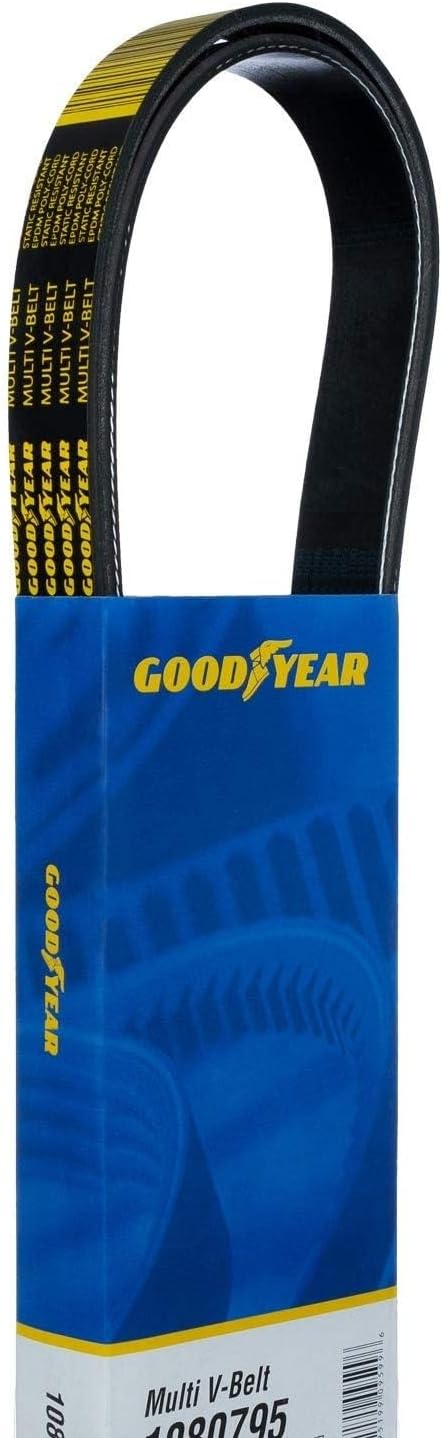
| Belt Style | Serpentine Belt |
|---|---|
| Belt Ribs | 8 Ribs |
| Length | 35.2" |
| Material Type | 100% Goodyear (EPDM) |
This Goodyear Multi V serpentine belt is built to replace a worn or failing belt and restore smooth operation of the alternator, water pump, A/C compressor, and power steering. Constructed from EPDM rubber with a polyester cord and an 8-rib multi V profile, it is designed for long life, reduced slippage, and quieter running than older ribbed belts. Installation is straightforward for anyone familiar with belt routing and a tensioner tool, and the belt’s factory-style construction makes it suitable for routine maintenance or performance-minded owners who want consistent accessory drive under load. The durable materials help resist cracking and glazing that shorten belt life, but buyers should confirm the exact length and rib count match their engine application before ordering. This product focuses on reliable, OEM-quality replacement rather than upgraded high-performance compounds, so it is best when you want dependable everyday performance and longevity rather than specialized racing-level belts.
Best for: Drivers who want a reliable, factory-quality replacement belt to keep accessories performing consistently, especially those who prioritize durability and quiet operation during everyday and spirited driving.
Less Ideal for: Those seeking specialty high-temperature or track-focused belts with upgraded compounds and extreme stretch resistance should consider performance-specific aftermarket options instead.
- EPDM rubber and polyester cord construction for durability and resistance to cracking
- Multi V 8-rib profile reduces slippage and promotes smooth accessory drive
- Manufactured by Goodyear, matching factory-quality replacement standards
- Suitable for key accessories including alternator, water pump, A/C compressor, and power steering
- Sold as a single replacement belt so buyers must confirm length and rib count before purchase
Verdict: Choose this Goodyear serpentine belt if you want a durable, factory-quality replacement that restores smooth accessory drive for everyday and performance-oriented driving.
3. bproauto Serpentine Belt for Jeep Wrangler (2018–2020)

| Material Type | Ethylene Propylene Diene Monomer (EPDM) |
|---|---|
| Belt Style | V-Belt |
| Included Components | (1) Serpentine Belt |
| Warranty Description | 24 MONTHS parts exchange |
This bproauto serpentine belt is a direct replacement designed to restore accessory drive performance on 2018–2020 Jeep Wranglers. Constructed from an EPDM compound with aramid-loaded reinforcement, the belt is built to resist wear and retain flexibility while precision-formed ribs help maintain grip and reduce slipping under normal driving loads. Installation is the same as a factory-style belt and it is intended for routine replacement during scheduled maintenance or when the original belt shows cracking or glazing. The manufacturer notes the belt meets or exceeds RMA ISO specifications and includes a two-year parts warranty. Expect reliable power transfer for everyday driving and towing within typical Wrangler use, but like most aftermarket belts it may show different break-in behavior versus a factory belt and longevity will depend on pulley alignment and accessory loads. Overall this is a practical, budget-minded option to get a Wrangler back on the road with a focus on durable materials and slip resistance.
Best for: A practical Jeep owner who wants a durable, factory-style replacement belt that focuses on longevity and dependable day-to-day performance without paying for dealer parts.
Less Ideal for: Not the best choice for builders seeking performance upgrades beyond stock capacity or for projects that require custom belt lengths or specialty compounds.
- EPDM compound resists ozone and heat for longer service life
- Aramid-reinforced construction improves tensile strength and flexibility
- Precision ribs reduce belt slip and help maintain accessory drive performance
- Designed to meet or exceed RMA ISO specification for reliable performance
- No vehicle-specific installation hardware or routing diagram included
Verdict: A durable, factory-style replacement that restores reliable accessory drive performance for 2018–2020 Jeep Wranglers without excess cost.
4. A-Premium Serpentine Belt 35.2 in for Jeep JL Wrangler 2.0L
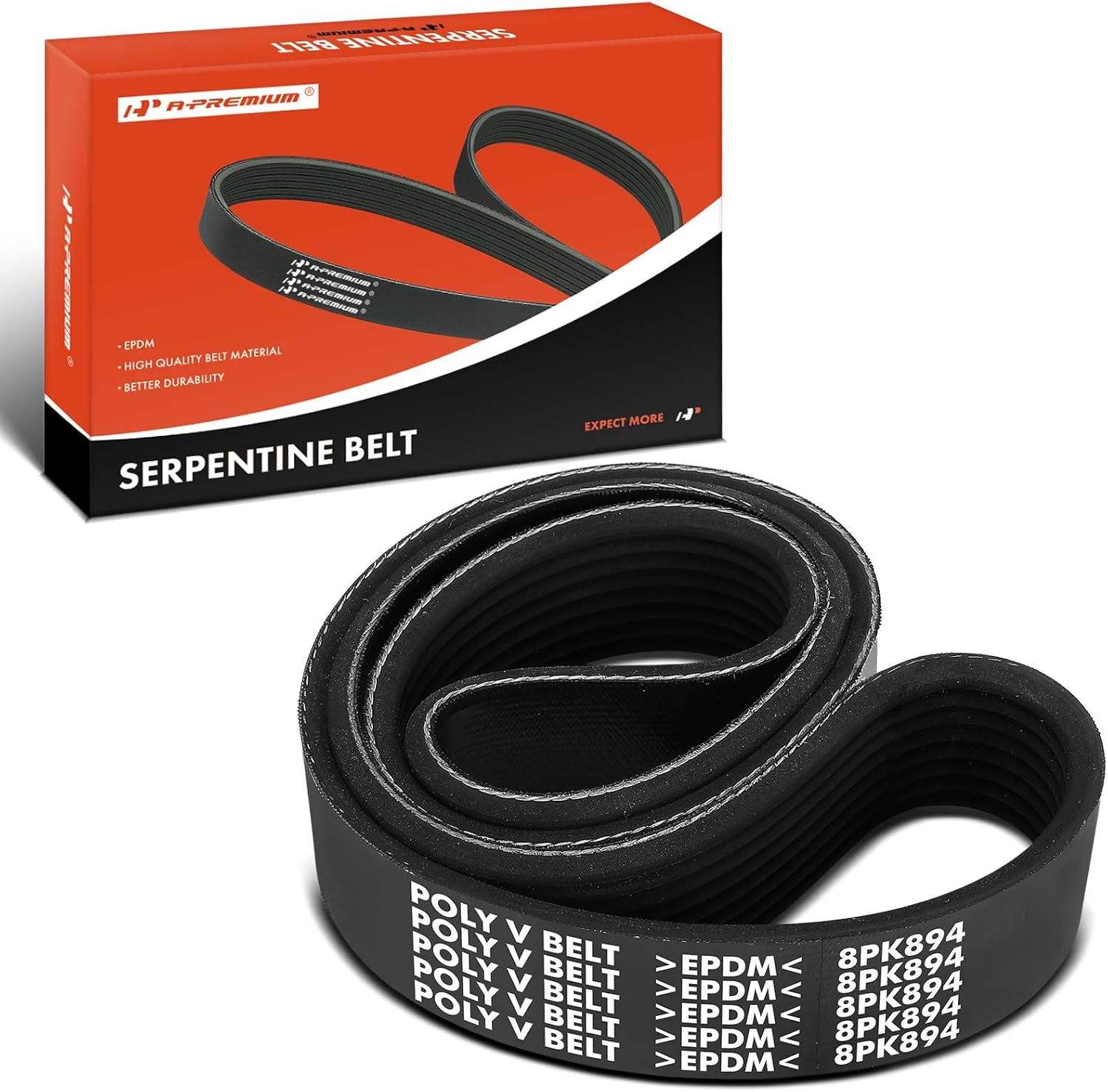
| Effective Length | 35.2 in |
|---|---|
| Rib Quantity | 8 |
| Belt Material | EPDM |
| Cross Section | K |
This A-Premium serpentine belt is a direct-fit replacement designed for Jeep JL Wrangler 2018–2022 2.0L four-cylinder models and is intended to drive alternator and accessory systems. Constructed from EPDM rubber with a polyester cord and an 8-rib K-profile, it claims improved resistance to heat, oils, and cracking compared with older-style belts. Installation is straightforward for a mechanic or competent DIYer and the belt’s precise dimensions help maintain correct tension and reduce noise and vibration when paired with a healthy tensioner. The part lists common reference numbers used for Wrangler drive systems and comes with a one-year unlimited-mileage guarantee. Expect a budget-friendly option that covers basic replacement needs, but be sure to inspect or replace the tensioner and pulleys if they show wear, since a new belt cannot correct failing hardware and could wear prematurely if installed on worn components.
Best for: Buyers replacing a worn serpentine belt on a JL Wrangler 2.0L who prioritize low cost and a close-fitting aftermarket replacement that performs like a factory belt.
Less Ideal for: Drivers who want a complete drivetrain refresh or heavy-duty upgrades that include new tensioners and pulleys should consider a bundled kit or premium service parts instead.
- Made from EPDM rubber for better resistance to heat, oils, and cracking
- 8-rib K-profile compatible with factory accessory pulleys on 2.0L Wrangler
- Precision manufacturing helps reduce vibration and noise when tensioner is good
- Includes common reference numbers for straightforward fit verification
- No bundled tensioner or pulley—those may need replacement separately for reliable performance
Verdict: A practical, budget-focused replacement belt sized for JL Wrangler 2.0L engines that delivers factory-style fit and durable EPDM construction.
5. IRIEQU Drive Belt Kit with Tensioner and Idler Pulleys for Jeep Wrangler 3.6L V6

| Fitment | Jeep Wrangler 2012-2018 3.6L V6 |
|---|---|
| Includes | Belt, belt tensioner, idler pulleys |
| Replaces part numbers | 4627038AA, 4627038AA-KIT, 4627038AAKIT |
This IRIEQU drive belt kit supplies the main serpentine belt plus a matched belt tensioner and idler pulleys to restore proper belt routing and tension on 3.6L V6 Wrangler engines. It is intended as a direct replacement for the listed part numbers and is typically used when replacing a worn belt, noisy pulley, or failing tensioner to eliminate squeal and prevent belt slippage. The kit’s components are produced to meet factory-quality standards and the seller notes each part is tested before shipment, which simplifies installation by giving you parts matched for fit and function. Practical benefits include replacing multiple wear items at once to avoid repeat labor and reducing the chance of premature belt failure. Limitations are that fitment is specific to the listed Wrangler years and 3.6L V6 engines and you should verify the part numbers against your vehicle prior to purchase; the kit does not include vehicle-specific installation instructions or additional hardware beyond the listed parts.
Best for: Buyers prioritizing long-term dependability who want a single kit to replace all belt-drive wear items and minimize the chance of repeat shop visits on a 3.6L V6 Wrangler.
Less Ideal for: Do not choose this if your Wrangler has a different engine, if you need vehicle-specific installation guidance, or if you prefer buying individual components separately.
- Complete kit replaces belt, tensioner, and idler pulleys to address multiple failure points in one job
- Manufactured and tested to meet factory-quality standards for reliable fit and operation
- Matches the listed factory part numbers to simplify compatibility checks and installation
- Fitment is limited to Jeep Wrangler 3.6L V6 model years specified and will not suit other engines or model variations
Verdict: A practical, factory-quality replacement kit that refreshes the serpentine belt system on 3.6L V6 Wranglers to restore reliable belt tension and reduce future failures.
6. Gates Micro-V Serpentine Drive Belt (K060876)
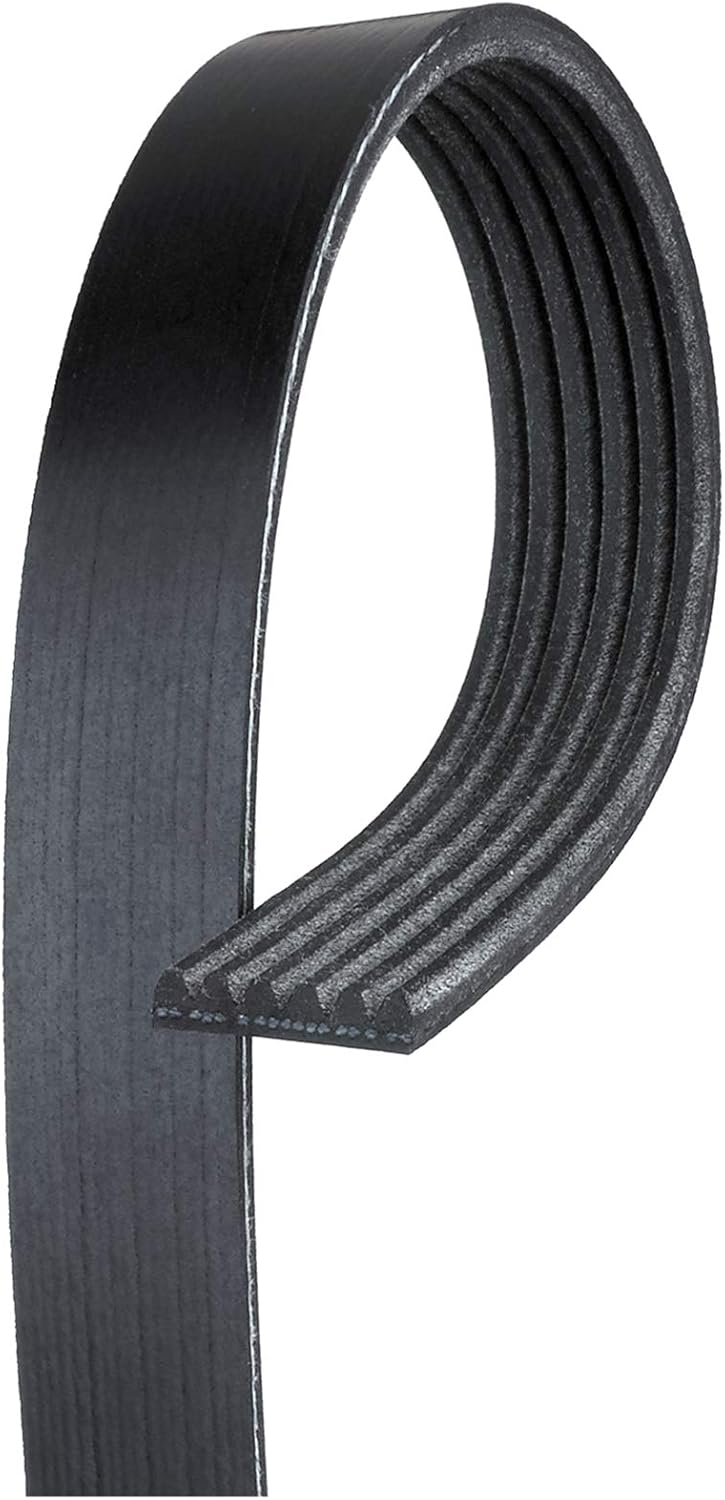
| Brand | Gates |
|---|---|
| Model | Micro-V Serpentine Drive Belt |
| Item model number | K060876 |
| Manufacturer Part Number | K060876 |
| OEM Part Number | 0029930896, 0109978892, 03531942, 4627043AA, 6PK2224 |
This Gates Micro-V serpentine belt is a direct-fit replacement designed to run the accessories off the crankshaft pulley without modification. Made from EPDM rubber with precision ribs, it mirrors factory size and construction so installation is straightforward and it seats properly on pulleys. Typical use is replacing a worn or noisy belt during routine maintenance on compatible vehicles; customers report it fits Jeep Wrangler applications and stops common squeaks. The belt’s factory-style build offers predictable tensioning and long service life compared with cheap aftermarket copies, and the product listing includes multiple OEM part cross-references for fit verification. Limitations are minimal but include the need to confirm the exact part number for your engine and routing before buying since belts are vehicle-specific. There is no tensioner or installation hardware included, so expect to use existing components or order those separately if they are worn.
Best for: Buyers who prioritize a proven, factory-quality replacement and want social proof that the belt performs well in real Wrangler use cases.
Less Ideal for: If you need a complete repair kit with a new tensioner or pulleys included, or if you prefer a belt sold with installation parts, look for a kit instead.
- Factory-style fit and construction for reliable seating on pulleys
- EPDM rubber compound resists rib cracking for longer service life
- Precision-fit to match OEM dimensions and materials
- Multiple OEM part cross-references to verify compatibility
- No tensioner or installation hardware included
Verdict: Choose this Gates Micro-V belt when you want a factory-quality, proven serpentine replacement that fits Wrangler drivetrains and stops common belt noise.
7. Bando USA 6PK2225 Serpentine Belt

| Brand | Bando USA |
|---|---|
| Model | 6PK2225 |
| Exterior | Rubber |
| Material | EPDM rubber |
The Bando USA 6PK2225 is a direct-style serpentine belt engineered to match factory rib profile and performance. It is intended for routine replacement when the old belt shows wear, glazing, or noise. Made from EPDM rubber with ground ribs and strong tensile cords, this belt aims to resist heat, reduce slip, and run quietly under normal driving conditions. The manufacturer emphasizes precision grinding to meet OEM fit and a construction that handles typical accessory loads without stretching. In practice the belt installs like a factory part, fits common engine pulley layouts, and tends to quiet noisy accessory drive systems. Limitations are that it is a single replacement belt without installation hardware or tensioner; correct belt length and routing must be verified for your Wrangler application before purchase. Buyers replacing a worn belt will get a durable, OEM-style part but should follow recommended installation and tension procedures to ensure long life.
Best for: A cautious buyer looking for a factory-style, dependable replacement belt to restore quiet, reliable accessory drive operation on a modern Wrangler; ideal for routine maintenance and DIY installs.
Less Ideal for: Not the best choice for someone replacing a failed tensioner or looking for a complete repair kit that includes pulleys and hardware; professional shops needing bundled components may prefer a kit.
- Manufactured to OEM-quality standards for accurate rib profile and fit
- EPDM rubber compound and ground ribs for improved heat resistance and wear life
- Tensile cords designed to resist stretching under accessory load
- Run-quiet design reduces belt noise and slip during normal operation
- Sold as the belt only with no tensioner or installation components included
Verdict: Choose the Bando 6PK2225 when you want a factory-quality serpentine belt that fits and runs quietly like the original.
Choosing the Right 2018-Present Jeep Wrangler Serpentine Belt: Key Factors to Consider
Fit and Rib Profile
Proper fit and the correct number of ribs are critical for reliable operation on the 2018-present Jeep Wrangler. A belt with the wrong width or rib count will not seat correctly on pulleys, increasing slippage risk and accelerating wear. Ensuring the belt matches factory dimensions preserves tensioner range and prevents odd pulley loading that can damage bearings over time. On the JL and JLU Wrangler, routing complexity and accessory placement make exact fit especially important. When sourcing a replacement, confirm the belt lists fitment for the JL and JLU chassis and the correct engine variant. Even small deviations in profile can cause belt noise or premature failure, so accurate fit is a top priority when selecting a replacement.
Material Composition and Durability
Belt compound and reinforcement determine heat resistance, tensile strength, and resistance to cracking or glazing. Belts reinforced with strong cord materials and formulated rubbers resist stretch and degradation when exposed to engine heat, oil mist, and road contaminants. A durable compound translates to longer service intervals and fewer roadside failures. Consider the typical driving environment for your Wrangler. If you do off-road driving or frequent short trips, choose a belt with proven resistance to flex fatigue and cracking. Durability affects how often you need serpentine belt replacement and contributes to overall ownership convenience.
Noise and Vibration Performance
Squeal, chirp, and belt whine are common complaints when a belt or tensioner is marginal. Noise often indicates slippage, misalignment, or an incompatible belt profile. Selecting a belt engineered for reduced vibration and stable engagement helps keep startup and under-load squeal to a minimum. For JL and JLU owners who value a quieter cabin or who have sensitive electronic accessories, look for belts with anti-squeal backing or advanced rib geometries designed to damp vibrations. Noise performance is closely tied to proper installation and tensioner condition, so factor both belt design and system health into your choice.
Compatibility With Tensioner and Pulleys
The serpentine belt works with the factory tensioner to maintain correct tension across loads. A belt that is too long, too short, or has different stretch characteristics can overwork the tensioner or leave the system under-tensioned. That accelerates wear on the tensioner and pulley bearings, and can lead to failure of driven accessories. When choosing a belt, verify it is matched for the Wrangler's tensioner travel and pulley diameters. If your vehicle has had aftermarket pulleys or a different accessory layout, account for that when selecting a replacement. Proper compatibility reduces the chance of barking noises, rapid wear signs, or the need for additional parts at installation.
Resistance to Environmental Contaminants
Engine bays collect oil, grease, salt, and dirt, all of which can degrade belt rubber over time. Belts with compounds resistant to oil and ozone degradation hold up better in harsh conditions and maintain grip. This matters for Jeep Wrangler owners who may encounter mud, salt, or frequent wash cycles after off-road use. A belt designed to resist contaminants will show slower deterioration of ribs and less glazing, preserving grip and reducing the chance of sudden failures between service intervals. Consider belts rated for contamination resistance if you drive in demanding conditions.
Ease of Installation and Serviceability
Some belts are straightforward to install with the factory tensioner and a standard tool, while others may require additional steps or partial component removal. Ease of installation affects whether you can perform serpentine belt replacement yourself and the labor time if a shop is involved. Check installation notes for access limitations around the engine bay and whether the belt routing matches the factory serpentine belt diagram for the 2018-present Wrangler. A belt that installs cleanly with the stock tensioner and no pulley swapping will reduce downtime and potential for installation errors.
How to Tell If Your Wrangler Needs a New Belt
Several common signs indicate the serpentine belt may be wearing out or failing. Listen for high-pitched squeal at startup or when accelerating; this often points to slipping on one or more pulleys. Visible cracks, fraying, or missing ribs on the belt surface are direct indicators that replacement is due.
Other symptoms include intermittent accessory loss such as a failing alternator charge or A/C compressor engagement, and unusual vibrations from the accessory drive. Regularly inspect the belt for glazing, embedded debris, or uneven wear that suggests misalignment or a failing tensioner.
- High-pitched squeal or chirp at startup or under load
- Visible cracks, fraying, or missing ribs
- Glazing or shiny belt surface
- Intermittent accessory failure or reduced performance
- Unusual vibrations from the engine bay
Replacing the Belt on a JL and JLU Wrangler: What To Expect
Replacement on the 2018-present JL and JLU Wrangler is usually straightforward if you have basic hand tools. The factory tensioner can be rotated to relieve tension and allow belt removal without disassembling major components. Keep the belt routing diagram handy and verify rib count and width before installing the replacement.
If the tensioner or pulleys show signs of wear, replace them concurrently to avoid repeating the job. Tight engine bays or engine accessories arranged close together can make access more difficult on some engine variants, so plan for additional time if you are working without a lift.
- Use a proper tool to rotate the tensioner and relieve tension
- Verify belt routing against the factory serpentine belt diagram
- Inspect tensioner and idler pulleys while replacing the belt
- Allow extra time for tight engine bay access on certain JL and JLU configurations
Tensioner Care and When to Replace It
The tensioner maintains correct belt tension and compensates for stretch over time. A weak or stuck tensioner will cause slipping, noise, and uneven belt wear. When you replace the belt, check the tensioner for smooth operation, excessive play, or noisy bearings.
Replacing the tensioner at the same time as the belt is often a cost-effective preventive measure. This ensures the new belt is not subjected to a failing tensioner and reduces the likelihood of reinstalling a belt that will prematurely fail.
- Check for smooth rotation and no bearing noise
- Look for excessive arm play or slow return
- Replace tensioner if any doubt about its condition
Common Routing and Diagram Tips for JL and JLU Engines
Keeping a clear serpentine belt diagram specific to the JL and JLU engine in your Wrangler simplifies installation and reduces mistakes. The diagram shows pulley order and helps ensure the belt wraps correctly around the crank, alternator, tensioner, and other accessories.
If you are referencing a belt size lookup or diagram, confirm it matches the 2018-present Wrangler JL and JLU configuration. Differences in accessory fitment or optional equipment can change routing and belt length, so double-check the diagram for your exact engine variant.
- Always match the diagram to the JL and JLU engine variant
- Confirm rib count and belt length against the diagram
- Use the diagram to route the belt before applying tension
Signs a Tensioner or Pulley Is Causing Belt Squeal
Persistent squeal after installing a new belt often stems from a worn pulley bearing or misaligned pulley rather than the belt itself. Listen and feel for roughness while spinning idler pulleys by hand and check for wobble or excessive resistance.
If squeal occurs only under certain loads, it can indicate binding or intermittent misalignment. Address pulleys and bracket alignment before assuming the belt is defective.
- Spin pulleys by hand to detect rough bearings
- Check pulley alignment and mounting hardware
- Investigate squeal under load versus constant noise
When to Consult a Technician
Consult a technician if you find cracked ribs combined with pulleys that feel rough, or if you encounter strange accessory behavior after a DIY belt change. Complex symptoms such as intermittent charging combined with noise can require diagnostic tools to isolate alternator, belt, or tensioner issues.
A professional can also confirm correct routing for less common JL and JLU accessory layouts and verify tensioner preload and pulley alignment, reducing the risk of repeat visits.
- Complex electrical symptoms combined with belt noise
- Rough pulleys or seized tensioner detected during inspection
- Limited access or unclear routing for your JL and JLU variant
Still looking for the perfect fit?
Select your Jeep Wrangler configuration to see the most relevant Serpentine Belts recommendations
How We Chose the Best 2018-Present Jeep Wrangler Serpentine Belt
We focused on criteria that directly affect service life and real-world performance on the 2018-present Jeep Wrangler (JL and JLU generation). Our evaluation prioritized accurate OEM-equivalent fit and correct rib profile to ensure proper seating on pulleys and to prevent slippage. Material composition and construction were assessed for heat resistance and tensile strength, since Wrangler engine bays can see wide temperature swings and heavier accessory loads. Noise and vibration characteristics were considered to reduce common complaints like belt squeal under load or at startup. Compatibility with factory tensioner ranges and routing geometry was another essential filter to avoid belts that stress the tensioner or require aftermarket pulley changes. We also looked at expected longevity based on construction details and common maintenance intervals for off-road and street use. We excluded belts that did not list clear fitment for the 2018-present Wrangler JL and JLU chassis or that used ambiguous rib counts and widths. Belts lacking verifiable material specs or that had frequent reports of rapid cracking or glazing were not considered. The final shortlist balances fit accuracy, longevity, and quiet running while keeping installation practicality in mind for owners performing serpentine belt replacement or alternator belt replacement themselves or with a technician.
Our full evaluation process is outlined in our review methodology.
FAQ
How often should I inspect the serpentine belt on my 2018-present Wrangler?
Inspect the belt at every oil change or at least every 12 months. Look for cracks, glazing, or rib wear, and check belt tension and pulley condition. More frequent checks are wise if you drive off-road or in extreme conditions.
Can I replace the serpentine belt myself on a JL and JLU Wrangler?
Yes. Many owners can replace the belt with basic tools by rotating the factory tensioner and following the belt diagram. Allow extra time for tight engine bay access and replace the tensioner or pulleys if they show wear.
What causes a serpentine belt to squeal on startup?
Squeal at startup usually indicates temporary slippage, which can be caused by a glazed or worn belt, weak tensioner, or contaminated belt surface. Cleaning pulleys and addressing tensioner condition often resolves startup squeal.
Should I replace the tensioner when replacing the belt?
Often it is prudent to replace the tensioner alongside the belt if the tensioner shows noise, excessive play, or delayed return. Replacing both reduces the chance of redoing the job soon after and protects the new belt.
How do I confirm the correct belt size for my Wrangler?
Use a serpentine belt size lookup tied to the 2018-present Jeep Wrangler JL and JLU chassis and your engine variant, or compare rib count and belt width to the factory serpentine belt diagram. Verify the length before installation to avoid fitment issues.
What are the first signs of serpentine belt wear signs I should watch for?
Early signs include minor glazing, slight rib fraying, and faint chirps under load. As wear progresses you will see cracking across ribs, missing chunks, or pronounced squeal, all of which indicate immediate replacement is needed.
Does the alternator belt replacement differ from a full serpentine belt change on the JL and JLU?
On most JL and JLU Wranglers the alternator is driven by the same serpentine belt, so replacing the belt covers alternator belt replacement as well. The procedure is the same: relieve tension, remove the belt, and reinstall following the correct routing.
Final Verdict
When choosing a serpentine belt for the 2018-present Jeep Wrangler prioritize correct fit, rib profile, and durable construction to minimize noise and prevent premature failures. Inspect pulleys and the tensioner during any belt service, and replace worn components together to protect a new belt. Balance longevity and noise performance based on how you use the Wrangler. For most owners, an OEM-equivalent fit with robust material and confirmed compatibility with the JL and JLU tensioner delivers the best combination of reliability and low maintenance.
Explore More:
- Check out all Jeep Wrangler parts & accessories
- Explore Serpentine Belts Maintenance & Repair Guides
- Explore Engine
- Browse all Auto Parts
