

Note: This article contains affiliate links. If you click on these links and make a purchase, I may earn a small commission at no extra cost to you. This helps support my research and content. Read my full affiliate disclosure here.
If you want a wider track, better stance, or extra clearance for larger brakes or tires on your 2014-2018 Chevrolet Silverado 1500, choosing the right wheel spacers matters. The wrong spacer can cause poor fit, wheel imbalance, or excessive stress on suspension components, while the right one improves tire clearance and gives a controlled aesthetic without compromising safety.This guide covers seven shortlisted wheel spacers selected specifically for the 2014-2018 Silverado 1500. We evaluated fit accuracy, material and machining quality, and mounting hardware so you can pick spacers that deliver consistent alignment with your factory wheels and hubs. Read on for installation considerations, size guidance, and answers to common owner questions before you install spacers on your truck.
Looking for other parts? See all Chevrolet Silverado 1500 parts & accessories.
Top Picks at a Glance
| Best Overall The best all-around choice for most situations | Rough Country 2" Wheel Spacer (6061-T6 Aluminum) for Chevy/GMC 1500 Trucks & SUVs |  |
| Best Quality Built to a higher standard if you want something more solid | Richeer 2" 6×5.5 Hubcentric Wheel Spacers (78.1mm Bore, 14×1.5 Studs) |  |
| Best Value The sweet spot between price and what you get | dynofit 1.5" 6×5.5 Hub-Centric Forged Wheel Spacers (Set of 4) |  |
| Best Budget The cheapest option that still gets the job done reliably | ECCPP 3" 6-Lug Wheel Spacers (6×5.5) |  |
| Highest Rated A top-rated pick with lots of positive feedback | KSP Performance 1.5" Forged 6×5.5 Hub-Centric Wheel Spacers (4-Pack) |  |
| Most Popular A crowd favorite that many people choose with confidence | Orion Motor Tech 2" 6×5.5 Wheel Spacer Kit with M14x1.5 Studs (4 pcs) |  |
| Best Seller A high-volume bestseller chosen again and again | dynofit 6×5.5 Forged 2" Wheel Spacers (Set of 4) |  |
1. Rough Country 2" Wheel Spacer (6061-T6 Aluminum) for Chevy/GMC 1500 Trucks & SUVs

| Bolt pattern | 6×5.5 (6×139.7) |
|---|---|
| Offset | 2" |
| Material | 6061-T6 Aluminum |
| Thread pitch | M14x1.5 |
| Center bore | 3.08" |
These Rough Country 2" wheel spacers push the wheels outward to create a wider stance and extra clearance for larger tires on GM 1500 trucks and SUVs. Made from 6061-T6 aluminum and precision machined, the spacers are corrosion resistant and come with preinstalled studs for quicker installation. They are hub-centered for a secure fit on compatible vehicles and do not require drilling. In real-world use they give a more aggressive look, help balance the track after a lift, and can improve stability when running wider tires. Installation is straightforward for anyone comfortable with wheel work but requires proper torqueing and retorque checks after the first 100 miles. Buyers should note the product is sold as a pair so a second set may be needed for all four corners, and fit depends on matching the vehicle bolt pattern, center bore, and thread pitch. Follow professional installation and periodic inspections for long-term safety.
Best for: Buyers who want a balanced improvement in stance and clearance for wider tires on a GM 1500 platform and value a factory-quality, easy-to-install spacer that holds up in daily and light off-road use.
Less Ideal for: Drivers who need a one-step solution for all four wheels without buying multiple sets or those running nonstandard bolt patterns or center bores should consider other options.
- Machined from 6061-T6 aluminum for strength and corrosion resistance
- Preinstalled studs simplify installation and reduce parts handling
- Hub centric design improves wheel seating and reduces vibration risk
- 2-inch offset increases track width for better stance and tire clearance
- Sold as a pair, so you may need to buy two sets to space all four wheels
Verdict: A durable, factory-quality 2-inch spacer that gives Silverado 1500 trucks a wider stance and reliable clearance for larger tires while remaining simple to install.
2. Richeer 2" 6×5.5 Hubcentric Wheel Spacers (78.1mm Bore, 14×1.5 Studs)

| Bolt pattern | 6×5.5 (6×139.7) |
|---|---|
| Spacer thickness | 2 inches |
| Hub bore | 78.1 mm |
| Stud thread pitch | 14×1.5 |
| Material | Forged 6061-T6 aluminum |
These Richeer 2-inch spacers push the wheels outward to widen the track on 6×5.5 GM pickups and full-size SUVs, improving stance and on-road stability. Machined from forged 6061-T6 billet aluminum and anodized for corrosion resistance, they mount hubcentric to the factory hub and use Grade 12.9 studs rated for higher tensile strength than common 10.9 hardware. Installation is straightforward: the spacer slips over the hub, is bolted on using the supplied studs and nuts, then the wheel is refitted and torqued. In use they give a noticeably wider track and can reduce body roll and improve cornering feel on a Silverado when paired with proper alignment. Some users report occasional vibration at high speeds and a few earlier reports flagged stud stretching or loosening if not retorqued, so careful installation and periodic torque checks are important. These spacers are a practical way to get an aggressive look and improved handling without modifying suspension components, but they require attention to torque and fitment to avoid issues at highway speeds.
Best for: Buyers seeking a performance-oriented visual and handling upgrade for their Silverado who prioritize a wider track and improved cornering feel while willing to follow correct installation and maintenance steps.
Less Ideal for: Drivers who want a maintenance-free, permanent suspension modification or who avoid periodic torque checks should consider hub-flange adapters or professional wheel fitment services instead.
- Forged 6061-T6 billet aluminum construction for strength and corrosion resistance
- Grade 12.9 studs offering higher tensile strength than common 10.9 studs
- Hubcentric 78.1 mm bore for proper centering and reduced runout risk
- Anodized finish and CNC machining for consistent fit and appearance
- Some reviewers noted wheel vibration at highway speeds after installation
Verdict: If you want a beefier stance and crisper cornering on a 2014-2018 Silverado, these forged 2-inch hubcentric spacers deliver strength and a noticeable handling benefit when installed and maintained correctly.
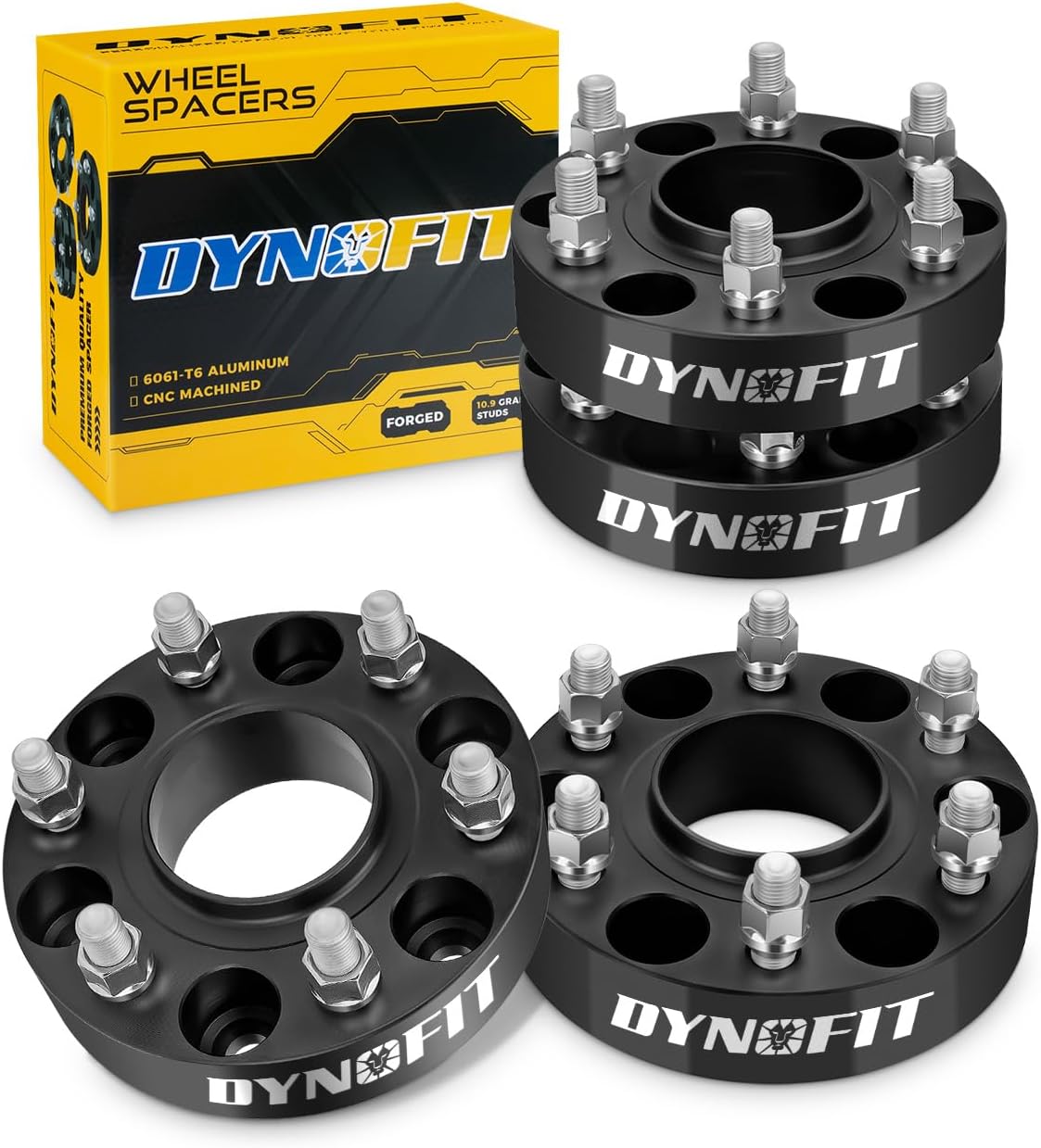
3. dynofit 1.5" 6×5.5 Hub-Centric Forged Wheel Spacers (Set of 4)
| Bolt pattern (PCD) | 6×5.5 (6×139.7mm) |
|---|---|
| Thread pitch | M14x1.5 |
| Hub bore | 78.1mm |
| Thickness | 1.5 inches (38mm) |
These dynofit spacers push wheels out 1.5 inches to improve stance and clearance for fender flares on compatible Chevy Silverado 1500 models. They are forged from 6061-T6 aluminum and CNC machined to a hub-centric profile, which helps the wheel sit concentric to the hub and reduces the chance of vibration when installed correctly. The kit includes heat-treated ISO 10.9 grade bolts and uses M14x1.5 thread pitch to match the vehicle studs. In real-world use you install one spacer per wheel between the hub and wheel, torque the supplied hardware to spec, and recheck fitment after a short drive. Buyers will appreciate the stronger forged construction compared with low-cost cast spacers and the clear hub bore that minimizes wobble. Expect to sometimes trim original studs or remove paint from the center bore for a perfect fit, and remember spacers change wheel offset which can slightly alter steering feel and suspension loading. Always verify fitment for your Silverado year and configuration before installation.
Best for: Buyers who want a reliable, factory-quality upgrade to push wheels outward for better stance or to clear aftermarket fender flares on a 2014–2018 Silverado while prioritizing strength and fitment over the lowest price.
Less Ideal for: Drivers who need a no-modification, bolt-on solution with guaranteed perfect fit to every aftermarket wheel or those concerned about changing suspension loads without professional installation.
- Forged 6061-T6 aluminum construction for higher strength than cast spacers.
- Hub-centric CNC machining reduces vibration risk when hub and wheel match.
- Includes heat-treated ISO 10.9 grade bolts for secure clamping.
- 1.5 inch thickness provides noticeable increase in track width and flare clearance.
- May require trimming original studs or sanding paint from the spacer bore for a precise wheel fit.
Verdict: A durable, forged 1.5-inch hub-centric spacer built for strong fitment and improved stance on 2014–2018 Silverado 1500 trucks.
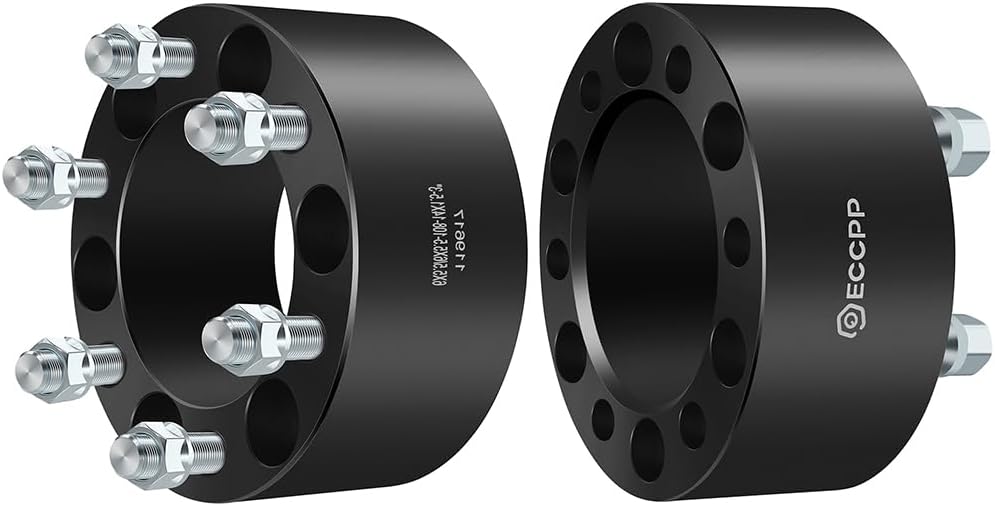
4. ECCPP 3" 6-Lug Wheel Spacers (6×5.5)
| Thickness | 3" |
|---|---|
| Vehicle bolt pattern | 6×5.5 / 6×139.7mm |
| Wheel bolt pattern | 6×5.5 / 6×139.7mm |
| Thread | 14mm x 1.5 |
| Bore size | 108mm |
These ECCPP 3-inch wheel spacers push wheels outward to give a wider stance and improved clearance for larger brakes or suspension modifications on 2014–2018 Chevrolet Silverado 1500 models with a 6×5.5 (6×139.7mm) bolt pattern. The kit includes open-end lug nuts and is drilled to a 108mm bore with 14×1.5mm threads, so installation is straightforward when your factory studs and wheel center bore match the listed requirements. In real use the spacers increase stability at speed and create room for larger calipers or aggressive tire fitments, and they visually give the truck a more planted look. Important limitations: you must verify stud length, thread pitch, and fender clearance before fitting, and some installations require trimming studs or using shorter ones; following torque specs and using thread locker is advised to avoid vibration. These are a budget-friendly option that delivers the basic function of track widening but lack branded performance validation or extensive fitment assurances.
Best for: Buyers who want an affordable way to widen a 2014–2018 Silverado 1500 for improved stance, brake clearance, or to fit larger tires and who are comfortable checking fitment and making minor hardware adjustments.
Less Ideal for: Drivers who want a plug-and-play, guaranteed-fit spacer with vehicle-specific engineering documentation or those unwilling to verify stud length and perform minor modifications.
- Full 3-inch offset increases track width for a wider stance and better clearance
- Compatible with 6×5.5 (6×139.7mm) bolt pattern common to Silverado 1500
- Includes open-end lug nuts and hardware for basic installation
- 108mm center bore and 14×1.5mm thread specification provided for fit checks
- May require shortening or replacing factory studs if they protrude past the spacer face
Verdict: A cost-conscious way to add 3 inches of track width and basic brake or tire clearance to a 2014–2018 Silverado 1500 when you confirm stud length and fitment.
5. KSP Performance 1.5" Forged 6×5.5 Hub-Centric Wheel Spacers (4-Pack)

| Size | 1.5"-6×5.5-4pcs |
|---|---|
| Bolt Pattern | 6×139.7 mm (6×5.5) |
| Thread Pitch | M14x1.5 |
| Hub Bore | 78.1 mm |
These KSP 1.5" forged wheel spacers are built to move wheels outward for improved stance clearance and wheel fitment on compatible Chevrolet/GMC trucks. They are machined from 6061 T6 aircraft-grade aluminum, anodized black, and include heat-treated SCM435 studs and ISO/DIN grade 10.9-12.9 bolts with thread locker, which together reduce the common failure points users worry about. Installation typically involves removing the factory lug studs, fitting the hub-centric spacer over the hub, and torquing the supplied hardware to spec; hub bore centering helps keep vibration low. The package includes four spacers sized for a 6×5.5 bolt pattern with a 78.1mm center bore and M14x1.5 threads, and the product notes recommended torque values. While forged construction and quality studs improve durability compared with low-cost cast spacers, buyers should still follow torque and recheck procedures and be prepared to trim excess stud length on some wheel setups. Support includes a 30-day refund and 12-month replacement policy.
Best for: Buyers who prioritize a durable, factory-quality spacer solution to reliably correct wheel fitment and stance on 2014–2018 Silverado 1500s and similar GM trucks and who follow proper torque and maintenance routines.
Less Ideal for: Drivers seeking a temporary or lowest-cost cosmetic spacer or those unwilling to perform torque checks and occasional stud adjustments should consider other options.
- Forged 6061-T6 aluminum construction for greater strength than typical cast spacers
- Hub-centric 78.1mm bore reduces runout and vibration when paired to the correct hub
- Includes heat-treated SCM435 studs and high-grade bolts plus thread locker for secure fastening
- Black anodize provides corrosion resistance and a finished appearance
- May require trimming or adjustment of stud length with some aftermarket wheels
Verdict: A robust forged 1.5" hub-centric spacer set built for reliable, vibration-free wheel widening on Silverado 2014–2018 when installed and torqued to spec.
6. Orion Motor Tech 2" 6×5.5 Wheel Spacer Kit with M14x1.5 Studs (4 pcs)

| Bolt pattern | 6×5.5 (6×139.7) |
|---|---|
| Stud size | M14x1.5 |
| Thickness | 2 inches |
| Material | T6 aircraft-grade aluminum |
| Pieces | 4 |
These Orion Motor Tech wheel spacers push the wheels 2 inches outward to widen the track, improving stance and giving a more aggressive fitment on compatible trucks. Installation is straightforward: the kit uses 24 Dacromet-coated M14x1.5 studs and a hub-centric design intended to center the spacer on the hub for stability. The spacers are machined from T6 aircraft-grade aluminum to balance strength and weight, and the rear slots make future removal easier. In real-world use they change the vehicle's handling feel slightly by widening the track, which can improve cornering and stability but may require a check of wheel/tire clearance and alignment after fitment. Several users report easy installs and good fit, though a few noted vibration at high speeds or missing pieces in some orders, so inspect the set and torque to spec. These are a practical option for owners wanting a wider stance and added traction without major modifications, provided you verify fitment for the Silverado 1500 and follow torque and alignment checks after installation.
Best for: Buyers who prioritize measured, proven upgrades and want to improve stance and on-road stability while relying on community feedback and standard installation checks.
Less Ideal for: Drivers seeking a bolt-on change with zero risk to handling or those uncomfortable performing wheel torque and post-install alignment checks should consider alternatives or professional installation.
- 2-inch offset widens track for a more aggressive stance and improved lateral grip
- Hub-centric machining for better centering compared with generic stud-only spacers
- T6 aircraft-grade aluminum construction balances strength with lower weight
- Dacromet-coated M14x1.5 studs increase corrosion resistance compared with plain studs
- Rear face slots simplify removal during maintenance
- Some users reported vibration at higher speeds after installation
Verdict: A solid, hub-centric 2-inch spacer set that gives Silverado owners a wider stance and improved road manners when installed and torqued to spec.
7. dynofit 6×5.5 Forged 2" Wheel Spacers (Set of 4)

| Bolt pattern | 6×5.5 (6×139.7mm) |
|---|---|
| Thickness | 2 in (50.8mm) |
| Hub bore | 108 mm |
| Stud thread pitch | M14x1.5 |
| Material | 6061-T6 aluminum |
These dynofit spacers push wheels outward by 2 inches to widen stance, improve wheel clearance for aftermarket tires or fender flares, and correct backspacing issues on compatible 6×5.5 trucks. They are forged from 6061-T6 aluminum and CNC-machined, which gives a lighter, corrosion-resistant alternative to cast spacers; the kit includes M14x1.5 studs and hardware for bolt-on installation. In practice the spacers are used to move wheels flush with flares or to achieve a more aggressive look while maintaining drivability; installers should clean mating surfaces, consider using thread locker as suggested, trim original stud tips if needed, and have a post-install alignment and re-torque at 50–100 miles. Buyers get solid build quality and packaged hardware, but some users report tight hub bores that may need paint removal for a perfect fit and occasional stud trimming during installation. Follow local width regulations and verify fit for 2014–2018 Silverado 1500 before buying.
Best for: Buyers who want a reliable, factory-quality spacer to widen stance or clear aftermarket tires and fender flares on mainstream trucks and prefer a product with solid construction and predictable installation steps.
Less Ideal for: If you want a plug-and-play solution with zero wheel or stud modification or you prioritize the lightest possible option for performance racing, consider alternatives tailored to those needs.
- Forged 6061-T6 aluminum construction for improved strength and corrosion resistance compared with cast spacers
- CNC machining and anodized finish for consistent fit and durability
- Complete kit with M14x1.5 studs and hardware for bolt-on installation
- 2" thickness provides noticeable stance change and fixes common backspacing/clearance issues
- Hub bore can be tight due to paint or finish and may require cleaning or light sanding for wheel fitment
- Some installations require trimming original stud tips which adds minor installation work
Verdict: A strong, CNC-forged 2-inch spacer kit that gives 2014–2018 Silverado 1500 owners a durable, factory-quality way to correct backspacing and achieve a wider, more aggressive stance.
Choosing the Right 2014-2018 Chevrolet Silverado 1500 Wheel Spacers: Key Factors to Consider
Bolt Pattern and Hub Fit
Bolt pattern must match the Silverado 1500 exactly to avoid improper lug engagement and unsafe loading. Confirm the 6-lug pattern and check the specified PCD on any spacer listing because an incorrect pattern will prevent proper mounting and can lead to stripped threads or interrupted torque readings.
Hub-centric versus lug-centric fit matters for vibration control. Hub-centric spacers have a center bore that seats on the factory hub, transferring centering forces to the hub rather than the lug nuts. For the 2014-2018 Silverado 1500, prefer spacers with a precise center bore tolerance to maintain factory wheel alignment and reduce the chance of wheel wobble at highway speeds.
Spacer Material and Machining
Material choice affects strength, corrosion resistance, and longevity. Forged aluminum or high-grade billet with CNC machining offers consistent thickness and flatness, which reduces warpage and uneven contact. Cheaper stamped or cast spacers may have uneven surfaces that cause stress concentrations at the hub or wheel mating faces.
Surface finishes and protective coatings matter in environments with road salt or moisture. Anodized or ceramic-coated aluminum resists corrosion and maintains torque reliability. Consistent machining also ensures bolt holes are chamfered correctly to prevent burrs that can damage studs or lug nuts.
Thickness and Its Effect on Handling
Spacer thickness determines how far the wheel moves outward and therefore influences scrub radius, steering feel, and suspension load paths. Small offsets may provide cosmetic stance or allow minor brake clearance. Larger thicknesses change track width significantly and can increase leverage on wheel bearings and suspension components.
When selecting a thickness for the Silverado 1500, weigh the desired clearance against added load and potential altered steering behavior. Thicker spacers can exacerbate bump steer or require an alignment afterward. Choose the minimum thickness that achieves necessary clearance and stance, following the vehicle manufacturer tolerances for wheel offset changes where possible.
Studs, Lug Hardware, and Thread Engagement
Proper stud length and lug engagement are critical for retaining wheels under load. Some spacer kits use extended studs, while others require replacement studs or longer lug nuts. Ensure there is enough thread engagement on every fastener to maintain clamp force without bottoming out or leaving too few engaged threads.
Included hardware quality matters. Grade-rated studs and lug nuts with correct seat type provide reliable torque retention. Avoid kits that expect you to reuse worn studs or lug nuts because compromised threads can compromise safety. Verify torque specifications and re-torque intervals for the chosen hardware.
Compatibility With Wheels and Brakes
Wheel inner clearance and brake caliper clearance are typical reasons owners add spacers. Make sure the chosen spacer size provides the necessary offset for the specific aftermarket wheel and wheel backspacing you plan to use. Also confirm that moving the wheel outward resolves interference with caliper bosses, aftermarket rotors, or suspension components.
Consider whether the wheel is OEM or aftermarket and check for differences in center bore and hub protrusion. Some wheels require hub-centric rings or additional machining to ensure a snug fit after spacer installation.
Vibration, Balancing, and Installation Precision
Even well-machined spacers can introduce vibration if installation steps are ignored. Balancing the wheel after spacer installation helps offset any mass changes. Proper torque sequence and following torque specs maintain even clamp load across the wheel face.
Precision during installation reduces the chance of vibration. Clean contact surfaces, torque in the correct pattern, and ensure washers or rings are properly seated. If vibration persists, check for bent wheels, hub runout, or incorrect center bore sizing rather than assuming the spacer is defective.
Understanding Bolt Patterns and Center Bores
The Silverado 1500 in the 2014-2018 range uses a 6-lug wheel pattern, so any spacer must be specified to match that configuration. Verify the bolt circle diameter and the exact center bore measurement before purchase to ensure the spacer will seat correctly on the hub and align with the wheel holes.
If a spacer is hub-centric, its center bore should precisely match the truck hub diameter to transfer centering forces through the hub instead of the lug nuts. When a spacer is lug-centric, the wheel relies on lug engagement to center itself, which can increase the chance of vibration if tolerances are not tight.
- Confirm 6-lug PCD and center bore dimensions on spacer spec sheets
- Use hub-centric spacers when possible for better vibration control
- Consider hub rings if center bore mismatch is minor
Common Spacer Thicknesses and When to Use Them
Thickness choices commonly range from small shims that correct minor clearance to wide adapters that significantly change track width. For brake clearance or modest stance adjustments, thinner spacers are usually sufficient and produce fewer side effects.
Larger thicknesses are useful when fitting much wider tires or avoiding suspension component contact, but they increase leverage on bearings and may necessitate alignment and inspection of steering geometry.
- Small offsets: cosmetic or minor brake clearance
- Medium offsets: wider tires, mild stance changes
- Large offsets: drastic clearance changes, check bearing and hub load
Installation Steps and Common Tools
A correct installation starts with clean contact surfaces between the hub, spacer, and wheel. Torque sequence is usually a star pattern applied in progressive steps to reach final torque. Whether the kit uses extended studs or replacement studs, measure thread engagement and use a calibrated torque wrench to meet specs.
Typical tools include a torque wrench, breaker bar, jack stands, and possibly a hub puller if a spacer tight fit requires hub removal. Mark parts during removal to help reassembly and confirm all fasteners are secured to the specified torque.
- Clean mating surfaces and inspect hub for corrosion
- Install spacer, then hand-start lug nuts before torquing
- Torque in a star pattern and re-torque after initial road miles
Balancing and Road-Test After Installation
After mounting spacers and wheels, have the wheel assembly balanced to account for any added mass or eccentricity. Unbalanced assemblies can cause vibration at certain speeds, which might be incorrectly attributed to the spacer rather than the balance weights.
Perform a careful road-test with gradual speed increases to detect vibration or abnormal steering feel. Re-check torque after the first 50 to 100 miles and at regular maintenance intervals to ensure nothing has loosened.
- Balance wheels after spacer installation
- Road-test progressively and listen for vibration changes
- Re-torque lugs after initial drives
Maintenance and Long-Term Inspection
Inspect spacer mating surfaces and fasteners periodically for corrosion, fretting, or loosening. In corrosive climates, protective coatings can slow degradation but do not eliminate the need for inspection. Any sign of movement or fretting at the mating faces warrants immediate attention.
Regularly check stud and nut condition and replace hardware that shows thread damage or elongation. Keep a record of torque values and the dates you performed inspections so you can track any progressive issues over time.
- Inspect fasteners and mating surfaces regularly
- Replace hardware showing thread wear or corrosion
- Document torque checks and inspection dates
Legal and Safety Considerations
Modifying wheel offset can affect vehicle dynamics and may be subject to local vehicle regulations. Ensure any spacer installation complies with applicable roadworthiness standards in your area. Some regions require components that affect wheel fitment to meet specific certification or engineering standards.
Safety checks are part of installation: confirm adequate thread engagement, correct torque, and no contact between wheel and suspension or brake components throughout articulation. If uncertain about fitment or structural integrity, consult a professional mechanic or a certified shop.
- Check local regulations for wheel modification rules
- Verify full thread engagement and correct torque
- Consult professionals when in doubt about structural fitment
Still looking for the perfect fit?
Select your Chevrolet Silverado 1500 configuration to see the most relevant Wheel Spacers recommendations
How We Chose the Best 2014-2018 Chevrolet Silverado 1500 Wheel Spacers
We prioritized criteria that directly affect fit, safety, and real-world use on the 2014-2018 Chevrolet Silverado 1500. Primary filters included bolt pattern accuracy and hub-centric machining to ensure the spacer centers on the factory hub without relying solely on lug nuts. Material and machining quality were assessed to favor forged or CNC-machined aluminum with corrosion-resistant finishes for long-term durability.Fit and thickness options were evaluated to match common tire and brake clearance needs while minimizing changes to suspension geometry. Thread engagement and included hardware were checked so spacer kits provide adequate stud length or replacement studs and the correct lug nuts. We also considered how easy the product is to install, including whether a complete installation kit is provided.Exclusions: we excluded spacers that lack clear bolt pattern or hub-centering specifications, kits with incomplete hardware, and low-grade stamped steel spacers with inconsistent tolerances. The final list focuses on components that meet safety-conscious fitment, machining, and fastener standards relevant to this Silverado generation.
Our full evaluation process is outlined in our review methodology.
FAQ
Will wheel spacers cause vibration on my 2014-2018 Silverado 1500?
Vibration can occur but is often due to incorrect center bore fit, poor machining, or unbalanced wheels after installation. Choosing hub-centric spacers with tight tolerances and balancing wheels post-installation usually prevents vibration.
How thick of a spacer can I use before risking wheel bearing issues?
There is no single thickness limit because effects depend on wheel width and driving conditions, but thicker spacers increase leverage on bearings and suspension. Use the minimum thickness that achieves clearance and monitor bearing heat and wear after installation.
Do I need replacement studs or will my factory studs work?
It depends on spacer design. Some spacers use extended studs while others require replacement studs or longer lug nuts to maintain proper thread engagement. Verify thread engagement and included hardware before starting the install.
How should I torque fasteners after installing spacers?
Use a calibrated torque wrench and follow the vehicle-recommended torque for lug nuts or the spacer kit's specification if provided. Torque in a star pattern, use progressive steps to final torque, and re-torque after initial road miles.
Can I install wheel spacers myself with basic tools?
Yes, many owners can install spacers with basic tools like a jack, jack stands, breaker bar, and torque wrench. However, if the spacer requires hub removal or replacement studs, or if you are unsure about fitment tolerances, professional installation is recommended.
Do spacers affect wheel alignment on the Silverado 1500?
Spacers change track width and scrub radius which can alter steering feel and, in some cases, steering geometry. A post-install alignment check is a good idea if you notice handling changes or have made a large offset change.
Final Verdict
Prioritize fit and durability when choosing wheel spacers for the 2014-2018 Chevrolet Silverado 1500. Focus on correct bolt pattern, hub-centric fitment, and material quality to minimize vibration and maintain safe clamp forces. Select the smallest thickness that delivers necessary clearance and make sure hardware provides full thread engagement.Install carefully, balance wheels, and re-check torque after initial driving. When you follow these steps and weigh the tradeoffs between stance and added load on bearings, you can confidently choose spacers that meet your clearance and appearance goals without compromising safety.
Explore More:
- Check out all Chevrolet Silverado 1500 parts & accessories
- Explore Wheel Spacers Maintenance & Repair Guides
- Explore Wheels & Tires
- Browse all Auto Parts
