

Note: This article contains affiliate links. If you click on these links and make a purchase, I may earn a small commission at no extra cost to you. This helps support my research and content. Read my full affiliate disclosure here.
If you rely on a Ford F-150 for towing, the right tow hitch receiver is one of the most important upgrades you can make. The proper receiver improves towing stability, maximizes payload capacity, and reduces wear on the truck when hauling trailers, campers, or cargo carriers. This guide presents five top-rated options selected for the F-150, each shortlisted for fitment, structural strength, and installation practicality. We evaluate load ratings, mounting style, and installation effort so you can match a receiver to how you actually use your truck. Read on to find a receiver that fits your towing goals and installation preferences.
Looking for other parts? See all Ford F-150 parts & accessories.
Top Picks at a Glance
| Best Overall Tow Hitch Receiver Top pick that balances strength, fit, and long-term reliability | Draw-Tite Class 4 Trailer Hitch 2" Receiver for 2015-2026 Ford F-150 |  |
| Best Class 5 Tow Hitch Receiver Highest-rated receivers built to Class V specs for heavy towing | Draw-Tite 41954 Class V Trailer Hitch, 2-Inch Receiver for Ford F-150 (2015–2026) |  |
| Best Heavy‑Capacity Tow Hitch Receiver Receivers rated for elevated GTW/TW — for bigger trailers and loads | CURT Class 4 Trailer Hitch 2-Inch Receiver (Fits Select Ford F-150) |  |
| Best No‑Drill Bolt‑On Receiver Pre-drilled or bolt-on fit receivers that avoid body drilling work | Rigid Hitch Class IV Trailer Hitch Receiver for 2009–2014 Ford F-150 |  |
| Best E‑Coat Rust‑Resistant Receiver Receivers with e‑coat or dual-layer powder coatings for corrosion resistance | YZONA 2-Inch Trailer Hitch Receiver for 2015–2020 Ford F-150 |  |
Draw-Tite Class 4 Trailer Hitch 2" Receiver for 2015-2026 Ford F-150
Best Overall Tow Hitch Receiver

| Vehicle application | 2015-2026 Ford F-150 |
|---|---|
| Receiver opening | 2 inch square |
| Maximum towing capacity | 6000 Pounds |
| Maximum tongue weight | 900 Pounds |
| Finish type | Powder Coated |
This Draw-Tite Class 4 hitch bolts directly to the Ford F-150 frame to add a 2-inch receiver for towing and accessory mounting. It is engineered as a vehicle-specific fit, so installation aligns with factory mounting points and typically requires removing the rear fascia; Draw-Tite includes mounting hardware and bolt fishing lines to help. Built from all-welded alloy steel with a black powder coat, the hitch is rated for 6,000 lb gross trailer weight, 900 lb tongue weight, and is compatible with weight-distribution setups up to 10,000 lb. For everyday use it lets you hook up boat or utility trailers, attach bike racks, or carry cargo carriers with confidence. Practical benefits include solid construction, industry-standard testing, and a finish that resists corrosion. Expect a moderately involved install that can be done at home with a floor jack or a helper; some buyers report chipped paint from shipping and occasionally missing or short hardware, so check parts before starting. The hitch reuses or requires specific factory fasteners in some installations, which can add time or extra parts purchases.
Best for: Buyers who prioritize convenience and a direct-fit upgrade for their Ford F-150 and want a strong, ready-to-install hitch that supports towing and common rear-mounted accessories.
Less Ideal for: Those seeking a no-install option or plug-and-play hitch that requires no vehicle disassembly should consider professional installation or a dealer-supplied option instead.
- Vehicle-specific design that aligns with Ford F-150 frame mounting points for a secure fit
- All-welded alloy steel construction rated for 6,000 lb GTW and tested to exceed industry standards
- Black powder coat finish provides corrosion resistance for long-term use
- Includes mounting hardware and bolt fishing lines to simplify installation
- Installation can require fascia removal and a second set of hands or a jack to position the hitch
- Some units arrive with cosmetic paint chips from shipping and occasional hardware fit issues
Verdict: Choose this when you want a well-rounded receiver that combines solid build quality, good towing capacity, and a reliable fit for common installations.
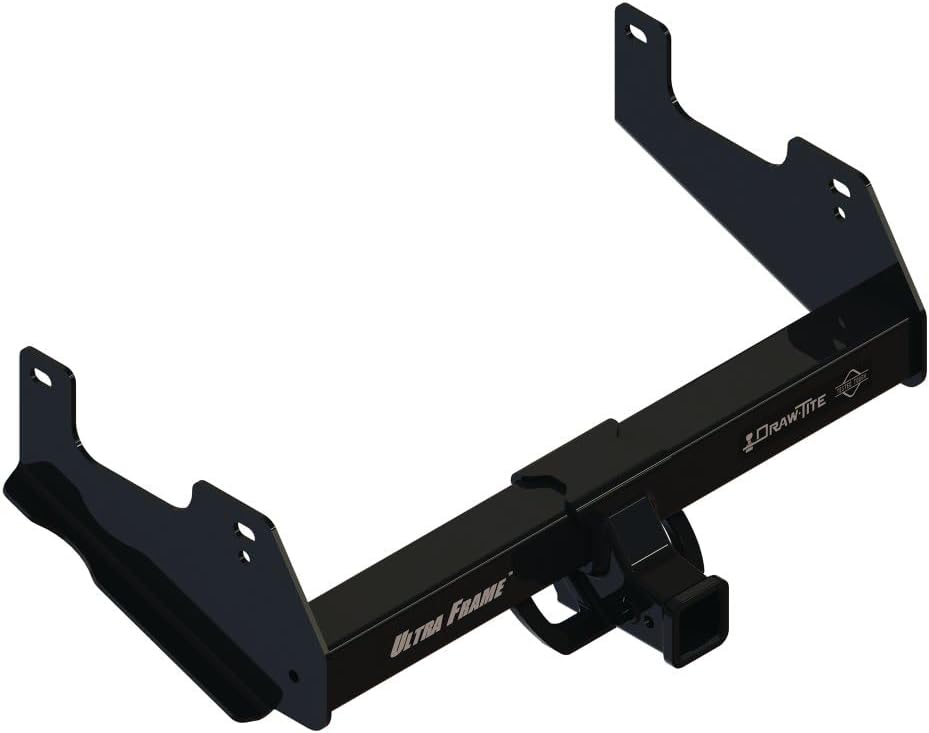
Draw-Tite 41954 Class V Trailer Hitch, 2-Inch Receiver for Ford F-150 (2015–2026)
Best Class 5 Tow Hitch Receiver
| Vehicle fit | Ford F-150 2015–2026 |
|---|---|
| Receiver size | 2 in. square |
| GTW rating | Up to 11,000 lbs |
| TW rating | Up to 1,100 lbs |
| Material | Alloy Steel |
The Draw-Tite 41954 is a Class V, vehicle-specific trailer hitch made to replace the factory hitch on Ford F-150s from 2015 through 2026. It installs to the truck frame and provides a 2-inch square receiver for commercial-grade towing. Constructed from all-welded alloy steel with a two-part powder coat, this hitch is designed to resist corrosion and withstand repeated heavy use. It is rated for up to 11,000 lbs. gross trailer weight and 1,100 lbs. tongue weight and supports weight distribution systems up to 14,000 lbs. which makes it suitable for large trailers and heavy loads. Installation is straightforward on trucks with compatible mounting points and the kit includes necessary hardware; some users report needing additional fabrication on trucks with integrated bumper-receiver assemblies. The finish and fitment are generally good, though a few buyers received units with surface damage or had fitment surprises on certain trim packages. If you need a factory-quality, high-capacity receiver tailored to the F-150 platform, this hitch delivers the strength and mounting precision required for demanding towing tasks.
Best for: Buyers who need a robust, commercially capable receiver for heavy towing on a 2015–2026 Ford F-150 and prioritize factory-quality fit and high capacity.
Less Ideal for: Drivers who want a universal or noninvasive plug-and-play hitch for trucks with welded factory bumper-receivers or who prefer a lighter-duty Class III solution.
- Class V rating with high capacities suitable for heavy trailers
- Vehicle-specific design for Ford F-150 2015–2026 for a close fit
- All-welded alloy steel construction and powder coat finish for durability
- Includes hardware and is designed for relatively straightforward installation on compatible trucks
- May require bumper or bracket modification on F-150s with integrated receiver/bumpers
- Some reported cosmetic finish defects on arrival
Verdict: Opt for this slot when you need a receiver rated for very high gross trailer weight and tougher commercial-grade towing demands.
CURT Class 4 Trailer Hitch 2-Inch Receiver (Fits Select Ford F-150)
Best Heavy‑Capacity Tow Hitch Receiver

| Pull Force (GTW) | 10000 Pounds |
|---|---|
| Tongue Weight | 1000 Pounds |
| Weight Distribution Capacity | 12000 Pounds |
| Receiver Size | 2 inches |
| Material | Carbon Steel |
The CURT 14017 is a custom-fit Class 4 trailer hitch designed for select Ford F-150 trucks that converts the rear into a standard 2-inch receiver for heavy towing. It is typically bolted to the truck frame using the supplied hardware and is most often installed with a helper or a jack to hold the heavy assembly in place. Notable features include a 10,000 lb gross trailer weight rating with 1,000 lb tongue weight, compatibility with weight-distributing hitches up to 12,000 lb GTW, and a dual-coat finish intended to resist rust, chips, and UV exposure. In practice the hitch gives your F-150 the capacity to tow large campers, boats, or multi-axle utility trailers while matching factory mounting points for a clean fit. Downsides are its weight, which makes solo installation awkward, and occasional shipping scuffs reported by users that may require touch-up paint. Installation instructions are serviceable but benefit from hands-on guides or video support for first-time installers.
Best for: Buyers prioritizing reliability and towing capability for a Ford F-150 who want a tested, vehicle-specific hitch that performs like a factory-quality receiver.
Less Ideal for: Those who need an ultra-lightweight or universal hitch solution or who prefer a product that requires no on-vehicle installation effort.
- High towing capacity: rated for 10,000 lb GTW and supports weight distribution up to 12,000 lb
- Vehicle-specific design for a snug, factory-quality fit on compatible Ford F-150s
- Durable dual-coat finish (liquid A-coat plus black powder coat) for corrosion and chip resistance
- Includes all necessary mounting hardware for a complete installation
- Heavy assembly makes solo installation difficult and often requires a jack or second person
- Some customers report surface dings or chipped finish on arrival that may need touch-up
Verdict: Choose this when you plan to tow heavier trailers, equipment, or boats and need a receiver with higher gross-trailer and tongue-weight capacity.
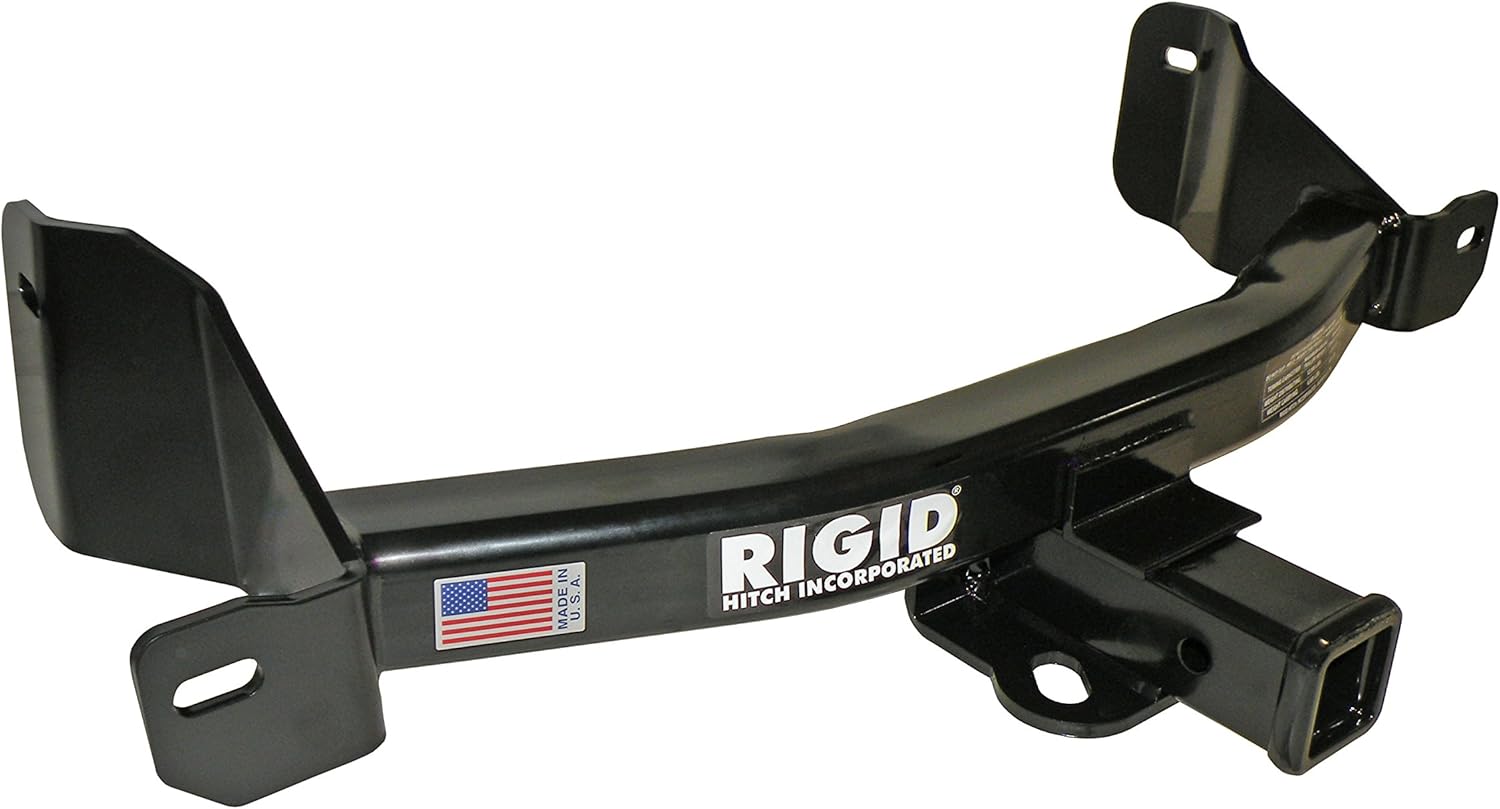
Rigid Hitch Class IV Trailer Hitch Receiver for 2009–2014 Ford F-150
Best No‑Drill Bolt‑On Receiver
| Pull Force | 6000 Pounds |
|---|---|
| Maximum Towing Capacity | 6000 Pounds |
| Vehicle Service Type | Trailer, Truck |
| Material | Alloy Steel |
| Finish Type | Powder Coated |
This Rigid Hitch Class IV receiver is a vehicle-specific, bolt-on trailer hitch for 2009–2014 Ford F-150 pickups that provides a 2-inch receiver opening and a 6,000 lb gross trailer weight rating. It installs with included mounting hardware and claims a quick, no-drill fit that tucks the crosstube beneath the bumper for a cleaner appearance and less exposure to road hazards. The powder-coated alloy steel construction and reinforced safety-chain attachment points give it a heavy-duty feel suited to towing trailers and hauling accessories. Notable practical benefits are the high tongue and gross weight ratings including higher ratings with weight distribution, and the concealed cross tube that preserves rear clearance and factory looks. Limitations to note are that it is vehicle-specific so fitment excludes certain HD models and some users reported tight forward mount alignment requiring adjustment, so professional help may be needed in rare cases. Ball mount and hitch ball are sold separately, so plan to buy those if you need a complete towing setup.
Best for: Buyers who prioritize practical value and a factory-like, heavy-duty hitch for a standard 2009–2014 Ford F-150 and want a durable, no-drill installation that supports regular towing needs.
Less Ideal for: Owners of F-150 HD variants or those seeking a universal hitch for multiple truck models should look elsewhere; also avoid if you need an all-in-one towing kit since ball mounts are not included.
- Vehicle-specific fit for 2009–2014 Ford F-150 for a near-factory installation
- 6,000 lb gross trailer weight rating with higher capacity when using weight distribution
- Powder-coated alloy steel construction resists corrosion and looks finished under the bumper
- Includes mounting hardware and hides the crosstube beneath the bumper for better ground clearance and aesthetics
- Does not fit 2013 F-150 HD models and is limited to specified F-150 years
- Some users reported tight forward mount alignment that required adjustment or professional attention
Verdict: Select this if you want an easier install using existing mounting points and prefer to avoid cutting or drilling into the frame or bumper.
YZONA 2-Inch Trailer Hitch Receiver for 2015–2020 Ford F-150
Best E‑Coat Rust‑Resistant Receiver

| Compatible Vehicle Type | 2015-2020 Ford F-150 |
|---|---|
| Material Type | Carbon Steel |
| Receiver Size | 2 inch |
| Towing Capacity | 8,000 LBS |
This YZONA trailer hitch is a direct-fit, no-drill receiver designed specifically for 2015–2020 Ford F-150 trucks. It bolts to factory mounting points and provides a standard 2-inch receiver opening for common accessories like ball mounts, bike racks, and cargo carriers. The hitch is made from heavy-duty carbon steel with an inner e-coat and an outer black powder coat for extra corrosion resistance, which helps it stand up to road salt, rain, and winter conditions. A reinforced crossbeam and stout mounting brackets aim to reduce flex and sway when towing, and the 8,000 lb rated capacity covers most medium-duty towing tasks. The package includes the required hardware and keeps a low, chassis-hugging profile so ground clearance is preserved. Limitations to note are that fitment is strictly for 2015–2020 F-150s and installation, while straightforward for one person, still requires basic tools and torqueing to spec; buyers planning heavy commercial towing should verify vehicle tow packages and brake requirements separately.
Best for: Buyers who need a factory-style, corrosion-resistant hitch for seasonal climates and salted roads and who prioritize long service life and easy bolt-on installation for a 2015–2020 F-150.
Less Ideal for: Drivers who need a hitch for other vehicle models or those planning constant heavy commercial towing without verifying the truck's tow configuration and brakes.
- Designed as a no-drill direct bolt-on fit for 2015–2020 Ford F-150s for easy installation
- Dual-layer corrosion protection with inner e-coat plus outer powder coat for enhanced rust resistance
- Standard 2-inch receiver accepts a wide range of towing and carry accessories
- 8,000 lb rated capacity with reinforced crossbeam and brackets to limit flex and sway
- Includes installation hardware and a low-profile design that preserves ground clearance
- Fitment limited to 2015–2020 Ford F-150 models only
Verdict: Pick this when you need extra protection against rust and road corrosion for long service life in wet or salted-road environments.
Choosing the Right Ford F-150 Tow Hitch Receiver: Key Factors to Consider
Load Capacity and Rating
Rated towing capacity and maximum tongue weight are the primary numbers to match with your trailer and payload. Choose a receiver whose published capacities meet or exceed your truck and trailer specifications so you do not exceed the weakest link in the towing chain.
Consider the combined weight of trailer, cargo, and passengers when evaluating ratings. A receiver with a higher class designation often provides more headroom for heavier trailers, but you still must respect the F-150 chassis and drivetrain limits.
Receiver Class and Hitch Size
The receiver class determines the common ball mount and accessory sizes that will fit. For many F-150 use cases, Class 3 receivers are a typical starting point because they accept 2-inch shanks used by a wide range of towing accessories.
Verify the exact hitch receiver size and pin diameter so accessories seat properly and locking mechanisms are compatible. Mismatched sizes can force the wrong accessory choice or require adapters that change load characteristics.
Mounting Style and Fitment
Most F-150 receivers are designed for bolt-on mounting to factory frame holes or underbody brackets. Bolt-on installations reduce labor and avoid permanent frame modification, making them preferable for resale and warranty-preservation.
Check whether the receiver requires bumper removal, trailer wiring relocation, or trimming of fascia elements. The easier the fitment to existing frame points, the quicker and less costly the installation.
Corrosion Protection and Finish
Receivers endure road grime, salt, and water. A durable finish and corrosion-resistant materials extend usable life and reduce maintenance. Look for powder coats, zinc plating, or similar treatments specified by the manufacturer.
Consider drainage features and sealed welds; these reduce rust at stress points. A better finish also helps maintain resale value and prevents structural weakening over time.
Installation Complexity and Hardware
Installation determines whether you can install the receiver yourself or need professional help. Bolt-on receivers that reuse factory holes and include complete fasteners, brackets, and instructions minimize surprises.
Assess whether additional drilling, welding, or cutting is required. Also confirm included mounting hardware grade and torque specs, because using wrong fasteners can compromise safety and durability.
Accessory Compatibility and Future Needs
Think beyond the immediate trailer. Buyers often use the receiver for bike racks, cargo carriers, or adapters for specialty hitches. Choose a receiver that accepts common accessories without sacrificing clearances or exceeding capacity.
Plan for future towing upgrades such as weight-distribution or 5th-wheel adapters and ensure the chosen receiver and mounting arrangement will support those adaptations or clearly note limitations.
Bolt-On Versus Weld-On Receivers
Bolt-on receivers are designed to attach to existing frame holes using supplied hardware, making them the easiest option for many F-150 owners. They usually preserve factory structure and are reversible, which helps if you sell or trade the truck later.
Weld-on receivers can offer a lower-profile or higher-capacity solution in specific circumstances, but they require a qualified welder and may affect resale and factory warranty considerations. For most owners who want straightforward installation and predictable fitment, bolt-on receivers are the practical choice.
- Bolt-on: quicker installation, reversible, minimal frame alteration
- Weld-on: potential for custom positioning and higher rigidity but requires professional welding
Preparing Your F-150 for Receiver Installation
Preparation reduces surprises during installation. Start by confirming your F-150's frame condition and cleaning mounting areas to remove rust or undercoating that can hide holes. Inspect the truck's wiring and bumper structure so you know if components need temporary removal.
Have the required tools, torque wrench, and hardware grade specified by the receiver. If you plan to DIY, arrange a safe lifting method and an assistant for alignment. Label any wiring or fasteners you remove to simplify reassembly.
- Verify factory mounting hole alignment and condition
- Clear underbody debris and address surface rust beforehand
- Gather proper tools and torque specifications
Understanding Towing Capacity Relative to the Receiver
A receiver's rating is one part of a larger towing system. The truck's axle ratio, transmission, brakes, and payload all contribute to safe towing. Installing a high-capacity receiver does not change the F-150's manufacturer towing limits, so always cross-check receiver ratings with your truck's placard and owner's manual.
If you frequently tow near the truck's limits, consider a receiver with a margin above your common loads and pay attention to tongue weight limits. This helps reduce stress on the hitch assembly and improves control when braking or cornering.
- Match receiver rating with the truck's published towing limits
- Allow safety margin for heavier loads and dynamic forces
Corrosion Prevention and Routine Maintenance
Routine inspection and care extend receiver life. Rinse salt and road grime from the receiver after winter driving, and touch up chips in the finish to prevent rust from starting at exposed metal. Grease or anti-seize at fasteners can reduce corrosion-induced seizure during future removals.
Inspect welds, bolts, and the receiver tube regularly for cracks or deformation, especially after heavy towing or impact. Replace any fasteners that show significant corrosion or wear rather than attempting temporary fixes.
- Rinse underbody after salt exposure
- Touch up paint chips and protect fasteners with anti-seize
- Inspect structural points before and after heavy towing
Electrical and Wiring Considerations
Installing a receiver often coincides with adding or relocating trailer wiring. Verify the condition of the truck's factory trailer wiring harness and ground points before mounting the receiver so routing does not pinch or stress the connectors.
If your towing setup requires a dedicated wiring module or auxiliary power feed, plan routing that keeps wires clear of exhaust and moving suspension parts. Secure connectors with proper clips and use dielectric grease on plugs to reduce corrosion.
- Check factory harness condition and ground points
- Route wiring away from heat and moving parts
- Use proper connectors and protect against moisture
How We Chose the Best Ford F-150 Tow Hitch Receiver
We focused editorial selection on attributes that directly affect performance and ownership for Ford F-150 owners. Key evaluation criteria included load capacity and weight distribution, because gross towing and tongue weight limits determine safe usage with different trailers. Fitment and mounting style were assessed to ensure the receiver aligns with factory frame points and bed configurations common to the F-150. Corrosion resistance and finish matter for long-term durability in varied climates and road salt conditions. Installation complexity and hardware completeness were examined so owners can estimate shop time or DIY feasibility. Finally, build quality and material grade were considered to infer fatigue resistance under repeated towing cycles. We excluded products that require frame modification beyond factory mounting points or that lack explicit F-150 fitment information. We did not consider accessories or ball mounts as separate products; the focus is the receiver assembly itself. The final list balances high load capacity with practical bolt-on installation options and corrosion protection appropriate for regular towing use.
Our full evaluation process is outlined in our review methodology.
FAQ
Can I install a receiver myself on an F-150?
Often you can install a bolt-on receiver yourself if it reuses factory frame holes and you have the right tools and an assistant. More complex installs that require drilling, welding, or bumper removal are better handled by a shop.
How do I choose the correct receiver class for my truck?
Match the receiver class to your typical trailer weight and the F-150's towing limits. Class 3 with a 2-inch opening covers many common towing tasks, but confirm tongue weight and gross trailer weight ratings against your load.
Will adding a higher-rated receiver increase my F-150's towing limit?
No. The receiver rating does not override the truck's manufacturer towing limits. A higher-rated receiver provides extra margin, but you must still stay within the F-150's official capacities.
What maintenance does a hitch receiver need?
Inspect the receiver and fasteners for rust and distortion periodically, rinse off road salt, touch up finish chips, and ensure mounting bolts remain torqued to specifications. Replace any corroded hardware promptly.
Are bolt-on receivers as strong as weld-on units?
Bolt-on receivers can be extremely strong when designed to use factory frame attachment points and proper hardware. Weld-on units may offer different placement or integration but require professional welding and are less reversible.
Final Verdict
Prioritize a receiver whose rated capacities and mounting method align with how you actually tow with your Ford F-150. Pay attention to tongue weight, class size, and whether the unit bolts to factory frame points to minimize installation time and preserve truck condition. Consider corrosion protection and included hardware when evaluating long-term durability and maintenance. Balance capacity with practical installation needs: choose a higher-rated, bolt-on receiver if you want strong performance without significant modification, or opt for a specialist installation only if your towing scenario demands it. With those tradeoffs in mind, you can select a receiver that reliably supports your towing plans.
Explore More:
- Check out all Ford F-150 parts & accessories
- Explore Exterior Accessories
- Browse all Accessories
