

Note: This article contains affiliate links. If you click on these links and make a purchase, I may earn a small commission at no extra cost to you. This helps support my research and content. Read my full affiliate disclosure here.
Upgrading the cat-back exhaust on a Ford F-150 3.5L can reshape the truck's sound, throttle response, and corrosion resistance without changing emissions hardware. You want a system that matches the engine character, delivers the tone you prefer, and stands up to road exposure and miles. This guide covers the top shortlisted cat-back exhaust systems selected for the F-150 3.5L and explains the practical tradeoffs between materials, sound level, and fitment.Below we summarize what matters for real-world driving and installation, then move into our top picks and the detailed decision factors that will help you pick the right system for your truck.
Looking for other parts? See all Ford F-150 parts & accessories.
Top Picks at a Glance
| Best Overall The best all-around choice for most situations | MBRP XP Series Cat-Back Exhaust System S5262AL for Ford F-150 (3" Mandrel-Bent, Pre-Axle Dual Outlet) |  |
| Best Quality Built to a higher standard if you want something more solid | Borla 140619 ATAK Cat-Back Exhaust for 2015–2020 Ford F-150 (select engines) |  |
| Best Value The sweet spot between price and what you get | Flowmaster FlowFX Extreme 3-Inch Cat-Back Exhaust Kit |  |
| Highest Rated A top-rated pick with lots of positive feedback | Borla 140616BC ATAK Cat-Back Exhaust for Ford F-150 |  |
| Most Popular A crowd favorite that many people choose with confidence | Roush 421711 F-150 Cat-Back Exhaust System — Side Exit, 3" Piping |  |
MBRP XP Series Cat-Back Exhaust System S5262AL for Ford F-150 (3" Mandrel-Bent, Pre-Axle Dual Outlet)

| Construction | T409 stainless steel, 16 gauge |
|---|---|
| Tubing | Mandrel-bent 3" |
| Outlet | Pre-axle dual outlet |
| Model number | S5262AL |
The MBRP XP Series cat-back replaces the factory rear exhaust with 3" mandrel-bent T409 stainless steel tubing and a pre-axle dual outlet layout to give the 3.5L F-150 a fuller, deeper tone and a more aggressive presence at the rear. It is designed for bolt-on installation with some alignment and a one-time cut of the stock pipe required on certain chassis; many owners report straightforward fitment when the hangers are lined up. The 16-gauge T409 construction resists corrosion from road salt and debris better than mild steel and is backed by a lifetime warranty for peace of mind. In use the system delivers strong midrange sound and a satisfying rumble at cruise, though several users note noticeable cabin drone at highway speeds or under steady throttle. The system improves exhaust flow without major modification, so it suits performance-minded drivers who want a louder, durable upgrade without tuning, but those sensitive to interior drone should be aware of that compromise.
Best for: Buyers who want a durable, factory-quality exhaust that adds a deeper, performance-oriented sound and improved flow while retaining a mostly straightforward installation process.
Less Ideal for: Drivers who prioritize a quiet cabin and minimal interior noise at highway speeds should consider a quieter muffler option or a system tuned for low drone instead.
- Durable T409 stainless steel construction with 16-gauge tubing for corrosion resistance
- Mandrel-bent 3" tubing to support improved exhaust flow and a fuller sound
- Pre-axle dual outlet layout gives a deeper, balanced tone and visual appeal
- Lifetime warranty provides long-term protection against defects
- Notable interior drone reported by multiple users at certain speeds and throttle conditions
Verdict: Choose this MBRP XP cat-back if you want a rugged, long-wearing 3" system that delivers a deep, performance-oriented tone for your 3.5L F-150.
Borla 140619 ATAK Cat-Back Exhaust for 2015–2020 Ford F-150 (select engines)
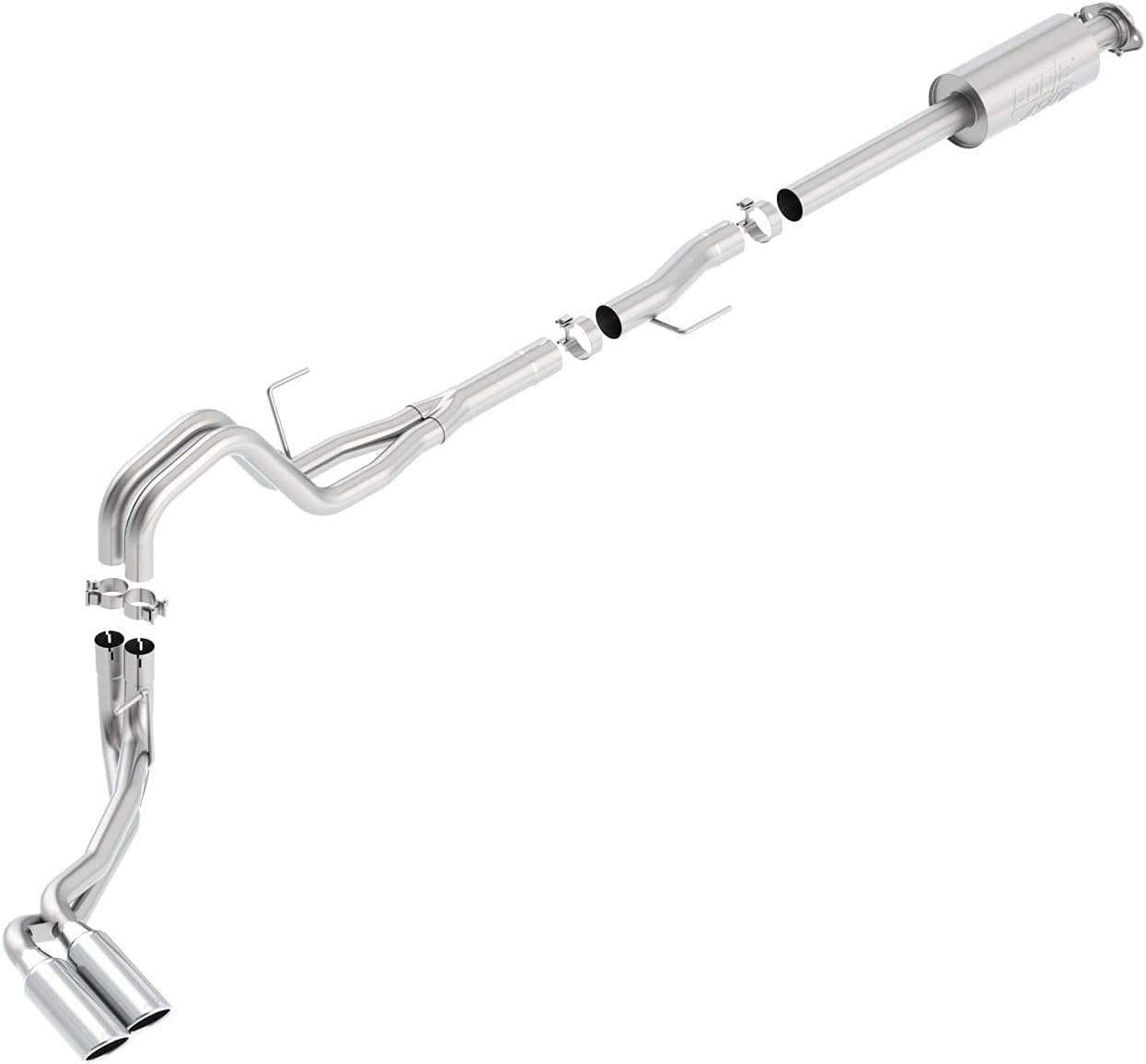
| Material Type | Stainless Steel |
|---|---|
| Included Components | Catback |
| Manufacturer Part Number | 140619 |
| Brand Name | Borla |
The Borla ATAK 140619 is a T-304 stainless steel cat-back system engineered to deliver a much louder, more aggressive exhaust note for select 2015–2020 Ford F-150 configurations. It installs with factory-style hangers and welds for a bolt-on fit and is intended for drivers who want an aggressive soundtrack without fabricating custom mounts. In use it produces pronounced burble and midrange punch that pairs well with forced-induction engines and cold-air intakes, while reviewers note limited in-cabin drone at cruising speeds. Construction is all-welded stainless for corrosion resistance and a long service life. Important trade-offs are loudness and potential need to tweak hanger length or cut sections during install on some trucks, and the ATAK tone may be too extreme for drivers who prefer a subtle or OEM-like sound. This is a focused performance upgrade for owners prioritizing aggressive sound and durable construction over stealth or strict factory refinement.
Best for: Buyers who want a bold, performance-focused exhaust tone and durable construction for their 3.5L F-150 and prioritize sound and character over a quiet factory feel.
Less Ideal for: Drivers who need a subtle or near-stock sound or who often drive in noise-restricted areas should consider quieter alternative systems or muffler-equipped options.
- T-304 stainless steel and all-welded construction for durability and corrosion resistance
- Bolt-on design uses factory-style hangers for straightforward installation
- ATAK tuning delivers aggressive, race-inspired exhaust tone with strong midrange presence
- Made in USA manufacturing and designed specifically for compatible F-150 configurations
- Very loud ATAK sound may be excessive for daily drivers in residential areas
- Some installations may require minor cutting or hanger adjustment for proper fitment
Verdict: Choose this Borla ATAK cat-back if you want a durable bolt-on system that gives a loud, aggressive performance tone to your 3.5L F-150.
Flowmaster FlowFX Extreme 3-Inch Cat-Back Exhaust Kit

| Compatible with Vehicle Type | Ford F-150 |
|---|---|
| Inlet Connection Size | 3 Inches |
| Material Type | 409 stainless steel |
| Automotive Fit Type | Vehicle Specific Fit |
The Flowmaster FlowFX Extreme cat-back replaces the factory rear exhaust on compatible Ford F-150 2.7L, 3.5L, and 5.0L models with a 3.0-inch mandrel-bent stainless system designed for increased flow and a louder, deeper exhaust note. It installs using factory hanger locations and includes the necessary hardware, so many owners complete the swap in a driveway in about an hour. The 409 stainless steel construction and 16-gauge tubing give corrosion resistance and durability for daily driving and occasional off-road use. Expect a noticeably more aggressive tone that grows louder under load and some reports of rasp at high rpm; the dump-style exit helps ground clearance for rough terrain. Flowmaster advertises rear-wheel gains on a dyno, and several users saw modest performance and fuel economy improvements in real-world use. This is a straightforward, performance-oriented upgrade for drivers who prioritize sound and usable power gains, but those seeking a subtle or quiet upgrade should consider milder muffler options instead.
Best for: Buyers who want a bolt-on exhaust that delivers a stronger sound and noticeable drivability gains while keeping installation simple and largely DIY-friendly.
Less Ideal for: Drivers who prioritize a quiet, subtle stock-like tone or need a less aggressive exhaust for daily commuting or noise-sensitive areas.
- 3.0-inch mandrel-bent stainless tubing for improved exhaust flow and durability
- Designed to use factory hanger locations for relatively simple at-home installation
- Includes all necessary hardware for a complete cat-back swap
- Dump-style exit improves clearance for off-road driving
- Manufacturer claims measurable rear-wheel power gains
- Significantly louder and more aggressive tone that can be intrusive for some drivers
Verdict: Choose this Flowmaster kit when you want an easy-install, durable cat-back that amplifies sound and adds usable performance to a Ford F-150 3.5L.
Borla 140616BC ATAK Cat-Back Exhaust for Ford F-150

| Material Type | Stainless Steel |
|---|---|
| Included Components | Catback |
| Manufacturer Part Number | 140616BC |
| Item Type Name | Catback |
This Borla ATAK cat-back replaces the stock rear section with all-welded T-304 stainless steel piping and large-bore resonator design to deliver a much louder, more aggressive exhaust note at throttle while remaining reasonably quiet at cruise. Installation is bolt-on for the listed F-150 fitments and most buyers report the kit aligns well with factory hangers, though you may need basic hand tools and occasional breaker-bar effort on tight suspension bolts. Notable features include thick black 4-inch tips, full welded construction, and a manufacturer claim of no drone. In real-world use the system gives a pronounced cold-start and strong mid- to high-RPM character, improved turbo sound on EcoBoost trucks, and reported cooler engine temps when towing. Trade-offs are higher cabin/neighbor noise at startup and under hard acceleration and an expectation of professional alignment of tips for best finish since tip length and weld areas can be uneven on some units.
Best for: Buyers who prioritize a durable, long-lasting exhaust upgrade and want a system that emphasizes sound and proven stainless construction while still fitting without major modifications.
Less Ideal for: If you need a very quiet daily-driven truck for close neighborhoods or want a subtle cosmetic-only change, this loud performance-oriented system is not a good match.
- T-304 stainless steel construction for long corrosion resistance
- Bolt-on design uses factory mounting points for straightforward installation
- All-welded build and quality clamps reduce leak risk
- Loud, aggressive sound at WOT but subdued at cruise to avoid highway drone
- Designed pieces and large tips improve rear-end appearance and turbo tone
- Significantly louder on cold starts and wide-open throttle which may bother nearby people
- Some units show minor fit-and-finish issues like uneven tip projection and exposed welds
Verdict: Choose this Borla ATAK cat-back when you want a durable, bolt-on stainless exhaust that gives a dramatic mid-to-high RPM sound upgrade while resisting corrosion.
Roush 421711 F-150 Cat-Back Exhaust System — Side Exit, 3" Piping

| Vehicle fit | 2011–2014 F-150 3.5L/5.0L/6.2L |
|---|---|
| Piping diameter | 3 Inches |
| Material | 409 stainless steel (304 tips) |
| Exit style | Side exit |
This Roush cat-back replaces the factory rear section with mandrel-bent 3 inch piping, a canister-style muffler, and side-exit chrome-flashed tips to produce a deeper, more aggressive tone while improving exhaust flow. It is built from 409 stainless steel with 304 stainless tips and is intended to fit all cab and bed configurations on 2011–2014 F-150 3.5L, 5.0L, and 6.2L trucks; some special editions may need minor flange modification. Typical use is a direct bolt-on swap with one marked pipe left long to trim for fitment, so the kit works for owners who want the signature Roush sound without cutting into headers. The mandrel bends reduce restrictions compared with crimped systems and the deleted resonator gives a fuller note, but expect noticeably louder exhaust and occasional popping under heavy throttle. Installation is straightforward for anyone comfortable with basic tools and a saw or grinder for the one cut, and reviewers report solid weld and finish quality. If you want a louder, throaty upgrade that keeps a relatively factory-style layout and durable materials, this system delivers; if you need a quiet daily-driver setup or want a perfect factory match for every rare trim, consider alternatives.
Best for: Buyers who prioritize a proven, aggressive exhaust tone and want a durable, bolt-on system that fits 2011–2014 F-150s while relying on community feedback for reliability and sound character.
Less Ideal for: Drivers seeking a near-silent or stock-like exhaust experience or those who want a no-modification fit for every limited edition trim should look elsewhere.
- Mandrel-bent 3" piping for improved exhaust flow
- Durable stainless-steel construction with 304 stainless tips
- Side-exit design with embossed Roush tips for a distinct look and sound
- Marked long pipe simplifies trimming to fit different cab and bed configurations
- Polished components and solid welds reported by users
- Deletes factory resonator so cabin noise and loudness are noticeably increased
Verdict: Choose this Roush cat-back if you want a durable, mandrel-bent 3" system that gives your 2011–2014 F-150 a deeper, aggressive Roush sound with proven fitment across cab and bed configurations.
Choosing the Right Ford F-150 3.5L Cat-back Exhaust System: Key Factors to Consider
Material and Corrosion Resistance
The metal and finish determine how long a cat-back will last under road exposure. Stainless steel alloys resist rust far better than mild steel; look for 409 or 304 stainless specifications and any protective coatings. Thicker wall tubing and mandrel bends also reduce the chance of premature deterioration.
Corrosion resistance matters more in regions with salted roads or frequent moisture. A system that resists rust will maintain fitment and sound character longer, preventing leaks at joints and reducing the chance of hanger failure. Consider lifetime expectations when deciding whether to invest in higher-grade stainless or a more economical coated option.
Sound Tuning and Drone
Different muffler designs and pipe diameters create very different sound profiles, from mellow and deep to loud and aggressive. For a daily-driven F-150 3.5L, consider how the system sounds at idle, during steady cruise, and under full-throttle acceleration. Pay attention to owner-reported drone at highway speeds, which can make long trips fatiguing.
Manufacturers tune chambers, resonators, and muffler packing to control midrange resonance. If you expect frequent highway cruising, prioritize designs that specifically minimize cabin drone while still delivering the desired exterior tone.
Fitment and Hanger Alignment
Correct fitment ensures the system installs cleanly without fabricating hangers or relocating components. A purpose-built cat-back for the Ford F-150 3.5L should match the factory exhaust routing, hanger positions, and tip placement. Poorly aligned systems can stress hangers, cause rattles, or scrape the bumper during suspension travel.
Check whether the system uses factory-style hangers, includes adapter hardware, or requires cutting. Clear fit notes reduce installation time and limit the need for additional brackets or welding.
Backpressure, Flow, and Engine Response
Pipe diameter, bend quality, and muffler internals affect exhaust flow and backpressure. On the 3.5L engine, excessive backpressure can blunt midrange torque, while a correctly sized system can improve throttle response and high-end power delivery. Mandrel-bent tubing preserves internal diameter through bends to avoid flow restriction.
When choosing pipe size, balance low-end drivability against high-rpm gains. Larger pipes favor top-end flow but can reduce scavenging below certain RPMs. Look for specs or descriptions that indicate how the design affects the F-150's torque curve.
Muffler Design and Tailpipe Options
Muffler type—chambered, straight-through, or baffled—shapes tone and backpressure. Straight-through designs typically make a louder, freer-flowing sound but can increase cabin noise. Chambered mufflers often offer deeper tones and more interior comfort. Tailpipe tip styles and placement affect appearance and may influence how sound projects behind the truck.
Consider whether you want dual tips, quad tips, or staggered outlets, and whether the tips are welded or clamp-on for future changes. Tip finish and size are part of the truck's visual appeal and may require trimming bumper cutouts for a clean look.
Installation Complexity and Tools Needed
Installation can range from simple clamp-on swaps to systems that need cutting, welding, or bolting in place. For owners doing their own work, systems that use existing flanges and factory hangers significantly reduce time and tools required. Consider whether included hardware, gaskets, and detailed instructions are provided.
Factor in whether you have access to common garage tools, a lift, or prefer a shop install. Systems designed for bolt-on installation reduce labor costs and the likelihood of fitment issues that arise during field modifications.
How Cat-Back Systems Affect Everyday Driving
A cat-back exhaust replaces the piping from the catalytic converter back, changing how the truck breathes and sounds without touching emissions components. On the Ford F-150 3.5L, expected differences include a sharper throttle response at mid to high RPMs and a noticeable change in cabin and exterior tone depending on muffler choice.
Practical impacts include potential improvements in passing acceleration and a change in in-cabin noise. Owners who commute long distances should weigh sound preference against possible drone, while those who tow should ensure the system does not create excessive backpressure that could affect low-speed torque.
- Can improve throttle response and high-rpm power delivery
- Alters cabin and exterior sound profile
- Typically does not require changes to catalytic converters or emissions hardware
Deciding Between Stainless Grades and Coated Pipes
Higher-grade stainless steel costs more but lasts longer, especially in climates with road salt or high humidity. 409 stainless is common for good corrosion resistance at reasonable cost, while 304 stainless offers superior longevity and a brighter finish.
Coated or painted systems may be economical and look good initially but can chip over time and allow corrosion to start. If you plan to keep your F-150 for many years or frequently drive in harsh conditions, prioritize corrosion-resistant construction.
- 409 stainless balances cost and rust resistance
- 304 stainless offers the best corrosion protection and finish
- Coatings can extend life but are susceptible to damage
Installation Tips for a Smooth Swap
Prepare the truck and workspace by elevating it safely and letting the exhaust cool. Inspect factory hangers and rubber isolators for wear and replace them if necessary to ensure a secure fit for the new system. Use penetrating lubricant on bolts when removing old clamps or flanges.
Follow torque specs for any flange bolts and support the system during alignment to avoid twisting hangers. If cutting is required, measure twice and trim incrementally. When clamps are used, tighten progressively and check for leaks at operating temperature.
- Replace worn hangers before installing the new system
- Support the exhaust during alignment to prevent stress
- Check for leaks after a short test drive and retorque connections
Sound Level, Neighborhood Considerations, and Legal Notes
Sound preference is subjective, but local noise ordinances and community standards may restrict aftermarket exhaust loudness. Confirm legal limits or HOA rules before choosing an aggressive tone. For many owners, a balanced system that offers a deeper exterior sound without excessive interior drone is the best compromise.
Also consider how the truck will be used. A louder setting may be desirable for weekend drives but problematic for daily commuting or early-morning departures. Plan for compromises between showy sound and practical neighborhood living.
- Check local regulations and HOA rules
- Opt for tunable options like removable resonators if unsure
- Consider different profiles for daily use versus occasional spirited driving
Tailpipe Fitment and Bumper Clearance
Tailpipe tip size and exit location affect fitment with the rear bumper and may require trimming or an adapter for a clean look. Verify the tip geometry against the F-150 3.5L bumper profile to avoid rubbing or an awkward exit angle.
Some systems include adjustable tips or extensions to fine-tune placement after installation. Ensuring adequate clearance prevents damage during suspension travel and maintains a factory-like appearance.
- Measure tip projection relative to bumper cutouts
- Look for adjustable tips to perfect alignment
- Confirm clearance for hitch receivers or bed accessories
Still looking for the perfect fit?
Select your Ford F-150 configuration to see the most relevant Cat-back Exhaust Systems recommendations
How We Chose the Best Ford F-150 3.5L Cat-back Exhaust System
We narrowed candidates by focusing on attributes that directly affect fitment, performance feel, longevity, and install effort for the Ford F-150 3.5L. Key evaluation criteria included: sound tuning, which determines interior and exterior noise levels and the system character under idle, cruise, and full throttle; material and corrosion resistance, prioritizing stainless options and protective finishes that resist road salts and moisture; fitment and hanger alignment, ensuring the system mates cleanly to the 3.5L exhaust routing and existing hangers without frame modifications; backpressure and flow characteristics, assessing whether the design preserves low-end torque while improving flow at higher RPMs; muffler design and tailpipe layout, for balancing tone, drone potential, and desired tip position; and installation complexity, including clamp- versus bolt-flange joints and whether cutting or welding is required.We excluded systems that required manifold changes, catalytic converter relocation, or modifications to emissions equipment. We also filtered out options without explicit fit notes for the 3.5L configuration. The result is a focused set of systems that suit typical owners seeking improved sound and durability without major drivetrain or emissions alterations.
Our full evaluation process is outlined in our review methodology.
FAQ
Will a cat-back exhaust change my Ford F-150 3.5L's emissions?
A cat-back replaces the piping after the catalytic converter and does not alter emissions hardware. It should not affect emissions certification as long as the catalytic converters and sensors remain stock and unmodified.
How difficult is catback exhaust installation on the 3.5L?
Difficulty varies by system. Many cat-back systems designed for the F-150 3.5L use factory hangers and clamp connections for a straightforward install that a competent DIYer can handle. Some options may require cutting, welding, or additional hanger brackets and are better done in a shop.
Will a larger pipe diameter make my truck louder or more powerful?
Larger pipe diameters often free up high-rpm flow and can increase exhaust volume, but they may reduce low-end scavenging if oversized. For the 3.5L, balance pipe size to preserve midrange torque while providing the desired top-end characteristics.
Can a cat-back cause interior drone on long drives?
Yes, certain muffler designs and resonator setups can create cabin drone at specific cruise RPMs. Choose designs that mention drone reduction or include resonators if minimizing in-cabin noise is a priority.
Is welding required for most aftermarket cat-back systems?
Many modern cat-back systems for the F-150 3.5L use slip-fit or flange connections that avoid welding, but some performance-focused kits may require welding for the final assembly. Product fit notes usually indicate the installation method.
How do I maintain and extend the life of my new cat-back?
Regularly inspect hangers, clamps, and pipe joints for corrosion or looseness. Rinse the underside after driving on salted roads, and touch up any damaged finishes. Re-torque clamp connections after a short break-in period to prevent leaks.
Final Verdict
When choosing a cat-back exhaust for the Ford F-150 3.5L, prioritize material quality, sound character, and proper fitment to ensure the system suits your daily driving and towing needs. Expect tradeoffs between a louder, free-flowing design and one that minimizes cabin drone and retains low-end torque.Make your decision based on how you use the truck: choose corrosion-resistant materials and secure hanger alignment for longevity, and select muffler and pipe sizing that achieve the tone and response you want. Focus on fitment notes and installation complexity to reduce surprises and ensure a clean, durable install.
Explore More:
- Check out all Ford F-150 parts & accessories
- Explore Cat-back Exhaust Systems Maintenance & Repair Guides
- Explore Exhaust & Emissions
- Browse all Auto Parts
