

Note: This article contains affiliate links. If you click on these links and make a purchase, I may earn a small commission at no extra cost to you. This helps support my research and content. Read my full affiliate disclosure here.
If you own a 1997-2003 Ford F-150 and you are dealing with rough idle, poor fuel economy, or an engine light, the oxygen sensor is a likely culprit. Choosing the right 1997-2003 Ford F-150 oxygen sensor matters because this generation relies on proper O2 feedback to control fuel trim and emissions. Installing the correct sensor restores correct air-fuel ratios and helps the engine run smoothly. This guide presents the top shortlisted oxygen sensors tailored to the 1997-2003 F-150, explains the evaluation criteria we used, and outlines common symptoms and installation considerations. Read on to find the options that fit your truck and the factors to weigh before you buy.
Looking for other parts? See all Ford F-150 parts & accessories.
Top Picks at a Glance
| Best Overall The best all-around choice for most situations | Bosch 15716 Premium Original Equipment Oxygen Sensor |  |
| Best Quality Built to a higher standard if you want something more solid | Bosch 15717 Premium Original Equipment Oxygen Sensor |  |
| Best Value The sweet spot between price and what you get | HHGKPVX Oxygen Sensor (15717) — Direct Replacement, 4-Wire, Stainless Steel (2-Pack) |  |
| Best Budget The cheapest option that still gets the job done reliably | Gledewen Oxygen Sensor (Replacement for 15717/15716/15664) |  |
| Most Popular A crowd favorite that many people choose with confidence | MOSTPLUS Oxygen Sensor Kit (Set of 4) for Ford F-150 5.4L |  |
| Best Seller A high-volume bestseller chosen again and again | RANSOTO O2 Oxygen Sensor Kit (Set of 4) |  |
Bosch 15716 Premium Original Equipment Oxygen Sensor

| Brand | Bosch |
|---|---|
| Model | 15716 |
| Mounting Type | Flange Mount |
| Upper Temperature Rating | 180 Degrees Celsius |
| Material Type | Metal, Stainless Steel |
The Bosch 15716 is a direct-fit oxygen sensor built to replace a failing factory unit and restore accurate exhaust oxygen readings. It includes a fast-acting heater for quick warm-up, a double laser-welded stainless steel body that resists exhaust corrosion, and true direct-fit connectors with pre-coated threads to simplify installation. In use it monitors exhaust oxygen so the engine control unit can adjust air-fuel ratio, helping reduce emissions, stabilize idling, and recover fuel economy when a worn sensor causes drivability issues. The sensor is factory-tested for functionality, and many buyers report straightforward plug-and-play swaps on compatible Ford vehicles, though cable length varies between similar Bosch part numbers so confirm reach for your sensor position. Installation can still be tight depending on vehicle access and may require common hand tools or penetrating spray to remove the old sensor. For someone replacing a worn upstream sensor on compatible 1997-2003 F-150s, this offers OEM-level durability and reliable performance.
Best for: Buyers who want a dependable, factory-quality replacement to restore proper air-fuel control and emissions performance on compatible Ford trucks and value long-term durability over lowest-cost options.
Less Ideal for: If you need a sensor with an extended harness for modified exhausts or custom headers, choose a part specified for longer wiring or a universal sensor with an appropriate length rather than this direct-fit unit.
- Direct-fit connectors and pre-coated threads speed installation and reduce prep work.
- Fast-acting heater brings the sensor to operating temperature quickly for accurate early readings.
- Double laser-welded stainless steel body resists exhaust corrosion for longer service life.
- Factory testing ensures functional unit out of the box, matching factory-quality performance.
- Cable length can be shorter than some factory harnesses requiring extension or different part selection.
- Access to the sensor location on some vehicles can make installation difficult without the right tools.
Verdict: Choose the Bosch 15716 when you want a proven, factory-quality direct-fit oxygen sensor that restores proper engine monitoring and long-term durability for compatible Ford F-150s.
Bosch 15717 Premium Original Equipment Oxygen Sensor

| Maximum Supply Voltage | 12 Volts |
|---|---|
| Measurement Accuracy | ±1.5% |
| Mounting Type | Flange Mount |
| Output Type | Digital |
| Upper Temperature Rating | 1472 Degrees Fahrenheit |
The Bosch 15717 is a premium direct-fit oxygen sensor built to match factory performance for compatible Ford applications. It measures exhaust oxygen and sends a digital signal to the engine control unit so the air-fuel mixture can be adjusted, which helps the catalytic converter and fuel economy. Installation is straightforward thanks to factory-style connectors, pre-applied anti-seize on the threads, and a flange mount that bolts into the original location. Notable features include a stainless steel double laser-welded body for corrosion resistance, a fast-acting heater to reach operating temperature within seconds, and factory-level testing to verify output accuracy. In practice this means quicker closed-loop operation after cold starts and reliable long-term readings that help prevent drivability issues and check engine lights related to oxygen sensor failure. Limitations are typical of any replacement sensor: fitment must be matched to the correct sensor position and model year, and wiring length may be longer than some factory harnesses requiring tidy routing during install.
Best for: A buyer wanting to maintain or restore engine performance and emissions control on a late 1990s to early 2000s Ford, prioritizing a reliable factory-quality replacement that plugs into the existing harness and heats up quickly for accurate readings.
Less Ideal for: People looking for a universal or multi-vehicle aftermarket solution or those who need a sensor explicitly tuned for high-performance engine management modifications.
- Direct-fit connector and pre-coated threads for straightforward installation
- Stainless steel double laser-welded body resists exhaust corrosion
- Fast-acting heater brings the sensor to operating temperature quickly
- 100% factory testing for consistent, accurate output
- Requires correct position-specific fitment; not a universal sensor
Verdict: Choose the Bosch 15717 when you want a dependable, factory-quality direct-fit oxygen sensor that restores accurate air-fuel control on compatible Ford trucks.
HHGKPVX Oxygen Sensor (15717) — Direct Replacement, 4-Wire, Stainless Steel (2-Pack)

| Material | Stainless Steel |
|---|---|
| Maximum Supply Voltage | 12 Volts |
| Measurement Accuracy | ±1-2% |
| Mounting Type | Flange Mount |
| Upper Temperature Rating | 900 Degrees Celsius |
These HHGKPVX oxygen sensors are a budget-minded direct-replacement option for vehicles that use 4-wire narrowband sensors. They arrive prepped for installation with anti-seize on the threads and a crush washer so you can install them with common hand tools rather than specialty equipment. In use they perform the single-task role of monitoring exhaust oxygen and sending an electrical signal to the engine control module to help maintain proper fuel trim. The sensors are stainless steel and rated for high temperatures, which is typical for exhaust service, and the listing includes multiple part numbers to match factory connections. Important limitations: these are 4-wire narrowband sensors and will not work in applications that require a wideband 6-pin upstream sensor, so confirm plug count and connector type before buying. Fitment is focused on older Ford trucks and related models covered in the listing rather than modern vehicles with different sensor types.
Best for: Buyers who want a practical, no-frills replacement sensor that fits older Ford F-Series and related models and prioritizes straightforward installation and reliable basic function.
Less Ideal for: Those who need a wideband upstream sensor, advanced emissions diagnostics, or an OEM-branded sensor with manufacturer-backed validation should look elsewhere.
- Pre-applied anti-seize and crush washer for easier installation
- Stainless steel construction and high temperature rating for durability in exhaust conditions
- Direct-replacement fit for many Ford-era models listed by part number and year range
- Comes as a two-pack, useful when replacing paired sensors
- Not compatible with wideband 6-pin upstream sensors so it will not work for all applications
Verdict: A cost-effective, ready-to-install 4-wire replacement sensor pair for older Ford trucks when a narrowband factory-style swap is required.
Gledewen Oxygen Sensor (Replacement for 15717/15716/15664)
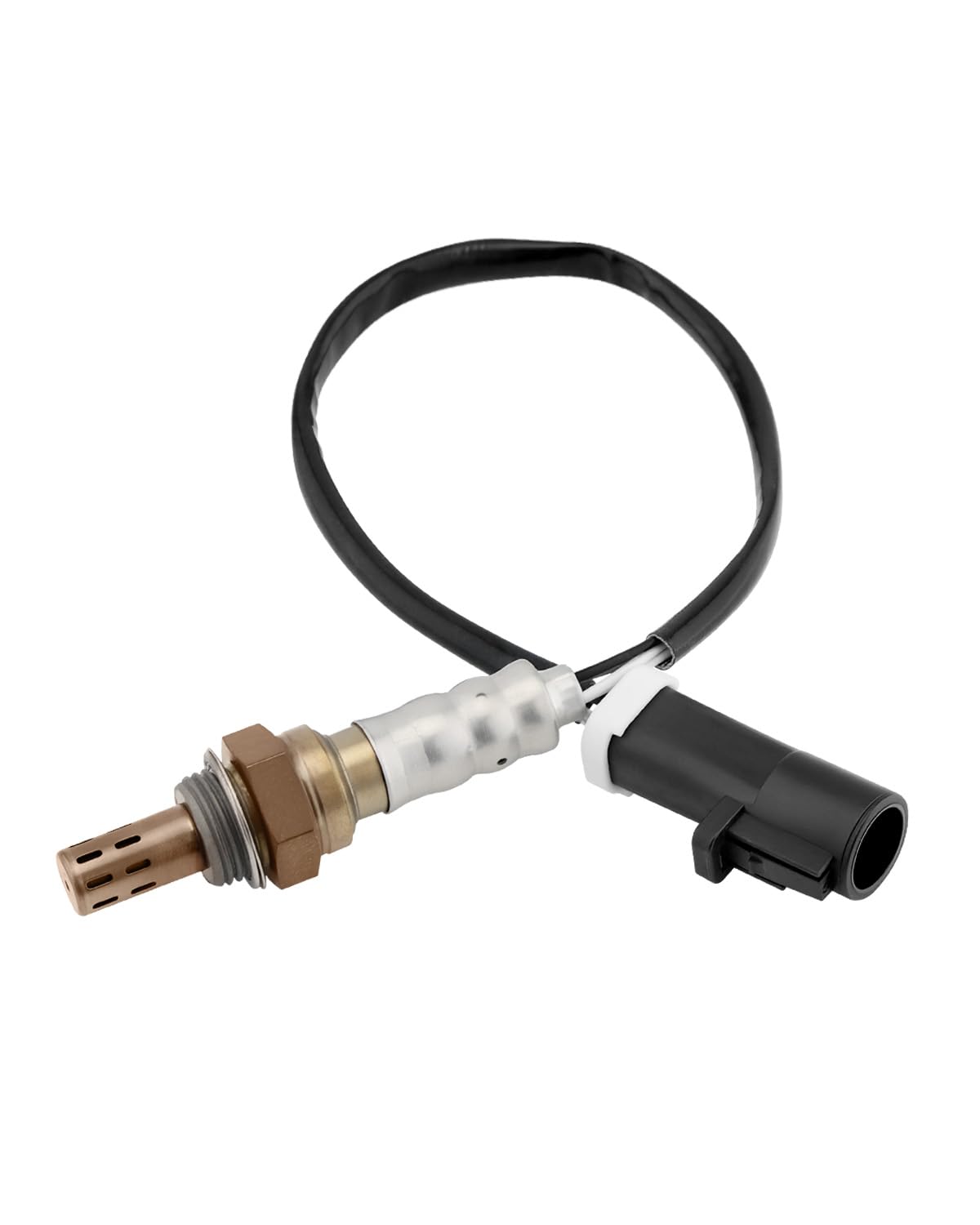
| Maximum Supply Voltage | 5 Volts |
|---|---|
| Measurement Accuracy | ±0.5% |
| Mounting Type | Flange Mount |
| Upper Temperature Rating | 1000 Degrees Celsius |
| Material Type | Stainless Steel |
This Gledewen oxygen sensor is a budget-friendly direct replacement designed to detect exhaust oxygen for proper air/fuel control. It installs in place of factory sensors using a flange mount and the included electrical connector when it matches your original plug. The stainless steel, laser-welded body and high temperature rating are meant to improve durability and response compared with worn units, which helps restore fuel economy and reduce emissions-related drivability issues. Typical use is as a like-for-like upstream or downstream sensor on compatible Ford V6 and V8 engines to clear check-engine codes or recover lost performance. Notable features are a stated ±0.5% measurement accuracy, 5 volt supply compatibility, and material built for 1000 C service. Limitations: compatibility depends on matching the original plug and part number, and longevity can vary by operating conditions so some users may see shorter service life than OEM parts. Replacement wiring or connector differences may require verification before installation.
Best for: Buyers who need an affordable, do-it-yourself replacement to clear O2-related codes and restore fuel economy on older Ford trucks and prefer a viable, lower-cost alternative to dealer parts.
Less Ideal for: Shoppers seeking long-term, guaranteed OEM-equivalent longevity under heavy-duty commercial duty or those unwilling to verify plug compatibility should consider higher-end branded sensors or dealer replacements.
- Direct replacement fit for listed Ford part numbers for straightforward swap
- Stainless steel, laser-welded construction rated for high temperatures
- Specified measurement accuracy and standard 5 V output for ECU compatibility
- Suitable for upstream or downstream use to restore fuel trim and reduce emissions faults
- Requires confirming connector and plug match before ordering since wrong plug will not fit
Verdict: A low-cost, stainless-steel direct replacement that restores oxygen sensing and fuel control on compatible Ford trucks when the connector matches the original part.
MOSTPLUS Oxygen Sensor Kit (Set of 4) for Ford F-150 5.4L

| Material | Ceramic, Metal, Polymer |
|---|---|
| Style | 4pcs |
| Mounting Type | Threaded |
| Output Type | electrical signal |
| Upper Temperature Rating | 1562 Degrees Fahrenheit |
These MOSTPLUS oxygen sensors provide a full set of upstream and downstream replacements intended for Ford F-150 5.4L engines. Each sensor threads into the exhaust and sends an electrical signal to the engine computer so the PCM can adjust air-fuel mixture and clear emission codes. The kit is sold as four sensors and includes longer wiring harnesses than many factory units, which makes routing easier on some vehicles but can require zip ties or trimming to keep excess cable away from heat sources. Install is straightforward for a mechanically minded owner and the sensors come with antiseize on the threads to ease future removal. Performance-wise they are an economical option that many buyers report restored drivability and cleared diagnostic codes after a few driving cycles, though quality control appears mixed in a minority of orders. If you need a budget replacement to get an aging F-150 running cleanly, this kit does the job, but be prepared to manage the longer wiring and to swap any defective pieces under seller support if necessary.
Best for: Buyers who prioritize proven user feedback and want a low-cost, full replacement kit to clear emission codes and restore drivability on a 1997–2003 Ford F-150 with a 5.4L engine.
Less Ideal for: Shoppers who need exact factory-length sensors or guaranteed premium fitment without any potential for adjustments should consider higher-end OEM-quality replacements.
- Complete set covers upstream and downstream locations so you can replace all sensors at once
- Threads are pre-treated with antiseize to simplify installation and future removal
- Long wiring harnesses reduce the risk of being too short during installation
- Compatible with common OEM part numbers listed for Ford 5.4L applications
- Plug-and-play electrical connectors for straightforward replacement on supported vehicles
- Wiring harnesses are significantly longer than factory which may require securing or trimming
- Some buyers reported occasional defective units in multi-pack orders
Verdict: A budget-friendly four-sensor kit that restores emissions control and drivability for 1997–2003 Ford F-150 5.4L trucks when you want an affordable, user-proven replacement.
RANSOTO O2 Oxygen Sensor Kit (Set of 4)

| Material | Ceramic, Metal |
|---|---|
| Mounting Type | Flange Mount |
| Output Type | Push-Pull |
| Item model number | WWJ286 |
This RANSOTO kit supplies four oxygen sensors intended as direct-replacement upstream and downstream sensors for older Ford platforms. Installation is straightforward for a competent DIYer or a shop: the sensors use a flange mount and standard electrical connector so they thread into the exhaust and plug into the factory harness. The kit lists compatibility with a wide range of Ford and related models and claims to replace several factory part numbers, which simplifies sourcing sensors for a multi-sensor job. In use the sensors typically clear check-engine codes and restore normal engine behavior according to buyers, though a few users reported lingering fuel-trim codes that may require tuning or a different sensor type. Build materials are ceramic and metal and the set includes four pieces so you can replace both upstream and downstream locations at once. Expect an aftermarket fit and finish that is good for routine repairs but be prepared to troubleshoot connector clips or wiring differences on some applications when compared with factory parts.
Best for: Buyers who want a complete set to replace all O2 sensors at once and prefer a low-risk, do-it-yourself repair that restores basic engine control and clears check-engine lights.
Less Ideal for: Drivers seeking an exact factory-spec matched sensor for emissions testing or vehicles with sensitive fuel-trim management should consider a manufacturer-specific sensor instead.
- Includes four sensors so you can replace upstream and downstream units in one purchase
- Threads and flange mount match standard exhaust ports for easy mechanical installation
- Plugs into factory-style connector for straightforward electrical hookup
- Covers many Ford-era part numbers and models, reducing fitment guesswork
- Aftermarket calibration can trigger lean or rich codes on some vehicles
- Some units lack the factory color coding or locator tabs found on OEM sensors
Verdict: A convenient four-piece replacement kit that makes routine O2 sensor replacement simple for older Ford trucks and riders who want a practical, do-it-yourself fix.
Choosing the Right 1997-2003 Ford F-150 Oxygen Sensor: Key Factors to Consider
Fitment and Connector Type
Correct thread size, mounting orientation, and connector pinout determine whether the sensor plugs into the stock wiring harness without splicing. Many 1997-2003 F-150 variants use specific upstream and downstream locations with distinct connectors. Installing a sensor that does not match these details can lead to false codes or improper heater operation.
Confirming fitment prevents unnecessary modification and ensures the engine computer receives accurate signals. When fitment information is unclear, verify the harness connector visually or consult the vehicle's service specifications before ordering.
Heater Circuit Performance
Heated oxygen sensors reach operating temperature faster, which helps the engine enter closed-loop operation more quickly after startup. For the 1997-2003 F-150, reliable heater element function reduces cold-start emissions and stabilizes fuel trim sooner.
Assess reported warm-up times and heater resistance specs when available. A weak or failed heater can trigger heater-related codes and prolong rich or lean conditions during warm-up, so heater durability is a critical consideration for year-round reliability.
Signal Response and Stability
The sensor's voltage response speed and consistency affect how accurately the engine control unit can adjust fuel delivery. A sluggish or noisy signal produces unstable fuel trims, leading to hesitation, poor fuel economy, or rough idle on the F-150.
Look for parts that specify fast voltage transition times and low electrical noise. Stable output under varying exhaust temperatures and loads is especially important for towing or heavy-load driving common with pickup use.
Durability and Contaminant Resistance
Exhaust sensors are exposed to high heat, road debris, and chemical contaminants from oil or coolant leaks. The 1997-2003 F-150's operating environment, especially in climates with road salt or frequent towing, demands sensors with protective coatings and robust housings.
Durable sensors resist premature failure from thermal cycling and contamination. Consider units with anti-seize on threads and protective shrouds to simplify future servicing and reduce the risk of sensor damage during installation.
Location: Upstream Vs Downstream
Upstream sensors (before the catalytic converter) directly influence fuel trim by measuring raw exhaust oxygen, while downstream sensors monitor converter efficiency. For the 1997-2003 F-150, correct placement and function of each position are essential to diagnose control and emissions issues accurately.
Choose sensors specified for their respective bank and position, since upstream and downstream units can differ in sensing elements and expected signal behavior. Mixing positions can cause incorrect diagnostics and prolonged drivability problems.
Electrical Specifications and Diagnostics Compatibility
Matching expected sensor resistance, signal voltage range, and heater current ensures the PCM interprets the sensor data correctly. The 1997-2003 Ford F-150 relies on known voltage thresholds for triggering adaptive fuel adjustments and fault codes like P0135 or bank-related DTCs.
Ensure replacement parts publish electrical specs or list compatibility with bank 1 sensor 1 when relevant. This helps avoid intermittent codes and supports straightforward troubleshooting with an OBD-II scanner if check engine light oxygen sensor warnings appear.
Common O2 Sensor Symptoms on 1997-2003 F-150s
Several telltale signs point to a failing oxygen sensor on a 1997-2003 Ford F-150. The most common are a persistent check engine light oxygen sensor code, noticeable drop in fuel economy, rough idle, and hesitation under acceleration.
- Illuminated check engine light with oxygen sensor codes like P0135 or related bank/position codes
- Degraded fuel mileage over several tanks without driving habit changes
- Rough or unstable idle, especially after cold start
- Black smoke from the tailpipe or a rich-running smell indicating incorrect air-fuel mixture
Diagnosing Before You Replace
Do targeted diagnostics to confirm the sensor is the root cause. Start by scanning for codes and noting which bank and sensor the PCM reports. Use live-data reading to watch voltage swings on upstream sensors and heater current status if available. Observing slow or no voltage changes, or an inoperative heater circuit, supports replacing the sensor rather than focusing on fuel system parts.
- Check for contamination sources such as oil or coolant leaks that may have damaged the sensor
- Inspect wiring and connector corrosion before condemning the sensor
- Use an OBD-II reader to observe real-time voltage for bank 1 sensor 1 and downstream readings for converter monitoring
Installation Tips for the 1997-2003 F-150
Proper installation reduces the chance of damage and future problems. Allow the exhaust to cool before starting, disconnect the battery if recommended by the vehicle service manual, and ensure thread anti-seize is applied if not pre-coated. Tighten to the specified torque and avoid over-bending the wiring harness to prevent pin damage.
- Match the sensor orientation to the original to avoid exhaust flow issues
- Replace gaskets or seals at the mounting flange if applicable
- When installing upstream sensors, verify the heater connector is fully seated and the wiring is routed away from heat sources
When to Replace Upstream Versus Downstream Units
If diagnostic data shows slow or no voltage switching on the upstream sensor, or heater circuit faults, prioritize replacing the upstream unit first because it directly controls fuel trim. Downstream units should be replaced when converter efficiency monitoring shows flatlined or non-varying signals, or when specific downstream codes are present.
- Upstream failures often cause drivability and fuel economy issues
- Downstream failures usually trigger emissions-related codes and conversion monitoring faults
- Address contamination or exhaust leaks that could damage new sensors after replacement
Maintaining Sensor Life in a Working Truck
Regular maintenance helps extend oxygen sensor life. Keep the engine in good tune, address oil or coolant leaks promptly, and avoid fuel additives that may leave deposits on the sensing element. For trucks used for towing, inspect sensors more frequently due to higher exhaust temperatures and loading conditions that stress the sensor.
- Follow routine tune-up schedules for spark and fuel systems
- Inspect underbody shields and exhaust hangers to prevent physical sensor damage
- Replace sensors proactively if you frequently drive in corrosive environments
Still looking for the perfect fit?
Select your Ford F-150 configuration to see the most relevant Oxygen Sensors recommendations
How We Chose the Best 1997-2003 Ford F-150 Oxygen Sensor
We focused on parts that match the exact fitment and electrical connectors used on 1997-2003 Ford F-150 models and that provide stable voltage or heater performance for closed-loop operation. Selection criteria included connector and thread compatibility, heater element reliability and warm-up time, signal stability under varying engine loads, and resistance to exhaust contamination. We also prioritized sensors that meet or exceed the vehicle's original sensor specifications for voltage response and impedance. Other editorial filters included documented fitment across the 1997-2003 model years, durable sensor housings and protective coatings for exposure to road salt and heat, and clear wiring or adapter guidance to reduce installation errors. We excluded any products lacking explicit compatibility with the 1997-2003 F-150, aftermarket parts with unverified heater circuit performance, and units without published electrical specs. In short, our picks balance exact-fit compatibility, reliable heated operation for quick closed-loop control, and durable construction to minimize premature failure.
Our full evaluation process is outlined in our review methodology.
FAQ
What does an oxygen sensor code like P0135 mean on my F-150?
P0135 typically indicates a heater circuit malfunction for a specific oxygen sensor. On a 1997-2003 F-150, it often refers to the upstream sensor heater not reaching operating specs. Verify wiring and heater resistance before replacing the sensor.
Can I drive with a bad oxygen sensor on my F-150?
You can usually drive short distances, but continued operation may cause poor fuel economy, increased emissions, and possible catalyst stress. It is best to diagnose and repair promptly to avoid secondary damage.
How do I tell if the upstream or downstream sensor is failing?
Scan for codes and monitor live data. Upstream sensors should show rapid voltage switching; a sluggish or flat signal points to upstream failure. Downstream sensors normally show steadier values reflecting converter performance, so non-varying downstream readings suggest converter monitoring or downstream sensor issues.
Is testing an oxygen sensor at home possible without special tools?
Basic checks like inspecting connectors and looking for visible damage are possible at home. For accurate electrical testing you need an OBD-II scanner with live data or a multimeter to measure heater resistance and signal voltage. These tools provide definitive information for replacement decisions.
Should I replace both sensors at once on my F-150?
Not necessarily. Replace the specific sensor(s) indicated by diagnostic codes or confirmed by testing. However, if one sensor failed due to contamination from an engine issue, address the root cause and consider replacing the paired sensor if it is aging or shows marginal performance.
Will a bad oxygen sensor trigger the check engine light immediately?
Often it depends on the fault. Heater circuit failures or persistent out-of-range signals usually trigger the check engine light, but intermittent faults may take longer to set a stored code. Regular scans can detect pending issues before the light stays on.
Final Verdict
For the 1997-2003 Ford F-150, prioritize exact-fit sensors with reliable heater performance and fast, stable signal response. Focus on correct connector match, upstream versus downstream placement, and resistance to contaminants to avoid repeat failures. Balance the need for quick closed-loop operation with durable construction when choosing a replacement. Overall, use diagnostic data to identify which bank and position need attention, address any underlying engine issues that could have caused sensor damage, and select a sensor that matches the vehicle's electrical and mechanical specifications to ensure a trouble-free repair.
Explore More:
- Check out all Ford F-150 parts & accessories
- Explore Oxygen Sensors Maintenance & Repair Guides
- Explore Engine
- Browse all Auto Parts
