

Note: This article contains affiliate links. If you click on these links and make a purchase, I may earn a small commission at no extra cost to you. This helps support my research and content. Read my full affiliate disclosure here.
If you drive a Ford F-150 with the EcoBoost configuration, a properly functioning radiator is vital to avoid overheating and maintain turbocharger health. Replacing a worn or damaged radiator restores cooling capacity, reduces risk of engine damage, and keeps HVAC and turbo systems running as designed. This guide highlights seven shortlisted radiators chosen specifically for Ford F-150 EcoBoost applications and explains the evaluation criteria buyers should use. Below you will find top options selected for fitment, cooling performance, and build quality, plus practical advice on diagnosing radiator problems, installation considerations, and maintenance steps to maximize service life.
Looking for other parts? See all Ford F-150 parts & accessories.
Top Picks at a Glance
| Best Overall The best all-around choice for most situations | Readair Engine Coolant Radiator Assembly with Transmission Oil Cooler (fits select Ford F-150 3.5L/3.7L/5.0L and Lincoln/Navigator models) |  |
| Best Quality Built to a higher standard if you want something more solid | Mishimoto Performance Aluminum Radiator for Ford F-150 2011–2014 |  |
| Best Value The sweet spot between price and what you get | AUTOSAVER88 Radiator for Ford F-150 and Lincoln Navigator (compatible 2.7L, 3.5L, 5.0L) |  |
| Best Budget The cheapest option that still gets the job done reliably | TYC 13510 Replacement Radiator for Ford F-150 |  |
| Highest Rated A top-rated pick with lots of positive feedback | PHILTOP CU13510 Vehicle Radiator for 2015–2016 F-150 and 2018–2021 Navigator |  |
| Most Popular A crowd favorite that many people choose with confidence | SCITOO Aluminum Radiator Assembly Compatible with Ford F-150 and Expedition |  |
| Best Seller A high-volume bestseller chosen again and again | CSF Replacement Radiator for Ford F-150 (2015–2019) |  |
Readair Engine Coolant Radiator Assembly with Transmission Oil Cooler (fits select Ford F-150 3.5L/3.7L/5.0L and Lincoln/Navigator models)

| Compatibility | Select 2011-2014 F-150 3.5L/3.7L/5.0L; 2015-2016 Expedition; 2015-2017 Navigator |
|---|---|
| Transmission Oil Cooler | Included |
| Core Height | 31-1/2 inch |
| Core Thickness | 7/8 inch |
| Inlet/Outlet Diameter | 1-1/2 inch |
This Readair radiator is a full replacement assembly engineered to match factory fit and routing for the listed Ford F-150 EcoBoost and related V6/V8 engines. It combines an aluminum core with TIG-welded joints and high-grade plastic inlet/outlet tanks, and includes a brass transmission oil cooler so you retain cooling for the transmission when replacing the engine radiator. Typical use is a direct swap for a failing or damaged radiator; installers reported it installs like the factory part though some needed extra time to remove protective adapters from transmission ports. The treated coating and leak testing address longevity, and the unit's polished exterior gives a finished look in the engine bay. Downsides to expect are variable quality control across units and occasional early tank failures reported by a minority of buyers, so careful pre-install inspection is recommended. The radiator is covered by the seller's two-year unlimited-mileage guarantee and is a cost-effective alternative to dealer parts if you want a near-factory fit without OEM cost.
Best for: Buyers who want a budget-friendly, near-factory replacement radiator that keeps the transmission cooler function and fits without major modification, and who prioritize a direct swap and value over dealer pricing.
Less Ideal for: Those seeking a guaranteed long-term premium rebuild or who prefer factory-branded parts for peace of mind should consider higher-end or dealer-sourced radiators instead.
- Direct-fit design to match factory mounting and hose locations for the listed Ford F-150/Expedition/Navigator engines
- Integrated brass transmission oil cooler so transmission cooling is retained with the radiator replacement
- Aluminum core with TIG-welded joints and treated coating aimed at corrosion resistance
- Arrives well packaged and generally matches OEM form for straightforward installation
- Some buyers reported premature tank cracks or leaks indicating inconsistent quality control
- May require removal of protective adapters or minor adjustments to transmission fittings during install
Verdict: A cost-effective, direct-fit replacement radiator that retains the transmission oil cooler and closely matches factory fit for the specified F-150 EcoBoost and related engines.
Mishimoto Performance Aluminum Radiator for Ford F-150 2011–2014

| Mounting Type | Chassis Mount |
|---|---|
| Cooler Heatsink Material | Aluminum |
| Included Components | Magnetic Drain Plug, Mounting Hardware, O-Ring |
| Warranty Description | Lifetime Warranty |
This Mishimoto aluminum radiator replaces the stock unit on 2011–2014 F-150 EcoBoost trucks and is aimed at drivers who need stronger cooling while towing or pushing the engine harder. It is a direct-fit replacement designed to reuse factory fans, hoses, and lines and includes mounting hardware and a magnetic drain plug. Key engineering highlights are a much larger coolant capacity and core surface area compared with the heavy-duty factory radiator, which translates to lower coolant and transmission temperatures under load. The full-aluminum, TIG-welded construction removes plastic end tanks that can be a weak point on factory radiators, so durability is improved. Installation is generally straightforward but can take longer than the listed time and may require tilting and maneuvering the core during removal and fitment. A few buyers reported fitment hiccups with hose outlets on rare units, so double-check hose alignment during install. For EcoBoost owners who tow or run high loads, this is a practical cooling upgrade that reduces overheating risk and keeps transmission temps down.
Best for: Drivers who push their 2011–2014 EcoBoost F-150 with frequent towing, heavy loads, or performance modifications and prioritize lower engine and transmission temperatures.
Less Ideal for: Owners who only use their truck for light commuting with no towing and who do not need upgraded cooling capacity.
- Significantly larger coolant capacity and core surface area than the stock heavy-duty radiator for better heat dissipation
- All-aluminum, TIG-welded construction eliminates plastic end tanks for improved durability
- Direct-fit design that reuses factory fans, hoses, and lines and includes mounting hardware
- Built-in larger internal transmission cooler to help reduce transmission temperatures while towing
- Some installers report a fiddly removal and fitment process that can take longer than expected
- A small number of buyers experienced minor fitment mismatch with a radiator hose outlet
Verdict: Choose this Mishimoto radiator if you need a robust, factory-fit cooling upgrade that lowers coolant and transmission temperatures for 2011–2014 EcoBoost F-150s.
AUTOSAVER88 Radiator for Ford F-150 and Lincoln Navigator (compatible 2.7L, 3.5L, 5.0L)
| Compatible engines | 2.7L, 3.5L, 5.0L (listed fitments) |
|---|---|
| Core material | Aluminum core |
| Tank material | Plastic tanks |
| Replacement OEM part numbers | FL3Z8005B, FO3010334, HL3Z8005C |
| Package includes | 1x complete radiator, 1x user manual |
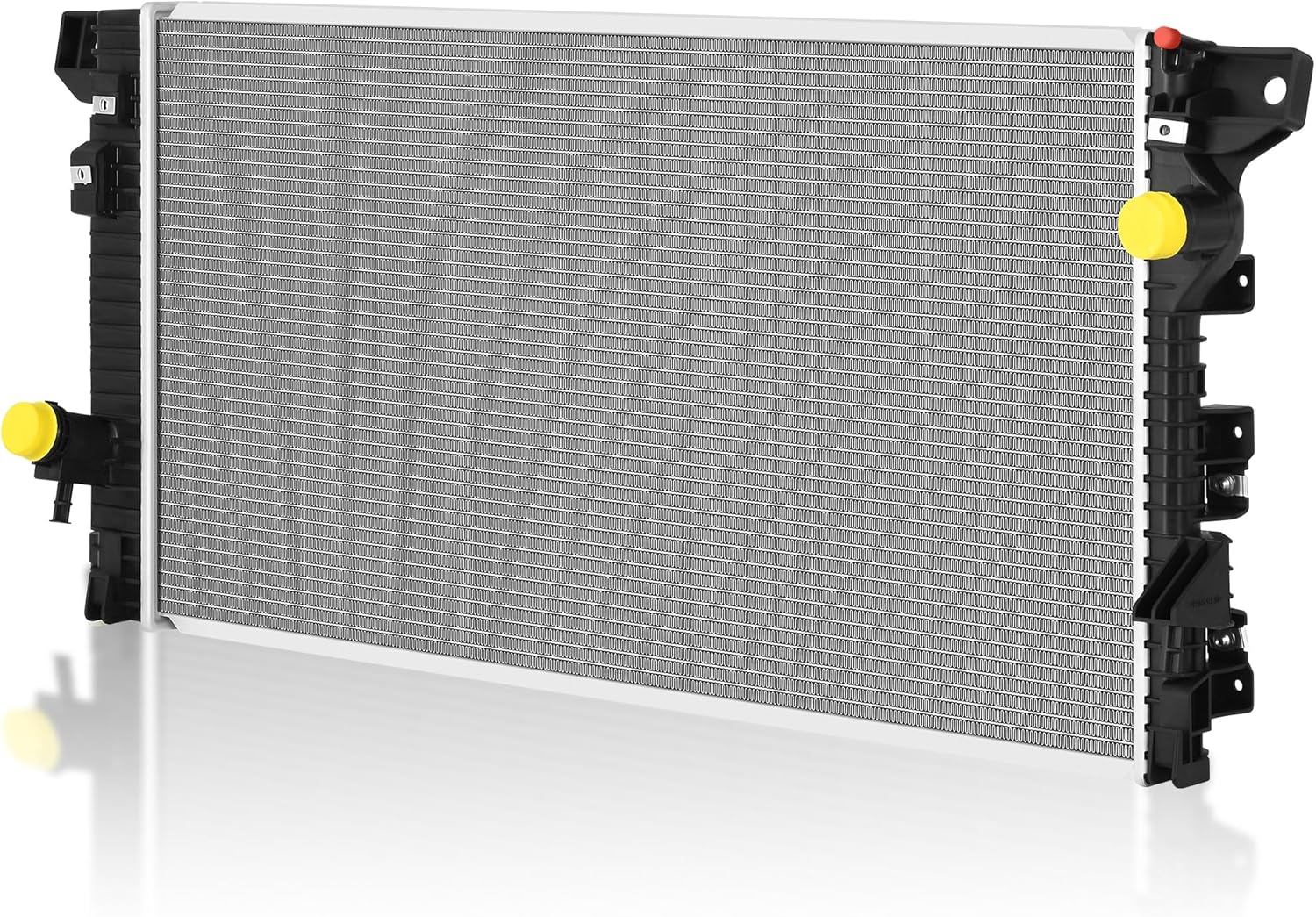
This AUTOSAVER88 radiator is a full replacement unit intended to directly fit 2015–2016 Ford F-150 EcoBoost 2.7L and 3.5L engines and 2018–2021 Lincoln Navigator 3.5L and 5.0L applications. It uses an aluminum core with multi-louvered fins and plastic end tanks to maximize cooling surface area while keeping weight down. The unit ships as a complete radiator (cap not included) and is packaged with foam protection and a user manual. In practice the radiator installs like a factory-style part and reviewers report straightforward bolt-in fitment and good initial cooling performance. Expect good heat dissipation from the aluminum oil cooler and a unit that passes factory-style leak tests out of the box. Limitations to note are variable long-term durability reported by some owners and the absence of the radiator cap, so professional installation and inspection are advisable. Overall this is a cost-conscious replacement aimed at restoring cooling function without modifying the vehicle.
Best for: Buyers who want a cost-effective, vehicle-specific replacement to restore factory cooling performance quickly and with minimal installation hassle.
Less Ideal for: Drivers seeking an upgraded high-capacity performance radiator for heavy towing or extreme-duty use should consider purpose-built aftermarket cooling solutions instead.
- Direct-fit design for specified Ford F-150 EcoBoost and Lincoln Navigator engines for simplified installation
- Aluminum core with multi-louvered fins for improved heat dissipation
- Shipped with upgraded EPE foam and cardboard packaging to reduce transit damage
- Includes a complete radiator assembly and user manual for straightforward replacement
- Radiator cap is not included so an additional purchase or reuse of the factory cap is required
- Some long-term reliability complaints exist among user reports
Verdict: A practical, direct-fit replacement that restores factory-style cooling for specified F-150 EcoBoost and Navigator engines without unnecessary bells or complex installation.
TYC 13510 Replacement Radiator for Ford F-150

| Model | 13510 |
|---|---|
| Manufacturer Part Number | 13510 |
| OEM Part Number | HL3Z 8005 C |
| Position | Front, Rear |
The TYC 13510 is a direct-fit replacement radiator built to match factory coolant flow and fin/tube layout for 2015–2020 Ford F-150 trucks. It uses precision-folded aluminum fins and tubes with reinforced features like aluminum inlet rings, internal tank ribs, expansion grooves, and double header plates to reduce the chance of leaks. For vehicles with transmission oil coolers this unit includes durable, heat-resistant polymer tanks and each radiator is leak-tested before shipping. Installation is intended to be drop-in with OEM-style mounting points, so a typical DIYer or professional shop can swap it with standard hand tools. The practical benefits are restored cooling efficiency, comparable performance to the factory part, and several durability enhancements aimed at longer life. Limitations are typical for aftermarket replacements: this is a like-for-like factory replacement rather than a high-capacity performance radiator, so it will not provide significant extra cooling for heavily modified engines or sustained track use.
Best for: Buyers who need a reliable, budget-friendly factory-equivalent replacement to restore proper cooling on a 2015–2020 F-150 without upgrading other cooling components.
Less Ideal for: Drivers planning high-horsepower builds, heavy towing beyond stock ratings, or frequent track use should consider an upgraded high-capacity performance radiator instead.
- Direct OE-style fit for straightforward installation on 2015–2020 F-150s
- Aluminum tubes and precision fins that mirror factory coolant flow
- Reinforced construction features to reduce leaks and improve durability
- Leak-tested at the factory for consistent quality
- Not a high-capacity or performance-oriented radiator for heavily modified engines
Verdict: A practical, budget-focused direct replacement that restores factory cooling performance for 2015–2020 Ford F-150 EcoBoost trucks.
PHILTOP CU13510 Vehicle Radiator for 2015–2016 F-150 and 2018–2021 Navigator

| Item model number | CU13510 |
|---|---|
| Manufacturer | PHILTOP |
| Exterior | Machined |
| Manufacturer Part Number | 1366RAD0697US |
This PHILTOP CU13510 radiator is a direct-fit replacement intended for 2015–2016 F-150 EcoBoost engines and 2018–2021 Navigator models and is built to restore cooling performance after a failed factory radiator. It installs in place of the original unit and is typically used during a routine radiator swap by a professional or experienced DIYer. Notable features include a machined exterior, 1 inch core thickness, and factory-style inlet and outlet diameters that match common hose sizes so connection is straightforward. The seller notes IATF16957 certification which indicates production process controls rather than a performance claim. In practice this radiator delivers the primary benefits buyers want: reliable engine cooling, correct hose and mounting alignment for a straightforward fit, and a complete unit packaged with an installation manual. Limitations to keep in mind are that hoses, clips, or small fasteners from the old radiator may need to be reused and professional installation is recommended to avoid leaks or fitment mistakes. Overall it is a no-frills, vehicle-specific replacement that focuses on restoring factory cooling function.
Best for: Buyers who prioritize dependable cooling system repairs and want a direct-fit replacement to get their EcoBoost-equipped F-150 back to factory-level cooling performance quickly.
Less Ideal for: Someone looking for upgraded cooling capacity for heavy towing or performance applications should choose a purpose-built high-capacity radiator instead.
- Vehicle-specific fit for 2015–2016 F-150 EcoBoost and 2018–2021 Navigator models without heavy duty towing package
- Complete replacement unit with matching inlet and outlet diameters to simplify hose connections
- Machined exterior and 1 inch core thickness designed to restore factory cooling capacity
- IATF16957 production certification indicating controlled manufacturing processes
- May require reusing clips or small fasteners from the old radiator because some mounting hardware is not included
- Professional installation recommended which adds labor cost and complexity for DIYers
Verdict: A straightforward, vehicle-specific replacement radiator that restores factory cooling reliability for EcoBoost F-150s.
SCITOO Aluminum Radiator Assembly Compatible with Ford F-150 and Expedition

| Transmission Oil Cooler Included | Yes |
|---|---|
| Engine Oil Cooler Included | No |
| Inlet Diameter | 38.1mm |
| Outlet Diameter | 38.1mm |
This SCITOO radiator is a direct-fit aluminum replacement designed for specific 2011–2017 Ford F-150 and 2015–2017 Expedition/Navigator applications and includes an integrated transmission oil cooler. It replaces the factory cooling assembly and is used the same way: remove the old core, transfer any reusable fittings, and install the new unit into the factory location. Notable features are the all-aluminum core for thermal efficiency and the included transmission cooler which saves the cost of a separate unit. In practice buyers report straightforward installs and solid cooling performance when mounting points match, and the unit restores normal engine operating temperature. Limitations to expect are occasional missing or different-molded brackets and fan-shroud tabs that may require minor fabrication or modification during installation, and some users have reported variable long-term durability. This radiator is a practical value choice when you need a functioning replacement that restores cooling and transmission cooling in one part, but expect to verify fitment carefully and have basic fabrication skills on hand if needed.
Best for: Buyers who prioritize vehicle-specific fit and restored cooling performance at a lower cost and who check compatibility carefully and accept doing light fabrication if needed.
Less Ideal for: People who want a guaranteed bolt-in, factory-identical replacement without any fitment work or those who prefer an extended factory-backed warranty and dealer-sourced parts.
- Aluminum core improves heat transfer compared with plastic tanks
- Integrated transmission oil cooler eliminates the need for a separate cooler
- Designed to match vehicle-specific mounting points for listed F-150 and Expedition/Navigator years
- Multiple positive user reports of good cooling and straightforward installation
- Some units arrive without all mounting brackets or correct fan-shroud tabs requiring modification
- Mixed long-term durability reports from users across different installs
Verdict: A budget-conscious, vehicle-specific aluminum radiator with a built-in transmission cooler that restores cooling performance when you verify fitment and are prepared for minor installation tweaks.
CSF Replacement Radiator for Ford F-150 (2015–2019)

| Brand | CSF |
|---|---|
| Manufacturer Part Number | 3744 |
| Compatible Engines | 2.7L, 3.5L, 5.0L (Ford F-150 2015–2019) |
| Exterior | Painted |
| Item Weight | 10 pounds |
This CSF replacement radiator is engineered as a direct-fit cooling solution for 2015–2019 Ford F-150 applications and is intended to replace the factory unit without modifications. It uses CAD/CAM design, radial deep-drawn aluminum end tanks, and military-grade clad aluminum tubes and fins to improve durability and heat transfer. CNC machined fittings and B-Tube technology aim to deliver stronger tubes and efficient coolant flow. Installers will find it behaves like a standard OEM replacement: mount where the original radiator sits, reconnect coolant and any oil cooler or transmission lines as applicable, and top up with coolant. The practical benefits are improved build quality over some aftermarket cores and consistent fitment reports from users. Limitations are that it is a vehicle-specific part so it must match the listed model years and engine options, and buyers should transfer or reuse any original rubber grommets or gasket prongs if needed for proper sealing. Overall it is a conservative, dependable choice for restoring factory cooling performance on covered F-150s.
Best for: Buyers who want a conservative, factory-style replacement radiator that restores original cooling performance with minimal installation risk and long-term durability.
Less Ideal for: Drivers looking for universal aftermarket upgrades, performance cores for track use, or radiators for other vehicle models should look elsewhere.
- Direct-fit design for specified 2015–2019 Ford F-150 engines so no cutting or trimming is required
- Constructed from clad aluminum tubes and fins for improved heat transfer and corrosion resistance
- CNC machined fittings and painted exterior for factory-quality connections and appearance
- B-Tube technology provides a stronger tube profile marketed to enhance durability
- Fitment limited to the listed F-150 year and engine combinations so verify compatibility before buying
Verdict: A factory-style, direct-fit replacement radiator that gives risk-averse F-150 owners a durable, OEM-like cooling solution.
Choosing the Right Ford F-150 EcoBoost Radiator: Key Factors to Consider
Cooling Capacity and Core Design
Cooling capacity determines how effectively a radiator moves heat away from the engine and turbocharged components. For the EcoBoost configuration, which produces higher thermal loads than some naturally aspirated setups, a radiator with adequate core area, efficient fin density, and appropriate row count helps keep temperatures stable under towing or heavy-load driving.
Core design also affects airflow resistance and heat transfer efficiency. A thicker, multi-row core can improve cooling but may restrict airflow in tight engine bays, so balance core thickness with fin design and vehicle airflow characteristics.
Fitment and Mounting Accuracy
Accurate fitment ensures the radiator lines up with factory hoses, fans, brackets, and shrouds without forcing hoses or altering mounting points. For the Ford F-150 EcoBoost, even small misalignments can cause stress on hose connections, lead to leaks, or prevent cooling fans from engaging properly.
Check for correct inlet and outlet locations, transmission cooler or oil cooler integration if required, and compatibility with factory fan assemblies. Radiators that come with correct mounting brackets or clear instructions reduce installation time and potential fitment issues.
Materials and Corrosion Resistance
Radiator longevity depends heavily on the materials used for the core, tanks, and joints. Aluminum cores with welded or brazed seams are common for performance and corrosion resistance. Plastic tanks are lighter and cheaper but can crack over time when exposed to heat cycling and coolant additives.
Consider the typical climate and road conditions for your truck. If you operate in salty or humid environments, prioritize radiators with corrosion-resistant coatings and robust seam welding to avoid premature leaks and failure.
Compatibility with Cooling System Components
The radiator must work with the existing cooling system design, including thermostat, water pump flow rates, coolant type, and any integrated coolers. EcoBoost trucks sometimes route additional coolers or rely on specific flow characteristics; selecting a radiator designed for those flow rates preserves engine temperature control and heater performance.
Confirm whether the radiator supports integrated transmission or oil coolers if your F-150 configuration requires them. Mismatched flow characteristics can affect transmission temperatures and turbocharger cooling.
Seam Strength and Leak Prevention
Leaks typically originate at tank seams, hose connections, or fittings. Radiators with robust seam construction, such as fully welded or brazed joints, reduce the chance of leakage under pressure and thermal cycling. Look for quality control markers like consistent weld beads and pressure testing documentation where available.
Proper hose clamp points and reinforced inlet/outlet areas also matter. A radiator that resists vibration and thermal expansion will have fewer maintenance issues over its service life.
Serviceability and Installation Support
Serviceability affects long-term ownership cost and ease of installation. Radiators that include necessary fittings, replacement mounting hardware, or clear installation guides save time and reduce the risk of improper installation. Also consider whether the radiator allows straightforward access for flushing, bleeding air, or replacing sensors.
If professional installation is planned, compatibility with standard shop procedures and coolant handling practices will streamline the process. For DIYers, clear instructions and labeled connections are particularly valuable.
Common Radiator Symptoms and How to Diagnose Them
Recognizing early signs of radiator trouble helps you address issues before major engine damage occurs. Watch for persistent high temperature gauge readings, visible coolant puddles beneath the truck, white or oily residue around hose connections, and an unexplained drop in coolant level. Steam or a sweet smell after driving can indicate an active leak or coolant boil.
Simple diagnostic steps include a pressure test of the cooling system, visual inspection for pinhole leaks and corrosion, and checking hose connections and clamps. Use a hand-held infrared thermometer or scan tool to compare inlet-outlet temperature differential under steady-state driving to gauge heat transfer efficiency.
- High coolant temperature during towing or long climbs
- External leaks at seams, hose connections, or drain petcock
- Foamy or discolored coolant indicating contamination
- Reduced cabin heater output when idling
Preparing for Radiator Replacement on an EcoBoost F-150
Before starting a radiator replacement, gather the correct coolant, replacement hoses or clamps if needed, and any new mounting hardware. Park on a level surface and allow the engine to cool completely. Have a drain pan and absorbent materials ready to capture drained coolant and protect surfaces.
Label hose locations and fastener positions if you plan to reuse components. For turbocharged engines, inspect oil cooler and transmission cooler lines routed near the radiator and consider replacing crush washers or seals during reassembly.
- Disconnect the negative battery terminal to avoid electrical issues when removing fans
- Relieve system pressure and cool fully before opening the radiator cap
- Inspect fan shroud and cooling fan for damage or interference
Coolant Choice and Flushing Best Practices
Using the correct coolant chemistry for the Ford F-150 EcoBoost is important to protect aluminum components and maintain corrosion inhibitors. Follow manufacturer guidance for coolant type and mixture ratio. When replacing the radiator, perform a thorough coolant flush to remove old inhibitors, sediments, and deposits that can reduce heat transfer.
A proper flush involves draining the system, cycling clean water or a recommended flushing solution through the engine and heater core, and repeating until the effluent runs clear. After installation, refill with the specified coolant mixture and properly bleed the system of air to avoid hot spots.
- Use a 50/50 coolant-to-water mixture unless directed otherwise
- Avoid mixing incompatible coolant chemistries
- Bleed the system according to truck-specific procedures to remove trapped air
Installation Tips to Avoid Leaks and Fitment Problems
Take care to align the radiator with factory mounts and route hoses without kinks. Replace any brittle hoses or worn clamps encountered during removal. Tighten hose clamps to the correct specification to avoid over-compressing hose ends which can lead to leaks.
If the radiator includes threaded fittings for transmission or oil cooler lines, ensure proper torque on fittings and use new crush washers or seals. After installation, pressure-test the cooling system and check for leaks during a controlled warm-up cycle before returning the truck to heavy use.
- Use new O-rings or washers for any fluid connections
- Hand-start fasteners to ensure proper thread alignment
- Retorque fittings after the first heat cycle if recommended
When to Consider Professional Service
Complex fitments, integrated cooler lines, or signs of internal contamination often justify professional service. A shop can perform pressure testing, flushing, and proper bleeding with the correct tools and dispose of coolant safely. Professional installers also confirm that fan assemblies and sensors are functioning after replacement.
If you lack the tools to test for flow rates or to diagnose hidden leaks, a trained technician can prevent repeat failures by identifying root causes such as head gasket issues or block corrosion that mimic radiator problems.
- Persistent overheating after replacement
- Evidence of cross-contamination between oil and coolant
- Difficulty accessing or removing factory-mounted components
Still looking for the perfect fit?
Select your Ford F-150 configuration to see the most relevant Radiators recommendations
How We Chose the Best Ford F-150 EcoBoost Radiator
Our selection focused on attributes that matter most for the Ford F-150 EcoBoost powertrain and typical driving conditions. We prioritized cooling capacity under load and at highway speeds, because EcoBoost engines run higher intake and coolant demands. Fitment and mounting accuracy came next, since a radiator that aligns with factory supports, hose positions, and shroud clearances reduces installation time and leak risk. Construction quality was assessed for core material, tank design, seam strength, and number of rows and fins because these factors influence durability and heat transfer. Corrosion resistance and compatibility with common coolant chemistry were also considered to minimize premature failure. We checked compatibility with turbocharger oil coolers or transmission cooler passages used on EcoBoost-equipped trucks. Ease of installation and availability of replacement mounting hardware or integrated fittings were included as practical filters. We excluded units that lacked clear fitment documentation for the EcoBoost configuration, radiators with known reports of poor seam construction, and options that required extensive aftermarket modification to fit. Our final picks balance cooling performance, long-term reliability, and straightforward installation for the Ford F-150 EcoBoost.
Our full evaluation process is outlined in our review methodology.
FAQ
How often should I inspect the radiator on my Ford F-150 EcoBoost?
Inspect the radiator visually at least twice a year and before heavy towing or long trips. Look for leaks, corrosion, bent fins, and secure mounting; check coolant level regularly between inspections.
Can I flush the coolant myself or should I get a professional flush?
You can perform a coolant flush if you have basic tools and follow vehicle-specific procedures for draining, flushing, and bleeding. A professional flush is recommended if the system shows signs of contamination, oil in the coolant, or if you are uncomfortable handling coolant disposal.
What are the signs that the radiator is causing overheating rather than another component?
Signs pointing to the radiator include a large inlet-to-outlet temperature difference under load, visible external leaks, low coolant levels without external signs of engine oil contamination, and poor cooling performance even with a functioning thermostat and water pump.
Is it necessary to replace hoses when replacing the radiator?
Not always, but replacing brittle or swollen hoses and old clamps is good practice. New hoses and clamps reduce installation headaches and the chance of future leaks, especially on older trucks.
Will upgrading to a higher-capacity radiator affect heater performance?
A properly matched higher-capacity radiator typically does not harm heater performance and may improve overall temperature control. However, changes that significantly alter flow rates could affect cabin heat under some conditions, so ensure compatibility with the EcoBoost cooling system.
Can a leaking radiator be temporarily repaired?
Temporary fixes such as sealants or epoxy can stop small external leaks short term but are not reliable long-term solutions. For pressure-side or internal leaks, replacement is usually the most dependable fix.
Final Verdict
For a Ford F-150 EcoBoost, prioritize radiators that combine verified fitment with sufficient cooling capacity and durable construction. Balance core design against under-hood airflow and ensure compatibility with any integrated cooler lines. Addressing fitment, seam quality, and proper coolant chemistry will minimize future failures. When choosing a replacement, focus on documented fitment for the EcoBoost configuration, robust seam construction, and support for proper installation and bleeding. Those priorities will deliver the most reliable cooling performance and peace of mind for day-to-day driving and heavy-duty use.
Explore More:
- Check out all Ford F-150 parts & accessories
- Explore Radiators Maintenance & Repair Guides
- Explore Cooling System
- Browse all Auto Parts
