

Note: This article contains affiliate links. If you click on these links and make a purchase, I may earn a small commission at no extra cost to you. This helps support my research and content. Read my full affiliate disclosure here.
If your 2009-2014 Ford F-150 is showing overheating signs or coolant loss, swapping the radiator can be the most effective repair. The right radiator restores cooling capacity, maintains proper engine temperature under load, and reduces the chance of future leaks. This guide covers the top six radiators shortlisted for the 2009-2014 F-150, focusing on fitment accuracy, cooling performance, and durability specific to this model range.Below you will find how each option meets the demands of towing, daily driving, and heavy use, plus the criteria we used to evaluate them and practical advice for installation and maintenance.
Looking for other parts? See all Ford F-150 parts & accessories.
Top Picks at a Glance
| Best Overall The best all-around choice for most situations | KAX CU13099 Replacement Engine Radiator (compatible with 2009–2014 F-150/Expedition/Navigator) |  |
| Best Quality Built to a higher standard if you want something more solid | Readair Engine Coolant Radiator Assembly with Transmission Oil Cooler |  |
| Best Value The sweet spot between price and what you get | SCITOO Replacement Radiator Assembly for Ford F-150 / Expedition / Lincoln Navigator (fits 2009–2014) |  |
| Best Budget The cheapest option that still gets the job done reliably | OCPTY Aluminum Engine Radiator (Replacement for select 2009–2014 Ford F-150 / Expedition / Lincoln Navigator) |  |
| Highest Rated A top-rated pick with lots of positive feedback | AUTOSAVER88 Radiator Compatible with 2009-2014 Ford F-150/Expedition/Navigator 4.6L & 5.4L V8 |  |
| Most Popular A crowd favorite that many people choose with confidence | DWVO Radiator Compatible with 2009–2014 Ford F-150 and 2009–2014 Expedition/Lincoln Navigator V8 |  |
KAX CU13099 Replacement Engine Radiator (compatible with 2009–2014 F-150/Expedition/Navigator)

| Compatible vehicles | 2009–2014 F-150, Expedition, Navigator (as listed) |
|---|---|
| Core thickness | 1 in |
| Inlet diameter | 1-1/2 in |
| Outlet diameter | 1-9/16 in |
| OEM part numbers | 9L3Z8005A, 9L3Z8005B, CL1Z8005A |
The KAX CU13099 is a vehicle-specific replacement radiator intended to restore cooling performance for affected 2009–2014 Ford F-150, Expedition, and Navigator models. It uses a one-inch core thickness with an aluminum core and high-density multi-louver fins to increase heat dissipation, and factory-style plastic tanks to resist corrosion. The unit is leak and pressure tested and arrives in reinforced packaging to reduce shipping damage. For installation it is a like-for-like swap that a professional or experienced DIYer can complete using standard coolant system procedures. Practical benefits include improved cooling efficiency compared with old or damaged radiators and a claimed two-year quality assurance from the brand. Limitations to note are that some buyers reported occasional cosmetic or transit damage on arrival and long-term durability depends on cooling system maintenance and driving conditions. Confirm vehicle fitment before purchase and plan for a proper coolant flush and thermostat check during replacement.
Best for: Buyers who want a balanced, vehicle-specific replacement that restores factory cooling performance without expensive upgrades and prefer a ready-to-install unit for routine repairs.
Less Ideal for: Those seeking a high-performance or heavy-duty aftermarket radiator for towing or extreme-duty use should consider performance-oriented options designed for higher cooling capacity.
- Direct-fit design matched to listed Ford 2009–2014 part numbers for straightforward replacement
- Aluminum core with multi-louver fins for improved heat dissipation
- Leak and pressure tested before shipment to reduce early failures
- Reinforced shockproof packaging to lower risk of transit damage
- Backed by a two-year quality assurance from the manufacturer
- Some customers reported minor damage on arrival despite protective packaging
- Long-term longevity not proven beyond typical aftermarket lifetimes
Verdict: A practical, direct-fit replacement radiator that restores factory cooling performance for 2009–2014 F-150 family trucks without complicated modifications.
Readair Engine Coolant Radiator Assembly with Transmission Oil Cooler

| Fitment | 2011-2014 F-150 (3.5T, 3.7L, 5.0L); 2015-2016 Expedition; 2015-2017 Navigator |
|---|---|
| Transmission Oil Cooler Included | Yes |
| Core Height | 31-1/2 inch |
| Core Thickness | 7/8 inch |
| Inlet/Outlet Diameter | 1-1/2 inch |
This Readair radiator replaces the factory unit on covered 2011–2014 F-150 engines and related vehicles and combines an aluminum core with built transmission oil cooler for a single replacement assembly. It installs like a factory-style unit and is typically used to restore proper engine cooling and maintain transmission fluid temperatures after the original radiator fails or leaks. Notable features include a TIG-welded aluminum core, PA66 GF30 inlet/outlet tanks, and leak-tested construction. In practice that means it should fit cleanly into the stock mounting points, provide equivalent cooling capacity, and simplify replacement by including the transmission cooler so you avoid separate components. Some buyers report strong fit and value while others note occasional quality-control failures such as tank cracks, so careful inspection at install is wise. Expect a mostly straightforward install but plan for standard coolant and fluid routing work and verify any adapters or O-rings during hookup.
Best for: Buyers who need a direct replacement radiator that restores cooling and transmission cooling capacity with a focus on performance-minded drivability and stock-equivalent fit. Ideal for owners who prefer a single, vehicle-specific assembly to avoid sourcing a separate transmission cooler.
Less Ideal for: Drivers seeking a heavy-duty aftermarket upgrade for towing higher loads or extreme cooling beyond factory capacity should consider performance radiators designed for increased core area and flow rather than this direct-fit replacement.
- Direct-fit design matching factory mounting and hose locations for listed Ford F-150 and related models
- Integrated transmission oil cooler eliminates separate cooler plumbing and speeds replacement
- Aluminum core with TIG-welded construction for effective heat transfer and improved corrosion resistance
- Leak-tested assembly and treated coating intended to improve longevity
- Includes commonly referenced OEM part references to simplify fit confirmation
- Some customers report occasional tank cracking or early leaks indicating inconsistent quality control
- May require removal of preinstalled adapters and replacement O-rings during installation
Verdict: Choose this Readair assembly when you want a vehicle-specific, single-piece replacement that restores engine and transmission cooling with a factory-style fit.
SCITOO Replacement Radiator Assembly for Ford F-150 / Expedition / Lincoln Navigator (fits 2009–2014)

| Compatible vehicles | 2009–2014 Ford F-150, Expedition, Lincoln Navigator |
|---|---|
| Transmission oil cooler | Included |
| Core rows | 1 Row |
| OEM part number | 13099 |
This SCITOO radiator is a budget-minded replacement built to match the factory fitment for 2009–2014 Ford F-150, Expedition, and Lincoln Navigator engines listed. It includes a transmission oil cooler but not an engine oil cooler and uses a single-row core intended to restore cooling for trucks with the compatible engines. Buyers report it installs without major modification in many cases and that the transmission line fittings are present though some installers have swapped or rotated lines to correct orientation. The construction aims for leak resistance with multi-layer cooling fins, but quality control appears variable across units so careful inspection at install is recommended. Practical benefits are its low cost, direct-replacement mounting points, and inclusion of transmission cooler passages so you do not need a separate cooler. Limitations include potential fitment nuances around line ports and radiator cap compatibility on some units, and the single-row core may run warmer than heavier-duty or multi-row aftermarket radiators under extreme towing conditions.
Best for: Buyers who want the most cost-effective, factory-style radiator replacement for their 2009–2014 Ford truck and who prioritize a straightforward swap and transmission cooler integration.
Less Ideal for: Avoid this if you routinely tow heavy loads, need maximum cooling capacity, or expect to rely on perfect factory-level quality control without inspecting the part during installation.
- Made to match factory mounting points for direct replacement on specified 2009–2014 Ford models
- Includes transmission oil cooler passages so no separate cooler is required
- Low-cost option compared with dealer parts for straightforward radiator replacement
- Many buyers report simple installation when fittings align correctly
- Fitment quality can vary so some units require minor adjustments or line reorientation
- Single-row core offers less cooling margin than multi-row or performance radiators
Verdict: A budget-friendly, direct-replacement radiator that includes the transmission cooler passages and is best for drivers who want a practical, low-cost swap for 2009–2014 Ford trucks.
OCPTY Aluminum Engine Radiator (Replacement for select 2009–2014 Ford F-150 / Expedition / Lincoln Navigator)

| Compatible vehicles | Select 2009–2014 Ford F-150, Expedition, Lincoln Navigator (listed engines) |
|---|---|
| Core material | Aluminum core |
| Included tanks | Premium-grade plastic tanks |
| Manufacturer | OCPTY |
| Replaces part numbers | 13099, CU13099, RAD13099, 13098, RAD3546, 9L3Z8005B |
This OCPTY radiator is a direct-fit replacement built with an all-aluminum core and premium plastic tanks to restore a vehicle's cooling capability. It is intended for drop-in installation on the listed 2009–2014 Ford F-150, Expedition, and Lincoln Navigator models and replaces several common OEM part numbers for easier fit confirmation. In use it functions like a factory-style cooling component, increasing heat dissipation compared with aged or damaged radiators and helping prevent overheating under normal driving. Notable features include full leak inspection at the factory and construction meant to mimic factory fit and function. Practical benefits are improved cooling reliability and a straightforward replacement process for experienced DIYers or professional installers. Limitations are that installation can be moderately challenging for beginners and the listing relies on vehicle fitment checks, so confirm exact model and engine variant before buying. The product does not include installation hardware or hoses so you may need to reuse or purchase additional parts for a complete swap.
Best for: A practical buyer looking to repair a cooling system on a budget who prioritizes a factory-style replacement that restores cooling performance without paying OEM premium prices.
Less Ideal for: Not a good choice for someone seeking a performance-upgrade radiator for racing or heavy towing beyond factory duty cycles or for buyers who want a fully bundled installation kit.
- Full aluminum core for improved heat dissipation compared with corroded older radiators
- Manufactured to match factory fit and common OEM part numbers for easier drop-in replacement
- Factory leak testing performed to reduce chance of out-of-box failures
- Wide compatibility across specified 2009–2014 F-150, Expedition, and Navigator engine variants
- Installation can be challenging for novice installers and may require professional help or additional parts
Verdict: If you need an affordable, factory-style replacement to restore cooling on the listed 2009–2014 Ford vehicles, this OCPTY aluminum radiator is a budget-focused, direct-fit option.
AUTOSAVER88 Radiator Compatible with 2009-2014 Ford F-150/Expedition/Navigator 4.6L & 5.4L V8
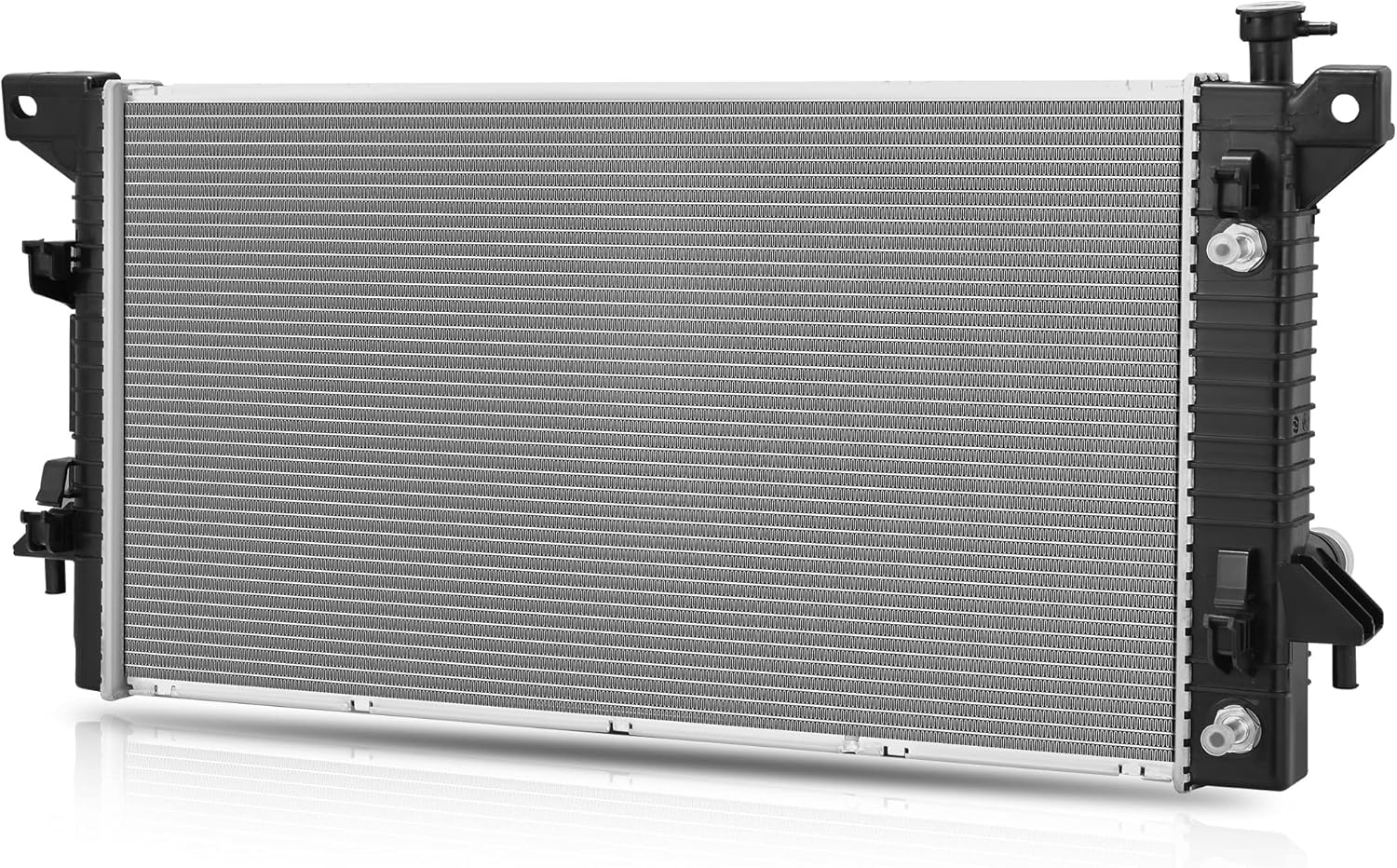
| Compatible Engines | 4.6L and 5.4L V8 |
|---|---|
| Fitment Years | 2009-2014 |
| Core Material | Aluminum |
| Tanks | Plastic |
This AUTOSAVER88 radiator is a direct-fit replacement for 2009-2014 Ford F-150, Expedition, and Lincoln Navigator models with the 4.6L and 5.4L V8 engines. It pairs an aluminum core with high-density multi-louvered fins and machined exterior for improved cooling efficiency, and the plastic tanks are tested for leaks before shipping. Typical use is a full radiator swap during repair or as an upgrade to restore cooling performance after a failed unit. Buyers will appreciate the OE-style mounting locations that simplify installation and the reported strong cooling performance in both highway and heavy-duty conditions. However some reviewers note variability in build quality, occasional fitment trimming of shrouds, and concerns about hose attachment design that may require careful clamp choice or professional installation. The unit ships as a complete radiator without a cap and professional installation is recommended to ensure proper sealing and to avoid issues with transmission cooler or hose connections.
Best for: Buyers who prioritize restoring reliable cooling performance with a direct-fit replacement and want improved cooling over an aged radiator while keeping installation straightforward.
Less Ideal for: People seeking a lifetime, worry-free OEM-level part without any risk of manufacturing variability or buyers who prefer an aftermarket radiator with extended warranty service and guaranteed heavy-duty construction.
- Direct-fit design with OEM-style mounting points for easier installation
- Aluminum core with high-density multi-louvered fins for improved cooling efficiency
- Leak-tested components using high-grade plastic tanks to help ensure longevity
- Ships as a complete radiator ready to install (radiator cap not included)
- Some users report inconsistent build quality and occasional leaks
- Hose attachments may lack sufficient lip requiring careful clamps or reinforcement
- May require minor trimming or adjustment of mounting shrouds on some vehicles
Verdict: A cost-effective, direct-fit aluminum-core replacement that restores cooling performance for 2009–2014 Ford 4.6L and 5.4L V8 vehicles when installed carefully.
DWVO Radiator Compatible with 2009–2014 Ford F-150 and 2009–2014 Expedition/Lincoln Navigator V8

| Core size | 32" x 16.5" |
|---|---|
| OEM part number | 9L3Z8005B, FO3010288 |
| Material | Aluminum core with PA66 GF30 tanks |
| Item weight | 9.83 pounds |
This DWVO complete radiator is a direct-fit replacement intended for 4.6L and 5.4L V8 Ford trucks and SUVs from 2009–2014. It installs like a factory component with matching mounting points and a 32" x 16.5" core to restore cooling capacity for overheated or leaking originals. Construction uses an aluminum core with TIG-welded end tanks and reinforced PA66 GF30 inlet/outlet housings to resist leaks and corrosion, and multi-louvered fins to improve heat dissipation. The unit ships with foam padding to prevent damage and a user manual but does not include a radiator cap, so reuse or replace your cap during service. Buyers report straightforward installs and steady operating temperatures under load, though fitment must be confirmed against OEM part numbers before ordering. Professional installation is recommended to ensure correct hose and sensor connections. If you want a factory-style replacement that balances durability and cost, this radiator is a practical option for restoring reliable cooling on the specified Ford V8 models.
Best for: Buyers who prioritize proven fit and customer-reported reliability and want a direct replacement radiator to restore safe engine temperatures on specified 2009–2014 Ford V8 trucks and SUVs.
Less Ideal for: Anyone seeking a universal or performance-upgraded radiator or requiring parts for vehicles outside the specified Ford V8 fitment should look at other options.
- Direct OEM-compatible fit for 2009–2014 Ford F-150/Expedition/Navigator V8 applications according to listed OEM part numbers
- Aluminum core with TIG-welded joints and PA66 GF30 tanks for improved leak resistance
- High-density multi-louvered fins designed to increase cooling efficiency under load
- Arrives well packaged with protective foam to prevent shipping damage
- Radiator cap is not included and must be reused or purchased separately
- Fitment varies by vehicle sub-model so buyers must confirm compatibility before installation
Verdict: A factory-style aluminum replacement that restores proper cooling and fitment on specified 2009–2014 Ford V8 trucks and SUVs with broad positive user feedback.
Choosing the Right 2009-2014 Ford F-150 Radiator: Key Factors to Consider
Fitment and Mounting
Exact fitment matters because the 2009-2014 Ford F-150 has specific mounting points, transmission cooler passages, and hose orientations. Choosing a radiator that matches the original mounting layout minimizes fabrication and reduces the risk of stress on hoses or misalignment that can lead to leaks.
A direct-fit unit saves time and keeps accessory components like the fan shroud, sensor ports, and overflow connections in the correct positions. Confirming inlet and outlet diameters and locations avoids the need for adapter hoses and helps maintain proper coolant routing. For trucks with factory or auxiliary coolers, ensure the radiator supports any transmission or oil cooler lines to prevent interference during installation.
Cooling Capacity and Core Design
Cooling capacity determines how well the radiator can dissipate heat under normal and heavy loads, such as towing or driving in hot climates. Core design—number of rows, tube thickness, and fin density—affects how quickly heat transfers from coolant to air. Multi-row cores or higher fin counts can improve thermal performance but may add weight and reduce airflow at low vehicle speeds.
Consider the typical use of your F-150. If you tow frequently or operate in high ambient temperatures, prioritize radiators with larger cores or enhanced cooling features. For light-duty, a core matching factory specifications often provides sufficient cooling while preserving engine warm-up behavior and heater performance.
Material and Corrosion Resistance
Materials influence longevity and failure modes. Aluminum cores with brass or plastic tanks perform differently in corrosion resistance and impact durability compared with all-aluminum brazed units. Corrosion-resistant finishes and proper construction reduce the chance of pinhole leaks and extend service life, especially if coolant maintenance has been irregular in the past.
Check for coatings, brazed joints, and tank construction quality. Vehicles that see road salt, frequent towing, or long service intervals benefit from radiators built with better corrosion protection. While material choice can affect repairability, prioritize units designed to resist the common causes of leakage for this truck.
Transmission Cooler Integration
Many 2009-2014 F-150 configurations route transmission fluid through the radiator for cooling. Radiators that include properly sized and placed transmission cooler passages avoid the need for separate remote coolers and preserve factory fluid routing. A mismatch can cause fitting issues or inadequate transmission cooling, which may shorten transmission life.
Verify whether your truck has a factory transmission cooler in the radiator and choose a replacement with matching ports and flow capacity. For heavy towing, consider radiators with reinforced or larger transmission passages designed to improve heat exchange and reduce transmission operating temperatures.
Durability and Serviceability
Durability affects how long the radiator will last between replacements and how it responds to road debris, vibration, and thermal cycling. Look for reinforced tanks, robust mounting points, and designs that resist pressure spikes. Serviceability includes access to drain plugs, sensor ports, and the ability to replace ancillary parts such as the cap or shroud without removing the entire assembly.
A well-built radiator reduces downtime and repair frequency. For owners who perform their own maintenance, features that simplify removal and allow reuse of the fan shroud or sensors can be particularly valuable. Evaluate construction quality and available replacement parts when assessing long-term ownership costs.
Compatibility With Coolant Maintenance Practices
The radiator you choose should be compatible with common coolant types and maintenance routines, such as periodic coolant flushes and using manufacturer-recommended antifreeze. Some materials or coatings are less tolerant of improper coolant mixtures or neglected service intervals, which can accelerate corrosion.
If your truck has a history of inconsistent coolant changes, choose a radiator with better corrosion resistance and easier access for flushing. Ensure the replacement supports routine cooling system maintenance like bleeding air, filling to the correct level, and connecting to the overflow reservoir without additional adapters.
Common Radiator Symptoms and How to Diagnose Them
Recognizing early signs of radiator trouble lets you address issues before they cause engine damage. Common indicators include a rising engine temperature gauge, visible coolant leaks under the truck, and low coolant level in the reservoir. You may also notice white steam from the engine bay or a coolant odor after driving.
A basic diagnosis sequence helps isolate the radiator as the source. Start by inspecting hoses, clamps, and the overflow tank for obvious leaks. Pressure-testing the cooling system can reveal pinhole leaks in the radiator or failed seals. If the system holds pressure, consider checking the thermostat and water pump next, since those components can produce similar overheating symptoms.
- Check for external leaks and damp areas around the radiator and hose connections
- Perform a cooling system pressure test to find slow leaks
- Monitor temperature changes under load and at idle to spot poor heat dissipation
Preparing for Radiator Replacement on a 2009-2014 F-150
Preparation reduces surprises during replacement. Park on level ground and allow the engine to cool fully before draining coolant. Gather replacement hoses, new clamps, and any required gaskets or O-rings because older components often fail when disturbed. A clean drain pan and safe disposal method for used coolant are essential.
Document the routing of transmission cooler lines and sensor connectors before removal. If your truck has an auxiliary fan or aftermarket accessories attached to the shroud, plan how to transfer or temporarily remove them. Having the correct hand tools and a service manual or vehicle-specific instructions will speed the job and help avoid unnecessary disassembly.
- Ensure engine is cool and disconnect the battery if working near electrical components
- Collect replacement clamps, hoses, and O-rings prior to starting
- Label connectors and take photos to aid reassembly
Cooling System Maintenance After Installing a New Radiator
After installing a new radiator, flushing and refilling the cooling system restores coolant quality and removes accumulated debris from old cores. Use the correct coolant type recommended for Ford engines in this year range and bleed air pockets thoroughly to prevent hot spots. Replacing the thermostat and radiator cap while servicing the system is often a prudent preventive step.
Monitor temperature and coolant levels closely for the first few hundred miles. Check for slow leaks at hose connections and around the transmission cooler passages. Regular coolant checks and periodic coolant flushes based on driving conditions will keep the replacement radiator functioning at peak efficiency and help avoid premature failure.
- Perform a complete coolant flush to remove contaminants
- Bleed trapped air using the recommended procedure to prevent overheating
- Reinspect hose clamps and transmission cooler fittings after a short test drive
Tools and Tips for a Smooth Installation
Having the right tools makes radiator replacement safer and faster. Essential tools include a torque wrench, hose clamp pliers, a radiator pressure tester, and a funnel for filling coolant. A service jack and stands can aid access on some repairs, though many tasks can be completed from above the engine bay on the F-150.
Work methodically to avoid cross-threading fittings or over-tightening plastic components. Keep fasteners organized and reuse only those parts that are in good condition. If lifting the fan shroud, protect the radiator fins from contact to avoid bending them, which reduces airflow efficiency.
- Use a torque wrench for critical fasteners to avoid over-tightening
- Protect radiator fins during handling to maintain airflow
- Keep a clean workspace to prevent contamination of the cooling system
Upgrading Cooling for Towing or Heavy Use
If you use your 2009-2014 F-150 for frequent towing or heavy loads, consider radiators with enhanced cores or greater cooling surface area. These units are designed to move heat away from the engine more effectively during prolonged high-load operation. Pairing an upgraded radiator with proper transmission cooling maintenance helps protect drivetrain components under strain.
Also assess supporting components such as fans and coolant hoses. Improved radiators can expose weaknesses elsewhere in the cooling system, so confirm that fans provide adequate airflow at idle and that hoses are in good condition to handle higher flow rates and temperatures.
- Select radiators with larger cores or higher fin density for towing
- Verify the fan can deliver sufficient air at low speeds
- Inspect supporting cooling components when upgrading
Still looking for the perfect fit?
Select your Ford F-150 configuration to see the most relevant Radiators recommendations
How We Chose the Best 2009-2014 Ford F-150 Radiator
We prioritized radiators that deliver reliable cooling performance and direct fitment for 2009-2014 Ford F-150 trucks. Our selection criteria emphasized cooling capacity under load, measured by core design and coolant flow characteristics, and material durability—comparing aluminum cores, brazed construction, and corrosion-resistant finishes. Fitment accuracy was critical: we only considered units that match factory mounting points, inlet and outlet locations, and transmission cooler provisions for the specified year range.Thermal efficiency and pressure tolerance were evaluated through published core specifications and design features such as tube-and-fin density or multi-row cores. Ease of installation and compatibility with common engine configurations in the 2009-2014 F-150 were included to reduce hassle during replacement. We also checked intended use cases—daily driving, towing, or heavy-duty work—to ensure the radiator could handle expected loads.Excluded items included universal-fit cores that require significant modification, radiators without clear fitment mapping to the 2009-2014 F-150, and units lacking basic corrosion protection. The remaining picks represent a balance of verified fitment, thermal performance, durability, and installability for owners of this truck.
Our full evaluation process is outlined in our review methodology.
FAQ
How do I know if the radiator is the cause of overheating?
Often you will see coolant loss, wet spots under the front of the truck, or steam from the engine bay. A cooling system pressure test and visual inspection of the radiator core and hoses help confirm the radiator as the source. Also consider testing the thermostat and water pump, since they can produce similar symptoms.
Can I replace the radiator myself on a 2009-2014 F-150?
Many owners can perform the replacement with basic mechanical skills, the right tools, and a service manual. Key steps include draining coolant, disconnecting transmission cooler lines if present, and ensuring correct bleed procedures. If you are uncomfortable working with the cooling system or transmission lines, seek professional assistance.
Should I replace the thermostat and hoses when installing a new radiator?
It is often sensible to replace the thermostat and aging hoses during radiator service. These parts are inexpensive relative to the labor and can prevent future failures that might compromise the new radiator. Fresh clamps and a new radiator cap are also recommended for reliability.
Does a radiator replacement affect transmission cooling?
Yes, for trucks that use the radiator for transmission fluid cooling, the replacement must include matching transmission cooler passages. Incorrect or poorly fitting radiator ports can reduce transmission cooling efficiency. Verify port locations and fittings before installation.
How long should a properly installed radiator last on an F-150?
Lifespan varies with materials, driving conditions, and maintenance, but a well-made radiator that receives proper coolant care can last many years. Exposure to road salt, frequent towing, and neglected coolant changes shorten service life. Regular inspections help detect issues early.
What type of coolant should I use after installing a new radiator?
Use the coolant type recommended for Ford engines in the 2009-2014 F-150. Mixing incompatible coolant chemistries can reduce corrosion protection. Follow the manufacturer guidelines for concentration and change intervals when refilling after replacement.
Final Verdict
When replacing a radiator on a 2009-2014 Ford F-150, prioritize exact fitment, adequate cooling capacity for your typical loads, and durable construction that resists corrosion. Balance the need for improved heat dissipation—especially if you tow frequently—against installation complexity and compatibility with transmission cooling passages.Focus on matching inlet and outlet locations, confirming transmission cooler integration, and planning for a full coolant flush and proper bleeding. With those priorities in mind, you can select a replacement radiator that restores reliable engine temperature control and reduces the chance of repeat issues.
Explore More:
- Check out all Ford F-150 parts & accessories
- Explore Radiators Maintenance & Repair Guides
- Explore Cooling System
- Browse all Auto Parts
