

Note: This article contains affiliate links. If you click on these links and make a purchase, I may earn a small commission at no extra cost to you. This helps support my research and content. Read my full affiliate disclosure here.
If you own a 2011-2021 Jeep Grand Cherokee (WK2), the intake manifold is a small part that can have an outsized effect on drivability and engine performance. A failing manifold or gasket commonly causes rough idle, reduced throttle response, or vacuum leaks that trigger fault codes. Choosing the right intake manifold or replacement option matters whether you are correcting a leak, replacing a warped housing, or pursuing modest performance gains. This guide covers the seven top shortlisted intake manifolds for the WK2 Grand Cherokee and explains the practical criteria we used to evaluate fitment, sealing, and long-term reliability. Read on for symptoms to watch, installation considerations, and which features matter most for this vehicle.
Looking for other parts? See all Jeep Grand Cherokee parts & accessories.
Top Picks at a Glance
| Best Overall The best all-around choice for most situations | maXpeedingrods Full Aluminum Lower Intake Manifold for 3.6L V6 |  |
| Best Quality Built to a higher standard if you want something more solid | YEHERIT Full Aluminum Lower Intake Manifold for 3.6L Pentastar |  |
| Best Value The sweet spot between price and what you get | LLNSEAUTO Lower Intake Manifold with Gasket for 3.6L V6 (Fits 2011–2021 models) |  |
| Best Budget The cheapest option that still gets the job done reliably | EVERESTWAY Lower Intake Manifold for 3.6L V6 |  |
| Highest Rated A top-rated pick with lots of positive feedback | BELKEBIR Aluminum Lower Intake Manifold with Gasket for 3.6L Pentastar V6 |  |
| Most Popular A crowd favorite that many people choose with confidence | MITZONE 3.6L Intake Manifold with Gasket and Bolts | 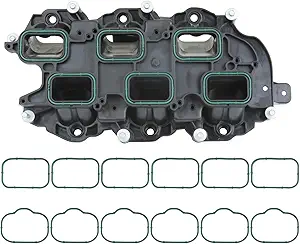 |
| Best Seller A high-volume bestseller chosen again and again | NewYall 3.6L Upper Intake Manifold for 3.6L V6 |  |
maXpeedingrods Full Aluminum Lower Intake Manifold for 3.6L V6

| Application | Fit for Dodge Chrysler Jeep Vehicles with 3.6L V6 engine |
|---|---|
| Package contents | 1 aluminum lower intake manifold, 12 gaskets, 19 bolts |
| Manufacturer | maXpeedingrods |
| Manufacturer Part Number | IR72LK |
This aluminum lower intake manifold replaces the plastic factory unit on 3.6L V6 Chrysler-family engines and is aimed at owners who want a stronger, longer-lasting part. It installs in place of the stock lower manifold and ships with gaskets and a selection of bolts, so it is typically used during engine repairs or when upgrading to a metal intake to avoid future cracking. The all-aluminum construction resists heat and warping better than plastic and can give you greater confidence in high-mileage engines. Included gaskets and hardware make it convenient for a single-shop job, but multiple reviews note the supplied bolts vary in quality and a few long bolts for certain applications may be missing. Expect a straightforward installation when you have basic mechanical skills and the correct torque specs, but budget for replacement high-strength fasteners if you want to torque to factory values without risk of snapping. Overall this is a practical, budget-friendly factory-replacement option when you want a durable metal lower intake for the 3.6L V6 platform.
Best for: A balanced buyer who wants a durable, factory-replacement lower intake for a 3.6L V6 Jeep or Chrysler vehicle and values straightforward installation and longer-term reliability over matching OEM plastic material.
Less Ideal for: Drivers who need a guaranteed hardware package or a plug-and-play, bolt-for-bolt match without any parts sourcing should consider alternatives or plan to buy higher-grade fasteners separately.
- Full-aluminum construction reduces risk of heat-related deformation and cracking compared with plastic originals
- Ships with gaskets and multiple bolts so you get most of what is needed for a standard install
- Direct-fit replacement for 3.6L V6 Chrysler family applications listed in the description
- Manufacturer offers technical support and a one-year limited warranty for quality issues
- Supplied bolts have inconsistent quality and some reviewers report weak zinc bolts that can break under torque
- May not include the three long upper-manifold bolts for some vehicle applications, requiring sourcing replacements
Verdict: Choose this aluminum lower intake if you want an affordable, more durable factory-replacement for the 3.6L V6 that reduces the risk of plastic manifold failures.
YEHERIT Full Aluminum Lower Intake Manifold for 3.6L Pentastar

| Fitment | 2011–2021 compatible 3.6L Pentastar vehicles (select Jeep, Dodge, Chrysler, RAM) |
|---|---|
| Material | Full aluminum |
| Manufacturer Part Number | 05184199AF |
This YEHERIT lower intake manifold replaces the factory plastic lower manifold on 3.6L Pentastar engines with a full-aluminum unit intended to resist corrosion and avoid the common cracking and stripped-bolt issues seen in plastic parts. It is used when servicing the valley area for oil cooler, spark plug, or coil access or as an upgrade to strengthen the intake where plastic failures occurred. Notable features include full-aluminum construction, preinstalled gaskets, and supplied hardware for installation. In real-world use customers report a generally good fit on compatible Grand Cherokee and other Pentastar vehicles and longer-term durability versus plastic OEM parts. Practical benefits are improved resistance to heat and breakage and a reduced chance of fastener hole damage when removing and reinstalling the upper intake. Important limitations include variable quality control of fasteners and occasional reports of fitment or machining issues that can cause vacuum or fueling faults if not inspected and sealed carefully during installation. Expect to take time to check mating surfaces and torque hardware gently to avoid snapping supplied screws.
Best for: Drivers who want a durable, performance-minded replacement to the fragile plastic lower intake on 3.6L Pentastar engines and plan to do valley-level service or upgrades to improve long-term reliability.
Less Ideal for: Drivers seeking a direct drop-in with factory-level quality assurance without inspecting or prepping surfaces should consider OEM replacements or professional installation instead.
- Full-aluminum construction is corrosion resistant and stronger than the original plastic lower manifold
- Preinstalled gaskets and included hardware simplify swap during valley-level service
- Reduces risk of stripped bolt holes and plastic cracking when removing upper intake
- Reported to fit well on 3.6L Pentastar applications when installed carefully
- Supply hardware quality can be inconsistent and some supplied screws are fragile
- A few users reported machining or fitment issues that produced vacuum or fueling codes
Verdict: Swap the fragile plastic lower intake for this aluminum unit if you want a stronger, longer-lasting solution when working on 3.6L Pentastar engines.
LLNSEAUTO Lower Intake Manifold with Gasket for 3.6L V6 (Fits 2011–2021 models)

| Manufacturer | LLNSEAUTO |
|---|---|
| Manufacturer Part Number | 5184199AF |
| Compatible Engines | 3.6L V6 |
| Includes | Lower intake manifold, gaskets, bolts |
This LLNSEAUTO lower intake manifold is a direct replacement designed for 3.6L V6 Chrysler-family engines and ships with the necessary gaskets and mounting bolts. It is used to restore proper intake sealing when the original manifold develops vacuum or coolant leaks, check engine lights, or performance issues. The kit includes lower and upper gaskets plus bolts, which simplifies installation and reduces the need to source separate parts. In practice the part fits like factory components for owners doing a mid-level repair or a DIY replacement with basic mechanical skills. Buyers can expect restored combustion stability and elimination of leak-related symptoms when installed correctly. Limitations to consider are that this is an aftermarket part rather than a factory-branded unit and installation may require moderate disassembly and torque accuracy to avoid future leaks. Overall it is a practical, cost-effective option for replacing a worn lower intake manifold on covered 3.6L vehicles.
Best for: Buyers who want a practical, ready-to-install replacement to fix intake leaks and restore engine performance without hunting down separate gaskets and hardware.
Less Ideal for: People seeking a factory-branded original part or professional shops that prefer OEM-labelled components for warranty or fleet consistency.
- Includes lower and upper gaskets plus bolts for a complete install kit
- Designed to fit the 3.6L V6 line used across many Chrysler-family models
- Many user reports of correct fitment and restored engine performance
- Saves time sourcing parts by bundling necessary hardware and gaskets
- Aftermarket unit rather than factory-branded part
Verdict: A complete, budget-conscious replacement manifold kit that gets 3.6L V6 engines back to proper sealing and performance without extra parts shopping.
EVERESTWAY Lower Intake Manifold for 3.6L V6

| Manufacturer | EVERESTWAY |
|---|---|
| Manufacturer Part Number | E004BC024AAD |
| OEM Part Numbers | 05184199AD, 05184199AE, 5184199AF, 5184199AE, 5184199AD, 72140191 |
| Compatible Engine | 3.6L V6 |
This EVERESTWAY lower intake manifold is a budget-oriented direct replacement for 3.6L V6 Chrysler-family cars and trucks. It installs in place of the factory lower manifold and is intended for routine repair or engine rebuilds where the original manifold is damaged or leaking. The unit claims OEM-style fit and comes with mounting hardware to simplify installation and avoid modifications. Construction uses glass-fiber reinforced material with reinforced aluminum sections for corrosion resistance and high-temperature durability, which should hold up under normal driving conditions. Buyers will appreciate the straightforward fitment listing for multiple model years and the low-cost alternative to a dealer part. Limitations to consider are that this is an aftermarket part rather than a factory part and long-term durability beyond typical service life is not documented, so it is best for cost-conscious repairs rather than high-performance or long-term restoration projects.
Best for: Buyers needing an affordable, ready-to-install lower intake manifold to replace a damaged factory unit and prioritize immediate fit and cost savings over sourcing a dealer part.
Less Ideal for: Owners restoring a vehicle to factory-original condition or those who need a high-performance upgrade should consider factory parts or performance-specific manifolds instead.
- Priced as a budget-friendly alternative to dealer or OEM replacement manifolds
- Advertised as a direct replacement with included mounting hardware for easier installation
- Materials specified as glass-fiber reinforced and aluminum-reinforced for heat and corrosion resistance
- Fits a wide range of 3.6L Chrysler-family vehicles across multiple model years
- Aftermarket part with limited documented long-term durability compared with factory replacements
Verdict: A cost-effective, direct-fit replacement lower intake manifold for 3.6L V6 Chrysler-family vehicles when budget and quick installation are the top priorities.
BELKEBIR Aluminum Lower Intake Manifold with Gasket for 3.6L Pentastar V6

| Material Type | Aluminum |
|---|---|
| Number of Ports | 7 |
| Inlet Connection Type | Flange |
| Outlet Connection Type | NPT |
| Valve Type | Intake Manifold |
This BELKEBIR lower intake manifold replaces plastic factory units with a cast aluminum assembly and included gasket to address common cracking and sealing failures. It installs as a direct replacement on compatible 3.6L Pentastar V6 applications and is intended to prevent vacuum leaks and coolant seepage thanks to the supplied gasket and a design that claims optimized airflow to each cylinder. The aluminum construction resists heat, corrosion, and warping compared with plastic originals, so it should hold up better over time under normal driving conditions. Buyers should expect a near-factory fit when OE numbers match and follow vehicle fitment guidance before installing. The part uses flange inlet connections and NPT outlets and comes with seven ports, so professional installation is recommended if you are not experienced with intake service or coolant routing. If you need a durable, replacement manifold to stop leaks and restore stable engine operation on a Pentastar V6, this unit targets that need effectively.
Best for: Buyers prioritizing a long-term, factory-quality replacement to stop intake manifold leaks and avoid repeat failures on 3.6L Pentastar V6 engines; suitable for owners who want a durable repair rather than a temporary fix.
Less Ideal for: Do not choose this if you need a performance-upgraded or vehicle-specific custom manifold; installers seeking plug-and-play without any verification or professional installation may prefer a dealer-sourced unit.
- Aluminum construction reduces risk of cracking, warping, and corrosion compared with plastic manifolds
- Includes a gasket to improve sealing and help prevent vacuum and coolant leaks
- Designed for balanced airflow to each cylinder which supports stable engine performance
- Direct-replacement form and flange/NPT connections intended for straightforward fit when OE part numbers match
- Fitment must be verified against OE part numbers and vehicle application before purchase
Verdict: A durable aluminum replacement built to stop leaks and outlast plastic originals, making it a practical reliability upgrade for 3.6L Pentastar V6 engines.
MITZONE 3.6L Intake Manifold with Gasket and Bolts
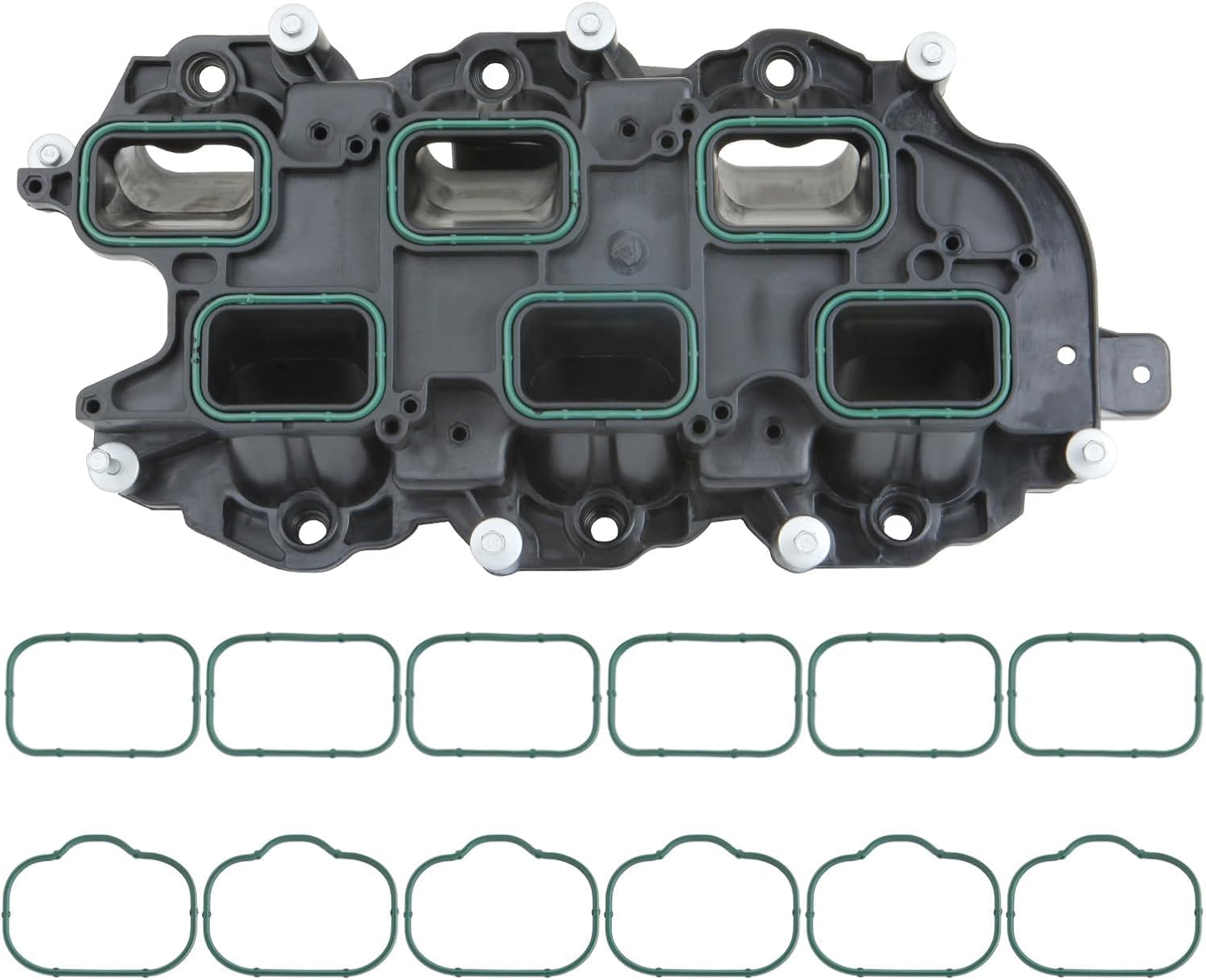
| Compatible engine | 3.6L Pentastar V6 |
|---|---|
| Included | Intake manifold, gasket, bolts |
| Exterior material | ABS |
| Manufacturer part number | 009-167 |
This MITZONE intake manifold is a direct replacement lower intake for 3.6L Pentastar V6 applications and is offered as a complete kit with gaskets and mounting bolts. It is typically used to cure leaking or cracked plastic manifolds on 2011–2021 Jeep and related models; installers report straightforward bolt-on fitment and that the part seals reliably when torqued in sequence. The manifold is molded from ABS and the listing emphasizes upgraded material to resist heat-related warping, while the kit adds convenience by including hardware. Buyers should expect a factory-replacement style part rather than a performance upgrade; some customers found the supplied bolts and gaskets to be lower quality and swapped them for OEM items during installation. Overall the part is a practical, lower-cost option that restores serviceability and eliminates intake leaks, but careful attention to proper torque and optional use of higher-quality gaskets or bolts will improve long-term results.
Best for: Buyers who want a cost-effective, ready-to-install replacement to stop intake leaks and restore reliability on 3.6L Pentastar V6 vehicles and who value peer-tested fitment and straightforward installs.
Less Ideal for: Drivers seeking a performance intake or heavy-duty aftermarket upgrade should look at uprated aluminum performance manifolds instead.
- Complete kit includes manifold, gasket, and bolts for one-stop replacement.
- Made from ABS with claimed heat-resistant formulation to reduce warping and leaks.
- Multiple reviewers report good fit and easy installation on 3.6L Pentastar engines.
- Supplied gaskets and bolts have mixed quality reports and some buyers replaced them with OEM parts.
Verdict: A budget-friendly, ready-to-install replacement that reliably fixes leaking 3.6L Pentastar lower intake manifolds and is backed by many successful installs.
NewYall 3.6L Upper Intake Manifold for 3.6L V6
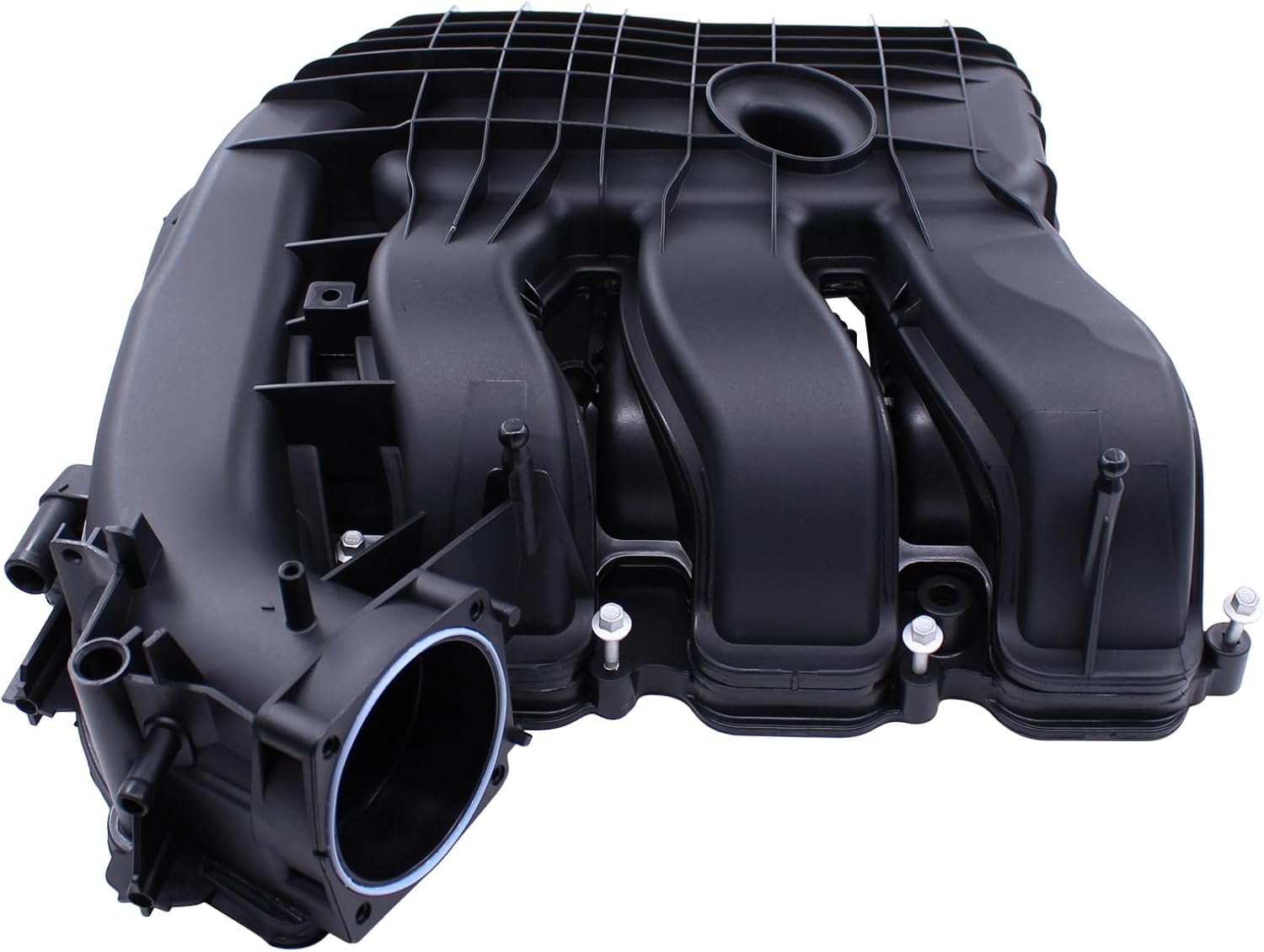
| Engine fitment | 3.6L V6 |
|---|---|
| Compatible years | 2011–2020 (listed models) |
| Brand | NewYall |
| Model number | 5l84693AE |
This NewYall upper intake manifold is a direct-replacement style part for vehicles equipped with the 3.6L V6. It replaces the upper intake assembly and is typically used during engine repairs where the original manifold is cracked, leaking, or damaged. The part is listed for a wide range of 2011–2020 Chrysler and Dodge models and select Jeep and Ram vehicles that use the 3.6L, which simplifies fit decisions when your vehicle matches the specified years and engine. Buyers report straightforward fitment and factory-like mating surfaces that make installation by a competent DIYer or technician practical. Because it is a single-component upper manifold, expect the usual benefits of restoring intake sealing and airflow without needing to replace lower manifold parts. One limitation is that correct fit depends strictly on the 3.6L V6 application and the listed model years, so confirm exact vehicle and engine match before purchase; another user reported difficulty achieving final bolt torque which suggests careful attention to fastener condition and torque sequence during installation.
Best for: Buyers who prioritize a reliable, factory-style replacement to restore a 3.6L V6 intake on supported 2011–2020 Chrysler, Dodge, Jeep, or Ram vehicles and who prefer a straightforward swap rather than performance upgrades.
Less Ideal for: If you are looking for a performance or modified intake solution or need coverage for engines other than the 3.6L V6, this part is not appropriate.
- Made for 3.6L V6 applications so compatibility is clear for supported models
- Factory-style replacement that restores intake sealing and airflow
- Multiple buyer reports of good fit on listed vehicles
- Fit and final fastening may require careful torqueing and possibly replacement of hardware to achieve proper seal
Verdict: Choose this NewYall upper intake manifold when you need a direct factory-style replacement for a 3.6L V6 on supported 2011–2020 vehicles to restore proper sealing and function.
Choosing the Right 2011-2021 Jeep Grand Cherokee Intake Manifold: Key Factors to Consider
Fitment and Port Alignment
Correct fitment is the baseline requirement for any intake manifold you consider for the 2011-2021 Grand Cherokee (WK2). The manifold must align precisely with the cylinder head ports, throttle body, MAP or MAF sensor locations, and all vacuum and coolant passages. Even small deviations can cause leaks, sensor misreads, or interference with fuel rails and ignition components.
When inspecting options, verify the port shape and spacing against your engine head, check for the correct throttle-body flange, and ensure all accessory brackets and sensor bosses are present. Proper alignment reduces the need for adapters or spacers and prevents stress on gaskets and fasteners that can lead to premature failure.
Sealing Design and Gasket Quality
Sealing performance is critical because intake manifold leaks produce rough idle, poor fuel trim, and potential engine damage if unaddressed. Look for manifolds that come with multi-layer or molded gaskets designed to accommodate slight surface irregularities. Integrated gasket rails or OEM-style seals often provide better long-term sealing than generic flat gaskets.
Consider whether replacement gaskets are readily available and whether the manifold design allows for proper gasket seating under normal torque. Some manifolds include captive seal features or raised bosses that improve compressive load distribution and reduce the chance of vacuum or coolant leakage.
Material and Thermal Stability
Material choice affects durability, heat soak behavior, and susceptibility to warping. Composite manifolds resist corrosion and can dampen heat transfer to the intake charge, while aluminum units offer strength and lower long-term deformation risk when engineered correctly. For the WK2 application, choose a construction that tolerates the underhood temperatures and repeated thermal cycling common in daily driving and towing.
Also consider the finish and internal surface treatment. Smooth internal passages can help airflow and reduce carbon buildup, while brittle or thin sections are more likely to crack when fasteners are tightened or during engine flex.
Vacuum and Sensor Port Configuration
The Grand Cherokee uses multiple vacuum ports and sensor locations that must be preserved for proper engine control. A manifold that repositions or omits a port can complicate installation or require additional hose routing. Confirm that the manifold provides the correct number and type of ports for brake boosters, EVAP, MAP/MAF, and any model-specific actuators.
Easy access to these ports during service is also important. Ports placed in cramped or hard-to-reach areas make routine diagnostics and vacuum leak testing more difficult, potentially increasing labor time for simple repairs.
Serviceability and Maintenance Access
Routine service tasks like gasket replacement, intake manifold cleaning, or accessing spark plugs are influenced by manifold design. A manifold that simplifies removal and reinstallation by minimizing interference with fuel rails, wiring harnesses, or coolant lines will reduce labor and the chance of incidental damage.
Also evaluate whether common maintenance items—like PCV valve locations or drain paths for condensation—are accessible. Manifolds that integrate accessible service points or modular components facilitate repairs and lower ownership costs over time.
Fastening Method and Torque Considerations
Correct fastener pattern and torque application are essential to prevent warping, ensure gasket compression, and avoid leaks. Manifolds designed for the WK2 typically use specific bolt lengths and sequences; using the wrong torque values can compress gaskets unevenly or strip bosses.
Confirm that the manifold design tolerates recommended torque specs and that replacement fasteners and washers are available if needed. Where possible, choose manifolds with clearly defined clamping surfaces and reinforced bosses to help maintain sealing integrity through repeated service cycles.
Common Intake Manifold Symptoms and What They Mean
Recognizing symptoms early can save time and prevent collateral engine issues. On the 2011-2021 Grand Cherokee (WK2), common signs of intake manifold or gasket problems include rough idle, stumble on acceleration, and an illuminated check-engine light with codes related to fuel trim or manifold absolute pressure. These symptoms often point to air entering or escaping the intake tract in places other than the throttle body.
Other telltale signs include unexplained vacuum leaks audible at idle, coolant loss if the manifold shares coolant passages, and oil contamination inside the manifold plenum caused by valve-cover or PCV failures. Identifying the specific symptom helps narrow whether the issue stems from the manifold body, gasket surfaces, or associated vacuum lines.
- Rough idle and unstable RPMs often indicate a vacuum leak or intake gasket failure.
- Hesitation or lack of throttle response can result from port distortion or internal obstruction.
- Coolant in the intake plenum suggests a breached coolant passage or degraded gasket sealing.
- Check-engine codes for fuel trim or MAP sensor discrepancies commonly accompany manifold leaks.
Diagnosis: How to Confirm a Manifold Leak on a WK2
A methodical diagnosis isolates the intake manifold as the source before parts are replaced. Start with a visual inspection for cracked or discolored gasket surfaces, warped mating faces, and missing or damaged vacuum hoses. Next, perform a controlled vacuum leak test using a smoke machine or propane/butane method around the manifold flange and sensor ports while the engine idles.
Listen for hissing sounds at the flange and watch live fuel-trim and MAP readings if you have access to a scan tool. If coolant presence is suspected, pressure-test the cooling system to reveal leaks that intersect manifold passages. Accurate diagnosis prevents unnecessary replacement and targets the correct sealing surface or component.
- Use a smoke test to find subtle vacuum leaks around flanges and sensor ports.
- Monitor live fuel-trim data to confirm unmetered air is affecting engine control.
- Pressure-test cooling circuits if coolant contamination of the plenum is suspected.
Installation Tips and Torque Guidance
Installation quality is as important as part selection. Clean mating surfaces thoroughly and replace all gaskets and O-rings with OEM-equivalent parts. Follow a proper bolt tightening sequence and torque values to avoid uneven clamping that leads to leaks. For the WK2 manifold, use the manufacturer-recommended torque sequence and incremental torque steps where specified, beginning with a light fitment pass and ending at the final torque value.
Always use new fasteners if the original bolts are torque-to-yield or show signs of stretch. Apply threadlocker or anti-seize where appropriate for your application and avoid overtightening plastic bosses, which can strip or crack. After installation, recheck torque after a short break-in period to account for gasket creep.
- Start bolts in a crisscross pattern and tighten gradually to final torque.
- Replace all gaskets, seals, and any torque-to-yield fasteners during installation.
- Recheck fastener torque after initial heat cycles to confirm sealing integrity.
Cleaning and Preventive Maintenance
Periodic inspection and cleaning can extend manifold life and prevent performance degradation. For the WK2, carbon buildup in the plenum and around intake runners can affect airflow consistency and sensor readings. Use safe intake cleaning methods that do not damage sensors or coatings, and avoid harsh abrasives on mating surfaces.
During routine service, inspect vacuum hoses, PCV fittings, and gasket edges for cracks or material breakdown. Addressing minor leaks and cleaning deposits early reduces the risk of larger failures and makes later repairs simpler.
- Avoid harsh scrubbing on mating surfaces; use plastic scrapers for gasket residue.
- Check PCV and vacuum hoses during oil changes to spot early degradation.
- Use intake-safe cleaners and follow manufacturer exposure time limits when removing carbon deposits.
When to Replace Versus Repair the Manifold
Deciding between repair and replacement depends on damage severity and long-term goals. Minor gasket failures, small vacuum hose damage, or superficial surface imperfections can often be repaired with new seals and careful resurfacing. However, cracks in the manifold body, severely warped flanges, or persistent coolant leaks usually justify full replacement to ensure reliable sealing.
If you are planning a performance upgrade or expect heavy duty use like towing, replacement with a robust, purpose-built manifold will typically offer better durability than a repaired original. Factor in future serviceability and the availability of quality gaskets when choosing the repair route.
- Repair when damage is limited to gaskets or hose fittings.
- Replace if the manifold body is cracked, severely warped, or has compromised coolant passages.
- Consider replacement for long-term reliability if the vehicle sees heavy-duty use.
Performance and Tuning Considerations
Some owners pursue intake manifold upgrades to improve airflow and engine response. For the WK2 Grand Cherokee, modest gains typically come from manifolds with smoother internal flow paths, larger runners, or reduced plenum turbulence. However, gains are often incremental unless combined with supporting modifications such as improved throttle bodies or tuned engine management.
When evaluating performance-oriented manifolds, confirm that any differences in port geometry still match the cylinder head and sensor locations. Also consider whether the manifold will require calibration or changes to fueling to maintain safe air-fuel ratios. Practical performance upgrades focus on reliability as much as flow improvements.
- Expect incremental gains unless paired with additional induction or tuning changes.
- Verify port compatibility to avoid sensor misplacement or intake distortion.
- Plan for potential fueling adjustments if runner volume or plenum size changes significantly.
How We Chose the Best 2011-2021 Jeep Grand Cherokee Intake Manifold
We prioritized concrete, vehicle-specific criteria when assembling this list of intake manifolds for the 2011-2021 Jeep Grand Cherokee (WK2). First, fitment and direct compatibility were required: candidates had to match OEM mounting points, throttle-body alignment, and vacuum port locations for the WK2 intake layout. Second, sealing performance was a primary filter, so we favored manifold designs and gasket solutions that reduce the risk of vacuum leaks and oil or coolant intrusion. Third, materials and construction quality mattered: manifolds made from robust composites or corrosion-resistant metals with reinforced bosses were preferred for longevity. Fourth, ease of installation and maintenance influenced selection; manifolds that allow straightforward gasket replacement and access to common service points scored higher. We also checked torque spec compatibility and recommended fastener patterns to ensure correct clamping forces. Exclusions: we omitted any items lacking WK2-specific fitment data, manifolds that required extensive rework or custom machining, and parts with known recurring sealing failures. The result is a compact set of options that balance reliability, serviceability, and the real-world needs of Grand Cherokee owners.
Our full evaluation process is outlined in our review methodology.
FAQ
What are the most common intake manifold symptoms on a WK2 Grand Cherokee?
Common symptoms include rough idle, hesitation on acceleration, audible vacuum hissing, and check-engine light codes related to fuel trim or MAP readings. Coolant in the plenum or persistent vacuum leaks are also indicators of manifold or gasket issues.
Can I replace just the intake manifold gasket instead of the whole manifold?
Often a gasket replacement will fix leaks caused by sealing failure, provided the mating surfaces and manifold body are not warped or cracked. Inspect the flange faces and bolt bosses carefully; if the manifold shows structural damage, a full replacement is usually the more reliable choice.
How do I diagnose an intake manifold vacuum leak on this vehicle?
Use a smoke test or carefully apply a small amount of propane around the manifold flange and vacuum ports while the engine idles. Monitor live fuel-trim and MAP sensor data; a sudden change indicates unmetered air. Visual inspection and cooling-system pressure tests can help identify coolant-related leaks.
Are there torque specs I should follow when reinstalling the intake manifold?
Yes. Follow the manufacturer-recommended torque sequence and incremental steps to ensure even clamping and avoid warping. Use new fasteners if the originals are torque-to-yield and recheck torque after a few heat cycles to account for gasket compression.
Will cleaning the intake manifold improve performance on the WK2?
Cleaning can restore airflow consistency if carbon buildup is restricting runners or the plenum. It often improves idle and throttle response, but it will not fix leaks or structural damage. Use intake-safe cleaners and avoid damaging sensors or coated surfaces.
What should I expect in terms of service access when replacing the manifold?
Plan for removal of ancillary components such as coolant lines, vacuum hoses, and possibly fuel-rail brackets to gain clear access. A manifold that reduces interference with wiring and fuel components will shorten labor time and lower the chance of incidental damage during service.
When is a full manifold replacement preferable to repairing the existing unit?
Full replacement is preferable if the manifold has cracks, severely warped mating surfaces, or leaking internal coolant passages. Replacement is also advisable when you want to upgrade to a more serviceable or durable design for long-term reliability.
Final Verdict
For the 2011-2021 Jeep Grand Cherokee (WK2), prioritize intake manifolds that provide exact port alignment, robust gasket solutions, and durable construction. Proper diagnosis will reveal whether a gasket replacement or full manifold swap is required, and correct installation with the right torque sequence is essential to avoid recurring leaks. Balance the desire for incremental performance gains against the need for reliable sealing and serviceability. Choosing a direct-fit, well-sealed manifold and following correct installation practices gives the most dependable outcome for WK2 owners.
Explore More:
- Check out all Jeep Grand Cherokee parts & accessories
- Explore Intake Manifolds Maintenance & Repair Guides
- Explore Engine
- Browse all Auto Parts
