

Note: This article contains affiliate links. If you click on these links and make a purchase, I may earn a small commission at no extra cost to you. This helps support my research and content. Read my full affiliate disclosure here.
If you own a 1995-2004 Toyota Tacoma, choosing the right brake pads matters for everyday safety and long-term maintenance costs. Worn or inappropriate pads can increase stopping distance, create excessive dust, or cause noisy operation that is uncomfortable during daily driving.This guide shortlists seven top-performing brake pads suited to the 1995-2004 Tacoma platform and driving needs. We evaluated options for stopping performance, pad life, noise, and rotor friendliness so you can pick a pad that matches your driving style and maintenance priorities. Read on for concise guidance and the criteria we used to make the selections.
Looking for other parts? See all Toyota Tacoma parts & accessories.
Top Picks at a Glance
| Best Overall The best all-around choice for most situations | Raybestos Element3 Front Brake Pad Set (EHT799H) |  |
| Best Quality Built to a higher standard if you want something more solid | BOSCH QuietCast Premium Ceramic Front Brake Pad Set (BC799) |  |
| Best Value The sweet spot between price and what you get | ECCPP Front Ceramic Disc Brake Pads (4-pack) — Fit for Toyota 4Runner 1995–2002, Toyota Tacoma 1995–2004 |  |
| Best Budget The cheapest option that still gets the job done reliably | HUSCH D436 Front Ceramic Brake Pads Kit for Toyota Tacoma (1995–2004) |  |
| Highest Rated A top-rated pick with lots of positive feedback | Bendix Premium SBC799 Ceramic Front Brake Pads |  |
| Most Popular A crowd favorite that many people choose with confidence | Detroit Axle Front Drilled & Slotted Brake Kit with Ceramic Pads (11.69" Rotor) |  |
| Best Seller A high-volume bestseller chosen again and again | Bosch Severe Duty Ceramic Front Brake Pad Set (BSD976) |  |
Raybestos Element3 Front Brake Pad Set (EHT799H)

| Auto Part Position | Front |
|---|---|
| Compatible with Vehicle Type | Passenger Car |
| Specification Met | OEM |
| Material Type | Ceramic |
These Raybestos Element3 front brake pads are built for drivers who want a balanced, everyday replacement for older Tacomas. The EHT hybrid formulation mixes ceramic and semi-metallic traits to deliver confident stopping without excessive noise or black dust. Installation is straightforward and the kit includes common hardware pieces like clips and springs for an easier swap. In normal driving the pads feel smooth and responsive with braking performance close to factory quality, and several users report good durability and low rotor wear after extended use. You may notice slightly different initial bite compared with pure semi-metallic pads, so expect a short break-in period. These are not a performance racing compound, so aggressive track use or heavy towing will push them toward their limits. For routine street driving and light-duty use on a 1999–2004 Toyota Tacoma, they offer a good balance of quiet operation, wear life, and stopping control.
Best for: Buyers who want a quiet, long-wearing front pad that closely matches factory behavior for daily driving and light-duty use on older Tacomas.
Less Ideal for: Drivers who need race-level braking or frequent heavy towing should choose a dedicated high-performance or heavy-duty pad instead.
- Hybrid EHT formulation combines good stopping power with reduced brake dust
- Engineered noise-damping multi-layer shims for quieter operation
- Includes installation hardware (clips and springs) for easier fitment
- Vehicle-specific fitment for direct replacement front pads
- Not optimized for high-heat track or heavy towing applications where full metallic compounds excel
Verdict: For 1999–2004 Toyota Tacoma owners seeking a quiet, durable factory-style replacement, these Element3 hybrid pads deliver a reliable, balanced upgrade.
BOSCH QuietCast Premium Ceramic Front Brake Pad Set (BC799)

| Brand | Bosch |
|---|---|
| Auto Part Position | Front |
| Material Type | Ceramic |
| Automotive Fit Type | Vehicle Specific Fit |
The Bosch QuietCast BC799 is a front axle ceramic brake pad kit engineered as a direct, vehicle-specific replacement for select Toyota Tacoma models. It is typically used when refreshing the front pads during routine maintenance or when seeking improved brake feel without changing rotors. QuietCast pads use a ceramic friction compound and OE-style multilayer rubber-core shims that reduce noise and vibration, while a protective transfer layer and powder-coated backing plates aim to extend pad and rotor life. The kit ships with installation lubricant and hardware where required so you can complete a single-axle service without sourcing extras. In practice these pads deliver confident bite and low dust, and many owners report better stopping compared with worn factory pads. Expect solid day-to-day performance for street and moderate heavy-duty use, though performance drivers who demand maximum fade resistance on track or heavy towing may prefer a dedicated performance or semi-metallic pad designed for high-temperature repeated stops.
Best for: Drivers who want a quiet, low-dust, factory-quality front pad replacement for 1999–2004 Toyota Tacoma that improves everyday stopping and longevity without changing rotors.
Less Ideal for: Enthusiasts who plan repeated high-speed track braking or owners who regularly tow heavy loads should consider a heavy-duty or track-focused brake compound instead.
- Ceramic friction formula offers quiet operation with low brake dust
- OE-style multilayer rubber-core shim reduces noise and improves corrosion resistance
- Powder-coated backing plates and protective transfer layer help extend pad and rotor life
- Includes hardware kit and synthetic lubricant for a complete front-axle installation
- Not optimized for sustained high-temperature track use or heavy trailer towing
Verdict: Choose Bosch QuietCast BC799 when you want a quiet, low-dust, factory-quality front brake pad upgrade for your Tacoma that balances strong everyday stopping power with long life.
ECCPP Front Ceramic Disc Brake Pads (4-pack) — Fit for Toyota 4Runner 1995–2002, Toyota Tacoma 1995–2004

| Fitment | Toyota 4Runner 1995-2002; Toyota Tacoma 1995-2004 |
|---|---|
| Position | Front |
| Unit Count | 4 Count |
| Manufacturer Warranty Description | 1 Year |
These ECCPP front ceramic brake pads are a budget-focused replacement kit for Toyota 4Runner (1995–2002) and Tacoma (1995–2004) front brakes. They are sold as a four-piece set and include hardware and a small packet of grease, which simplifies installation for DIYers. The ceramic-based formulation aims to reduce brake dust and run quietly while providing predictable stopping power for everyday driving. Multiple customer reports show good fitment and quiet operation when installed correctly, though one purchaser noted occasional filing or minor trimming was needed to achieve a perfect fit. The pads meet OEM specification claims and are paired with semi-metal and organic formulations for balanced performance. Expect solid value for routine street use and commuting; these pads are not targeted at aggressive towing or heavy-duty track work where high-temperature fade resistance is critical. If you want a straightforward, low-dust replacement that comes with the basic install pieces, this set delivers, but allow some time for test bedding and checking fit before regular use.
Best for: Buyers who prioritize a cost-effective, low-dust, and quiet street replacement for daily driving and want parts that come ready for self-installation.
Less Ideal for: Drivers who frequently tow heavy loads, carry constant heavy payloads, or do performance driving should consider higher-temperature-rated or heavy-duty brake compounds instead.
- Vehicle-specific fit for listed Toyota 4Runner and Tacoma years reduces installation guesswork.
- Ceramic formulation reduces brake dust and tends to run quietly.
- Includes hardware and grease packet to simplify DIY installation.
- Meets OEM specification claims for a like-for-like replacement feeling.
- May require light filing or minor trimming on some hubs to achieve perfect fit on arrival.
Verdict: A practical, low-dust front pad set that gives Toyota 1995–2004 Tacoma and 1995–2002 4Runner owners reliable, quiet everyday braking at a budget-friendly value.
HUSCH D436 Front Ceramic Brake Pads Kit for Toyota Tacoma (1995–2004)

| Auto Part Position | Front |
|---|---|
| Compatible with Vehicle Type | Car, SUV, Truck |
| Number of Items | 4 |
| Material Type | Ceramic |
| Specification Met | OEM |
These HUSCH D436 front ceramic brake pads are a direct-fit replacement intended for Toyota Tacoma 1995–2004 owners who want a quiet, low-dust option on a budget. The kit includes four ceramic pads and common installation hardware; ceramic construction keeps wheel dust down and the manufacturer states the material is metal-free, which reduces wheel staining and makes cleanup simple. A claimed friction coefficient of 0.405 suggests responsive, short stopping distances in everyday and hard stops. Many buyers report a snug fit, low noise and included anti-rattle clips and grease that simplify installation. Trade-offs to expect are typical of ceramic compounds: they tend to be quieter and cleaner but may produce slightly less initial bite than some high-performance semi-metallic pads under repeated heavy towing or track use. The set meets OEM specification per the listing and comes with a two year manufacturer warranty, making it a practical budget replacement for routine driving and light-duty use on older Tacomas.
Best for: Tacoma owners looking for a cost-effective, factory-quality front pad replacement that prioritizes low dust, quiet operation, and straightforward installation for daily driving.
Less Ideal for: Drivers who frequently tow heavy loads, carry heavy payloads, or take their vehicle to the track and need maximum high-heat stopping power should consider heavy-duty or performance-oriented pads instead.
- True ceramic material for reduced wheel dust and easier cleaning
- Vehicle-specific fit for Toyota Tacoma 1995–2004 reduces installation adjustments
- Includes installation hardware and anti-rattle components for a smoother install
- Quiet operation with minimal brake squeal reported by multiple buyers
- Ceramic formulation can offer less initial bite than aggressive semi-metallic pads under heavy-duty towing or track use
Verdict: If you want a quiet, low-dust, budget-friendly front pad replacement for a 1995–2004 Toyota Tacoma, this HUSCH ceramic kit is a dependable choice.
Bendix Premium SBC799 Ceramic Front Brake Pads
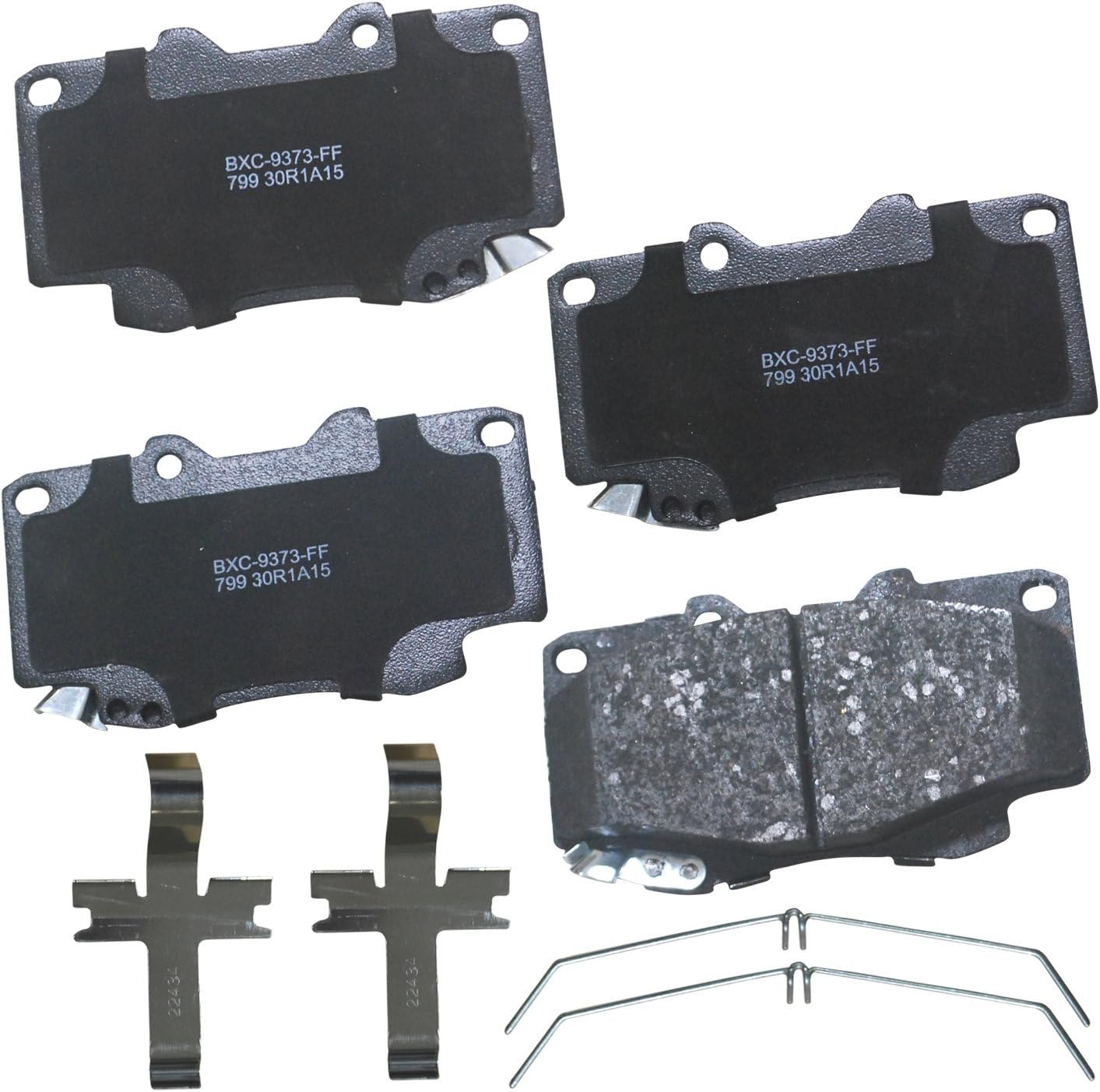
| Material Type | Ceramic |
|---|---|
| Automotive Fit Type | Vehicle Specific Fit |
| Included Components | (1) Brake Pad Set with Installation Hardware |
| Model Number | SBC799 |
These Bendix Premium SBC799 ceramic front brake pads are a direct-fit replacement designed to match factory fit, form, and function for Toyota Tacoma models from 1999 to 2004. Intended for everyday driving, the ceramic compound gives a smooth, quiet feel once bedded in and reduces the squeal associated with some semi-metallic pads. The set ships with installation hardware which simplifies swap-out and can make a one-person job quicker. Bendix highlights durability and reduced fade, so drivers who commute or tow occasionally should notice steady pedal feel under normal use. A practical limitation is that ceramic pads can produce noticeable brake dust on some wheel finishes and may cost a bit more than generic white-box options, but buyers trade a little extra expense for quieter operation and predictable stopping. Fitment is vehicle-specific, so this is best when you want a like-for-like factory-quality replacement without altering braking behavior.
Best for: Drivers who prioritize dependable, factory-like braking for daily driving and occasional towing and want a quiet, predictable replacement over budget white-box pads.
Less Ideal for: Drivers who want the lowest upfront cost or who demand high-performance racing or heavy-duty commercial braking should consider alternatives designed for those specific applications.
- Vehicle-specific fit designed to match factory fit, form, and function
- Ceramic compound delivers quiet operation after bedding in
- Includes installation hardware for an easier swap
- Formulated to resist fade for consistent braking under normal driving
- Ceramic formulation can leave noticeable brake dust on wheels
Verdict: A reliable, factory-quality ceramic front pad set that restores quiet, consistent braking for 1999–2004 Toyota Tacoma owners focused on dependability.
Detroit Axle Front Drilled & Slotted Brake Kit with Ceramic Pads (11.69" Rotor)

| Rotor diameter | 11.69 inch (297mm) |
|---|---|
| Orientation | Front |
| Pad type | Ceramic |
| Included accessories | Clip set, brake cleaner, brake fluid |
This Detroit Axle front brake kit supplies two drilled and slotted 11.69 inch rotors, a pair of ceramic front pads with hardware, and small bottles of brake fluid and cleaner to complete a front brake service. It is intended as a direct-fit replacement for specified 6-lug Toyota 4Runner and Tacoma front hubs and is installed like a factory-style replacement. The drilled and slotted rotor pattern helps dissipate heat and shed moisture, which is useful for towing, hauling, or repeated braking, while the ceramic pads tend to run quieter and produce less dust than semi-metallic pads. The kit arrives with locating holes machined for bolt-up and zinc plating to resist corrosion. Practical perks include included clips, cleaner, and fluid so you can finish a job without hunting for extras. Limitations to note are the rotor size specificity—measure before buying—and reports from some users that drilled/slotted rotors and new pads can be noisy until they bed in, and the small fluid bottle may not match every vehicle's DOT spec.
Best for: Buyers who prioritize proven customer feedback and want a ready-to-install front brake service kit that includes rotors, pads, and finishing supplies for a 6-lug Tacoma/4Runner front axle.
Less Ideal for: People looking for a universal or different-size rotor solution or those who need DOT-specific brake fluid included for every vehicle.
- Complete front kit includes rotors, ceramic pads, hardware, brake cleaner, and fluid for one straightforward service
- Drilled and slotted rotors improve heat dissipation and help clear moisture during repeated stops
- Zinc-plated rotors resist surface corrosion and reduce visible wheel dust over time
- Machined locating holes and included clips aim to provide a factory-style fit without modification
- Kit is specific to a single rotor diameter (11.69 inch) and will not fit vehicles with different rotor sizes
- Some users report longer bedding-in noise with drilled/slotted rotors and ceramic pads
- Included brake fluid may not match every vehicle's DOT requirement so replacement with the correct type may be needed
Verdict: A complete, well-reviewed front brake kit that gives social-proof-minded buyers a direct-fit, factory-style replacement with drilled/slotted rotors and ceramic pads for the specified 6-lug Toyota front applications.
Bosch Severe Duty Ceramic Front Brake Pad Set (BSD976)

| Material Type | Ceramic |
|---|---|
| Auto Part Position | Front |
| Automotive Fit Type | Vehicle Specific Fit |
| Manufacturer | Bosch Automotive |
These Bosch Severe Duty ceramic front brake pads are designed to replace factory front pads on compatible Toyota platforms and deliver quiet, consistent stopping in everyday and demanding use. They are intended for vehicles that see frequent stop-and-go driving or carry heavier loads, using a ceramic friction formulation that reduces dust and noise while maintaining firm braking. Bosch includes OE-style multilayer shims, slots, and chamfers where required to match factory fit and simplify installation, and the set ships with synthetic lube and any platform-specific hardware. Because they are targeted at severe-duty duty cycles, you can expect good wear life under city driving and occasional light towing. The pads are vehicle-specific fitment, so confirm compatibility with the front axle of a 1995–2004 Toyota Tacoma before purchase. These are not a performance racing compound, so drivers seeking track-focused bite or aggressive high-temperature fade resistance should consider specialty options instead.
Best for: Buyers who prioritize low noise, minimal dust, and dependable, factory-like braking for daily driving and occasional light towing will appreciate these pads.
Less Ideal for: Drivers who need track-capable pads or who routinely tow very heavy loads should look at high‑temperature performance or heavy‑duty commercial brake compounds instead.
- Ceramic formulation delivers low dust and quiet operation
- Engineered with OEM-style shims, slots, and chamfers for proper fit and reduced vibration
- Designed for heavy stop-and-go use and light payload/towing duty for improved wear life
- Includes synthetic lube and platform-specific hardware for easier installation
- Not formulated for track or heavy commercial towing where extreme fade resistance is required
Verdict: Choose these Bosch Severe Duty front ceramic pads if you want quiet, low-dust, factory-style braking tailored for frequent city driving and light towing on your Tacoma.
Choosing the Right 1995-2004 Toyota Tacoma Brake Pads: Key Factors to Consider
Material Compound
The pad compound determines initial bite, fade resistance, longevity, and dust production. Organic and ceramic compounds typically offer quieter operation and lower dust at modest cost, making them appealing for daily-driven Tacomas. Semi-metallic compounds can provide stronger initial bite and better heat tolerance, which helps under heavier loads or occasional towing, but they often produce more dust and may be louder.
For a 1995-2004 Tacoma, consider how you use the truck. If you mostly commute and carry light loads, a ceramic-oriented compound can reduce noise and rotor wear. If you frequently tow or carry heavy cargo, a compound with higher metallic content may sustain braking performance under repeated heavy stops. Also factor in local climate; extreme heat or mountainous driving increases demand on the compound's fade resistance.
Stopping Power and Pedal Feel
Stopping power is the primary safety metric. Different pad formulations deliver different initial bite and modulation characteristics, which affects how the pedal feels and how confidently you can control stops. For the Tacoma, look for pads that provide predictable, linear pedal response rather than abrupt grab that can unsettle the truck when hauling.
Pedal feel can also change as pads bed in. Some pads require a bedding procedure to reach optimal friction levels. Consider whether you are comfortable performing a bedding process or prefer a pad that offers good performance out of the box. Matching pad performance expectations to your driving—city, highway, or mixed use—helps avoid a mismatch between pedal feel and required stopping ability.
Noise and Vibration Control
Brake noise is a common complaint on older trucks. Quality pads address this with chamfers, shims, and consistent friction material. Excessive squeal, grinding, or vibration often indicates a poor compound, missing hardware, or inadequate backing plate rigidity.
For the Tacoma, quieter pads improve daily comfort and reduce the chance of misdiagnosing other brake issues. If you prioritize low noise, look for pads with anti-squeal shims, proper chamfering, and a dense, well-bonded backing plate. Also inspect whether the pad design minimizes uneven wear that can contribute to vibration over time.
Rotor Compatibility and Wear
Pad choice affects rotor life. Aggressive compounds can shorten rotor life by increasing wear rates, while softer materials may extend rotor life but wear faster themselves. For a Tacoma with original or refurbished rotors, choose pads that balance friction with rotor friendliness to avoid costly rotor machining or replacement.
Consider the current rotor condition. If rotors are near minimum thickness or heavily scored, pairing them with a high-abrasion pad may accelerate the need for replacement. Selecting a pad with a reputation for being rotor-friendly helps reduce long-term maintenance costs, especially if you plan to keep the truck for many years.
Fitment and Backing Plate Quality
Accurate fitment is essential for safe braking and easy installation. Pads must match the caliper and hardware for the 1995-2004 Tacoma to prevent uneven wear or caliper binding. Backing plate rigidity and corrosion-resistant coatings help ensure consistent pad contact and reduce the chance of noise or movement under braking.
Inspect whether pads come with the correct hardware or if additional clips and shims are required. A pad with a sturdy, well-coated backing plate will maintain alignment and reduce the risk of squeal caused by loose-fit or flexing plates.
Dust, Maintenance, and Service Life
Brake dust affects wheel appearance and can indicate wear rate. Low-dust pads simplify maintenance and keep wheels cleaner, which is a practical benefit for Tacoma owners who use alloy wheels or want less frequent cleaning. Service life ties directly to compound and driving style; more aggressive use shortens life regardless of material.
Think about expected mileage between replacements and ease of inspection. If you prefer longer intervals between pad changes, prioritize compounds known for extended life and check whether the pad design allows quick visual inspection of remaining material. Also consider availability of replacement pads and consistent fitment across production years in the 1995-2004 range.
Front Vs Rear Brake Considerations on the Tacoma
Front and rear pads play different roles on the Tacoma due to weight transfer and brake bias. Front pads typically handle a larger share of stopping force and can wear faster, especially under heavy braking or towing. Rear pads contribute to stability and parking braking but generally experience lower thermal loads.
When servicing the Tacoma, evaluate front pads for higher-performance compounds if you need stronger stopping, while rear pads may prioritize longevity and low noise. Also inspect caliper hardware and parking brake components when replacing rear pads to ensure complete system reliability.
- Front pads handle more heat and require better fade resistance.
- Rear pads focus more on steady braking and parking hold.
- Replace hardware and check caliper pins when changing pads.
Bedding and Break-In Practices
A proper bedding procedure helps pads and rotors mate evenly, improving initial bite and reducing the likelihood of uneven wear and noise. Bedding typically involves a series of moderate to firm stops from moderate speed to gradually transfer an even layer of friction material onto the rotor surface.
For the 1995-2004 Tacoma, follow the pad manufacturer's recommended bedding steps when available. If no guidance is provided, perform controlled stops with increasing intensity, allowing cooling periods between cycles. Avoid aggressive repeated stops without cooling as that can lead to glazing or excessive pad wear.
- Perform 8 to 12 moderate stops initially, avoiding full-lock braking.
- Allow time between cycles for rotors to cool.
- Recheck torque on caliper hardware after bedding.
Signs You Need Brake Pad Replacement
Recognizing wear symptoms early helps keep stopping performance reliable. Common indicators include a grinding sound that suggests metal-on-metal contact, a high-pitched squeal caused by wear indicators or glaze, and a change in pedal feel such as sponginess or reduced bite. Visual inspection remains one of the fastest checks: if pad material is thin or below the manufacturer recommended thickness, replace the pads.
For Tacomas in this year range, pay attention to vibration during braking, uneven wear across the pad surface, and excessive dust buildup. These signs often signal that pads or related hardware need attention before more expensive rotor or caliper damage occurs.
- Grinding indicates urgent pad replacement to prevent rotor damage.
- Squeal can indicate worn pads or missing shims.
- Thin pad material or metal showing through requires replacement.
Choosing Between Ceramic and Semi-Metallic Options
Ceramic-style pads typically offer quieter operation, lower dust, and gentler rotor wear, which suits daily-driven Tacomas and owners who value clean wheels and reduced noise. Semi-metallic pads provide better thermal performance and initial bite, helpful for towing or heavier loads, but they may create more dust and sound.
Match the compound to your typical use. If you rarely carry heavy loads and want low maintenance, ceramic-oriented pads are sensible. If you tow frequently or drive in hilly terrain, consider a higher-friction semi-metallic choice instead, keeping in mind the tradeoffs in dust and potential rotor wear.
- Ceramic: lower dust, quieter, gentler on rotors.
- Semi-metallic: higher bite and heat tolerance, more dust.
Installation Tips and Common Pitfalls
When installing pads on the Tacoma, clean the caliper bracket and hardware to ensure smooth movement and even pad wear. Replace or lubricate caliper slide pins with high-temperature brake grease and inspect anti-rattle clips. Torque caliper bolts to factory specifications and avoid over-tightening mounting hardware.
Common mistakes include reusing worn or corroded hardware, neglecting to compress the caliper piston evenly, and skipping a test drive to verify pedal feel and absence of noise. Address any unusual brake behavior immediately after installation to prevent further damage.
- Clean mounting surfaces and lubricate slide pins.
- Replace anti-rattle clips and hardware if corroded.
- Torque bolts to spec and perform a short test drive.
Service Intervals and How Often To Replace Brake Pads
Replacement intervals depend on compound, driving style, and load. Light commuting in mostly flat areas can yield longer pad life, while frequent towing, off-road use, or hilly driving shortens service intervals. Inspect pads every oil-change interval and measure pad thickness against the vehicle specification.
Many Tacoma owners find front pads need replacement more often than rear pads. If you notice reduced material thickness, changing pads before they reach the minimum thickness helps avoid rotor damage and costly machining.
- Inspect pads visually at regular maintenance intervals.
- Front pads typically wear faster than rears.
- Replace pads before reaching minimum thickness to protect rotors.
Still looking for the perfect fit?
Select your Toyota Tacoma configuration to see the most relevant Brake Pads recommendations
How We Chose the Best 1995-2004 Toyota Tacoma Brake Pads
We prioritized criteria that directly affect on-vehicle performance and owner experience for the 1995-2004 Toyota Tacoma. First, stopping power under typical light-truck loads was a primary filter, since the Tacoma often carries cargo and towing demands. Second, pad longevity and material composition were assessed to balance life expectancy and wear characteristics on factory rotors. Third, noise and vibration behavior were considered, including whether pads include shims or chamfers to reduce squeal. Fourth, rotor friendliness and dust generation were evaluated to avoid premature rotor wear and reduce cleanup. Fifth, fitment accuracy and backing plate quality were checked to ensure reliable installation and consistent caliper engagement.We excluded pads designed solely for heavy racing or track use and any that lacked clear fitment information for the 1995-2004 Tacoma range. We filtered out pads with known fitment mismatches, poor backing plate construction, or materials unfit for daily driving. The final list reflects a balance of braking performance, expected service life, noise control, and installation reliability specific to this Tacoma generation.
Our full evaluation process is outlined in our review methodology.
FAQ
How do I tell if my Tacoma's brake pads are worn?
Common signs include a persistent squeal, reduced braking bite, visible thinning of the pad material, or a grinding noise that indicates metal contact. Regular visual checks and measuring pad thickness are the most reliable methods.
Can I replace only the front or rear pads instead of all four?
You can replace front or rear pads independently, but it is best to assess wear across both axles. Replacing only the most worn axle is acceptable if the other pads still have adequate thickness and show even wear.
Are ceramic pads better than semi-metallic for a 1995-2004 Tacoma?
Ceramic pads are generally quieter and create less dust, good for daily driving and lighter loads. Semi-metallic pads offer stronger initial bite and better heat resistance, which can be beneficial if you tow often or drive in hilly terrain. Choose based on use and preferred tradeoffs.
What does a grinding noise from the brakes usually mean?
Grinding often means the pad material is worn down to the backing plate and the metal is contacting the rotor. This requires prompt inspection and usually immediate pad replacement to prevent rotor damage.
Do brake pads require a bedding procedure on the Tacoma?
Many pads benefit from a bedding procedure to achieve optimal performance. Follow the manufacturer's recommendations; if none are provided, use a sequence of controlled moderate stops with cooling intervals to help transfer an even friction layer to the rotor.
How thick should brake pads be before replacement?
Replacement is typically recommended when friction material is near the manufacturer minimum specification or visibly thin. If pad thickness approaches a few millimeters, plan for replacement to avoid rotor damage and loss of braking performance.
Final Verdict
Prioritize stopping performance, compound suitability, and rotor friendliness when choosing brake pads for a 1995-2004 Toyota Tacoma. Match pad material to how you use the truck: quieter, low-dust ceramic-style pads for routine commuting and semi-metallic choices for heavier loads or towing. Pay attention to fitment accuracy, noise-control features, and pad thickness during inspections.Balancing initial bite, expected service life, and noise will help you pick pads that keep the Tacoma stopping reliably while minimizing maintenance. Replace pads before they reach critical wear to protect rotors and maintain consistent braking performance.
Explore More:
- Check out all Toyota Tacoma parts & accessories
- Explore Brake Pads Maintenance & Repair Guides
- Explore Brake System
- Browse all Auto Parts
