

Note: This article contains affiliate links. If you click on these links and make a purchase, I may earn a small commission at no extra cost to you. This helps support my research and content. Read my full affiliate disclosure here.
If you drive a 1995-2004 Toyota Tacoma, a failing brake booster can turn everyday stops into a harder, less predictable task. The brake booster is the component that uses engine vacuum to reduce the force you need to press the pedal, so wear, vacuum leaks, or diaphragm failure change pedal travel and braking confidence. This guide covers the top shortlisted brake boosters suitable for the 1995-2004 Tacoma, focusing on correct fitment, vacuum performance, and pedal feel.You will find options chosen for different installation preferences and repair approaches, along with the evaluation criteria we used. Read on to identify the replacement that best restores safe, predictable braking for your Tacoma, then follow the installation or test guidance that matches your skill level.
Looking for other parts? See all Toyota Tacoma parts & accessories.
Top Picks at a Glance
| Best Overall The best all-around choice for most situations | SCITOO Power Brake Booster remanufactured for 1995-2001 Toyota Tacoma |  |
| Best Quality Built to a higher standard if you want something more solid | QUALITY-BUILT Power Brake Booster (B3038N) — fits 1995–2001 Toyota Tacoma |  |
| Best Value The sweet spot between price and what you get | Silscvtt Power Brake Booster 53-2791 for Toyota Tacoma/T100 (1994–2001) |  |
| Best Budget The cheapest option that still gets the job done reliably | munirater Power Brake Booster Replacement for 1995-2001 Tacoma/T100 |  |
| Highest Rated A top-rated pick with lots of positive feedback | Fexhull Vacuum Power Brake Booster 53-2581 (compatible with 1995–2001 Toyota Tacoma) | 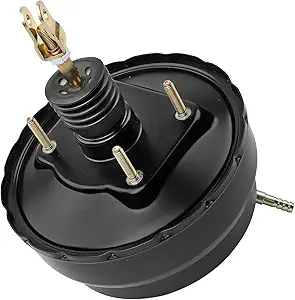 |
| Most Popular A crowd favorite that many people choose with confidence | IRONTEK Vacuum Power Brake Booster for Toyota Tacoma (2001–2004) |  |
| Best Seller A high-volume bestseller chosen again and again | HARUMA Vacuum Power Brake Booster 53-4905 Compatible with 2001–2004 Toyota Tacoma |  |
SCITOO Power Brake Booster remanufactured for 1995-2001 Toyota Tacoma

| Fitment years | 1995-2001 |
|---|---|
| Brand | SCITOO |
| Model | 165070 |
| Special feature | Stemless |
This remanufactured SCITOO power brake booster replaces the factory unit on 1995–2001 Toyota Tacoma trucks to restore vacuum-assisted braking. It arrives pre-tested with factory-quality seals and check valves installed, and the listing notes master cylinder output rods are pre-adjusted when included to simplify installation. Typical use is a direct replacement during a brake system overhaul or when the original booster fails, delivering firmer brake pedal feel and reliable vacuum assist. The unit uses a rust-resistant finish intended to extend service life and is offered as a stemless design with the vacuum barb included. Buyers should expect a practical, budget-friendly alternative to an expensive dealer part, though a few owners reported swapping the plastic vacuum barb for the original metal fitting and one buyer experienced an initial vacuum leak that required exchange. Installation can require access under the dash and basic brake bench bleeding afterward if the master cylinder is disturbed.
Best for: Buyers who want a cost-effective, factory-fit replacement to restore brake assist on a mid-1990s Tacoma and prefer a tested remanufactured unit over chasing dealer parts.
Less Ideal for: Drivers seeking a brand-new OEM unit or who want a plug-and-play swap without any minor fitment adjustments or parts swapping should consider other options.
- Direct fitment for 1995–2001 Toyota Tacoma for straightforward replacement
- Remanufactured with factory-quality seals and tested for like-new performance
- Pre-adjusted master cylinder output rods (when included) speed up installation
- Rust-resistant finish to improve durability compared with untreated units
- Some units ship with a plastic vacuum barb that may not match the original metal fitting and could require replacement
Verdict: A budget-friendly, remanufactured brake booster that restores factory-like brake assist on 1995–2001 Toyota Tacoma trucks.
QUALITY-BUILT Power Brake Booster (B3038N) — fits 1995–2001 Toyota Tacoma

| Manufacturer | Quality-Built |
|---|---|
| Model | B3038N |
| Item Weight | 9 pounds |
| Exterior | Painted |
This QUALITY-BUILT power brake booster is a direct replacement intended to restore strong, consistent brake assist on 1995–2001 Toyota Tacomas. It arrives installation-ready with new factory-spec mounting hardware, factory-preset pushrod, and chased threads to reduce the chance of cross-threading during install. The unit uses 100% re-pressurized nitrogen chambers and a full check valve replacement to provide immediate vacuum assist and improved stopping power over a failed or weakened booster. Quality-Built states the booster is pressure tested and made to meet or exceed factory fit and reliability, and rust prevention measures aim to keep performance stable over time. Expect a straightforward swap for routine brake system repairs and confidently firmer pedal response after installation. Limitations are that this is a vehicle-specific replacement part so it only serves Tacomas in the stated year range and does not upgrade braking performance beyond what the vehicle's master cylinder and calipers allow.
Best for: Buyers who want a reliable, ready-to-install replacement to restore firm, factory-style brake response on an older Tacoma and prioritize dependable stopping power over aftermarket performance upgrades.
Less Ideal for: Drivers seeking increased braking performance beyond factory levels or owners of Tacomas outside the 1995–2001 year range should consider other upgrade paths or compatible parts.
- Direct-fit design with included factory-spec mounting hardware for easier installation
- Factory-preset pushrod and chased threads reduce installation errors
- 100% re-pressurized nitrogen chamber and new check valve for immediate, consistent vacuum assist
- Pressure tested and made to meet or exceed factory fit for leak-free operation
- Rust prevention features to help maintain long-term performance
- Fits only 1995–2001 Toyota Tacoma models and is not a performance upgrade beyond stock braking components
Verdict: Choose this booster when you need a tested, direct-fit replacement to reliably restore factory braking feel on a 1995–2001 Toyota Tacoma.
Silscvtt Power Brake Booster 53-2791 for Toyota Tacoma/T100 (1994–2001)

| Fitment | Toyota Tacoma 1995-2001; Toyota T100 1994-1998 |
|---|---|
| Replacement Part Numbers | 44610-04050, 44610-04060, 44610-04040, 53-2791 |
| Brand | Silscvtt |
| Item model number | 53-2791 |
This Silscvtt brake booster is a direct-replacement style unit made to restore vacuum assist on Toyota Tacoma (1995–2001) and T100 (1994–1998) pickups. It replaces common part numbers 44610-04050, 44610-04060 and similar OEM boosters to reduce pedal effort and return firm braking feel. Installation is typical for a booster swap and several buyers report the body is slightly larger than factory, which can make clearance and alignment of the master cylinder studs a bit fiddly and may require pushing or minor adjustment to fit. Once installed and bled, users report improved throttle response and resolved vacuum-leak related lean codes. The unit includes the pushrod fork and lock nut needed for linkage hookup, and the construction aims at durability for long service life. Expect to spend time on fitment and the booster bench procedure after install; this is a budget replacement that restores function but may need a careful installation to match factory mounting precisely.
Best for: Buyers looking to restore proper brake assist on a mid-1990s to early-2000s Tacoma or T100 who prioritize reliable, budget-minded replacement parts and are comfortable with hands-on installation.
Less Ideal for: If you want a perfect factory-exact drop-in with guaranteed zero fitment work or require dealer-level matched components, this unit may not meet that need.
- Made to replace factory brake boosters for specified Tacoma and T100 model years
- Includes pushrod fork and lock nut for linkage hookup
- Restores vacuum assist and can resolve vacuum-leak related lean codes
- Reportedly durable construction for long service life
- Slightly larger body than some factory units which can complicate installation and master cylinder alignment
- May require extra effort and minor adjustments during fitment and the booster conditioning procedure
Verdict: A cost-conscious replacement that restores vacuum-assisted braking on 1995–2001 Tacomas and 1994–1998 T100s for owners willing to do careful fitment during installation.
munirater Power Brake Booster Replacement for 1995-2001 Tacoma/T100

| Part Number | 44610-04040 / 44610-04050 / 44610-04060 / 53-2791 |
|---|---|
| Compatible Models | Tacoma and T100 1995-2001 (2.4L, 2.7L, 3.4L listed) |
| Manufacturer | munirater |
This munirater power brake booster replaces the factory unit on 1995–2001 Toyota Tacoma and T100 engines specified by the listed part numbers. It functions like a standard vacuum-assisted booster to restore pedal feel and braking power after the original unit fails. The unit ships painted and includes a single booster ready for installation; buyers report straightforward bolt-in installs on matching vehicles with only minor adjustments needed. Practical benefits are durable construction and compatibility with multiple Tacoma/T100 engine variants, which makes it a convenient fix when the original booster starts leaking or the pedal gets hard. Limitations to note are occasional fitment differences — some users found a larger housing or different bolt pattern that required extra clearance or adjustments — so careful comparison to your existing booster and part number is important. For a budget-focused replacement this offers good value, but a professional inspection of mounting pattern and pushrod alignment is recommended before installation.
Best for: Buyers looking for an affordable, direct replacement booster to restore normal pedal assist on mid-1990s to early-2000s Tacoma or T100 trucks and who prioritize cost-effective parts over OEM-branded options.
Less Ideal for: Owners who need guaranteed exact factory-fit without inspection or those who prefer brand-name factory-sourced parts and dealer-backed fitment confirmation.
- Made to replace factory boosters for 1995–2001 Tacoma and T100 according to listed part numbers
- Painted finish and delivered as a complete single-unit replacement ready for install
- Multiple customer reports of straightforward installation and restored pedal feel
- Compatible with 2.4L, 2.7L and 3.4L engine variants listed in the product description
- Some buyers reported the housing is larger or bolt pattern differs requiring extra adjustments
- Fitment errors reported for certain 2001 Tacoma variants with different mounting patterns
Verdict: A cost-conscious aftermarket brake booster that restores pedal assist for 1995–2001 Toyota Tacoma and T100 models when the original unit has failed.
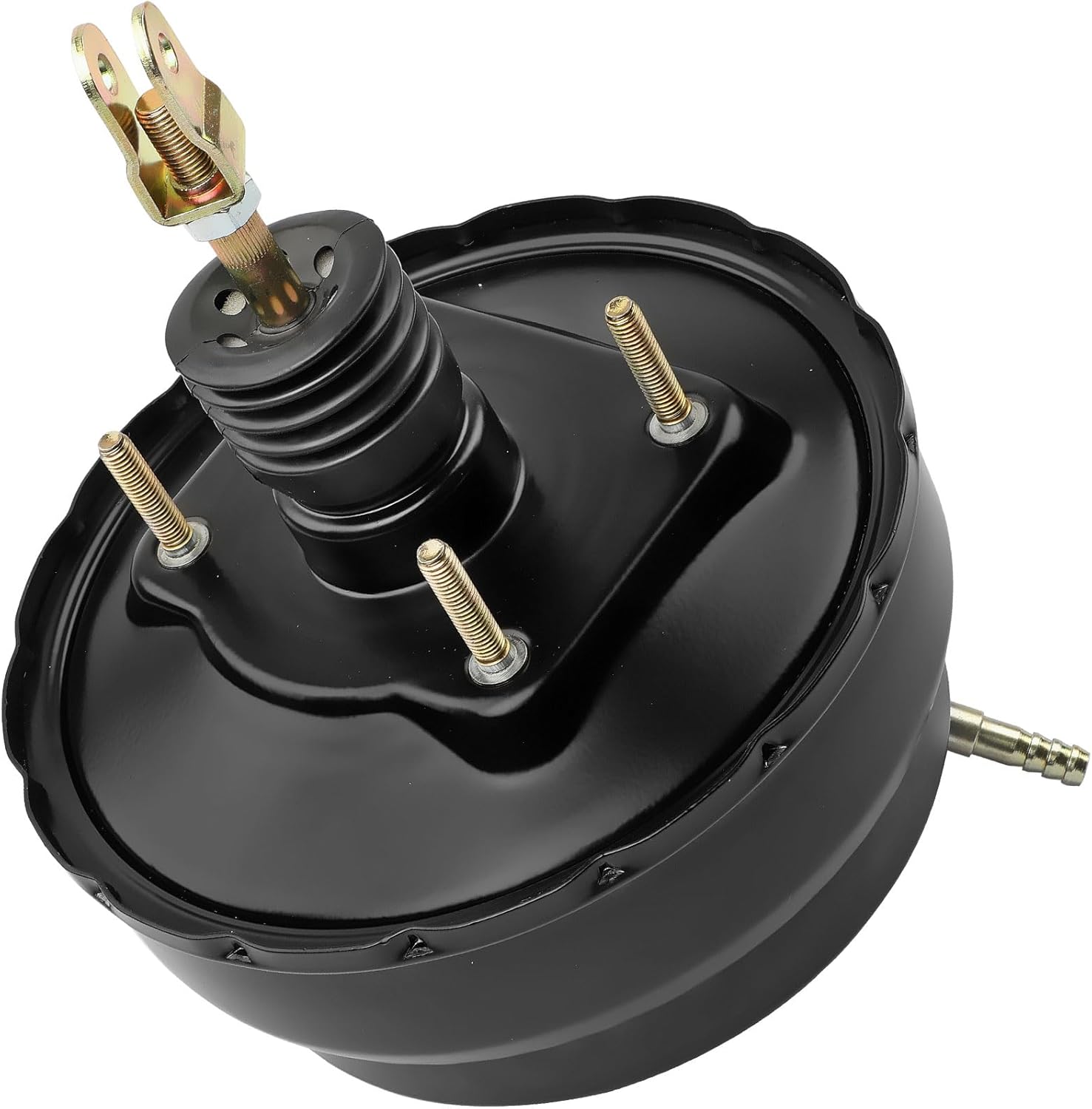
Fexhull Vacuum Power Brake Booster 53-2581 (compatible with 1995–2001 Toyota Tacoma)
| Fitment years | 1995-2001 Tacoma (specified engines/configs) |
|---|---|
| Reference numbers | 53-2581, 4461004040, 532581 |
| Includes master cylinder | No |
| Manufacturer | Fexhull |
This Fexhull vacuum power brake booster replaces the factory booster on many 1995–2001 Toyota Tacoma configurations that used an 8-3/4" diameter booster and do not have anti-lock brakes. It provides the vacuum assist function that reduces pedal effort and restores firm braking feel after the original booster fails. The unit is offered without a master cylinder, so installation requires either reusing the existing master or fitting a separate replacement. The listing notes five quality tests including airtightness and durability, and the booster is billed as a professional aftermarket replacement built to match common factory fitment and mounting points. Expect a straightforward swap for owners comfortable with brake system work; confirm fitment against the part numbers and your VIN because it is not universal and excludes ABS-equipped models. Buyers should budget for a brake system bleed and possible master cylinder changes during installation.
Best for: Buyers who prioritize restoring reliable, factory-like brake assist on older Tacomas and want a tested aftermarket replacement that matches original mounting and vacuum specifications.
Less Ideal for: Drivers with ABS-equipped Tacomas or those who want a complete drop-in assembly including a new master cylinder should consider other options.
- Made to match factory 8-3/4" booster fitment for listed Tacoma years and engines
- Undergoes airtightness and durability testing per seller documentation
- Compatible with common Toyota part numbers for easier verification
- Delivered without master cylinder so you can reuse a good existing unit or upgrade separately
- Not compatible with trucks equipped with anti-lock brake systems
- Sold without master cylinder which requires extra parts or reuse of the old unit
Verdict: Choose this tested replacement booster if you need a reliable, factory-style brake assist swap for a non-ABS 1995–2001 Toyota Tacoma.
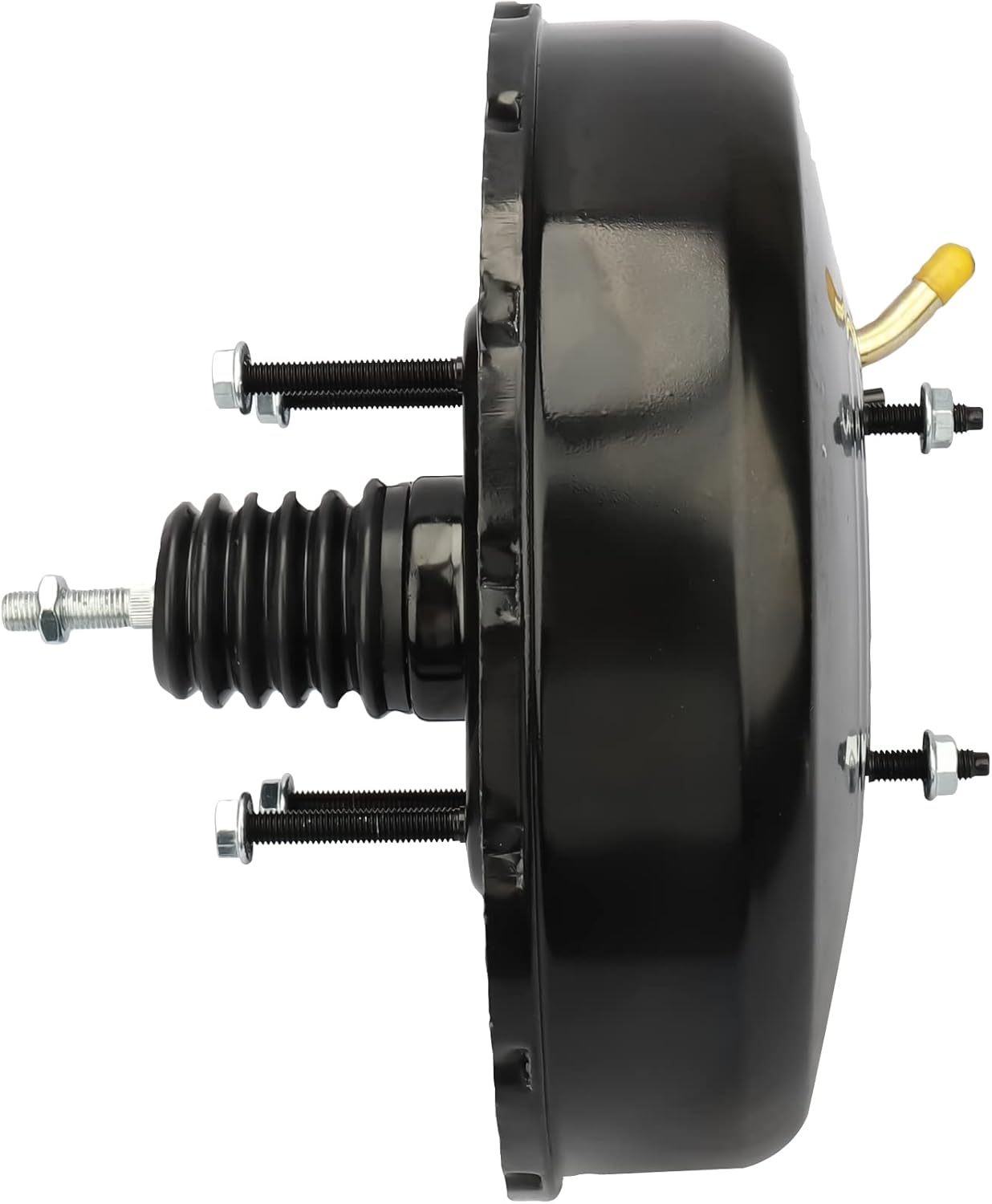
IRONTEK Vacuum Power Brake Booster for Toyota Tacoma (2001–2004)
| Manufacturer | IRONTEK |
|---|---|
| Compatible vehicles | Toyota 2001–2004 Tacoma |
| Manufacturer Part Number | IRKPBV8021 |
| Replace part numbers | 53-4905, 534905, AA1534905, 5C-34905, 221908 |
The IRONTEK vacuum power brake booster is a direct-replacement unit made to fit 2001–2004 Toyota Tacoma models without modification. It restores power-assisted braking by using engine vacuum to reduce pedal effort and is intended for routine replacement when an original booster fails or leaks. The listing emphasizes factory-quality design and claims testing for fitment, corrosion resistance, torque and spring-back. Installation is straightforward for anyone comfortable with basic brake-line and master-cylinder removal since the part is built to mount in the factory location. Buyers can expect quieter operation and a restoration of normal pedal feel when the booster is functioning correctly. Customer feedback is mixed: several users report a good fit and reliable performance while a few experienced early failures or pedal issues, so careful inspection at installation and prompt follow-up with the seller are advisable. There is a stated three-year one-time replacement warranty which may help mitigate risk for buyers who want coverage beyond the typical return window.
Best for: Buyers who prioritize an affordable, direct-fit replacement to restore factory braking feel on a 2001–2004 Tacoma and who value products backed by a stated warranty and user feedback.
Less Ideal for: Drivers who need guaranteed long-term durability without any risk of early failure or who prefer to rely only on long-established OEM suppliers for critical safety parts.
- Built as a direct replacement for 2001–2004 Toyota Tacoma with no modification required
- Claims factory-quality engineering and fitment testing for typical brake-booster failure modes
- Designed to restore normal power-assisted pedal feel and reduce braking effort
- Straightforward installation for technicians familiar with master cylinder and booster removal
- Some buyers reported early failures or abnormal pedal behavior on installation
- Mixed seller support reported in a few reviews which can complicate warranty or replacement claims
Verdict: A budget-friendly, direct-fit replacement booster that restores factory-style power braking on 2001–2004 Tacomas while offering a seller-backed replacement window for added buyer confidence.
HARUMA Vacuum Power Brake Booster 53-4905 Compatible with 2001–2004 Toyota Tacoma

| Vehicle fitment | 2001–2004 Toyota Tacoma |
|---|---|
| Replaces part numbers | 53-4905, 4461004100/4101/4110/4111 |
| Seals | EPDM, -40°C to 150°C |
| Manufacturer | HARUMA |
This HARUMA vacuum power brake booster is a replacement unit designed to restore power-assisted braking on 2001–2004 Toyota Tacoma models. It installs in place of the original booster using the listed OEM part numbers, so it is typically used during brake system repairs when the existing booster is leaking, weak, or causing a hard pedal. Notable features include rust-resistant coating, EPDM seals rated for wide temperature ranges, and consistent manufacturing tolerances aimed at minimizing fitment issues. For a risk-averse buyer the product represents a practical repair option: the corrosion protection and sealed design help extend service life, and the unit is sized and shaped to match factory mounting points for a straightforward professional or DIY swap. Limitations to be aware of are that fitment must match the exact Tacoma years and OEM numbers listed and one user reported a wrong-fit experience, so double-check vehicle application before purchase. Overall it is a functional, factory-style replacement intended to return solid brake feel without requiring modifications.
Best for: Buyers who prioritize a straightforward, low-risk repair and want a factory-style replacement that restores normal power-brake feel without modifications.
Less Ideal for: Do not choose this if you need a universal or multi-vehicle booster or if your vehicle does not match the listed Tacoma years and OEM numbers.
- Made to replace specific Toyota part numbers for direct-fit installation
- Rust-resistant coating and EPDM seals for improved durability
- Manufactured to consistent tolerances to reduce installation adjustments
- Suitable for professional or competent DIY installation
- Compatibility depends strictly on matching the listed OEM part numbers and model years
Verdict: A factory-style, direct-replacement booster built for straightforward restoration of power braking on 2001–2004 Toyota Tacoma vehicles.
Choosing the Right 1995-2004 Toyota Tacoma Brake Booster: Key Factors to Consider
Fitment and Mounting Dimensions
Correct fitment is the first priority when replacing a brake booster on a 1995-2004 Tacoma. The booster must align with the firewall studs, the master cylinder mounting pattern, and the pedal pushrod geometry. If the mounting flange or stud spacing differs, you will need adapters or modifications that increase install time and risk of leaks.
Pay attention to pushrod length and stroke range. A pushrod that is too long or too short can change pedal free play and braking engagement point, creating a spongy or overly sensitive pedal. Check whether the replacement mentions compatibility with the Tacoma master cylinder used in these years, since improper sealing where the booster and master cylinder meet can produce vacuum loss or fluid seepage.
Vacuum Performance and Check Valve Quality
Since the brake booster for the Tacoma relies on engine vacuum, the internal diaphragm and external check valve are critical. A durable diaphragm with reliable sealing reduces the chance of a progressive vacuum leak that manifests as a hard pedal when the engine is running. A high-quality one-way check valve prevents backflow and helps the booster maintain vacuum reserve during repeated braking events.
Look for replacement boosters that describe reinforced diaphragm construction, improved sealing beads, or upgraded check valves. These features directly affect real-world pedal feel during highway driving, hill descents, and repeated stop-start traffic common to Tacoma owners.
Pedal Travel and Pushrod Adjustability
Pedal travel determines where braking pressure begins and how responsive the system feels. For the Tacoma, matching the original pedal engagement point preserves driver confidence. Replacements that allow pushrod adjustment let you fine-tune the pre-load on the master cylinder piston to restore the proper engagement point and minimize pedal free play.
If adjustability is limited, plan for careful measurement and possible minor modifications. A booster that closely replicates factory pushrod geometry reduces the need for aftermarket shims or rod alterations, which can introduce inconsistencies over time.
Material Durability and Corrosion Resistance
The 1995-2004 Tacoma often sees a variety of climates and road conditions, so material durability matters. Corrosion-resistant housings, quality welds, and plated mounting hardware extend service life and prevent issues that complicate future repairs. Internal components exposed to brake fluid or road salts should have protective finishes or stainless components where practical.
Durability also affects resale and long-term maintenance. Boosters that use inferior metal or thin coatings can develop leaks or seize mounting studs, making future servicing more difficult and increasing labor time at the next replacement.
Compatibility With Brake Master Cylinder Assembly
The booster must form a leak-free, mechanically correct interface with the master cylinder assembly used on Tacoma trucks in this era. Differences in master cylinder bore size or mounting bolt pattern change hydraulic pressure characteristics and can alter braking performance if not matched correctly.
Ensure the replacement specifies compatibility with the master cylinder bore size and includes or allows for the correct gasket and mounting hardware. Mating issues that lead to misalignment can cause pedal pulsation, uneven braking, or fluid leaks.
Serviceability and Installation Support
Consider how easy the booster is to install and service. Clear vacuum port placement, included check valves or grommets, and straightforward pushrod adjustment save several hours of labor. Units that require removal of the master cylinder or complicated shimming add time and increase the chance of installation errors.
Practical serviceability also includes replacement parts availability such as check valves, grommets, or mounting studs. A design that facilitates bench testing before installation helps you confirm function and reduces the chance of rework after mounting it to the firewall.
Recognizing Brake Booster Symptoms On The Tacoma
Owners of 1995-2004 Tacoma trucks commonly notice progressive changes in pedal feel before a total failure. Typical early symptoms include a pedal that becomes harder to press with the engine running, longer required pedal travel, or uneven braking pressure between stops. These signs often point to either a failing diaphragm inside the booster or a degrading check valve that cannot hold vacuum.
Other telltale signs include a hissing noise from the firewall area under the dash when the brake pedal is applied, which indicates a vacuum leak, and a change in engine idle when the pedal is pressed if the vacuum is being compromised. Observing these symptoms early can let you choose a replacement before the condition affects stopping performance in demanding situations.
- Harder pedal with engine running
- Hissing noise from firewall when pedal applied
- Longer pedal travel before braking
- Intermittent change in idle when pressing brake
How To Test A Brake Booster On Your Tacoma
A simple functional test helps determine whether the booster or another component is causing pedal problems. With the engine off, pump the brake pedal several times to deplete any residual vacuum. Then press and hold the pedal and start the engine. If the pedal drops slightly as the engine starts, the booster is building vacuum and is likely operational. If there is no change, suspect a vacuum supply issue or internal booster failure.
A secondary check is to listen for vacuum leaks at the booster vacuum hose connection and the one-way check valve. Inspect the vacuum hose for cracks or soft spots and verify the check valve only allows flow toward the booster. For more conclusive diagnosis, measuring vacuum with a gauge at the booster hose while the engine idles shows whether the booster is receiving an adequate vacuum supply.
- Pump pedal with engine off, then start engine to watch for pedal drop
- Inspect vacuum hose and check valve for cracks or incorrect flow
- Use a vacuum gauge at the booster hose to verify supply
Dealing With A Brake Booster Vacuum Leak
Vacuum leaks are a common cause of booster-related symptoms. Small cracks in the vacuum hose, degraded check valves, or a failing booster diaphragm can all allow air in and reduce assistance. Begin by tracing the vacuum hose from the intake manifold to the booster and replace any brittle or collapsed sections. Replace the check valve if it fails the flow-direction test.
If the leak is internal to the booster, replacement is the right solution for the Tacoma. Internal repairs are rarely practical given the labor and risk of diaphragm damage. Choose a replacement that specifies improved sealing features and includes a quality check valve to reduce the chance of recurrence.
- Replace cracked or soft vacuum hose sections
- Test and replace faulty one-way check valve
- Replace booster if diaphragm failure is suspected
Installation Considerations And DIY Tips
Replacing a brake booster on a 1995-2004 Tacoma is a moderate-difficulty job. You will typically disconnect the vacuum hose, remove the master cylinder or detach it from the booster, unbolt the booster from the firewall, and then swap the unit. Having the correct pushrod orientation and pre-setting approximate pushrod length before final tightening helps avoid pedal geometry issues.
If you plan a DIY replacement, prepare for bench-testing the new booster before final assembly. Verify the check valve and vacuum port locations match the original, and use new mounting gaskets or hardware where possible. When reinstalling the master cylinder, bleed the brake system thoroughly to remove any air introduced during the swap. If you are unsure about pedal feel or pushrod preload after install, consult a professional to confirm correct setup.
- Confirm pushrod length and orientation before final mounting
- Bench-test new booster check valve and vacuum sealing
- Bleed brakes after master cylinder reinstallation
Common Causes Of Premature Booster Wear
Premature wear in Tacoma boosters can stem from exposure to corrosive elements, brake fluid contamination, or heat. Corroded mounting hardware or housings can allow moisture ingress and accelerate diaphragm deterioration. Brake fluid that leaks onto the booster from a failing master cylinder seal can also damage internal components and sealing surfaces.
Another contributor is improper hose routing or rubbing that abrades the vacuum line, creating leaks. Regular inspection during brake service for hose condition and master cylinder sealing helps catch these issues before the booster suffers permanent damage.
- Corrosion and moisture ingress
- Brake fluid contamination from master cylinder leaks
- Abrasion of vacuum hose due to poor routing
Budgeting For Replacement And Installation
When planning a booster replacement for a 1995-2004 Tacoma, factor in the cost of compatible mounting hardware, a new check valve, vacuum hose, and any gaskets needed to mate with the master cylinder. If you are not performing the work yourself, include labor time for removal and bench testing and for bleeding the brake system afterwards.
Some boosters come with supplemental hardware that simplifies the swap, while others require you to reuse original parts. Confirm what is included so you can accurately estimate the total replacement and installation cost and avoid a return visit for missing pieces.
- Include check valve, vacuum hose, and mounting gaskets in estimates
- Confirm whether replacement includes necessary hardware
- Account for labor to bench-test and bleed the system
Still looking for the perfect fit?
Select your Toyota Tacoma configuration to see the most relevant Brake Boosters recommendations
How We Chose the Best 1995-2004 Toyota Tacoma Brake Booster
We evaluated candidates for the 1995-2004 Toyota Tacoma by applying practical, vehicle-specific filters aimed at restoring original braking performance. First, fitment accuracy was confirmed by checking mounting flange dimensions, pushrod length range, and vacuum hose orientation that match the Tacoma firewall and master cylinder interface. Second, vacuum performance and diaphragm integrity were judged by design descriptions and construction notes showing reinforced diaphragms or improved sealing to reduce the chance of a vacuum leak under load. Third, pedal travel and pushrod adjustability were prioritized so the booster can be set to match factory pedal geometry and avoid abnormal free play.We also considered build quality factors such as corrosion-resistant coatings, robust check valves, and the presence of replacement grommets or hardware that simplify install. Ease of installation and compatibility with common brake master cylinder assemblies used on the Tacoma were included as selection criteria. Exclusions: units with unclear fitment data, nonstandard pushrod lengths that require modification, or listings that lack specific vacuum port and mounting measurements were removed. The result is a practical shortlist focused on restoring safe, consistent braking for the specified Tacoma years.
Our full evaluation process is outlined in our review methodology.
FAQ
What are the most common bad brake booster signs on a Tacoma?
Common signs include a noticeably harder brake pedal with the engine running, hissing noises from the firewall area when braking, and increased pedal travel before the brakes engage. These symptoms often indicate a vacuum leak or diaphragm degradation.
Can I test the Tacoma brake booster myself without special tools?
Yes. A simple test is to pump the pedal with the engine off, hold it, then start the engine. If the pedal drops slightly as the engine starts, the booster is likely functional. Inspecting the vacuum hose and check valve for obvious damage is also useful.
How do I know if the problem is the booster or the master cylinder?
If assistance changes with engine vacuum and you hear hissing or experience a hard pedal, the booster is a likely culprit. If you see brake fluid leaks, spongy pedal unrelated to engine vacuum, or internal master cylinder seal failure signs, the master cylinder may be the cause. Sometimes both components require evaluation.
Is it reasonable to replace the booster myself on a 1995-2004 Tacoma?
It is reasonable for a mechanically skilled owner. The job requires removing or detaching the master cylinder, unbolting the booster, and ensuring correct pushrod setup and brake bleeding. If you are unsure about pedal geometry or bleeding procedures, seek professional help.
What should I inspect for a brake booster vacuum leak?
Inspect the vacuum hose for cracks, soft spots, or collapsed sections, and verify the in-line check valve only allows flow toward the booster. Listen for hissing noises around the firewall and the booster body when the pedal is applied.
Will replacing the booster affect brake booster vs master cylinder balance?
Replacing the booster changes the mechanical assistance but does not change master cylinder bore size. Proper pushrod preload and correct mating to the master cylinder are necessary to maintain the intended hydraulic ratio and pedal feel.
Final Verdict
When replacing a brake booster on a 1995-2004 Toyota Tacoma, prioritize correct fitment, vacuum integrity, and pushrod adjustability to restore predictable pedal feel. Balance durability and serviceability: a unit with corrosion resistance and clear mounting compatibility reduces the chance of rework and future leaks. If you are comfortable with moderate DIY tasks, bench-testing and careful pushrod adjustment will let you achieve factory-like braking behavior. Otherwise, have a qualified technician confirm the setup to ensure safe, consistent stopping performance.
Explore More:
- Check out all Toyota Tacoma parts & accessories
- Explore Brake Boosters Maintenance & Repair Guides
- Explore Brake System
- Browse all Auto Parts
