

Note: This article contains affiliate links. If you click on these links and make a purchase, I may earn a small commission at no extra cost to you. This helps support my research and content. Read my full affiliate disclosure here.
Replacing worn or warped rotors on a 1997-2001 Toyota Camry matters more than many owners realize. The right rotors restore pedal feel, reduce vibration, and help retain ABS function under repeated stops. A poor rotor choice can lead to premature pad wear, noise, or pulsing at the pedal.This guide covers seven carefully shortlisted options that fit the 1997-2001 Camry and explains the real-world tradeoffs you should weigh. We evaluated fitment accuracy, thermal performance, material and machining quality, and durability to surface common concerns for daily drivers and occasional heavy loads. Read on to see which rotor types match your driving needs and maintenance plans.
Looking for other parts? See all Toyota Camry parts & accessories.
Top Picks at a Glance
| Best Overall The best all-around choice for most situations | Detroit Axle Front Brake Kit with 10" Rotors and Ceramic Pads for 1992–2001 Toyota Camry (2.2L, 14" wheels) |  |
| Best Quality Built to a higher standard if you want something more solid | PowerStop Z17 Front Brake Kit with Ceramic Pads and Replacement Rotors |  |
| Best Value The sweet spot between price and what you get | Detroit Axle Front Brake Kit for 2.2L Toyota Camry (10" Rotor) |  |
| Best Budget The cheapest option that still gets the job done reliably | Centric C-Tek Front Brake Rotor 121.44078 |  |
| Highest Rated A top-rated pick with lots of positive feedback | Raybestos R-Line Rear Disc Brake Rotor (96216R) |  |
| Most Popular A crowd favorite that many people choose with confidence | Detroit Axle Brake Kit for 1997–1999 Toyota Camry / Lexus ES300 — Front and Rear Rotors with Ceramic Pads |  |
| Best Seller A high-volume bestseller chosen again and again | Detroit Axle Front Brake Kit with 10.04" Rotors and Ceramic Pads for 1992–1999 Toyota Camry (2.2L) | |
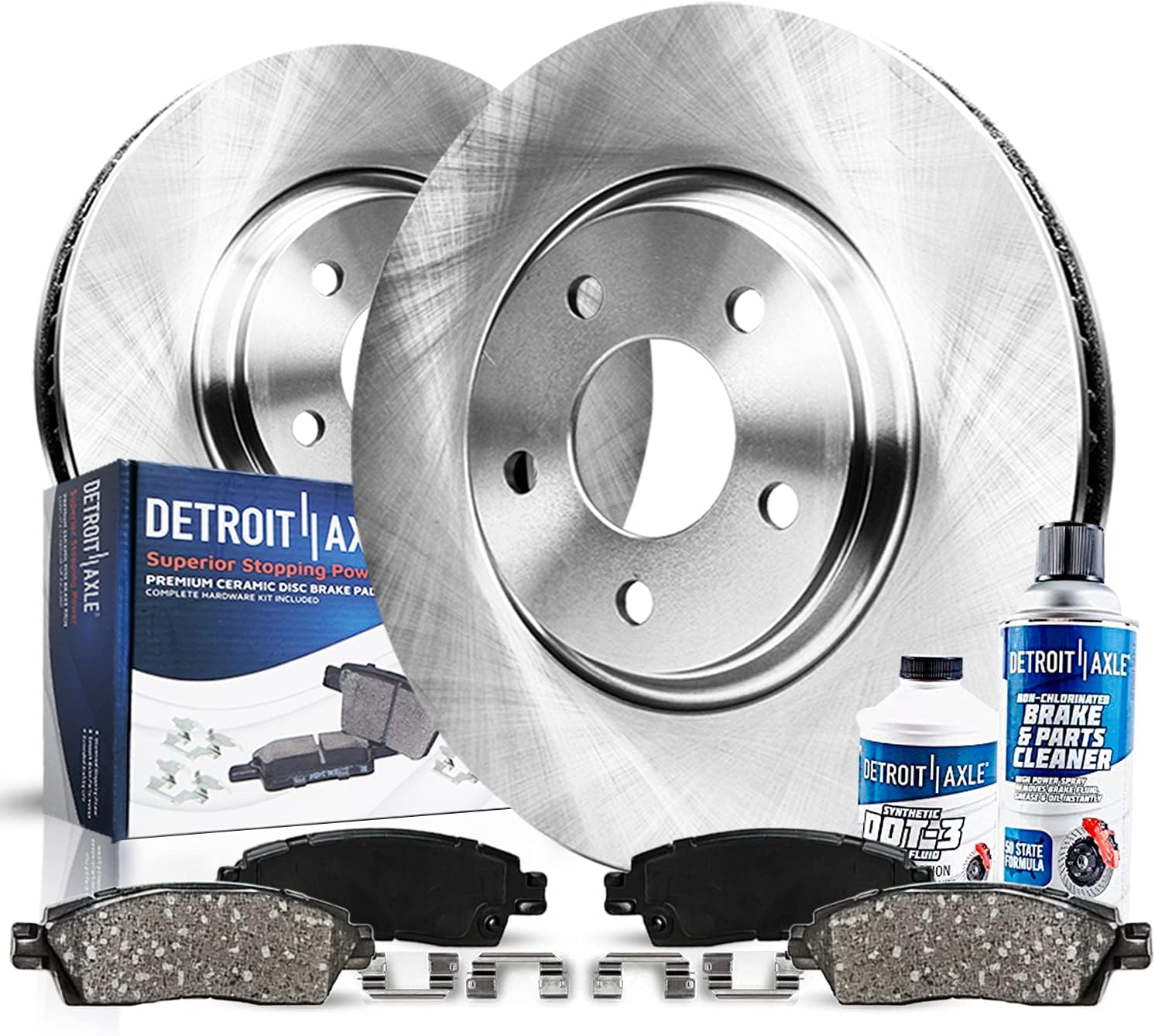
Detroit Axle Front Brake Kit with 10" Rotors and Ceramic Pads for 1992–2001 Toyota Camry (2.2L, 14" wheels)
| Fitment note | 1992-1999 Camry 2.2L; 2000-2001 Camry 2.2L (14-inch wheels) |
|---|---|
| Rotor size | 10 inch (254 mm) |
| Orientation | Front |
| Brake pad type | Ceramic |
| Includes | Rotors, pads, hardware, brake cleaner, small brake fluid bottle |
This Detroit Axle front brake kit supplies everything needed to refresh the front brakes on 2.2L Toyota Camrys that use 14-inch wheels. The kit includes two ventilated 10-inch rotors matched with ceramic brake pads, hardware, a can of brake cleaner and a small bottle of brake fluid so you can complete the job without sourcing extras. The rotors are zinc plated and machined with locating holes for a direct fit that minimizes hub corrosion and helps installation go smoothly. Ventilated rotor surfaces and ceramic pads aim to reduce noise and help dissipate heat for consistent stopping during everyday driving. Practical benefits include the convenience of a full kit and parts that install like factory replacements. Limitations to keep in mind are the strict fitment to Camry 2.2L front applications with 14-inch wheels only and that the included fluid quantity is small so a full brake bleed may require additional brake fluid.
Best for: A practical shopper who wants a single-purchase, factory-style brake refresh for a mid-1990s to 2001 Camry with 14-inch wheels and values convenience and dependable daily driving performance.
Less Ideal for: Drivers who need rotors or pads for Camrys with 15- or 16-inch wheels, those seeking high-performance or track-oriented braking upgrades, or anyone wanting larger volumes of brake fluid for multiple bleed operations.
- Complete kit includes rotors, ceramic pads, mounting hardware, brake cleaner and a small bottle of brake fluid for one-stop installation.
- Ventilated, machined rotors with zinc plating resist corrosion and promote faster cooling under normal driving loads.
- Parts are machined with locating holes for an accurate, factory-style fit that simplifies installation and reduces the need for modifications.
- Fits only 2.2L Camry front hubs that use 14-inch wheels, so it is not suitable for Camrys with larger wheel sizes.
Verdict: A convenient, factory-style front brake kit that supplies rotors and ceramic pads tuned for 2.2L Camry front brakes with 14-inch wheels.
PowerStop Z17 Front Brake Kit with Ceramic Pads and Replacement Rotors

| Orientation | Front |
|---|---|
| Item Type Name | OE Brake Rotors & Ceramic Brake Pads |
| Compatible with Vehicle Type | Car, Truck |
| Manufacturer Part Number | KOE1058 |
This PowerStop front brake kit includes Z17 ceramic brake pads, OE-style replacement rotors, rubberized shims, and stainless-steel installation hardware to provide a complete bolt-on front brake refresh. It is designed for daily-driven Camry front applications and installs with standard tools using the included hardware. The Z17 ceramic pads emphasize quiet operation and low dust by using a chamfered, slotted, carbon-ceramic formula, while the rotors are precision mill-balanced castings intended to match factory fit and vane configuration for smooth operation. Practical benefits include reduced wheel dust, straightforward installation without modifications, and improved stopping feel compared with worn factory pads. Limitations for a performance-focused buyer are that these are primarily a stock-replacement solution rather than aggressive track-grade components, so they may not resist fade as well under repeated high-temperature use and some users report occasional early squeak or rotor warping under heavy driving over long service life.
Best for: Buyers who want a straightforward, performance-minded front brake refresh for a 1997–2001 Toyota Camry that improves daily stopping, reduces dust, and installs without modification.
Less Ideal for: Drivers who regularly do track days or heavy repeated high-speed braking should choose a dedicated high-temp or performance rotor and pad package instead.
- Complete kit with pads, rotors, shims, and stainless-steel hardware for an all-in-one front brake replacement
- Z17 ceramic pads deliver low dust and generally quiet operation for daily driving
- Mill-balanced OE-style rotors provide smooth, bolt-on replacement without modifications
- Chamfered and slotted pad faces help fast break-in and reduce initial noise
- Designed as a stock-replacement kit rather than a high-temp, track-oriented braking system
- Some users report occasional initial squeak and potential rotor warping under sustained aggressive driving
Verdict: A convenient bolt-on front brake kit that upgrades Camry daily-driving braking with low-dust Z17 ceramic pads and mill-balanced replacement rotors.
Detroit Axle Front Brake Kit for 2.2L Toyota Camry (10" Rotor)

| Fitment | 2.2L Toyota Camry (10.00 inch rotor) – front |
|---|---|
| Kit contents | 2x front rotors + 2x front ceramic pads (hardware included) |
| Rotor type | Vented, drilled & slotted |
| Orientation | Front |
| Warranty | 10 Year Warranty |
This Detroit Axle front brake kit replaces the rotors and pads on 2.2L Toyota Camry front hubs that use a 10.00-inch rotor. The box includes two vented, drilled and slotted rotors plus a pair of ceramic pads and basic hardware, so it is a straightforward one-stop replacement for worn front braking components. The rotors are zinc plated to resist corrosion and are machined with locating holes to match factory fit, which keeps installation simple and helps avoid modification. Vented and slotted faces aid heat dissipation for more consistent braking under normal daily driving and light towing. Ceramic pads are quieter and produce less dust than some semi-metallic options, improving wheel cleanliness. Important limitations are strict fitment requirements: this kit fits only 2.2L Camry applications with the 10.00-inch rotor (14-inch wheels), so you must measure rotor diameter before buying, and the included grease tube and hardware are minimal for a full brake job. Expect good value for routine replacement but verify rotor size and wheel clearance before ordering.
Best for: Buyers who prioritize a practical, cost-effective brake refresh for an older Camry and want a single kit that replaces both rotors and pads with factory-style fit and quieter pads.
Less Ideal for: Drivers who need parts for Camry variants with different rotor diameters, those wanting heavy-duty or track-focused braking upgrades, or buyers who prefer full-service kits with extensive consumables and large grease supplies.
- Complete kit includes two rotors, ceramic pads, and basic installation hardware for a simple front brake refresh
- Vented, drilled and slotted rotor design improves heat dissipation and wet-weather performance
- Zinc plating and machined locating holes support corrosion resistance and correct factory-style fit
- Ceramic pads run quietly and generate less brake dust than many alternatives
- Compatible only with 2.2L Camry front hubs that use a 10.00-inch rotor, so incorrect rotor size will prevent fitment
- Hardware and the small grease tube included may be insufficient for a thorough rebuild without extra supplies
Verdict: A wallet-friendly, all-in-one front brake kit that restores factory-style stopping for 2.2L Camry front hubs with 10" rotors.
Centric C-Tek Front Brake Rotor 121.44078

| Automotive Fit Type | Vehicle Specific Fit |
|---|---|
| Exterior Finish | Machined |
| Material Type | Cast Iron |
This Centric C-Tek front brake rotor is a basic, vehicle-specific replacement intended to restore stopping performance on compatible Camry models. Made from cast iron with a machined finish, the rotor is balanced and surfaced to reduce initial vibration and promote consistent pad contact from first use. Typical installation is direct replacement during a front brake job and it pairs with standard brake pads and calipers. Practical benefits include a factory-style vane design and plate thickness for heat capacity, which helps resist warping under normal driving. Centric ships the rotor with rust-prevention oil for shelf life and the part is marketed for budget repairs where a like-for-like replacement is needed. Limitations are that this is a plain, non-drilled and non-slotted rotor so it will not provide extra cooling or improved fade resistance for aggressive driving, and buyers must confirm the exact engine and hub fitment since fitment is vehicle-specific.
Best for: Buyers looking for an affordable, straightforward front rotor to restore factory-style braking on an older Camry and who prioritize cost and reliable day-to-day performance.
Less Ideal for: Drivers seeking upgraded rotors for track use, heavy towing, or enhanced cooling and braking performance should choose slotted, drilled, or performance rotors instead.
- Vehicle-specific fit designed for Toyota Camry front replacement
- Machined finish and balanced construction for smooth, vibration-free braking
- Cast iron construction with OEM-style vane design for heat capacity
- Shipped with rust-prevention oil to protect the rotor before installation
- Plain solid rotor with no slots or holes, so less performance cooling under heavy braking
- Requires careful fitment selection; some listings may reference different engine variants
Verdict: A budget-friendly, factory-style replacement rotor that restores smooth, reliable front braking for compatible 1997-2001 Toyota Camry models.
Raybestos R-Line Rear Disc Brake Rotor (96216R)

| Automotive Fit Type | Vehicle Specific Fit |
|---|---|
| Exterior Finish | Machined |
| Compatible with Vehicle Type | SUV, Truck, Van |
| Material Type | Metal |
This Raybestos R-Line rear rotor is a direct-fit replacement designed for routine street driving and maintenance on 1997–2001 Toyota Camry rear brakes. It is machined and mill balanced to reduce thickness variation and lateral runout, which helps minimize pedal pulsation and vibration after installation. The rotor meets SAE tensile strength standards and is produced from automotive-grade metal to provide consistent stopping performance and extended pad life under normal driving conditions. Installation is straightforward for a mechanic or experienced DIYer since it is a vehicle-specific fit. Notable limitations are that the rotor is a plain machined design without slots or holes, so it will not offer the enhanced cooling or fade resistance of performance rotors under aggressive driving. A few users have reported early surface rust on the hat area, so aesthetics may degrade in wet climates though braking function remains intact.
Best for: Buyers who prioritize dependable, factory-style braking and want a straightforward replacement that restores the original stopping feel for daily driving and commuting.
Less Ideal for: Drivers who frequently tow, race, or do spirited driving and need rotors with enhanced cooling or performance features should consider slotted or drilled performance rotors instead.
- Vehicle-specific fit for select Toyota Camry, Lexus ES300 and Solara rear applications for simple replacement
- Mill balanced and machined finish reduces vibration and pedal pulsation after installation
- Meets SAE tensile strength standards for structural integrity and consistent service life
- Plain machined design lacks slots or drilling for improved cooling or aggressive-use fade resistance
Verdict: Choose this rotor when you want a dependable, factory-quality rear replacement that restores smooth, vibration-free braking for everyday Camry driving.
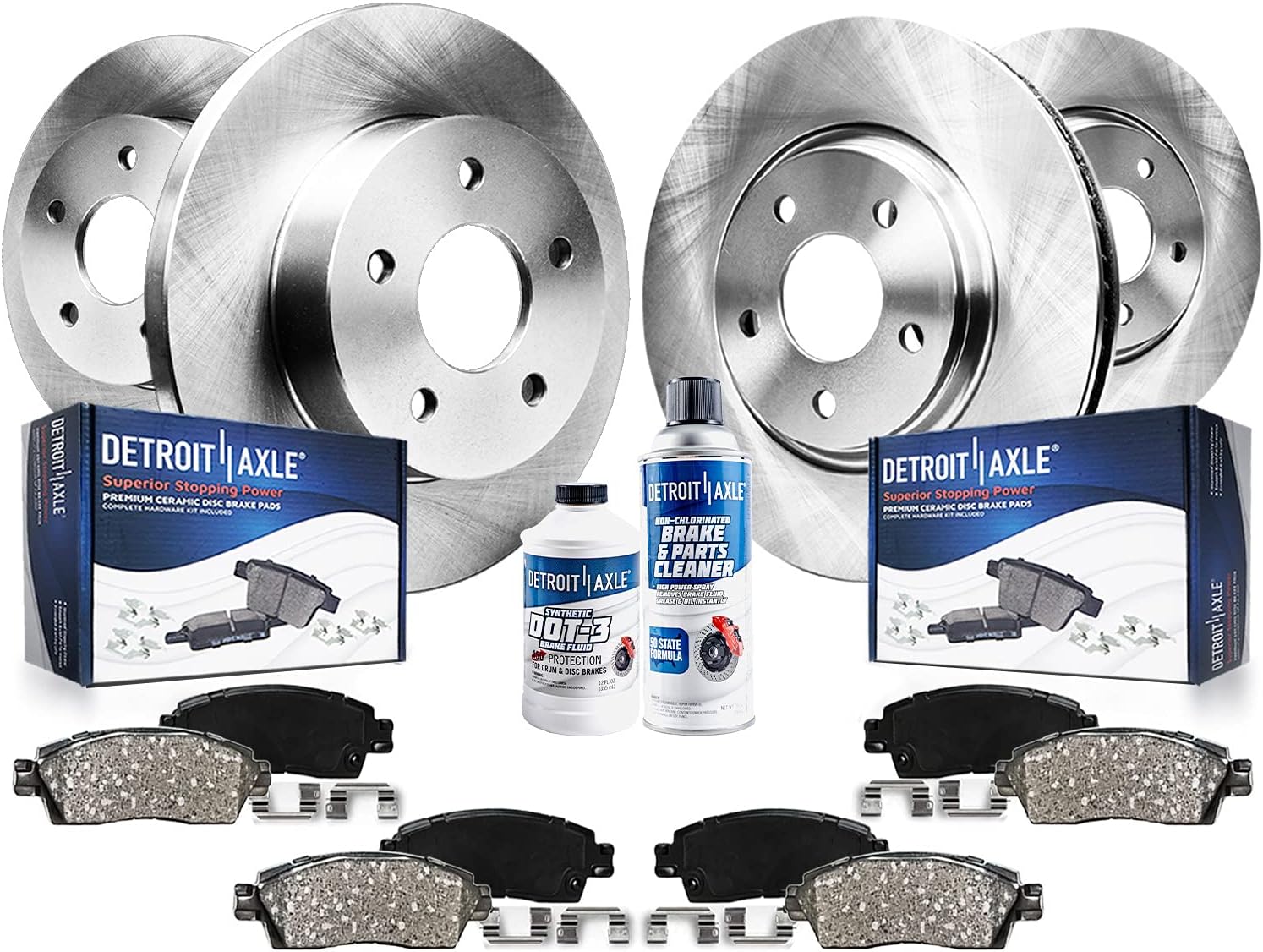
Detroit Axle Brake Kit for 1997–1999 Toyota Camry / Lexus ES300 — Front and Rear Rotors with Ceramic Pads
| Fitment years | 1997-1999 |
|---|---|
| Includes | Front and rear rotors, front and rear ceramic pads, hardware, brake cleaner, brake fluid |
| Rotor feature | Vented, zinc plated |
| Pad type | Ceramic |
| Warranty | 10 Year |
This Detroit Axle kit supplies all four rotors and matching ceramic pads so you can do a full front and rear brake service for 1997–1999 Camry V6 / ES300 without chasing parts. The kit includes vented, zinc-plated rotors for quicker cooling and corrosion resistance, ceramic pads with hardware packets, plus a can of brake cleaner and a bottle of brake fluid to simplify install prep. In practice the rotors arrive with a clean machined finish and locating holes that match factory fit, and reviewers report straightforward installation and immediate improvement in braking feel after a short bedding drive. Practical benefits are the all-in-one convenience and the non-drilled/slotted rotor surface that resists rapid surface oxidation while keeping noise low. Limitations: a few buyers mentioned minor hardware fitment issues such as front pad clips that rubbed or undersized hardware, and the kit does not include replacement rotor screws or gloves, so you may need small extras for certain cars. Overall this is a sensible, value-focused option for replacing the entire brake set on the specified Camry/ES300 models.
Best for: Buyers who value social proof and want a single, factory-style replacement kit that others have successfully installed and recommended for the specified Camry/ES300 models.
Less Ideal for: Drivers who need performance-oriented drilled or slotted rotors or who prefer premium fitment accessories included with top-tier kits should look elsewhere.
- Complete kit covering both front and rear rotors and pads so one purchase handles a full brake job
- Zinc-plated, vented rotors for quicker cooling and improved corrosion resistance
- Includes brake cleaner and brake fluid to simplify prep and bleeding during installation
- Machined locating holes and factory-style fit reduce need for modifications and speed installation
- Hardware kit has occasional fitment variances; some users reported front clips rubbing or slightly undersized pieces
- Does not include rotor retaining screws or gloves which some installations require
Verdict: A convenient, factory-style full brake replacement kit for 1997–1999 Camry V6 and ES300 that bundles rotors, ceramic pads, and basic install supplies.
Detroit Axle Front Brake Kit with 10.04" Rotors and Ceramic Pads for 1992–1999 Toyota Camry (2.2L)
| Fitment | 1992–1999 Toyota Camry (2.2L) with 10.04" front rotors |
|---|---|
| Kit contents | 2 front disc rotors and 2 front ceramic pads with hardware |
| Rotor feature | Vented with zinc plating |
| Pad type | Ceramic |
This Detroit Axle front brake kit supplies two vented, zinc-plated 10.04" rotors and a set of ceramic front pads with mounting hardware intended as a direct factory-style replacement for the specified 2.2L Camry fitment. The rotors are ventilated for faster heat dissipation and carry a zinc plating to resist corrosion and reduce visible wheel dust. The pads are ceramic, which typically run quieter and produce less dust than semi-metallic compounds, and the kit includes pre-machined locating holes to simplify installation without modification. In practice this delivers a straightforward swap for owners doing a DIY brake job or for independent shops looking for an affordable, complete front set. Some buyers report consistent fit and quiet operation, though a minority reported fitment mistakes or noisy outlier sets, so confirming exact rotor diameter and wheel clearance before buying matters. The kit aims for ease of install and long-term corrosion resistance but is positioned as an economical aftermarket replacement rather than an upgraded performance rotor and pad combo.
Best for: Buyers who prioritize a straightforward, factory-style replacement that minimizes fuss and aims to restore stock braking behavior without chasing performance gains.
Less Ideal for: Drivers seeking high-performance or track-focused brake upgrades or those who need a universal or multi-vehicle kit should look elsewhere.
- Complete front kit with both rotors and pads plus hardware for a single service job
- Vented rotors improve cooling compared with solid rotors for everyday driving
- Zinc plating helps resist corrosion and keeps rotor appearance cleaner over time
- Ceramic pads generally create less dust and run quieter under normal driving
- Fitment is specific to 10.04" (255mm) front rotors so incorrect application will cause problems
- Not marketed as a performance upgrade so aggressive driving may reveal increased wear compared with premium performance parts
Verdict: A complete, budget-friendly front brake replacement that restores factory-style stopping and corrosion resistance for Camrys specified with 10.04" front rotors.
Choosing the Right 1997-2001 Toyota Camry Brake Rotors: Key Factors to Consider
Fitment and Bolt Pattern
Correct fitment is the first priority when selecting rotors for a 1997-2001 Toyota Camry. Rotors must match the hub diameter, bolt pattern, and overall thickness specification so they seat evenly and do not cause wheel misalignment or bearing preload changes.
A rotor that fits precisely simplifies installation and reduces the chance of wheel vibration or uneven pad contact. If the rotor requires different hardware or hub machining, that adds labor and potential for error. Confirming fitment also ensures the rotor clears the OEM caliper and any dust shield without the need for modification.
Material Quality and Casting
Rotor material and how it is cast influence thermal conductivity, wear resistance, and susceptibility to cracking. High-quality cast iron with controlled chemistry provides predictable expansion under heat and resists rapid wear.
Lower-grade castings can contain porosity or inconsistent microstructure that accelerates wear or increases the risk of warping. Look for rotors specified to meet automotive-grade casting tolerances and with documented machining processes, as these reduce runout and improve longevity.
Thermal Performance and Venting
How a rotor handles heat is critical for maintaining braking performance during repeated stops. For a Camry used in daily commuting or towing light loads, rotors that dissipate heat efficiently prevent pad glazing and reduce the chance of brake fade.
Vent design and internal vanes affect airflow through the rotor. Better-vented rotors maintain lower operating temperatures and more consistent friction, translating to steadier pedal feel. Consider your driving style: heavy city traffic and downhill driving increase thermal demand on the rotors.
Surface Finish and Machining Tolerances
A smooth, accurately machined surface reduces initial bedding issues with new pads and minimizes vibration. Rotors with tight thickness variation and low lateral runout ensure even pad contact across the rotor face.
Poorly machined surfaces lead to uneven pad transfer layers, pulsing at the pedal, and shorter pad life. Choosing rotors with documented machining tolerances helps avoid road tests and repeat work for corrections.
Corrosion Protection and Coatings
Exposure to road salt and moisture can accelerate corrosion on rotors, especially on the hat and edges. Protective coatings or zinc treatments on non-friction surfaces prolong service life and reduce the tendency for rust-induced noises.
Corrosion can lead to difficulty removing the rotor in future services and may affect wheel balance over time. Prioritizing rotors with effective protective finishes helps maintain functionality and eases future maintenance.
Serviceability and Resurfacing Options
Consider whether the rotor is suited for resurfacing if you prefer re-machining during brake service. Some rotors have minimum thickness limits that make resurfacing impractical after modest wear. Knowing the minimum machine thickness and the rotor's original thickness helps you decide between resurfacing and replacement.
Choosing rotors that allow at least one safe resurfacing cycle can lower long-term ownership cost. However, repeated resurfacing reduces thickness and can change thermal characteristics, so weigh the tradeoff between initial quality and planned maintenance intervals.
Rotor Types and What They Mean for a Camry
There are several rotor designs commonly offered for the 1997-2001 Camry, each with practical pros and cons. Plain solid rotors prioritize simplicity and even wear, while vented designs improve heat dissipation for repeated stops. Slotted and drilled faces change pad bite and water clearing behavior but also alter longevity.
For everyday commuting in a Camry, vented rotors are often the sensible default at the front where heat load is greatest. Slotted faces can help with pad cleaning and initial bite in wet conditions, but drilled holes can concentrate stress and potentially shorten service life if the rotor quality is marginal.
- Solid vs vented: vented front rotors reduce heat buildup during repeated braking.
- Slotted: helps remove gases and debris at the pad face; good for spirited driving.
- Drilled: improves water evacuation but can accelerate cracking if the casting is weak.
- Coated hats: extend service life in corrosive environments without affecting friction.
When to Resurface Instead of Replace
Resurfacing can be an economical choice if rotors are only lightly scored and above the minimum thickness specification. For a 1997-2001 Camry, check the rotor's service manual thickness limits and the actual measured thickness before deciding. Resurfacing removes material to restore a flat face but reduces total rotor life.
Avoid resurfacing if the rotor shows deep heat cracks, severe rust pitting, or if machining would bring the rotor below minimum thickness. In those cases replacement is the safer option to maintain structural integrity and heat capacity.
- Measure thickness and compare to minimum spec before machining.
- Do not resurface if hairline heat cracks are present.
- Consider replacement when repeated resurfacing would compromise heat capacity.
How to Measure Rotor Thickness and Runout
Measuring thickness requires a micrometer across several points on the friction surface. Take multiple readings and use the lowest value as the deciding figure. Compare this to the rotor's minimum thickness stamped on the rotor or listed in the service manual.
For lateral runout, use a dial indicator on the rotor face while rotating the wheel hub. Excessive runout causes pedal pulsation and uneven pad wear. If runout exceeds manufacturer tolerance, the rotor may need machining or replacement.
- Use a quality micrometer and measure at three or more radial positions.
- Check runout with a dial indicator; correct any hub runout first.
- Record measurements and replace rotors when values approach minimum limits.
Signs of Brake Rotor Wear on a Camry
Common symptoms indicating rotor issues include vibration or pulsation at the brake pedal, squeal or grinding noises, and visible scoring or blue discoloration from overheating. Uneven pad wear and reduced braking performance under repeated stops are other practical indicators.
Address early signs promptly. Minor issues like glazing can sometimes be addressed with pad replacement, but vibrations or deep scoring usually mean machining or rotor replacement is necessary. Ignoring symptoms can increase stopping distances and accelerate related component wear.
- Pedal pulsation at moderate braking speeds suggests lateral runout.
- Grinding noises indicate pad-to-metal contact and likely rotor damage.
- Blue tint or heat spots point to excessive heat and possible loss of hardness.
Installation and Torque Considerations
Proper installation practices help prevent rotor warping and premature issues. Use the correct torque on wheel lug nuts in a star pattern and follow the vehicle's recommended torque values. Uneven or over-torqued lug nuts can induce rotor distortion once the vehicle returns to service.
Clean mating surfaces and inspect hub faces for corrosion before mounting a new rotor. If the hub flange is heavily corroded, remove rust and ensure a true seating surface. When possible, use a torque wrench and follow recommended torque sequences to maintain even clamping force.
- Tighten lug nuts in a star pattern to the manufacturer torque spec.
- Ensure hub and rotor mating surfaces are clean and free of rust.
- Re-check torque after a short break-in drive to confirm proper seating.
Matching Rotors to Pads and Driving Style
The rotor choice should align with the pads you plan to use and how you drive the Camry. Softer brake pads pair well with smooth, high-quality rotors to provide quiet, progressive braking. Aggressive pads generate more heat and may benefit from rotors with better venting or slots to manage gas and debris.
If you primarily drive in urban stop-and-go traffic, prioritize rotors that resist glazing and maintain even wear. For occasional heavy loads or sustained downhill braking, select rotors with stronger thermal dissipation properties to avoid fade.
- Match rotor venting to expected heat load from driving habits.
- Consider slotted faces when using higher-friction pads to improve bedding.
- Avoid unnecessarily aggressive rotor designs if you drive mostly in town.
Still looking for the perfect fit?
Select your Toyota Camry configuration to see the most relevant Brake Rotors recommendations
How We Chose the Best 1997-2001 Toyota Camry Brake Rotors
We focused on criteria that matter for the 1997-2001 Toyota Camry and for owners replacing rotors today. Core evaluation factors included fitment precision and OE bolt pattern compatibility to ensure straightforward installation without hub machining. Thermal performance and heat dissipation were assessed because the Camry often faces repeated city braking; rotors that dissipate heat consistently reduce glazing and pad fade.Material and machining quality were weighted heavily. We prioritized rotors with consistent thickness tolerance and smooth machining to minimize vibration and uneven wear. Corrosion resistance and protective coatings were considered for longevity in varied climates. Durability factors included whether a rotor design resists warping under typical torque and load cycles for the vehicle.We also examined ease of maintenance: whether the rotor allows for resurfacing, and typical service life expectations based on common driving patterns. Exclusions: we omitted specialty motorsport rotors and multi-vehicle universal designs that do not explicitly match the Camry's specifications. Our shortlist reflects parts that balance reliable fitment, thermal control, and day-to-day durability.
Our full evaluation process is outlined in our review methodology.
FAQ
How do I know if my Camry's rotors need replacement?
Look for pedal vibration, audible grinding, deep scoring, or blue heat spots. Measure rotor thickness at multiple points and compare to the service manual minimum. If thickness is below spec or there are structural cracks, replacement is necessary.
Can I resurface the rotors on a 1997-2001 Toyota Camry?
You can resurface rotors if they are above the minimum thickness and free of heat cracks or severe pitting. Resurfacing restores a flat face but reduces usable life, so confirm remaining thickness before machining.
Should I choose slotted or drilled rotors for this Camry?
Slotted rotors help remove debris and maintain pad bite with modest added wear. Drilled rotors aid water evacuation but can concentrate stress and may not be ideal if the casting quality is limited. For most Camry owners, vented or slotted designs balance performance and durability.
How often should I check rotor thickness on my Camry?
Inspect rotor thickness and surface condition at every pad change, typically between 30,000 and 70,000 miles depending on driving habits. Check earlier if you notice vibration, noise, or reduced braking performance.
What causes rotor warping on a 1997-2001 Camry?
Warping often results from excessive heat cycles, uneven lug nut torque, or contaminated mating surfaces that prevent even seating. Repeated hard stops and insufficient cooling can also induce thermal stress leading to distortion.
Can corrosion affect braking on my Camry?
Yes. Corrosion on rotor hats and edges can make future removal difficult and may affect rotor balance. Surface rust on friction faces can typically be cleaned during service, but deep pitting or severe corrosion warrants replacement.
Final Verdict
When selecting rotors for a 1997-2001 Toyota Camry, prioritize correct fitment, consistent machining tolerances, and thermal performance that matches your driving conditions. Consider corrosion protection and whether you want the option to resurface later. Balance initial rotor quality against long-term service needs to avoid repeat work.Choose rotors that meet the Camry's specifications and your typical braking demands. If you favor longevity and consistent pedal feel for daily driving, opt for well-machined, vented rotors with protective coatings. If your driving generates higher heat loads, select a rotor with stronger venting or slots to maintain performance.
Explore More:
- Check out all Toyota Camry parts & accessories
- Explore Brake Rotors Maintenance & Repair Guides
- Explore Brake System
- Browse all Auto Parts
