

Note: This article contains affiliate links. If you click on these links and make a purchase, I may earn a small commission at no extra cost to you. This helps support my research and content. Read my full affiliate disclosure here.
If you own a 1997–2001 Toyota Camry, worn or noisy brake pads affect both safety and driving confidence. The right replacement brake pads restore predictable pedal feel, shorten stopping distance, and reduce squeal or vibration without adding unnecessary dust or harshness. This guide presents our top shortlisted options for front and rear pads that fit the 1997–2001 Camry, chosen for ride comfort, stopping performance, and long-term durability. We evaluated common buyer concerns like pad material, thickness, and compatibility with the Camry's braking system. Read on for practical guidance that helps you pick pads suited to daily commuting, occasional highway driving, or heavier city use.
Looking for other parts? See all Toyota Camry parts & accessories.
Top Picks at a Glance
| Best Overall The best all-around choice for most situations | PowerStop Z17 Front Brake Kit (rotors & ceramic pads) |  |
| Best Quality Built to a higher standard if you want something more solid | TRQ Front Ceramic Brake Pad and Rotor Kit for Toyota Camry (front) |  |
| Best Value The sweet spot between price and what you get | cciyu Ceramic Front Brake Pad Set (front, set of 4) |  |
| Best Budget The cheapest option that still gets the job done reliably | Auto Shack Front Ceramic Brake Pad Set |  |
| Highest Rated A top-rated pick with lots of positive feedback | Bendix Priority1 CFC707 Ceramic Front Brake Pads |  |
| Most Popular A crowd favorite that many people choose with confidence | Detroit Axle Front Brake Kit for 2.2L Toyota Camry (10" Rotor) |  |
| Best Seller A high-volume bestseller chosen again and again | Detroit Axle Front Brake Kit with 10.83" Rotors and Ceramic Pads | |
PowerStop Z17 Front Brake Kit (rotors & ceramic pads)

| Orientation | Front |
|---|---|
| Included Components | Rotors, Z17 Ceramic Pads, Shims, Hardware |
| Compatible with Vehicle Type | Car, Truck |
| Model Year | 1997 |
This PowerStop front brake kit bundles Z17 ceramic brake pads, OE-replacement rotors, rubberized shims, and stainless-steel installation hardware to deliver a straightforward bolt-on front brake refresh for 1997–2001 Toyota Camry applications. The Z17 ceramic pads are chamfered, slotted, and low-dust, so they provide quiet, predictable stopping for daily driving and help keep wheels cleaner than semi-metallic pads. The included rotors are mill-balanced with a cross-hatched finish for consistent bedding and a smooth pedal feel after installation. Because the kit includes all required hardware it is convenient for DIYers or shops and reduces the chance of missing clips or pins during a job. Limitations: this is a stock-replacement style kit aimed at daily drivers rather than high-performance or heavy-tow use, and some users report long-term rotor warping under aggressive driving. Fitment is vehicle-specific so confirm the Camry front application before purchase.
Best for: Buyers who want a reliable, low-noise brake refresh that restores everyday stopping performance with minimal fuss and a focus on clean wheels and easy installation.
Less Ideal for: Drivers who regularly push their Camry hard, tow heavy loads, or need track-capable braking should look at performance-oriented pads and rotors designed for higher heat and fade resistance.
- Complete kit with rotors, Z17 ceramic pads, shims, and stainless-steel hardware for one-stop installation
- Low-dust ceramic pad formula keeps wheels cleaner and reduces brake dust buildup
- Mill-balanced OE-style rotors with cross-hatched finish for smooth bedding and reduced vibration during normal driving
- Bolt-on fit and included hardware simplify DIY or shop installation
- Designed for daily driving stock-replacement use and not intended for high-heat or heavy towing applications
- Some users reported rotor warping after extended or aggressive driving
Verdict: A convenient, low-dust bolt-on front brake kit that restores quiet, dependable daily-driving braking for 1997–2001 Camry front applications.
TRQ Front Ceramic Brake Pad and Rotor Kit for Toyota Camry (front)

| Included Components | 1 Front Ceramic Brake Pad Set, 2 Front Brake Rotors |
|---|---|
| Friction Material Composition | Ceramic |
| Front Brake Rotor Venting Type | Vented |
| Orientation | Front |
| Automotive Fit Type | Vehicle Specific Fit |
This TRQ kit combines a front ceramic pad set with two vented rotors to replace worn Camry front braking components in one package. It is intended for direct-fit installation on compatible Camry front hubs and is typically used when both pads and rotors need replacement. Ceramic pads offer quieter operation and lower dust than semi-metallic compounds, and the vented rotor design helps dissipate heat during repeated stopping. The kit ships with preassembled pads and rotors so installation is straightforward for a DIYer with basic tools and access to torque specs. Expect quieter, smooth initial braking after bedding in, and the rotors are machineable for an extra service life in some cases. Important limitations are fitment variance reported by some buyers and that the kit does not include small hardware such as caliper guide pins or boots, which should be replaced separately for a complete brake job.
Best for: A buyer who wants a quieter, low-dust front brake refresh and prefers a combined pad-and-rotor solution they can install themselves to restore braking feel.
Less Ideal for: Drivers seeking aggressive track-focused pads or maximum fade resistance should choose a performance-specific pad compound instead; also avoid this kit if you want a complete hardware refresh included.
- Includes both front ceramic pads and two vented rotors for a single replacement job
- Ceramic friction material reduces dust and typically runs quieter than semi-metallic pads
- Preassembled components simplify installation for DIY mechanics
- Vented rotors help manage heat for consistent stopping under repeated use
- Does not include small brake hardware like guide pins, boots, or mounting screws which may need separate purchase
- Some customers report inconsistent fitment — confirm vehicle compatibility carefully
Verdict: A convenient front pad-and-rotor kit that delivers quieter, low-dust ceramic braking and easy DIY installation for compatible Camry front applications.
cciyu Ceramic Front Brake Pad Set (front, set of 4)

| Material | Ceramic |
|---|---|
| Auto Part Position | Front |
| Specification Met | OEM |
| OEM Part Number | D562-7441 |
These cciyu ceramic front brake pads are a direct-fit replacement designed for many Toyota models in the 1990s and early 2000s, including the 1997–2001 Camry. They use a ceramic organic compound intended to deliver quieter stops and a higher friction coefficient than standard pads, which helps shorten stopping distance in everyday driving. The set ships with matched components and hardware to simplify installation for a DIYer or technician, and customers report a close-to-factory fit with minimal noise when chamfering and installation are done correctly. Because they are ceramic, they tend to be quieter and produce less dust than semi-metallic pads, but they may not offer the same initial bite or heat tolerance as high-performance pads under repeated heavy braking. A few users noted fitment variances with clips on some rear applications, so confirm the Camry-specific fitment before installing and be prepared to swap or trim hardware if needed. For routine street use on a Camry, these pads give a balance of quiet operation, solid everyday stopping power, and value compared with dealer alternatives.
Best for: Buyers who want a low-noise, low-dust brake pad that restores everyday stopping performance on a 1997–2001 Camry while keeping installation simple and cost reasonable.
Less Ideal for: Drivers who frequently tow, do spirited driving, or need heavy-duty repeated high-temperature braking should choose a performance or semi-metallic pad instead.
- Ceramic formulation for quieter braking and reduced pad dust compared with semi-metallic pads
- Higher coefficient of friction than many standard pads to help shorten stopping distances in typical street driving
- Includes matched components and hardware to simplify installation
- Vehicle-specific fit design intended for direct replacement on listed Camry years
- May have lower heat tolerance and less aggressive bite than performance-oriented pads during repeated hard stops
- Some reports of oversized spring clips or minor fitment variance requiring hardware adjustment
Verdict: A practical, quiet ceramic front pad set that restores reliable everyday braking on 1997–2001 Toyota Camry models while minimizing dust and noise.
Auto Shack Front Ceramic Brake Pad Set

| Auto Part Position | Front |
|---|---|
| Included Components | Ceramic Brake Pad Set |
| Material Type | Ceramic |
| Automotive Fit Type | Vehicle Specific Fit |
These Auto Shack front ceramic pads are a direct replacement designed for everyday driving on 1997–2001 Toyota Camry front brakes. They are intended for drivers who want low-dust, quiet performance and reduced rotor wear compared with more aggressive friction materials. Installation is the same as a standard pad swap and the set comes as four pads for one axle. In practice the ceramic compound produces stable, predictable stopping power under normal city and highway use and leaves less brake dust on wheels. Because clips are not included, you may need to reuse factory hardware or source replacement clips if yours are worn. The pads are marketed as vehicle-specific fit so verifying position before install is important. These are not a performance or heavy-duty towing pad, so drivers who push hard on track or routinely haul heavy loads should consider a different compound. For routine Camry commuting and parking-lot stops they offer a practical, low-maintenance upgrade at a budget-friendly level.
Best for: Buyers looking for an affordable, low-dust, and quiet replacement for routine daily driving on a 1997–2001 Toyota Camry who prioritize easy maintenance over high-performance braking.
Less Ideal for: Drivers who require aggressive stopping for track use, heavy towing, or high-temperature braking should choose a dedicated performance or heavy-duty pad instead.
- Ceramic formulation yields quiet operation and low wheel dust
- Designed to be vehicle-specific for straightforward fitment on listed Camry years
- Claims reduced rotor wear for longer rotor life compared with some compounds
- Sold as complete front axle set with four pads included
- Mounting clips are not included which may require reusing old hardware or buying extras
Verdict: A budget-friendly ceramic front pad set that delivers quiet, low-dust braking for routine 1997–2001 Camry driving.
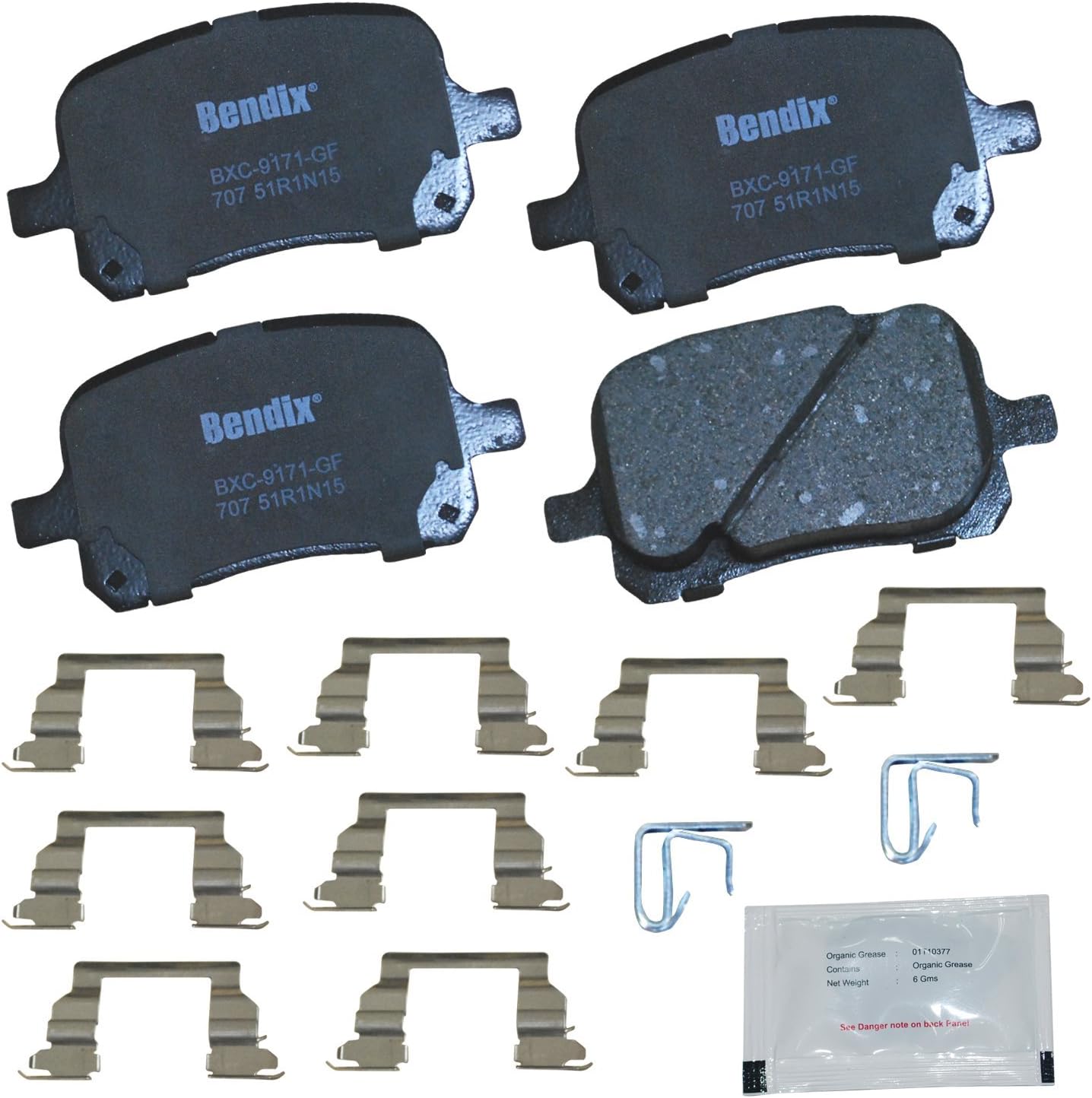
Bendix Priority1 CFC707 Ceramic Front Brake Pads
| Auto Part Position | Front |
|---|---|
| Automotive Fit Type | Vehicle Specific Fit |
| Material Type | Ceramic |
| Included Components | Brake Pad Set with Installation Hardware |
| Number of Items | 1 |
The Bendix Priority1 CFC707 are vehicle-specific ceramic front brake pads designed to match factory fit, form, and function for select 1997–2001 Camry 3.0L, Avalon, Solara and Lexus ES300/RX300 models. They come as a single pad set with installation hardware and include shims, slots, and chamfers intended to reduce noise and provide a precise fit in the caliper. In everyday use these pads deliver predictable, quiet braking with low dust compared with many semi-metallic options, and reviewers note easy installation and OEM-like dimensions. The ceramic friction material offers stable stopping under normal highway and city driving and is formulated to resist fade during repeated moderate stops. Limitations are typical of ceramic pads: slightly reduced initial bite versus some higher-friction compounds and they are optimized for standard passenger duty rather than heavy towing or track use. Buyers should confirm exact fit for their Camry variant before installing and expect the best balance of quiet operation and consistent braking for daily driving rather than extreme load conditions.
Best for: A Camry owner prioritizing dependable, low-noise everyday braking who values a direct factory-quality replacement that requires minimal fuss during installation.
Less Ideal for: Drivers who frequently tow heavy loads, carry sustained high payloads, or seek track-capable aggressive stopping should choose a higher-friction or performance-specific pad instead.
- Factory-style fit and hardware included for straightforward replacement
- Ceramic formulation reduces brake dust and delivers quiet operation
- Shims, slots, and chamfers engineered to minimize noise and promote even wear
- Ceramic pads typically have milder initial bite compared with high-performance semi-metallic compounds
Verdict: Choose these Bendix Priority1 ceramic front pads for a quiet, factory-quality stopping upgrade that fits 1997–2001 Camry 3.0L and similar models and delivers reliable daily braking.
Detroit Axle Front Brake Kit for 2.2L Toyota Camry (10" Rotor)

| Fitment | 2.2L Toyota Camry (10.00 inch rotor, 14" wheels) |
|---|---|
| Kit contents | 2 front rotors + 2 front ceramic pads (hardware included) |
| Rotor type | Drilled & slotted, ventilated |
| Finish | Zinc plated |
| Orientation | Front |
This Detroit Axle front brake kit supplies two drilled and slotted 10.00 inch rotors and a pair of ceramic front pads with the necessary hardware, intended as a direct replacement for 2.2L Toyota Camry models that use 10.00 inch front rotors and 14‑inch wheel configurations. Installers will appreciate that the rotors are machined with locating holes to align with factory hub fitment and zinc plating to deter corrosion, while the ventilated, slotted design helps dissipate heat during frequent city and highway driving. Ceramic pads typically run quieter and shed less dust than organic or semi-metallic compounds, making this kit a good match for daily drivers seeking cleaner wheels and low-noise operation. Important limitations are strict fitment requirements: this kit only fits 2.2L Camrys with the 10.00 inch rotor diameter and 14‑inch wheel option, so measuring your rotor before purchase is essential. The included small tube of grease and hardware covers basic installation but technicians may prefer to use their own quality brake lubricant for slider pins and clips.
Best for: Buyers who want a ready-to-install front brake replacement with quieter ceramic pads and proven user feedback, prioritizing reliable daily driving performance and cleaner wheels.
Less Ideal for: Drivers who need brakes for other Camry engine or rotor configurations, heavy-duty towing, or aggressive track use should choose a different kit engineered for those demands.
- Complete kit with both front rotors and ceramic pads plus installation hardware
- Drilled and slotted, ventilated rotors for faster cooling under repeated stops
- Zinc plating on rotors helps resist surface corrosion
- Ceramic pads produce less dust and tend to be quieter in normal driving
- Strict, narrow fitment limited to 2.2L Camry units with 10.00 inch rotors and 14‑inch wheel configurations (measure before buying)
- Rotor finish may show surface oxidation if exposed to moisture despite zinc plating
Verdict: A full front brake replacement tailored to 2.2L Camry owners who want quieter ceramic pads and ventilated rotors in a single, user-friendly kit.
Detroit Axle Front Brake Kit with 10.83" Rotors and Ceramic Pads
| Fitment rotor size | 10.83 inch (275mm) Front Rotors |
|---|---|
| Kit contents | 2x Front Disc Rotors, 2x Front Ceramic Brake Pads |
| Orientation | Front |
| Compatible vehicle type | Car |
This Detroit Axle front brake kit supplies everything needed to refresh the front braking on compatible 1997–2001 Camry V6 applications that use 10.83-inch rotors. The kit pairs vented, zinc-plated rotors with ceramic pads and basic installation hardware so you can replace both rotors and pads in one job. Vented rotors help dissipate heat and resist warp during repeated stops while the silver zinc plating reduces surface corrosion for cleaner-looking parts out of the box. Ceramic pads are quieter and produce less dust than many metallic pads, giving a smooth, low-noise feel in normal daily driving. Fit and locating holes are machined to match factory mounting for straightforward installation without modification. Expect the kit to perform like a cost-conscious factory-quality replacement, but it is not a high-performance upgrade for track use and long-term pad life will depend on driving style. Also note the kit targets vehicles with 10.83-inch front rotors, so verify rotor size before ordering.
Best for: Buyers who prioritize a reliable, factory-style replacement that restores quiet, predictable braking and reduces fuss during installation should consider this kit.
Less Ideal for: Drivers looking for upgraded track-capable brake components or those who need heavy-duty commercial braking performance should look for performance-oriented alternatives.
- Complete front kit includes both rotors and ceramic pads for a single replacement job
- Vented rotors improve heat dissipation to reduce risk of warping under normal use
- Zinc plating on rotors slows surface corrosion and reduces pre-install rust cleanup
- Ceramic pads offer quieter braking and lower dust than typical metallic pads
- Designed for standard street use and not optimized for high-performance or track braking demands
Verdict: A straightforward, factory-style front brake kit that delivers quiet, corrosion-resistant rotors and ceramic pads for dependable everyday stopping on compatible Camry models.
Choosing the Right 1997-2001 Toyota Camry Brake Pads: Key Factors to Consider
Pad Material and Composition
Pad material directly affects stopping power, noise, dust generation, and longevity. Organic compounds tend to be quieter and softer but may wear faster, while semi-metallic formulations provide strong initial bite and heat resistance at the cost of increased rotor wear and more dust. Ceramic-style pads usually offer low noise and low dust with stable performance across everyday temperatures, making them a common choice for commuter-oriented Camrys.
For the 1997–2001 Toyota Camry, consider material relative to your driving: mostly city commuting favors quieter, low-dust options; frequent highway or heavier loads benefit from materials that manage heat and resist fade. Also note that some materials require a short bedding-in period to achieve consistent pedal feel and optimal stopping performance.
Pad Thickness and Fitment
Correct pad thickness matters for both safety and fit. Pads that are too thin may require premature replacement, while pads that deviate from OEM thickness can change clearance in the caliper and affect caliper piston travel. Confirm the pad thickness spec and backing plate dimensions for both front and rear positions to ensure proper fit in the 1997–2001 Camry calipers.
Exact fitment also reduces installation time and prevents issues like uneven wear or caliper binding. If a pad set lacks clear thickness or dimensional data, treat it cautiously or verify with the manufacturer before installing on a Camry from this model range.
Stopping Performance and Pedal Feel
How quickly and predictably the vehicle slows is the most important real-world factor. Look for pads that deliver stable friction across a range of temperatures and braking intensities so pedal feel remains consistent during normal driving and heavier braking. A pad that feels grabby at low speeds but fades under repeated stops can undermine confidence and safety.
For the 1997–2001 Camry, which is frequently used for daily commuting, prioritizing linear and repeatable stopping performance typically yields the best overall driving experience. Consider how the pads perform during short, firm stops and longer braking events that might occur on highway descents.
Noise, Vibration, and Harshness (NVH)
Brake noise is a common complaint on older vehicles and can be influenced by pad material, shims, and backing plate design. Look for pads that include anti-squeal shims, chamfered edges, and a proven backing plate finish to minimize vibration and squeal on the 1997–2001 Camry. Proper installation with clean caliper hardware and anti-seize where appropriate also reduces NVH.
A quiet pad often improves driver confidence and cabin comfort. However, extremely quiet pads that sacrifice bite or heat resistance may not be ideal for drivers who frequently tow or carry heavier loads, so weigh noise control against braking performance.
Wear Life and Rotor Impact
Longer-wearing pads reduce replacement frequency, but very hard compounds can accelerate rotor wear. For a Camry in everyday use, choose pads that balance pad life with rotor friendliness to avoid frequent rotor resurfacing. Consider typical annual mileage and driving style when estimating replacement intervals.
Also check whether the pad formulation is known to glaze or develop uneven wear; those issues can shorten life and increase maintenance. Proper bedding-in after installation helps extend life and maintain consistent performance.
Installation and Maintenance Considerations
Ease of installation matters if you plan to do the job yourself. Pads that match OEM backing plate contours and mounting points reduce hassle and ensure correct caliper operation. Also verify whether the pads include hardware, shims, or wear indicators; missing components increase installation time and can affect performance.
Plan for routine inspection after installation to confirm even wear and correct bedding. For the 1997–2001 Camry, check pad thickness during regular service intervals and pay attention to any new noises or changes in pedal travel that indicate replacement or brake system service is needed.
Front Versus Rear Pads: What to Replace and When
The braking load distribution on the 1997–2001 Toyota Camry places more demand on the front pads, which typically wear faster than the rear. Many owners find front pads need replacement sooner, but rear pads should be inspected at every service interval because uneven wear can indicate caliper or hydraulic issues.
When replacing pads, evaluate both axles. If front pads are significantly more worn, you can replace only the fronts, but matching material characteristics across axles helps maintain balanced brake response. Always measure pad thickness against the Camry's specifications and replace worn rotors or resurface them if they show scoring or warping.
- Inspect front pads every 10,000–15,000 miles if you drive mostly in city traffic.
- Check rear pads during every front service to catch uneven wear early.
- Replace pads in pairs on the same axle to preserve balanced braking.
Bedding-In New Brake Pads for Reliable Performance
New pads require a brief bedding-in or break-in procedure to transfer a thin, even layer of friction material to the rotor surface. Proper bedding improves initial stopping power and reduces noise and vibration. Follow a progressive bedding sequence with moderate stops and increasing intensity, allowing the brakes to cool between cycles.
Avoid repeated hard stops from high speeds during the first 200 miles. After the initial bedding period, inspect pad seating and rotor condition. Proper bedding can reduce early glazing and help the pads achieve their designed friction profile on the 1997–2001 Camry.
- Perform 8–10 moderate stops from 30–40 mph, followed by a series of firmer stops.
- Allow cooling periods between aggressive cycles to prevent overheating.
- Recheck torque on caliper hardware after the first few hundred miles.
Common Brake Pad Wear Symptoms and Troubleshooting
Recognizing wear symptoms early prevents damage and maintains safety. Common signs include a change in pedal feel, increased stopping distance, audible squeal, grinding noise, or visible thinning of the pad lining. Squeal often indicates glazing or missing shims, while a true grinding sound means the pad material is largely gone and metal is contacting the rotor.
When you detect an issue, measure pad thickness and inspect rotors and caliper hardware. Uneven wear across a pad can indicate caliper sticking or guide hardware problems. Addressing the root cause prevents repeated premature wear on replacement pads for the 1997–2001 Camry.
- Squeal at light braking often points to glazing or missing anti-squeal shims.
- Grinding indicates worn pads and possible rotor damage; inspect immediately.
- Soft or low pedal travel can signal fluid or caliper issues rather than pad wear alone.
Rotor Considerations When Replacing Pads
Pads and rotors function as a system, so rotor condition influences braking performance and pad life. Thin, scored, or warped rotors can undermine new pads and cause vibration or reduced stopping power. Measure rotor thickness against Toyota specifications for the 1997–2001 Camry and resurface or replace rotors that fall below minimum thickness or show severe damage.
Using pads with compatible friction characteristics avoids accelerated rotor wear. If rotors are marginal, pairing new pads with resurfaced or replaced rotors yields more consistent results and longer service life.
- Check rotor runout and thickness before installing new pads.
- Replace rotors if below minimum thickness or if severe scoring is present.
- Match pad material choice to rotor condition to minimize wear and vibration.
Aftermarket Options and Fitment Guidance
Aftermarket pads offer a range of materials and performance characteristics for the 1997–2001 Camry. When choosing aftermarket options, confirm part numbers or fitment data explicitly for the Camry model years and whether the pads are for front or rear positions. Dimensions, backing plate shape, and mounting clip locations must match the Camry caliper design to avoid installation issues.
Look for pads that provide clear technical specifications and include necessary hardware. Even quality aftermarket pads can cause problems if fitment is not exact, so prioritize vendors or products that document Camry-specific compatibility.
- Verify front versus rear fitment before purchase or installation.
- Ensure hardware and shims are included or sourced separately.
- Check manufacturer specifications for pad thickness and backing plate dimensions.
Maintenance Tips to Extend Pad Life on a Camry
Regular maintenance helps extend pad life and keeps braking reliable. Keep caliper slides and pins clean and lubricated, use proper torque on caliper bolts, and inspect hardware for corrosion. Periodic cleaning of braking surfaces reduces dust buildup that can accelerate wear or cause noise.
Address driving habits that accelerate wear, such as frequent hard stops or riding the brakes on long descents. Small adjustments in driving can significantly lengthen pad service intervals on a 1997–2001 Camry.
- Lubricate slide pins and inspect caliper hardware annually.
- Avoid prolonged light braking when descending long grades; use engine braking safely.
- Monitor pad thickness at regular service intervals to catch abnormal wear early.
Still looking for the perfect fit?
Select your Toyota Camry configuration to see the most relevant Brake Pads recommendations
How We Chose the Best 1997-2001 Toyota Camry Brake Pads
Our shortlist focuses on brake pads that meet the typical use patterns and braking system of the 1997–2001 Toyota Camry. We prioritized stopping performance and pedal feel first, because consistent deceleration and driver confidence are the primary safety outcomes for this model. Durability and pad life were weighed next, using typical mileage expectations and reported wear patterns for Camrys of this era. Noise and NVH were key selection filters, since owners commonly report squeal or vibration with some replacement pads. Compatibility and fitment were confirmed against the Camry's front and rear caliper specifications and pad thickness requirements. Heat management and material composition were considered to ensure the pads resist glazing and fade under repeated stops. We excluded products that did not provide clear Camry-specific fitment data, lacked OEM-equivalent backing plate design, or used ambiguous material claims. Final choices reflect a balance of braking performance, longevity, quiet operation, and straightforward fitment for the 1997–2001 Toyota Camry.
Our full evaluation process is outlined in our review methodology.
FAQ
How often should I replace brake pads on a 1997–2001 Toyota Camry?
It depends on driving habits and mileage, but many owners see replacement intervals between 30,000 and 60,000 miles. City driving with frequent stops shortens pad life, while highway driving tends to extend it. Inspect pad thickness regularly and follow the Camry's maintenance schedule.
Can I replace only the front pads on my Camry if the rears still have life?
Yes. Replacing only the front pads is common because they wear faster, but always replace pads in pairs on the same axle. Check rear pad condition and ensure material characteristics remain compatible to preserve balanced braking performance.
What causes brake pad noise or a grinding sound on this Camry?
Squeal is often caused by glazing, missing or degraded shims, or vibration between pad and caliper. Grinding usually means the friction material is worn away and metal is contacting the rotor. Inspect pad thickness and hardware to identify the cause and address it promptly.
Are ceramic-style pads a good choice for a 1997–2001 Camry?
Ceramic-style pads are often a good fit for commuter-oriented Camrys because they provide low noise and low dust while delivering stable everyday braking. However, if you frequently tow or haul heavier loads, consider materials with stronger heat resistance to reduce fade during heavy use.
How do I know if rotors need resurfacing when changing pads?
Inspect rotors for scoring, grooves, or warping and measure thickness against Toyota specifications. If runout causes vibration or the surface shows deep grooves, resurfacing or replacement is recommended before installing new pads to ensure consistent contact and pad life.
What should I check after installing new pads on my Camry?
After installation, verify correct pad seating, torque on caliper hardware, and the presence of any anti-squeal shims or hardware. Perform a controlled bedding-in routine and recheck for noise, uneven wear, or abnormal pedal feel after the first few hundred miles.
Final Verdict
When replacing brake pads on a 1997–2001 Toyota Camry, prioritize stopping performance, correct fitment, and noise control. Choose a pad material and thickness that match your driving patterns and inspect rotors and hardware at the same time to avoid premature wear. Balancing initial bite, long-term durability, and rotor friendliness will help you get consistent braking and fewer service visits. Focus on proven fitment and proper installation to ensure safe, predictable braking for daily driving.
Explore More:
- Check out all Toyota Camry parts & accessories
- Explore Brake Pads Maintenance & Repair Guides
- Explore Brake System
- Browse all Auto Parts
