

Note: This article contains affiliate links. If you click on these links and make a purchase, I may earn a small commission at no extra cost to you. This helps support my research and content. Read my full affiliate disclosure here.
When you rely on your Honda Pilot for daily driving, weekend trips, and carrying passengers, dependable brakes are essential. Choosing the right brake pads affects stopping distance, pedal feel, and long-term wear, so picking a suitable set matters for safety and ownership costs.This guide covers the top shortlisted Honda Pilot brake pads across common use cases, and explains the evaluation criteria such as stopping performance and pad life. Read on to understand the tradeoffs and find options that match your driving style and maintenance preferences.
Looking for other parts? See all Honda Pilot parts & accessories.
Top Picks at a Glance
| Best Reviewed A top-rated pick with lots of positive feedback | PowerStop Z17 Front Ceramic Brake Pads with Hardware (17-1378) |  |
| Most Popular A crowd favorite that many people choose with confidence | Raybestos Element3 Enhanced Hybrid Rear Brake Pad Set (EHT1724H) |  |
| Best Quality Built to a higher standard if you want something more solid | TRQ Ceramic Front and Rear Brake Pad Set (BKA11917) |  |
| Best Budget The cheapest option that still gets the job done reliably | Auto Shack Front & Rear Ceramic Brake Pad Set for 2009–2015 Honda Pilot |  |
| Most Sold A high-volume bestseller chosen again and again | Bosch QuietCast Premium Ceramic Rear Brake Pad Set (BC1281) |  |
| Best Value for Money The sweet spot between price and what you get | Bendix Priority1 CFC1281 Ceramic Rear Brake Pads (rear) |  |
| Best Overall The best all-around choice for most situations | SIPAUTEC Ceramic Front and Rear Brake Pad Set (D1280/D1281) |  |
1. PowerStop Z17 Front Ceramic Brake Pads with Hardware (17-1378)

| Material | Ceramic |
|---|---|
| Auto Part Position | Front |
| Specification Met | OEM |
| Number of Items | 1 |
The PowerStop Z17 front ceramic pads are engineered for daily driving on vehicles like the Honda Pilot, providing a straightforward bolt-on replacement with included stainless-steel installation hardware. In normal commuting and family-driving scenarios the Z17 formula delivers quiet stops and reduced brake dust thanks to its ceramic compound and dual-layer shims, which helps keep wheels cleaner. The pads are chamfered and slotted for faster break-in and consistent bedding, and the package includes brake lube to simplify installation. Practical benefits include easy fitment for the listed front applications and a focus on comfort rather than aggressive track performance. Limitations: these are not performance-oriented pads for heavy towing or spirited driving where higher friction materials perform better, and ceramic pads can wear differently than some factory replacements under repeated high-heat use. Expect OEM-quality stopping for everyday use but choose a different compound if you routinely demand heavy-duty braking performance.
Best for: Reliability-focused buyers who prioritize quiet, consistent everyday braking and low maintenance for family SUVs like the Honda Pilot.
Less Ideal for: Drivers who need heavy-duty or track-capable braking materials for towing, performance driving, or repeated high-heat stops should consider performance-oriented pads instead.
- Designed as an OEM-plus replacement for front brakes on compatible vehicles
- Low-dust ceramic formula that helps keep wheels cleaner
- Includes stainless-steel installation hardware and brake lube for easier install
- Chamfered and slotted design for faster break-in and consistent bedding
- Not intended for heavy towing, frequent high-temperature use, or track-style driving
Verdict A dependable, quiet ceramic front pad set that keeps wheels cleaner and fits the Honda Pilot for everyday driving but is not meant for heavy-duty or track use.
2. Raybestos Element3 Enhanced Hybrid Rear Brake Pad Set (EHT1724H)

| Material | Ceramic |
|---|---|
| Auto Part Position | Rear |
| Vehicle Service Type | SUV |
| Automotive Fit Type | Vehicle Specific Fit |
These Raybestos Element3 rear brake pads are a vehicle-specific replacement set engineered to give stronger stopping power and longer pad life than a basic organic pad. They pair ceramic-like low dust and quieting shims with semi-metallic bite thanks to the brand's Enhanced Hybrid Technology, and include hardware such as abutment clips and anti-rattle pieces for a straightforward swap. Typical use is direct replacement on compatible Honda Pilot rear calipers where drivers want a noticeable improvement in aggressive braking and reduced pad wear without a performance-only price. In practice the pads bed in quietly for many users and tend to produce less dust, while several reports note a firmer initial bite and good pedal feel. Expect generally easy installation if you have basic tools, though some buyers mention occasional fitment tweaks or shim adjustments. A minority of users report higher dust or noise, so if you need track-level performance or absolute lowest dust in every condition you may want a different compound.
Best for: Convenience-driven buyers who want a direct-fit rear pad for a Honda Pilot that improves stopping feel and longevity without specialist installation or setup.
Less Ideal for: Drivers seeking track-focused compounds, absolute minimum dust in all conditions, or those who require extreme longevity under heavy towing and sustained high-heat use should consider performance- or heavy-duty alternatives.
- Enhanced Hybrid formulation combines ceramic quietness with semi-metallic stopping power
- Includes installation hardware such as abutment clips and anti-rattle pieces for easier replacement
- Designed and tested across many vehicles with reported improved pad wear and durability
- Five-layer shims and electronic wear sensor support quieter operation across temperatures
- Some users report occasional noise or a squeak after installation
- A few reports note higher-than-expected brake dust on certain vehicles
Verdict A convenient, vehicle-specific rear pad that balances stronger stopping and quieter operation for Honda Pilot drivers who want an easy upgrade from basic pads.
3. TRQ Ceramic Front and Rear Brake Pad Set (BKA11917)

| Material | Ceramic |
|---|---|
| Auto Part Position | Rear |
| Specification Met | OEM |
| Automotive Fit Type | Vehicle Specific Fit |
These TRQ ceramic front and rear brake pads are a direct-fit replacement designed to restore stopping power on compatible Honda Pilot models. They install like a factory-quality pad and are intended for everyday driving, offering quieter operation and reduced brake dust compared with older organic or semi-metallic pads. The kit includes pre-molded, thermally scorched friction material and machined exteriors to improve bedding and consistent pad contact, and TRQ provides step-by-step installation videos for DIYers. In practice you can expect cleaner wheels, smoother pedal feel in normal driving, and decent longevity when used for commuting and light towing. Some users report fitment and sensor hole alignment issues on non-Honda vehicles, so check the Pilot-specific compatibility carefully before installing. A few reviews also dispute the exact friction formulation on certain applications, so professional inspection during installation is a good idea if you depend on aggressive braking performance. These pads are best when you want quieter, low-dust braking close to factory behavior rather than track-level friction or heavy-duty commercial duty.
Best for: Performance-oriented Honda Pilot owners who prioritize quieter, low-dust, near-factory braking for daily driving and light towing and value a direct-fit, DIY-friendly replacement.
Less Ideal for: Drivers who need heavy-duty or track-capable pads for aggressive braking, towing large loads frequently, or who want verified high-temperature race performance should consider performance- or heavy-duty alternatives.
- Vehicle-specific direct-fit design simplifies installation on compatible Honda Pilot models.
- Ceramic formulation marketed for low dust and quieter braking, keeping wheels cleaner.
- Thermal scorched surface and machined exterior aim to improve initial bite and consistent contact.
- Includes access to TRQ installation videos to support DIY replacement.
- Some reviewers reported inconsistent material composition and occasional fitment or sensor alignment problems on certain cars.
- Not engineered for track use or heavy commercial braking where high-temperature stability is required.
Verdict A DIY-friendly, low-dust ceramic replacement that restores factory-like braking on compatible Honda Pilot models but is not intended for track or heavy commercial use.
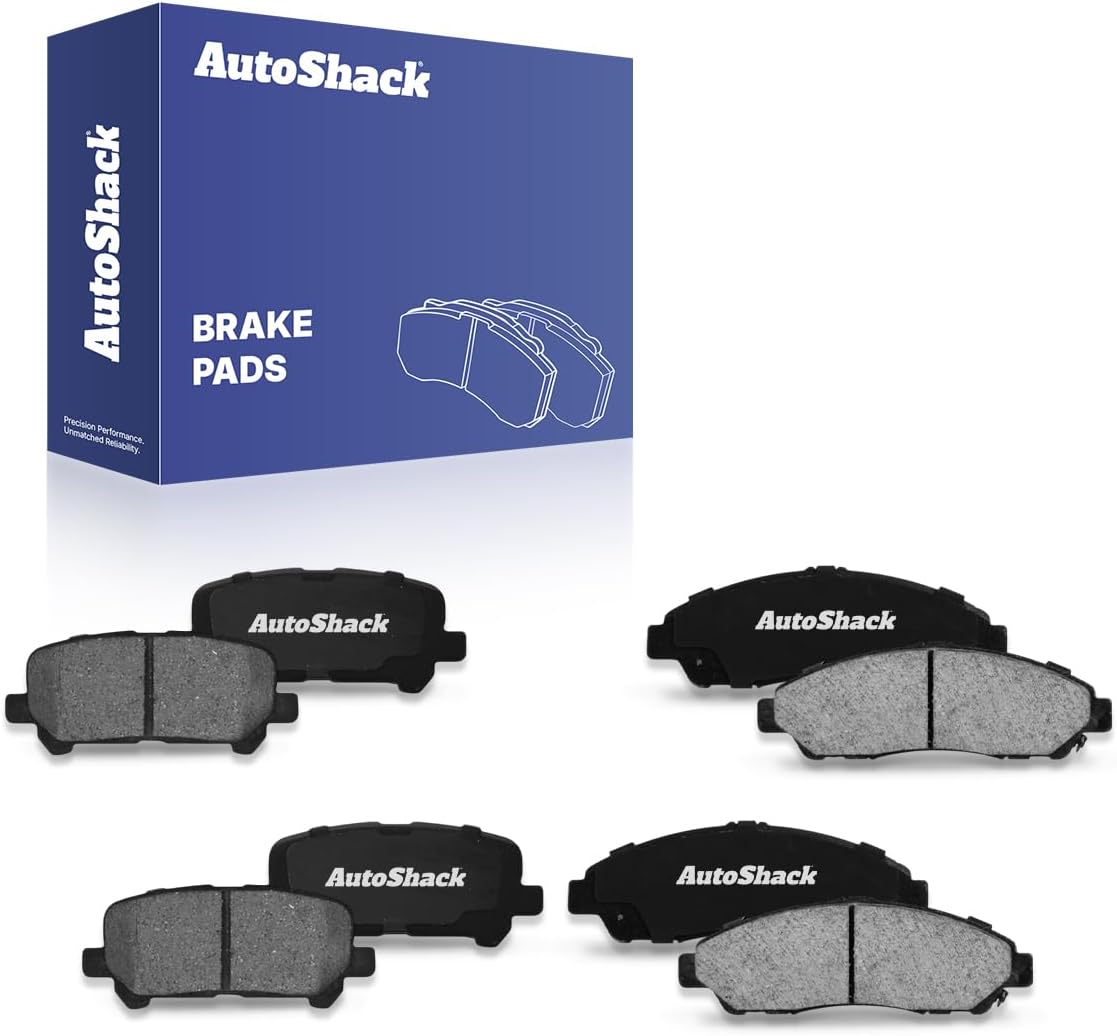
4. Auto Shack Front & Rear Ceramic Brake Pad Set for 2009–2015 Honda Pilot
| Material | Ceramic |
|---|---|
| Auto Part Position | Rear |
| Vehicle Service Type | SUV |
| Specification Met | ISO/TS 16949 |
| Number of Items | 8 |
This Auto Shack kit supplies a complete set of ceramic front and rear brake pads engineered to fit the 2009–2015 Honda Pilot. Designed as a direct factory-quality replacement, the pads use low-dust ceramic friction material intended to reduce wheel grime and run quieter than semi-metallic alternatives. Buyers will typically install these during routine brake service to restore stopping power and extend rotor life; the set covers both axles so you can replace pads all at once. The manufacturer cites ISO/IATF 16949 production standards and the listing notes vehicle-specific fitment, which supports straightforward fit and generally quick installation when paired with the factory hardware. Limitations include no included mounting hardware and a six-month warranty, so factor in the cost of clips or shims and consider professional installation if you want a warranty-backed install. For a budget-focused Pilot owner, this delivers sensible braking performance and low dust with the trade-off of modest warranty coverage and missing accessories.
Best for: Budget-conscious Honda Pilot owners who prioritize low-dust, quiet everyday braking and want an affordable, vehicle-specific pad set for routine maintenance.
Less Ideal for: Drivers who demand performance-oriented pads for towing, heavy loads, or aggressive driving should consider higher-performance or heavy-duty options instead.
- Ceramic formulation produces low dust for cleaner wheels
- Sold as a complete 8-piece front and rear kit for one-time replacement
- Manufactured to ISO/IATF 16949 standards indicating controlled production quality
- Vehicle-specific fit for the 2009–2015 Honda Pilot which simplifies installation
- Hardware is not included so clips or shims may need to be purchased separately
- Warranty period is limited to six months
Verdict A cost-effective, low-dust ceramic pad set sized for the 2009–2015 Honda Pilot that gives quiet, everyday braking but requires separate hardware and has limited warranty coverage.
5. Bosch QuietCast Premium Ceramic Rear Brake Pad Set (BC1281)

| Material | Ceramic |
|---|---|
| Auto Part Position | Rear |
| Specification Met | OEM |
| Number of Items | 1 |
These Bosch QuietCast rear brake pads are a vehicle-specific ceramic replacement engineered to match factory-quality braking on compatible Honda Pilot models. They install like a direct replacement for one axle and include hardware and lubricant where applicable, so DIYers can complete a rear-pad service without hunting for extras. Notable features are Bosch Molded Shim Technology for multilayer rubber-core shims that reduce noise, powder-coated backing plates for rust resistance, and slots and chamfers to help bed the pads smoothly. In real-world use the ceramic compound delivers quieter stops and lower dust than many semi-metallic options, and the included lubricant reduces drag at the slide points. Expect good stopping power for everyday driving and improved durability versus cheap aftermarket pads, though ceramic material can feel slightly less aggressive under repeated hard braking and may wear faster on heavily used towing or performance applications. Fitment is vehicle-specific, so confirm compatibility with your Pilot trim before purchase.
Best for: Risk-averse mainstream buyers who prioritize quiet, low-dust, factory-quality replacement parts and want a straightforward, reliable rear brake pad swap for their Honda Pilot.
Less Ideal for: Drivers who frequently tow heavy loads, carry full passenger/cargo weight, or drive aggressively should consider heavy-duty or performance-specific brake compounds instead.
- Vehicle-specific fit and includes hardware and lubricant for one axle, simplifying installation
- Multilayer rubber-core shims reduce noise for quiet braking
- Ceramic friction formulation produces low dust and consistent everyday stopping power
- Powder-coated backing plates resist corrosion to extend pad life
- Ceramic pads may be less effective than heavier duty compounds under repeated hard or towing stops
Verdict A quiet, low-dust, factory-quality rear ceramic pad set that fits Honda Pilot owners looking for a reliable, low-risk replacement but not optimized for heavy towing or aggressive use.
6. Bendix Priority1 CFC1281 Ceramic Rear Brake Pads (rear)

| Material | Ceramic |
|---|---|
| Auto Part Position | Rear |
| Specification Met | OEM |
| Number of Items | 1 |
These Bendix Priority1 ceramic rear brake pads are a vehicle-specific replacement designed to meet factory fit, form, and function for compatible Honda Pilot years. They install like a direct replacement and ship with installation hardware and a small packet of silicone brake grease, which helps speed a DIY swap. The ceramic compound and built-in shims, slots, and chamfers are intended to reduce noise and brake dust while maintaining stable stopping under everyday driving and heavier loads. In practice you can expect quiet, smooth braking with low dust and minimal bedding-in noise once the pads seat. Limitations: ceramic pads can feel slightly less bite-heavy than some semi-metallic options during aggressive driving, and a few users report occasional fitment variance so confirm the pad shape against your current rear pads before installing. For routine commuting and family driving, these pads balance performance, cleanliness, and value well.
Best for: A practical optimizer focused on reliable, low-maintenance braking for daily driving and family use, who values quiet operation and low wheel dust while keeping service costs down.
Less Ideal for: Drivers who frequently tow heavy loads, perform spirited driving, or demand the highest initial friction should consider heavy-duty semi-metallic options instead.
- Factory-quality fit and vehicle-specific design for direct rear replacement on compatible models
- Ceramic compound with shims and chamfers reduces noise and brake dust
- Includes installation hardware and a packet of brake grease for a complete DIY install
- Engineered to meet OEM specifications for consistent, fade-resistant braking
- May offer slightly less initial bite than semi-metallic pads under aggressive driving
- Some buyers report fit variation so verification against existing pads is advised
Verdict A cost-conscious, factory-fit ceramic rear pad that delivers quiet, low-dust braking for everyday Honda Pilot use, provided you confirm fit before installation.
7. SIPAUTEC Ceramic Front and Rear Brake Pad Set (D1280/D1281)

| Material | Carbon-Fiber Ceramic |
|---|---|
| Auto Part Position | Front, Rear |
| Specification Met | SAE J2784 |
| Number of Items | 8 |
These SIPAUTEC ceramic brake pads are a complete front and rear replacement set designed to fit 2009–2022 Honda Pilot models. The pads use a carbon-fiber ceramic compound with chamfered and slotted faces to reduce noise, control heat, and improve initial bite compared with many semi-metallic options. The kit includes four front and four rear pads plus brake lubricant but does not include mounting hardware or clips, so expect to reuse factory hardware or source clips separately. In real-world use the pads should produce less wheel dust and a cleaner appearance while offering consistent stopping power and longer wear life than budget organic pads. They meet SAE J2784 specification and are marketed as factory-quality replacements, though they may take a short bedding-in period and can feel firmer than stock during the first few stops. Installation is straightforward for a DIYer familiar with brake service, but those who need new clips or sensors should plan for extra parts.
Best for: Balanced buyers who want a low-dust, quieter ceramic upgrade for regular driving and occasional towing on a Honda Pilot and value a complete pad set for all wheels.
Less Ideal for: Drivers seeking performance race pads or those who want a plug-and-play swap with included hardware should consider other options or purchase mounting clips separately.
- Full front and rear pad sets included so all four corners can be replaced at once.
- Carbon-fiber ceramic compound reduces brake dust and is advertised for quieter operation.
- Chamfered and slotted pad faces improve initial bite and help manage heat under heavy braking.
- Mounting hardware and clips are not included so additional parts may be required for some installs.
- May require a brief bedding-in period and can feel firmer than factory pads at first.
Verdict A practical, low-dust ceramic full-set replacement that balances quieter braking and longevity for Honda Pilot owners, but plan to source hardware if needed.
Choosing the Right Honda Pilot Brake Pads: Key Factors to Consider
Material Composition
Pad material determines many core attributes like initial bite, fade resistance, dust production, and rotor wear. Organic compounds tend to be quieter and gentler on rotors but may wear faster and perform less well at high temperatures. Semi-metallic formulations usually offer stronger initial stopping power and heat dissipation but can produce more noise and rotor wear. Ceramic-style materials are often quieter, produce less visible dust, and provide stable friction across a broad temperature range, though they sometimes cost more. Understanding the material tradeoffs helps you match pads to how you drive—commuting, towing, or more spirited driving—and to your tolerance for dust and noise.
Stopping Performance and Modulation
How a pad feels under braking matters as much as measured stopping distance. Some pads provide a firm, progressive pedal and predictable modulation that lets you control braking force precisely, which helps in daily traffic and emergency stops. Others may offer stronger initial bite but less linear modulation, making it easier to lock wheels under hard braking without ABS intervention. Consider whether you prioritize shortest possible stops, pedal feel and consistency, or a balance of both. Realistic performance expectations should account for rotor condition and bedding-in, since those factors influence how a pad performs after installation.
Longevity and Wear Characteristics
Expected pad life affects ownership cost and maintenance intervals. Harder friction materials and larger contact areas generally last longer, but can increase rotor wear. Softer compounds wear faster but are gentler on rotors. Look for published thickness specs and manufacturer guidance on wear rates, but also account for driving patterns like frequent city braking versus highway cruising. Quality backing plates and proper bonding reduce the chance of premature delamination or uneven wear, which can cause vibration and require early replacement. Consider maintenance frequency and how easy it is to inspect or measure remaining pad thickness.
Noise, Vibration, and Comfort
Brake squeal, groan, and vibration are common complaints that affect perceived quality. Noise arises from pad material, backing plate design, and how the pad interacts with the caliper and rotor surface. Some formulations include shims, chamfers, and damping layers to reduce squeal, while others rely on the pad material itself. Vibration and judder can indicate uneven wear or poor bedding procedures. If you prioritize a quiet cabin and smooth feel, choose pads designed with noise mitigation features and follow recommended bedding-in procedures to minimize early issues.
Fitment and Ease of Installation
Correct fitment is essential for safe operation. Pads must match the Honda Pilot's caliper design, retaining hardware, and sensor provisions. Well-documented fitment information, clear hardware kits, and included shims simplify installation and reduce the risk of incorrect assembly. Ease of replacement can also affect labor costs if you use a technician. Additionally, consider whether the pads require special tools or break-in procedures that differ from stock parts, and whether replacement hardware or clips are included to ensure consistent performance.
Environmental and Maintenance Considerations
Brake dust, debris on wheels, and the environmental impact of pad wear are practical concerns. Some pad materials generate finer, lighter dust that is less noticeable on wheels, while others leave heavy residues that require frequent cleaning. Thermal stability affects how often rotors need resurfacing, since excessive heat can cause warping or glazing that shortens rotor life. Maintenance friendliness, such as clear wear indicators and compatible sensors, helps you spot when pads need service. Balance environmental preferences with performance requirements to choose pads that fit your upkeep routine.
FAQ
How do I know when Honda Pilot brake pads need replacement?
Brake pads often show symptoms like reduced pedal responsiveness, longer stopping distances, or a steady squeal when braking. Visual inspection can reveal thinning pads; many pads drop below safe thickness before performance degrades noticeably. If you notice grinding noises or visible metal contact, replace pads immediately to avoid rotor damage.
Are front and rear brake pads different on a Honda Pilot?
Front and rear brake pads serve different loads and may use different compounds or sizes depending on the vehicle's braking design. Front pads typically handle more braking force and wear faster. Always verify fitment and thickness specs for each axle and install the correct pads in the intended position.
Is it worth choosing ceramic-style pads for a Honda Pilot?
Ceramic-style pads usually offer quieter operation and produce less visible dust, which many owners prefer for daily driving. They also deliver stable friction over a broad temperature range. However, depending on your driving style and towing needs, a different material may provide better initial bite or heat tolerance. Consider your priorities for noise, dust, and performance when selecting material.
How often should brake pads be replaced on a Honda Pilot?
Replacement intervals vary widely based on driving habits, pad material, and operating conditions. Typical lifespans range from several tens of thousands of miles for many drivers to shorter spans if you do heavy city driving or towing. Inspect pads regularly and follow thickness guidelines rather than relying solely on mileage.
What causes a grinding noise when braking, and is it dangerous?
A grinding noise usually indicates the friction material is worn through to the backing plate or that debris is trapped between pad and rotor. It is potentially dangerous because metal-on-metal contact can severely damage rotors and reduce braking performance. If you hear grinding, have the brakes inspected and address the issue promptly.
How We Chose the Best Honda Pilot Brake Pads
We focused on real-world braking performance, durability, and fitment reliability when selecting the seven Honda Pilot brake pads on this list. Our primary filters included compatibility with Honda Pilot model years and factory caliper designs, measured stopping effectiveness under varied driving conditions, thermal resistance and fade characteristics, and expected pad life based on material and backing design. We also considered rotor wear tendencies, dust generation and cleanliness, and typical noise or vibration reports to assess occupant comfort and maintenance needs. Installation friendliness and clear fitment information were factored in because correct fitment reduces installation time and potential safety issues. Excluded items included pads without verified fitment data, entries lacking objective wear or performance information, and experimental formulations without sufficient field testing. The final selections balance braking consistency, longevity, and real-world usability for Honda Pilot owners.
Our full evaluation process is outlined in our review methodology.
Conclusion
Choosing the right Honda Pilot brake pads means balancing stopping performance, longevity, and comfort. Prioritize the attributes that match how you drive: stronger initial bite and heat tolerance if you tow or drive aggressively, or quieter, lower-dust compounds for daily commuting and family use.Pay attention to fitment details, pad thickness, and recommended bedding procedures to get consistent results. Regular inspections and prompt replacement when wear indicators appear will keep braking performance dependable over time.
Explore More:
- Check out all Honda Pilot parts & accessories
- Explore Brake Pads Maintenance & Repair Guides
- Explore Brake System
- Browse all Auto Parts
