

Note: This article contains affiliate links. If you click on these links and make a purchase, I may earn a small commission at no extra cost to you. This helps support my research and content. Read my full affiliate disclosure here.
What You’ll Need
A quick look at the tools and supplies commonly used for this job.
Tools
- OBD-II scan tool with live data capability
- Digital multimeter
- Flashlight
- Basic socket and screwdriver set
- Battery terminal wrench
- Service information or factory relearn procedure
Parts & Supplies
- Throttle body cleaner
- Clean lint-free shop towels
- Mass air flow sensor cleaner
- Replacement air intake clamps or hose if damaged
- Dielectric grease for electrical connectors if needed
This article is part of our Electrical System Maintenance & Repair Guides.
Throttle, idle, and sensor relearn problems usually show up right after a battery disconnect, throttle body cleaning, ECM replacement, or parts swap that changes airflow or sensor values.
The tricky part is that a vehicle can feel like it has a bad sensor, vacuum leak, or failing throttle body when the real issue is simply that the control module has lost its learned settings and has not completed the correct relearn routine. On newer vehicles, electronic throttle control and idle strategy depend heavily on stored adaptives, so even a healthy engine can idle poorly or hesitate until the learned values are restored.
This guide walks you through a practical DIY diagnostic process so you can tell the difference between a true component fault and a relearn issue. The goal is to verify the basics first, check scan data next, and only perform relearn procedures after you know the engine, throttle, and sensors are capable of relearning correctly.
What Relearn Problems Usually Look Like
A relearn problem often appears after recent work or a low-voltage event. Common triggers include a dead battery, disconnected battery cables, jump-starting, throttle body replacement, throttle body cleaning, PCM or ECM replacement, intake duct removal, or replacing sensors such as the mass air flow sensor or accelerator pedal position sensor.
Symptoms vary by make and model, but the pattern matters. If the engine ran normally before service and developed idle or throttle issues immediately afterward, a missing or incomplete relearn moves high on the suspect list.
- Erratic idle speed, especially on cold start or when shifting into Drive.
- Idle too high or too low after battery replacement or disconnection.
- Throttle lag, soft pedal response, or a brief hesitation off idle.
- Stalling when coming to a stop even though no obvious mechanical problem is present.
- Check engine light with throttle, idle air, or correlation codes that appeared after recent work.
Safety and Before-You-Start Checks
Park on a level surface, set the parking brake, and work in a well-ventilated area. If you will be cleaning the throttle body or disconnecting connectors, keep the key off unless the procedure specifically calls for key-on testing.
Before assuming the vehicle only needs a relearn, make sure the battery is fully charged and all electrical connections are stable. Relearn routines often fail when system voltage is low, and that can create false symptoms that send you in the wrong direction.
- Battery voltage should generally be about 12.4 volts or higher with the engine off.
- Battery terminals should be clean and tight.
- Ground straps between engine, body, and battery should be intact.
- The air intake duct between the air box and throttle body should be fully seated with no cracks.
- All recently disturbed connectors should be locked in place.
Confirm the History Before Testing
Relearn problems are strongly tied to what happened just before the symptom started. Ask yourself a few basic questions before opening the toolbox.
- Was the battery disconnected, replaced, or allowed to go dead?
- Was the throttle body removed or cleaned?
- Was the ECM, PCM, or throttle body replaced?
- Was the intake tube, air box, or MAF sensor recently removed?
- Did the problem begin immediately after repair work?
If the answer to one or more of these is yes, you may be dealing with lost adaptive memory, a required idle learn, or a sensor value mismatch after cleaning or parts replacement. If the problem appeared gradually with no recent work, a real hardware fault becomes more likely.
Scan for Codes and Live Data First
Why Scan Data Matters
A scan tool is the fastest way to separate a relearn issue from an active fault. Some vehicles will store a code when idle control cannot be achieved, when throttle position values do not match expected ranges, or when airflow calculations do not line up after service.
Codes That Deserve Attention
Look for codes related to electronic throttle control, throttle position correlation, idle speed control, mass air flow performance, accelerator pedal position correlation, and battery or control module voltage history. A code does not automatically mean the part is bad, but it tells you where the computer is struggling.
Live Data Values to Review
- Throttle position at key on and at idle.
- Commanded throttle angle versus actual throttle angle.
- Engine coolant temperature to verify the PCM sees a realistic warm-up condition.
- Short-term and long-term fuel trims for signs of vacuum leak or airflow error.
- Mass air flow reading at idle if equipped.
- Accelerator pedal position percentage for smooth movement without dropouts.
If throttle angle, pedal position, and airflow data look stable but idle remains unstable after battery loss or service, a relearn issue stays likely. If values are erratic, missing, or obviously unrealistic, diagnose the failed circuit or component before attempting any relearn.
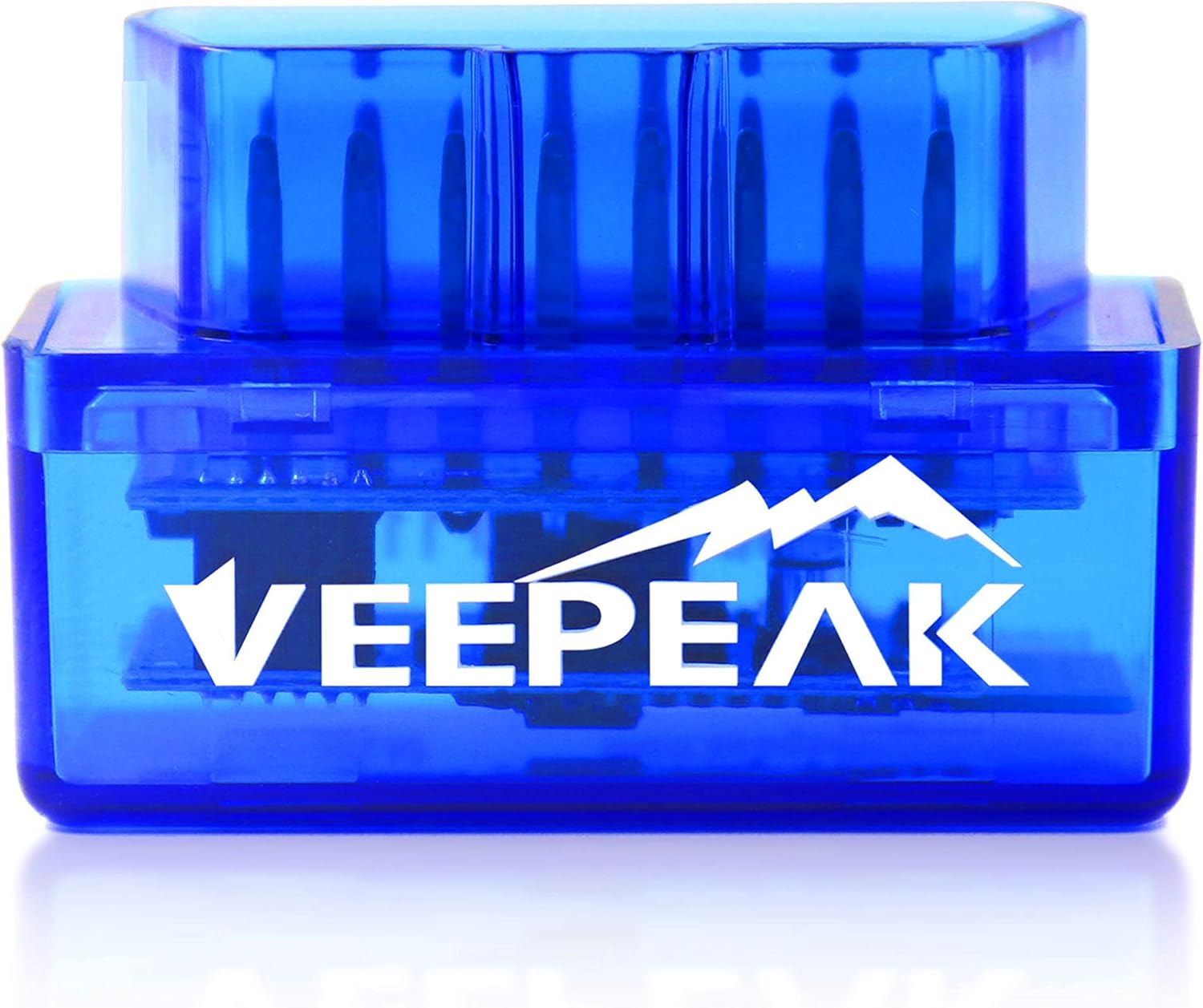
Tools That Make This Job Easier


Inspect the Throttle Body and Intake Path
A throttle relearn cannot compensate for a dirty or damaged throttle body forever. Carbon buildup around the throttle plate changes airflow at idle, and that can cause unstable idle or improper throttle adaptation. If the throttle body was just cleaned, the opposite can happen: airflow suddenly increases and the old learned value no longer fits.
Remove the intake duct and inspect the throttle bore and plate. Look for heavy carbon, oil residue, binding, physical damage, or a plate that does not sit evenly. On electronic throttle bodies, do not force the plate open by hand unless the service information says it is safe for that design.
- Check the air duct for cracks, loose clamps, or disconnected PCV and breather hoses.
- Inspect for vacuum leaks around the intake duct, intake manifold, and any hoses disturbed during repair.
- Make sure the air filter housing is closed correctly and the MAF sensor is installed in the proper direction.
- Clean only with the correct cleaner and avoid flooding electrical components.
If the throttle body is very dirty, clean it first, then perform the relearn afterward. If you do the relearn on a dirty throttle body and clean it later, the idle may become unstable again because airflow has changed.
Check for Sensor and Connector Problems That Mimic Relearn Failure
Not every relearn symptom is truly a relearn problem. A contaminated MAF sensor, weak battery, unplugged intake hose, or loose throttle body connector can make the module incapable of finishing a learn routine. Always rule out obvious sensor and wiring issues first.
Mass Air Flow Sensor
If the MAF sensor is dirty or misreporting airflow, the engine may idle rough and fuel trims may drift even though the throttle body itself is fine. If the sensor was touched during filter service or intake work, inspect the connector and clean the sensor only with MAF-safe cleaner.
Accelerator Pedal and Throttle Position Signals
Using live data, slowly press and release the pedal. The percentage should rise and fall smoothly without sudden jumps. Compare commanded and actual throttle position. If the commanded value changes but actual angle lags badly or is inconsistent, the problem may be in the throttle body assembly, power supply, ground, or wiring.
Voltage and Grounds
Modules do not learn well on unstable voltage. Check charging voltage with the engine running and inspect grounds if you see odd, changing symptoms. A vehicle with low idle voltage, corroded terminals, or recent jump-start history may need electrical repair before any relearn will hold.
How to Tell a Relearn Issue From a Mechanical or Air Leak Problem
A true relearn issue usually improves or changes noticeably after key cycles, short drive time, or following a correct procedure, even if it is not fully fixed right away. A vacuum leak or mechanical problem usually stays consistently bad and often shows supporting evidence in fuel trims, noise, or visible hose damage.
- If fuel trims are strongly positive at idle and improve off idle, suspect a vacuum leak before blaming relearn.
- If the engine has misfires, poor compression, or timing issues, fix those first because idle learn will not correct them.
- If the throttle body makes abnormal noises, sticks, or fails correlation tests, the component may be defective.
- If the issue began immediately after a battery disconnect and there are no major trim or airflow faults, relearn becomes more likely.
The best diagnostic shortcut is this: a relearn routine only works when the engine and control inputs are fundamentally healthy. If the module cannot control idle after verifying voltage, airflow, and sensor signals, stop repeating relearn attempts and go back to basic diagnosis.
Recommended Tools for This Job


Perform the Correct Relearn Procedure
There is no universal relearn sequence that fits every vehicle. Some cars relearn automatically after several warm-up cycles. Others require a scan tool function. Some need a specific idle time with all accessories off, followed by a second phase with the A/C or steering load applied.
General Relearn Approach
- Start with a fully charged battery and no active hard faults that would block throttle control.
- Bring the engine to operating temperature unless the service procedure says to begin cold.
- Turn off headlights, blower motor, A/C, audio system, and other accessory loads.
- Follow the exact model-specific key-on, idle, or scan tool relearn routine.
- After the static relearn, complete any required road test or drive cycle.
Do not guess the procedure from a different engine family or model year. Small changes in software can make a generic internet sequence ineffective. If a scan tool offers an idle learn or throttle body relearn function, use it exactly as directed.
When the Relearn Seems to Fail
If idle still hunts, stalls, or stays excessively high after a correct relearn, recheck for intake leaks, throttle contamination, coolant temperature sensor accuracy, and pending codes. Many failed relearns are not software problems at all; they fail because the PCM is seeing airflow or position values outside its acceptable window.
Interpreting Your Results
Signs the Relearn Fixed the Problem
- Idle speed becomes stable after warm-up.
- Throttle response feels consistent and predictable.
- Stalling on deceleration disappears.
- Related codes do not return after a drive cycle.
- Fuel trims settle closer to normal once idle control is stable.
Signs There Is Still an Underlying Fault
- Throttle or pedal correlation codes return immediately.
- Idle remains unstable regardless of engine temperature.
- Commanded and actual throttle positions do not track each other well.
- Fuel trims stay heavily positive or negative.
- The engine only runs acceptably when you hold the throttle open slightly.
If you are seeing those second-group symptoms, the next step is not another relearn. It is targeted diagnosis of vacuum leaks, throttle body condition, wiring integrity, sensor accuracy, or PCM inputs.
When to Stop DIY Diagnosis
DIY diagnosis makes sense when the vehicle has a clear battery-disconnect history, accessible intake components, and scan data that points toward an adaptation issue. It makes less sense when the vehicle requires factory-level software functions, has multiple communication codes, or shows inconsistent electronic throttle behavior that could create a safety issue.
- Seek professional help if the vehicle goes into reduced power mode repeatedly.
- Get advanced diagnosis if throttle, pedal, or module correlation codes come back after wiring checks.
- Use a shop with factory-capable scan tools if the relearn function is not available on your tool.
- Do not continue driving a vehicle that surges, stalls in traffic, or has unpredictable throttle response.
Key Takeaways
- Start with battery voltage, intake duct sealing, and connector checks before assuming the car only needs a relearn.
- Use scan tool live data to compare commanded versus actual throttle behavior and to spot airflow or sensor issues that block relearn.
- Clean a dirty throttle body before performing the relearn, not after, so the learned idle value matches current airflow.
- Always follow the exact model-specific relearn routine because generic sequences often fail on electronic throttle systems.
- If codes, fuel trims, or throttle correlation problems remain after a correct relearn, diagnose the underlying fault instead of repeating the procedure.
FAQ
Can Disconnecting the Battery Really Cause Idle or Throttle Problems?
Yes. On many vehicles, disconnecting the battery erases adaptive memory used for idle control and throttle response. The engine may run rough, idle high or low, or hesitate until the correct relearn procedure is completed.
How Long Does a Throttle or Idle Relearn Usually Take?
It depends on the vehicle. Some relearn in a few minutes at idle, some need a scan tool command, and others need several warm-up and drive cycles. Always use the procedure for your exact year, make, engine, and transmission combination.
Will a Dirty Throttle Body Cause a Relearn to Fail?
Yes. Heavy carbon around the throttle plate changes idle airflow and can prevent the module from reaching its target idle speed. Clean the throttle body correctly first, then perform the relearn.
Can a Vacuum Leak Look Like a Relearn Problem?
Absolutely. A vacuum leak can cause high idle, stalling, lean fuel trims, and poor idle quality that may seem like a lost idle learn. If trims are strongly positive or there is an obvious intake leak, fix that before performing a relearn.
Do I Need a Scan Tool for Every Relearn Procedure?
No, but many newer vehicles either require a scan tool or are much easier to diagnose with one. Even when the relearn itself is manual, scan data helps confirm whether the throttle body, pedal sensors, and airflow readings are behaving normally.
Why Did the Problem Start Right After I Cleaned the Throttle Body?
Cleaning removes carbon that the PCM had already adapted to. That changes airflow at idle, so the old learned values may no longer work. A proper idle or throttle relearn is often required after cleaning.
What if the Car Idles Badly After Relearn but No Codes Are Stored?
Check for low battery voltage, intake duct leaks, dirty or damaged MAF sensor elements, throttle body contamination, and inaccurate coolant temperature readings. Not every airflow or idle-control issue sets an immediate code.
Need Parts for This Repair?
The right parts and supplies vary by vehicle.
Select your make and model to find compatible parts and accessories for your car.
Exact Fit
Parts that fit your make and model
Quality You Can Trust
Top brands and OEM quality options
Fast Shipping
Get the parts you need, delivered fast