

Note: This article contains affiliate links. If you click on these links and make a purchase, I may earn a small commission at no extra cost to you. This helps support my research and content. Read my full affiliate disclosure here.
Fitting the right wheel spacers can change how your Volkswagen Atlas rides and looks while solving clearance and fitment issues. The right spacer maintains safe wheel alignment, avoids rubbing, and helps you achieve the desired stance without compromising vehicle handling.This guide covers the seven shortlisted Volkswagen Atlas wheel spacers that met our editorial filters. We evaluated each option for hub-centric accuracy, material strength, and installation practicality before creating the list. Read on to understand the criteria and find the spacer profile that matches your needs.
Looking for other parts? See all Volkswagen Atlas parts & accessories.
Top Picks at a Glance
| Best Overall The best all-around choice for most situations | Torchbeam 25mm 5×100/5×112 Wheel Spacers (57.1mm Bore) with M14x1.5 – 4pcs |  |
| Best Quality Built to a higher standard if you want something more solid | StanceMagic 20mm Hubcentric Wheel Spacers (5×112, 66.6mm Bore) |  |
| Best Value The sweet spot between price and what you get | Torchbeam 15mm 5×100 to 5×112 Wheel Spacers (57.1mm Bore) — Pair |  |
| Best Budget The cheapest option that still gets the job done reliably | KSP Performance 5x112mm 12mm Hubcentric Wheel Spacers (66.56mm) — 2 pcs |  |
| Highest Rated A top-rated pick with lots of positive feedback | ZY WHEEL 15mm Hub-Centric Wheel Spacers (5×100 / 5×112) with Lug Bolts |  |
| Most Popular A crowd favorite that many people choose with confidence | SYKRSS 15mm 5×112 / 5×100 Wheel Spacers, 57.1mm Center Bore, M14x1.5 Thread (2-Pack) |  |
| Best Seller A high-volume bestseller chosen again and again | KSP 20mm Hub-Centric Wheel Spacers (5×100 & 5×112) with M14x1.5 Lug Bolts, 57.1mm Bore, 2pcs |  |
1. Torchbeam 25mm 5×100/5×112 Wheel Spacers (57.1mm Bore) with M14x1.5 – 4pcs

| Bolt Pattern | 5×100/5×112 |
|---|---|
| Thickness | 25mm |
| Center Bore | 57.1mm |
| Thread Pitch | M14x1.5 |
| Material | 6061-T6 Aluminum |
These Torchbeam 25mm spacers are a straightforward bolt-on solution for widening wheel track and adapting bolt patterns where needed on compatible Volkswagen models. Machined from 6061-T6 aluminum and anodized for corrosion resistance, the kit includes four spacers, grade 12.9 geomet bolts, thread locker, and instructions for installation. In use the spacers push wheels out by 25mm to provide a wider stance, improve visual fitment, and can slightly enhance lateral grip and roll resistance when paired with properly sized tires. Fitment is vehicle-specific so measuring hub bore and confirming bolt pattern is essential before buying. Installation requires proper torqueing and a recheck after short mileage; the product lists a recommended torque range and customers note checking torque at 50 miles. These are practical for owners who want a clean, factory-style appearance without changing wheels, but they add unsprung mass at the hub and require correct torque and periodic inspection to stay safe. Professional installation or careful DIY with a torque wrench is recommended.
Best for: Balanced Volkswagen owners seeking a modest track-width increase for a factory-style look and improved presence while prioritizing overall day-to-day drivability and reliability.
Less Ideal for: Drivers looking for aggressive offsets, major stance changes, or who plan heavy-duty offroad use should consider alternative wheel and suspension options rather than a modest 25mm spacer.
- Made from 6061-T6 aircraft-grade aluminum for strength and corrosion resistance
- CNC precision machining and anodized finish for consistent fit and durable surface
- Includes grade 12.9 geomet bolts and thread locker for a complete installation kit
- 25mm thickness gives a noticeable wider track without extreme offset changes
- Adds unsprung mass and changes wheel offset which can affect handling and tire wear if not matched to wheel/tire setup
- Requires precise measurement and torqueing plus a post-installation torque recheck
Verdict: A ready-to-install 25mm aluminum spacer kit that gives Volkswagen wheels a wider, factory-quality stance with included hardware for straightforward installation.
2. StanceMagic 20mm Hubcentric Wheel Spacers (5×112, 66.6mm Bore)

| Thickness | 20mm |
|---|---|
| Bolt Pattern | 5×112 |
| Center Bore | 66.6mm |
| Material Type | Aluminum |
These StanceMagic 20mm hubcentric spacers are CNC machined from billet aluminum and anodized to resist corrosion, designed to move the wheel 20mm outward while centering on a 66.6mm hub. They are used to correct minor clearance issues, provide room for wider tires, and give a wider track for a more aggressive stance and improved lateral stability. Installation requires checking stud/bolt engagement and may need extended lug bolts or studs which are not included; the spacers bolt to the hub and the wheel mounts to the spacer using the vehicle studs. The hubcentric lip reduces the chance of vibration when matched to the correct hub bore and bolt pattern. Buyers should verify exact fitment for their Volkswagen Atlas since the spacer's 66.6mm bore and 5×112 pattern must match the Atlas hub dimensions and bolt pattern; incorrect fitment can cause vibrations or prevent mounting. Also note the package is spacers only and does not include extended hardware, so plan for additional parts if needed.
Best for: Performance-oriented owners seeking a high-quality, factory-feel spacer to widen track and clear larger tires while prioritizing precise fit and handling improvements.
Less Ideal for: Buyers who do not want to source or install additional hardware or who prefer a plug-and-play solution from a wheel shop; avoid if you cannot verify hub bore and stud engagement for your Atlas.
- CNC machined billet aluminum construction for consistent fit and corrosion resistance after anodizing
- Hubcentric 66.6mm lip helps center the wheel to reduce vibration when matched to the hub
- 20mm thickness provides noticeable track width gain for improved handling and clearance
- Machined finish presents a clean, factory-quality appearance on visible wheels
- Does not include extended lug bolts or studs so additional hardware may be required for safe installation
- Fitment depends on exact hub bore and stud length so may not fit without verification or modifications
Verdict: A precision-machined 20mm hubcentric spacer that delivers a factory-quality fit and noticeable track and clearance gains when matched correctly to the vehicle hub.
3. Torchbeam 15mm 5×100 to 5×112 Wheel Spacers (57.1mm Bore) — Pair

| Bolt pattern | 5×100 to 5×112 |
|---|---|
| Thread pitch | M14x1.5 |
| Center bore | 57.1mm |
| Thickness | 15mm |
| Material | 6061-T6 aluminum |
These Torchbeam spacers are a practical, budget-focused way to widen wheel fitment and adapt bolt patterns. They bolt onto the hub using supplied M14x1.5 studs and center on a 57.1mm lip, moving the wheel out by 15mm to improve clearance for larger tires or give a slightly wider track. Machined from 6061-T6 billet and forged under high pressure, the spacers aim for better strength than typical cast units and use heat-treated 10.9 grade bolts to resist vibration and corrosion. Installation is straightforward for a competent DIYer or shop and the product images and instructions include bolt-cutting and torque guidance. Important limitations are the modest 15mm thickness, which only provides a small visual and clearance change, and the need to follow torque and recheck intervals; users must ensure the Atlas hub and wheel bolt pattern match precisely and may need longer lug bolts for some wheel designs. These spacers are a cost-effective option when you want factory-style fitment and improved clearance without changing wheels.
Best for: Practical optimizers who want an affordable, factory-like spacer to gain modest clearance or adapt bolt patterns while keeping installation simple and reversible.
Less Ideal for: Enthusiasts seeking large stance changes or major wheel offset correction should choose wider spacers or dedicated wheels instead.
- Forged 6061-T6 aluminum construction for higher strength than typical cast spacers
- CNC-machined center lip (57.1mm) for accurate centering and reduced vibration risk
- Includes heat-treated 10.9 grade bolts for durability and corrosion resistance
- Direct bolt-on design intended for simple installation with no drilling required
- 15mm thickness provides only a minor change in track width and clearance
- Fitment requires exact bolt pattern and hub bore match and may need longer lug hardware
Verdict: A budget-friendly forged spacer that gives Volkswagen Atlas owners a reliable, factory-style 15mm offset increase to improve wheel fitment and clearance.
4. KSP Performance 5x112mm 12mm Hubcentric Wheel Spacers (66.56mm) — 2 pcs

| Bolt pattern | 5x112mm |
|---|---|
| Hub bore | 66.56mm |
| Thickness | 12mm |
| Material | Forged 6061-T6 aluminum |
These KSP Performance spacers push a vehicle's wheels out by 12mm using a 5×112 bolt pattern and a 66.56mm hub bore. Made from forged 6061-T6 aluminum and CNC machined, they are hubcentric to reduce the chance of vibration and include zinc-plated open-end acorn design lug seats and thread locker for fastening. Typical use is cosmetic wheel offset correction or to gain extra clearance for aftermarket wheels, center caps, or brake components. In practice the machining and fitment in user reports are precise and installation is straightforward when measured for correct bore and rotor clearance. Limitations include the modest 12mm thickness, which offers only slight offset compared with thicker spacers, and the product requires careful measurement to ensure clearance over rotors and hub features. The listing also warns against using an impact gun during installation which means torquing by hand tools is required to avoid damage. For budget-focused projects this set delivers a factory-quality feel without premium pricing, but confirm fitment for the Atlas before installation.
Best for: Budget-conscious owners seeking an affordable, factory-quality spacer to slightly widen wheel offset for improved stance or minor clearance needs on their Volkswagen Atlas.
Less Ideal for: Drivers looking for significant offset gains, heavy-duty track use, or who need thicker spacers for major fitment changes should consider heavier-duty or larger-thickness alternatives.
- Forged 6061-T6 aluminum construction for strength with lightweight design
- Hubcentric 66.56mm bore reduces vibration risk when it matches the hub
- CNC machining and zinc-plated seating for consistent fit and corrosion resistance
- Includes thread locker and open-end acorn seating for secure, OEM-like installation
- Only 12mm thickness provides limited offset compared with larger spacers
- Requires precise measurement—may not clear rotors or hub protrusions on all applications
Verdict: A cost-effective, hubcentric 12mm spacer that gives a clean stance improvement with factory-style fitment for 5x112mm hubs.
5. ZY WHEEL 15mm Hub-Centric Wheel Spacers (5×100 / 5×112) with Lug Bolts

| Bolt pattern | 5×100 / 5×112 |
|---|---|
| Spacer thickness | 15mm |
| Material Type | Forged 6061-T6 aluminum |
| Hub bore | 57.1mm |
| Bolt thread | 14mm x 1.5 |
These ZY WHEEL spacers push the wheels outward by 15mm to correct clearance issues and give a wider stance. They are CNC machined from forged 6061-T6 aluminum and supplied as a set of four with 20 ball-seat lug bolts, which makes them suitable for routine fitment on passenger cars with 5×100 or 5×112 bolt patterns. Typical uses include clearing calipers or shocks, fitting wider tires, and improving the vehicle appearance and handling feel. Practical benefits include the hub-centric design and included bolts, which simplify installation when the hub bore and bolt pattern match. Important limitations are that they do not change bolt pattern and that proper stud length must be verified before installation; some buyers reported occasional bolt length or fitment issues and the recommendation to have a trained installer and to re-torque after short use. These spacers are best treated as a fitment/clearance solution rather than a performance upgrade.
Best for: Reliability-focused owners who prioritize a solid, factory-replacement style solution to wheel clearance and stance issues on their Volkswagen and want a durable, machined spacer backed by straightforward hardware.
Less Ideal for: Drivers looking to change a vehicle's bolt pattern or those unwilling to confirm stud length and get professional installation should consider other options.
- Forged 6061-T6 aluminum construction for strength and durability
- Hub-centric design and CNC machining for consistent fit when matched to the hub bore
- Includes 20 ball-seat lug bolts so wheels can be installed without sourcing fasteners
- 15mm thickness commonly clears caliper and suspension interference and improves stance
- Does not change bolt pattern so it will not adapt mismatched bolt circles
- Some users reported incorrect or inconsistent lug bolt lengths and occasional fitment wobble
- Installation requires verification of stud length and professional installation is recommended
Verdict: A durable, hub-centric 15mm spacer kit that provides a reliable clearance and stance solution for vehicles with 5×100 or 5×112 bolt patterns.
6. SYKRSS 15mm 5×112 / 5×100 Wheel Spacers, 57.1mm Center Bore, M14x1.5 Thread (2-Pack)
| Thickness | 15mm |
|---|---|
| Bolt Pattern | 5×100 & 5×112 |
| Center Bore | 57.1 mm |
| Thread Pitch | M14x1.5 |
| Material Type | Aluminum |
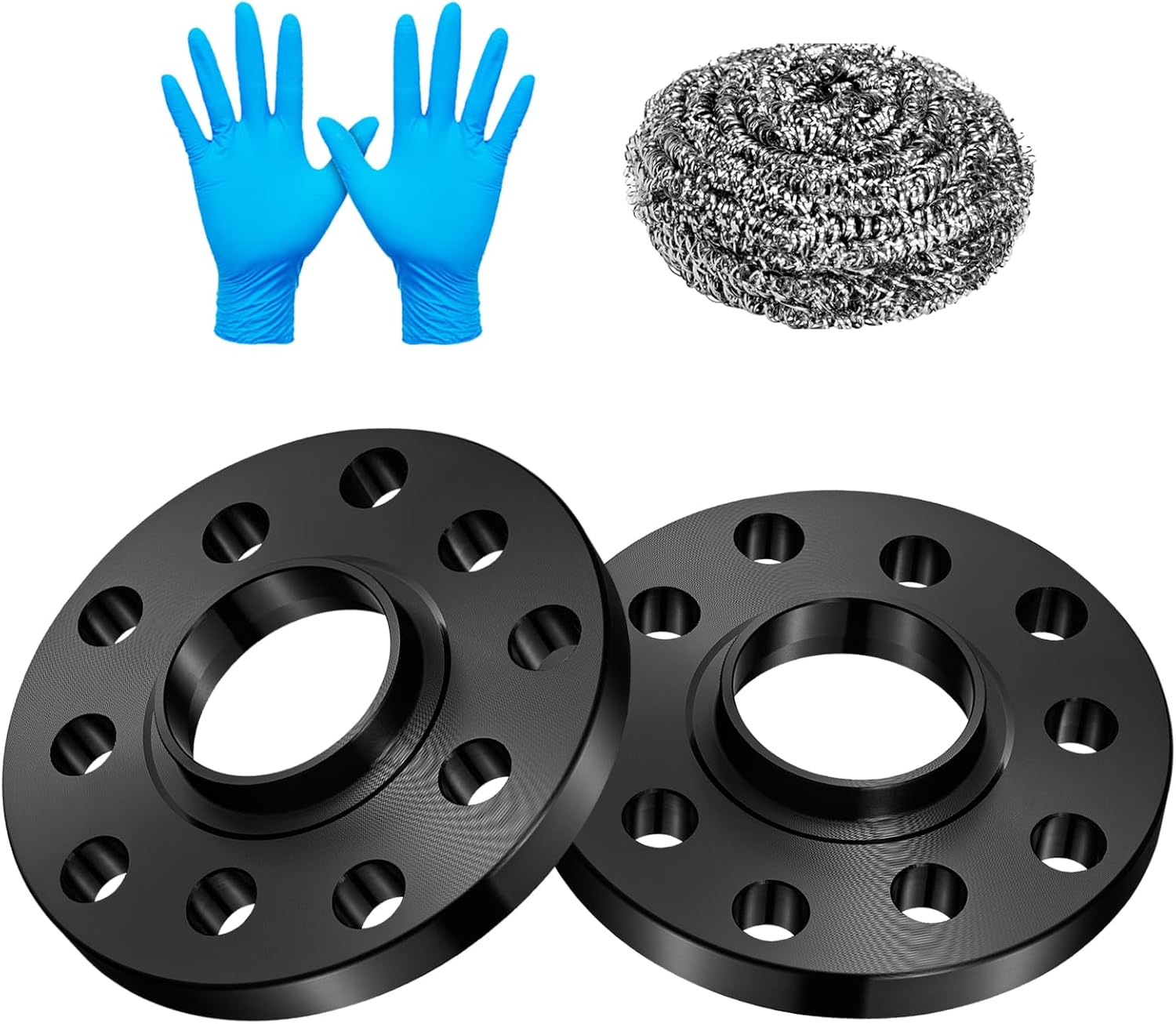
These SYKRSS wheel spacers are a simple bolt-on way to push wheels outward by 15mm using forged 6061 aluminum construction and hardened M14x1.5 studs. For a Volkswagen Atlas needing a 5×112 bolt pattern and a 57.1mm hub bore, they provide extra clearance for wider tires or brake/suspension upgrades and give the truck a wider stance that can improve stability on-road. Installation is typical for spacers: remove the wheel, fit the spacer to the hub, torque the studs to spec, then refit the wheel using the provided grade 10.9 bolts. The unfinished aluminum finish is functional but will patina if left exposed. These are sold as a two-piece set and include basic protective gloves and cleaning wire. Limitations are that the spacers are vehicle-specific in sizing so you must verify Atlas wheel hub diameter and bolt pattern before buying, and the basic finish means you may want to protect them against corrosion if you drive in salted or coastal conditions.
Best for: Convenience-driven Atlas owners who want an easy bolt-on solution to increase wheel clearance or achieve a wider stance without complex modifications.
Less Ideal for: Drivers planning heavy-duty off-road use or those wanting a finished, painted spacer should consider purpose-built alternatives with corrosion protection and full-axle coverage.
- Forged 6061 aluminum construction offers strong, lightweight support for the wheel offset
- Hardened M14x1.5, class 10.9 studs for secure wheel retention
- 15mm thickness gives modest track widening for improved stability without major geometry changes
- 57.1mm center bore and common 5×112 bolt pattern match many Volkswagen Atlas wheel hubs
- Unfinished aluminum surface may corrode or discolor over time without protective coating
- Sold as a 2-piece set which covers only one axle, requiring a second set for all four wheels
Verdict: A straightforward forged-aluminum 15mm spacer that fits common Volkswagen Atlas wheel hubs to provide a wider stance and easier clearance for modest upgrades.
7. KSP 20mm Hub-Centric Wheel Spacers (5×100 & 5×112) with M14x1.5 Lug Bolts, 57.1mm Bore, 2pcs

| Bolt patterns | 5×100 & 5×112 |
|---|---|
| Spacer thickness | 20mm |
| Material | 6061-T6 aluminum |
| Included hardware | 10 M14x1.5 extended lug bolts |
| Center bore | 57.1mm |
These 20mm KSP wheel spacers are designed to move wheels outward for improved stance and clearance while keeping a hub-centric fit to minimize vibration. They are CNC machined from 6061-T6 aluminum and anodized for corrosion resistance, and the kit includes extended M14x1.5 lug bolts sized for the thicker stack. Installation is straightforward for anyone comfortable removing wheels and torquing fasteners and the 57.1mm center bore ensures precise centering on compatible hubs. For a Volkswagen Atlas buyer focused on low risk, the machined hub bore and included longer bolts reduce common fitment uncertainty and many owners report no vibration after install. Limitations are that these spacers fit a specific hub bore and bolt patterns and will not work if your vehicle uses a different center bore or bolt size, and missing hardware has been reported rarely so verify the kit contents before installation. They are primarily an aesthetic and minor clearance upgrade rather than a suspension or handling overhaul.
Best for: Risk-averse mainstream buyers who want a conservative, low-risk visual and clearance upgrade and prioritize a precise, factory-like fit and minimal vibration after installation.
Less Ideal for: Drivers seeking major suspension or handling changes, owners whose Atlas hubs or bolt patterns do not match the specified bore and lug size, or buyers who want a plug-and-play solution without verifying hardware fitment.
- Hub-centric 57.1mm bore for accurate centering and reduced vibration risk
- CNC machined 6061-T6 aluminum construction balances strength and lightness
- Anodized finish and electrophoresis coated bolts resist corrosion
- Includes extended M14x1.5 lug bolts sized for the 20mm spacer thickness
- Fits only vehicles with a 57.1mm hub bore and the listed 5×100 or 5×112 bolt patterns
- Some customers reported missing lug bolts in individual shipments
Verdict: A precisely machined 20mm hub-centric spacer kit that gives a conservative fit-and-finish lift in stance while minimizing vibration risk for compatible vehicles.
Choosing the Right Volkswagen Atlas Wheel Spacers: Key Factors to Consider
Bolt Pattern and Hub-Centric Fit
Correct bolt pattern and precise hub-centric fit reduce the risk of wheel runout and vibration. A spacer must match the Atlas bolt pattern to maintain even load distribution across the hub and studs.
Poorly centered spacers can transfer loads unevenly, which may lead to premature wheel bearing wear or an unsettled steering feel. Choose spacers that specify hub-centric design and provide tolerances so you can confirm they seat flush against the hub face.
Material and Corrosion Resistance
Spacer material affects strength and long-term durability. Forged aluminum and billet steel offer different balances of weight and robustness; good corrosion-resistant finishes prevent galvanic corrosion between the spacer and hub or wheel.
Consider how often you drive in wet or salted conditions. A spacer with a protective coating or stainless hardware will last longer and reduce the likelihood of seizing, which matters when you need to remove or reinstall wheels for maintenance.
Spacer Thickness and Track Width Effects
Thickness determines how far the wheel moves outward, changing track width and fender clearance. Small thicknesses can correct minor clearance or fitment issues, while larger spacers dramatically alter stance and may require additional fender work.
Think about handling tradeoffs too: increasing track width can enhance cornering stability but may place extra stress on suspension components. Match thickness to your goals, whether clearance for aftermarket wheels or a specific stance look, and verify that the change does not create rubbing across the suspension travel.
Hardware Quality and Torque Requirements
Hardware quality is critical for safe clamping force. Spacers should include hardened studs or extended lug bolts where necessary, and the kit should state recommended torque values and thread engagement specs.
Under-torqued fasteners can loosen over time, while over-torquing can strip threads or damage studs. Select spacers that provide clear torque guidance and hardware made to automotive standards to reduce the chance of mechanical failure.
Brake and Suspension Clearance
Any spacer that moves the wheel outwards changes the relationship to brake calipers and suspension components. Ensure there is adequate clearance for caliper buckets, ABS sensors, and control arm movement across full steering lock and suspension travel.
Lack of clearance can cause contact under load, leading to brake noise, component damage, or unsafe steering inputs. Verify fitment with wheel and tire combinations you intend to use and consider mock-fit measurements where possible.
Installation Simplicity and Serviceability
Ease of installation affects whether you can safely fit and later remove spacers for service. Kits that allow simple inspection of hub seating and permit proper torque checks are preferable for routine maintenance.
Look for spacers compatible with common installation kits and that do not require permanent modifications. Serviceable designs minimize the risk of seized hardware and allow you to confirm torque retention during regular maintenance intervals.
How We Chose the Best Volkswagen Atlas Wheel Spacers
Our selection process focused on the specific demands of the Volkswagen Atlas platform and the functional requirements buyers most commonly cite. We prioritized hub-centric tolerance and bolt-pattern match to reduce the risk of runout and minimize vibration. Material and manufacturing quality were assessed by looking for forged or billet construction and corrosion-resistant finishes that hold up to road exposure. Thread engagement and hardware compatibility were considered to ensure safe clamping and the ability to achieve recommended torque specs. We also evaluated spacer thickness options and how they affect track width, clearance for brake components, and fender fitment. Installation practicality was weighed, including whether the spacer design supports use with common installation kits and straightforward torque procedures.We excluded any spacers that did not explicitly match the Volkswagen Atlas bolt pattern or that lacked clear hub-centric specifications. We also set aside options without adequate hardware or clear guidance on torque and installation, since unsafe or incomplete kits do not meet the standards for this roundup.
Our full evaluation process is outlined in our review methodology.
FAQ
Are wheel spacers safe to use on a Volkswagen Atlas?
Wheel spacers can be safe when they are properly matched to the Atlas bolt pattern and hub dimensions, use appropriate material and hardware, and are installed following specified torque procedures. Safety depends on correct fitment, adequate thread engagement, and using hub-centric designs when possible to minimize vibration. If uncertain, consult a qualified installer to verify clearances and torque.
How do I know what spacer thickness I need?
Determine the amount of additional clearance or track width you want, and measure the current rubbing or offset issue with the wheel and tire installed. Start with smaller thicknesses to correct minor issues and account for brake and suspension clearance at full travel. Keep in mind that larger spacers have greater impact on handling and may need additional checks for fender clearance.
Do hub-centric spacers matter compared with lug-centric spacers?
Hub-centric spacers help center the wheel on the hub, which often reduces runout and vibration. Lug-centric designs rely on the lug nuts to center the assembly, which can be adequate if tolerances are tight but may be more prone to slight misalignment. Choosing hub-centric spacers is usually preferable when available for the Volkswagen Atlas to support smoother operation.
Will spacers cause vibration or steering issues?
Spacers do not inherently cause vibration if they fit correctly and are installed with proper torque and hub fit. Vibration is more likely when spacers are not hub-centric, have poor tolerances, or lack full contact with the hub. Ensuring correct fitment, balanced wheels, and the recommended torque can minimize the risk of vibration.
What torque specifications should I follow when installing spacers?
Follow the vehicle and spacer manufacturer's recommended torque values and thread engagement guidance. Proper torque ensures the spacer stays clamped without overstressing studs or threads. If torque guidance is unclear, consult a professional installer or refer to factory wheel torque specs adjusted as needed for spacer hardware length.
Can I install wheel spacers myself or should I use a professional?
If you have experience with wheel removal, torque procedures, and can verify fitment and clearances, you may install spacers yourself. However, because correct hub seating, torque, and clearance checks are critical, many owners prefer a professional installation to ensure safe long-term use and to avoid potential issues like vibration or hardware seizure.
Conclusion
Choosing Volkswagen Atlas wheel spacers is a balance between achieving the desired clearance or stance and maintaining safe fitment and handling. Prioritize bolt-pattern accuracy, hub-centric seating, and quality hardware when making your selection. Consider how spacer thickness affects track width and component clearance, and follow recommended torque and service practices to reduce the risk of vibration or mechanical issues.When in doubt, opt for spacers with clear specifications and good corrosion protection, and have fitment confirmed by a qualified technician so you can enjoy the intended handling and aesthetic benefits without compromise.
Explore More:
- Check out all Volkswagen Atlas parts & accessories
- Explore Wheel Spacers Maintenance & Repair Guides
- Explore Wheels & Tires
- Browse all Auto Parts
