

Note: This article contains affiliate links. If you click on these links and make a purchase, I may earn a small commission at no extra cost to you. This helps support my research and content. Read my full affiliate disclosure here.
If your Hyundai Tucson is showing performance loss, poor emissions readings, or an illuminated check engine light, a faulty catalytic converter can be the culprit. Choosing the right replacement matters because the wrong unit can cause fit issues, trigger diagnostics, or fail prematurely. This guide presents seven shortlisted catalytic converters chosen for their suitability to Hyundai Tucson applications. We evaluated each option on material construction and fitment accuracy, plus durability and emissions performance. Read on to compare the top picks and find the right unit for restoring proper exhaust function.
Looking for other parts? See all Hyundai Tucson parts & accessories.
Top Picks at a Glance
| Best Reviewed A top-rated pick with lots of positive feedback | A-Premium Catalytic Converter Kit for Hyundai Tucson L4 2.0L (2005–2008), EPA Compliant |  |
| Most Popular A crowd favorite that many people choose with confidence | Walker Ultra Direct-Fit Catalytic Converter for Hyundai Tucson |  |
| Best Quality Built to a higher standard if you want something more solid | Walker Ultra EPA Direct-Fit Catalytic Converter with Integrated Exhaust Manifold for Hyundai Tucson |  |
| Best Budget The cheapest option that still gets the job done reliably | FortunaFlow Catalytic Converter Compatible with Hyundai Tucson 2005–2009 2.7L (Rear) |  |
| Most Sold A high-volume bestseller chosen again and again | A-Premium Rear Catalytic Converter with Gasket Kit |  |
| Best Value for Money The sweet spot between price and what you get | Sechune Direct-Fit Catalytic Converter for Hyundai Tucson 2010–2015 (2.4L) |  |
| Best Overall The best all-around choice for most situations | PTPDRH Catalytic Converter — Direct-Fit for 2010–2013 Hyundai Tucson 2.4L |  |
1. A-Premium Catalytic Converter Kit for Hyundai Tucson L4 2.0L (2005–2008), EPA Compliant

| Vehicle Fitment | Hyundai Tucson 2005-2008 L4 2.0L |
|---|---|
| EPA Compliance | Yes (federal emissions) |
| Inlet Type | 2 Bolt Welded Flange |
| Gaskets & Hardware | Included |
| Body Material | Stainless Steel |
This A-Premium catalytic converter kit is a direct-fit replacement for the Hyundai Tucson with the 2.0L inline-four engine (2005–2008). It installs using 2-bolt welded flanges and arrives with gaskets and bolts, which simplifies a routine exhaust repair or a converter swap during emissions troubleshooting. The unit is stainless steel and labeled EPA compliant for federal emissions, so it is intended as a legal replacement outside states with stricter regulations. The included hardware and factory-style flange connections make it suitable for a bolt-on installation by a competent DIYer or a standard exhaust shop. Limitations to note are the state restrictions for California, Colorado, New York, and Maine where this specific EPA listing cannot be sold or used, and buyers should confirm their vehicle's emission label before ordering. A-Premium provides a one-year unlimited-mileage guarantee, which gives extra assurance for a reliability-focused buyer replacing a worn or failed converter on a Tucson.
Best for: Reliability-focused owners who prioritize a factory-style, straightforward replacement to restore emissions performance and avoid repeat trips to the shop.
Less Ideal for: Drivers in states with stricter aftermarket converter rules or those who need a CARB-compliant unit should look for region-legal alternatives.
- Direct-fit design with 2-bolt welded flanges for straightforward installation on Tucson 2.0L engines
- Ships with gaskets and bolts so no separate hardware purchase is required
- Stainless steel construction resists corrosion compared with mild-steel aftermarket units
- EPA-compliant for federal emissions, suitable for use where federal converters are accepted
- Cannot be sold or installed in California, Colorado, New York, and Maine due to state emissions laws
Verdict A practical, stainless-steel direct-fit replacement for 2005–2008 Hyundai Tucson 2.0L owners who need a reliable, bolt-on EPA-compliant catalytic converter outside CARB states.
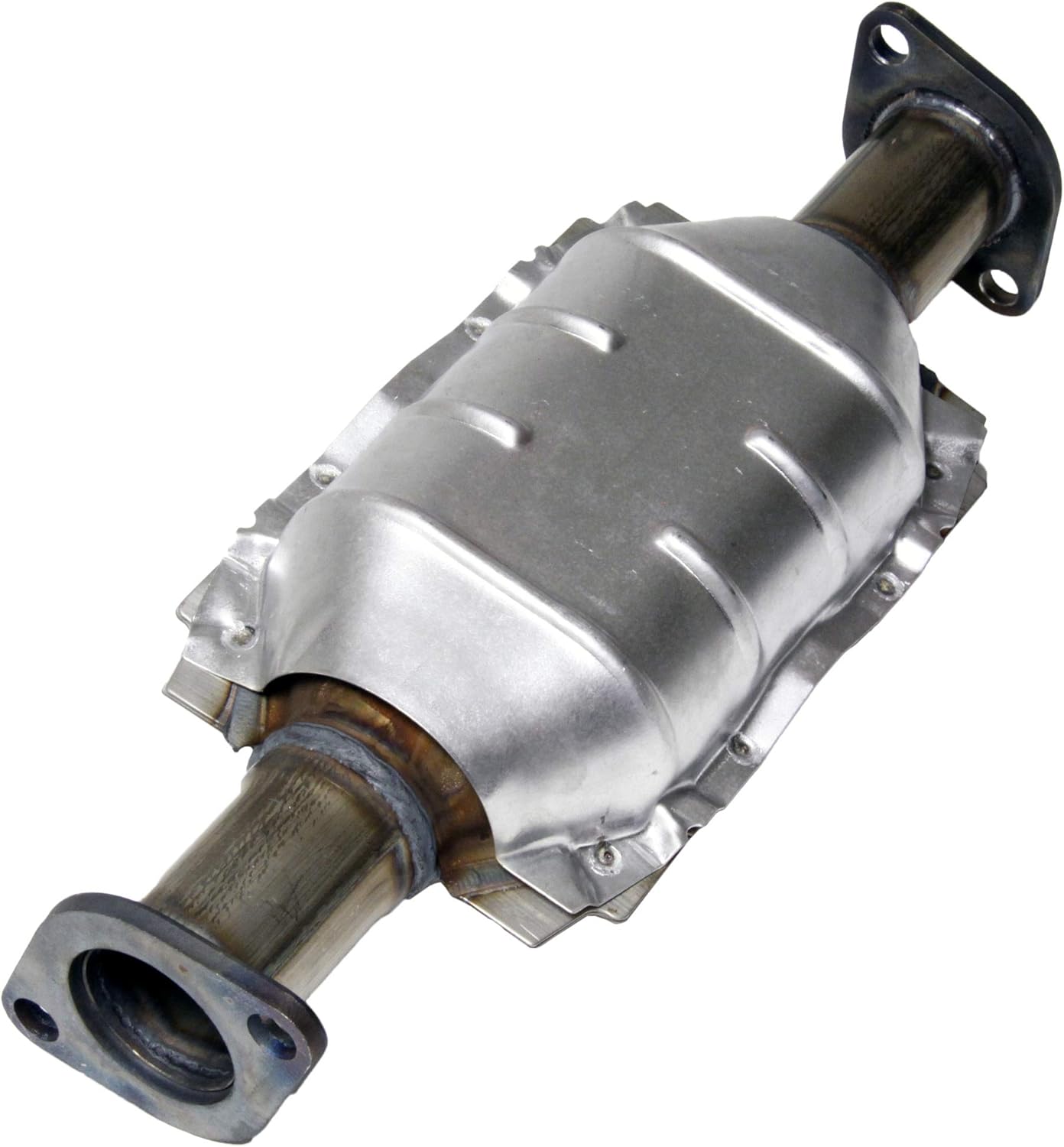
2. Walker Ultra Direct-Fit Catalytic Converter for Hyundai Tucson
| Compatible with Vehicle Type | Car |
|---|---|
| OEM Equivalent Part Number | 16455 |
| Automotive Fit Type | Vehicle Specific Fit |
| Material Type | Metal |
This Walker Ultra is a direct-fit catalytic converter intended as a bolt-on replacement for compatible Hyundai Tucson models. It installs using OE-style hangers, flanges and heat shields so a mechanic can swap it in without cutting or welding. The unit is built to meet EPA compliance for OBDII vehicles and uses Walker's washcoat and precious-metal loading to reduce tailpipe emissions to the levels required for the listed vehicle applications. Practical benefits include a factory-style fit that simplifies installation, reinforced flanges and brackets for durability, and aluminized heat shielding where originally equipped to protect the undercarriage. Limitations to keep in mind: fitment depends on matching the exact year, engine and drive type for the Tucson and some buyers report fitment differences with earlier converters or nonstandard undercarriage configurations, and state aftermarket regulations may restrict use in certain states. Professional installation is recommended to ensure correct fit and compliance.
Best for: Buyers focused on convenience who want a near-factory replacement that minimizes shop time and avoids custom exhaust work on a Hyundai Tucson.
Less Ideal for: Drivers seeking a low-cost universal or high-performance aftermarket converter, or those in states that prohibit this type of aftermarket unit should consider alternatives.
- Direct-fit bolt-on design with OE-style hangers and flanges for straightforward installation
- Engineered to meet EPA compliance for OBDII vehicles so it restores emissions control function
- Aluminized heat shields included where originally equipped to protect vehicle undercarriage
- Robust flanges, hangers and brackets for improved durability during service life
- Fitment requires exact match of year, engine and drive type and may not suit vehicles with previous aftermarket modifications
- Not legal for sale or use in some states that restrict aftermarket converters
Verdict A convenient, factory-style replacement for Hyundai Tucson owners who need a compliant direct-fit catalytic converter without fabrication.
3. Walker Ultra EPA Direct-Fit Catalytic Converter with Integrated Exhaust Manifold for Hyundai Tucson

| Manufacturer | Walker Exhaust |
|---|---|
| Item model number | 16598 |
| Compatibility note | Fits Hyundai Tucson model years listed in product description |
| EPA compliance | Designed to meet EPA emissions requirements for OBDII vehicles |
This Walker Ultra catalytic converter is a direct-fit manifold assembly designed specifically for Hyundai Tucson applications and for OBDII vehicles 1996 and newer. It replaces the factory manifold/converter assembly using bolt-on connections so installation follows the original attachment points and downstream interfaces. The unit is engineered with a factory-style washcoat and precious metal load to meet EPA emissions requirements and restore proper catalytic function, while thick flanges and machined manifolds improve durability under normal driving and spirited use. It also includes the same style heat shielding found on factory parts to protect the undercarriage from converter heat. The practical benefit for performance-minded owners is predictable emissions control and exhaust flow consistent with factory expectations, which supports engine management and keeps check-engine triggers related to catalyst efficiency at bay. Limitations are that fitment is limited to specified Tucson model years and some states have additional regulations for aftermarket converters, so verify local rules before purchase.
Best for: Performance-oriented owners seeking a high-quality, factory-style replacement that preserves emissions compliance and exhaust behavior for a Hyundai Tucson.
Less Ideal for: Buyers who need a universal or multi-vehicle solution or who live in states with restrictive aftermarket catalyst laws should look for alternatives or verified local-compliant options.
- Direct-fit integrated manifold matches factory mounting points for straightforward replacement
- EPA-compliant design with factory-style washcoat and precious metal load for expected emissions control
- Thick flanges and machined manifolds increase structural durability under heat and vibration
- Includes factory-style heat shielding to protect undercarriage components from converter heat
- Compatibility limited to specific Hyundai Tucson model years so you must confirm exact fit
- Aftermarket converter regulations vary by state and may restrict use in some areas
Verdict A factory-style, EPA-compliant direct-fit catalytic converter for Hyundai Tucson owners who want reliable emissions performance with a durable integrated manifold.
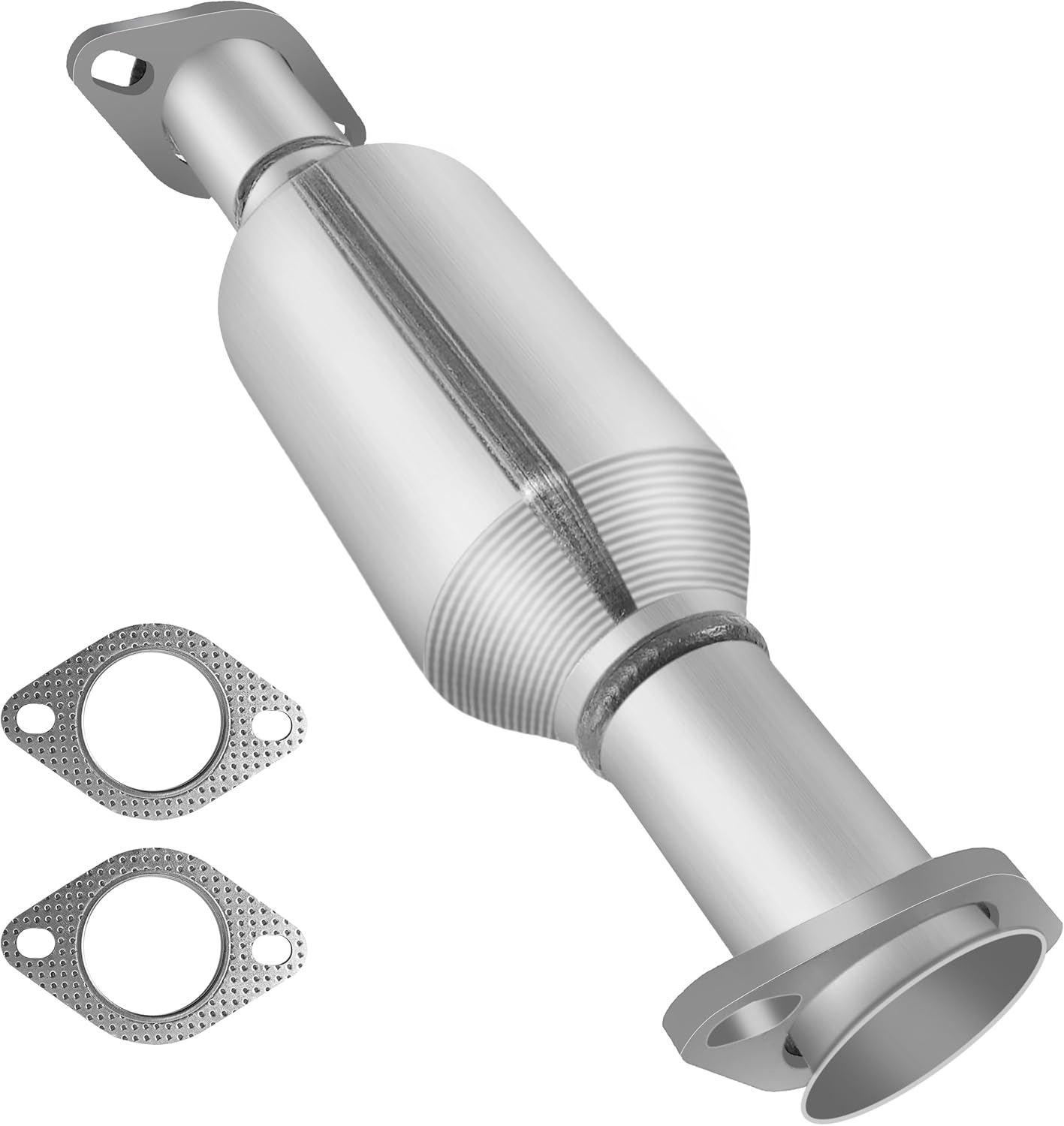
4. FortunaFlow Catalytic Converter Compatible with Hyundai Tucson 2005–2009 2.7L (Rear)
| Manufacturer | FortunaFlow |
|---|---|
| Model | HTR052.7 |
| Fitment | Hyundai Tucson 2005-2009 2.7L (rear) |
| Core structure | 400 CPI multi-porous |
This FortunaFlow catalytic converter is a budget-focused, direct-fit replacement for the rear position on 2005–2009 Hyundai Tucson 2.7L vehicles. It installs using the factory-style flange and includes gaskets and hardware to simplify bolt-on replacement without extensive modifications. The unit uses a high-flow 400 CPI multi-porous core intended to improve exhaust flow and reduce backpressure compared with heavily clogged originals, while stainless steel construction and CNC MIG welding aim to resist heat and deformation over time. In practical use it can clear P0420/P0430 codes and help vehicles pass OBD-II checks when the old converter is failing. Limitations include the product not being legal for sale in some states with strict emissions rules, and it is an aftermarket part rather than a factory-certified emissions unit, so it may not meet specific state emissions certification requirements.
Best for: Budget-conscious Tucson owners seeking a low-cost, bolt-on rear converter to restore running condition and clear emissions-related trouble codes without extensive exhaust work.
Less Ideal for: Drivers in states that require certified emissions parts or buyers who need a guaranteed state-compliant replacement should consider factory-quality or CARB-compliant options instead.
- Direct-fit flange and included gaskets/hardware for straightforward installation
- High-flow 400 CPI core designed to reduce backpressure and improve exhaust flow
- Stainless steel construction with CNC MIG welding for improved heat resistance and durability
- Said to resolve P0420/P0430 codes and stabilize OBD-II emissions readiness
- Not legal for sale or installation in several states with strict emissions regulations
- Aftermarket unit not certified as a factory-quality emissions replacement for all compliance programs
Verdict A cost-effective direct-fit rear catalytic converter for 2005–2009 Hyundai Tucson 2.7L owners who need a practical repair but do not require state-certified emissions compliance.
5. A-Premium Rear Catalytic Converter with Gasket Kit

| Vehicle Emissions Specifications | Federal Emissions |
|---|---|
| Position | Rear Side |
| Body Material | Stainless Steel |
| Inlet Type | 1 Bolt Fixed Flange |
| Mounting Hardware Included | Yes |
This A-Premium rear catalytic converter is a direct-fit replacement intended for Hyundai 2.0L vehicles and comes with the necessary gasket and mounting hardware for installation. It mounts on the rear side of the exhaust, uses a one-bolt fixed flange inlet and slip-fit outlet, and is constructed from stainless steel for corrosion resistance. Typical use is straightforward replacement of a failed or clogged rear converter to restore emissions control and clear check-engine codes. Practical benefits include EPA compliance for federal emissions, included hardware to simplify installation, and a one-year unlimited-mileage guarantee for peace of mind. Limitations to note are restricted-state sale rules that may prevent legal installation in states with stricter aftermarket converter regulations and the part is specified for rear-side fitment only, so it will not replace front/center converters. Buyers should also confirm the reference numbers match their vehicle before purchasing to ensure fitment.
Best for: Risk-averse mainstream buyers who prioritize restoring factory-quality emissions performance with a ready-to-install replacement and minimal installation guesswork.
Less Ideal for: Shoppers in states with strict aftermarket converter laws or anyone needing a front or center catalytic converter should look for an alternative that explicitly fits those positions or local regulations.
- Direct-fit rear replacement built for Hyundai 2.0L applications so installation is typically bolt-in
- Includes gasket and mounting hardware to reduce additional parts purchases
- Stainless steel body improves corrosion resistance compared with cheaper materials
- EPA-compliant for federal emissions and sold with a one-year unlimited-mileage guarantee
- Not legal for sale or installation in certain restricted states under specific conditions
- Designed only for rear-side fitment and will not substitute for front or center converters
Verdict A practical, ready-to-install rear catalytic converter replacement for Hyundai 2.0L models that restores emissions function but may be restricted in some states.
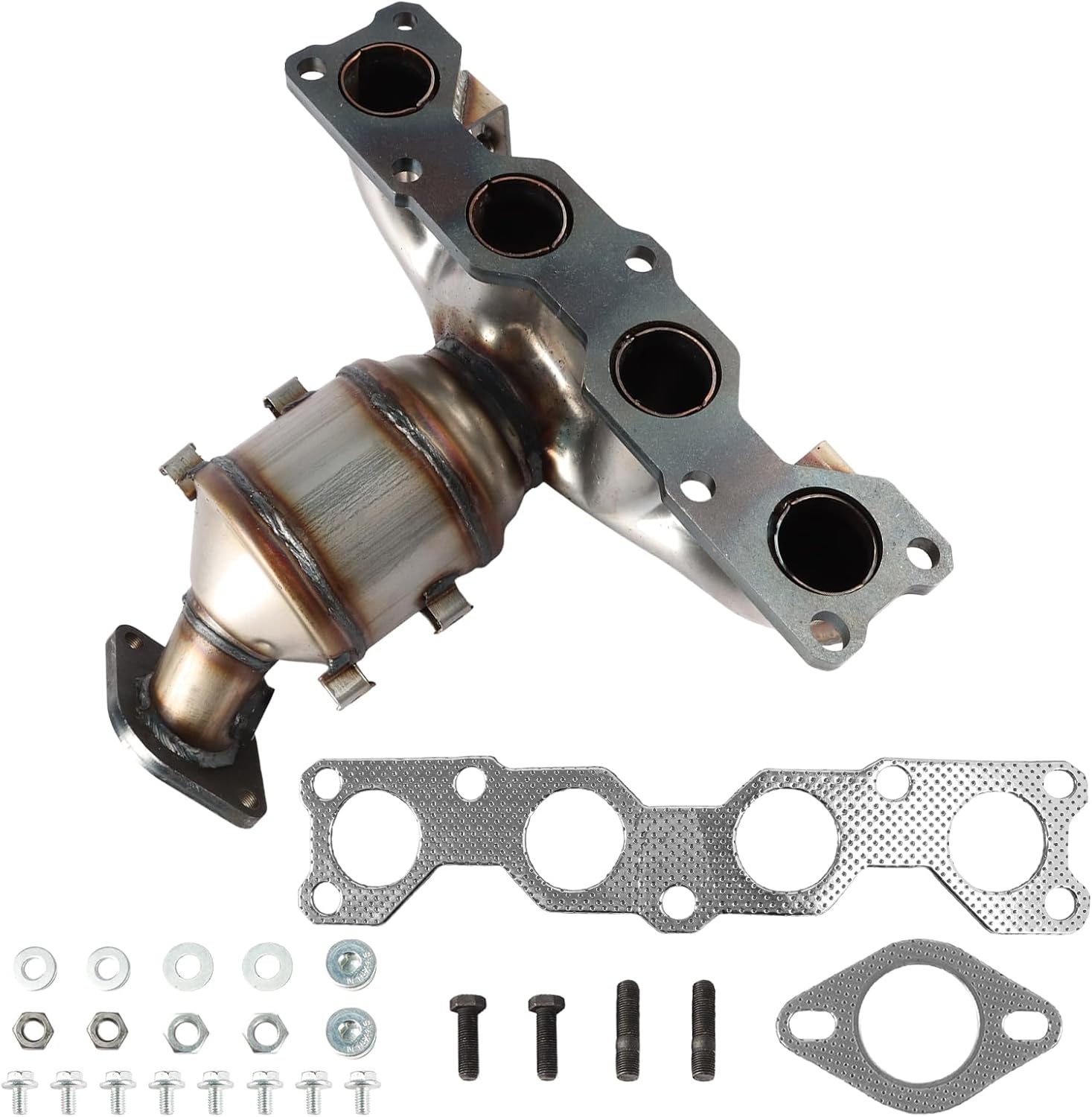
6. Sechune Direct-Fit Catalytic Converter for Hyundai Tucson 2010–2015 (2.4L)
| Vehicle fitment | Hyundai Tucson 2010-2015 2.4L L4 |
|---|---|
| EPA compliance | EPA compliant |
| Exterior | Stainless Steel |
| OEM part numbers | 16788 & 55698 |
This Sechune catalytic converter is a direct-fit replacement for Hyundai Tucson 2010–2015 models with the 2.4L inline-4. It installs using factory-style mounting points so a professional or experienced DIY mechanic can swap it in place of the original unit. The converter is built from stainless-steel exterior components and an extended catalyst chamber intended to improve conversion efficiency while keeping the engine performance and fuel economy close to factory levels. It is sold as an EPA-compliant unit, which means it is suitable for use in most U.S. states but not in states that require CARB-compliant parts. Hardware like gaskets and mounting nuts is included for the lower connection, simplifying installation. The main limitations are regulatory: it cannot be used in California and other CARB-only states, and you should confirm fitment against your vehicle’s emission label before purchase. For a budget-minded replacement that aims to mirror factory fit and function, this unit offers a practical solution.
Best for: Practical optimizers who want a low-cost, factory-style replacement that restores emissions function and drivability without unnecessary upgrades.
Less Ideal for: Buyers in California or other CARB-mandated states or anyone who needs a CARB-compliant converter; those customers should seek a certified alternative.
- Direct-fit design with factory-style mounting points for straightforward replacement
- Stainless-steel exterior and extended catalyst chamber for improved durability and conversion efficiency
- Includes gasket seals and mounting nuts for the lower connection to simplify installation
- Engineered to maintain performance and fuel efficiency close to factory levels
- Not CARB compliant so it cannot be legally sold or installed in CARB-only states
- Does not include broad state compliance guidance so buyers must verify local regulations before purchase
Verdict A budget-friendly, direct-fit replacement that restores emissions control and factory-style fit for Tucson 2.4L owners, provided your state accepts EPA-compliant aftermarket converters.
7. PTPDRH Catalytic Converter — Direct-Fit for 2010–2013 Hyundai Tucson 2.4L

| Compatibility | 2010–2013 Hyundai Tucson 2.4L |
|---|---|
| Exterior | Stainless Steel |
| EPA Compliance | Certified for U.S. federal emissions |
| Installation | Direct fit, bolt-on replacement |
This PTPDRH catalytic converter replaces the factory unit on 2010–2013 Hyundai Tucson 2.4L models and is offered as a drop-in, bolt-on replacement that requires no programming. It uses a three-way catalytic design to reduce hydrocarbons, CO, and NOx and is built with stainless-steel housings and ceramic internal substrates for thermal durability. Typical use is as a like-for-like emissions repair after a failed converter or when passing an emissions test; installation is straightforward for a professional shop or a competent DIYer with standard exhaust tools. The unit is EPA compliant for federal markets, which helps ensure legal operation outside states that require additional certifications. Practical benefits include OEM-style fitment and materials aimed at resisting corrosion and high exhaust temperatures. Limitations are that it is not approved for sale in California, Oregon, Vermont, or Washington and buyers should confirm exact fit with vehicle year, engine, and trim before purchase because state regulations and minor fit differences can affect legal suitability.
Best for: A balanced all-round buyer looking for a reliable, factory-quality replacement to restore emissions performance and pass federal inspections on a 2010–2013 Hyundai Tucson 2.4L.
Less Ideal for: Drivers who must meet strict state-specific emissions programs or who require parts pre-approved for California and other restricted states should consider alternatives that carry those certifications.
- Direct-fit design for Hyundai Tucson 2.4L for straightforward bolt-on replacement.
- Constructed with stainless-steel exterior and ceramic substrate for improved heat and corrosion resistance.
- EPA certified for federal emissions compliance.
- No calibration or programming required after installation, simplifying repairs.
- Not approved for sale in California, Washington, Vermont, or Oregon which limits legal use in those states.
- Product listing does not include detailed pipe diameter or full installation hardware information, so installers should verify fitment specifics.
Verdict A practical, EPA-certified direct-fit catalytic converter for 2010–2013 Hyundai Tucson 2.4L owners who want a reliable factory-style replacement outside of states with stricter certifications.
Choosing the Right Hyundai Tucson Catalytic Converter: Key Factors to Consider
Fitment and Compatibility
Correct fitment ensures the converter mounts cleanly to the existing exhaust and aligns with oxygen sensor ports. If flange locations, pipe diameters, or sensor bung placements do not match, installation may require cutting, welding, or adapters that introduce leak and alignment risks.
Choosing a unit designed for the Tucson reduces the chance of exhaust leaks, rattles, or stress on adjacent components. Verify the converter matches your vehicle year and engine configuration to avoid unnecessary modifications.
Substrate Type and Cell Density
The internal substrate—ceramic or metallic—affects how the converter handles heat and vibrations. Ceramic substrates often provide good conversion efficiency but can be more brittle under severe impact, while metallic substrates tolerate rapid thermal changes and mechanical stress better.
Cell density, expressed in cells per square inch, influences flow restriction and conversion surface area. Higher cell density increases catalyst surface but can raise backpressure, so choose a balance suited to your engine’s flow characteristics.
Catalyst Coating and Precious Metal Load
The catalytic coating contains precious metals such as platinum, palladium, and rhodium, which drive the chemical reactions that reduce pollutants. A higher or better-distributed precious metal load typically improves conversion efficiency and longevity, especially under heavy-duty or high-mileage use.
Consider coatings optimized for the Tucson’s emissions profile to help maintain low tailpipe hydrocarbons, carbon monoxide, and NOx levels over time.
Durability and Thermal Resistance
Catalytic converters must withstand repeated high-temperature cycles and exposure to condensation or contaminants from the engine and fuel. Materials and construction that resist thermal cracking, substrate erosion, and washcoat loss will extend service life.
Look for designs that account for heat shielding, robust welds, and protections against road debris to reduce the risk of premature failure.
Oxygen Sensor Provision and Diagnostics
Modern vehicles rely on upstream and downstream oxygen sensors to monitor converter performance. A replacement unit should provide correct sensor bung locations and maintain proper sensor spacing to avoid misleading readings or diagnostic trouble codes.
Accurate sensor placement helps prevent the check engine light from staying on due to measurement discrepancies and supports proper closed-loop fuel control.
Installation Complexity and Serviceability
Some converters are direct bolt-on replacements, while others may require welding or additional hardware. Ease of installation affects labor time and the likelihood of installation errors that can lead to leaks or stress fractures.
Assess whether the unit includes necessary gaskets, hangers, and flanges, and consider how often future access for inspection or replacement might be needed when choosing a design.
FAQ
What are common catalytic converter symptoms on a Hyundai Tucson?
Common signs include a persistent check engine light, reduced engine power, rough idling, or an increase in fuel consumption. You might also notice a sulfur or rotten-egg smell from the exhaust. These symptoms often indicate reduced conversion efficiency or partial blockage.
Will a failing catalytic converter trigger the check engine light?
Yes, a failing converter often causes the check engine light to illuminate when oxygen sensor readings suggest poor conversion efficiency. Diagnostic trouble codes related to catalyst efficiency or oxygen sensor discrepancies usually point toward the converter as a potential cause.
Can I replace the catalytic converter myself on a Hyundai Tucson?
DIY replacement is possible if you have the proper tools and experience with exhaust work, including safely lifting the vehicle and making secure flange or weld connections. However, sensor alignment and leak-free installation are critical, so many owners prefer professional installation to ensure proper fitment and diagnostics.
How long should a catalytic converter last?
A well-made converter typically lasts many years under normal driving conditions, but life expectancy depends on factors such as driving habits, engine maintenance, fuel quality, and exposure to contaminants. Regular maintenance that prevents unburned fuel and oil from entering the exhaust can prolong service life.
Will replacing the catalytic converter fix emissions test failures?
Replacing a degraded converter can resolve emissions test failures when the converter was the primary cause. It is important to ensure the replacement unit is correctly fitted and that any underlying engine issues that cause excess emissions are also addressed to avoid repeat failures.
How We Chose the Best Hyundai Tucson Catalytic Converter
We focused on units specifically designed to match Hyundai Tucson exhaust geometry and emissions requirements. Our selection criteria emphasized material construction, including ceramic substrate quality or metallic monolith options, and the catalytic coating formulation that affects longevity and conversion efficiency. Fitment accuracy and mounting compatibility were central, so we prioritized parts that align with factory flange locations and oxygen sensor ports. Durability under thermal cycling and resistance to clogging from contaminants were also weighted, along with manufacturer quality controls and warranty support. We excluded universal or generic converters that require extensive modification, salvage or visibly damaged cores, and parts without clear fitment data for the Tucson. The final shortlist reflects parts that balance reliable emissions control, easy installation, and expected service life for Hyundai Tucson owners.
Our full evaluation process is outlined in our review methodology.
Conclusion
When selecting a catalytic converter for a Hyundai Tucson, prioritize correct fitment and a substrate and coating that match your driving conditions. Tradeoffs include choosing between higher precious metal load for longer-lasting conversion and substrate types that balance thermal resilience with flow characteristics.Focus on units that provide proper oxygen sensor provision and durable construction to minimize installation issues and future diagnostics. Address any engine or fuel-system problems before fitting a new converter to protect your investment and ensure stable emissions performance.
Explore More:
- Check out all Hyundai Tucson parts & accessories
- Explore Catalytic Converters Maintenance & Repair Guides
- Explore Exhaust & Emissions
- Browse all Auto Parts
