

Note: This article contains affiliate links. If you click on these links and make a purchase, I may earn a small commission at no extra cost to you. This helps support my research and content. Read my full affiliate disclosure here.
If your Hyundai Accent has uneven fan speeds, intermittent blower operation, or weak airflow, a faulty blower motor resistor is a common cause. Choosing the right replacement matters because fitment, durability, and electrical reliability directly affect cabin comfort and HVAC performance.This guide covers six shortlisted blower motor resistors chosen for their relevance to the Hyundai Accent. We evaluated options based on fitment accuracy and long-term reliability to help you identify units that address common blower resistor failures. Read on to see the factors we considered and practical tips for installation and troubleshooting.
Looking for other parts? See all Hyundai Accent parts & accessories.
Top Picks at a Glance
| Best overall The best all-around choice for most situations | ACROPIX HVAC Blower Motor Resistor for Hyundai Accent |  |
| Best quality Built to a higher standard if you want something more solid | Genuine HVAC Blower Motor Resistor for Hyundai Accent (fits 2006–2011) |  |
| Best Value The sweet spot between price and what you get | POHILA Blower Motor Fan Resistor Compatible with 2012–2017 Hyundai Accent and 2012–2016 Veloster |  |
| Best budget The cheapest option that still gets the job done reliably | ACROPIX Blower Motor Resistor Module for Hyundai Accent |  |
| Highest Rated A top-rated pick with lots of positive feedback | STETIG Manual Blower Motor Resistor for Hyundai Accent & Veloster |  |
| Best Seller A high-volume bestseller chosen again and again | A-Premium Front HVAC Blower Motor Resistor for Hyundai Accent and Select Hyundai/Kia Models |  |
1. ACROPIX HVAC Blower Motor Resistor for Hyundai Accent

| Position | Inner |
|---|---|
| Brand | ACROPIX |
| Manufacturer | ACROPIX |
This ACROPIX blower motor resistor replaces the factory unit to restore full fan-speed control in compatible Hyundai Accent models. It is intended as a simple replacement part that installs in the HVAC housing where the original resistor lives; most buyers report a two-screw swap and a single electrical plug connection. The listing notes fitment for multiple Hyundai Accent years and trims, and the part is presented as factory-spec replacement with straightforward installation. Practical benefits include returning intermittent or high-only fan operation back to normal and saving the cost of a dealer repair. Limitations are typical for aftermarket resistors: lifespan can vary by climate and use, and a failing blower motor rather than the resistor will not be fixed by this part. If you are not comfortable with basic under-dash work, a professional installation is recommended to avoid connector or mounting errors.
Best for: Balanced buyers who want a practical, cost-effective repair to restore HVAC fan speeds on a Hyundai Accent without paying dealer labor and who are comfortable with basic under-dash replacement or can arrange modest shop time.
Less Ideal for: Owners seeking a long-term guaranteed factory part or those whose HVAC problems are electrical or motor failures rather than a resistor should look elsewhere.
- Direct-fit replacement for Hyundai Accent blower resistor applications
- Simple install requiring removal of two screws and one electrical plug
- Restores full fan-speed control when the resistor is the cause of the issue
- Marketed to meet OEM specifications and quality inspections
- Aftermarket longevity can vary compared with factory parts
- Will not resolve issues caused by a failing blower motor or electrical faults
Verdict: A practical, direct-fit resistor that restores blower speed control on Hyundai Accent models at a lower cost than dealer repair, with typical aftermarket durability considerations.
2. Genuine HVAC Blower Motor Resistor for Hyundai Accent (fits 2006–2011)
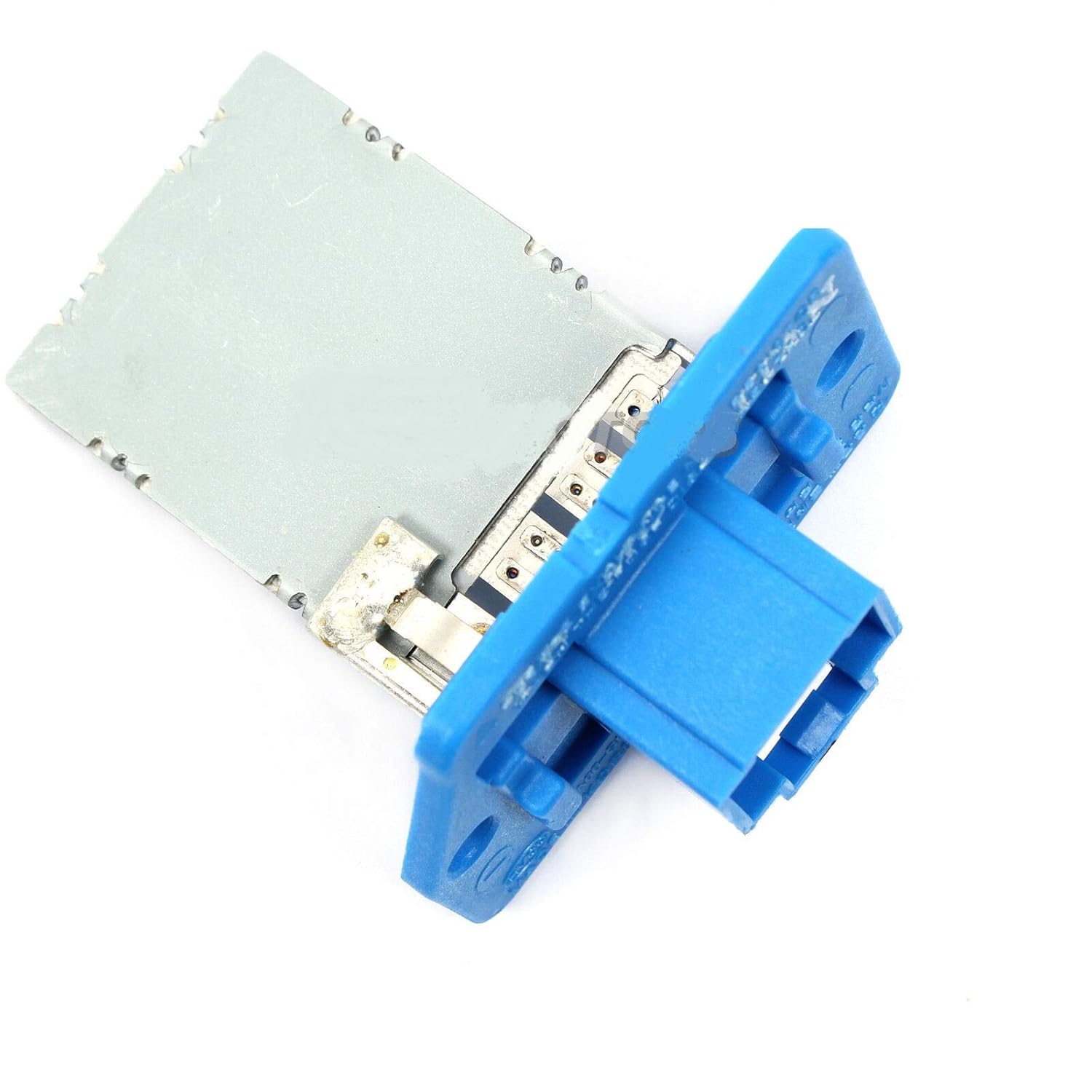
| Voltage | 16 Volts |
|---|
This blower motor resistor replaces the factory part that controls blower fan speeds in the HVAC system of 2006–2011 Hyundai Accent models. It is installed in the HVAC housing and used whenever fan speed selection is inconsistent or the blower works on a single speed. The part lists as a genuine-style replacement and runs at the stated 16 volt rating, which supports typical vehicle electrical systems and should match factory electrical behavior. Practical benefits include straightforward fitment for the specified Accent model range and a simple swap that can immediately restore multiple fan speeds without needing a new blower motor. Limitations are that the listing provides minimal technical detail beyond voltage and does not include explicit installation hardware or instructions, and compatibility is limited to the stated model years. Buyers seeking documented OEM traceability or extended coverage may want a seller-backed substitute or dealer part instead.
Best for: Performance-oriented buyers who prioritize restoring factory HVAC fan control quickly and reliably on a Hyundai Accent to regain precise speed selection during daily driving or spirited use.
Less Ideal for: Drivers who want dealer-certified parts, full manufacturer traceability, or those needing coverage across multiple vehicle models should consider alternative sources.
- Designed to replace the factory blower motor resistor for 2006–2011 Hyundai Accent, restoring multi-speed fan control
- Matches vehicle electrical system with a 16 Volt rating stated in specs
- Simple direct-replacement design that typically requires only basic hand tools for installation
- Listing lacks detailed installation instructions and does not specify included mounting hardware
- Limited documentation on manufacturer or OEM traceability
Verdict: A straightforward, performance-focused replacement resistor to restore proper fan speed control on 2006–2011 Hyundai Accent models, but with limited manufacturer documentation.
3. POHILA Blower Motor Fan Resistor Compatible with 2012–2017 Hyundai Accent and 2012–2016 Veloster

| Brand Name | POHILA |
|---|---|
| Model | RECM00022YX |
| Included Components | Blower Motor Fan Resistor |
This blower motor fan resistor replaces the factory unit on 2012–2017 Hyundai Accent and 2012–2016 Veloster models to restore full manual control of the HVAC fan speeds. Installation is straightforward: remove the blower motor access screws, swap the resistor assembly, and refit. The part references common factory numbers so it aligns with the original fitment and wiring, and the seller emphasizes heat and impact resistance for durability. In everyday use it returns lost speed settings and prevents the blower from being stuck on a single speed, which is the primary symptom owners encounter. The practical benefit is a low-cost, fast repair that avoids replacing the entire blower motor. Limitations are that this is a single-purpose replacement component so it will not address failures in the blower motor itself or unrelated HVAC electrical problems, and long-term durability depends on the vehicle environment and installation quality.
Best for: A practical optimizer looking for an affordable, no-frills repair to restore HVAC fan-speed control on a compatible Hyundai Accent or Veloster rather than replacing the entire blower assembly.
Less Ideal for: Drivers experiencing intermittent electrical issues beyond the resistor or those who prefer replacing the entire blower motor assembly for a comprehensive repair should consider other options.
- Direct-fit replacement for specified Hyundai Accent and Veloster years for straightforward swap-in repair
- References common factory part numbers for easier verification of compatibility
- Restores manual fan-speed control without replacing the entire blower motor
- Compact, single-component fix that reduces labor time and cost compared with larger HVAC repairs
- Does not repair a failing blower motor or faults elsewhere in the HVAC electrical system
- Long-term lifespan can vary with heat exposure and vehicle conditions
Verdict: A cost-effective, direct-fit resistor that restores fan-speed control on compatible Hyundai Accent and Veloster models without replacing the blower motor.
4. ACROPIX Blower Motor Resistor Module for Hyundai Accent

| Manufacturer | ACROPIX |
|---|---|
| Position | Inner |
| Fits Models | Hyundai Accent |
This ACROPIX blower motor resistor is a direct replacement designed to restore blower fan speed control on affected Hyundai Accent vehicles. It installs in the heater/AC housing where the original resistor failed and connects to the factory wiring harness with the same mounting points, so the typical repair is a straightforward swap using basic hand tools. The part is presented as factory-spec fitment for Accent model years and is intended to bring back multiple fan speeds rather than a single stuck setting. Its compact, single-piece design reduces parts-handling during installation and the seller notes simple screw-in mounting. Expect the practical benefit of getting a nonworking or single-speed blower back to normal without replacing the whole blower motor assembly. Limitations are typical of budget replacement parts: long-term durability may not match a higher-end or OEM unit and there is limited documentation or extended support beyond the basic installation notes.
Best for: Practical, budget-conscious buyers who want a low-cost repair to restore heater and A/C fan speed control on a Hyundai Accent without replacing larger components.
Less Ideal for: Those seeking a long-term, warranty-backed replacement or professional shops that prefer OEM-sourced parts for repeat business should consider alternatives.
- Made to match factory fit and mounting points for direct replacement
- Simple screw-in installation that uses the existing connector
- Compact single-module design minimizes installation steps
- Affordable option to restore blower speed control without replacing the entire blower motor
- Durability and longevity may be lower than higher-end or OEM equivalents
- Limited manufacturer documentation and support provided with the part
Verdict: A budget-friendly, direct-fit resistor to quickly restore blower fan speed control on Hyundai Accent models, but with potentially shorter long-term durability than premium replacements.
5. STETIG Manual Blower Motor Resistor for Hyundai Accent & Veloster

| Voltage | 12 Volts |
|---|---|
| Material Type | Metal |
This STETIG blower motor resistor replaces the factory unit that controls the manual fan speeds on select Hyundai Accent and Veloster models. It installs behind the glove box and connects to the existing harness, so replacement is typically a short DIY job using basic tools. The part is metal-bodied and specified for 12 volts, and buyers report straightforward fit and restored fan speed steps when fitted correctly. The product aims to match factory fit, form and function which simplifies installation and reduces troubleshooting time. Most users find it reliable and easy to swap in, though there are a few reports of early failures which suggests verifying vehicle electrical issues before replacing the resistor. For someone repairing a failed fan speed operation this part offers a low-effort repair path, but long-term durability may vary with vehicle-specific conditions and installation environment.
Best for: Reliability-focused owners wanting a straightforward, factory-quality replacement to fix manual fan speed failures and get their Hyundai Accent or Veloster back to normal operation.
Less Ideal for: Those seeking an upgraded or heavy-duty aftermarket resistor for extreme-duty use or users who have underlying electrical faults that require professional diagnosis.
- Designed to match factory fit and function for a plug-and-play swap
- Metal construction for improved heat tolerance compared with plastic parts
- Simple installation that can be completed with basic hand tools
- Specifically built for 12V vehicle electrical systems
- Some users reported premature failures, so longevity may be inconsistent
Verdict: A factory-style 12V replacement resistor that makes a quick, straightforward repair to restore manual fan speed control on affected Hyundai Accent and Veloster models.
6. A-Premium Front HVAC Blower Motor Resistor for Hyundai Accent and Select Hyundai/Kia Models

| Manufacturer Part Number | APBMR189AM |
|---|---|
| OEM Part Number | 3A1397, RU1038, SW11536C, 97235A8000 |
| Compatible Models | Hyundai Accent 2017-2022 and select Elantra/Elantra GT; Kia Optima and Soul EV listed |
This A-Premium blower motor resistor replaces the factory resistor to restore variable fan speeds when a blower has lost some or all speed control. It is intended for direct replacement installation on compatible Hyundai Accent model years and several related Hyundai and Kia vehicles, matching common reference numbers used by manufacturers. The part ships as the resistor assembly only with a 7-blade connector and does not include a wiring harness, so installation typically involves unplugging the old unit, removing a few fasteners, and swapping in the new resistor in the original position. Practical benefits include factory-spec fit intent for a straightforward fit and a one-year unlimited-mileage guarantee that gives conservative buyers added reassurance. Limitations to note are the lack of a wiring harness and the need to verify part-number compatibility before purchase; customers with damaged connectors or unusual HVAC variants may need extra parts or professional help to complete the repair.
Best for: A risk-averse mainstream buyer who prioritizes buying a straightforward, guaranteed replacement to fix intermittent or lost blower speeds on a Hyundai Accent and wants a simple, low-risk repair option.
Less Ideal for: Technically adventurous buyers who prefer a full plug-and-play kit with harnesses included or those seeking a universal resistor for multiple different vehicles.
- Designed as a direct replacement to restore blower fan speed control on compatible vehicles.
- Matches multiple manufacturer reference numbers for easier identification.
- Ships with a 7-blade connector for plug-and-play connection on supported harnesses.
- Backed by a one-year unlimited-mileage guarantee for added buyer confidence.
- Does not include a wiring harness, so vehicles with damaged connectors may require additional parts or wiring work.
- Fitment varies by model and HVAC options so buyers must confirm the exact part number before installing.
Verdict: A practical, factory-intent replacement resistor for Hyundai Accent owners who want a simple, low-risk fix for blower speed issues, but be prepared to provide or repair the vehicle wiring harness if needed.
Choosing the Right Hyundai Accent Blower Motor Resistor: Key Factors to Consider
Connector and Pin Compatibility
Correct connector shape and pin layout ensure a plug-and-play replacement without splicing or adapter harnesses. A mismatch can lead to poor electrical contact, intermittent fan control, or potential overheating at the connection points.
Verify the mating connector type and the number of pins before buying. Even small differences in pin spacing or keying can prevent a proper connection, so prioritize parts with exact-fit connector data or OEM-style plugs when available.
Resistor Pack Electrical Rating
The resistor pack rating determines how the unit handles current from the blower motor across different speed settings. If the resistor is underspecified, it can overheat under load, causing premature failure and loss of speed control.
Look for parts with clear current or wattage ratings that match the expected draw of the Hyundai Accent blower motor. Components rated for higher continuous loads tend to run cooler and last longer under typical cabin HVAC use.
Thermal Management and Heat Dissipation
Blower motor resistors convert excess electrical energy into heat, so effective thermal management is critical. Designs that incorporate metal heat sinks, larger surface area, or thermal vents reduce peak temperatures and slow degradation of components.
Consider units with visible heat-sinking features or robust housings that promote airflow. Better thermal design reduces the risk of heat-related failures and improves service life, especially in stop-and-go city driving where the fan cycles frequently.
Material Quality and Corrosion Resistance
Terminals, connectors, and mounting hardware are exposed to humidity and contaminants over time. Corrosion or brittle plastic can lead to poor electrical contact, vibration failures, or cracked housings that let debris in.
Choose resistors with plated terminals, corrosion-resistant metals, and durable polymer housings. These material choices help maintain consistent electrical performance and reduce the likelihood of intermittent faults caused by environmental exposure.
Fitment and Mounting Dimensions
Accurate mounting holes and overall dimensions allow secure installation in the HVAC housing without stressing wires or connectors. A poorly fitting part can rub against ducts or the blower motor, causing mechanical noise or damage.
Check dimensional references and mounting hole locations against the vehicle's heater box layout. Parts designed to mirror original mounting geometry simplify installation and reduce the need for modifications that could compromise reliability.
Serviceability and Replacement Ease
Resistors that are easy to access and replace save time and reduce the chance of installation errors. Clear connector orientation, captive mounting screws, or modular designs simplify both diagnosis and replacement.
Consider how straightforward it will be to remove the old unit and install the new one, including any need to remove trim or the glove box. Units that come with straightforward fit guidance or documented compatibility make routine replacement less prone to mistakes.
How We Chose the Best Hyundai Accent Blower Motor Resistor
We focused on parts that match the electrical and mounting specifications typical of the Hyundai Accent HVAC system. Key evaluation criteria included connector and pin compatibility, resistor pack ratings, thermal tolerance and heat-sinking design, and materials used for terminals and housing. We also weighed build quality indicators such as corrosion-resistant contacts and robust plastic molding that withstands repeated heat cycles.Durability under repeated motor-on cycles and resistance to moisture or debris were important, as these influence lifespan in everyday use. We excluded universal or generic-fit resistors lacking clear dimensional or connector data, and parts without documented thermal ratings. Finally, ease of installation and availability of straightforward fit references were considered to ensure realistic, user-friendly replacements for this vehicle.
Our full evaluation process is outlined in our review methodology.
FAQ
What are common symptoms of a failing blower motor resistor?
Common signs include loss of certain fan speeds, blower working only on high, intermittent fan operation, or complete blower failure. Electrical issues such as blown fuses or burning smells in rare cases can accompany resistor faults. Symptoms often appear gradually as contacts degrade or coils overheat.
How can I test the blower resistor on a Hyundai Accent?
A simple test is to confirm whether the fan operates on only one speed, then inspect the resistor and connector for corrosion or damage. More definitive testing uses a multimeter to check for continuity and expected resistance values across the resistor terminals. If you are not comfortable with electrical testing, a visual inspection often reveals obvious failures.
Where is the blower motor resistor typically located in a Hyundai Accent?
The blower motor resistor is usually mounted in the HVAC housing near the blower motor, often accessible from behind the glove box or under the dash. Location can vary by model year, so consult vehicle service information or look for the electrical connector and a small rectangular resistor assembly near the fan.
Can I replace the blower motor resistor myself?
Many owners can replace the resistor with basic hand tools and a little patience, especially if it is accessible from the glove box area. Take care to disconnect the battery or ignition and avoid pulling on wiring. If access is limited or you are unsure about electrical work, professional installation is a reasonable option.
Will replacing the resistor fix a weak blower motor?
Replacing a faulty resistor can restore proper fan speed control when the resistor is the root cause. However, if the blower motor itself is worn or drawing excessive current, the resistor may fail again. It often helps to check motor condition and electrical draw to ensure the replacement resolves the underlying problem.
What should I consider about durability when choosing a replacement resistor?
Look for parts with robust housings, plated terminals, and clear thermal design to handle repeated heating cycles. Durability relates to material choices and how well the part sheds heat and resists corrosion. These attributes reduce the chance of premature failure in regular use.
Conclusion
When selecting a replacement for a Hyundai Accent blower motor resistor, prioritize exact connector compatibility, proper electrical ratings, and solid thermal management. These factors most directly influence reliability and restoration of full fan control.Balance ease of installation and material quality against expected service conditions. If the blower motor shows signs of wear, check both components to prevent repeated resistor failures and ensure sustained HVAC performance.
Explore More:
- Check out all Hyundai Accent parts & accessories
- Explore Blower Motor Resistors Maintenance & Repair Guides
- Explore HVAC
- Browse all Auto Parts
