

Note: This article contains affiliate links. If you click on these links and make a purchase, I may earn a small commission at no extra cost to you. This helps support my research and content. Read my full affiliate disclosure here.
If you own a Nissan Maxima and need to replace its catalytic converter, choosing the right unit matters for emissions, drivability, and long-term reliability. The wrong choice can lead to poor fit, check-engine lights, or suboptimal exhaust performance. This guide covers a short list of top picks that meet common fitment and emissions needs for the Nissan Maxima.We evaluated candidates based on fit and mounting style, substrate construction, emissions performance, and durability. Read on to see the options that made the shortlist and why they may suit your needs.
Looking for other parts? See all Nissan Maxima parts & accessories.
Top Picks at a Glance
| Best overall The best all-around choice for most situations | AUTOSAVER88 Catalytic Converter Compatible with 2004–2006 Nissan Maxima (Direct-Fit, EPA Compliant) |  |
| Best quality Built to a higher standard if you want something more solid | A-Premium Rear Catalytic Converter Kit for Nissan Maxima 3.5L (2009–2014) |  |
| Best Value The sweet spot between price and what you get | KAC Direct-Fit High Flow Catalytic Converter for Nissan Maxima (Front Left) |  |
| Highest Rated A top-rated pick with lots of positive feedback | ABysmauto Rear Catalytic Converter for Nissan Maxima 2009–2014 3.5L V6 (Direct-Fit, EPA Compliant) |  |
| Most popular A crowd favorite that many people choose with confidence | MagnaFlow 94006 Standard Grade Universal Catalytic Converter (2.5" Inlet/Outlet) |  |
| Best Seller A high-volume bestseller chosen again and again | Garage-Pro Catalytic Converter Kit for Nissan Maxima / Infiniti I35 (Firewall and Radiator Side) |  |
1. AUTOSAVER88 Catalytic Converter Compatible with 2004–2006 Nissan Maxima (Direct-Fit, EPA Compliant)

| Vehicle fitment | 2004–2006 Nissan Maxima 3.5L (direct-fit) |
|---|---|
| Position | Rear |
| Shell material | T409 stainless steel |
| Certification | EPA federal certified |
This AUTOSAVER88 catalytic converter is a direct-fit replacement meant to restore exhaust function and emissions control on 2004–2006 Nissan Maxima 3.5L models. It installs in place of the factory unit using the supplied gaskets and hardware and is built with a T409 stainless steel shell and internal ceramic substrate to provide the catalyst surface area needed for emissions conversion. The flange and mounting holes are made to align with factory attachment points so installation is generally straightforward for professional shops or experienced DIYers. The unit is EPA certified, which simplifies passing emissions checks where federal certification is accepted. Practical advantages include corrosion resistance from the stainless shell and a design that aims to mirror OEM performance. Limitations to consider are mixed reports about hardware fitment and flex section durability, and professional installation is recommended to avoid leaks or fit problems. If you need a budget-friendly factory-style replacement for a Maxima, this is a solid candidate but be prepared to address minor hardware issues during installation.
Best for: A balanced all-round buyer who wants a factory-style, EPA-certified replacement to get a 2004–2006 Maxima back to proper emissions performance without paying dealer prices.
Less Ideal for: Drivers seeking a long-term performance upgrade or a lifetime-guaranteed aftermarket part should consider higher-end or manufacturer-backed options instead.
- Direct-fit flange and mounting holes designed to match factory attachment points for simpler installation
- EPA federal certification for emissions compliance in applicable states
- T409 stainless steel shell improves resistance to rust and heat compared with mild steel
- Internal ceramic substrate with ample catalyst surface area aimed at restoring emissions control
- Some customers report inconsistent hardware and gasket fit requiring additional parts or modification
- Durability of the flex section has mixed feedback and may degrade sooner than OEM in some cases
Verdict: A cost-effective, EPA-certified direct-fit replacement that restores factory emissions function on 2004–2006 Nissan Maxima but may require attention to hardware or flex-piece durability during installation.
2. A-Premium Rear Catalytic Converter Kit for Nissan Maxima 3.5L (2009–2014)

| Vehicle Fitment | Nissan Maxima 2009–2014 V6 3.5L |
|---|---|
| Position | Rear |
| Material | Stainless Steel |
| Inlet Type | 3-bolt welded flange |
| EPA Compliant | Yes |
This rear catalytic converter kit replaces the factory rear converter on Nissan Maxima 2009–2014 V6 3.5L models. It mounts using welded flanges and comes with the necessary gasket and bolts, which simplifies installation and avoids sourcing extra hardware. The unit is stainless steel and EPA compliant for federal emissions, which means it is built to resist corrosion better than plain steel and meets emissions standards outside restricted states. Practical benefits include two inlet connections and a single outlet matching the factory layout, and the included hardware reduces time in the garage. Limitations to note are state restrictions that prevent legal use in California, Colorado, New York, and Maine, and the kit does not include heat shields present on some factory assemblies so heat management may differ. Also, older vehicles with heavily rusted fasteners may require cutting tools or nut extraction when removing the old converter. For performance-focused owners this is a direct-fit, durable replacement that keeps the exhaust path close to stock while restoring emissions function.
Best for: Performance-oriented buyers who prioritize a durable, factory-like replacement to restore exhaust flow and emissions control while keeping near-stock behavior.
Less Ideal for: Drivers in states with strict aftermarket converter rules or those who require factory heat-shielding or state-specific certified converters should look elsewhere.
- Direct-fit design for Nissan Maxima 2009–2014 3.5L, matching the factory rear converter layout.
- Stainless steel construction improves corrosion resistance versus mild steel units.
- Includes gaskets and bolts so installation can be completed without buying extra hardware.
- EPA-compliant for federal emissions, restoring emissions control when used in allowed states.
- Not legal for sale or use in California, Colorado, New York and Maine due to state emissions regulations.
- Does not include factory-style heat shields which may affect heat routing compared with the original part.
Verdict: A durable, direct-fit rear catalytic converter kit that restores emissions control and near-stock performance for Maxima 2009–2014, but is restricted in several states.
3. KAC Direct-Fit High Flow Catalytic Converter for Nissan Maxima (Front Left)

| Position | Front Left |
|---|---|
| Compatible engines | 3.5L V6 |
| EPA compliance | Yes |
| Manufacturer | KAC |
This KAC catalytic converter is a direct-fit replacement intended for the front-left position on 2004–2008 Nissan Maxima 3.5L engines. It functions as a high-flow emissions device that converts carbon monoxide, hydrocarbons, and nitrogen oxides into less harmful gases while matching the factory mounting points for a bolt-in installation. Typical use is to clear a P0420/P0430 fault, restore emissions control, or replace a stolen or failed factory unit. Notable features include stainless steel construction, EPA-compliant cores, and compatibility with several Nissan part numbers for a close fit. In practice the unit offers a budget-friendly alternative to dealer parts and can improve exhaust sound versus a straight pipe while maintaining emission control. Installers should be prepared for possible minor fitment adjustments such as heat shield modification or slight flange/gasket differences reported by some users, and sensor bung locations may vary from factory parts on certain builds. For a practical optimizer this converter balances cost and functionality but may require a competent mechanic to ensure proper fit and sealing.
Best for: Practical optimizers who want an affordable, factory-style replacement to restore emissions function and reduce backpressure without paying dealer prices.
Less Ideal for: Buyers seeking guaranteed perfect factory interchangeability or plug-and-play fitment without any adjustments should consider higher-end OEM or vehicle-specific branded converters.
- Direct-fit design matching common Nissan 3.5L part numbers for easier installation
- Stainless steel construction intended for corrosion resistance
- Sold as a high-flow unit that can reduce backpressure compared with fully restrictive OEM cores
- EPA-compliant core for emissions control in allowed states
- Includes mounting hardware to simplify replacement of a single bank
- Some buyers report differences in sensor bung placement, flange alignment, or length that require adjustment
- May require trimming or modification of heat shields and exhaust gaskets during installation
Verdict: A cost-conscious direct-fit high-flow converter that restores emissions control and improves flow for 2004–2008 Nissan Maxima front-left applications.
4. ABysmauto Rear Catalytic Converter for Nissan Maxima 2009–2014 3.5L V6 (Direct-Fit, EPA Compliant)
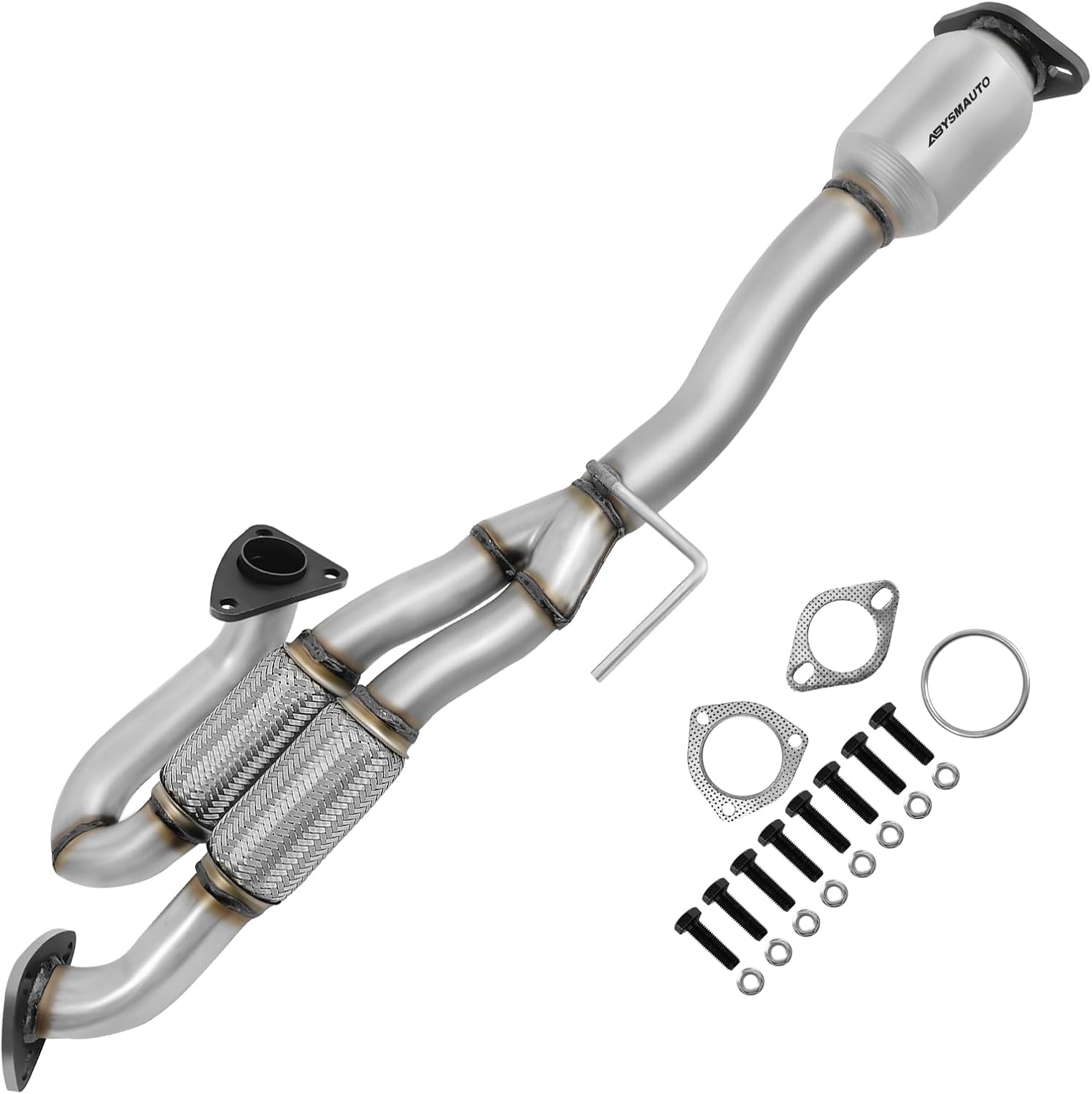
| Vehicle Fitment | Nissan Maxima 2009-2014 3.5L V6 |
|---|---|
| Exterior | Polished |
| Manufacturer | abysmauto |
| EPA Compliance | EPA compliant (not CARB) |
This ABysmauto rear catalytic converter is a direct-fit replacement intended for the Nissan Maxima 2009–2014 with the 3.5L V6. It mounts in place of the factory rear converter and is built from stainless steel with a polished exterior and an internal catalyst designed to meet EPA emissions standards. In real-world use it aims to restore exhaust flow and emissions control after the original unit fails, and the seller describes a high-flow design to help maintain engine breathing. Installation should be straightforward for an experienced DIYer or a shop because it is a direct-fit application, but several customer reports note fitment and flange angle issues that could require modification or additional adapters. The product is not CARB compliant and is restricted from use in certain states, so it is suitable only where EPA-compliant aftermarket converters are allowed. Expect a basic factory-replacement level of finish and performance rather than an OEM-identical unit; durability will depend on installation quality and local conditions.
Best for: Reliability-focused owners looking for a straightforward EPA-compliant replacement to restore emissions control and exhaust flow on a Nissan Maxima 2009–2014 3.5L V6 who prioritize getting the car back on the road with a basic factory-replacement unit.
Less Ideal for: Drivers in CARB states or those who require an exact factory-match converter should avoid this unit and seek a certified CARB or dealer-sourced replacement.
- Direct-fit design for Nissan Maxima 2009–2014 3.5L V6 intended to simplify installation
- Made from stainless steel with a polished exterior for corrosion resistance
- EPA-compliant catalytic core suitable for states that accept federal-only converters
- Described high-flow internal design to help restore exhaust breathing and performance
- Not CARB compliant and restricted from use in California, Colorado, Maine, and New York registered vehicles
- Customer reports indicate inconsistent fitment and flange angle mismatch that may require modification
Verdict: A stainless-steel direct-fit EPA-compliant rear catalytic converter aimed at restoring emissions control and exhaust flow on Nissan Maxima 2009–2014 3.5L V6 models.
5. MagnaFlow 94006 Standard Grade Universal Catalytic Converter (2.5" Inlet/Outlet)

| Inlet/Outlet Diameter | 2.5 Inches |
|---|---|
| Body Material | Stainless Steel |
| Type | Universal Federal/EPA Compliant |
| Substrate Material | Ceramic |
The MagnaFlow 94006 is a compact, universal-fit catalytic converter built to meet federal pre-OBDII emissions requirements and intended for professional installation on older vehicles like the Nissan Maxima that use pre-1996 style systems. It uses a ceramic substrate inside a stainless-steel clam-shell body with a welded continuous seam and an attached aluminized heat shield to improve durability and thermal insulation. Because it is universal, the converter must be cut, fitted, and welded into the Maxima exhaust by a shop and may require adding an O2 sensor bung downstream if your Maxima needs one. Practical benefits include corrosion resistance from stainless construction, a compact low-mass design for faster warm-up, and compliance with federal emissions standards for non-California regions. Limitations are the need for modification to fit the Maxima exhaust routing, absence of an oxygen sensor port as packaged, and mixed quality-control reports from some users that suggest inspecting the core after delivery. For a convenience-driven buyer seeking a straightforward replacement that gets the Maxima back to road-legal emissions for pre-OBDII systems, this is a usable option provided you plan professional installation.
Best for: A convenience-driven buyer who values a factory-quality replacement that restores emissions function on an older Nissan Maxima and prefers a mechanic to handle modifications and installation.
Less Ideal for: Drivers looking for a direct bolt-in, California-compliant converter for a Maxima or those who want a no-modification DIY install should consider vehicle-specific alternatives instead.
- Meets federal pre-OBDII EPA emissions standards for legal replacement in most states
- Durable stainless-steel clamshell construction with continuous seam weld for corrosion resistance
- Compact low-mass design helps the converter reach operating temperature faster
- Integrated heat shield and welded inlet/outlet provide a robust, serviceable unit
- Universal design requires cutting, welding, and likely an added O2 sensor bung for proper Maxima fitment
- Does not include a preinstalled oxygen sensor port as shipped
- Some users report internal core failures indicating occasional quality-control issues
Verdict: A durable, federal-compliant universal replacement that will restore emissions on a pre-OBDII Nissan Maxima if you plan for professional cutting, welding, and possible O2 bung installation.
6. Garage-Pro Catalytic Converter Kit for Nissan Maxima / Infiniti I35 (Firewall and Radiator Side)
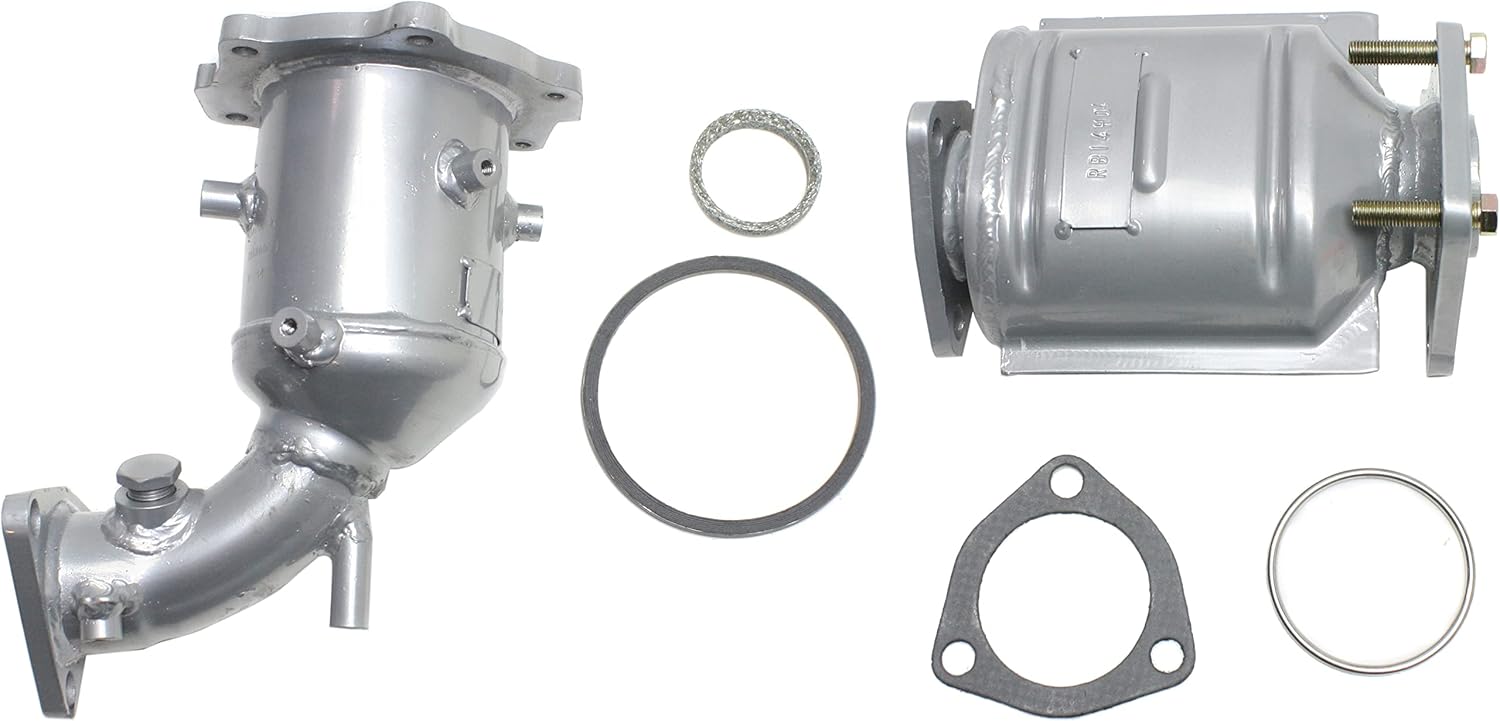
| Vehicle fitment | Nissan Maxima 2002-2003, Infiniti I35 2002-2004 3.5L |
|---|---|
| Material | Aluminized Steel |
| Includes | Firewall-side and Radiator-side catalytic converters (firewall with gasket, radiator without gasket) |
| Emissions standard | Federal EPA Standard, 46-State Legal (restricted in some states) |
This Garage-Pro kit replaces both the firewall-side and radiator-side catalytic converters for the Nissan Maxima (2002-2003) and Infiniti I35 (2002-2004) 3.5L models. It is supplied as a matched pair with factory-style ports and aluminized steel construction intended to restore exhaust flow and emissions performance to a factory-like condition. Typical installation replaces the failed original units to clear emissions faults and restore drivability; the firewall-side unit ships with a gasket while the radiator-side unit does not, so expect to source or reuse that gasket as needed. The kit is described as meeting federal EPA standards for 46-state legality, which suits most buyers outside restricted states. Practical benefits include direct-fit design to simplify bolt-on replacement and an economy-focused brand positioning that keeps costs lower than many branded alternatives. Limitations are that it is not legal for use in some states with stricter emissions rules and the radiator-side unit may require an extra gasket, adding a small parts and installation step for installers seeking a fully plug-and-play swap.
Best for: Risk-averse mainstream buyers seeking a budget-friendly, direct-replacement catalytic converter kit that restores emissions performance without experimental upgrades.
Less Ideal for: Owners in states with stricter emissions rules or buyers who require a CARB-compliant or certified-state-specific converter should look for alternatives certified for those states.
- Matched pair kit covers both firewall and radiator side converters for a complete replacement
- Factory-style ports and direct-fit design simplify installation for typical repair scenarios
- Aluminized steel construction offers corrosion resistance compared with plain steel
- Designed to meet federal EPA standards for 46-state legality where permitted
- Not legal for use in certain states with stricter emissions regulations
- Radiator-side converter ships without a gasket, requiring an extra parts purchase or reuse of an old gasket
Verdict: A cost-conscious, direct-fit catalytic converter pair that restores emissions function for most owners outside high-regulation states but is not suitable where stricter certification is required.
Choosing the Right Nissan Maxima Catalytic Converter: Key Factors to Consider
Fitment and Mounting Style
Correct fitment and mounting style are essential because exhaust geometry on the Nissan Maxima varies by model year and engine. An exact-fit unit reduces the need for cutting, welding, or additional adapters, which lowers installation time and the chance of leaks.
Flange shape, bolt hole spacing, and pipe diameter must match the vehicle to maintain proper exhaust flow and avoid stress on adjacent components. If a converter does not align precisely, you may need additional hardware or exhaust shop labor, increasing total cost and complexity.
Substrate and Cell Density
The internal substrate converts harmful gases into less-polluting compounds; its material and cell density affect conversion efficiency. Higher cell density generally provides more surface area for catalytic reactions, improving emissions reduction, but it can also increase backpressure if not matched to the engine.
Ceramic substrates are common for balance of cost and performance, while metallic substrates can heat up quicker and resist thermal shock. Select a substrate that balances conversion efficiency with an acceptable backpressure profile for your Maxima's engine.
Emissions Performance and Certification
Emissions performance is a primary purpose of the catalytic converter, and certification or testing that demonstrates compliance with applicable standards matters. Certified or tested converters are more likely to bring the vehicle into compliance with inspection and regulatory requirements.
Look for products with documented efficiency ratings or references to applicable regulations. Avoid units marketed for off-road use only, as those may not meet emissions inspection criteria.
Durability and Corrosion Resistance
Exhaust components are exposed to heat, road salts, and moisture, so materials and protective coatings affect service life. Stainless steel housings, robust welding, and protective finishes reduce the risk of rust and structural failure over time.
Durable construction is especially important if you drive in regions with heavy road salt or frequent temperature swings. A longer-lasting converter lowers the chance of premature replacement and maintains emissions performance over years of use.
Backpressure and Engine Compatibility
Catalytic converters can alter exhaust backpressure, which in turn can affect engine performance and fuel control systems. Choosing a unit with a backpressure profile suited to the Maxima's engine displacement and exhaust layout helps maintain power delivery and prevent adverse effects on fuel trims.
Manufacturers that provide backpressure or flow specs make it easier to choose a compatible unit. If flow data is unavailable, opt for converters described as direct-fit or engineered for similar engine setups to reduce the risk of drivability issues.
Warranty and Support
A clear warranty gives insight into expected product longevity and the manufacturer's confidence. Warranty coverage can vary in duration and what it covers, such as substrate failure or housing corrosion.
Good customer support and clear installation guidance are valuable if you encounter fitment questions. A robust warranty and accessible technical resources reduce the risk and cost associated with potential defects or installation challenges.
How We Chose the Best Nissan Maxima Catalytic Converter
Our selection process focused on factors that directly affect performance, fit, and legal emissions compliance for the Nissan Maxima. We prioritized exact-fit mounting and flange alignment to minimize installation adjustments and the risk of exhaust leaks. Substrate type and washcoat quality were evaluated because they influence conversion efficiency and how quickly a unit reaches optimal operating temperature. Durability and corrosion resistance were considered to ensure long service life in varied climates. We also looked for converters with appropriate backpressure profiles to avoid negatively impacting engine performance and fuel trim. Warranties and manufacturer support were noted as indicators of expected longevity.We excluded units with vague fitment claims, converters intended only for off-road or racing use, and products lacking clear substrate or material specifications. The final list includes only converters that meet the fit, emissions, and durability dimensions most relevant to Maxima owners.
Our full evaluation process is outlined in our review methodology.
FAQ
How do I know if my Nissan Maxima catalytic converter needs replacement?
Common signs include a persistent check-engine light related to emissions codes, decreased engine performance, rattling noises from the converter area, or failed emissions inspections. Diagnosis often involves scanning for trouble codes and a visual or physical inspection for damage or excessive clogging.
Can I install a catalytic converter myself on a Nissan Maxima?
Many Maxima owners can handle a direct-fit replacement with basic tools if the flanges and pipe sizes match and rust is not severe. However, vehicles with seized bolts, custom exhausts, or tight access may require professional assistance to avoid leaks and ensure proper alignment.
Is a universal catalytic converter a good option for a Nissan Maxima?
Universal converters can work in some situations but often need additional piping, clamps, or welding to fit correctly. That extra work can introduce leak points and change backpressure. For most owners, a direct-fit option designed for the vehicle simplifies installation and reduces risk.
Will replacing the catalytic converter clear a check-engine light?
Replacing a faulty converter can resolve emissions-related fault codes, but the vehicle may need a drive cycle or emissions readiness reset before the light clears. If other components in the emissions system are failing, the light may persist even after the converter is replaced.
What should I check before buying a replacement catalytic converter?
Confirm the converter matches the Maxima model year, engine type, and exhaust flange configuration. Review substrate type and any documentation about emissions certification. Also check warranty coverage and whether any additional hardware is required for installation.
Conclusion
When choosing a catalytic converter for a Nissan Maxima, prioritize correct fitment, verified emissions performance, and durable construction. These factors reduce installation complications, help maintain engine performance, and support long-term compliance with emissions standards.Balance substrate type and backpressure considerations with expected driving conditions and warranty support. If you value a straightforward installation and predictable results, lean toward units specified for the Maxima's mounting and engine configuration.
Explore More:
- Check out all Nissan Maxima parts & accessories
- Explore Catalytic Converters Maintenance & Repair Guides
- Explore Exhaust & Emissions
- Browse all Auto Parts
