

Note: This article contains affiliate links. If you click on these links and make a purchase, I may earn a small commission at no extra cost to you. This helps support my research and content. Read my full affiliate disclosure here.
If you drive a Dodge Challenger, choosing the right flywheel can have a big effect on drivability and clutch life. The correct flywheel helps the clutch engage smoothly, reduces vibration, and supports consistent performance under load, so selecting one that matches your vehicle and driving habits matters. This guide covers six shortlisted flywheels for the Dodge Challenger that met our editorial criteria. We evaluated fitment precision, material and construction, and serviceability to surface the most suitable options for typical repairs and performance upgrades. Read on to see the factors we considered and which attributes to prioritize.
Looking for other parts? See all Dodge Challenger parts & accessories.
Top Picks at a Glance
| Best Overall The best all-around choice for most situations | McLeod Steel Flywheel for MOPAR Gen III 130 Tooth (464400) |  |
| Best quality Built to a higher standard if you want something more solid | LuK LFW195 Replacement Flywheel |  |
| Best Value The sweet spot between price and what you get | Sawyer Auto Mechanics Choice Clutch Flywheel for 6.2L V8 Dodge Challenger (2008–2023) |  |
| Best Budget The cheapest option that still gets the job done reliably | A-Premium Flywheel for Dodge Challenger 2009–2021 V8 Manual Transmission |  |
| Highest Rated A top-rated pick with lots of positive feedback | LuK LFW137 Replacement Flywheel |  |
| Best Seller A high-volume bestseller chosen again and again | McLeod Aluminum Flywheel 130T for 2009-2010 and 2012-2020 Dodge Challenger 5.7L/6.4L |  |
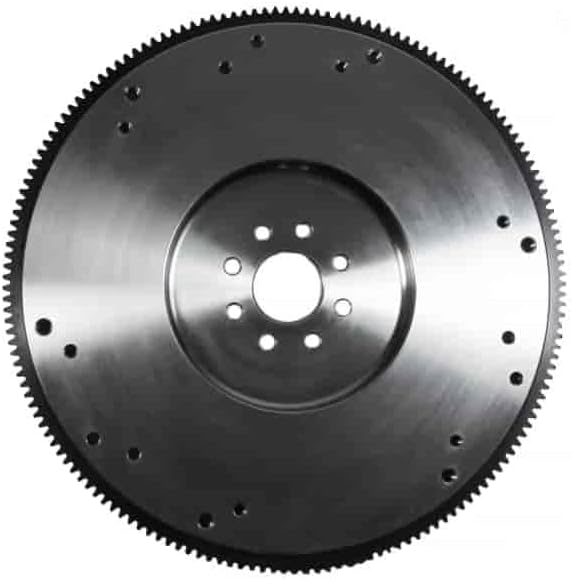
1. McLeod Steel Flywheel for MOPAR Gen III 130 Tooth (464400)
| Manufacturer | McLeod Racing |
|---|---|
| Model | 464400 |
| Exterior | Machined |
| Tooth Count | 130 |
This McLeod machined steel flywheel is a direct-fit replacement for Gen III MOPAR 8-bolt 130-tooth crank engines and is intended for street and performance use in Challengers with that crank configuration. It replaces the factory flywheel to provide a durable, balanced surface for the clutch to engage against and is fully machined to factory-style specifications. Typical use is during a clutch service or upgrade where a robust replacement is needed for higher power levels or repeated hard engagement. The steel construction adds strength and heat resistance compared with lighter friction materials, while the machined finish helps maintain smooth clutch operation and consistent engagement. Because it is a heavier steel unit, expect a small increase in rotational inertia compared with lightweight options, which can slightly blunt throttle response but improves drivability during low-speed maneuvers and gives more forgiving engagement. Installation follows factory procedures and is straightforward for a competent mechanic when swapping the clutch and pressure plate.
Best for: Balanced, all-round Challenger owners who want a durable, factory-quality replacement that improves clutch consistency without prioritizing extreme weight reduction.
Less Ideal for: Drivers seeking maximum throttle response and quickest rev-up times from a track-focused lightweight setup should consider lightweight or billet flywheels instead.
- Direct-fit replacement for Gen III MOPAR 8-bolt 130-tooth crank applications.
- Machined steel construction offers durability and consistent clutch surface.
- Factory-style machining promotes smooth engagement and reduced vibration.
- Suitable for street performance and higher-load clutch applications.
- Heavier than lightweight or billet flywheels, which can reduce throttle responsiveness.
Verdict: A durable, machined steel flywheel built as a reliable, factory-quality replacement for Gen III MOPAR 8-bolt 130-tooth Challenger engines.
2. LuK LFW195 Replacement Flywheel

| Manufacturer | LuK |
|---|---|
| Model | LFW195 |
| Exterior | Machined |
The LuK LFW195 is a machined, bolt-in replacement flywheel designed as a factory-quality substitute for vehicles that require a direct-fit unit. It is typically used when replacing the clutch or when the original flywheel’s surface or heat-absorption capacity has been compromised. LuK emphasizes full functional testing to match OEM performance and uses premium friction surfaces to improve heat management and durability compared with a resurfaced, over-machined part. The flywheel is intended to be paired with a new clutch assembly for predictable engagement and longer clutch life. For a performance-oriented build on a Dodge Challenger, this type of balanced, tested flywheel helps maintain consistent clutch behavior under higher loads and repeated heat cycles. Limitations include the fact that it is a direct replacement solid-style flywheel rather than a multi-mass or performance-lightweight racing unit, so it will not reduce rotational mass for quicker rev response or provide the noise/feel changes some enthusiasts seek.
Best for: Performance-oriented owners focused on reliable, OEM-quality replacements who want a durable, heat-resistant flywheel for spirited street driving and towing on their Dodge Challenger.
Less Ideal for: Drivers seeking a purpose-built lightweight or track-focused flywheel to improve throttle response or those who want explicitly tuned NVH and engagement characteristics should consider aftermarket performance options instead.
- Factory-quality functional testing to meet OEM performance specifications
- Machined, balanced unit designed for bolt-in fit and predictable clutch engagement
- Premium friction surface and good heat absorption to extend clutch service life
- Suitable replacement when resurfacing would remove necessary material and risk clutch issues
- Not a lightweight or performance-oriented flywheel for reduced rotational inertia
- Product listing does not specify exact Dodge Challenger model-year fitment details
Verdict: Choose this LuK flywheel if you want a factory-quality, functionally tested replacement that prioritizes durability and consistent clutch performance over lightweight performance gains.
3. Sawyer Auto Mechanics Choice Clutch Flywheel for 6.2L V8 Dodge Challenger (2008–2023)

| Fitment | 2008-2023 Dodge Challenger 6.2L V8 |
|---|---|
| Type | Rigid Flywheel |
| Manufacturer | Sawyer Auto |
| Manufacturer Part Number | PAT-153454 |
This Sawyer Auto Mechanics Choice rigid flywheel is a direct-fit replacement for the 6.2L V8 Dodge Challenger, built to match factory mounting and balance. It installs like a factory unit and is intended for owners replacing a worn or damaged flywheel during a clutch service or drivetrain repair. The listing highlights modern tooling and road testing, which suggests consistent dimensional accuracy and durability for street-driven cars. Its rigid single-piece construction is simple and reliable for daily driving and occasional spirited use without the complexity of dual-mass designs. Practical benefits include straightforward installation, predictable engagement characteristics, and claimed material improvements over older factory parts. Limitations are that this is a basic rigid flywheel rather than a performance or lightweight unit, so it will not reduce rotating mass for faster rev response nor provide noise reduction features of more advanced designs. Buyers should also verify exact crank bolt patterns and clutch compatibility during installation.
Best for: Practical optimizers who want a reliable, cost-conscious replacement that installs like a factory unit and keeps a Challenger running without upgrading to a performance flywheel.
Less Ideal for: Enthusiasts seeking weight savings, quicker engine response, or motorsport-focused upgrades should consider dedicated performance flywheels instead.
- Direct-fit design intended to match factory fit and mounting for easy installation
- Rigid single-piece construction offers simple, reliable operation for street use
- Manufactured with modern tooling and road tested for consistent quality
- Claims improved materials over older factory parts for enhanced durability
- Not a lightweight or performance flywheel so it will not significantly improve throttle response
- Limited specification details provided for balance tolerance or finish
Verdict: A straightforward, factory-style replacement flywheel that gives practical reliability and fit for 6.2L Challenger owners looking for value.
4. A-Premium Flywheel for Dodge Challenger 2009–2021 V8 Manual Transmission

| Vehicle fitment | Dodge Challenger 2009-2021 V8, manual |
|---|---|
| Material | Gray Iron |
| Bolt holes | 8 |
| Number of teeth | 131 |
This A-Premium flywheel is a direct replacement designed for V8 Dodge Challengers with manual transmissions and provides a budget-friendly alternative to factory parts. Made from gray iron as a solid unit with 8 bolt holes and 131 teeth, it installs where the clutch mates to the crank and restores the flywheel surface needed for proper clutch engagement. The aftermarket unit is marketed to meet factory-spec fitment and includes measures to reduce vibration and noise, which helps maintain drivability after a clutch job. For cost-conscious owners it offers straightforward compatibility across several V8 engines and comes with a one-year unlimited-mileage guarantee. Expect typical limitations of aftermarket replacements: it is a solid (not dual-mass) design so it will not reproduce some factory damping characteristics on every setup, and finishing or balance tolerances can vary from high-end factory or performance flywheels. That said, it is a practical, low-cost option for restoring clutch function on a Challenger without expensive OEM parts.
Best for: Budget-conscious Challenger owners who need an inexpensive, straightforward replacement flywheel to restore clutch engagement after a failure or during a clutch job.
Less Ideal for: Drivers seeking factory-equivalent damping or high-performance balanced flywheels for track use should consider higher-end or dual-mass alternatives instead.
- Direct-fit replacement for Dodge Challenger V8 manual transmissions 2009–2021
- Solid gray-iron construction for durability in normal street use
- Compatible across multiple V8 displacements (5.7L, 6.1L, 6.2L, 6.4L) simplifying parts selection
- Includes a one-year unlimited-mileage guarantee
- Solid design lacks the additional damping of a dual-mass flywheel which can increase vibration in some setups
- Aftermarket balance and finish may vary compared with higher-end factory or performance flywheels
Verdict: A cost-effective, direct-fit solid flywheel for V8 Dodge Challengers that gets a worn clutch system back to working order without the OEM price.
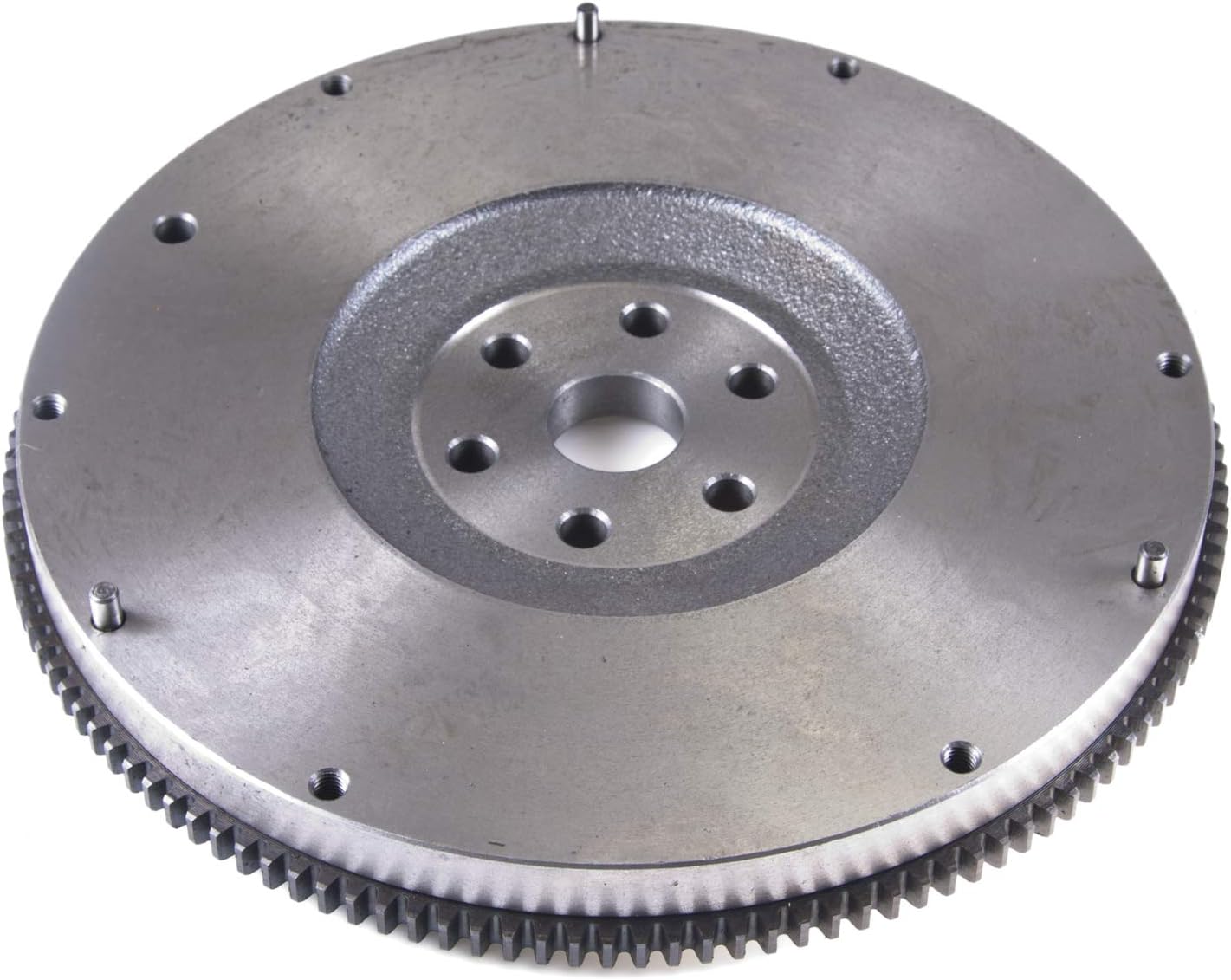
5. LuK LFW137 Replacement Flywheel
| Brand | LUK |
|---|---|
| Fit Type | Vehicle Specific Fit |
| Vehicle Service Type | ATV, Passenger Car, SUV, Truck, Van |
| Model | LFW137 |
The LuK LFW137 is a direct-replacement flywheel engineered to match factory performance and used when installing or refreshing a Challenger clutch assembly. It is functionally tested to OEM specifications and made from premium-grade metal with a friction surface and heat-absorption design intended to reduce clutch chatter and extend service life. Typical use is as a bolt-in replacement during a clutch job rather than resurfacing an old unit, which the manufacturer warns can remove needed material and reduce heat-sinking capacity. The LFW137 is aimed at solid flywheel or RepSet clutch installations and claims balanced construction and expanded torque capacity for certain applications. Practical benefits include easier installation fitment when the correct build and model match is confirmed and a reduced risk of premature clutch wear compared with over-machined resurfaced flywheels. Limitations are that fitment is vehicle- and build-specific so you must verify compatibility with your Challenger year and engine, and some owners report bolt-hole or fit issues on incompatible models, so cross-check before ordering.
Best for: Reliability-focused owners seeking a factory-quality replacement flywheel for a Challenger who prioritize long-term clutch performance and want a part engineered to meet manufacturer specifications.
Less Ideal for: Drivers who are unsure of their Challenger's exact build or who need a universal or one-size-fits-many solution should consider alternatives or confirm fitment with the vehicle VIN before buying.
- Functionally tested to meet OEM performance specifications
- Premium-grade friction surface and balanced construction to reduce clutch chatter
- Designed as a bolt-in replacement for clutch installations to avoid risks of over-machining when resurfacing
- Fitment is vehicle- and build-specific and may not match every model without verification
- Not a universal flywheel so requires correct year/engine selection before purchase
Verdict: A factory-quality, functionally tested replacement flywheel that gives reliability-focused owners a safer, bolt-in alternative to resurfacing when replacing a Challenger clutch.
6. McLeod Aluminum Flywheel 130T for 2009-2010 and 2012-2020 Dodge Challenger 5.7L/6.4L

| Manufacturer | McLeod Racing |
|---|---|
| Model | 6344907 |
| Exterior | Machined |
This McLeod aluminum flywheel is a direct replacement-style performance flywheel for 2009-2010 and 2012-2020 Dodge Challenger models with 5.7L or 6.4L engines. Built from machined aluminum and supplied fully assembled, it replaces the factory steel unit to reduce rotational mass and help the engine rev more freely, which aids throttle response and acceleration in street or occasional track use. Installation follows factory fitment and bolt patterns so it fits into standard clutch and bellhousing setups without custom machining. Practical benefits include a lighter driveline feel and compatibility with performance clutch kits; the machined finish also offers good surface flatness for consistent clutch engagement. Important limitations are that aluminum flywheels typically retain less heat than steel and can be more susceptible to wear under aggressive, sustained track use, so this is best paired with appropriate clutch materials and driving expectations. Professional installation is recommended to ensure correct torque and alignment.
Best for: Risk-averse mainstream buyers looking for a factory-quality upgrade that improves throttle feel while retaining standard installation practices and predictable behavior.
Less Ideal for: Drivers who plan heavy, repeated track sessions or extreme clutch abuse should consider heavier or purpose-built competition flywheels and clutch systems instead.
- Designed as a vehicle-specific direct-fit for specified Challenger 5.7L and 6.4L engines
- Machined aluminum construction reduces rotational mass for improved throttle response
- Supplied fully assembled for straightforward replacement with standard clutch components
- Aluminum construction can wear faster and handle less sustained heat than heavier steel flywheels
Verdict: A vehicle-specific machined aluminum flywheel that lightens rotational mass to sharpen throttle response while fitting directly to specified Dodge Challenger 5.7L and 6.4L applications.
Choosing the Right Dodge Challenger Flywheel: Key Factors to Consider
Vehicle-Specific Fitment
Correct fitment is the first priority because bolt pattern, pilot bearing bore, and ring gear alignment must match the Dodge Challenger precisely. A flywheel that is not dimensionally correct can cause clutch misalignment, accelerated wear, and potential failure. Confirming fitment reduces installation time and avoids modification. When shopping, check that the hole pattern, crank flange interface, and any pilot or alignment features are specified for the Challenger's engine and transmission combination.
Material and Heat Treatment
The flywheel material determines how well it resists wear, cracks, and warpage under heat. Forged steel and nitrided or properly heat-treated cast steel typically offer better fatigue resistance than untreated castings, which matters for both daily driving and occasional high-load use. Material choices also influence thermal conductivity and how quickly the surface cools after clutch engagement. Better heat handling reduces the likelihood of hot spots that can lead to glazing or scoring on the clutch friction surface.
Balance and Runout Tolerances
Balance and axial runout affect vibration and bearing loads. A poorly balanced flywheel can transmit vibration through the drivetrain, causing noise, premature bearing wear, and an unpleasant driving experience. Manufacturers that specify tight balance and runout tolerances generally result in smoother operation. If you already experience vibration, verify tolerances during installation and consider a machined or dynamically balanced unit to reduce drivetrain shake.
Surface Finish and Resurfacing Capability
The condition and finish of the friction surface influence clutch engagement feel and longevity. A uniform, flat surface with appropriate texture promotes consistent friction material contact and even wear. Also consider whether the flywheel can be resurfaced later. Resurfacing preserves crankshaft alignment when done correctly and can extend component life, but not all designs or materials are suitable for multiple resurfacing cycles. Know the maximum allowable material removal before installation.
Compatibility With Clutch Type
Flywheels must be matched to the clutch assembly you plan to use, whether that is an organic, ceramic, or higher-performance friction material. Different clutch types impose varying heat and wear demands on the flywheel surface. Some flywheels are optimized for high-torque, aggressive clutches and include features such as integrated dampers or different surface treatments. Ensure the flywheel you choose supports the intended clutch friction material and operating conditions.
Installation and Service Considerations
Ease of installation affects labor time and error risk. Features like alignment dowels, clean bolt access, and straightforward torque specifications simplify replacement and reduce chances of misassembly. Think about future service too. A flywheel designed for straightforward removal, clear resurfacing limits, and accessible pilot bearing areas will make future clutch work less invasive and less costly in time and effort.
How We Chose the Best Dodge Challenger Flywheel
We focused on flywheels specifically suited to the Dodge Challenger and applied objective filters to build the list. Primary evaluation criteria included fitment accuracy to factory mounting points, material and heat-treatment quality, surface finish and balance tolerances, and compatibility with common clutch types used on this model. We also assessed serviceability aspects such as whether the design supports resurfacing, ease of installation, and the presence of alignment features that simplify clutch mating. We excluded items that lacked clear vehicle-specific fitment data, components intended only for racing applications without street-compatibility details, and units that could not be verified for construction quality. Overall, we prioritized components that balance durability, drivability, and practical maintenance for Dodge Challenger owners.
Our full evaluation process is outlined in our review methodology.
FAQ
What are common flywheel symptoms on a Dodge Challenger?
Typical symptoms include vibration during idle or acceleration, a juddering clutch engagement, and unusual noise from the bellhousing area. These signs often point to surface wear, warpage, or imbalance, though other clutch components can cause similar symptoms.
Can a flywheel be resurfaced instead of replaced?
Often a flywheel can be resurfaced if it has sufficient thickness and no structural damage. Resurfacing restores a flat, properly textured friction surface, but excessive material removal or cracks make replacement necessary. Check manufacturer limits before machining.
How does flywheel balance affect the driving feel?
Balance directly influences vibration and drivetrain smoothness. A well-balanced flywheel reduces shake at idle and during acceleration, leading to smoother operation and lower bearing stress. If you notice persistent vibration, verify the flywheel balance and runout.
Do I need a specific flywheel for manual and automatic setups?
Flywheels for manual gearboxes differ from flexplates used with automatics because they serve different functions. For a manual Dodge Challenger, choose a flywheel designed for the specific transmission and clutch type to ensure proper engagement and mounting.
What should I inspect before flywheel installation?
Inspect the crank flange for damage or contamination, verify bolt threads and torque specifications, and confirm pilot bearing condition. Also check the mating surface for flatness and confirm that the flywheel meets the vehicle-specific dimensional requirements.
Will replacing the flywheel fix clutch noise?
Replacing a worn or damaged flywheel can resolve noise caused by surface irregularities or imbalance, but clutch noise can also stem from release bearings, pressure plates, or misalignment. Diagnose the exact source before assuming the flywheel is the only cause.
Conclusion
When choosing a flywheel for a Dodge Challenger, prioritize exact fitment, material quality, and balance tolerances to preserve clutch performance and reduce vibration. Consider whether the unit can be resurfaced and whether it matches the clutch friction material you intend to use. Tradeoffs typically involve durability versus weight and serviceability. Focus on components that align with how you drive and how often you plan to service the clutch to ensure reliable operation and predictable behavior.
Explore More:
- Check out all Dodge Challenger parts & accessories
- Explore Flywheels Maintenance & Repair Guides
- Explore Transmission & Drivetrain
- Browse all Auto Parts
