

Note: This article contains affiliate links. If you click on these links and make a purchase, I may earn a small commission at no extra cost to you. This helps support my research and content. Read my full affiliate disclosure here.
When an ABS warning light appears or braking feels inconsistent, replacing the right sensor matters for safety and drivability. You want a sensor that fits the Dodge Challenger correctly, delivers reliable speed signals, and integrates cleanly with existing wiring so the vehicle's stability systems function as intended. This guide lists the top shortlisted options for Dodge Challenger ABS wheel speed sensor replacements and explains the key criteria we used to evaluate them. Read on to understand which factors affect compatibility, signal accuracy, and installability before you inspect specific product choices.
Looking for other parts? See all Dodge Challenger parts & accessories.
Top Picks at a Glance
| Best Reviewed A top-rated pick with lots of positive feedback | A-Premium Rear Right ABS Wheel Speed Sensor (4779642AA) |  |
| Most Popular A crowd favorite that many people choose with confidence | Dorman Front ABS Wheel Speed Sensor (970-013) |  |
| Best Quality Built to a higher standard if you want something more solid | A-Premium 4PCS ABS Wheel Speed Sensor Set for Chrysler/Dodge 2011–2014 (Front & Rear) |  |
| Best Budget The cheapest option that still gets the job done reliably | OCPTY ABS Wheel Speed Sensor, front left and right (pack of 2) |  |
| Most Sold A high-volume bestseller chosen again and again | SPEEDWOW ABS Wheel Speed Sensor 4-Pack (Front and Rear) |  |
| Best Value for Money The sweet spot between price and what you get | BENERAY Front and Rear ABS Wheel Speed Sensor Pair (ALS1931) |  |
| Best Overall The best all-around choice for most situations | VECHA ABS Wheel Speed Sensor Kit (Set of 4) for Dodge Challenger 2008–2010 |  |
1. A-Premium Rear Right ABS Wheel Speed Sensor (4779642AA)

| Connector Pins | 2 Pins |
|---|---|
| Location | Rear Right Passenger Side |
| Output Type | Analog |
| Maximum Supply Voltage | 5 Volts (DC) |
This A-Premium rear right ABS wheel speed sensor is a direct-fit replacement that restores wheel-speed input to the vehicle stability and anti-lock braking systems. It is designed for rear right/passenger side fitment on Dodge Challenger and Charger and Chrysler 300 RWD models from 2011 through 2022 that do not use heavy-duty or performance brake options. Installation is straightforward because the sensor uses the factory two-pin connector and a flange mount that bolts into the original location. The sensor outputs an analog signal and is built from ABS plastic with a stated maximum supply voltage of 5 volts. In real-world use it returns the speed readings the car needs for traction control and ABS operation, and multiple owner reports cite good fit and easy installation. Limitations include the part being specific to non-HD/performance brake versions and that it is an aftermarket unit rather than a factory-branded sensor, so warranty policies and long-term durability may differ from dealer parts.
Best for: Reliability-focused buyers who prioritize restoring correct ABS and traction control operation with a straightforward, vehicle-specific replacement to keep a Challenger running safely.
Less Ideal for: Drivers with heavy-duty or performance brake packages or those who prefer dealer-sourced factory-brand parts and extended dealer support should consider alternatives.
- Direct-fit for rear right/passenger side on specified Dodge Challenger, Charger and Chrysler 300 RWD models, simplifying replacement.
- Uses the factory two-pin connector and flange mount for plug-and-play installation.
- Analog output and standard 5V supply make it compatible with factory ABS electronics.
- Multiple customer reports note correct fit and straightforward installation.
- Compatible only with non-heavy-duty and non-performance brake variants, so it will not fit certain brake packages.
- Aftermarket part may not match long-term durability or support of factory-branded sensors.
Verdict A practical, vehicle-specific aftermarket rear-right ABS sensor that restores ABS/traction control for non-performance Challenger models with easy plug-in installation.
2. Dorman Front ABS Wheel Speed Sensor (970-013)

| Compatible vehicle years | 2011–2015 Chrysler 300, Dodge Challenger, Dodge Charger |
|---|---|
| Mounting Type | Flange Mount |
| Output Type | Push-Pull |
| Material | Acrylonitrile Butadiene Styrene |
| Upper Temperature Rating | 430 Degrees Fahrenheit |
This Dorman front ABS wheel speed sensor replaces the factory sensor to restore proper wheel-speed input to the anti-lock brake system. It is used as a direct replacement on compatible Dodge Challenger, Charger, and Chrysler 300 model years listed, and arrives with the installation hardware needed for a straightforward swap. The sensor matches the original mounting style and output type so it plugs into the factory harness and transmits wheel-speed data back to the ABS control module. Practical benefits include quality-tested construction, a high upper temperature rating for under-hood durability, and broad fitment across several model years so you can keep a Challenger running without ABS faults. Limitations to note are that fitment must be verified for the specific wheel position and year since some vehicles use different sensor types front left versus front right, and a few users have reported that certain units did not communicate with the vehicle computer requiring an OEM replacement. This part is best when you need a quick, convenient repair and want a ready-to-install sensor with hardware included.
Best for: Convenience-driven buyers seeking a ready-to-install, budget-friendly repair that minimizes time off the road and avoids dealership visits; ideal for owners who value quick fixes and included hardware.
Less Ideal for: Owners who prefer dealer parts or need guaranteed factory-spec compatibility for a specific wheel position should consider a factory replacement instead.
- Direct-fit replacement designed to match factory mounting and output for listed model years.
- Includes necessary installation hardware for a complete repair.
- Quality-tested construction and a high upper temperature rating for durability.
- Positive user reports of straightforward installation and resolution of ABS warning lights.
- May not interface correctly on every vehicle/wheel position so fitment verification is required.
- A small number of users reported communication issues with the vehicle computer requiring an OEM part instead.
Verdict A convenient, ready-to-install front ABS wheel speed sensor that fixes ABS faults for many 2011–2015 Dodge Challengers, provided you confirm the correct fitment for the specific wheel position.
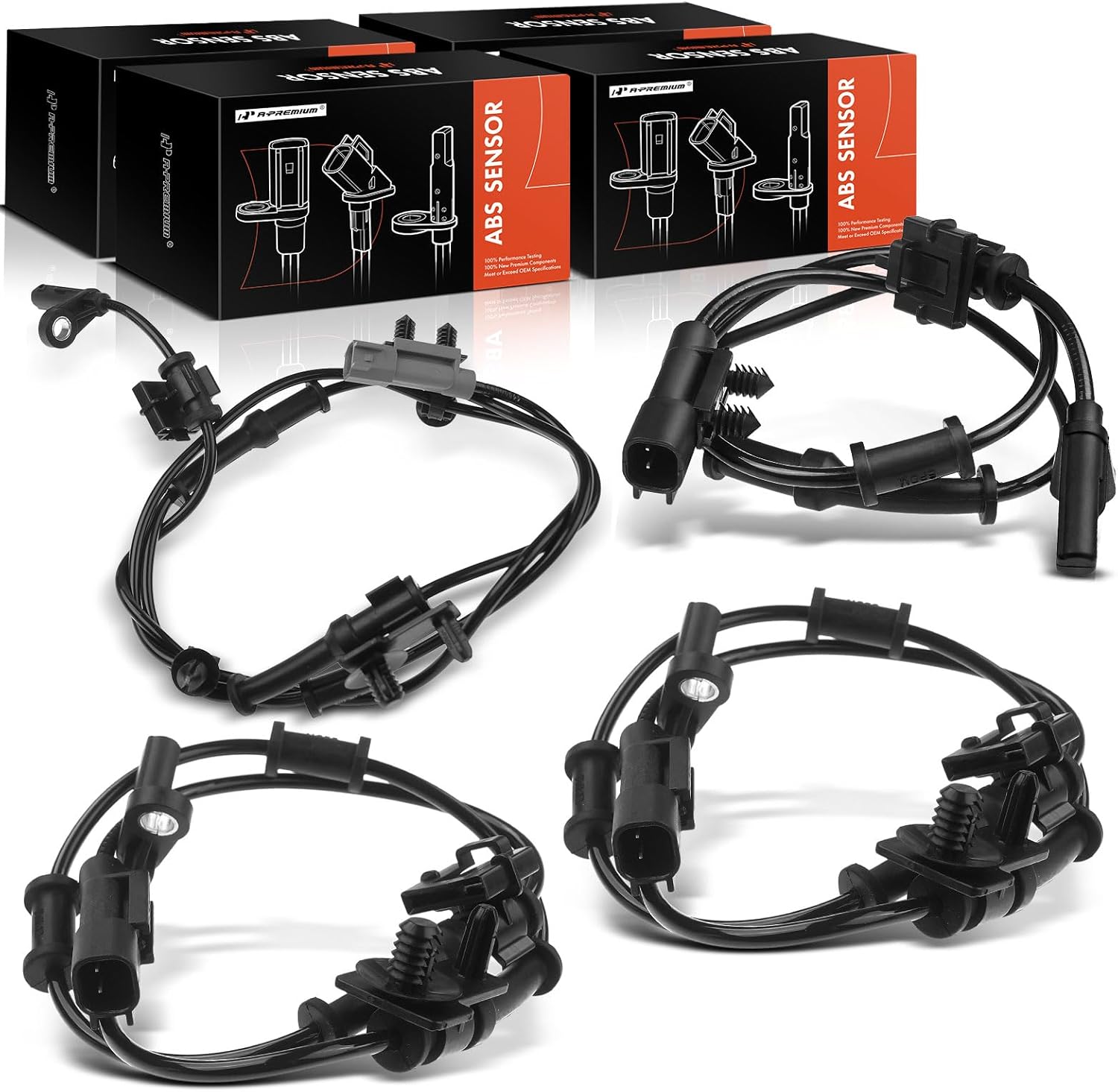
3. A-Premium 4PCS ABS Wheel Speed Sensor Set for Chrysler/Dodge 2011–2014 (Front & Rear)
| Compatible Vehicles | Chrysler 300 and Dodge Challenger/Charger 2011–2014 RWD without performance/heavy-duty brakes |
|---|---|
| Connector Pins | 2 Pins |
| Location | Front and Rear, Driver and Passenger Side |
| Manufacturer Part Number | APABS2106 |
This A-Premium 4-piece ABS wheel speed sensor set replaces the front and rear left and right sensors on specified Chrysler 300 and Dodge Challenger/Charger RWD models without performance or heavy-duty brakes. It is typically used to restore ABS, traction control, and cruise control functions after a failing sensor triggers warning lights and fault codes. The kit matches common OEM reference numbers and uses a two-pin connector for a straightforward electrical fit. Buyers will appreciate that the sensors come as a complete set so you can replace all four at once, which helps maintain consistent signal output and avoids repeat failures. Installers report minimal modifications to retainer clips and good waveform comparability with factory sensors. Limitations include fitment restricted to specific years and brake configurations and the usual variability of aftermarket parts versus factory units, so careful verification of your exact vehicle and brake type is necessary before purchase.
Best for: Performance-oriented owners who prioritize restoring precise wheel-speed input and vehicle stability systems quickly and prefer replacing all sensors at once to preserve consistent sensor signals.
Less Ideal for: Drivers with vehicles that have performance or heavy-duty brake packages or those who need an exact factory-branded sensor should consider a different option.
- Complete 4-sensor kit replaces all wheel positions so signals stay balanced across axle and avoid staggered failures
- Matches multiple OEM reference numbers to simplify fit verification
- Two-pin connector design aligns with factory electrical plugs for plug-and-play replacement
- Users report reliable restoration of ABS, traction control, and cruise control functions after installation
- Fitment limited to specific 2011–2014 Chrysler 300 and 2011–2014 Dodge Challenger/Charger RWD models without performance or heavy-duty brakes
- As an aftermarket part there can be minor differences in retainers or fit that may require small adjustments during install
Verdict A convenient full-set aftermarket replacement that restores ABS/traction functionality on specified 2011–2014 Chrysler and Dodge RWD models, but verify brake package compatibility before buying.
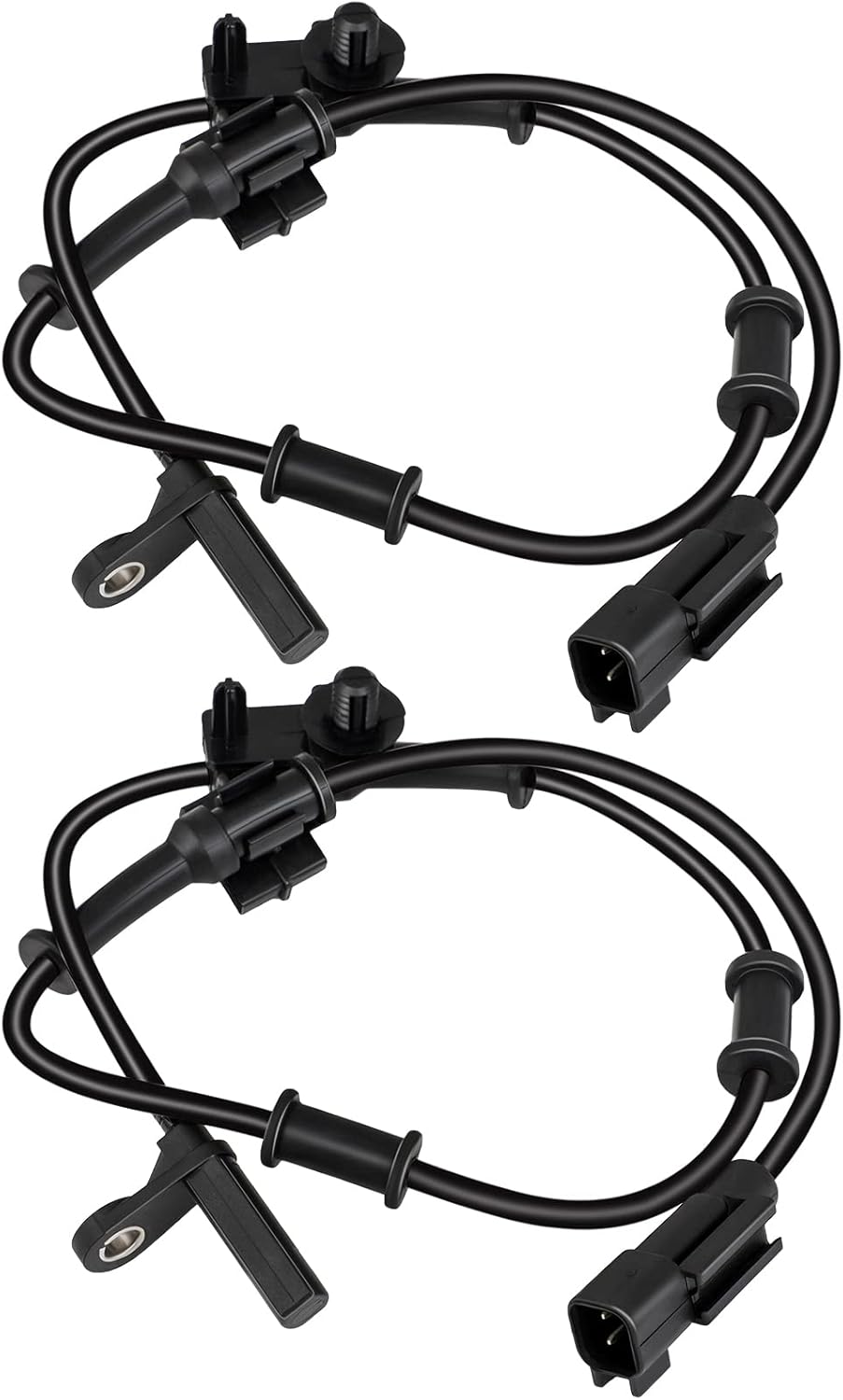
4. OCPTY ABS Wheel Speed Sensor, front left and right (pack of 2)
| Fitment | Dodge Challenger 2011-2014 (front) |
|---|---|
| Mounting Type | Flange Mount |
| Output Type | Digital |
| Material | Acrylonitrile Butadiene Styrene |
These OCPTY sensors measure wheel rotational speed and send digital signals to the vehicle control module to support ABS and traction control. Sold as a two-piece set for front left and right positions, they are flange-mounted and intended as direct factory-quality replacements for compatible Dodge Challenger model years. In practice they install like a standard sensor and are used when a faulty sensor triggers ABS or traction warnings, causes erratic speed readings, or disables stability functions. The ABS sensors are molded from ABS plastic and use standard digital outputs, so they are lightweight and straightforward to fit with basic hand tools. Buyers will get a budget-friendly route to fixing ABS-related faults without replacing more expensive assemblies. Limitations include a lack of detailed installation instructions in the package and no listed warranty information, so expect to rely on vehicle service literature for plug orientation and torque values. Fitment must be verified against the vehicle plug and mounting before purchase.
Best for: A budget-conscious Challenger owner who wants an affordable, straightforward sensor swap to clear ABS or traction faults and restore normal braking stability without buying dealer parts.
Less Ideal for: Drivers who prefer parts with documented warranty support, dealer-certified branding, or comprehensive installation guides should consider factory-authorized alternatives.
- Sold as a front left and right pair for convenient replacement.
- Designed to match factory sensor structure for direct fit on compatible models.
- Digital output compatible with ABS/ECM systems for proper wheel-speed reporting.
- Package does not include detailed installation instructions or vehicle-specific plug diagrams.
- No warranty information or coverage listed in the product details.
Verdict A cost-effective, pair-sold replacement for front wheel speed sensors on 2011–2014 Dodge Challengers that restores ABS function but lacks detailed installation support and listed warranty.
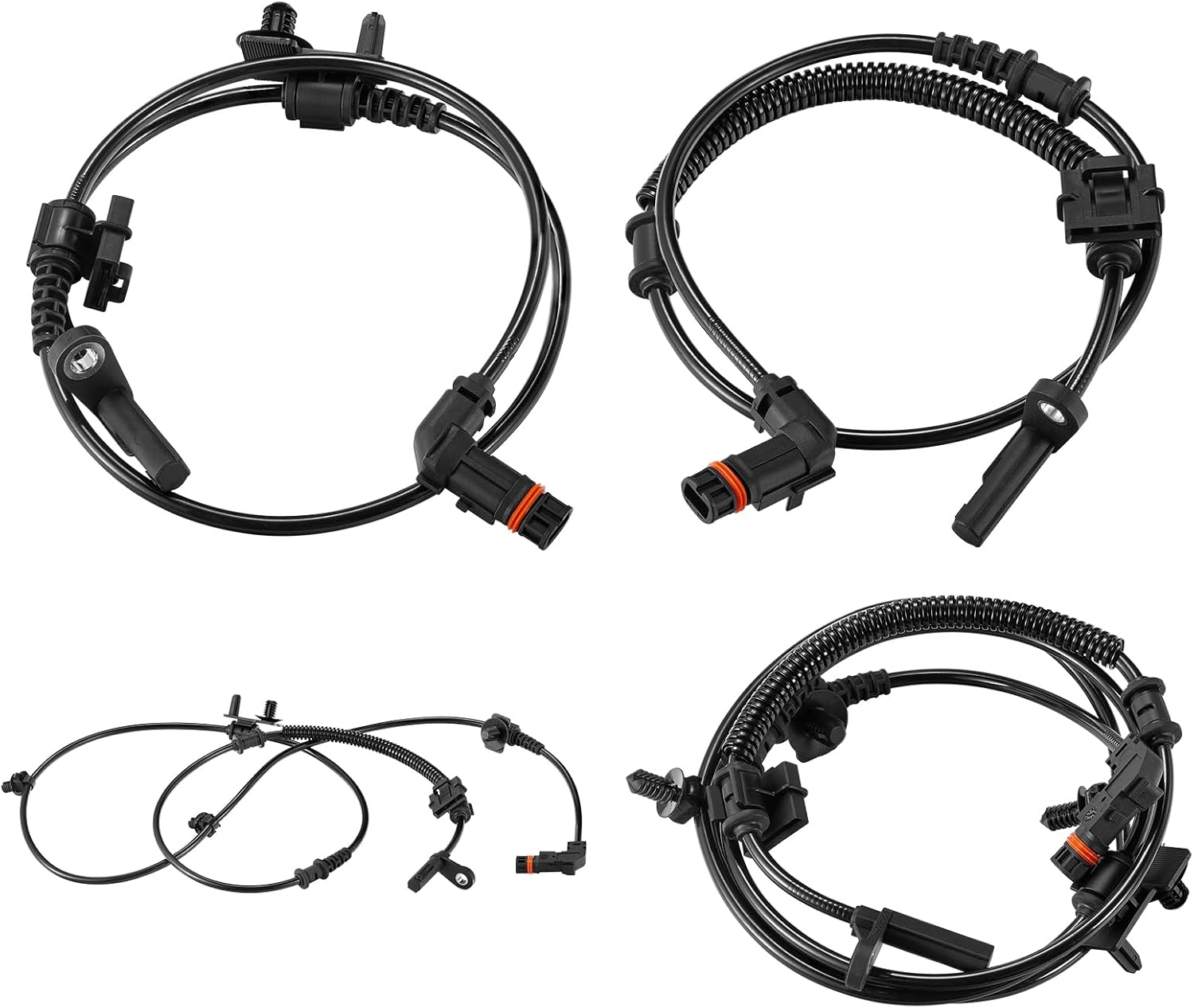
5. SPEEDWOW ABS Wheel Speed Sensor 4-Pack (Front and Rear)
| Material | Acrylonitrile Butadiene Styrene |
|---|---|
| Maximum Supply Voltage | 12 Volts |
| Mounting Type | Flange Mount |
| Output Type | Push-Pull |
This SPEEDWOW kit supplies four ABS wheel speed sensors intended to replace the factory sensors on compatible Dodge Challenger models. Installers typically use these sensors to restore proper wheel speed readings for the ABS and traction control systems after a sensor failure or damage. The parts are made from ABS plastic, use a flange-mount design, and have a push-pull output style with 12 volt supply compatibility, which makes them straightforward to route and plug into existing harnesses. The listing and customer feedback indicate a close fit to factory mounting points, so a DIY owner with basic hand tools can usually complete the swap without modifications. Practical benefits include restoring ABS function and clearing related dash warnings quickly and affordably when replacing all four corners at once. Limitations are typical for aftermarket sensors: plastic construction may not match long-term durability of higher-end units and you should verify connector and tone ring compatibility for your specific Challenger VIN before installation.
Best for: Risk-averse mainstream buyers who want a straightforward, budget-friendly replacement that restores ABS and traction control function with minimal fuss and DIY installation.
Less Ideal for: Drivers seeking a heavy-duty or performance-grade sensor for off-road or racing use should consider more robust aftermarket options or OEM replacements instead.
- Sold as a four-piece kit to replace all corner sensors at once
- Flange-mount design for direct fit to factory mounting locations
- Push-pull output and 12V supply match typical ABS wiring conventions
- Multiple customer reports of easy installation and correct fit
- Made from ABS plastic which may be less durable than metal-bodied aftermarket options
- Compatibility depends on matching exact connector and replacement numbers for the vehicle
Verdict A cost-effective four-piece replacement that restores ABS function on compatible Dodge Challenger models quickly, but choose a sturdier alternative if you need long-term heavy-duty durability.
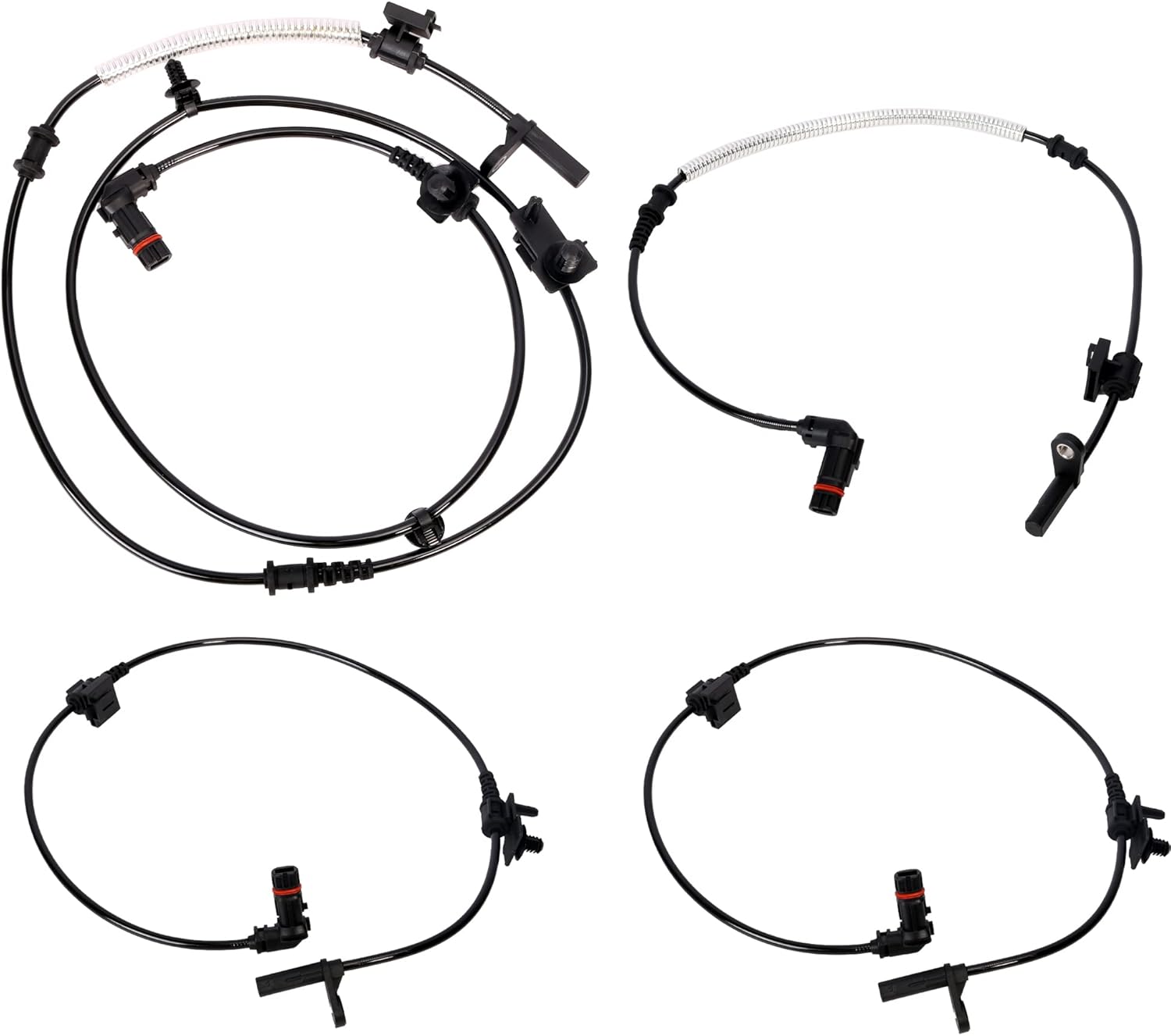
6. BENERAY Front and Rear ABS Wheel Speed Sensor Pair (ALS1931)
| Fitment | Dodge Challenger 2008-2010 |
|---|---|
| Output Type | Digital |
| Mounting Type | Flange Mount |
| Manufacturer Part Number | ALS1931, 4779247AA, 4779247AC, 4779457AA |
These BENERAY ABS wheel speed sensors are sold as a two-pair kit intended to replace the factory sensors on compatible Dodge Challenger models. They measure wheel speed and feed a digital signal to the vehicle ABS and traction systems, restoring functions such as ABS, traction control, and cruise control when a failed sensor is the cause. Installation is straightforward for a competent DIYer or shop: the sensors mount in the factory flange locations and plug into the existing wiring harness. The listing cites measurement accuracy and shows multiple factory-equivalent part numbers, which helps confirm fitment. In practice this kit offers a low-cost route to clear ABS/traction warnings and recover normal system behavior, and several owners report exact fit and immediate resolution of warning lights. Limitations are that instructions are not included and professional installation is recommended if you are not comfortable working under the vehicle, and long-term durability versus higher-end aftermarket or factory parts is unknown from the listing alone.
Best for: Practical optimizers who want an affordable, factory-style replacement to fix ABS and traction faults on a Dodge Challenger 2008–2010 and prefer value-focused parts that get systems working again.
Less Ideal for: Drivers seeking an OEM-branded sensor with documented long-term durability or those who prefer professional-specified premium aftermarket components should consider other options.
- Sold as front and rear left/right pairs so you can replace all affected corners at once.
- Listed to fit 2008–2010 Dodge Challenger engines and trims, with matching part numbers for easier verification.
- Digital output and flange-mount design match factory-style installation for plug-and-play replacement.
- Multiple customer reports of exact fitment and resolution of ABS/traction warnings.
- No installation instructions included so you may need a mechanic or online guidance.
- Manufacturer warranty or long-term reliability details are not provided in the listing.
Verdict A budget-friendly, factory-style replacement kit that restores ABS/traction function on 2008–2010 Dodge Challengers, best for buyers prioritizing value over OEM-backed longevity.
7. VECHA ABS Wheel Speed Sensor Kit (Set of 4) for Dodge Challenger 2008–2010

| Compatibility | Dodge Challenger 2008-2010 |
|---|---|
| Output Type | Digital |
| Mounting Type | Flange Mount |
| Maximum Supply Voltage | 12 Volts (DC) |
This VECHA four-piece ABS wheel speed sensor kit replaces all four wheel sensors on a Dodge Challenger 2008–2010 and is intended as a plug-and-play direct replacement. Installed sensors report wheel rotational speed to the ABS/traction control ECU so they restore ABS and stability functions when original sensors fail or show erratic output. The kit includes matched sensor pigtails and flange mounts with factory-style connectors and a digital output that improves signal clarity. VECHA says the connectors are plated to resist corrosion and the assembly is built to match factory routing and mounting for an easier swap. In use the sensors let you clear ABS warning lights and recover proper traction control behavior without wiring modifications. Limitations are typical of aftermarket parts: long-term durability depends on installation and road conditions and the kit assumes correct matching to the Challenger chassis and year, so double-check fit before install. For routine repairs on a Challenger with failed wheel speed sensors this kit provides a straightforward, cost-effective restore of ABS function.
Best for: Balanced buyers who want a complete, practical repair solution to restore ABS and traction control on a 2008–2010 Dodge Challenger without upgrading other systems.
Less Ideal for: Drivers seeking an OEM-sourced sensor for guaranteed factory provenance or those who prefer professional parts with an extended manufacturer warranty.
- Sold as a complete four-sensor kit to replace all wheels at once
- Plug-and-play design with factory-style connectors for straightforward installation
- Digital output and plated connectors intended to improve signal quality and corrosion resistance
- Built to match factory mounting and routing to minimize fitment issues
- Aftermarket longevity can vary compared with factory parts depending on driving conditions
- Requires verification of exact fit for specific Challenger submodels before installation
Verdict A convenient four-sensor, plug-and-play kit that restores ABS and traction control on 2008–2010 Dodge Challengers at a practical aftermarket price.
Choosing the Right Dodge Challenger ABS Wheel Speed Sensor: Key Factors to Consider
Fitment and Connector Compatibility
Correct mechanical fit and the right electrical connector are essential because improper fit can lead to poor sealing, physical interference, or intermittent contact. Ensure the sensor mounts to the same bracket and uses the same fastener pattern as the factory part to avoid vibration or misalignment that could degrade readings.
Connector compatibility matters for secure electrical contact. Different harness types or pin counts can cause resistance or loose connections that generate error codes. Confirming the connector style reduces the chance of splicing or adapter use, which can introduce failure points.
Signal Characteristics and Electrical Specs
A replacement must reproduce the expected signal amplitude, waveform, and resistance for the ABS module to interpret wheel speed correctly. Mismatched output can trigger fault codes or cause the system to ignore a wheel's data, affecting braking and traction interventions.
Check manufacturer-stated resistance, voltage output range, and whether the sensor is active or passive. Matching these specs to the vehicle's original requirements minimizes the risk of compatibility issues with the ABS control unit.
Durability and Environmental Resistance
Wheel speed sensors sit close to the road and face water, salt, grit, and heat cycles. Robust sealing and corrosion-resistant materials extend service life and reduce intermittent faults caused by moisture ingress or connector corrosion.
Look for sensors with durable housings, protected wiring, and quality grommets. Good mechanical protection helps prevent chafing and breakage during normal suspension travel and steering movement, which directly impacts long-term reliability.
Mounting Hardware and Ease of Installation
A sensor that includes correct mounting hardware, brackets, or grommets simplifies fitment and reduces installation errors. Properly torqued fasteners and secure routing prevent movement that can alter sensor-to-reluctor gap and affect signal strength.
Consider whether the replacement requires special tools, bracket modification, or additional clips. Easier installations reduce labor time and the chance of improper mounting that could result in early failure or recurrent ABS warnings.
Compatibility With Vehicle Diagnostics
The sensor should behave predictably when the vehicle is diagnosed. That means producing consistent readings under test conditions and not creating intermittent codes that complicate fault tracing. Sensors that closely match the electrical profile of the original part make diagnostic interpretation more straightforward.
If you need to clear codes or re-learn sensors after installation, a compatible part reduces the likelihood of persistent fault codes and unnecessary troubleshooting. This factor matters for both workshop repairs and DIY maintenance.
Repairability and Wiring Protection
Wiring integrity is a common failure mode, so assess how well the sensor's cable is protected and whether the design allows for straightforward repair if damage occurs. Reinforced sheathing, proper strain relief at the connector, and protected routing paths reduce the chance of wear-related failures.
If a splice or repair is required, simpler, well-documented cable constructions are easier to service. Good wiring protection helps maintain a reliable electrical connection over the life of the sensor.
FAQ
How do I know if a Dodge Challenger ABS wheel speed sensor is failing?
Common signs include the ABS warning light illuminating, inconsistent or erratic speedometer readings, or stability control systems activating unexpectedly. You may also notice loss of anti-lock braking function during hard stops. A diagnostic scan tool that reads ABS-related codes can help confirm whether a wheel speed sensor is the likely cause.
Can I replace a wheel speed sensor myself?
Many owners can replace a sensor with basic tools and a safe way to lift the vehicle. The job typically involves removing the wheel, unplugging the connector, unbolting the sensor, and installing the new unit with correct torque and routing. If you are uncertain about electrical connections or vehicle diagnostics, seek professional help to avoid introducing faults.
Will replacing the sensor clear ABS codes automatically?
Sometimes codes clear after the new sensor is installed and the system performs a self-check, but other times a diagnostic tool is needed to clear persistent codes or to command a relearn procedure. If the underlying wiring or module issues remain, replacing the sensor alone may not resolve the fault.
Are sensor wiring problems common and how are they found?
Yes, wiring chafing, corrosion at connectors, and broken wires are common failure sources. A visual inspection can find obvious damage, while a multimeter test of resistance and continuity helps identify open or shorted circuits. Wiggling the harness while monitoring the signal can reveal intermittent faults during testing.
Does the sensor location affect performance?
Sensor placement relative to the tone ring or reluctor is critical because gap and alignment determine signal strength and accuracy. Mounting position also impacts exposure to contaminants, so location and routing influence both performance and longevity. Proper installation ensures the sensor reads the wheel speed consistently.
What should I do if the ABS light returns after replacement?
If the warning light returns, recheck connector seating, wiring integrity, and correct sensor mounting. Use a diagnostic scanner to view live wheel speed data and check for stored codes that point to the issue. If the problem persists, investigate wiring, the reluctor ring condition, or module diagnostics beyond the sensor itself.
How We Chose the Best Dodge Challenger ABS Wheel Speed Sensor
We focused on parts that meet the specific fitment and electrical requirements of the Dodge Challenger and demonstrate consistent signal output under normal driving conditions. Key evaluation criteria included mechanical fit and connector type, signal waveform stability and tolerance, resistance and output specifications, materials and corrosion resistance at the mounting point, and ease of installation including necessary hardware or grommets. We also considered longevity factors such as sealing quality and sensor housing durability since sensors are exposed to wheel-end contaminants. Units that required vehicle-specific modifications or did not match OEM electrical characteristics were excluded. The goal was to shortlist sensors that are functionally compatible with the vehicle, provide reliable speed data, and avoid units that risk triggering false ABS or traction control faults.
Our full evaluation process is outlined in our review methodology.
Conclusion
Prioritize fitment, electrical compatibility, and durable sealing when choosing a Dodge Challenger ABS wheel speed sensor. A unit that matches mounting and signal specifications reduces the chance of persistent ABS codes and ensures consistent speed data for braking and stability systems.Balance ease of installation and wiring protection against long-term durability. If you encounter persistent faults after fitting a new sensor, inspect connectors and wiring, and use diagnostics to confirm whether additional repairs are needed.
Explore More:
- Check out all Dodge Challenger parts & accessories
- Explore ABS Wheel Speed Sensors Maintenance & Repair Guides
- Explore Electrical System
- Browse all Auto Parts
