

Note: This article contains affiliate links. If you click on these links and make a purchase, I may earn a small commission at no extra cost to you. This helps support my research and content. Read my full affiliate disclosure here.
Picking the right Dodge Challenger brake pad & rotor kit matters for safety, pedal feel, and long-term maintenance costs. Whether you drive the Challenger daily or use it for spirited weekend runs, brakes that match your driving style and the vehicle's demands will improve confidence and reduce costly repeat work.This guide highlights seven shortlisted kits that meet common Challenger needs. We evaluated each option for material durability, rotor condition and finish, heat tolerance, and installation fitment. Read on to find the features and tradeoffs that matter most for your Challenger, then use the product list to match a kit to your driving priorities.
Looking for other parts? See all Dodge Challenger parts & accessories.
Top Picks at a Glance
| Best Reviewed A top-rated pick with lots of positive feedback | Detroit Axle Rear Brake Kit with Rotors and Ceramic Pads |  |
| Most Popular A crowd favorite that many people choose with confidence | Detroit Axle Front Drilled & Slotted Brake Kit with Ceramic Pads for Dodge Challenger |  |
| Best Quality Built to a higher standard if you want something more solid | PowerStop K2560 Front Z23 Carbon-Fiber Ceramic Brake Kit (Drilled & Slotted) |  |
| Best Budget The cheapest option that still gets the job done reliably | Anpulsero Rear Brake Pads and Drilled/Slotted Rotors Kit for Dodge Challenger |  |
| Most Sold A high-volume bestseller chosen again and again | PowerStop K2853-26 Z26 Carbon-Fiber Ceramic Brake Pad and Drilled/Slotted Rotor Kit |  |
| Best Value for Money The sweet spot between price and what you get | R1 Concepts eLine Series Front and Rear Brake Kit (Drilled & Slotted Rotors, Ceramic Pads) |  |
| Best Overall The best all-around choice for most situations | Detroit Axle Brake Kit — Drilled & Slotted Rotors with Ceramic Pads (Front & Rear) |  |
1. Detroit Axle Rear Brake Kit with Rotors and Ceramic Pads
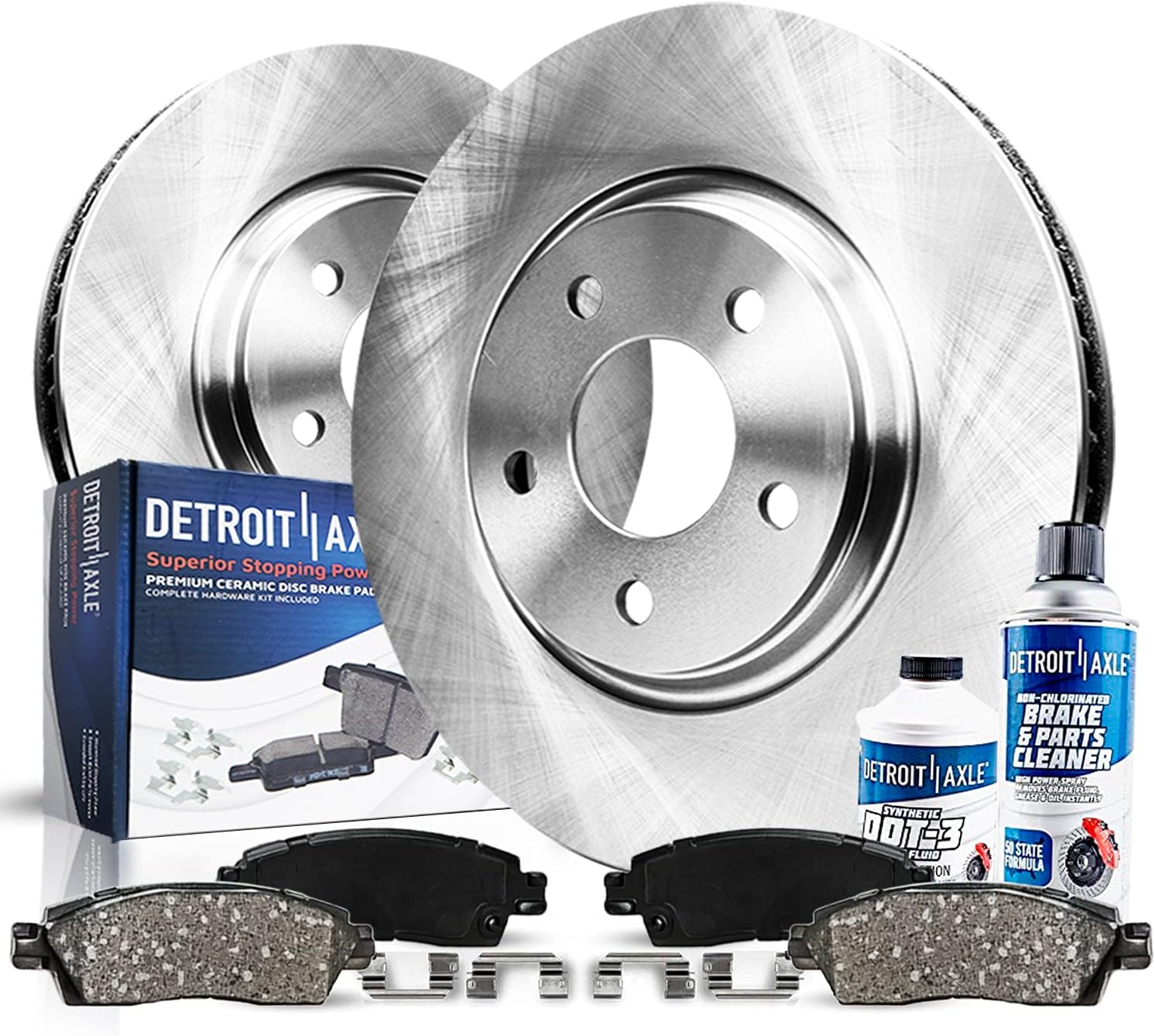
| Includes | 2x Rear Disc Brake Rotors, 2x Rear Ceramic Brake Pads |
|---|---|
| Compatible Models | Specified Dodge Challenger rear vented rotor applications |
| Manufacturer | Detroit Axle |
This Detroit Axle rear brake kit supplies two vented rear rotors plus a set of ceramic brake pads and basic hardware, packaged as a direct replacement for compatible Dodge Challenger applications. Installation is straightforward for a competent DIYer or mechanic since the rotors are pre-machined and the kit includes shims, grease and consumables that speed a routine rear brake job. Ceramic pads provide quiet operation and modest dust compared with semi-metallic compounds, making them suitable for daily driving where comfort matters. The rotors are engineered to meet factory-spec fit and are sold as vented units only, so confirm your Challenger has vented rear rotors before ordering. This kit is value-oriented and widely reported to fit correctly with no noise or warping, though it is not a high-performance or track-grade option and buyers wanting aggressive fade resistance should choose a performance rotor and pad combination instead.
Best for: A reliability-focused Challenger owner who prioritizes a dependable, factory-style replacement and quiet daily-driving performance without paying for premium performance parts.
Less Ideal for: Enthusiasts who drive on track or require upgraded fade resistance and heavy-duty stopping power should choose a performance-oriented rotor and pad package instead.
- Complete rear kit includes two vented rotors, ceramic pads and basic hardware for a single brake job
- Ceramic pads tend to run quiet and produce less visible dust during normal street use
- Rotors are pre-machined to fit factory mounting points for straightforward installation
- Multiple user reports confirm correct fitment and consistent stopping performance on Challengers
- Only fits Challenger models that use vented rear rotors and will not fit SRT8 or Brembo-equipped versions
- Not intended for high-performance or track use where higher fade resistance is required
Verdict A budget-friendly, reliability-focused rear brake replacement for Dodge Challengers with vented rear rotors that emphasizes quiet, factory-style performance rather than track capability.
2. Detroit Axle Front Drilled & Slotted Brake Kit with Ceramic Pads for Dodge Challenger
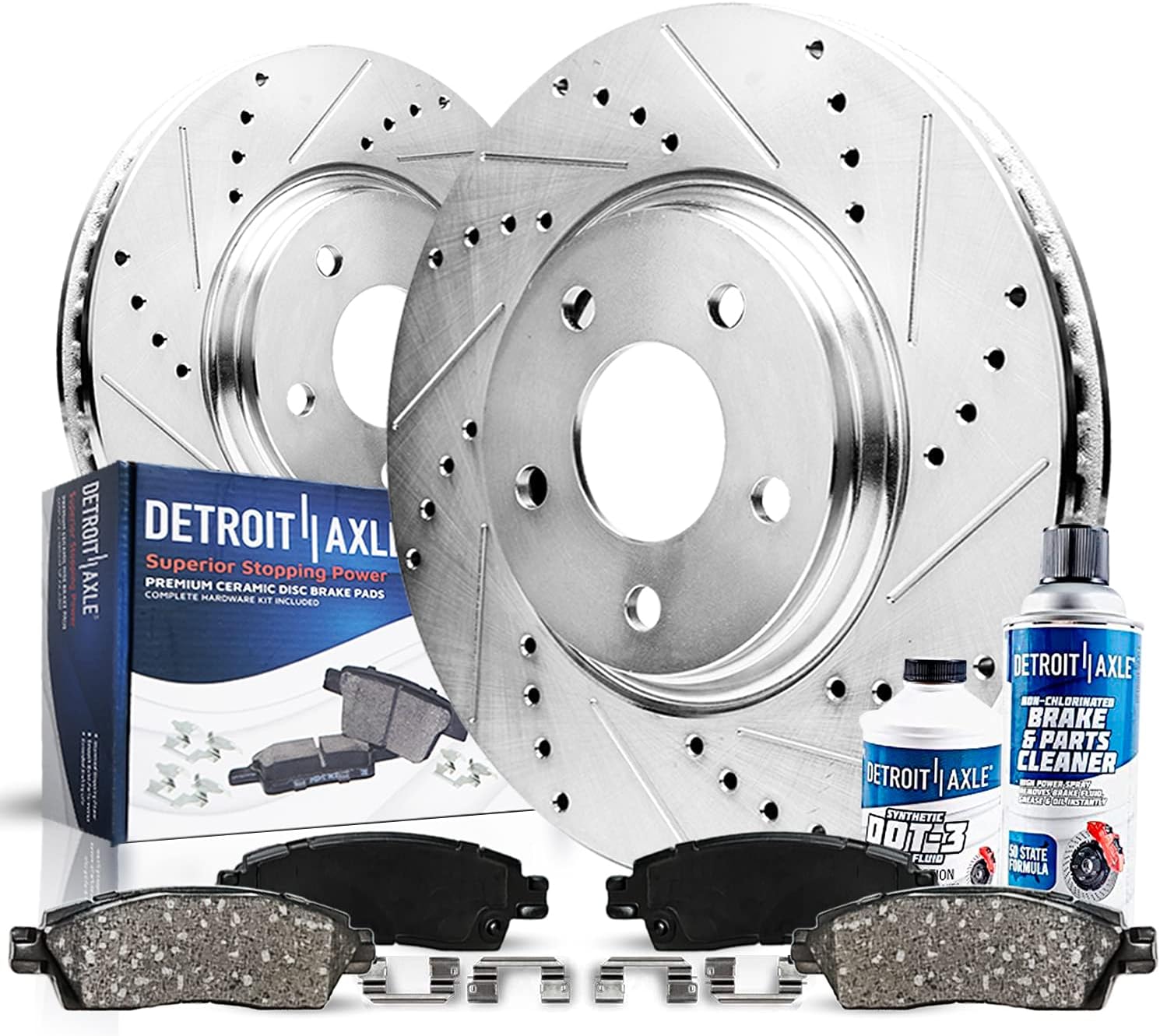
| Fitment | Front rotors for specified Dodge Challenger model years |
|---|---|
| Pad type | 100% ceramic |
| Rotor style | Drilled & slotted |
| Includes | Installation hardware, pads, rotors |
This Detroit Axle front brake kit replaces the factory front rotors and pads on specified Dodge Challenger model years and pairs drilled and slotted rotors with 100% ceramic pads. It is designed for straightforward bolt-on replacement and ships with installation hardware so you can swap both rotors and pads in one job. The drilled and slotted rotor pattern helps dissipate heat and channel debris, which reduces fade during spirited driving, while the ceramic pads are quieter and produce less dust than many semi-metallic options. Buyers also get a longer-looking warranty and the convenience of a complete kit instead of sourcing parts separately. Expect a firm, responsive pedal feel after proper bedding-in, and note that drilled rotors can be a bit noisier and may show faster cosmetic wear than plain rotors. This kit targets owners who want an easy, full-front brake refresh with improved stopping under heavy use, but drivers seeking ultimate track performance or ultra-long rotor life may prefer a different rotor style or premium brand.
Best for: Convenience-driven Challenger owners who want a single, ready-to-install front brake kit that improves everyday braking performance and reduces maintenance hassle.
Less Ideal for: Drivers focused on aggressive track use or seeking the longest-lasting, heavy-duty rotors should consider performance-specific or heavier-duty rotor and pad options instead.
- Complete front kit includes rotors, ceramic pads and installation hardware for a single purchase solution
- Drilled and slotted rotors improve heat dissipation and help reduce brake fade under heavy use
- Ceramic pads offer quieter operation and lower dust compared with many semi-metallic pads
- Drilled rotors can be more prone to cosmetic corrosion and may generate slightly more noise than plain rotors
- Ceramic pads prioritize low dust and quiet operation over maximum high-temperature friction for extended track use
Verdict A convenient, all-in-one front brake refresh for Dodge Challenger drivers who want quieter, lower-dust ceramic pads with improved heat control from drilled and slotted rotors.
3. PowerStop K2560 Front Z23 Carbon-Fiber Ceramic Brake Kit (Drilled & Slotted)

| Position | Front |
|---|---|
| Brake Pad Type | Z23 Carbon-Fiber Ceramic |
| Rotor Type | Drilled & Slotted |
| Rotor Finish | Zinc plated |
| Includes | Pads, rotors, hardware, shims |
This PowerStop front kit replaces the factory front pads and rotors with Z23 carbon-fiber ceramic pads, drilled and slotted rotors, and stainless installation hardware for Challenger applications. Designed as a bolt-on upgrade, it aims to improve initial bite, reduce dust and noise, and control heat during spirited driving. The rotors are drilled and slotted to increase cooling and gas/contaminant evacuation, and the zinc-type plating resists surface corrosion for longer life in wet climates. The kit includes rubberized shims, anti-rattle hardware, and high-temperature grease to simplify a professional installation without modifications. For performance-oriented Challenger owners, the pads provide stronger stopping feel than many stock replacements while staying relatively quiet and low-dust. Limitations: drilled rotors can be more prone to cracking under extreme repeated track abuse compared with heavy-duty vented designs, and ceramic-based pads may take slightly longer to reach peak performance from cold than aggressive metallic compounds. Also this listing covers the front axle only, so a matching rear kit is a separate purchase.
Best for: Performance-oriented Challenger owners who prioritize stronger, low-dust braking and a bolt-on upgrade that improves everyday and spirited driving confidence.
Less Ideal for: Drivers seeking dedicated track-only hardware or maximum thermal mass for extended hard laps should consider heavier-duty rotor and pad combinations tailored for track use.
- Complete front kit includes pads, drilled & slotted rotors, stainless hardware and shims for a straightforward bolt-on install
- Z23 carbon-fiber ceramic pads deliver stronger stopping power with low dust and reduced noise compared with many stock pads
- Drilled and slotted rotors improve cooling and help clear gases and debris during high-demand stops
- Zinc-type plating on rotors provides corrosion resistance for longer surface life
- Drilled rotors are not the best choice for extreme repeated track heat cycles where slotted or thicker vented rotors may resist cracking better
- This listing covers front components only so you must buy a rear kit separately for a full-axle upgrade
Verdict A high-quality, bolt-on front upgrade for Dodge Challenger drivers who want stronger, quiet stopping and lower dust without changing calipers.
4. Anpulsero Rear Brake Pads and Drilled/Slotted Rotors Kit for Dodge Challenger

| Position | Rear |
|---|---|
| Rotor diameter | 320mm |
| Pad type | Ceramic, high-carbon |
This Anpulsero rear brake kit combines a pair of drilled and slotted 320mm rotors with four ceramic rear pads and basic hardware to replace worn Challenger rear braking components. It is intended as a direct factory-replacement style kit for compatible Dodge Challenger years without high performance brake options, and is typically used for routine pad and rotor refreshes. The rotors are drilled and slotted to help dissipate heat and water, and the ceramic pads are described as high-carbon for quieter operation and reduced dust. The kit also carries a rust-resistant coating and claims extended corrosion resistance. On the practical side it offers a complete rear-side solution in one purchase and fits common Challenger rear applications, making installation straightforward for an experienced DIYer or a shop. Limitations include mixed user feedback on pad durability and reports that the included pads may not perform as well under heavy use, so drivers who regularly push their Challenger hard should consider higher-performance pad options instead.
Best for: Budget-conscious Challenger owners who need an affordable, all-in-one rear brake refresh and prioritize quiet, everyday braking over track-grade performance.
Less Ideal for: Drivers who frequently track their Challenger or demand high-temperature stopping performance should choose a higher-spec rotor and pad combination designed for sustained heavy use.
- Complete rear kit includes two drilled and slotted rotors plus four ceramic pads and hardware
- Rotors designed to improve heat dissipation and wet-weather braking
- Ceramic pads formulated for quieter braking and lower dust
- Rust-resistant coating improves longevity in corrosive conditions
- Several user reports cite poor pad durability under heavy or aggressive use
- Not suited for Challengers equipped with high performance or heavy duty brake packages
Verdict A wallet-friendly, complete rear kit for Dodge Challenger owners seeking a quiet, corrosion-resistant street replacement, but consider better pads if you drive aggressively.
5. PowerStop K2853-26 Z26 Carbon-Fiber Ceramic Brake Pad and Drilled/Slotted Rotor Kit
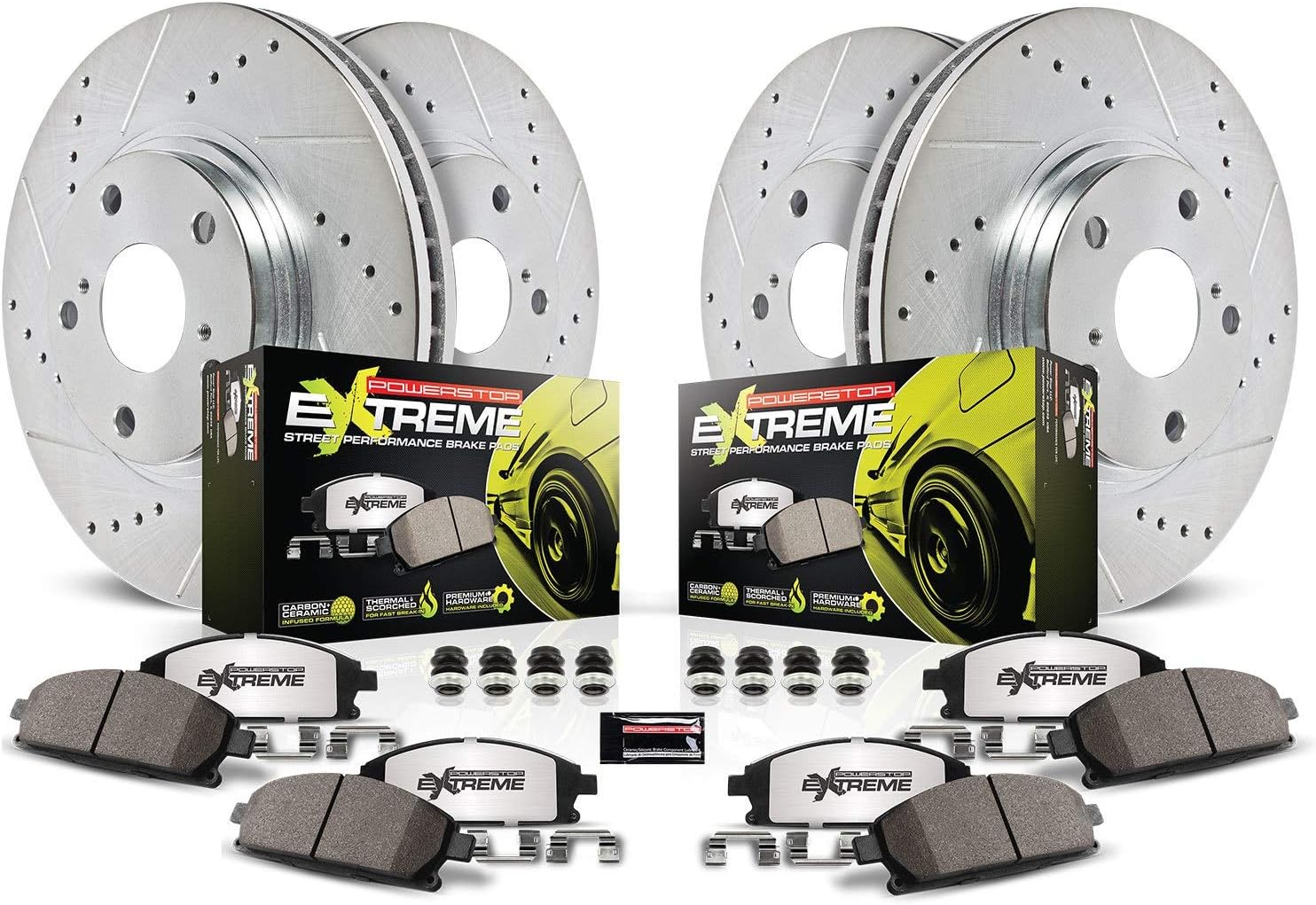
| Fits vehicles | Select Dodge Challenger and Chrysler 300 applications listed in product fitment |
|---|---|
| Pad type | Z26 carbon-fiber ceramic |
| Rotor style | Drilled and slotted with silver zinc dichromate plating |
| Hardware | Stainless-steel installation hardware included |
This PowerStop K2853-26 kit is a bolt-on braking upgrade that replaces both pads and rotors for compatible Dodge Challenger and Chrysler 300 applications. It includes Z26 carbon-fiber ceramic pads front and rear, drilled-and-slotted cast rotors with corrosion-resistant plating, and stainless-steel installation hardware so you can swap everything at once. In use the Z26 pads deliver stronger initial bite and higher thermal stability than typical stock compounds, which helps with confident stops on high-horsepower Challengers. The drilled and slotted rotor pattern improves cooling and helps clear gases and debris during spirited driving. Installation is straightforward for anyone comfortable with basic brake work, though heavily corroded factory components can make rotor removal difficult. Some owners report occasional surface corrosion over time and varying break-in feel, so expect a short bedding period and to watch finish condition in harsh environments. For a risk-averse buyer this kit provides a complete, vehicle-specific upgrade that balances street performance and everyday drivability.
Best for: Risk-averse mainstream buyers seeking a reliable, vehicle-specific brake upgrade for a Dodge Challenger who prioritize consistent stopping performance and a straightforward, all-in-one replacement.
Less Ideal for: Drivers who need track-focused endurance or extreme-duty motorsport rotors should consider purpose-built race options rather than this street-oriented kit.
- Complete front-and-rear kit includes pads, rotors, and stainless-steel hardware for one-stop replacement
- Carbon-fiber ceramic Z26 pads offer stronger bite and reduced dust compared with many stock compounds
- Drilled and slotted rotors aid heat dissipation and help clear gas and debris during heavy use
- Silver zinc dichromate plating on rotors reduces visible rust and extends cosmetic life
- Some users report surface corrosion or plating flaking in a few months under certain conditions
- Rotors can be difficult to remove on rusted hubs which may lengthen installation time
Verdict A convenient, vehicle-specific full kit that improves stopping performance and cooling for Dodge Challengers while keeping installation and fitment simple.
6. R1 Concepts eLine Series Front and Rear Brake Kit (Drilled & Slotted Rotors, Ceramic Pads)

| Fitment | 2009-2021 Dodge Challenger (except models with Brembo calipers) |
|---|---|
| Rotor finish | Zinc coated |
| Brake pad type | Low-dust ceramic |
| Rotor material | G3000 grade cast iron |
| Kit contents | 4 rotors and 8 brake pads |
This R1 Concepts eLine brake kit supplies everything needed to replace front and rear braking surfaces on compatible Dodge Challenger models without modification. The kit includes four drilled-and-slotted zinc-coated cast-iron rotors and eight low-dust ceramic pads with shims for quieter operation. The drilled and slotted rotor pattern improves ventilation and heat dissipation compared with plain rotors, which helps reduce fade during spirited driving, while the zinc finish resists surface rust in wet climates. Ceramic pads offer quiet, low-dust everyday braking suitable for street use and commuting. Customers report straightforward bolt-in fitment on Challengers that do not have Brembo calipers, and the kit is marketed as vehicle-specific so installation is typically swap-and-go. Limitations to consider are mixed long-term durability reports and occasional early noise or vibration on some vehicles, and drilled rotors are less ideal for heavy track abuse compared with thicker vented or directional performance rotors.
Best for: Practical optimizers who want a single, vehicle-specific kit that improves braking performance and reduces corrosion and dust while keeping installation simple and cost-effective.
Less Ideal for: Drivers who plan frequent track days or need a heavy-duty, high-temperature racing setup should choose a dedicated performance rotor and pad package instead.
- Complete front and rear kit so no separate purchases required.
- Zinc-coated G3000 cast-iron rotors resist surface rust for longer appearance life.
- Drilled and slotted design improves heat dissipation and helps reduce brake fade under hard use.
- Low-dust ceramic pads with shims reduce brake dust and help cut noise during normal driving.
- Drilled rotors and ceramic pads are not optimized for sustained track use or heavy repeated high-temperature braking.
- Some users reported noise, pedal pulsation, or premature wear on certain vehicles.
- Kit may not fit Challengers equipped with Brembo calipers without verifying fitment.
Verdict A budget-friendly, bolt-in front-and-rear kit that upgrades corrosion resistance and everyday stopping for Dodge Challengers that do not use Brembo calipers.
7. Detroit Axle Brake Kit — Drilled & Slotted Rotors with Ceramic Pads (Front & Rear)

| Rotor size | 12.60 inch (320mm) |
|---|---|
| Included components | Front and rear drilled & slotted rotors, front and rear ceramic pads, brake cleaner, DOT3 fluid |
| Fitment note | For Challenger models with single-piston calipers and non-performance brakes |
This Detroit Axle kit supplies everything needed to replace both front and rear brakes on Dodge Challenger models that require 12.60 inch (320mm) rotors. It includes two drilled-and-slotted rotors for each axle, matching ceramic brake pads front and rear, a small bottle of DOT3 brake fluid, and a can of brake parts cleaner. The drilled and slotted rotors help dissipate heat and resist glazing during spirited driving while ceramic pads offer quieter operation and reduced dust compared with semi-metallic compounds. Fitment is reported accurate for Challenger applications with single-piston calipers and non-performance brake packages, and most DIYers will find installation straightforward if they have basic tools. Limitations to note are a likelihood of some brake noise typical of drilled rotors and ceramic pads and that the pads may produce more or less dust depending on driving style. The kit also assumes you can source instructions or follow standard brake-replacement procedures because detailed step-by-step guides are minimal in the package.
Best for: Buyers seeking a balanced, do-it-yourself replacement that improves everyday braking feel and heat management on a Dodge Challenger without moving to a full performance kit.
Less Ideal for: Drivers who want track-focused brake compounds or those who prefer a plug-and-play upgrade with detailed manufacturer installation instructions should consider alternatives.
- Complete front-and-rear kit includes rotors, pads, brake cleaner and DOT3 fluid for a single purchase.
- Drilled and slotted rotors improve heat dissipation under heavy braking and help prevent pad glazing.
- Ceramic pads tend to be quieter and create less brake dust than many semi-metallic pads.
- Fitment targets Dodge Challenger applications with 12.60 inch rotors and single-piston calipers, reducing compatibility guesswork.
- Drilled rotors and ceramic pads can produce audible noise under some conditions.
- Package provides minimal installation instructions so novices may need external guidance.
- Brake pad compound may not satisfy drivers seeking high-track performance under extreme use.
Verdict A practical, all-in-one brake kit that upgrades heat control and everyday stopping for Dodge Challengers while staying aimed at street use rather than track performance.
Choosing the Right Dodge Challenger Brake Pad & Rotor Kit: Key Factors to Consider
Pad Material and Compound
Pad material determines initial bite, fade resistance, and dust levels. Ceramic compounds tend to produce less dust and quieter operation, which suits street-driven Challengers, while semi-metallic or metallic blends offer higher thermal tolerance and fade resistance for heavier use.
Consider how you drive: frequent spirited runs or track days favor heat-resistant compounds, while primarily street driving benefits from low-noise, low-dust formulations. Material also affects rotor wear rates, so balance pad longevity with rotor preservation when choosing a kit.
Rotor Design and Thermal Management
Rotors vary by thickness, venting, and whether they are solid, vented, slotted, or drilled. Venting and increased mass help dissipate heat, lowering the risk of fade during repeated heavy stops, which is important for high-speed or performance driving.
Surface treatments and machining influence how quickly pads bed in and whether you experience noise or vibration. For a Challenger, prioritize rotors that match your driving intensity: heavier use needs better thermal handling, while low-performance rotors can be acceptable for calm street driving.
Fitment Accuracy and Axle Coverage
A direct-fit kit reduces installation time and avoids compatibility surprises. Confirm whether a kit covers front brake kit replacement, rear brake rotor and pads, or both, and ensure the rotor hat, bolt pattern, and caliper clearance align with the Challenger’s specifications.
Mismatched fitment can lead to noise, abnormal wear, or installation delays. When shopping, look for kits that explicitly list fitment details for the Dodge Challenger and provide all necessary hardware or clear notes about additional parts required.
Installation and Hardware Included
Included hardware such as new rotor screws, shims, anti-rattle clips, and detailed instructions make installation smoother and help ensure correct function. Some kits assume you will reuse existing hardware, which can be acceptable if components are in good condition but adds risk.
Consider whether you will perform the replacement yourself or have a technician handle it. DIY installers benefit from kits with clear guidance and complete hardware, while professionals can manage partial kits but should be aware of any additional parts needed.
Noise, Dust, and NVH
Braking noise and dust are common concerns for Challenger owners who value both appearance and a refined driving experience. Pad backing plate design, chamfers, and shims all influence squeal and vibration, and rotor finish affects how pads bed in and generate dust.
Choose pads and rotors with known noise-mitigation features if low NVH is a priority. If noise appears after replacement, check bedding procedure and hardware fitment before changing components, as installation issues are often the cause.
Long-Term Serviceability and Resurfacing
Rotor thickness and the presence of a minimum thickness spec determine how many future resurfacing cycles are possible. Some drivers prefer resurfacing to extend rotor life, while others opt to replace rotors when wear or runout exceeds specs.
Weigh the pros and cons of resurfacing versus replace decisions for the Challenger: resurfacing can save money but may reduce future service life, while new rotors restore full spec and balance but add upfront cost. Verify rotor resurface vs replace guidance and minimum thickness before purchasing.
FAQ
How do I know if my Dodge Challenger needs both pads and rotors replaced?
You usually need both when rotors show deep grooves, cracking, or runout, or when pads are near their minimum thickness. Uneven pedal feel, vibration under braking, and persistent noise often indicate rotor issues that justify replacement along with new pads.
Can I replace just the front brake kit or only the rear brake rotor and pads?
Yes, many owners replace only the axle that needs attention. Matching pad compound and rotor condition across an axle is important to maintain balanced braking. If one axle has advanced wear while the other is healthy, replacing just that axle can be a safe and cost-effective choice.
What bedding-in steps should I follow after installing new pads and rotors?
A standard bedding procedure involves a series of controlled stops from moderate speed to transfer a thin pad layer to the rotor surface. Do multiple gradual decelerations without coming to a full stop between them, then allow components to cool. Avoid heavy braking until the bedding cycle is complete to ensure consistent performance.
Will choosing ceramic vs metallic brake pads kit affect stopping distance?
Material affects initial bite and fade characteristics more than raw stopping distance under normal conditions. Metallic blends typically offer better high-temperature performance, while ceramic pads can feel smoother and produce less dust. Your driving style and thermal demands will influence which compound provides more consistent stopping.
Is resurfacing rotors a good idea for a Dodge Challenger?
Resurfacing can be acceptable when rotors have minor scoring and remain above minimum thickness, restoring a flat contact surface and extending life. For rotors with excessive wear, runout, or heat damage, replacement is usually the safer option to preserve braking performance and avoid vibration.
What could cause brake noise after replacement and how can I address it?
Noise often stems from improper hardware, missing shims, uneven bedding, or contaminated pad surfaces rather than the parts themselves. Inspect installation, ensure correct hardware and torque, and perform a proper bedding procedure. Anti-squeal compounds or shims can help if noise persists.
How We Chose the Best Dodge Challenger Brake Pad & Rotor Kit
We focused on kits designed specifically for the Dodge Challenger and evaluated options across four to six core dimensions important to owners. Key criteria included pad material and expected wear characteristics, rotor construction and heat management, fitment accuracy for front or rear axle applications, and ease of installation using common tools.We also looked at rotor surface finish and balance to assess potential braking noise and vibration, plus nominal thermal capacity for drivers who push the car harder than average. Kits that required excessive modification or did not list direct fitment for the Challenger were excluded. We prioritized combos that pair matched pads and rotors to reduce cross-compatibility risk and emphasize long-term serviceability and consistent braking feel.
Our full evaluation process is outlined in our review methodology.
Conclusion
Choosing the right Dodge Challenger brake pad & rotor kit means balancing material, thermal capacity, and fitment accuracy against your typical driving demands. Prioritize pad compound and rotor design that match how you drive, confirm axle coverage and fitment, and opt for kits that include necessary hardware to simplify installation.Be mindful of tradeoffs: high-performance materials handle heat better but may increase dust and rotor wear, while quieter compounds favor daily comfort. Use the evaluation factors here to match a kit to your priorities and plan for proper bedding and future serviceability.
Explore More:
- Check out all Dodge Challenger parts & accessories
- Explore Brake Pad & Rotor Kits Maintenance & Repair Guides
- Explore Brake System
- Browse all Auto Parts
