

Note: This article contains affiliate links. If you click on these links and make a purchase, I may earn a small commission at no extra cost to you. This helps support my research and content. Read my full affiliate disclosure here.
If your Mitsubishi Lancer is exhibiting loose steering or uneven tire wear, the right tie rod end can make a big difference in road feel and safety. This guide covers the top shortlisted tie rod ends chosen for fitment, durability, and handling restoration. You will find options selected for accurate steering return and long-term reliability.Below we explain the criteria used to evaluate each option and why those factors matter, then present the seven top picks for the Mitsubishi Lancer.
Looking for other parts? See all Mitsubishi Lancer parts & accessories.
Top Picks at a Glance


1. Detroit Axle Front End 10‑Piece Suspension Kit for 2002–2007 Mitsubishi Lancer (FWD)

| Vehicle fitment | 2002–2007 Mitsubishi Lancer (FWD) |
|---|---|
| Kit contents | 2 lower control arms w/ball joints, 4 tie rod ends (inner+outer), 2 sway bar links, 2 boots + clamps |
| Position | Front |
This Detroit Axle 10‑piece front suspension kit bundles the common wear items you need when refreshing the front end on a 2002–2007 Mitsubishi Lancer FWD. It supplies two lower control arms with ball joints, inner and outer tie rod ends, sway bar end links and protective boots plus clamps, so you can replace the steering and lower suspension pieces in one job rather than sourcing parts separately. In practice the kit simplifies a multi‑part refresh: shops or experienced DIYers can swap the control arms and tie rods and get the steering geometry back to factory feel, while the included boots and clamps reduce the number of small parts you must track down. Reviewers report good fitment and improved handling after installation, although a few users found control arm shock‑mount clearance and longevity issues compared with factory parts. Expect the kit to be a strong value for restoring front‑end feel and eliminating play, but be prepared to address fitment quirks or replace individual components later if you need longer life or exact factory tolerances.
Best for: Balanced buyers who want a single, practical kit to service the front suspension and steering on a Mitsubishi Lancer without hunting for individual parts.
Less Ideal for: Drivers seeking factory‑grade longevity or exact OEM tolerances who prefer to replace only with dealer parts should consider alternative factory‑quality components.
- Complete kit covers lower control arms, inner and outer tie rod ends and sway bar links so fewer separate purchases are required
- Designed as a direct replacement for 2002–2007 Mitsubishi Lancer FWD which speeds fitment and installation
- Includes boots and C‑clamps to protect joints and finish a repair job without sourcing small hardware separately
- Parts undergo impact, wear, and fatigue testing per manufacturer notes which supports reasonable short‑term durability
- Some users reported lower control arm shock‑mount clearance issues that required modification or replacement
- A few reports indicate the ball joints may not match OEM longevity, so long‑term durability can vary
Verdict: A convenient, value‑focused front suspension kit that restores steering and eliminates play on 2002–2007 Mitsubishi Lancer FWD, though serious longevity or exact‑OEM fitment seekers may prefer factory‑quality alternatives.
2. A-Premium Front Suspension Steering Kit — Lower Control Arms and Inner/Outer Tie Rod Ends (set of 6)

| Fit Type | Vehicle Specific Fit |
|---|---|
| Auto Part Position | Front |
| Material | Iron |
| Manufacturer | PremiumpartsWhosale |
| Reference Part Numbers | K620548, K620549, ES800471, EV800638 |
This kit bundles two front lower control arm assemblies with two inner and two outer tie rod ends to restore steering geometry and front suspension function on compatible Mitsubishi Lancer and Outlander models. It is intended as a direct vehicle-specific replacement for worn or damaged front suspension steering components and is typically used when owners experience clunking, wandering steering, uneven tire wear, or vibration. The parts are iron construction and ship as a complete front left and right set, which simplifies installation for technicians or competent DIYers because you get both arms and both tie rod ends in one package. Practical benefits include addressing multiple failure points at once and matching manufacturer reference part numbers for fit. Limitations are that the kit is a mechanical, budget-oriented replacement without any premium coatings or reinforced designs listed, and alignment is required after installation to ensure correct handling and tire wear.
Best for: Performance-oriented buyers looking to restore precise steering and handling on their Mitsubishi by replacing multiple front suspension steering components at once.
Less Ideal for: Owners seeking upgraded performance parts with reinforced designs or specialty coatings should consider premium aftermarket options instead.
- Complete front kit includes both lower control arms plus inner and outer tie rod ends for left and right sides
- Vehicle-specific fit for covered Mitsubishi Lancer and Outlander model years simplifies parts selection
- Iron construction provides durable, serviceable replacement for worn suspension components
- No information about upgraded materials, corrosion protection, or extended-life bushings
- Package does not include alignment components so a post-install alignment is necessary
Verdict: A convenient, vehicle-specific front suspension kit that restores steering components for better handling but does not offer premium upgraded materials.
3. Metrix Premium Chassis Parts Front Inner Tie Rod End Kit (2 pc)

| Position | Front Inner |
|---|---|
| Manufacturer | METRIX PREMIUM CHASSIS PARTS |
| Model | 98794MT |
| OEM Part Number | 3812F1, 4422A012, 45A2219, TA2620, 531-589, EV800638 |
This Metrix two-piece front inner tie rod end kit replaces the factory inner tie rods on compatible Mitsubishi Lancer and Outlander models and is intended for steering linkage repair. Each kit includes two pre-greased tie rod ends to simplify installation and help ensure smooth movement out of the box. Metrix positions these as manufactured-to-spec parts with IATF 16949 and ISO 9001 traceability and reports production in Europe, which aligns with the fit-and-finish buyers expect from a factory-quality replacement. In practice the parts fit like OEM for owners doing a DIY swap or a shop technician performing a steering overhaul. Benefits include the pre-greased joints for quicker install and a 3 year / 36,000 mile limited warranty for peace of mind. Limitations are typical for aftermarket steering parts: you may still need alignment after installation and a small number of users reported minor fitment tweaks on certain vehicles, so confirm vehicle compatibility before fitting.
Best for: Practical owners who prioritize cost-effective, factory-quality replacement parts and prefer easy-to-install components that let them perform repairs without overspending.
Less Ideal for: Drivers seeking heavy-duty or performance steering upgrades or those who want a lifetime service part should consider specialty or reinforced alternatives instead.
- Pre-greased joints for easier installation and immediate smooth operation.
- Manufactured to certified quality standards (IATF 16949 and ISO 9001) suggesting consistent production control.
- Designed as a direct-fit replacement for specified Mitsubishi Lancer and Outlander applications.
- Includes two pieces so both front inner tie rod ends are replaced together for balanced steering response.
- Some buyers reported minor fitment adjustments were necessary on certain vehicles.
- Replacement requires a wheel alignment after installation to restore correct steering geometry.
Verdict: A practical, factory-quality inner tie rod replacement kit that balances fitment, pre-greased convenience, and a solid warranty for Mitsubishi Lancer owners seeking value.
4. WEDOAUTO Front Outer Tie Rod Ends (Pair) Fit Mitsubishi Lancer

| Manufacturer | WEDOAUTO |
|---|---|
| Manufacturer Part Number | WDEM600230009-2 |
| OEM Part Number | ES800471 |
| Package Included | 2x Front Outer Tie Rod Ends |
These WEDOAUTO front outer tie rod ends are a low-cost, direct-fit replacement sold as a left-and-right pair intended for Mitsubishi Lancer and compatible Outlander models. They install where the steering rack connects to the steering knuckle and are used to restore steering precision and reduce play or vibration. The parts are pre-greased, claim high-strength steel construction, and are offered to match the original OE fitment for straightforward installation and alignment. For a budget buyer this delivers the core function you need: restoring proper steering feel without expensive OEM parts. Expect typical aftermarket fitment steps like confirming part number and a professional alignment after installation. Limitations to note are minimal documentation and no included installation instructions, and long-term durability beyond initial use depends on driving conditions and maintenance. These are a sensible cost-conscious choice if you need an economical, direct replacement to get a Lancer back to stable steering quickly.
Best for: Budget-conscious owners who prioritize an affordable, functional steering repair and want a direct-fit replacement to restore steering feel without paying for premium branded parts.
Less Ideal for: Drivers seeking extended service-life guarantees or specialty performance steering components should consider higher-end or factory-quality alternatives.
- Sold as a left and right pair for easy simultaneous replacement
- Pre-greased out of the box for immediate installation
- Designed as direct-fit replacements to simplify installation and alignment
- High-strength steel body intended to withstand repeated impact loads
- No printed installation instructions included
- Limited long-term durability data compared with name-brand OEM parts
Verdict: A practical, low-cost direct-fit pair for restoring steering on a Mitsubishi Lancer when you need a budget-friendly repair.
5. TRQ Front Inner Tie Rod Set (2-Piece) Compatible with Mitsubishi Lancer and Outlander
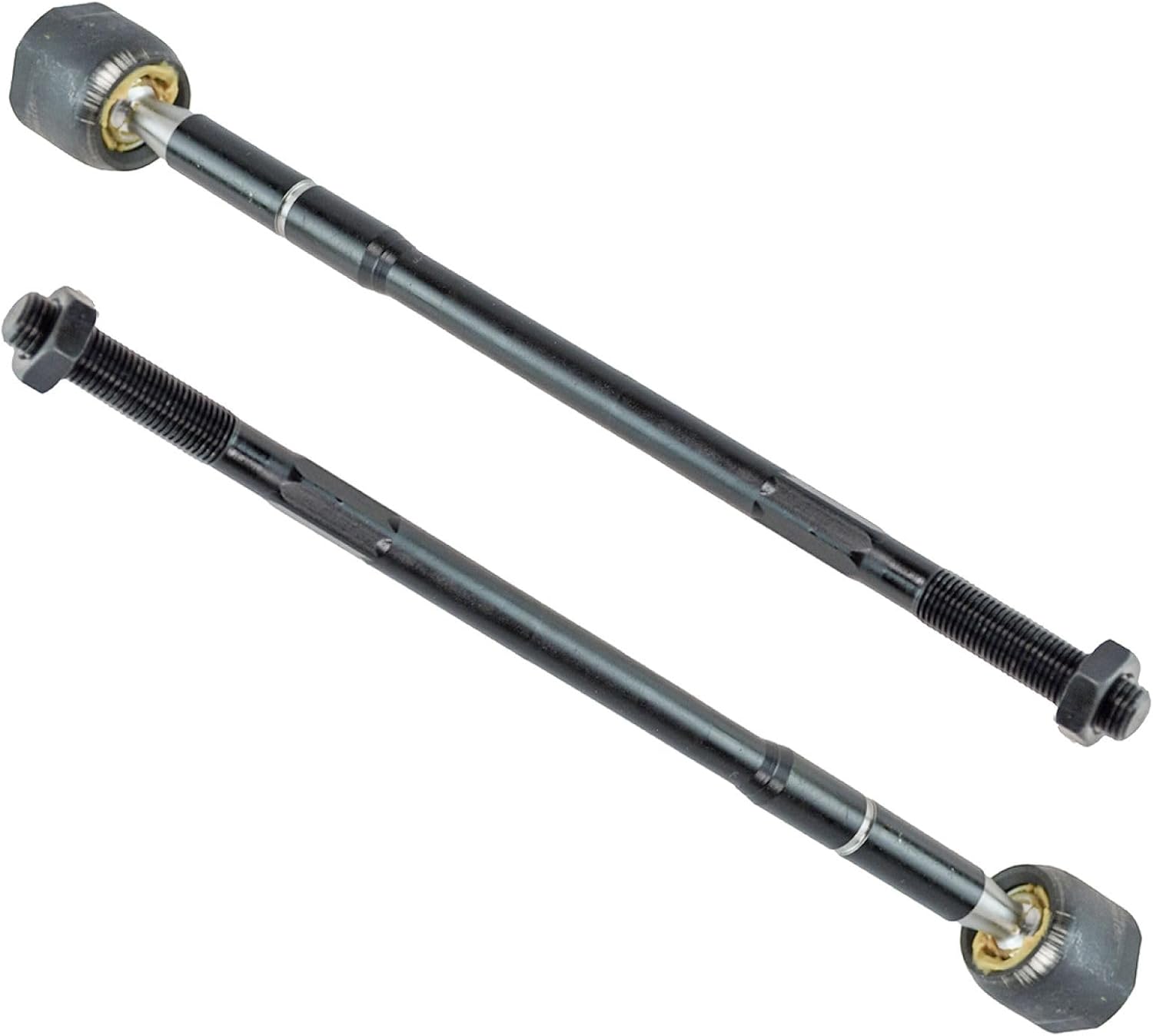
| Manufacturer | TRQ |
|---|---|
| Model | TRQ PSA55446 2 Piece Tie Rod Set |
| Exterior | Machined |
| Quantity | 2 Piece |
This TRQ two-piece front inner tie rod set replaces both driver and passenger inner tie rods on compatible Mitsubishi Lancer and Outlander models. It is supplied as pre-assembled, machined components intended for direct-fit installation, so you can swap both inner rods quickly during a front-end service and minimize downtime. The kit lists multiple factory reference numbers for fit confirmation and is commonly used when steering play, uneven tire wear, or knocking indicate worn inner tie rods. Practical benefits include matching factory fitment, straightforward installation for DIY mechanics or shops, and the convenience of replacing both sides at once to preserve steering geometry. Some buyers note the lack of grease zerk fittings, which means the joints are sealed for life rather than serviceable. While many owners report reliable, OEM-like fit and alignment stability after installation, a minority of heavy-duty or off-road users reported premature wear, so durability may vary with extreme use.
Best for: Reliability-focused buyers who prefer replacing steering components with direct-fit, pre-assembled parts to restore factory steering feel and avoid unexpected shop visits.
Less Ideal for: Drivers who regularly run heavy off-road loads or oversized tires should consider heavy-duty aftermarket steering components designed for extreme use.
- Sold as a complete 2-piece kit so both front inner tie rods are replaced together
- Machined exterior and pre-assembled design for straightforward direct-fit installation
- Compatible with a wide range of Mitsubishi Lancer model years and select Outlander years
- Includes manufacturer reference numbers to simplify fitment verification
- Sealed joints lack grease zerk fittings so they cannot be re-lubricated
- Some users report shorter life under heavy off-road or high-load conditions
Verdict: A direct-fit, pre-assembled inner tie rod kit that restores steering precision for Mitsubishi Lancer and compatible Outlander models.
6. TRQ Front Outer Tie Rod End (PSA68342) — Direct-fit for Mitsubishi Lancer/Outlander/Outlander Sport

| Manufacturer | TRQ |
|---|---|
| Model | TRQ PSA68342 Tie Rod |
| Exterior | Machined |
| Finish | E-Coated |
| Pre-Greased | Yes |
This TRQ front outer tie rod end is a direct-fit replacement for the steering linkage on compatible Mitsubishi models. It installs in the steering rack-to-wheel assembly to restore proper tie-rod connection and steering response after wear or failure. The part ships pre-greased with a dust boot and steel housing, so installation is straightforward for a mechanic or a capable DIYer and usually does not require modifications. The machined, e-coated finish and sealed design aim to resist corrosion and keep contaminants out. One notable limitation is that this unit is permanently sealed without a grease fitting, so it cannot be re-greased during future maintenance. Fitment is model- and year-specific, so verifying exact vehicle compatibility before purchase is necessary. Many buyers report OEM-like fit and easy installation, while a few noted fitment mismatches on unrelated vehicles, highlighting the importance of confirming the exact application.
Best for: Convenience-driven buyers who want a straightforward, ready-to-install steering replacement that minimizes shop time and avoids modifications.
Less Ideal for: Owners who prefer serviceable components that can be re-greased over the vehicle lifetime or those who need a universal or adjustable tie rod for custom setups.
- Direct-fit design for listed Mitsubishi models simplifies installation
- Pre-greased and sealed with dust boot for immediate use and contamination protection
- Steel construction and e-coated finish increase corrosion resistance
- Matches factory replacement geometry for straightforward alignment after installation
- Sealed design lacks a grease fitting so it cannot be serviced with fresh grease
Verdict: A ready-to-install, factory-replacement front outer tie rod end focused on easy fitment and corrosion resistance, but it is permanently sealed and not serviceable.
7. AUQDD Front Suspension Control Arm and Tie Rod Kit for Mitsubishi Lancer/Outlander

| Vehicle Fitment | 2008–2017 Mitsubishi Lancer (non-Evo); 2007–2020 Outlander; 2011–2022 Outlander Sport; 2011–2019 RVR |
|---|---|
| Kit Contents | 2 lower control arms w/ ball joints, 2 outer tie rod ends, 2 inner tie rod ends, 2 sway bar end links, 2 rack boots |
| Manufacturer | AUQDD |
| Model | Suspension Control arm Kit |
This AUQDD front end kit bundles the parts you need to rebuild the front suspension on compatible Mitsubishi Lancer and Outlander models. It includes two lower control arms with ball joints, inner and outer tie rod ends, sway bar end links, and rack-and-pinion boots so you can tackle multiple worn components at once instead of sourcing parts individually. In use the control arms provide the expected wheel control and the ball joints allow steering articulation while the tie rods restore steering response. Buyers report generally good packaging and improved ride feel after installation, though some customers needed to reuse factory fasteners because the supplied bolts did not match. Fitment is vehicle-specific so careful verification against year and model is required before ordering. This kit is practical for a coordinated front suspension refresh but may require experience to sort fastener fitment and alignment after installation.
Best for: Risk-averse mainstream buyers who want a practical, one-stop solution to restore front suspension and steering feel on applicable Mitsubishi Lancer or Outlander models and prefer bundled replacement parts to minimize visits to multiple suppliers.
Less Ideal for: Buyers who expect guaranteed bolt-for-bolt factory-fit without any adjustment or those who prefer individual OEM-sourced components for exact original fitment.
- Comprehensive kit replaces multiple front suspension components in one purchase
- Includes lower control arms with ball joints to restore wheel control and steering geometry
- Packed and shipped as a matched set which simplifies a coordinated repair
- Includes rack-and-pinion boots to protect steering rack after tie rod replacement
- Some customers reported incorrect or nonmatching bolts requiring reuse of original hardware
- Fitment inconsistencies reported by a few buyers, so verification is essential
- May require a professional alignment after installation which adds cost
Verdict: A convenient, budget-friendly bundled front suspension kit for compatible Mitsubishi Lancer and Outlander models that simplifies repairs but may need bolt verification and a post-install alignment.
Choosing the Right Mitsubishi Lancer Tie Rod End: Key Factors to Consider
Fitment and Thread Specifications
Correct fitment is essential because improper thread pitch or incorrect stud dimensions can prevent safe installation or lead to premature loosening. You should verify that the replacement matches the Mitsubishi Lancer's factory steering arm and inner tie rod interface so steering geometry is maintained.
Mismatched components often require adapters or rethreading, which adds failure points. Choosing a part with exact OEM-style dimensions reduces alignment time and helps ensure predictable handling after installation.
Ball Joint Durability and Seal Design
The tie rod end's ball joint is a wear point that directly affects steering precision. Robust ball bearings and hardened contact surfaces resist deformation under load and keep free play to a minimum, preserving crisp steering response.
A reliable dust boot and effective grease sealing are equally important because contamination shortens service life. Seals that repel water and road debris help maintain lubrication and slow wear, extending the interval between replacements.
Material Quality and Corrosion Resistance
Materials determine how well the part withstands environmental stress. Corrosion-resistant finishes and high-strength steel or alloy components resist rust and structural weakening from road salt and moisture.
Surface treatments such as zinc plating or specialized coatings reduce the chance of seized threads and simplify future maintenance. Higher material quality typically translates to longer service life and more consistent steering feel over time.
Adjustability and Alignment Compatibility
Tie rod ends must allow the correct range of length adjustment to achieve proper toe settings during alignment. Parts that preserve the factory adjustment method make it easier to hit alignment specs without modifying inner components.
Consider whether the design permits incremental adjustments and whether tie rod end ends lock securely after alignment. Good adjustability reduces shop time and helps maintain tire wear and handling characteristics.
Installation Accessibility and Hardware
Ease of installation affects labor time and whether you can perform the replacement at home or need professional help. Components that include compatible nuts, cotter pins, and clear mounting interfaces simplify the job and reduce the risk of missing or incorrect hardware.
Designs that do not require special tools or excess disassembly of suspension parts are preferable for routine maintenance. Also check for features that facilitate safe torque application and secure fastening to steering linkage points.
Expected Service Life and Maintenance Needs
Consider how often the tie rod end will need inspection or servicing under your driving conditions. Units with sealed designs often need less routine attention, while greasable fittings allow for periodic lubrication that can extend life in harsh conditions.
Evaluate the tradeoff between sealed convenience and the potential longevity gains from maintainable designs. Knowing typical wear intervals helps plan inspections and budget for eventual replacement.
How We Chose the Best Mitsubishi Lancer Tie Rod End
We focused on parts that deliver correct fitment and consistent steering geometry for the Mitsubishi Lancer. Key evaluation criteria included ball-joint durability and sealing, OEM-matching dimensions for straightforward installation, material quality and corrosion resistance, and the precision of steering linkage connection points. We also considered ease of installation, including whether the design permits common adjustment methods used during wheel alignment, and the expected service life under typical driving conditions.Excluded items included universal or non-vehicle-specific components that require extensive modification, specialty racing parts unsuitable for normal road use, and any listings lacking clear specification data. The resulting shortlist emphasizes components that preserve factory steering behavior while minimizing installation complexity and maintenance.
Our full evaluation process is outlined in our review methodology.
FAQ
What are common symptoms of a failing tie rod end?
Common signs often include loose or imprecise steering, uneven tire wear, and a knocking or clunking noise when turning. You may also notice wandering or a need for constant steering corrections. If these symptoms appear, have the steering linkage inspected promptly.
Can I replace a Mitsubishi Lancer tie rod end myself?
Many mechanically inclined owners can perform a tie rod end replacement with basic tools, a jack, and a torque wrench. The job typically requires a proper alignment afterward, so plan to get wheel alignment or be prepared to adjust toe settings if you have the equipment.
How long do tie rod ends usually last?
Service life depends on driving conditions and component quality, but they often last many tens of thousands of miles under normal use. Exposure to heavy road salt, off-road driving, or frequent potholes can shorten life and necessitate earlier replacement.
Will replacing tie rod ends fix steering alignment issues?
Replacing worn tie rod ends can correct excessive play that affects alignment, but a full wheel alignment is usually required to restore precise toe and tracking. New parts should be installed before alignment to ensure accurate adjustment range.
What maintenance helps extend tie rod end life?
Regular inspections for boot damage, keeping components clean, and greasing fittings when present will extend service life. Avoiding harsh impacts and promptly addressing suspension issues also reduces stress on tie rod ends.
Conclusion
When choosing tie rod ends for a Mitsubishi Lancer, prioritize correct fitment, durable ball-joint construction, and a reliable sealing system. These factors most directly affect steering precision, safety, and service life.Balance the benefit of sealed units for low maintenance against greasable designs that permit periodic lubrication. Ensure the chosen part supports accurate alignment adjustments and comes with the necessary hardware to simplify installation.
Explore More:
- Check out all Mitsubishi Lancer parts & accessories
- Explore Tie Rod Ends Maintenance & Repair Guides
- Explore Suspension & Steering
- Browse all Auto Parts
