

Note: This article contains affiliate links. If you click on these links and make a purchase, I may earn a small commission at no extra cost to you. This helps support my research and content. Read my full affiliate disclosure here.
When your Mitsubishi Lancer AC condenser fails or loses efficiency, cabin cooling and defogging suffer. Choosing the right condenser matters because it affects cooling capacity, refrigerant containment, and how easily the unit installs. This guide highlights five shortlisted options that meet common needs for replacement and repair, with attention to fitment, build quality, and compatibility with factory service procedures. Below we summarize the factors we evaluated and present the top picks for Mitsubishi Lancer owners seeking a dependable condenser replacement.
Looking for other parts? See all Mitsubishi Lancer parts & accessories.
Top Picks at a Glance
| Best Overall The best all-around choice for most situations | A-Premium A/C Condenser with Receiver Drier Compatible with Mitsubishi Lancer (2009-2017) and Related Models |  |
| Best Quality Built to a higher standard if you want something more solid | TYC Condenser Assembly for 2008-2019 Mitsubishi Lancer |  |
| Best budget The cheapest option that still gets the job done reliably | ASAPE AC Condenser for Mitsubishi Lancer (select years) |  |
| Highest Rated A top-rated pick with lots of positive feedback | TRQ A/C Condenser and Receiver Drier Assembly (ACA84421) |  |
| Best Seller A high-volume bestseller chosen again and again | UAC CN 4984PFXC A/C Condenser |  |
1. A-Premium A/C Condenser with Receiver Drier Compatible with Mitsubishi Lancer (2009-2017) and Related Models

| Brand | A-Premium |
|---|---|
| Manufacturer | PremiumpartsWhosale |
| Manufacturer Part Number | APCON138 |
| OEM Part Number | 7812A030, 7812A204, 7812A274, MI3030172, CN3747PFC, 3747 |
This A-Premium condenser replaces the factory A/C condenser and includes a receiver drier and mounting bracket for a direct bolt-on installation on compatible Mitsubishi Lancer models and related vehicles. It is intended for owners needing to restore cooling performance after a leak or failure and is used the same way a factory condenser is: mounted behind the front bumper and plumbed into the vehicle air conditioning system. Notable features include full assembly with receiver drier, aluminum construction for heat dissipation, and manufacturer-listed fitment across multiple Mitsubishi model years. In practice it delivers quick cooling recovery when installed correctly and simplifies repair by supplying the drier and bracket with the condenser. Some users report variable perceived material thickness and a minority had quality concerns, so careful inspection at install and proper system evacuation and recharge are recommended. The unit comes with a one-year unlimited-mileage guarantee from the brand which adds reassurance for routine ownership.
Best for: Balanced buyers who want a factory-replacement style condenser that restores A/C performance without premium aftermarket modification and value an all-in-one kit for an easier swap.
Less Ideal for: Shoppers seeking high-end performance upgrades or heavy-duty commercial cooling solutions should look at specialized performance condensers instead.
- Direct bolt-on replacement that includes receiver drier and mounting bracket for easier installation
- Aluminum condenser design intended to improve heat dissipation and restore A/C cooling
- Manufacturer lists broad fitment across Mitsubishi Lancer and related models, simplifying part selection
- Includes a one-year unlimited-mileage guarantee for added buyer reassurance
- Some buyers reported concerns about material thickness and perceived build quality
- May require professional evacuation and recharge of the A/C system after installation
Verdict: A complete, direct-fit replacement condenser with receiver drier that restores factory-style A/C cooling for Mitsubishi Lancer owners.
2. TYC Condenser Assembly for 2008-2019 Mitsubishi Lancer

| Material Type | Aluminum |
|---|---|
| Part Interchange Info | 7812A274 |
| Included Components | Condenser |
| Item Shape | Rectangular |
This TYC condenser is a direct-fit replacement designed to restore air conditioning performance on compatible Mitsubishi Lancer models. It mirrors factory construction with louvered aluminum fins and tubes bonded via the Nocolok furnace process, which improves heat transfer and durability compared with basic aftermarket cores. The unit is test-fit on vehicles before release and includes mounting brackets and inlet/outlet locations arranged for a straightforward swap, so installation is typically quick for a competent DIYer or tech. Because TYC uses a receiver/dryer where applicable and leak-tests each condenser, users get a component that reduces risk of refrigerant loss and premature failure. The main limitation is that this is a single condenser assembly so any aged hoses, accumulator, or orifice tube in the AC circuit may still need attention to fully restore system performance. Expect factory-like cooling capacity and reliability when the rest of the system is healthy.
Best for: Performance-oriented buyers who want a high-quality, factory-style replacement condenser that restores cooling efficiency and durability for spirited driving and hot-weather use.
Less Ideal for: Buyers looking for a complete AC system refresh or those who need an entire kit with hoses, dryer, and fittings included should consider a more comprehensive solution.
- Factory-style construction with louvered aluminum fins and tubes for efficient heat transfer
- Vehicle test-fit prior to market release for accurate drop-in installation
- Leak-tested at the factory to reduce early refrigerant leaks
- Includes correct mounting bracket positions and inlet/outlet fittings to simplify replacement
- Only the condenser assembly is supplied so other worn AC components may still require replacement
Verdict: A factory-style, leak-tested aluminum condenser built to deliver reliable, high-performance cooling as a direct-fit replacement for Mitsubishi Lancer models.
3. ASAPE AC Condenser for Mitsubishi Lancer (select years)
| Model | AC Condenser |
|---|---|
| Manufacturer Part Number | 122665-5459-1356220141 |
| OE part number | 3747 |
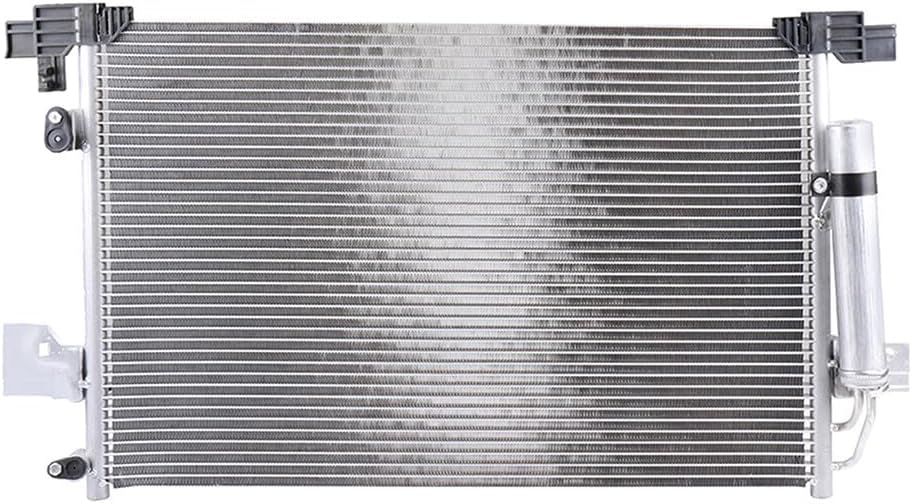
This ASAPE condenser is a budget-focused replacement part intended to restore the A/C cooling circuit on compatible Mitsubishi Lancer models. It installs in place of the factory condenser and is typically used when the original unit leaks or no longer cools efficiently. The design emphasizes high-density fins for faster heat transfer, and the listing notes improved sealing and low operating noise compared with worn OEM units. For a budget buyer the practical benefits are straightforward: it provides a like-for-like fit for Lancer model years listed in the fitment, restores refrigerant cooling performance, and avoids higher-cost dealer units. Important limitations are that this is an aftermarket condenser so finish and long-term durability can vary versus factory-quality parts, and fitment must be verified against the Lancer model year and engine because multiple model applications are listed. Installation may require standard A/C service tools and professional evacuation and recharge of refrigerant to meet safety and emissions requirements.
Best for: Budget-conscious Mitsubishi Lancer owners seeking an affordable replacement to restore A/C cooling without paying for dealer parts or premium aftermarket options.
Less Ideal for: Owners seeking a long-term OEM-equivalent part or who prefer manufacturer-certified components and warranties should consider factory-quality replacements or dealer units instead.
- Lists direct fit for multiple Mitsubishi Lancer year and engine combinations relevant to the model.
- High-density fin design intended to improve heat dissipation and cooling efficiency.
- Marketed with improved sealing and reduced operating noise compared with worn originals.
- Aftermarket construction means long-term durability may not match factory-quality condensers.
- Fitment covers several Mitsubishi models and years so buyers must confirm exact compatibility for their Lancer variant.
Verdict: A cost-focused condenser that restores A/C function for compatible Mitsubishi Lancer models but requires careful fitment checks and accepts the usual durability trade-offs of budget aftermarket parts.
4. TRQ A/C Condenser and Receiver Drier Assembly (ACA84421)
| Core Material | Aluminum |
|---|---|
| Core Thickness | 0.63 in |
| Core Width | 16.22 in |
| Core Length | 25.88 in |
| Mounting Hardware Included | Yes |
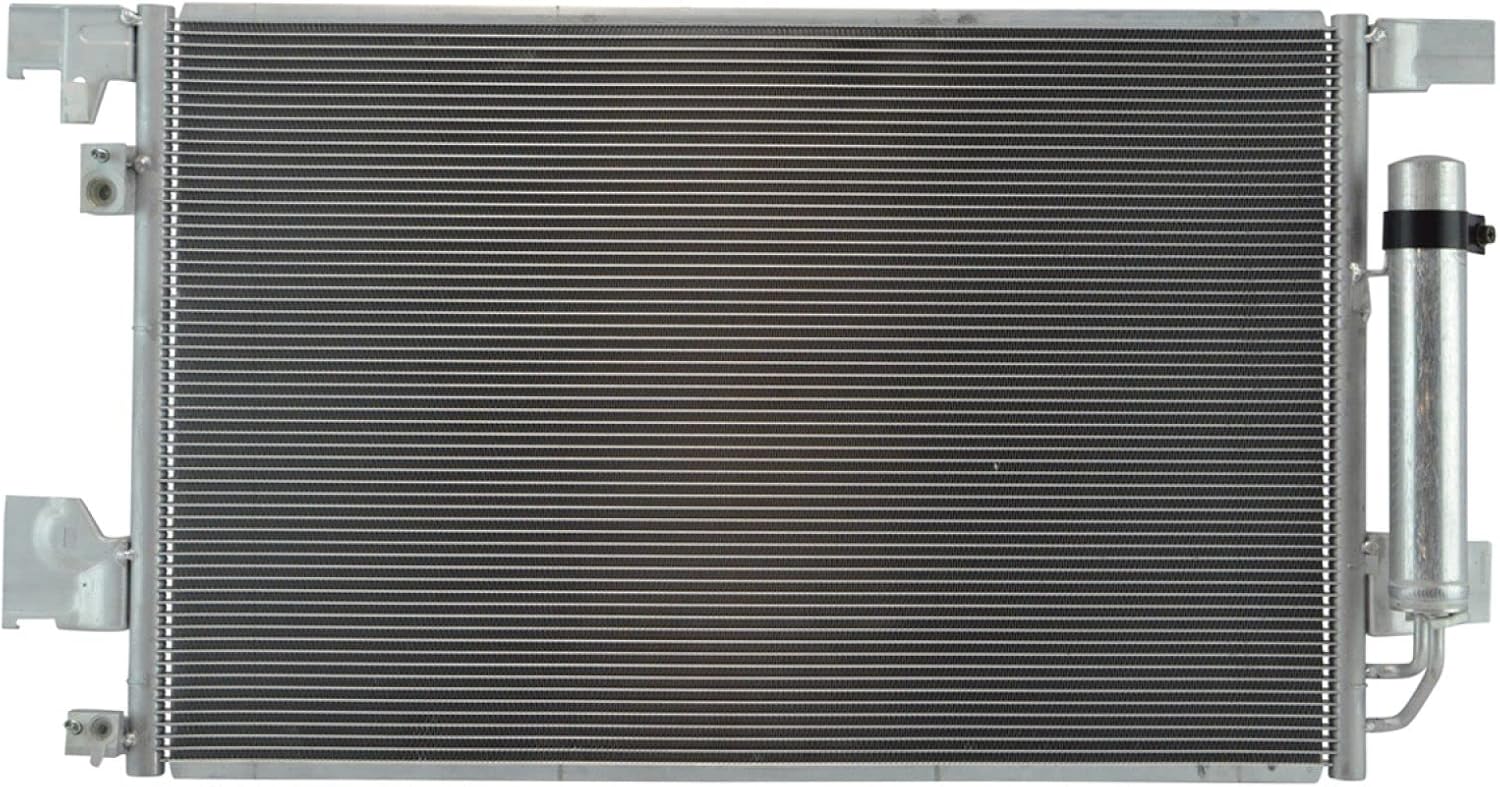
This TRQ condenser ships as a pre-assembled condenser and receiver drier intended as a direct replacement for factory units on compatible Mitsubishi models. It installs in the vehicle's cooling system to condense refrigerant vapor back into liquid and remove moisture through the integrated drier, restoring proper air conditioning performance after a failed condenser. Notable features include an aluminum core and included mounting hardware to simplify installation and reduce modification time. The assembly’s direct-fit design and TRQ's DIY video resources make it approachable for experienced DIY mechanics and independent shops, and many buyers report solid fit and cold air after install. Limitations include fitment sensitivity between similar model years, so verifying orientation and connection locations against the vehicle before purchase is important. The product leans toward value-conscious reliability rather than premium OE-grade materials, so installers who need an exact factory match for long-term OEM parity should compare part specifics before replacing the original unit.
Best for: Reliability-focused owners who prefer a direct-replacement part that restores A/C function with minimal fuss and supports DIY or independent-shop installation.
Less Ideal for: Buyers seeking an exact factory-original condenser for long-term OEM matching or those unwilling to verify connector orientation and fit against their vehicle first.
- Pre-assembled condenser with receiver drier simplifies installation and reduces plumbing steps
- Aluminum core construction for effective heat transfer
- Includes mounting hardware for a direct-fit replacement
- Well reviewed by users for fit and restoring cold A/C performance
- Fitment can vary between close model years so visual comparison is recommended before installation
- Not explicitly marketed as a factory-quality OEM unit, which may concern buyers seeking exact OEM parity
Verdict: A user-friendly, pre-assembled condenser and receiver drier that reliably restores cold A/C performance on compatible Mitsubishi Lancer models.
5. UAC CN 4984PFXC A/C Condenser

| Capacitance | 4984 Picofarad |
|---|---|
| Item Shape | Rectangular |
| Mounting Type | Pole Mount |
| Material Type | Aluminum |
This UAC CN 4984PFXC condenser is a factory-style replacement condenser intended to remove heat from refrigerant and restore A/C cooling performance. It is used when a worn or leaking condenser leaves the system underperforming or unable to hold vacuum. The unit is constructed from brazed and mechanically bonded aluminum with an anti-corrosive paint layer and is pressure tested with helium to check for leaks before shipping. For installation it mounts in the condenser location and connects to the vehicle refrigerant lines; buyers typically replace the condenser when repairing a failed A/C system and often change related components at the same time. The practical benefits are straightforward: a tested, prefinished condenser that aims to fit like a factory part and resist corrosion. Important limitations are that fitment must be confirmed for the specific Mitsubishi Lancer year and engine option, and some customers reported missing small connector bolts in the package so verify hardware on arrival or have replacement fasteners available.
Best for: Risk-averse mainstream buyers who prioritize buying a tested, factory-style replacement part to restore reliable A/C performance with minimal surprises.
Less Ideal for: Buyers who want performance or upgraded cooling beyond factory capability or those who prefer a condenser that includes a complete hardware kit out of the box.
- Factory-style brazed aluminum construction for durability and thermal transfer
- Anti-corrosive paint layer to slow aging in road-exposed locations
- Helium pressure testing performed to check for leaks before delivery
- Designed as a direct-fit replacement to simplify installation
- Some units have arrived with missing small connector bolts requiring sourcing replacements
Verdict: A pressure-tested, factory-style aluminum condenser intended to restore reliable A/C cooling with corrosion resistance.
Choosing the Right Mitsubishi Lancer AC Condenser: Key Factors to Consider
Exact Vehicle Fitment
Fitment is the most important factor because the condenser must align with the Lancer's mounting points, brackets, and condenser-to-evaporator interfaces. A unit with precise fitment reduces installation time, avoids modifications to the bumper or radiator support, and prevents stresses that can lead to premature failure.
Verify the condenser's mounting pattern, inlet and outlet orientations, and bracket locations before purchase. Even small deviations can complicate hose connections and affect refrigerant line routing, so choose a condenser specified explicitly for the Mitsubishi Lancer to ensure proper mechanical and service alignment.
Core Design and Airflow Efficiency
The core design dictates how effectively heat transfers from the refrigerant to passing air, which determines cooling performance. Look for cores with efficient fin patterns and sufficient surface area to match the Lancer's stock cooling capacity.
Better airflow efficiency can reduce compressor workload and improve cabin comfort, especially in hot conditions. Consider core thickness and fin density as they influence both heat rejection and potential susceptibility to clogging from road debris.
Build Materials and Corrosion Protection
Condenser longevity depends heavily on materials and protective coatings because the unit is exposed to road salts, moisture, and debris. Aluminum cores with robust anti-corrosion coatings or anodizing resist leaks and extend service life in varied climates.
Assess whether the condenser has treated fins, reinforced end tanks, and sealed joints. Units without adequate corrosion protection may develop pinhole leaks or degraded performance more quickly, increasing the chance of refrigerant loss and costly service events.
Refrigerant Ports and Serviceability
Serviceability matters for leak detection, evacuation, and recharge operations. Condensers with clearly marked, accessible port fittings and standard refrigerant connections simplify workshop procedures such as pressure testing and vacuum operations.
Consider port types and locations relative to the vehicle's service access. A condenser designed with technician access in mind reduces labor time for diagnostics, enables straightforward dye or electronic leak detection, and helps ensure proper evacuation before refrigerant charging.
Compatibility With System Components
A condenser must integrate with other air conditioning components like the receiver-drier or accumulator, expansion device, and condenser fans. Compatibility ensures the system maintains correct refrigerant charge and pressure characteristics without additional modifications.
Confirm that the condenser works with the vehicle's original refrigerant type and that any included fittings or adapters match the Lancer's lines. Mismatched components can cause service complications and affect overall system performance.
Durability and Maintenance Considerations
Durability involves resistance to vibration, impact, and thermal cycling. A condenser built with reinforced tanks and robust brazing or welding practices will better withstand road conditions and repeated thermal stress.
Also weigh ease of routine maintenance such as cleaning, fin straightening, and replacement of nearby components. A condenser that allows easy access for inspection and basic upkeep will lower long-term maintenance effort and help preserve cooling performance.
How We Chose the Best Mitsubishi Lancer AC Condenser
We evaluated candidate condensers using criteria focused on real-world repair and performance needs for the Mitsubishi Lancer. Key filters included exact vehicle fitment and mounting alignment, core construction and airflow efficiency, corrosion resistance and coating, refrigerant port type and serviceability, and durability under typical driving conditions. We also considered how straightforward the unit is to install with standard tools and whether the design supports routine maintenance tasks such as leak detection and system evacuation. Exclusions applied to any units lacking clear fitment data, nonstandard refrigerant compatibility, or inadequate corrosion protection. Our process prioritized condensers that reduce installation time, minimize leak risk, and restore cooling capacity reliably while matching factory connection points and service procedures.
Our full evaluation process is outlined in our review methodology.
FAQ
What are common signs that my Mitsubishi Lancer condenser is failing?
Common indicators include reduced cooling output, warm air from the vents when the compressor runs, visible oil residue or bent fins on the condenser, and higher than normal head pressures during a system check. Sometimes you may notice intermittent cooling or unusual noises related to a restricted flow.
Can I replace the condenser myself or should a technician handle it?
Replacing a condenser involves refrigerant recovery and system evacuation, which often requires certified equipment and procedures. If you have the proper tools, training, and access to refrigerant handling gear, a DIY replacement is possible. Otherwise, a trained technician will ensure correct evacuation, leak testing, and system recharge.
How can I check for a refrigerant leak in the condenser?
Leak detection usually involves visual inspection for oily residue, electronic leak detectors, or using UV dye with a follow-up inspection. Pressure testing the system with inert gas and using a soap solution on joints and fittings can also reveal leaks. These methods help pinpoint whether the condenser or another component is leaking.
Do I need to replace other components when changing the condenser?
It is often recommended to replace associated components like the receiver-drier or accumulator and to inspect lines and O-rings for wear. Replacing these items during a condenser service reduces the risk of contamination and moisture remaining in the system, which helps protect the compressor and maintain performance.
How important is matching refrigerant type when selecting a condenser?
Matching the vehicle's specified refrigerant is important because port fittings, internal passages, and materials are designed for particular refrigerants. Using a condenser compatible with the Lancer's refrigerant ensures proper pressures and helps avoid compatibility issues with seals and hoses.
Conclusion
When choosing a Mitsubishi Lancer AC condenser prioritize exact fitment, core efficiency, and corrosion resistance. Those factors directly influence installation complexity, cooling performance, and long-term reliability.Balance ease of serviceability and compatibility with the rest of the air conditioning system to minimize labor and reduce the chance of repeat failures. Focusing on these criteria will help you select a condenser that restores consistent cabin cooling and supports straightforward maintenance.
Explore More:
- Check out all Mitsubishi Lancer parts & accessories
- Explore AC Condensers Maintenance & Repair Guides
- Explore HVAC
- Browse all Auto Parts
