

Note: This article contains affiliate links. If you click on these links and make a purchase, I may earn a small commission at no extra cost to you. This helps support my research and content. Read my full affiliate disclosure here.
When your Acura RDX feels loose, pulls to one side, or exhibits uneven tire wear, the lower control arm is often involved. Choosing the right lower control arm matters because it directly affects alignment, steering precision, and suspension longevity. This guide shortlists the top options for the Acura RDX and explains the key attributes that influence fit and function. We evaluated candidate parts on fitment accuracy, bushing quality, construction, and ease of installation to identify seven top picks that address common riding and handling issues. Read on to understand the criteria we used and which features matter most when replacing a control arm.
Looking for other parts? See all Acura RDX parts & accessories.
Top Picks at a Glance
| Best Reviewed A top-rated pick with lots of positive feedback | Metrix Premium Chassis Parts Front Right Lower Control Arm with Ball Joint for Acura RDX |  |
| Most Popular A crowd favorite that many people choose with confidence | NA Car Parts Front Left Lower Control Arm for 2007–2012 Acura RDX |  |
| Best Quality Built to a higher standard if you want something more solid | TRQ Front Lower Control Arm with Ball Joint Set (2‑Piece) |  |
| Best Budget The cheapest option that still gets the job done reliably | Dorman Front Passenger Lower Control Arm and Ball Joint Assembly (521-700) |  |
| Most Sold A high-volume bestseller chosen again and again | A-Premium Front Lower Control Arm with Ball Joint and Bushing (pair) |  |
| Best Value for Money The sweet spot between price and what you get | TRQ Front Right Lower Control Arm with Ball Joint for 2007–2012 Acura RDX | 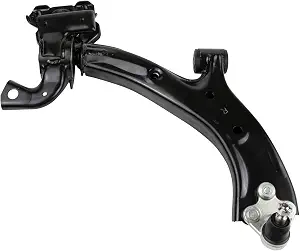 |
| Best Overall The best all-around choice for most situations | Detroit Axle 6‑Piece Front Suspension Kit for 2007–2012 Acura RDX |  |
1. Metrix Premium Chassis Parts Front Right Lower Control Arm with Ball Joint for Acura RDX

| Fit Type | Vehicle Specific |
|---|---|
| Auto Part Position | Right Lower |
| Material | Sheet Metal |
| Compatible Models | 2013-2018 Acura RDX |
| Warranty | 3 Year / 36,000 miles Limited Warranty |
This Metrix front right lower control arm is a direct-fit replacement engineered for 2013–2018 Acura RDX models. It arrives as a complete assembly with a pressed-in ball joint and bushing, pre-greased to simplify installation and reduce initial break-in noise. Typical use is straightforward: swap the failing passenger-side lower arm for this unit to restore steering stability and eliminate play or unusual tire movement. The part is sheet-metal construction with machined exterior details and is marketed as meeting IATF 16949 and ISO 9001 standards, which suggests consistent manufacturing quality. Real-world benefits include OEM-style fitment, reduced installation time since the ball joint is installed, and a three-year/36,000-mile limited warranty for peace of mind. Limitations are that the unit uses a pressed-in ball joint without an external grease fitting, so long-term servicing requires replacement or disassembly rather than periodic greasing, and buyers expecting an exact OEM finish may notice minor cosmetic differences. Professional installation is recommended when alignment or suspension geometry could be affected.
Best for: Reliability-focused buyers who prioritize a factory-quality, tested replacement that restores steering and suspension stability with minimal fuss and long-term confidence.
Less Ideal for: Drivers who want a serviceable ball joint with a grease fitting or who plan to frequently re-grease suspension joints should consider alternatives designed for regular maintenance.
- Vehicle-specific fit for 2013–2018 Acura RDX, reducing fitment issues
- Comes as a complete assembly with pre-greased ball joint and bushing for faster installation
- Manufactured to certified quality standards (IATF 16949 and ISO 9001) indicating consistent production
- 3 year / 36,000 mile limited warranty provides added reliability assurance
- Ball joint is pressed-in without a grease fitting, preventing easy periodic lubrication
- Sheet metal finish and cosmetic details may differ slightly from factory parts
Verdict A reliable, factory-quality right lower control arm for 2013–2018 Acura RDX that offers direct fitment and a warranty but uses a non-greasable pressed-in ball joint.
2. NA Car Parts Front Left Lower Control Arm for 2007–2012 Acura RDX

| Fitment | 2007–2012 Acura RDX (front left) |
|---|---|
| Pre-greased | Yes |
| Manufacturer | NA Car Parts |
| Item model number | 8211273 |
This NA Car Parts front left lower control arm replaces the factory part on 2007–2012 Acura RDX vehicles and is intended for direct, no-modification installation. The unit ships pre-greased and is built to match original specifications so it drops in using existing mounting points and hardware, simplifying a common suspension repair. The listing emphasizes durability testing for fatigue, temperature, and push-pull stresses, which suggests the arm is aimed at lasting through normal road use and mild driving conditions. Practical benefits include quick installation for DIY mechanics or shops and an expected improvement in steering stability and alignment retention when worn arms are replaced. Limitations are that this is a single-side replacement item and buyers should verify they are purchasing the correct left-side part; professional alignment after installation is still required. Fit and finish may vary by supplier since brand details are generic rather than a long-established OEM name.
Best for: Buyers who prioritize convenience and a straightforward repair process—DIYers or independent shops that want a ready-to-install, factory-quality replacement for a 2007–2012 Acura RDX.
Less Ideal for: Drivers seeking branded OEM parts with detailed manufacturer provenance or those who prefer buying complete suspension kits rather than individual components.
- Designed for direct, no-modification installation on 2007–2012 Acura RDX front left position
- Ships fully pre-greased to simplify installation and reduce prep time
- Engineered and tested for fatigue and temperature resistance to improve durability
- Matches original specifications to help restore steering geometry and handling
- Sold as a single left-side control arm so a matching right-side or pair must be purchased separately if needed
- Branding is generic which can make long-term part sourcing or exact supplier traceability less clear
Verdict A convenient, ready-to-install front left replacement control arm for 2007–2012 Acura RDX owners who want a quick, factory-quality repair.
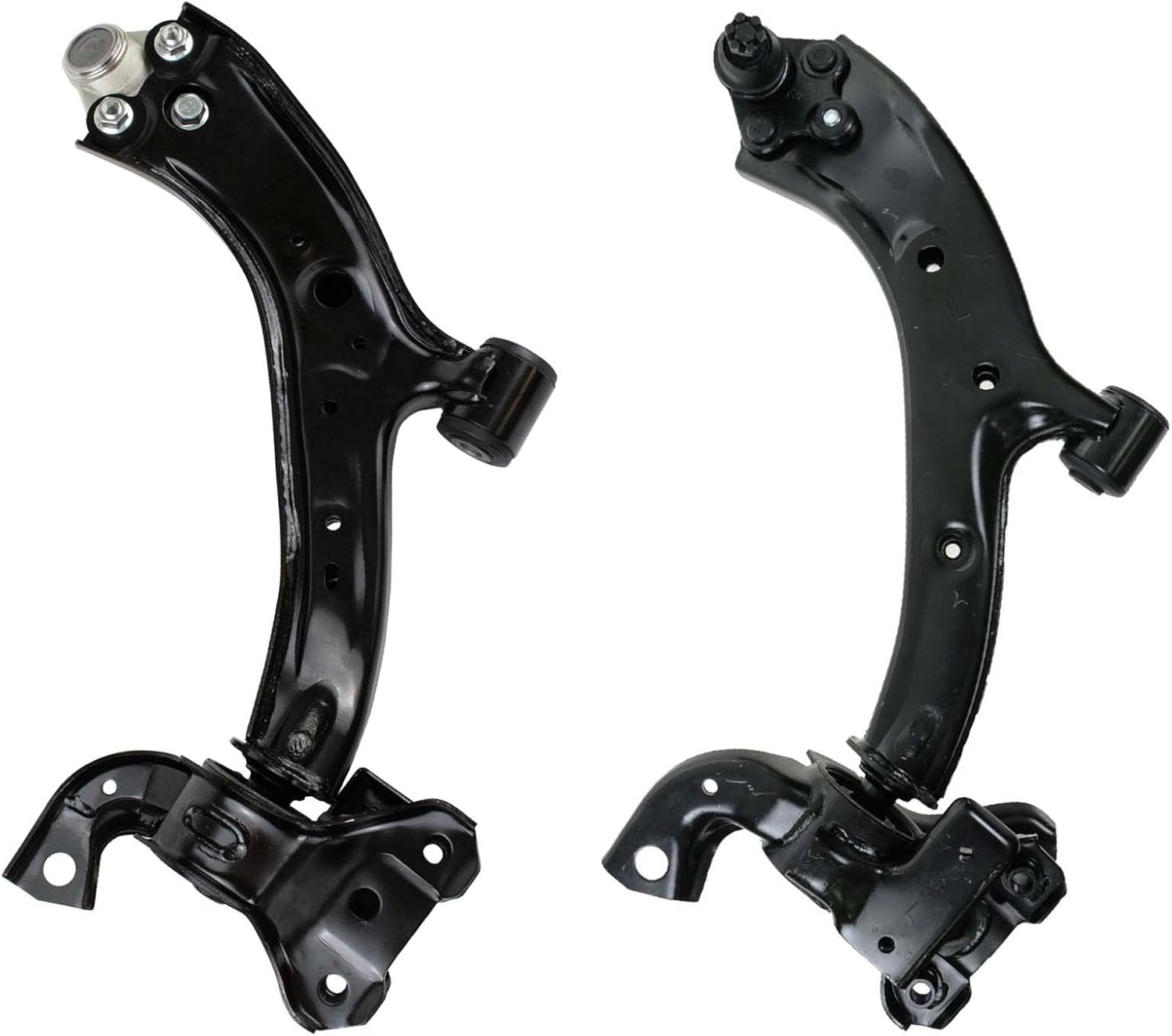
3. TRQ Front Lower Control Arm with Ball Joint Set (2‑Piece)
| Fitment | Acura RDX 2007–2012 |
|---|---|
| Quantity | 2 Piece |
| Position | Front Lower |
| Exterior | Machined |
This TRQ front lower control arm kit replaces both driver and passenger lower arms and comes with ball joints pre-assembled to simplify installation. Intended as a direct-fit replacement for the 2007–2012 Acura RDX, it bolts into the factory mounting points so a professional alignment is the only major follow-up step. Notable features include pre-installed ball joints and a machined exterior that aim to restore steering response and reduce play from worn original components. The main practical benefits are quicker installation compared with separate parts, tighter front-end feel after replacement, and the convenience of TRQ’s DIY support resources. Some buyers report occasional early wear on ball joints, so long-term durability may vary with driving conditions. Also the kit uses standard fasteners that in a few cases required reusing original hardware for proper cotter pin clearance. For a performance-minded RDX owner wanting to regain crisp steering and improved handling without aftermarket suspension reengineering, this kit is a straightforward, mostly bolt-in option.
Best for: Performance-oriented owners focused on restoring crisp steering and suspension control on a 2007–2012 Acura RDX who prefer a mostly bolt-in, DIY-friendly replacement.
Less Ideal for: Drivers seeking a heavy-duty or performance-upgraded control arm beyond factory-spec durability, or those who want a lifetime-guaranteed part, should consider more robust aftermarket options.
- Pre-assembled ball joints save installation time and reduce complexity.
- Designed as vehicle-specific fit for Acura RDX 2007–2012 for accurate alignment of factory mounting points.
- Machined exterior and solid bushings intended to restore tighter steering feel and even tire wear.
- Includes both driver and passenger lower arms for a matched replacement set.
- Some users reported premature ball-joint wear on certain vehicles, indicating variable long-term durability.
- Included nut dimensions may not work with the original cotter-pin arrangement, requiring reuse of factory hardware in some cases.
Verdict A convenient, mostly bolt-in replacement for restoring steering crispness on a 2007–2012 Acura RDX, though long-term ball-joint life can vary.
4. Dorman Front Passenger Lower Control Arm and Ball Joint Assembly (521-700)

| Fitment | Passenger side, front, Acura RDX 2007-2012 |
|---|---|
| Material | Alloy Steel |
| Includes | Preinstalled ball joint and bushings |
| Manufacturer | Dorman Products |
This Dorman control arm and ball joint assembly replaces the factory lower passenger-side unit on compatible Acura RDX years and comes with the ball joint and bushings already installed to simplify installation. It is used as a direct replacement during suspension repairs to restore steering stability, alignment behavior, and ride control after a worn arm causes noise, uneven tire wear, or poor handling. The part is alloy steel with machined exterior surfaces and corrosion-resistant coatings intended to extend service life. Because it ships as a complete assembly, labor time is reduced compared with sourcing separate components and pressing in a ball joint. Limitations are that fitment is vehicle-specific so you must confirm year and trim, and while Dorman tests for ride characteristics this is an aftermarket replacement rather than a factory-sourced component, which may matter for drivers seeking exact factory feel or highest-end durability under heavy-duty use.
Best for: Practical, budget-conscious buyers who want a reliable, cost-effective repair that minimizes shop time and restores safe handling on an Acura RDX.
Less Ideal for: Owners seeking an exact factory feel or who plan high-performance or heavy-duty use should consider a factory-quality or upgraded performance control arm instead.
- Direct-fit design with preinstalled ball joint and bushings reduces installation time
- Engineered and tested for stable steering and predictable handling
- Alloy steel construction with protective coatings for corrosion resistance
- Aftermarket replacement may differ slightly in feel and longevity from factory parts
Verdict A cost-effective, ready-to-install lower control arm assembly that restores handling and cuts installation time for budget-focused Acura RDX repairs.
5. A-Premium Front Lower Control Arm with Ball Joint and Bushing (pair)

| Compatible vehicles | Acura RDX 2019, 2020, 2021, 2022 |
|---|---|
| Position | Front Lower, left and right |
| Material | Aluminum |
| Includes | Ball joint and bushing, pre-greased |
This A-Premium front lower control arm pair replaces the factory lower arms on Acura RDX models from 2019 through 2022 and includes pre-greased ball joints and bushings for a direct suspension replacement. It is used as a like-for-like repair when worn control arms cause clunking, steering wander, uneven tire wear, or increased vibration; both left and right, driver and passenger, positions are supplied. Constructed from aluminum with a corrosion-resistant coating, the assemblies aim to restore correct steering geometry and suspension behavior while reducing weight versus heavier steel options. Installation follows standard front-suspension procedures and benefits from the included hardware and pre-greased joints for faster fitment. Limitations to consider are that aftermarket tolerances can vary from factory parts and buyers seeking an exact factory match or lifetime durability may prefer OEM or higher-end remanufactured units. The product comes with a one-year coverage which helps mitigate initial defects but does not replace long-term manufacturer support.
Best for: Practical, risk-averse buyers who want a direct replacement to restore handling and eliminate suspension noise without chasing OEM dealer parts.
Less Ideal for: Owners who prioritize an exact factory-sourced part or who need extended long-term warranty coverage should consider dealer or premium remanufactured options instead.
- Complete left and right front lower arm pair including ball joints and bushings for one simple repair set
- Pre-greased ball joints and included hardware speed installation and reduce initial servicing
- Aluminum construction with corrosion-resistant coating reduces corrosion risk and helps control weight
- Aftermarket fit and long-term durability can differ from factory parts
- One-year coverage is limited compared with some extended warranties
Verdict A practical, ready-to-install front lower control arm pair that restores steering and ride on Acura RDX 2019–2022 at a lower-cost aftermarket option.
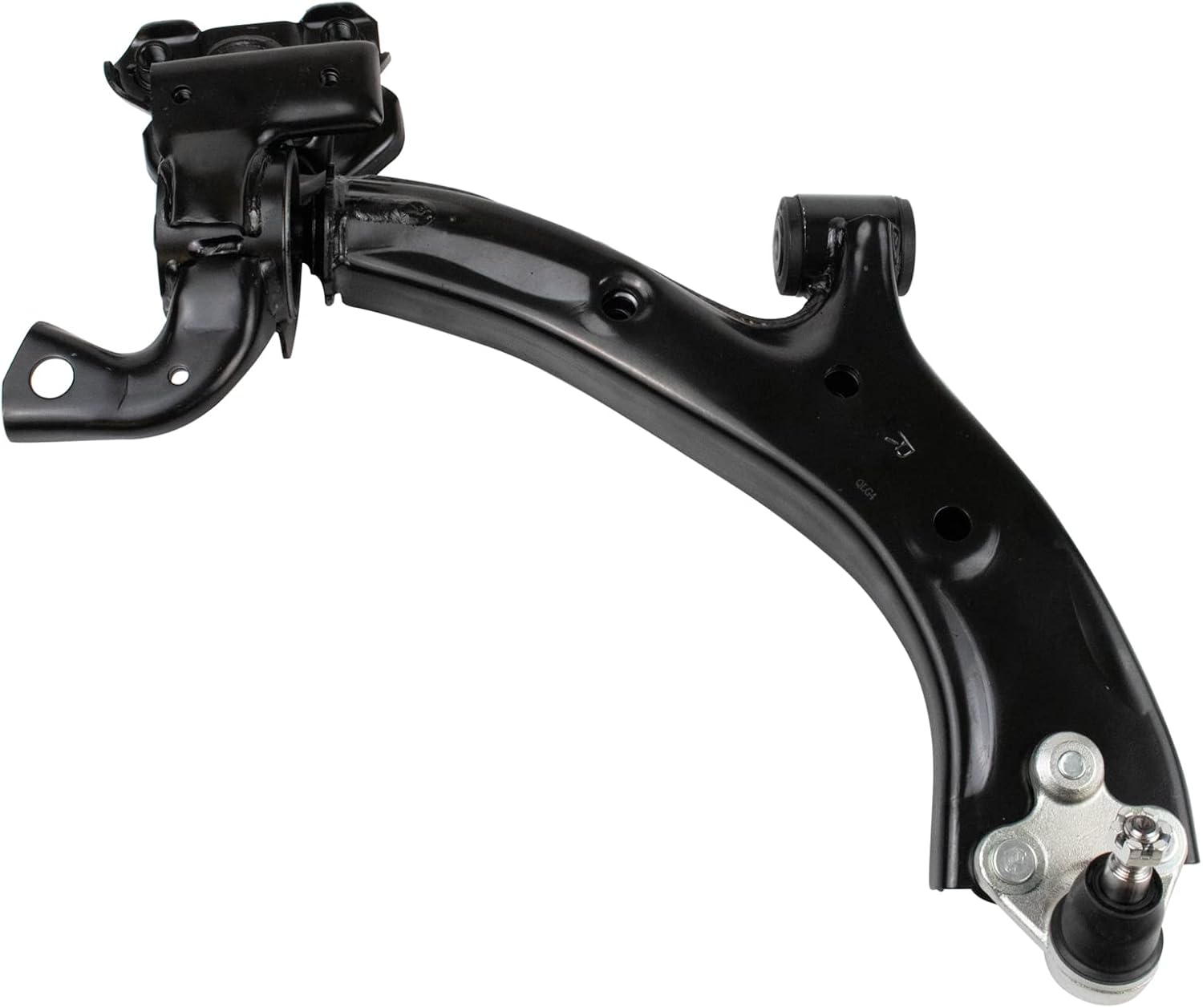
6. TRQ Front Right Lower Control Arm with Ball Joint for 2007–2012 Acura RDX
| Fitment | 2007–2012 Acura RDX Front Passenger Side Lower |
|---|---|
| Material | Alloy Steel |
| Ball Joint Mounting Type | Bolt In |
| Greaseable | No |
This TRQ front right lower control arm is a factory-replacement style unit intended to swap directly into a 2007–2012 Acura RDX. It arrives as a complete assembly with bushings pressed in and a sealed, pre-greased ball joint, so installation is typically bolt-in without fabrication and saves time compared with rebuilding an old arm. Constructed from steel with a machined exterior and corrosion-resistant finish, it is aimed at restoring steering stability, reducing clunks, and improving tire wear when an original arm is worn. TRQ also provides DIY installation videos which help if you plan to tackle the job yourself. The part is not greaseable or adjustable, so long-term joint service will require full replacement rather than periodic greasing, and like all aftermarket arms, longevity can vary by driving conditions. For a practical owner wanting a straightforward, cost-effective repair for the RDX, it balances value and convenience, though those seeking the longest possible ball-joint life may prefer a serviceable or OEM-sourced option.
Best for: A practical optimizer who wants a cost-effective, ready-to-install replacement to restore handling on a 2007–2012 Acura RDX without extensive parts sourcing or fabrication.
Less Ideal for: Drivers seeking a serviceable control arm with a greaseable ball joint or those prioritizing dealer OEM parts and longest-term proven durability should consider other options.
- Direct-fit assembly for 2007–2012 Acura RDX reduces installation time
- Preinstalled bushings and sealed, pre-greased ball joint arrive ready to bolt in
- Steel construction with machined exterior and corrosion-resistant finish
- Manufacturer provides DIY installation videos to support home repairs
- Ball joint is non-greaseable so long-term service requires replacement rather than refresh
- Not adjustable, so alignment work may be needed after installation
Verdict A budget-friendly, ready-to-install direct-fit control arm that restores steering stability on the 2007–2012 Acura RDX while prioritizing convenience over serviceable joints.
7. Detroit Axle 6‑Piece Front Suspension Kit for 2007–2012 Acura RDX

| Fitment | 2007–2012 Acura RDX |
|---|---|
| Kit contents | 2 lower control arms w/ ball joints, 2 outer tie rods, 2 sway bar links |
| Manufacturer | Detroit Axle |
| Customer rating | 4.5 out of 5 stars |
This Detroit Axle kit bundles two front lower control arms with integrated ball joints, two outer tie rod ends, and two sway bar end links to restore the RDX front suspension in one purchase. It is intended for a direct replacement when steering play, uneven tire wear, or clunking indicates worn front suspension parts. The lower control arms arrive with pressed-in bushings and ball joints to simplify installation, and the parts undergo impact and fatigue testing aimed at durability. Customers report straightforward fit and compatible alignment results in many installations, which makes this convenient for doing the job at once rather than sourcing individual components. Expect some variability in supplied hardware compared with factory fasteners, and a few reviewers noted missing small items or differences in nut sizes that can require an extra trip for the right tools or fasteners. The kit is targeted at restoration and maintenance rather than performance upgrades, and longevity can vary with driving conditions and installation quality.
Best for: Balanced buyers who want a single purchase to refresh the front suspension on a 2007–2012 Acura RDX and prefer the convenience of a matched parts kit over sourcing individual components.
Less Ideal for: Drivers seeking performance suspension upgrades, or those who insist on exact OEM fastener interchange without verifying supplied hardware, should consider alternatives or confirm included parts before installation.
- Complete front-end kit covers both lower control arms plus tie rod ends and sway bar links for a single repair session
- Lower control arms come with pressed-in bushings and ball joints to reduce installation time
- Widely reported to fit Acura RDX 2007–2012 directly, simplifying parts selection and alignment
- Some hardware differs from factory sizes which may require alternate sockets or replacement fasteners
- Occasional reports of missing small components in the package
- Not engineered as a performance upgrade; aimed at OEM replacement quality
Verdict A practical, all-in-one suspension replacement for 2007–2012 Acura RDX owners who want convenient, factory-replacement style parts in a single kit.
Choosing the Right Acura RDX Lower Control Arm: Key Factors to Consider
Fitment and Mounting Compatibility
Correct fitment ensures the control arm aligns precisely with factory mounting points and suspension geometry. A control arm that matches the Acura RDX mounting pattern reduces the need for additional modifications and minimizes alignment deviation after installation. Poor fitment can lead to accelerated tire wear, persistent alignment issues, or added stress on adjacent suspension components. When assessing fitment, check for exact bolt hole spacing, correct orientation for steering and brake lines, and whether the part is specified for the relevant model years. Consider also whether the part includes necessary hardware or requires transfer of original components. Ensuring compatibility up front saves time at installation and reduces the risk of premature failure.
Bushing Type and Quality
Bushing material and design control how vibration, noise, and movement are isolated between the arm and chassis. Harder bushings can improve steering precision but may transmit more road noise, while softer bushings improve ride comfort at the expense of some responsiveness. Sealed or bonded bushings tend to limit water and debris ingress, extending service life compared with loose-fit designs. The bushing's bore size, durometer rating, and whether it is replaceable or pressed-in are all relevant to long-term maintenance. Assess bushing resilience to oil, road salts, and UV exposure because those factors influence how quickly bushings degrade and produce symptoms like clunking or looseness.
Material and Construction
The base material and manufacturing method determine strength, weight, and fatigue resistance. Forged or cast steel components typically offer higher load capacity and better fatigue life than thin stamped pieces. Look for corrosion-resistant finishes or coatings that help prevent rust at critical stress points. Reinforced gussets or thicker cross-sections at mounting bosses reduce the risk of crack initiation in high-load zones. Welding quality and dimensional tolerances also affect how the arm performs under repeated loads. Choosing robust construction reduces the likelihood of bending or fracture for vehicles used in demanding conditions.
Noise and Vibration Characteristics
Control arm design influences the propensity for squeaks, clunks, and vibration transmitted into the cabin. Properly matched bushings and secure ball joint interfaces help minimize audible symptoms under load changes and over bumps. Excessive play in joints or poorly damped bushings often manifest as lower control arm noise during acceleration, braking, or steering inputs. Consider parts that emphasize sealed joints and tight tolerances to control movement. Reducing noise improves perceived build quality and can be an early indicator that suspension components are functioning correctly.
Serviceability and Installation
Ease of installation affects labor time and the risk of incorrect assembly. Some control arms arrive with pre-installed bushings and ball joints that simplify replacement, while others require pressing components in or reusing original hardware. Check whether the part requires alignment after installation and whether special tools are needed to fit bushings or torque mounting fasteners. Service-friendly designs reduce shop time and the chances of improper installation affecting suspension geometry. Also consider whether replacement bushings are readily available for future maintenance.
Longevity and Maintenance Considerations
Expected lifespan depends on bushing durability, corrosion protection, and how the arm handles repeated loads. Components designed to minimize dirt and moisture intrusion typically last longer in variable climates. Evaluate how easy it is to inspect and service wear items such as ball joints or bushings without removing the entire arm. Regular maintenance intervals and observable wear signs help you plan replacements before failure. Prioritizing longevity can lower lifetime ownership disruption and maintain consistent vehicle handling over time.
FAQ
What are common symptoms of a failing lower control arm on an Acura RDX?
Common symptoms often include uneven tire wear, pulling to one side during driving, a loose or imprecise steering feel, and unusual noises when going over bumps. You may also notice vibration through the steering wheel or clunking during acceleration and braking. These signs usually point to worn bushings, ball joints, or looseness at mounting points.
Can I replace just the bushings instead of the entire lower control arm?
In many cases you can replace bushings separately if the arm's structure and ball joint are still sound. Pressing new bushings into the original arm can be cost-effective but often requires specialized tools and a press. If the arm shows corrosion, cracking, or damaged mounting bosses, full-arm replacement is usually the safer, longer-lasting option.
How will a new lower control arm affect wheel alignment?
Installing a properly fitting lower control arm usually brings suspension geometry back toward factory specifications, but an alignment check is typically necessary after replacement. Even with exact bolt locations, small differences in bushing position and preload can alter toe and camber. A professional alignment ensures tire wear and handling are optimized following the repair.
What causes lower control arm noise and how can I diagnose it?
Noise often stems from worn bushings, loose ball joints, or corrosion at mounting points. Diagnosis commonly involves a visual inspection for cracked or separated bushings, checking for play at the ball joint, and performing a pry test to detect movement. Replicating the sound with a passenger in the car while a technician maneuvers the suspension can help localize the source.
Are there tradeoffs between softer and firmer bushings?
Yes. Softer bushings tend to improve ride comfort and isolate vibration better, but they can allow more suspension movement that slightly reduces steering precision. Firmer bushings deliver crisper handling and better alignment stability at the expense of transmitting more noise and harshness. Your choice depends on whether you prioritize comfort or responsiveness.
How long do lower control arms typically last on an Acura RDX?
Lifespan varies based on driving conditions, climate, and maintenance, but control arms commonly last many years under normal use. Exposure to road salt, rough roads, or heavy loading can shorten service life by accelerating bushing and surface corrosion. Regular inspections and addressing signs such as play or noise early can extend the component's usable life.
How We Chose the Best Acura RDX Lower Control Arm
We prioritized parts that deliver correct fitment and long-term durability for the Acura RDX. Our selection process focused on evidence of precision fit to factory mounting points, bushing material and design, and construction methods that resist corrosion and fatigue. We also evaluated the expected impact on wheel alignment stability and steering responsiveness, plus how straightforward installation typically is for a technician with standard tools. Key filters included only parts designed specifically for the Acura RDX chassis and model years covered by the selection, exclusion of universal or generic control arms, and rejection of options with unclear material specs or insufficient bushing detail. We favored parts where engineering choices, such as reinforced mounting areas and sealed bushings, address common wear modes. Finally, we considered documented longevity characteristics and user-reported outcomes related to noise, play, and alignment retention.
Our full evaluation process is outlined in our review methodology.
Conclusion
When choosing a lower control arm for an Acura RDX, prioritize correct fitment, bushing quality, and robust construction to maintain alignment and steering feel. Balance the tradeoffs between noise isolation and handling sharpness based on how you use the vehicle. Plan for a post-installation alignment and consider serviceability to reduce future labor. Focusing on these criteria will help you pick a part that restores ride quality and minimizes repeat work.
Explore More:
- Check out all Acura RDX parts & accessories
- Explore Lower Control Arms Maintenance & Repair Guides
- Explore Suspension & Steering
- Browse all Auto Parts
