

Note: This article contains affiliate links. If you click on these links and make a purchase, I may earn a small commission at no extra cost to you. This helps support my research and content. Read my full affiliate disclosure here.
If you drive a Subaru Forester, the timing belt tensioner is critical for keeping engine timing accurate and preventing costly engine damage. Choosing the right tensioner affects belt life, noise levels, and long-term reliability, so it matters for both routine maintenance and major jobs.This guide covers six shortlisted timing belt tensioners for the Subaru Forester, selected for their fitment, build quality, and expected longevity. We evaluated each option on durability and fit accuracy to help you pick the best match for your needs. Read on for the factors we used and what to look for when selecting a tensioner.
Looking for other parts? See all Subaru Forester parts & accessories.
Top Picks at a Glance
| Best Reviewed A top-rated pick with lots of positive feedback | Dorman 420-127 Engine Timing Belt Tensioner |  |
| Best Quality Built to a higher standard if you want something more solid | AISIN Hydraulic Timing Belt Tensioner (BTF-500) |  |
| Best Budget The cheapest option that still gets the job done reliably | Gates PowerGrip Premium Timing Belt Tensioner (T41023) |  |
| Most Sold A high-volume bestseller chosen again and again | A-Premium Timing Belt Kit with Water Pump and Tensioner for Subaru 2.5L |  |
| Best Value for Money The sweet spot between price and what you get | Torchbeam Timing Belt Kit (fits Subaru Forester) |  |
| Best Overall The best all-around choice for most situations | Subaru Timing Belt Hydraulic Tensioner 13033AA042 (genuine) |  |
1. Dorman 420-127 Engine Timing Belt Tensioner

| Brand | Dorman |
|---|---|
| Model | 420-127 |
| Position | Center |
| Exterior | Machined |
This Dorman 420-127 timing belt tensioner is a direct replacement designed to restore proper belt tension and quiet a noisy timing system. It installs where the original tensioner sits and is typically replaced when fitting a new timing belt and pulleys. The unit is machined and built to provide reliable tensioning, reducing startup knock and belt slippage when installed correctly. For a reliability-focused buyer this part offers the practical benefit of matching factory fit and giving a dependable service life backed by an established aftermarket brand. Installation is straightforward for a competent DIYer or mechanic, but confirming vehicle compatibility before ordering is important. The product does not include installation hardware or detailed step-by-step instructions, so some mechanical experience or a shop visit may be needed. While designed for specified applications, buyers should verify fit for their Subaru Forester model year and engine before purchase because the listing was produced for multiple makes and years.
Best for: Reliability-focused buyers who prioritize a proven replacement part to restore proper timing belt tension and eliminate noise during startup.
Less Ideal for: Buyers seeking a Forester-specific kit with instructions and included hardware or those unwilling to verify fitment through parts lookup should consider alternatives.
- Direct-replacement design intended to match factory fit and function
- Machined exterior construction for consistent mounting and operation
- Reputable aftermarket brand with many user reports of restored quiet operation
- Compatibility is listed for many vehicles so Forester fit must be confirmed before buying
- No installation hardware or step-by-step instructions included
Verdict A dependable, machined aftermarket tensioner suited to buyers who want a proven replacement—confirm Subaru Forester fit before purchasing.
2. AISIN Hydraulic Timing Belt Tensioner (BTF-500)

| Manufacturer | AISIN |
|---|---|
| Manufacturer Part Number | BTF-500 |
| OEM Part Number | 13033-AA042 |
| Position | Center |
This Aisin hydraulic timing belt tensioner is a factory-quality replacement intended to restore correct timing-belt tension and reduce vibration across the engine RPM range. It installs in the center position on compatible Subaru engines and is built using aluminum die casting for a balance of lightness and structural strength. The hydraulic piston provides built-in damping, which helps smooth belt oscillation under load and during acceleration. Typical use is as part of a timing belt service where replacing the tensioner at the same time prevents premature failure and saves labor. Users report it fits like the factory unit and functions well when bled correctly, though installation requires bleeding the hydraulic piston and confirming the keeper pin procedure. The main limitations are the need to properly bleed the piston during installation and the occasional report of missing hardware or early failure with improper installation, so professional installation or careful follow instructions is recommended for long-term reliability.
Best for: Performance-oriented Subaru owners who prioritize factory-quality parts and consistent belt damping for dependable engine timing under spirited driving.
Less Ideal for: Drivers seeking a no-fuss DIY swap without hydraulic-bleeding steps or those who need a tensioner kit that includes every accessory in one package.
- Factory-quality design that fits like the original part for compatible Subaru applications
- Hydraulic piston provides damping to reduce timing belt vibration across RPM range
- Aluminum die-cast body offers a lightweight but strong construction
- Well suited for timing belt service when replacing belt and tensioner together
- Requires bleeding the hydraulic piston during installation to avoid noise or poor tension
- Some buyers reported missing keeper hardware in rare cases
Verdict Choose this Aisin tensioner for OEM-level fit and hydraulic damping if you want factory-like timing performance on your Subaru.
3. Gates PowerGrip Premium Timing Belt Tensioner (T41023)

| Brand | Gates |
|---|---|
| Model | PowerGrip Premium Timing Belt Tensioner |
| Manufacturer Part Number | T41023 |
| OEM Part Numbers | 14510P08003, 14510P08004 |
The Gates PowerGrip Premium Timing Belt Tensioner is a direct replacement tensioner intended to maintain correct timing belt tension and alignment during engine operation. Installed in the timing assembly, it provides the constant preload needed for reliable belt tracking and reduced slippage. Its machined exterior and factory-compatible fit mean it installs like a factory-quality part when matching the correct Subaru Forester engine application. The practical benefit is straightforward: it replaces a worn or failed tensioner without requiring a full kit, letting you address a single-point failure affordably. Limitations are that this is a single tensioner unit rather than a full timing kit, so best practice on a Forester is to consider replacing the belt, idlers, and water pump at the same time for long-term reliability. Also check OEM part compatibility for your Forester model year and engine before ordering since fitment is specific.
Best for: Budget-conscious Subaru Forester owners focused on repairing a failed or noisy timing belt tensioner without buying a full timing kit.
Less Ideal for: Drivers planning a full timing service or long-term preventive maintenance who prefer to replace all timing components at once should choose a complete timing kit instead.
- Factory-compatible replacement from a reputable belt supplier
- Machined exterior for consistent fit and function
- Affordable single-component option for targeted repairs
- Listed OEM part numbers provided for straightforward fit verification
- Sold as a single tensioner so other timing components are not included
- Fitment is specific so you must confirm compatibility with your Forester engine
Verdict A cost-effective, factory-compatible replacement tensioner for Forester owners who need a targeted repair rather than a full timing component overhaul.
4. A-Premium Timing Belt Kit with Water Pump and Tensioner for Subaru 2.5L

| Brand | A-Premium |
|---|---|
| Item model number | APTBK034 |
| Compatible engines | Subaru H4 2.5L Naturally Aspirated SOHC |
This A-Premium timing belt kit is a full replacement package that supplies the timing belt, tensioner, idler pulleys, seals, crankshaft pulley seal, water pump with gasket, and installation tool for compatible Subaru 2.5L H4 engines. It is intended for a do-it-yourself install or professional replacement when doing a timing service, providing the convenience of getting all the commonly replaced components in one kit. Practical benefits include a matched set of components that can reduce parts sourcing time and the included water pump eliminates the need for a separate purchase. Notable features are the hydraulic tensioner and multiple idler pulleys to restore correct belt routing and tension. Important limitations seen in user reports are inconsistent quality control: some buyers noted missing timing marks on the belt and at least one report of premature pulley bearing failure, so careful inspection of pulleys and transferring or marking alignment lines before assembly is advisable. The kit comes with a one-year unlimited-mileage guarantee from the brand.
Best for: A risk-averse mainstream buyer who prefers buying a consolidated kit to minimize back-and-forth ordering and wants a straightforward replacement for a Subaru 2.5L timing service.
Less Ideal for: People who require guaranteed factory-marked belts and the absolute highest-end bearings should consider branded OEM or premium aftermarket alternatives instead.
- Complete kit includes belt, hydraulic tensioner, idler pulleys, seals, water pump and installation tool
- Fits specified Subaru 2.5L H4 applications so you can replace all timing components at once
- Includes water pump and gasket to avoid a second service interval and additional labor
- Some belts lack factory timing alignment marks, requiring manual marking during installation
- Mixed reports of pulley bearing failures indicate variable quality control across batches
Verdict A convenient, all-in-one timing service kit for Subaru 2.5L engines that saves time but requires careful pre-install inspection for belt marks and pulley quality.
5. Torchbeam Timing Belt Kit (fits Subaru Forester)
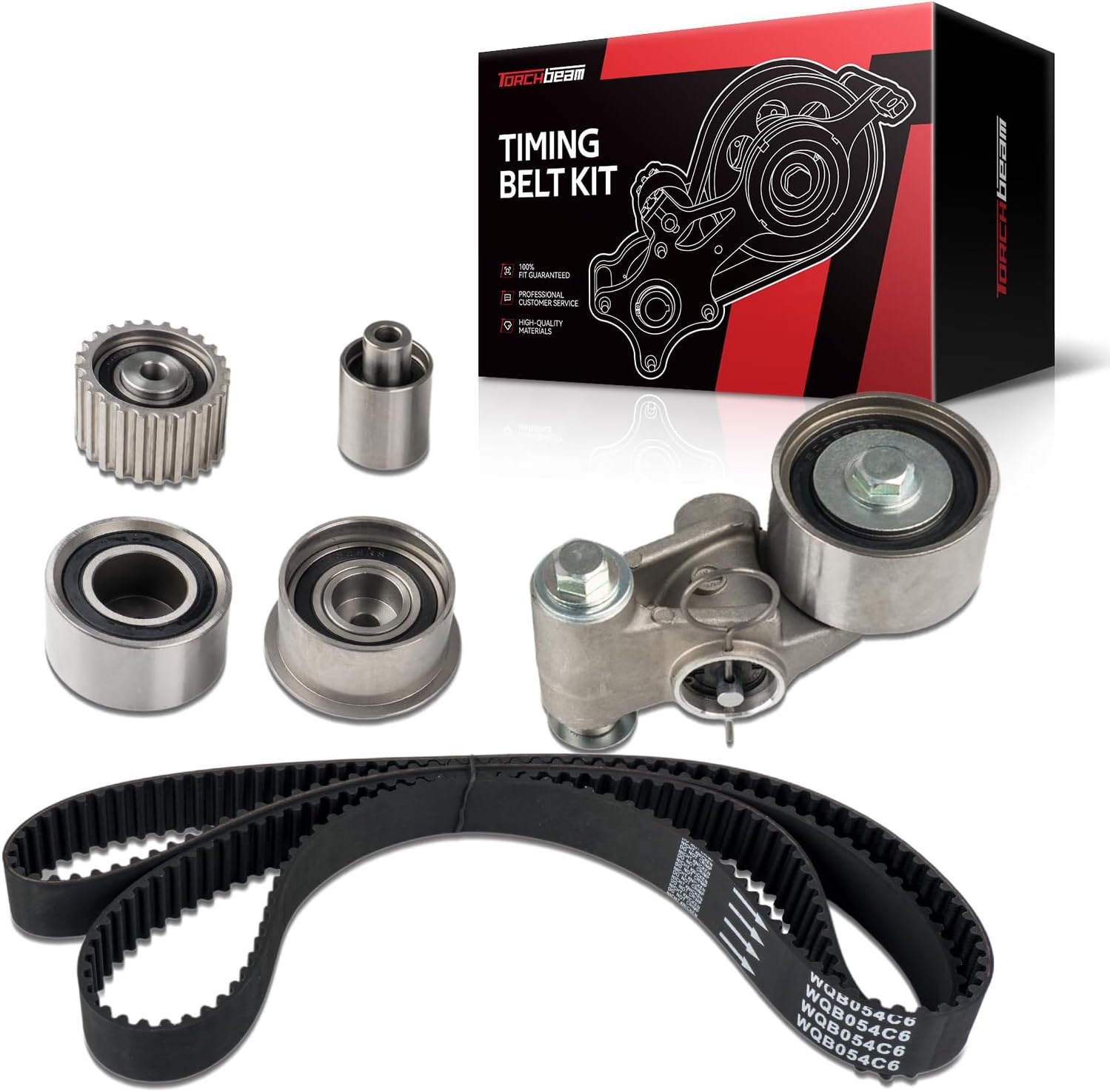
| Compatible vehicle | Subaru Forester 1999-2010 |
|---|---|
| Included parts | Timing belt, tensioner assembly, bearings, bolts |
| Manufacturer | Torchbeam |
| Part numbers | 13028-AA231, 13033AA042, 13073AA190 |
This Torchbeam timing belt kit supplies the core components needed when replacing a Forester timing belt and tensioner assembly. The package ships with a timing belt plus tensioner and several bearings and bolts so you can complete a scheduled timing service in one stop. Components are built to match OEM part numbers and the listing emphasizes heat-resistant, high-strength materials intended to reduce stretch and noise under daily driving. For a practical DIYer or independent shop working on a Forester, the kit simplifies parts sourcing and generally fits without modification according to multiple user reports. Limitations to note are occasional reports of missing parts in some orders and that this is an aftermarket kit rather than a direct factory-brand item, so if you require dealer-sourced parts or an extended factory warranty you may prefer a dealer option. Install should follow factory procedures and torque specs to ensure long-term timing reliability.
Best for: Practical optimizers who prioritize getting a complete, compatible timing kit for scheduled Forester maintenance without paying dealer premiums.
Less Ideal for: Buyers seeking dealer-sourced parts, extended factory warranty coverage, or a guaranteed new-old-stock replacement should consider alternatives.
- Includes matched timing belt and tensioner components for a single comprehensive replacement
- Covers factory part numbers listed for Subaru Forester fitment so installation is straightforward
- Materials described as heat-resistant and high-strength to minimize stretch and noise
- Multiple bearings and bolts included reduce the chance of needing extra parts during service
- Aftermarket product rather than dealer-branded part which may matter to warranty-focused buyers
- Some customer reports of missing components in individual orders
Verdict A cost-conscious, complete timing kit that fits many Forester years and streamlines a DIY or shop timing service, with the usual aftermarket caveats.
6. Subaru Timing Belt Hydraulic Tensioner 13033AA042 (genuine)

| Manufacturer | SUBARU |
|---|---|
| Part number | 13033AA042 |
| Compatibility note | Fits specified Subaru Forester and related models (see product listing) |
| Item weight | 2.05 pounds |
This is the factory-quality Subaru hydraulic timing belt tensioner sold as part number 13033AA042 and intended as a direct replacement for affected Subaru engines. It installs in place of the original tensioner and uses a pull-pin that locks the unit for transport; the pin must remain installed until the part is positioned and ready to be released during installation. Buyers will notice OEM fit and finish that matches the original, which simplifies installation and preserves the engine timing system's designed tensioning behavior. Typical use is as part of a timing belt service or when replacing a worn tensioner to avoid belt slack or noise. The practical benefits are straightforward: factory-spec reliability and compatibility, plus reduced risk of premature failure compared with many aftermarket knockoffs. Important limitations are that the unit is specific to the listed Subaru applications and the pull-pin mechanism is single-use for locking — once removed the tensioner cannot be returned and must be installed correctly or seek professional help if uncertain.
Best for: A balanced all-round buyer who wants a dependable, factory-quality replacement for a Subaru tensioner during a timing belt service and values long-term reliability over saving on aftermarket parts.
Less Ideal for: Drivers who need a universal or economy aftermarket alternative or who plan to service multiple different vehicle makes should consider other tensioners.
- Genuine Subaru factory replacement for direct fit on compatible models
- Hydraulic design reproduces factory tensioning behavior for reliable belt tension
- Ships locked with pulling pin to protect the hydraulic mechanism during handling
- Widely reported as Japan-made and matching original fit and markings
- Pull-pin locking mechanism is single-use and prevents returns after removal
- Fitment is limited to specific Subaru model years and engine variants listed by the manufacturer
Verdict Choose this genuine Subaru hydraulic tensioner if you want a factory-fit, reliable replacement for a Forester timing belt service; avoid it if you need a generic or returnable aftermarket option.
Choosing the Right Subaru Forester Timing Belt Tensioner: Key Factors to Consider
Fitment and Compatibility
Correct fitment is the single most important factor because an exact match prevents misalignment and improper belt tension. A tensioner that is designed specifically for the Subaru Forester will align with factory mounting points and mating surfaces, reducing the chance of installation issues or premature wear.
Compatibility also affects the tensioner geometry and pulley spacing, which directly influences timing belt tracking. Ensuring the part matches the engine variant and year reduces the risk of repeat service and helps maintain proper engine timing over the long term.
Materials and Construction Quality
Materials determine how well the tensioner withstands heat, oil, and mechanical stress. Look for robust housings, corrosion-resistant coatings, and high-grade seals that keep lubrication where it belongs. Bearings and pivots made from hardened steel or equivalent alloys typically endure longer under cyclical loads.
A well-constructed tensioner reduces deformation under load, which keeps belt tension consistent and lowers the risk of belt slippage or uneven wear. Pay attention to evidence of quality machining and solid fastener interfaces to minimize failure points.
Bearing Design and Lubrication
The bearing inside the tensioner pulley needs to rotate smoothly for quiet operation and consistent tension. Bearings with appropriate preload and sealed lubrication last longer and resist contamination from engine oil or road debris. Consider tensioners that use sealed, maintenance-free bearings rated for automotive engine environments.
Inferior bearings can produce noise, increase friction, and wear out faster, which may cause fluctuating belt tension or audible symptoms during start-up and operation. Proper bearing design reduces the chance of abrupt failures that affect engine timing.
Ease of Installation and Serviceability
How easy a tensioner is to install affects labor time and the likelihood of correct installation. Look for parts that include clear mounting points, straightforward adjustment mechanisms, and any necessary alignment marks. Tensioners that come with installation notes or require minimal special tools reduce the chance of mistakes.
Serviceability also matters if you plan to perform the replacement yourself. A design that allows access to the adjustment mechanism and uses common fasteners will simplify future inspections or replacements.
Durability Under Operating Conditions
Tensioners are exposed to heat cycles, vibration, and sometimes oil contamination. Components that tolerate high temperatures and resist oil-induced degradation will retain tension and alignment longer. Consider designs tested for thermal stability and those that minimize rubber or polymer exposure in critical load areas.
Durability influences maintenance intervals and the total cost of ownership. A more durable tensioner reduces the frequency of repeat replacements and helps maintain consistent engine timing throughout its service life.
Noise and Vibration Characteristics
A smooth-operating tensioner reduces timing belt noise and drivetrain vibration, which improves driving comfort and can indicate healthy component function. Bearings with low friction and stable pivots produce less audible noise and fewer resonant vibrations under various engine speeds.
If you have noticed clicking, squealing, or whining from the timing cover area, selecting a tensioner designed for quiet operation can address those symptoms. Lower noise levels often correlate with better lubrication and tighter manufacturing tolerances.
FAQ
What are common symptoms of a failing timing belt tensioner?
Common signs include unusual noise near the timing cover such as squealing or rattling, visible belt wobble, or inconsistent engine idling. You may also notice accelerated timing belt wear or audible changes during engine start-up and shutdown. These symptoms often indicate bearing wear or loss of proper tension rather than the belt itself.
How often should a Subaru Forester timing belt tensioner be replaced?
Replacement intervals often align with timing belt service schedules, which vary by engine and model year. Many owners replace the tensioner proactively when changing the timing belt to reduce the chance of failure. Consult your vehicle maintenance recommendations and consider age, mileage, and observed symptoms when deciding on replacement timing.
Can I replace the timing belt tensioner myself?
If you have mechanical experience and the right tools, replacing a tensioner can be a DIY task, but it requires careful attention to timing alignment and torque specifications. Incorrect installation can lead to severe engine damage. If you are unsure about procedures like locking timing components or setting belt tension, seek professional help.
What causes timing tensioner noise?
Noise often stems from worn bearings, loss of lubrication, or pivot wear inside the tensioner assembly. Contamination from oil or debris and excessive heat can accelerate bearing degradation. Addressing the root cause usually means replacing the tensioner and inspecting surrounding components for damage.
Is a tensioner failure likely to damage the engine?
Tensioner failure can lead to belt slippage or loss of timing, which risks valve and piston contact in interference engines. The severity depends on engine design and how quickly the issue is detected. That is why timely inspection and replacement at recommended intervals are important preventative measures.
Should I replace other parts when I change the tensioner?
It is common to replace the timing belt and any associated idler pulleys, seals, and tensioning hardware at the same time to ensure a complete, reliable timing system. Replacing related components together reduces the chance of future failures and can save labor in the long run.
How We Chose the Best Subaru Forester Timing Belt Tensioner
We focused on components specifically suitable for the Subaru Forester and prioritized parts that meet or exceed original equipment specifications. Key evaluation criteria included materials and construction quality to estimate longevity, precision of fit and alignment for accurate timing, bearing design and lubrication for smooth operation, and resistance to heat and oil exposure typical of Subaru engine bays. We also considered ease of installation, availability of service or installation instructions, and whether the part integrates with common maintenance intervals.Excluded items included universal or multi-vehicle tensioners that do not specify Forester fitment, and parts lacking clear materials or manufacturing details. We did not include accessories or kits that omit essential mounting hardware. The final list reflects components that best balance durability, fit, and practical installation for Forester owners.
Our full evaluation process is outlined in our review methodology.
Conclusion
When choosing a Subaru Forester timing belt tensioner, prioritize correct fitment and construction quality to maintain precise engine timing. Bearing design, durability under heat and oil exposure, and ease of installation are the factors that most directly affect longevity and noise.Balance the desire for a long-lasting component with practical considerations like serviceability and alignment features. Replacing the tensioner as part of scheduled timing belt service is often the most reliable way to protect the engine and avoid repeat labor.
Explore More:
- Check out all Subaru Forester parts & accessories
- Explore Timing Belt Tensioners Maintenance & Repair Guides
- Explore Engine
- Browse all Auto Parts
