

Note: This article contains affiliate links. If you click on these links and make a purchase, I may earn a small commission at no extra cost to you. This helps support my research and content. Read my full affiliate disclosure here.
If you drive a Jeep Compass and want a noticeable improvement in exhaust flow, sound, or durability, choosing the right cat-back exhaust system matters. The right system can change throttle response, reduce backpressure, and give your vehicle a more satisfying exhaust note while fitting cleanly to the factory connections.This guide covers six shortlisted cat-back exhaust systems selected for fitment to the Jeep Compass and highlights the evaluation criteria used, including build material, fitment precision, and expected sound characteristics. Read on to understand what to expect from each option and which features matter most for your goals.
Looking for other parts? See all Jeep Compass parts & accessories.
Top Picks at a Glance
| Best Overall The best all-around choice for most situations | MBRP Armor Lite Cat-Back Exhaust System (Aluminized, 3" Tubing, Single Side) |  |
| Best Quality Built to a higher standard if you want something more solid | MBRP S5142AL Aluminized Single-Side Cat-Back Exhaust System |  |
| Best Value The sweet spot between price and what you get | MBRP Installer Series 4" Aluminized Steel Cat-Back Exhaust System (S5259AL) |  |
| Best Budget The cheapest option that still gets the job done reliably | MBRP S5236AL 3" Aluminized Steel Single Side Exit Cat-Back Exhaust System |  |
| Best Seller A high-volume bestseller chosen again and again | Truck Exhaust Kits 2.5" Dual Cat-Back Conversion Kit (No Muffler) |  |
1. MBRP Armor Lite Cat-Back Exhaust System (Aluminized, 3" Tubing, Single Side)

| Tubing diameter | 3 in. |
|---|---|
| Exit | Single Side |
| Tip diameter | 4 in. |
| Material Type | Alloy Steel |
| Finish Type | Aluminized |
The MBRP Armor Lite cat-back is a bolt-on aluminized exhaust designed to free up exhaust flow and give a fuller, more responsive sound. Installed in place of the factory rear section, it uses 3-inch tubing and a single-side 4-inch tip to lower exhaust backpressure, which typically yields improved throttle response, slightly higher torque at low rpm, and a stronger idle note. The kit ships with the tubing and clamps needed for a complete rear replacement and is meant for straightforward installation with common hand tools and a saw or cutter when trimming is required for fit. Its aluminized alloy-steel construction resists corrosion better than bare steel while keeping cost lower than stainless options. Expect a noticeable rumble that is moderate rather than extreme inside the cabin and minimal highway drone according to reported installs. Be prepared to trim or adjust fitment for the Compass chassis and to source a specific clamp at the catalytic connection if your vehicle requires it.
Best for: A balanced all-round buyer who wants a practical, factory-replacement style exhaust that adds a stronger V4/V6 or V6-like rumble and modest performance gains without extreme noise or high cost.
Less Ideal for: Drivers seeking a near-silent, OEM-silent replacement or those wanting premium stainless construction and maximum longevity should consider different options.
- Bolt-on design allows direct rear-section replacement with common tools
- 3-inch tubing and 4-inch tip increase flow for improved throttle response and a deeper note
- Aluminized alloy-steel construction offers corrosion resistance at a lower cost than stainless
- Includes necessary tubing and clamps for most installations
- May require trimming or an extra clamp at the catalytic connection for proper fitment on some vehicles
Verdict: A practical, affordable cat-back that improves flow and sound with a straightforward bolt-on fitment for Jeep Compass owners seeking balanced performance and character.
2. MBRP S5142AL Aluminized Single-Side Cat-Back Exhaust System

| Brand | MBRP |
|---|---|
| Model | S5142AL |
| Exterior | Brushed |
| Item Weight | 49 pounds |
The MBRP S5142AL Installer Series cat-back replaces the factory rear exhaust with fully mandrel-bent piping and a high-flow muffler to reduce backpressure and sharpen throttle response. Intended as a direct-fit system it installs using existing hangers and includes clamps and parts needed for a typical swap. In real-world use the system produces a deeper, mellow tone at idle and a stronger growl under load while offering measurable gains in torque and horsepower when paired with supporting mods. Built from aluminized steel with sealed seams it balances cost and corrosion resistance compared with stainless options, and the spiral-louvered muffler and minimal bend angles help drop exhaust gas temperature for better performance. Trade-offs are its aluminized construction instead of stainless and the possibility of more pronounced drone depending on vehicle resonance and installation. Fitment notes and sound character make this a practical performance upgrade for drivers who want noticeable power and sound without a premium-price stainless system.
Best for: Performance-oriented buyers who prioritize stronger midrange torque and a deeper, more aggressive exhaust note while keeping cost reasonable.
Less Ideal for: Buyers who want a premium stainless-steel exhaust for maximum longevity or who need a completely drone-free touring setup should consider higher-end or different designs.
- Direct-fit design that installs on factory hangers with included clamps for a straightforward swap
- Mandrel-bent tubing and high-flow muffler reduce backpressure for improved throttle response
- Aluminized steel with sealed seams improves corrosion resistance over basic budget systems
- Tuned exhaust note that gives a deeper, mellow tone at idle and stronger sound under load
- Aluminized steel is less corrosion-resistant long-term than T304 stainless alternatives
- Some drivers report audible drone at certain RPMs depending on vehicle and mount points
Verdict: A cost-conscious performance cat-back that delivers stronger throttle response and a deeper exhaust tone through mandrel-bent piping and a high-flow muffler.
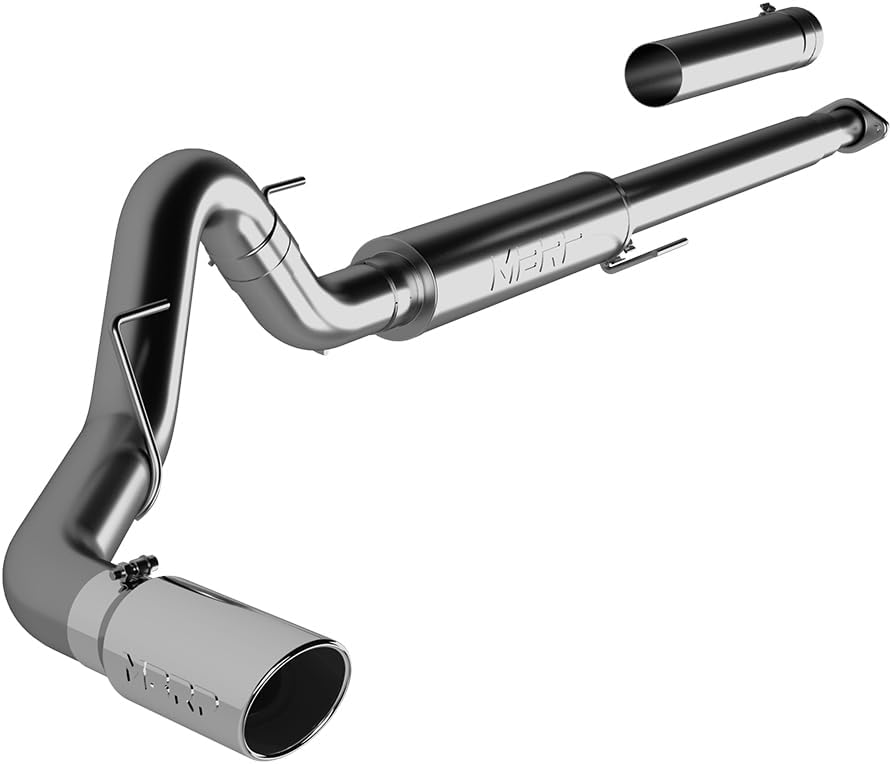
3. MBRP Installer Series 4" Aluminized Steel Cat-Back Exhaust System (S5259AL)
| Material | Aluminized steel |
|---|---|
| Tip Diameter | 4 inches |
| Fitment Type | Bolt-on, vehicle-specific hangers |
| Series | Installer Series |
| Warranty | 3 Year Warranty |
This MBRP Installer Series cat-back is a bolt-on aluminized-steel exhaust built to raise exhaust flow and add a pronounced, aggressive tone. It is intended as a direct-fit replacement that uses welded hangers and includes clamps and a 4-inch tip for a finished look. Typical use is as a performance upgrade for drivers wanting a louder, more free-flowing system without custom fabrication; installation is described as a one to two hour job when fitted to the vehicle-specific hangers. Notable features include fully sealed mandrel-bent tubing to resist seam corrosion longer than cheap systems, a vehicle-tuned muffler design for an emphatic exhaust note, and a stamped logo tip for a factory-style appearance. Practical benefits are improved exhaust flow that can complement other bolt-on upgrades and an easy install that avoids welding. Important limitations are the aluminized steel construction that will rust faster than stainless in wet or winter climates and a loud, sometimes cabin-droning sound that may be undesirable for daily highway commuting in a Jeep Compass confined cabin.
Best for: Practical optimizers who want a cost-conscious, bolt-on performance upgrade that improves sound and flow without custom fabrication. Ideal for owners prioritizing value and easy installation over long-term corrosion resistance.
Less Ideal for: Drivers who need a quiet, refined daily-driver exhaust or who live where road salt and moisture make long-lasting corrosion resistance a priority should consider stainless alternatives or quieter muffler options.
- Bolt-on design with direct-fit hangers and included clamps for straightforward installation
- Mandrel-bent tubing and fully sealed seams to maintain flow and resist early leak points
- Aggressive, well-defined exhaust note that enhances driving character
- Includes a polished 4" tip and stamped logo for a finished, performance look
- Aluminized steel construction is prone to corrosion in winter or coastal environments compared with stainless options
- Can be notably loud and produce cabin drone on some Compass configurations
Verdict: A budget-friendly, bolt-on cat-back that gives the Jeep Compass a loud, free-flowing exhaust note and easy installation for owners focused on value.
4. MBRP S5236AL 3" Aluminized Steel Single Side Exit Cat-Back Exhaust System

| Material | Aluminized steel |
|---|---|
| Pipe diameter | 3 inches |
| Tip material | T304 stainless tip |
| Warranty | 3 year warranty |
This MBRP cat-back system replaces the factory back section with a 3-inch single side exit design built from heavy 16-gauge aluminized steel. It is intended to increase torque and horsepower and produce a richer, mellow sound that opens up under throttle without excessive drone at idle. The system uses thicker steel and sealed seams coated with aluminum silica to resist corrosion better than bare seams, and it is offered as a lower-cost alternative to MBRP's Pro Series while keeping the same basic performance characteristics. Installation is possible with common hand tools and straightforward preassembly, which most experienced DIYers or a shop can handle in one session. Limitations include the aluminized steel construction, which is less durable than stainless steel over many years in corrosive climates, and some buyers report occasional fitment or shipping damage that may require minor repairs before installation.
Best for: Budget-conscious Jeep Compass owners who want a noticeable performance and sound upgrade without paying for a stainless steel pro-level system, and who are comfortable installing or having a shop install a cat-back.
Less Ideal for: Buyers who prioritize maximum long-term corrosion resistance or want a stainless steel system with the longest possible service life should consider higher-end stainless options instead.
- Designed to increase torque and horsepower compared with stock exhausts
- Heavier 16-gauge aluminized steel construction offers improved durability over thinner budget systems
- Seams have an aluminum silica protective coating to reduce common rust points
- Mirror polished T304 tips provide a clean finish and visual upgrade
- Installable with common hand tools and simple preassembly
- Aluminized steel is less corrosion-resistant long term than stainless steel
- Occasional fitment or shipping damage reported requiring minor fixes before install
Verdict: A cost-conscious cat-back that delivers real power and sound gains by using heavy-gauge aluminized steel and Pro Series-derived design.
5. Truck Exhaust Kits 2.5" Dual Cat-Back Conversion Kit (No Muffler)

| Installation Type | Clamp-On |
|---|---|
| Finish Type | ALUMINIZED |
| Compatible with Vehicle Type | Truck |
This kit converts a factory single-exit muffler to a dual 2.5" corner-exit system by adding mandrel-bent aluminized tailpipes, clamps, hangers, and corner exit adapters; no muffler or tips are included. It is typically used by owners who want the look and sound of a dual exhaust without replacing the entire system. The clamp-on installation and included hardware make it possible to fit the kit without welding in some cases, but the product description and user reports make clear that cutting, trimming, and occasional fabrication are commonly required. The aluminized mandrel bends promote good flow and resist corrosion better than plain steel, and the kit is designed to sit near the rear bumper corner and work with factory spare tire and hitch layouts. Important limitations are that fitment depends on vehicle-specific muffler inlet size and layout, the kit targets a single 3" inlet with dual 2.5" outlets, and professional installation is recommended for safe clearance and alignment on a Jeep Compass. This is an economical option for visual and acoustic upgrades but not a complete bolt-in Cat-back replacement.
Best for: Risk-averse mainstream buyers who want a budget-friendly visual and acoustic upgrade and prefer a solution that can be professionally fitted rather than a custom-built system.
Less Ideal for: Buyers seeking a guaranteed bolt-in Cat-back specifically engineered for a Jeep Compass or those unwilling to have a shop perform cutting or fabrication should consider purpose-built factory-quality exhausts instead.
- Mandrel-bent 2.5" piping for improved exhaust flow compared with crush-bent tubing
- Aluminized steel finish offers better corrosion resistance than raw steel
- Includes clamps, universal hangers, and corner exit adapters for a more complete conversion
- Clamp-on design can reduce welding for simpler installations in compatible setups
- No muffler or tips included so additional parts are required to finish a full Cat-back system
- Fitment requires cutting, trimming, or fabrication and may need professional installation
- Designed around a single 3" muffler inlet which may not match every Jeep Compass configuration
Verdict: A cost-effective mandrel-bent dual-tailpipe conversion kit that delivers the look and sound of a dual exhaust when professionally fitted.
Choosing the Right Jeep Compass Cat-back Exhaust System: Key Factors to Consider
Material and Corrosion Resistance
The construction material determines how well the system holds up to road salt, moisture, and heat cycling. Stainless steel alloys resist rust and tend to offer longer life, while aluminized steel can provide an entry-level balance of cost and corrosion protection. Pay attention to flange and weld quality as well, because thin materials or poor welds accelerate failure.
Coatings and finish options matter for appearance and longevity. A brushed or polished finish can resist surface corrosion better than bare metal, and ceramic or high-temperature paints help protect exposed areas. Choosing a more corrosion-resistant material can reduce long-term maintenance and the need for future replacements.
Fitment and Mounting Precision
A system that is made for the Jeep Compass should match factory flange locations and hanger points to ensure a bolt-on installation. Precise fitment reduces vibration, prevents premature hanger fatigue, and avoids exhaust leaks that can affect sound and emissions. Look for systems that include gaskets, hardware, or clear fitment notes to simplify installation.
Tolerance in bends and pipe length affects how the system sits under the vehicle. Systems with adjustable clamps or slightly oversize hangers can accommodate minor chassis variations, but major misalignment usually requires rework. Good fitment also preserves ground clearance and avoids contact with body panels.
Piping Diameter and Flow Characteristics
Piping diameter influences exhaust gas velocity and backpressure. Oversized tubing can reduce low-end torque by lowering scavenging, while too-small piping can restrict flow and limit power at higher rpm. For a daily-driven SUV like the Jeep Compass, a diameter that balances low-rpm response and midrange flow is usually preferable.
The internal design, such as mandrel bends versus crush bends, affects smoothness of flow and performance consistency. Mandrel-bent tubing maintains a consistent cross-section through bends, reducing turbulence and preserving flow characteristics across RPM ranges.
Muffler Design and Sound Character
Muffler type determines the exhaust note and how loud the system will be. Chambered mufflers, straight-through designs, or baffled cores each create distinct tones and levels. Consider whether you want a deeper, subdued tone or a more aggressive, rasping sound, and choose a design that aligns with local noise expectations and personal preference.
Remember that perceived loudness is affected by vehicle insulation and engine tuning as well as the muffler. A system tuned for sound should also balance resonance and drone to avoid unpleasant cabin noise during cruising speeds.
Installation Complexity and Required Modifications
Some cat-back systems are true bolt-on replacements that use existing hangers and flanges, while others need minor trimming, additional hangers, or adapter pieces. Evaluate how much mechanical skill, time, and tools the installation will require. Systems that include complete hardware and clear instructions reduce installation uncertainty.
Consider access under the vehicle and whether you need lifts, ramps, or professional installation. If you plan to do the work yourself, prioritize systems advertised as direct-fit to the Jeep Compass to minimize the risk of alignment issues.
Warranty and After-Sales Support
A clear warranty signals manufacturer confidence in materials and workmanship. Look for coverage terms that protect against corrosion and premature failure for a reasonable period. Also consider the ease of reaching support for fitment questions or replacement parts if a hanger or clamp fails.
Availability of replacement components and documented installation guides are practical benefits that reduce downtime and make ownership easier. Warranty processing and support responsiveness can save time and expense if issues arise.
How We Chose the Best Jeep Compass Cat-back Exhaust System
We focused on systems designed specifically to fit the Jeep Compass and prioritized components and characteristics that affect real-world performance. Key evaluation criteria included material and corrosion resistance, since durable alloys and protective coatings extend service life; fitment accuracy, because precise flanges and hanger placement reduce installation time and rattles; piping diameter and internal flow design, as these influence backpressure and throttle response; muffler type and sound tuning, to predict expected noise levels and character; ease of installation and required modifications, since many owners prefer bolt-on solutions; and warranty and manufacturer support, which matter for ownership confidence.Products were excluded if they required major custom fabrication, did not list fitment for the Jeep Compass, or relied on ambiguous material specifications. The result is a short list of systems that balance sound, durability, and installation practicality for Compass owners.
Our full evaluation process is outlined in our review methodology.
FAQ
Will a cat-back exhaust system change the fuel economy of my Jeep Compass?
A cat-back system can affect fuel economy, but changes are usually small. Improved flow may slightly increase efficiency under certain driving conditions, while more aggressive designs that encourage higher engine speeds can raise fuel use. Overall driving style and engine tuning have a larger impact than the cat-back alone.
Is catback exhaust installation something I can do at home?
Many cat-back systems designed for the Jeep Compass are intended as bolt-on replacements and can be installed at home with basic hand tools and vehicle access. Some installations may require lifting the vehicle safely, new gaskets, or minor adjustments. If welding or significant modification is needed, professional installation is recommended.
How loud will a cat-back system make my Jeep Compass?
Loudness depends on muffler design, pipe diameter, and overall routing. Systems marketed for a sportier tone tend to be louder and may produce more cabin drone at cruising speeds. If lower interior noise is important, choose a system with chambered mufflers or additional sound-attenuating features.
Do I need to retune the engine after installing a cat-back exhaust?
Most direct-fit cat-back systems do not require engine retuning because they do not alter engine management or catalytic converter function. However, if the system significantly changes flow characteristics or you combine it with other modifications, a tune may help optimize performance and drivability.
What are the differences between a cat-back and an axle-back system?
A cat-back system replaces the exhaust from the catalytic converter back to the tailpipe, while an axle-back replaces only the portion behind the rear axle. Cat-back systems typically have more impact on flow and sound because they include more piping and muffler options. The right choice depends on desired sound level, performance goals, and installation scope.
Conclusion
When choosing a cat-back exhaust system for a Jeep Compass, prioritize fitment accuracy, material quality, and muffler design to match your sound and durability goals. Balance piping diameter and flow characteristics against how you drive most often to avoid sacrificing low-end response for top-end gains.Consider installation complexity and warranty support as part of the decision. Focusing on these factors will help you select a system that improves exhaust flow and tone while fitting reliably to the vehicle.
Explore More:
- Check out all Jeep Compass parts & accessories
- Explore Cat-back Exhaust Systems Maintenance & Repair Guides
- Explore Exhaust & Emissions
- Browse all Auto Parts
