

Note: This article contains affiliate links. If you click on these links and make a purchase, I may earn a small commission at no extra cost to you. This helps support my research and content. Read my full affiliate disclosure here.
What You’ll Need
A quick look at the tools and supplies commonly used for this job.
Tools
- Digital multimeter
- 12-volt test light
- Battery charger or maintainer
- Socket and wrench set
- OBD-II scan tool
- Battery terminal cleaning brush
- Jumper wire with inline fuse
- Safety glasses and gloves
Parts & Supplies
- Battery terminal cleaner
- Dielectric grease
- Replacement battery terminals or cable ends
- Starter relay
- Starter fuse or fusible link
This article is part of our Electrical System Maintenance & Repair Guides.
Starter circuit problems usually show up as a no-crank condition, a single click, repeated rapid clicking, or an engine that only starts occasionally. The good news is that you can diagnose most starter circuit faults at home with a multimeter, a test light, and a logical process.
The starter circuit is more than just the starter motor. It includes the battery, battery cables, grounds, ignition switch, starter relay, park/neutral or clutch safety switch, wiring, and the starter solenoid itself. If any one of those parts drops voltage or fails to pass current, the starter may not crank even if the battery seems fine.
The most effective approach is to test the circuit in order: confirm battery condition, inspect connections, check for power at the starter, verify the control side of the circuit, and then decide whether the fault is in the wiring, a switch, a relay, or the starter assembly.
What the Starter Circuit Does
When you turn the key or press the start button, a low-current control circuit commands the starter relay and solenoid. That solenoid then closes a high-current path from the battery to the starter motor so the engine can crank.
On most vehicles, the control side includes the ignition switch or start button, a fuse, the starter relay, and a safety switch such as a park/neutral switch or clutch switch. The high-current side includes the battery positive cable, main power connection at the starter, engine ground path, and the starter motor itself.
- If the control side fails, you may hear nothing at all when turning the key.
- If the relay or solenoid clicks but the motor does not spin, suspect voltage drop, weak battery output, poor grounds, or a failing starter.
- If the engine cranks slowly, test battery condition and cable resistance before condemning the starter.
Common Symptoms and What They Usually Mean
No Sound and No Crank
This often points to a dead battery, blown fuse, failed ignition switch, bad starter relay, poor connection, or a safety switch problem. It can also happen if the anti-theft system is preventing a start command.
Single Click
A single click usually means the starter solenoid is trying to engage but the motor is not turning. Common causes include low battery voltage under load, corroded battery terminals, a weak ground, or an internally failed starter.
Rapid Clicking
Rapid clicking usually means the battery voltage is dropping too low during crank. The solenoid engages, voltage collapses, it releases, voltage recovers, and the cycle repeats. Start by charging and testing the battery and inspecting cable connections.
Slow Crank
Slow cranking usually points to a weak battery, voltage drop in the cables, poor engine grounds, high starter draw, or an engine that is mechanically hard to turn.
Intermittent No-crank
Intermittent problems are commonly caused by loose terminals, heat-soaked starter solenoids, worn relay contacts, failing ignition switch contacts, or neutral safety switch adjustment issues.
Safety Before You Test
Work on level ground with the parking brake fully set. Keep the transmission in Park for automatic vehicles or Neutral with wheel chocks for manual vehicles. If you need to get under the vehicle, support it safely with jack stands.
Avoid shorting the battery positive terminal to ground with tools. The starter circuit carries very high current, and accidental contact can cause burns, sparks, or damaged wiring. Remove rings or metal jewelry before working around the battery or starter.
- Do not bypass safety switches unless the vehicle is secured against movement.
- Use a fused jumper wire if you need to apply temporary power for testing.
- Keep hands, clothing, and tools clear of moving parts during cranking tests.
Initial Checks That Solve Many No-Crank Complaints
Check Battery Voltage First
With the engine off, a fully charged battery should usually read about 12.6 volts. Around 12.4 volts is partially charged, and much below 12.2 volts means the battery needs charging before you trust any starter test results.
If the battery is low, charge it first. A weak battery can create misleading results and make a good starter look bad.
Inspect the Battery Terminals and Cable Ends
Look for white or green corrosion, loose clamps, damaged cable ends, or cables that feel stiff or swollen under the insulation. Clean and tighten both battery terminals before moving deeper into the diagnosis.
Check Engine and Chassis Grounds
The starter needs a solid ground path through the engine block and battery negative cable. Inspect the battery ground connection, engine ground strap, and any body grounds related to the starting system. Rust, looseness, or oil contamination can cause enough resistance to stop cranking.
Try Simple Operating Checks
- Turn the headlights on and attempt to crank; if they go very dim, suspect battery or high-current cable issues.
- Move the shifter through all positions, then try starting again in Park and Neutral.
- On a manual transmission, press the clutch pedal firmly and try again in case the clutch switch is marginal.
- If the vehicle has a push-button start, verify the key fob battery and watch for anti-theft warnings on the dash.
Tools That Make This Job Easier


How to Test the Battery Under Cranking Load
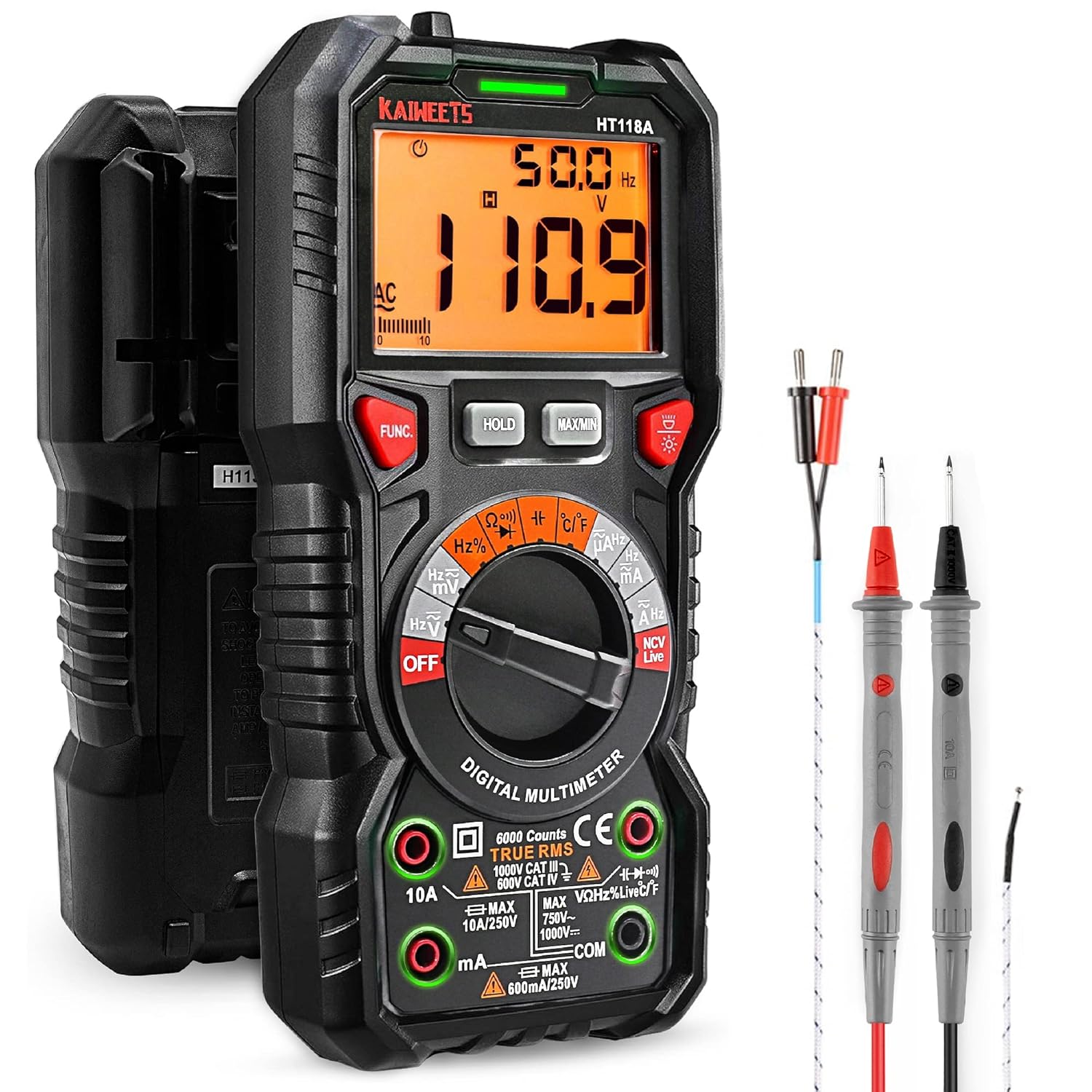
A battery can show acceptable voltage at rest and still fail when the starter is engaged. Set your multimeter to DC volts and connect it across the battery terminals. Have a helper turn the key to the start position while you watch the reading.
During cranking, battery voltage should generally stay above about 9.6 volts at room temperature. If it drops well below that and the starter barely turns or only clicks, the battery may be weak, discharged, or the starter may be drawing excessive current.
If jump-starting the vehicle makes it crank normally, that strongly supports a battery or connection issue. It does not completely rule out the starter, but it tells you the system responds when supplied with stronger voltage and current.
Testing the High-Current Side of the Starter Circuit
Confirm Battery Power at the Starter Main Terminal
At the starter, there is usually a large battery cable connected to the main terminal on the solenoid. With the key off, that terminal should have full battery voltage all the time. If it does not, trace back to the battery cable, fusible link, mega fuse, or connection issue.
Perform a Positive-side Voltage Drop Test
Place the multimeter positive lead on the battery positive post and the negative lead on the starter main battery terminal. Have a helper crank the engine. A reading over about 0.5 volts on this cable path usually indicates excessive resistance from corrosion, loose connections, or damaged cable strands.
Perform a Ground-side Voltage Drop Test
Place the multimeter positive lead on the starter housing or a clean metal point on the engine block near the starter. Place the negative lead on the battery negative post. Have a helper crank the engine. A reading over about 0.2 to 0.3 volts on the ground side usually means poor grounding.
Voltage drop testing is one of the most valuable starter diagnostics because it finds resistance that a simple continuity check can miss. A cable can look fine and still fail badly under load.
Testing the Starter Control Circuit
Check for Start Signal at the Solenoid Trigger Wire
The small wire on the starter solenoid is the start command wire. Connect a test light or multimeter to that terminal and have a helper turn the key to START. You should see battery voltage or a bright test light while the key is held in the start position.
If the trigger wire gets proper voltage but the starter does not engage, the problem is likely the starter solenoid, starter motor, or high-current cable path. If the trigger wire does not get voltage, the fault is upstream in the relay, switch, fuse, wiring, or control logic.
Test the Starter Relay
Locate the starter relay in the underhood or interior fuse box. Many relays can be swapped temporarily with another identical relay used for a non-critical circuit, such as a horn relay, if the part numbers match. If the vehicle then cranks, replace the relay.
You can also test the relay socket. One terminal should have battery power, one should become energized when the key is turned to START, and another may be grounded by the PCM, body module, or safety switch depending on vehicle design. Use a wiring diagram if available to identify the terminals correctly.
Check the Ignition Switch or Start Button Signal
If the relay never receives a start command, the ignition switch or push-button start control path may be at fault. On older vehicles, worn ignition switch contacts are common. On newer ones, the body control module, brake pedal input, immobilizer, or key recognition may be involved.
Inspect the Park/neutral or Clutch Switch
Automatic vehicles usually require the transmission range switch to report Park or Neutral before cranking is allowed. Manual vehicles usually require a closed clutch pedal switch. If the engine cranks in Neutral but not Park, suspect switch adjustment or wear.
Recommended Tools for This Job


When the Starter Clicks but Does Not Crank
A click means part of the circuit is working. The question becomes whether the solenoid is receiving enough current and whether the motor can turn once the contacts close.
- Recheck battery state of charge and cranking voltage.
- Clean and tighten the battery terminals and main starter cable.
- Run positive and ground voltage drop tests during crank.
- Verify the engine can turn by hand if mechanical lock-up is a possibility.
- If power and ground are strong at the starter but it still only clicks, replace the starter assembly.
Heat-related failures are common with older starters. If the vehicle starts cold but not hot, internal starter wear or high resistance in the solenoid may be the cause.
When There Is No Click at All
No click usually means the starter solenoid is not being commanded, or there is no battery power available at the starter or relay. This is where control-side diagnosis matters most.
- Check all starter-related fuses and fusible links.
- Confirm battery voltage is present at the starter main terminal.
- Test the relay for command and output.
- Check for voltage at the solenoid trigger wire during START.
- Test the ignition switch, park/neutral switch, clutch switch, or anti-theft inputs if no trigger signal is present.
If scan tool data is available, look for live data showing transmission range, clutch switch status, brake switch status, immobilizer status, and start request. That can save time on newer vehicles with module-controlled starting systems.
How to Interpret Your Test Results
Battery Voltage Low at Rest
Charge the battery and retest. If it will not hold a charge or repeatedly fails a load test, replace the battery before continuing.
Battery Good, but Large Voltage Drop on Positive Cable
Clean or replace the positive cable ends, check the connection at the underhood fuse box if equipped, and inspect for hidden corrosion inside the cable.
Battery Good, but Large Voltage Drop on Ground Side
Repair the battery negative connection, engine ground strap, or block grounding point. Many no-crank complaints come down to a poor ground.
Start Signal Present at Solenoid, but No Crank
If the starter has full battery power and acceptable voltage drop values, the starter solenoid or motor is faulty. Replacement is usually the fix.
No Start Signal at Solenoid
Work backward through the control circuit: relay, fuse, ignition switch, safety switch, wiring, and any module or anti-theft controls.
Engine Cranks Only in Neutral
Adjust or replace the park/neutral switch or inspect shifter linkage issues.
Next Steps After Diagnosis
Once you identify the faulty part of the circuit, make the repair and then retest the entire system. Do not stop at getting one successful start. Cycle the key several times and test both cold and hot conditions if the problem was intermittent.
If you replace a battery or starter, clean all related cable connections before reassembly. A new component installed into a corroded circuit can still perform poorly. Apply dielectric grease around clean terminal connections where appropriate to help limit future corrosion.
If all electrical tests pass but the engine still cranks poorly, consider other causes such as internal engine drag, accessory seizure, timing issues, or a charging system problem that leaves the battery undercharged between trips.
Key Takeaways
- Always test battery condition and terminal cleanliness before replacing a starter.
- Use voltage drop testing on both the positive and ground sides to find hidden cable resistance under load.
- If the solenoid trigger wire gets full voltage during START but the engine will not crank, the starter assembly is the likely fault.
- If there is no trigger voltage at the starter, inspect the relay, fuses, ignition switch, and park/neutral or clutch safety switch.
- Intermittent no-crank problems often come from loose connections, heat-soaked starters, or worn relay and switch contacts.
FAQ
Can a Bad Battery Cause the Starter to Click Once but Not Crank?
Yes. A battery can have enough voltage to activate the solenoid but not enough current capacity to spin the starter motor. That is why cranking voltage and load testing matter.
How Do I Know if It Is the Starter Relay or the Starter Itself?
If the relay is not sending power to the starter trigger wire during START, suspect the relay or its control circuit. If the trigger wire gets proper voltage and the main battery cable at the starter also has full power, the starter is more likely at fault.
What Voltage Should I See at the Battery While Cranking?
As a general rule, battery voltage should stay above about 9.6 volts during cranking at room temperature. A much lower reading points to a weak battery, excessive current draw, or major cable resistance.
Why Does My Car Start in Neutral but Not Park?
That usually indicates a worn or misadjusted park/neutral safety switch or a shifter linkage issue. The transmission range signal may not be correctly showing Park to the starting system.
Can Corroded Battery Cables Make a Good Starter Act Bad?
Absolutely. Corrosion adds resistance and reduces available voltage at the starter under load. The starter may click, crank slowly, or fail completely even if the battery and starter are otherwise good.
Should I Tap on the Starter to See if It Works?
A light tap sometimes makes a worn starter work briefly, but it is only a temporary clue, not a repair. If tapping changes the symptom, the starter is likely failing internally.
Do I Need a Scan Tool to Diagnose Starter Circuit Problems?
Not always. Many basic no-crank issues can be found with a multimeter and test light. A scan tool becomes more useful on newer vehicles with push-button start, immobilizer systems, and module-controlled relays.
Need Parts for This Repair?
The right parts and supplies vary by vehicle.
Select your make and model to find compatible parts and accessories for your car.
Exact Fit
Parts that fit your make and model
Quality You Can Trust
Top brands and OEM quality options
Fast Shipping
Get the parts you need, delivered fast