

Note: This article contains affiliate links. If you click on these links and make a purchase, I may earn a small commission at no extra cost to you. This helps support my research and content. Read my full affiliate disclosure here.
Repair Snapshot
Use a mechanic if the vehicle requires advanced anti-theft or module-based starting system diagnosis, or if wiring damage is buried inside harnesses. Get professional help if you are not comfortable working around batteries, high current cables, or under-vehicle access.
This article is part of our Electrical System Maintenance & Repair Guides.
Starter circuit wiring problems can cause a no-crank condition that feels like a dead battery or failed starter, even when those parts are still good. The key is to test the circuit in order: battery power, ground path, control signal, relay operation, and the wiring between them.
On most vehicles, the starter needs two things to work: a strong high-current battery cable and a low-current start signal from the ignition switch, relay, or control module. If either side is weak, corroded, loose, shorted, or open, the engine may click once, crank slowly, or do nothing at all.
This guide walks through a practical DIY process to inspect, test, and repair starter circuit wiring safely. You will learn how to identify whether the fault is in the battery cables, grounds, relay, ignition switch circuit, or the wire going to the starter solenoid.
How the Starter Circuit Works
Understanding the circuit makes diagnosis much faster. The battery sends high current through the positive cable to the starter motor, while the engine block and chassis ground return current back to the battery negative terminal. Separately, the ignition switch or push-button start system sends a low-current command through a fuse, relay, neutral safety or clutch switch, and then to the starter solenoid.
When you turn the key to START, the solenoid receives that command signal and closes an internal high-current contact. That allows battery power to reach the starter motor. If the command signal never arrives, the starter will not engage. If the command arrives but the battery cable or ground path is bad, the solenoid may click but the engine will not crank normally.
- A single click often points to weak battery power, bad cable connections, or a failing starter solenoid.
- A rapid clicking sound usually suggests low battery voltage or excessive resistance at the battery terminals.
- A silent no-crank condition often means no start signal, a blown fuse, bad relay, or an open wire in the control circuit.
Common Signs of Starter Wiring Trouble
Starter wiring faults usually show up intermittently before failing completely. A loose cable may work when cold and fail when hot, or a corroded terminal may pass enough current one day and not the next.
- Engine will not crank, but dash lights and accessories still work.
- Starter clicks once, then nothing happens.
- Cranking is slow even with a good battery.
- Vehicle starts only when shifted slightly in Park or Neutral.
- Wires near the starter look melted, brittle, oil-soaked, or rubbed through.
- Battery terminals or ground straps are visibly corroded or loose.
Safety and Setup Before Testing
Starter circuits carry very high current, so care matters. Always work on a cool vehicle when possible, keep loose clothing away from moving parts, and support the vehicle securely if you need access from below.
Before You Begin
- Set the parking brake and place the transmission in Park or Neutral.
- Disconnect the negative battery cable before repairing or removing any starter wiring.
- Reconnect the battery only when performing live voltage tests.
- Avoid shorting the large starter terminal to ground with a tool.
- If the starter is underneath, use jack stands on solid ground, not just a jack.
If your vehicle uses a smart key, anti-theft system, or integrated body control module to authorize cranking, the control side of the circuit can be more complex. You can still inspect cables and perform basic voltage tests, but advanced module diagnosis may require a wiring diagram and scan tool.
Inspect the Battery Cables and Starter Wiring First
Start with a careful visual inspection before you reach for the meter. Many starter wiring problems are obvious once you know where to look.
What to Inspect
- Battery terminals for corrosion, looseness, or damaged clamps.
- Positive battery cable from the battery to the starter for swelling, broken insulation, or burn marks.
- Negative cable from the battery to body and engine block for looseness or rust.
- Starter solenoid terminal for a loose nut, damaged ring terminal, or oil contamination.
- Small trigger wire at the starter for a loose connector, broken insulation, or rubbed-through section.
- Related fuses, fusible links, and starter relay connections.
If a cable is green under the insulation, stiff, or hot after repeated start attempts, replace it rather than trying to clean the ends only. Corrosion often travels inside the cable where you cannot see it. Also look for grounds between the engine and chassis. A missing or cracked ground strap can create a no-crank or slow-crank problem.
Tools That Make This Job Easier
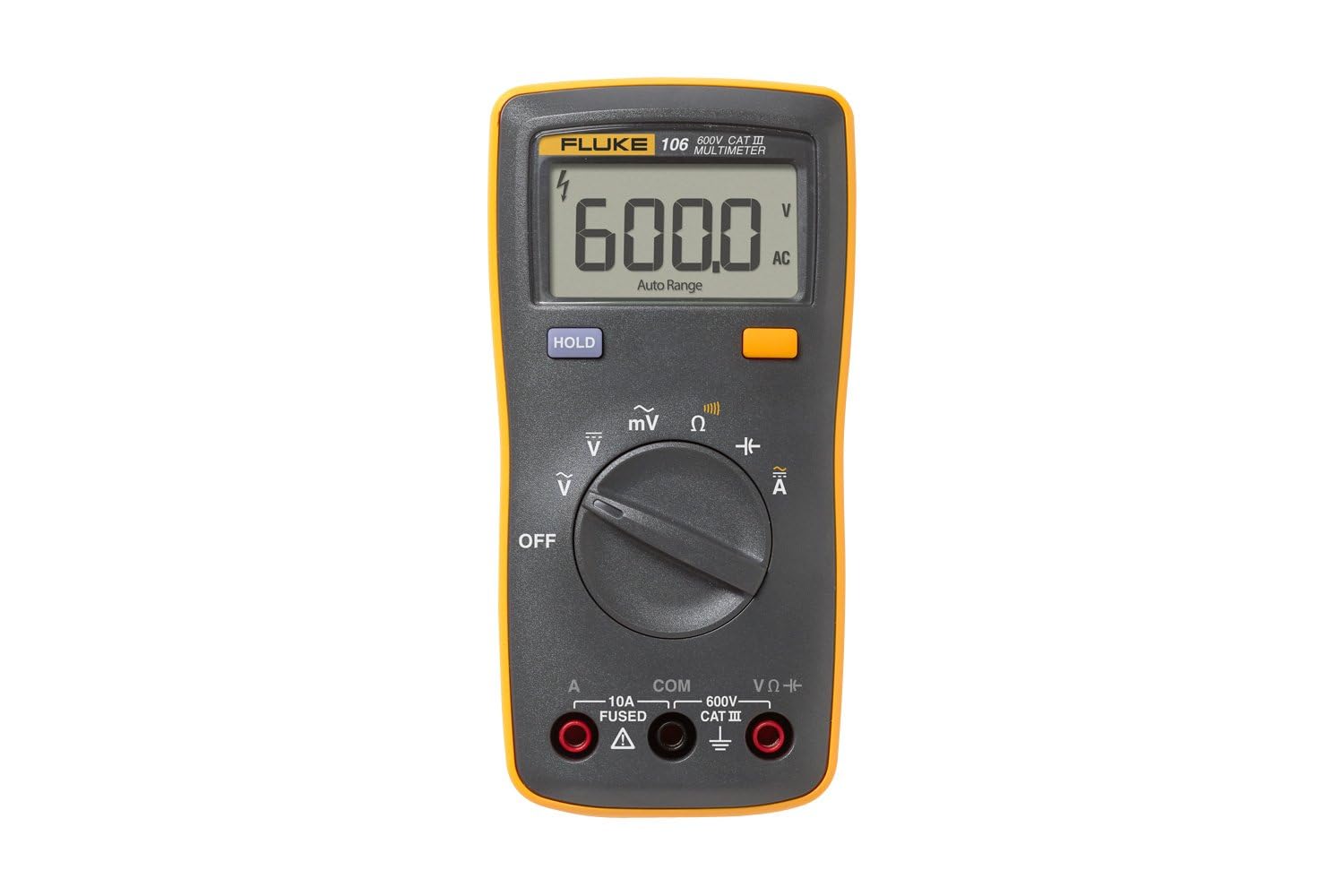


Check Battery Condition Before Blaming the Wiring
A weak battery can mimic bad starter wiring, so test it first. With the engine off, a fully charged battery should read about 12.6 volts. Around 12.4 volts is partially charged, and anything close to 12.0 volts is too low for reliable starter testing.
Quick Battery Test
- Set your multimeter to DC volts.
- Place the red lead on the battery positive terminal and the black lead on the battery negative terminal.
- Read static voltage with the key off.
- Have a helper turn the key to START while you watch the meter.
- If voltage drops far below about 9.6 volts during cranking, charge or replace the battery before continuing.
If the battery tests weak, fix that first. Wiring diagnosis is unreliable when battery voltage is low because every reading in the circuit will look worse than it really is.
Test for Power at the Starter
Once the battery is confirmed good, verify that battery power is actually reaching the starter main terminal. This checks the high-current side of the circuit.
Main Battery Cable Test
- Reconnect the battery if it was disconnected.
- Touch the black meter lead to a clean engine ground or starter housing.
- Touch the red lead to the large battery cable terminal on the starter solenoid.
- You should see battery voltage at all times, even with the key off.
If you do not have battery voltage at the large starter terminal, the problem is between the battery and starter. That may mean a damaged positive cable, severe corrosion, a blown fusible link on some vehicles, or a poor battery terminal connection.
Starter Trigger Wire Test
- Keep the black lead on a good ground.
- Probe the small starter solenoid trigger wire terminal.
- Have a helper turn the key to START.
- Look for battery voltage or a strong command voltage during the start request.
If the main terminal has power but the small trigger wire does not receive voltage during START, the issue is on the control side of the circuit. That commonly points to the starter relay, ignition switch circuit, clutch switch, neutral safety switch, fuse, or an open wire.
Use Voltage Drop Testing to Find Hidden Resistance
Voltage drop testing is one of the best ways to find bad starter cables and grounds. A cable can look fine and still have too much internal resistance to carry starter current.
Positive Side Voltage Drop
- Set the meter to DC volts.
- Place the red lead on the battery positive post itself, not the cable end.
- Place the black lead on the large starter main terminal.
- Have a helper try to crank the engine.
- A reading above roughly 0.5 volts on the positive side indicates excessive resistance.
Ground Side Voltage Drop
- Place the red lead on the starter housing or engine block near the starter.
- Place the black lead on the battery negative post itself.
- Have a helper try to crank the engine.
- A reading above roughly 0.2 to 0.3 volts on the ground side suggests a bad ground path.
High voltage drop on the positive side usually means a bad cable, dirty battery terminal, or poor connection at the starter. High drop on the ground side often means corrosion at the battery negative terminal, a loose engine ground, or a damaged ground strap.
Check the Relay, Fuse, and Start-control Circuit
If the starter trigger wire never gets a start signal, move upstream through the control circuit. Many no-crank issues are caused by a failed relay, blown fuse, or switch that does not close.
Starter Relay Checks
- Listen or feel for a click from the relay when the key is turned to START.
- Swap the relay with an identical known-good relay if one is available in the fuse box.
- Check for constant battery power at the relay feed terminal.
- Check for control voltage at the relay coil when START is requested.
- Check whether the relay output sends power toward the starter solenoid.
If the relay receives power and command but does not send output, replace it. If the relay never gets commanded, inspect the ignition switch, park/neutral safety switch, clutch pedal switch, anti-theft system, or body control module inputs depending on the vehicle.
Neutral Safety and Clutch Switch Clues
Automatic-transmission vehicles may fail to crank if the range switch does not confirm Park or Neutral. Manual-transmission vehicles often route the start signal through the clutch pedal switch. If the engine cranks only when shifting the lever slightly or stomping the clutch pedal harder, that part of the control circuit deserves attention.
Recommended Tools for This Job


How to Repair Damaged Starter Circuit Wiring
Once you find the fault, repair the wiring with materials that can handle heat, vibration, and current load. Do not use household wire, twist-and-tape repairs, or undersized connectors.
Repairing a Damaged Trigger Wire
- Disconnect the negative battery cable.
- Cut out any brittle, burnt, or corroded wire until clean copper is visible.
- Use the same gauge automotive primary wire for the replacement section.
- Strip the wire ends cleanly and crimp with quality butt connectors or solder if appropriate for your repair style.
- Seal the repair with heat-shrink tubing and protect it in wire loom away from exhaust heat and sharp edges.
- Reconnect the terminal securely at the starter solenoid.
Repairing Battery Cables or Ground Connections
For high-current cables, replacement is usually better than patching. Remove the cable, clean the mounting surfaces to bare metal where needed, and install the new cable with tight, clean connections. A starter cable repair splice can create resistance and heat if not done correctly, so full cable replacement is the safer long-term fix.
- Clean battery posts and terminal clamps with a battery terminal brush.
- Remove rust and paint from ground mounting points so the connection contacts bare metal.
- Apply a light coat of dielectric grease after the connection is secure to slow future corrosion.
- Route the cable exactly as the original, keeping it away from exhaust pipes, steering shafts, and moving suspension parts.
Verify the Repair and Confirm Proper Cranking
After the repair, do more than a single quick start. Confirm that the circuit performs consistently under repeated use.
- Reconnect the battery and confirm all tools are clear of the engine bay.
- Turn the key to START several times and verify strong, consistent cranking.
- Repeat the voltage drop tests if the vehicle previously had high resistance readings.
- Check that repaired wiring does not move into contact with hot or moving components.
- Inspect for abnormal heat at battery terminals or cable ends after several start attempts.
If the starter now receives proper voltage and the cables test well but the engine still will not crank, the starter motor or solenoid itself may be faulty. At that point, wiring is no longer the most likely cause.
Mistakes to Avoid During Starter Wiring Diagnosis
A few common mistakes can waste time or create new problems.
- Replacing the starter before confirming the battery, cables, and trigger wire actually test bad.
- Checking only static voltage and skipping voltage drop testing under load.
- Cleaning cable ends while ignoring corrosion hidden inside the cable insulation.
- Using wire that is too small for the circuit or connectors not rated for automotive use.
- Forgetting to inspect the engine ground strap and focusing only on the positive cable.
- Bypassing safety switches without understanding the risk or restoring the circuit correctly.
When Starter Wiring Repair Is Not the Right Fix
Not every no-crank issue is wiring-related. If the battery is healthy, the starter has full battery voltage at the main terminal, the trigger wire gets a solid start signal, and voltage drop is within spec, the starter assembly is the more likely problem.
Likewise, if scan data shows the vehicle is not authorizing crank because of anti-theft, transmission range, or module communication faults, wiring at the starter may be fine. In those cases, a repair manual, wiring diagram, and scan tool are often necessary.
Key Takeaways
- Always confirm battery condition first, because low voltage can mimic a starter wiring failure.
- Check both the large starter cable and the small trigger wire to separate high-current and control-circuit faults.
- Use voltage drop testing under load to find hidden resistance in cables, grounds, and connections.
- Replace badly corroded battery or starter cables instead of attempting weak patch repairs.
- If the starter gets full power and a solid start signal but still will not crank, suspect the starter itself or a control module issue.
FAQ
Can Bad Starter Wiring Make It Seem Like the Battery Is Dead?
Yes. Corroded battery cables, loose terminals, or a poor engine ground can limit current so badly that the starter barely clicks or does nothing, even with a good battery.
What Voltage Should I See at the Small Starter Wire?
During a start request, you should usually see battery voltage or very close to it at the starter solenoid trigger wire. Exact behavior varies by vehicle, but no voltage during START usually means a control-circuit problem.
Why Does My Starter Click Once but Not Crank?
A single click often means the solenoid is trying to engage but the high-current side cannot deliver enough power. Common causes include a weak battery, dirty battery terminals, a bad positive cable, poor ground, or a failing starter.
Can I Repair a Starter Wire with Electrical Tape Only?
No. Tape alone is not a proper electrical repair. Damaged wire should be cut back to clean copper and repaired with the correct gauge wire, proper connectors, and heat-shrink protection.
Should I Replace the Starter Relay if I Hear No Click?
Not automatically. First confirm that the relay is receiving power and a command signal. A relay that never clicks may be bad, but it may also be missing voltage from a fuse, ignition switch, clutch switch, neutral safety switch, or control module.
How Do I Know if the Ground Side Is Bad?
Do a ground-side voltage drop test while someone tries to crank the engine. If the reading is higher than about 0.2 to 0.3 volts, the ground path likely has too much resistance.
Is It Okay to Jump the Starter Solenoid for Testing?
It can be done on some vehicles, but it carries risk of sparks, movement, or bypassing safety circuits. For most DIY owners, using a multimeter and testing the circuit step by step is safer.
When Should I Stop and Call a Mechanic?
Call a mechanic if the wiring tests point toward anti-theft, body control module, or transmission range input issues, or if the starter is difficult to access safely from underneath the vehicle.
Need Parts for This Repair?
The right parts and supplies vary by vehicle.
Select your make and model to find compatible parts and accessories for your car.
Exact Fit
Parts that fit your make and model
Quality You Can Trust
Top brands and OEM quality options
Fast Shipping
Get the parts you need, delivered fast