

Note: This article contains affiliate links. If you click on these links and make a purchase, I may earn a small commission at no extra cost to you. This helps support my research and content. Read my full affiliate disclosure here.
Repair Snapshot
Use a mechanic if the bleeder screws are seized, the system will not build a firm pedal, or your vehicle requires scan-tool ABS bleeding. Brake work is safety-critical, and a mistake can cause brake failure.
This article is part of our Brake System Maintenance & Repair Guides.
Bleeding the brakes after replacing a brake hose is the step that removes trapped air from the hydraulic system so the pedal feels firm and the brakes work the way they should. Even if the hose swap went smoothly, air almost always enters the line once the system is opened.
The good news is that many DIYers can bleed the brakes at home with basic tools, the correct brake fluid, and a careful process. The key is keeping the master cylinder full, bleeding in the proper order, and stopping immediately if the pedal stays spongy or fluid leaks appear.
This guide walks through preparation, wheel-by-wheel bleeding, final pedal checks, and common mistakes to avoid after a brake hose replacement.
Before You Start
Brake fluid damages paint and brake work affects your ability to stop, so treat this as a safety-critical job. Park on level ground, chock the wheels, wear gloves and eye protection, and support the vehicle securely on jack stands before removing any wheels.
Make sure the new brake hose is installed correctly and routed exactly like the original. It should not be twisted, stretched, rubbing the tire, or contacting suspension parts through the steering range or suspension travel. Double-check banjo bolt washers or line fitting tightness before bleeding.
Use only the brake fluid type listed on the reservoir cap or in the owner’s manual, such as DOT 3 or DOT 4. Do not mix in the wrong fluid type, and do not reuse old fluid that has been sitting open because brake fluid absorbs moisture.
- Clean the master cylinder cap area before opening it so dirt does not enter the system.
- Fill the reservoir to the proper line before you begin.
- Have enough fresh fluid on hand to keep topping off the reservoir during the whole process.
- Spray the bleeder screws with penetrating oil first if they look rusty, but keep oil off the brake pads and rotor.
Know the Bleeding Order
On many vehicles, you bleed the wheel farthest from the master cylinder first and work toward the closest. That often means right rear, left rear, right front, then left front. But not every brake system follows that pattern, especially on some diagonal-split or ABS-equipped systems.
If you only replaced one brake hose, you still need to remove air from the affected circuit, and in many cases it is smart to bleed more than one wheel to ensure a firm pedal. The safest approach is to check the service information for your specific vehicle’s sequence.
If the brake hose replacement was at a front wheel and the reservoir never ran low, you may only need to bleed that corner and possibly the opposite front wheel. If the reservoir emptied or a lot of air entered, plan to bleed all four corners.
Set Up for Bleeding
Prepare the Wheel and Bleeder Screw
Remove the wheel if needed for better access. Clean around the bleeder screw so dirt does not get pulled into the caliper or wheel cylinder. Fit the correct wrench on the bleeder before attaching your clear hose. Push the hose firmly over the bleeder nipple and place the other end into a catch bottle partially filled with clean brake fluid so the hose end stays submerged.
Protect the Reservoir Level
The most common bleeding mistake is letting the master cylinder run low. If that happens, you pull more air into the system and may have to start over. Check the fluid level after every few pedal cycles or after each wheel, whichever comes first.
Choose Your Bleeding Method
A two-person manual bleed is the most common DIY method. A vacuum bleeder can make the job easier, while a pressure bleeder is often the fastest and cleanest. The exact tool changes the steps a little, but the goal stays the same: move fluid through the system until no air bubbles remain.
How to Bleed the Brakes with a Helper
This is the standard two-person bleeding method. One person sits in the driver’s seat and operates the brake pedal, while the other opens and closes the bleeder screw at the wheel.
- Top off the master cylinder reservoir with fresh brake fluid and leave the cap loosely in place to reduce splashing while still allowing venting.
- Start at the correct wheel for your vehicle’s bleeding order.
- Have your helper slowly press the brake pedal several times, then hold steady pressure on the pedal and say ‘holding.’
- With the hose attached, open the bleeder screw about a quarter turn. Old fluid and air bubbles should flow through the clear hose into the bottle.
- Before your helper releases the pedal, close the bleeder screw snugly. This is critical because releasing the pedal with the bleeder open can pull air back in.
- Tell the helper to slowly release the pedal, then repeat the pump-and-hold process.
- Watch the fluid in the hose. Continue until the stream becomes clean and free of bubbles.
- Check and refill the master cylinder reservoir often. Never let it drop below the minimum level.
- Move to the next wheel in the correct sequence and repeat the same steps.
- When finished, snug each bleeder screw properly, reinstall bleeder caps, and wipe away any spilled fluid.
Tell your helper to press the pedal slowly, not slam it. Fast or full-stroke pumping on an older master cylinder can sometimes damage seals by pushing the piston into parts of the bore it does not normally travel through.
If you replaced only one hose and got a clear, bubble-free stream quickly at that wheel, you may still want to continue at the remaining wheel or axle on that circuit until the pedal is consistently firm.
Tools That Make This Job Easier
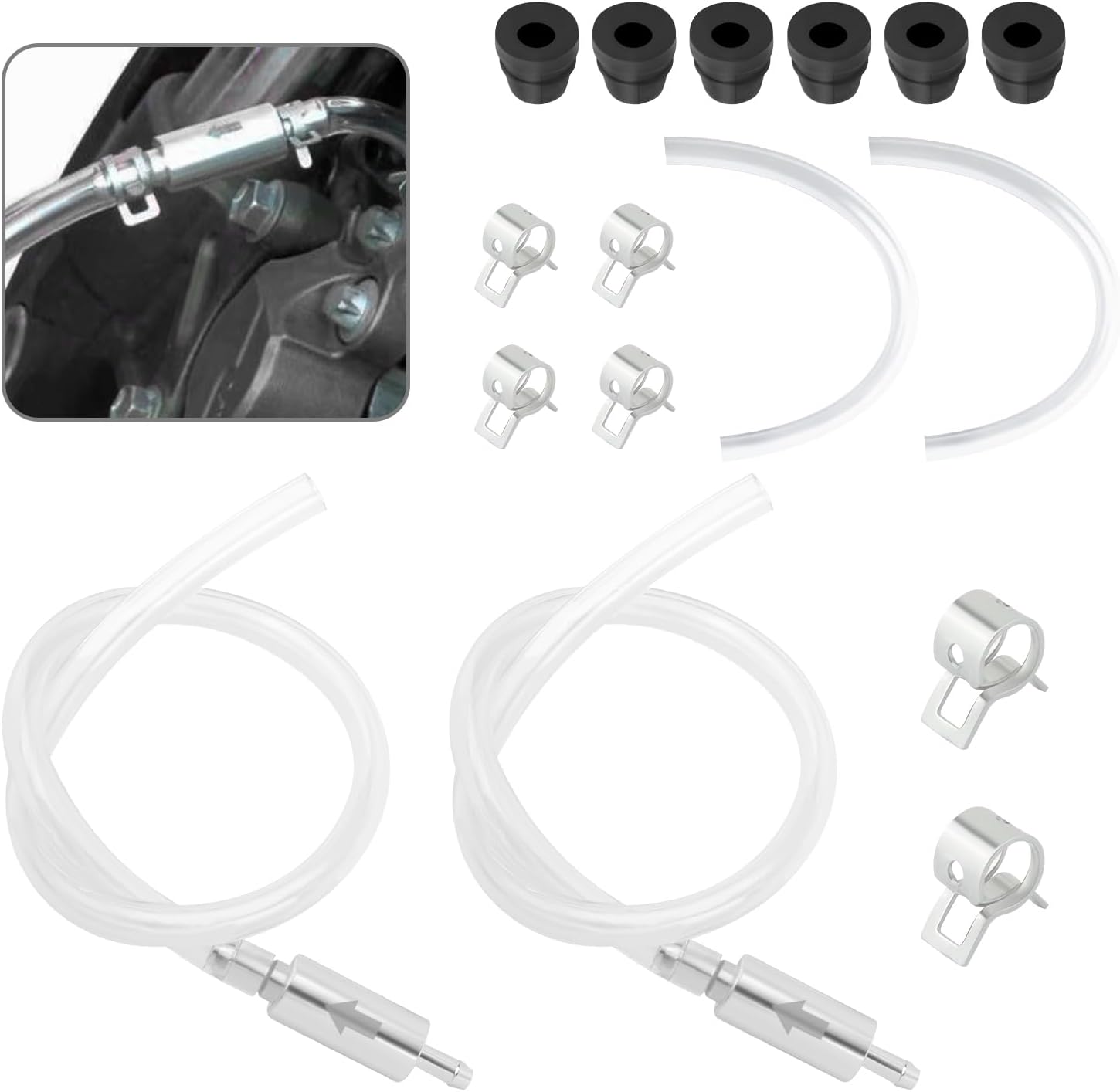


How to Bleed Brakes with a Vacuum or Pressure Bleeder
Using a Vacuum Bleeder
A vacuum bleeder attaches at the bleeder screw and pulls fluid through the system. Connect the tool, open the bleeder slightly, and draw fluid until no more bubbles appear. Keep an eye on the reservoir because the tool can move fluid quickly. Sometimes small bubbles show up around the bleeder screw threads rather than from the brake system itself, so do not judge only by a few tiny frothy bubbles at the screw.
Using a Pressure Bleeder
A pressure bleeder pushes clean fluid from the master cylinder reservoir through the system. This is often the best method for pushing air out after line or hose work. Fill the bleeder with the correct fluid, attach the proper cap adapter, pressurize to the tool’s recommended range, then open each bleeder in sequence until the fluid runs clear and bubble-free.
Pressure bleeding is especially useful when a lot of air entered the system, but you still need to verify the pedal feel afterward. Do not over-pressurize the reservoir, and do not leave the bleeders open longer than necessary.
What to Watch for While Bleeding
A successful bleed usually shows a steady stream of clean fluid with fewer and fewer air bubbles, followed by a noticeably firmer pedal. The pedal should feel more solid after each wheel if the process is working.
- Large bubbles at first are normal after a brake hose replacement.
- A constant stream of bubbles can mean the reservoir ran low, a fitting is loose, or the hose connection is leaking air or fluid.
- Fluid seeping at the new hose, banjo bolt, hard line fitting, caliper, or wheel cylinder means the system is not ready for service.
- A bleeder screw that seeps around the threads may give misleading bubbles during vacuum bleeding.
If the fluid coming out is dark, keep bleeding until it becomes cleaner, but do not waste fluid chasing perfection if the line is already air-free and pedal feel is good. The goal after hose replacement is to remove air first and foremost.
Final Checks Before Driving
When all wheels are done, fill the reservoir to the proper mark and tighten the cap. Wipe any spilled brake fluid immediately and spray contaminated areas with brake cleaner as needed. Reinstall the wheels, torque the lug nuts to spec, and lower the vehicle.
With the engine off, press the brake pedal several times. It should become firm and hold pressure without slowly sinking to the floor. Then start the engine. The pedal may drop slightly because of brake booster assist, but it should still feel solid and responsive, not mushy.
Turn the steering wheel lock-to-lock if you replaced a front brake hose and look again to make sure the hose does not twist or stretch. Check all hose connections and bleeder screws for leaks. Even a small wet spot means the job is not finished.
Perform a Cautious Test
Test the brakes in a safe area at very low speed first. Confirm the pedal is firm, the vehicle stops straight, and no warning lights stay on. Do not head into traffic until you are completely sure the brake system is operating normally.
Recommended Tools for This Job


When ABS Changes the Procedure
Many vehicles with ABS can still be bled normally after a simple brake hose replacement, especially if only a small amount of air entered the line. But if the master cylinder ran dry, the ABS hydraulic unit ingested air, or the manufacturer specifies electronic cycling of the ABS valves, you may need a scan tool with an ABS bleed function.
Symptoms that point to trapped air in the ABS unit include a stubborn soft pedal even after repeated bleeding with no visible air at the wheel bleeders. In that case, forcing the issue without the correct procedure can waste fluid and time.
If your vehicle’s service information calls for a scan-tool bleed, follow that procedure exactly or have a shop perform it. This is one of the clearest points where DIY can reasonably turn into a professional job.
Common Mistakes to Avoid
- Letting the master cylinder reservoir run low during bleeding.
- Using the wrong brake fluid type or reusing old fluid from an open container.
- Opening the bleeder too far, which can let air leak around the threads.
- Releasing the brake pedal before the bleeder screw is closed.
- Ignoring a twisted or misrouted new brake hose.
- Overtightening bleeder screws or line fittings and damaging the threads.
- Driving the vehicle without confirming pedal firmness and leak-free connections.
- Assuming every ABS system can be fully bled without a scan tool.
If one bleeder screw is stuck, do not round it off with the wrong wrench. Use a proper bleeder or line wrench, apply penetrating oil, and work carefully. Breaking a bleeder screw can turn a straightforward bleed into a caliper or wheel cylinder replacement.
Troubleshooting a Soft Pedal After Bleeding
If the pedal still feels soft after you think the air is out, start with the basics. Recheck the reservoir level, inspect the new hose connections, look for fluid seepage, and verify the bleeders are tight. A tiny leak can keep the system from building full hydraulic pressure.
Then bleed the affected wheel again, followed by the rest of the system in the correct order. Sometimes a bubble remains trapped near the caliper, wheel cylinder, or hose connection and needs a second round to clear.
- A pedal that pumps up temporarily often suggests remaining air in the system.
- A pedal that slowly sinks under steady pressure can point to a leak or an internal master cylinder problem.
- Rear drum brakes that are badly out of adjustment can also create extra pedal travel.
- If ABS air is suspected, a scan-tool bleed may be required.
Do not keep driving and hoping the pedal improves. If brake feel is not confidently normal, the vehicle is not ready for the road.
Key Takeaways
- Keep the master cylinder full the entire time or you may pull air back into the brake system and have to start over.
- Bleed the wheels in the correct vehicle-specific order and close each bleeder before the pedal is released.
- Do not drive until the pedal is firm, all fittings are dry, and the new brake hose is routed correctly with no twist or rubbing.
- A soft pedal after repeated bleeding may mean a leak, trapped ABS air, or another brake issue that needs further diagnosis.
- If your vehicle requires ABS scan-tool bleeding or you cannot get a solid pedal, it is safer to hand the job to a professional.
FAQ
Do I Always Need to Bleed the Brakes After Replacing a Brake Hose?
Yes. Opening the hydraulic system to replace a brake hose almost always lets air in, and that air must be removed before the brakes can work properly.
Which Wheel Should I Bleed First?
Many vehicles use the farthest-wheel-first sequence, but not all do. Check service information for your exact vehicle, especially if it has ABS or a non-standard brake circuit layout.
Can I Bleed Just the Brake Hose I Replaced?
Sometimes, if only that corner was opened and the reservoir never ran low. But if a lot of air entered or pedal feel is still soft, bleed the rest of the affected circuit or all four wheels as needed.
What if No Fluid Comes Out of the Bleeder Screw?
The bleeder may be clogged, seized, or not opened enough, or the hose could be kinked. Stop and inspect carefully rather than forcing it, because broken bleeders and damaged threads create bigger repairs.
Why Is My Brake Pedal Still Spongy After Bleeding?
Common causes include remaining air in the lines, a low reservoir during bleeding, a fluid leak, air trapped in the ABS unit, or rear drum brakes that need adjustment. Recheck for leaks and bleed again in the correct order.
Can I Use a Vacuum Bleeder by Myself?
Yes. A vacuum bleeder is a common one-person method, but you still need to monitor the reservoir closely and understand that some bubbles at the bleeder threads may not mean air is still trapped in the brake system.
How Firm Should the Brake Pedal Feel when I’m Done?
With the engine off, the pedal should become firm and hold pressure without sinking. With the engine running, it may drop slightly because of brake booster assist, but it should still feel solid and predictable.
When Should I Stop and Call a Mechanic?
Stop if the pedal stays soft, the bleeders are seized, the master cylinder ran dry, fluid leaks continue, or your vehicle requires ABS scan-tool bleeding. Those issues can make home bleeding unreliable or unsafe.
Need Parts for This Repair?
The right parts and supplies vary by vehicle.
Select your make and model to find compatible parts and accessories for your car.
Exact Fit
Parts that fit your make and model
Quality You Can Trust
Top brands and OEM quality options
Fast Shipping
Get the parts you need, delivered fast