

Note: This article contains affiliate links. If you click on these links and make a purchase, I may earn a small commission at no extra cost to you. This helps support my research and content. Read my full affiliate disclosure here.
The right fluid keeps your Ridgeline Automatic shifting smoothly and helps prevent premature wear under daily driving and towing. For Honda Ridgeline owners, choosing a transmission fluid that matches the vehicle's factory requirements and driving demands can reduce shudder, maintain consistent shift timing, and extend transmission life.This guide shortlists five top transmission fluids that fit the Honda Ridgeline Automatic scope. We evaluated each option on friction characteristics, thermal stability, and long-term protection to help you pick a fluid that suits your driving style and maintenance preferences. Read on for the criteria we used and practical advice for changing or topping up ATF.
Looking for other parts? See all Honda Ridgeline parts & accessories.
Top Picks at a Glance
| Best Overall Transmission Fluid A well-balanced ATF that matches factory specs and performance | Idemitsu ATF Type H-Plus Automatic Transmission Fluid, 5 qt |  |
| Best Budget Transmission Fluid An affordable ATF option that covers basic maintenance needs | Valvoline MaxLife Multi-Vehicle Full Synthetic ATF, 1 Gallon |  |
| Best OEM Honda DW‑1 Pack Genuine DW‑1 OEM fluid sold in multi‑quart packs for exact fit | Honda DW-1 Automatic Transmission Fluid, 1 qt (Pack of 4) |  |
| Best High‑Mileage Transmission Fluid ATF with conditioners and cleaners designed for older, worn transmissions | Castrol Transmax High Mileage Automatic Transmission Fluid, 1 Gallon |  |
| Best Bulk Multi‑Quart Pack Large multi‑quart or case packs for complete fluid changes and multiple services | TRIAX Global Full Synthetic Multi‑Vehicle Automatic Transmission Fluid (5 Quart) |  |
1. Idemitsu ATF Type H-Plus Automatic Transmission Fluid, 5 qt
Best Overall Transmission Fluid

| Unit Count | 159.94 Fluid Ounces |
|---|---|
| Liquid Volume | 5 Quarts |
| Recommended Uses For Product | Use in Honda and Acura vehicles with ATF Z-1 or DW-1 fluid specifications |
| Upper Temperature Rating | 258 Degrees Fahrenheit |
Idemitsu ATF Type H-Plus is a full-synthetic automatic transmission fluid formulated to match Honda Z-1 and DW-1 specifications, intended to provide smooth shifts and long service life in compatible Honda transmissions. It is typically used for fluid changes and top-ups in automatic transmissions, where its optimized viscosity and friction-reducing additives help maintain consistent shift feel and improve fuel economy. Notable features include enhanced oxidation and thermal stability to resist breakdown under heat, and anti-wear chemistry to protect gears, clutches, and bearings during everyday driving and towing. The 5-quart bottle supplies enough fluid for a complete drain-and-fill on many vehicles and the product claims higher clutch performance versus some factory fluids, which helps with crisp engagement. Limitations are straightforward: compatibility is specific to Honda/Acura applications calling for Z-1 or DW-1 type ATF, so it is not a universal replacement for all transmissions, and users should follow manufacturer service intervals rather than relying on extended change intervals without inspection.
Best for: DIYers who want a factory-spec replacement fluid for Honda transmissions and prioritize reliable, consistent shifting and long-term protection during routine maintenance.
Less Ideal for: People looking for a one-fluid solution for mixed-vehicle fleets or for transmissions that specify a different ATF type should choose a fluid matched to those specific requirements.
- Formulated to meet Honda Z-1 and DW-1 specifications for direct fit use in compatible Honda transmissions
- Optimized viscosity and friction modifiers promote smooth shifting and improved fuel economy
- Enhanced oxidation and thermal resistance for longer fluid life under heat
- Anti-wear additives help protect clutches, gears, and bearings during normal and towing use
- Designed specifically for Honda/Acura Z-1 or DW-1 applications and not suitable as a universal ATF
Verdict: The go-to choice for most DIYers who want a reliable, factory-spec transmission fluid that delivers smooth shifting and long-term protection.
2. Valvoline MaxLife Multi-Vehicle Full Synthetic ATF, 1 Gallon
Best Budget Transmission Fluid

| Material | Synthetic |
|---|---|
| Liquid Volume | 1 Gallons |
| Viscosity | 1 |
| Flash Point | 394 Degrees Fahrenheit |
Valvoline MaxLife Multi-Vehicle ATF is a full synthetic transmission fluid designed to restore smoother shifts, condition seals to reduce leaks, and resist breakdown in prolonged use. For a Honda Ridgeline automatic, it can be used where the manufacturer's approved fluid specification matches the product's listed compatibilities, bringing improved thermal and viscosity stability versus conventional fluids. The formula includes anti-wear additives and frictional modifiers intended to support smoother gear engagement and longer component life, which is useful for towing or frequent highway driving. Because it is labeled multi-vehicle and compatible with many modern ATF and some CVT specifications, it offers flexibility for shops or owners who service multiple vehicles. The main limitation is that you must verify the Ridgeline's exact ATF spec before swapping fluids, since Honda calls out specific factory-compatible fluids for certain model years and transmissions.
Best for: Honda Ridgeline owners looking for an affordable, full synthetic ATF that restores shift quality and helps protect transmission internals during towing or daily use.
Less Ideal for: Owners who prefer to use only the exact factory-branded fluid recommended by Honda or who have an unusual transmission spec not listed among this product's compatibilities.
- Full synthetic formula offers improved thermal stability and longer fluid life compared with conventional ATF
- Additives for seal conditioning help reduce leaks and maintain transmission performance
- Designed to improve shift feel and reduce wear with anti-wear and frictional enhancement chemistry
- Marketed as compatible with many ATF and some CVT specifications, useful for mixed-fleet servicing
- Requires confirmation of the Ridgeline's specific ATF specification before use to ensure compatibility
Verdict: Choose this when you need a low-cost fluid that restores shifting performance and protects internal parts without breaking the bank.
3. Honda DW-1 Automatic Transmission Fluid, 1 qt (Pack of 4)
Best OEM Honda DW‑1 Pack

| Liquid Volume | 128 Fluid Ounces |
|---|---|
| Unit Count | 128.0 Fluid Ounces |
| SAE J300 Viscosity Grade | 5W-40 |
| Number of Items | 4 |
This is factory-quality Honda DW-1 ATF supplied in four 1-quart bottles for routine transmission service. It is formulated to deliver the friction characteristics and viscosity range Honda specifies, so it helps maintain smooth shift feel and torque converter operation when used in compatible transmissions. Typical use is drain-and-fill or full fluid replacement during scheduled maintenance; the 4-quart pack covers multiple services for one vehicle or one full refill on many transmissions. The product is straightforward liquid ATF with no additives required, and being the manufacturer part means fitment and claims align with Honda maintenance recommendations. Limitations are that this is a specific OEM fluid so it is only appropriate where DW-1 is specified, and the pack does not include tools, funnels, or disposal materials, so you will need basic service supplies to perform the job.
Best for: Buyers who prioritize factory-approved maintenance and want the exact transmission fluid recommended by the manufacturer to preserve shift quality and compatibility.
Less Ideal for: People seeking a universal or multi-vehicle ATF solution or those who need service accessories bundled with the fluid.
- Factory-formulated DW-1 matches Honda shift friction and viscosity specs
- Four 1-quart bottles provide enough fluid for multiple services or a full refill
- Genuine Honda product reduces risk of incompatibility with Honda transmissions
- Only suitable where Honda DW-1 is the specified fluid and not a universal ATF replacement
Verdict: Pick this OEM DW‑1 pack when you want factory-approved fluid to ensure correct friction characteristics and warranty-friendly compatibility.
4. Castrol Transmax High Mileage Automatic Transmission Fluid, 1 Gallon
Best High‑Mileage Transmission Fluid

| Liquid Volume | 128 Fluid Ounces |
|---|---|
| Viscosity | 7.5 to 8.0 cSt at 100°C |
| Upper Temperature Rating | 175 Degrees Celsius |
| SAE J300 Viscosity Grade | 10W-30 |
Castrol Transmax High Mileage ATF is designed for servicing higher‑mileage automatic transmissions and is typically used during fluid changes or top‑ups to address common aging issues. It contains additional seal conditioners to help swell and reseal aging gaskets and additives intended to reduce leaks, along with detergents that help remove varnish and sludge. The formulation meets a broad set of manufacturer specifications and viscosity characteristics suitable for many imported automatic transmissions, which makes it practical for routine maintenance on a higher‑mileage Honda Ridgeline. In use it offers smoother shifts and can mitigate rough shifting caused by deposit buildup, though results depend on the transmission�s existing wear and service history. This product is a one‑gallon jug that simplifies DIY or shop service and is compatible with many automatic transmission types listed by the manufacturer. It is not a fix for severe mechanical failure and will not restore heavily worn components to like‑new condition.
Best for: Drivers maintaining a higher‑mileage Honda Ridgeline who want a fluid that conditions seals and helps clean deposits during routine transmission service.
Less Ideal for: Anyone needing a fluid to repair internal mechanical failures or to modify transmission performance beyond factory specifications should look at mechanical repair or specialist products.
- Formulated with seal conditioners to help reduce or stop leaks in aging transmissions
- Contains detergents and cleaning agents to help remove varnish and sludge
- Meets a wide range of manufacturer performance specs for imported automatic transmissions
- One‑gallon jug is convenient for full drain and fill services
- Not a cure for mechanical wear and will not restore severely damaged transmission components
Verdict: Use a high‑mileage formula when servicing transmissions with higher miles to help condition seals, reduce leaks, and clean varnish or deposits.
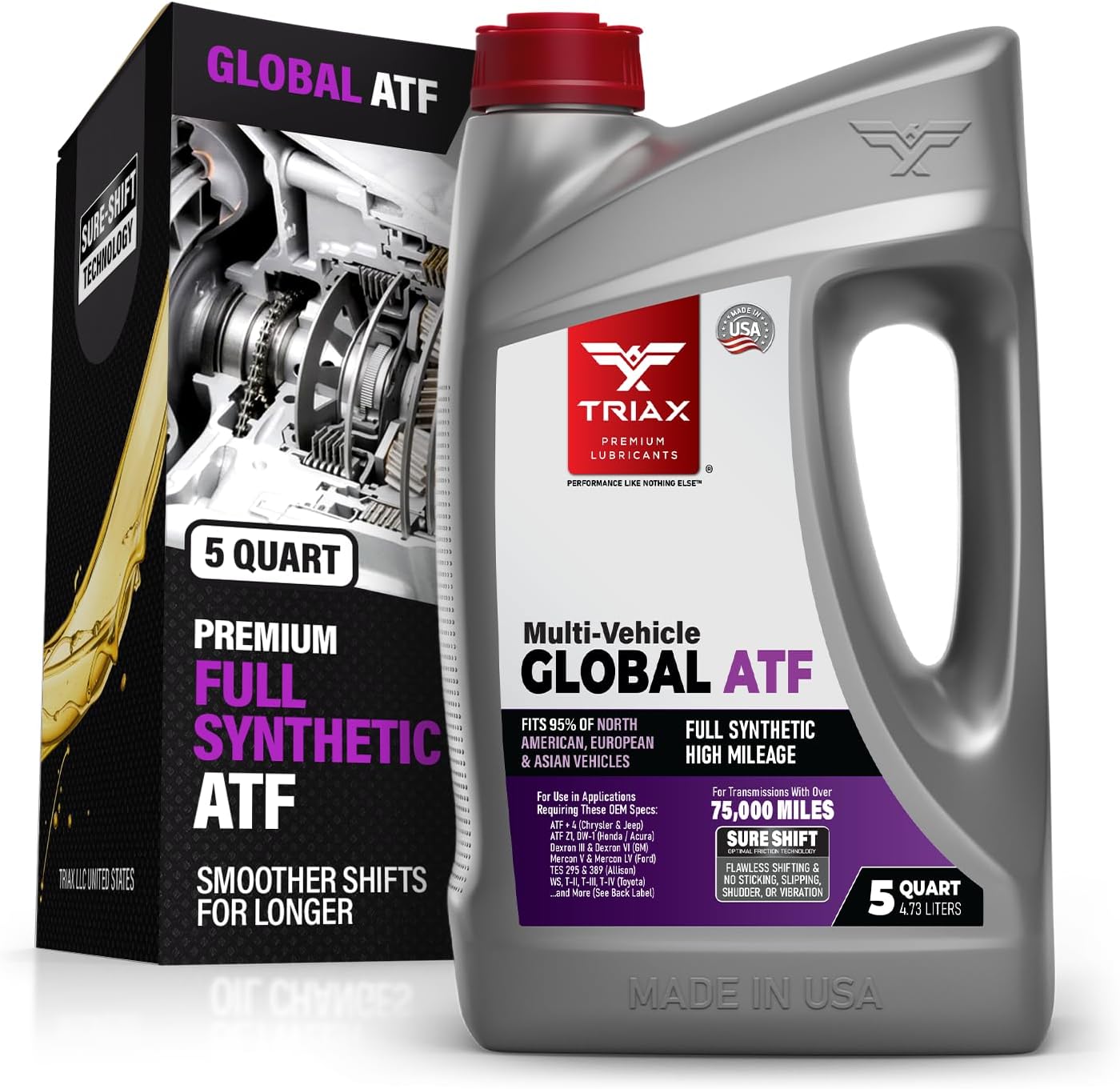
5. TRIAX Global Full Synthetic Multi‑Vehicle Automatic Transmission Fluid (5 Quart)
Best Bulk Multi‑Quart Pack
| Unit Count | 160.0 Fluid Ounces |
|---|---|
| Liquid Volume | 5 Quarts |
| Viscosity Grade | 10W‑30 |
| Material | Synthetic |
This 5‑quart jug of TRIAX Global ATF is designed as a versatile, full synthetic transmission fluid for modern automatic gearboxes that do not require CVT or dual clutch fluids. You would typically use it for a drain‑and‑fill or to top up during routine service; the 5‑quart size covers a full service on most trucks and allows keeping a spare for the next interval. The formula lists compatibility with a broad set of factory specs including Honda DW‑1, Dexron VI, Mercon V and TES‑295, which translates to smooth, stable shifts and improved thermal control in high‑torque or towing situations. Notable features are the brand's Sure Shift friction management and claims of extended service life for passenger vehicles and heavy‑duty applications. Limitations: it is not suitable for CVT or DSG transmissions and compatibility still requires matching your Ridgeline's factory spec exactly rather than assuming all ATFs are interchangeable. Expect good shifting and durability when used where the listed specifications match the vehicle requirement.
Best for: Buyers who want enough fluid for a full service or to stock a spare and who prioritize a factory‑spec compatible full synthetic ATF for routine maintenance or towing use.
Less Ideal for: Do not choose this if your vehicle requires a CVT or dual clutch fluid or if you need a one‑quart trial size before committing to a bulk purchase.
- 5‑quart jug supplies enough fluid for a full drain‑and‑fill or multiple services
- Full synthetic formulation for improved thermal stability and longer service life
- Matches many factory transmission specifications including Honda DW‑1, Dexron VI and Mercon V
- Designed for heavy duty and towing applications with higher film strength and load capacity
- Not compatible with CVT or dual clutch (DSG/DCT) transmissions
Verdict: Pick a bulk multi‑quart pack when you need enough fluid for a full drain-and-fill or multiple service intervals to save money per quart.
Choosing the Right Honda Ridgeline Automatic Transmission Fluid: Key Factors to Consider
Specification and Honda Compatibility
Using a fluid that meets Honda's specification is the single most important factor. Honda automatics rely on specific friction characteristics for correct band and clutch operation, so a noncompliant fluid can cause harsh shifts, slipping, or premature wear.
Check for explicit compatibility with Honda automatic transmissions or reference to the appropriate Honda specification. When a product lists compatibility with the Ridgeline Automatic or cites the correct OEM approval, it reduces the risk of drivability issues. For older vehicles or those with heavy use, confirm whether the formulation is intended for later-model recommendations or broad application across Honda automatic systems.
Friction Characteristics and Shift Quality
Friction modifiers in the fluid determine how smoothly clutches and bands engage. Fluids designed with the proper friction profile deliver consistent, predictable shifts and reduce shudder during partial clutch engagement.
If you tow or perform frequent stop-and-go driving, favor fluids with stable friction properties under load. A formula that maintains its friction curve as it ages will preserve shift feel and reduce the need for early fluid changes or service interventions.
Thermal Stability and Oxidation Resistance
Transmissions operate at elevated temperatures, especially under towing or spirited driving. Fluids with strong thermal stability resist oxidation and viscosity breakdown, which helps maintain protective film thickness and hydraulic performance.
Oxidation-resistant additives limit sludge and varnish buildup on valve bodies and clutch surfaces. That lowers the likelihood of shift degradation and helps preserve service intervals. For the Ridgeline Automatic, consider how often you tow or carry heavy loads when weighing thermal performance.
Viscosity and Cold-Start Performance
Viscosity affects hydraulic pressure and shift timing. A fluid that flows well when cold ensures crisp shifts during initial startup, while retaining sufficient viscosity when hot to protect components.
If you frequently drive in cold climates, prioritize formulations with good low-temperature flow. Conversely, if you primarily tow or run at highway speeds, make sure the fluid keeps its viscosity under heat to avoid thinning and reduced film strength.
Additive Package and Wear Protection
Additives such as antiwear agents, corrosion inhibitors, and detergents help protect gears, bearings, and clutch surfaces from wear and contamination. A robust additive package reduces metal-to-metal contact and helps keep valve bodies and solenoids cleaner over time.
Look for fluids that balance antiwear performance with friction stability. Excessive detergent action without adequate friction control can alter shift feel, so the best choices protect internal parts while preserving intended shift characteristics.
Service Interval, Maintenance Ease, and Availability
Consider how the fluid's recommended service interval fits your maintenance habits. Some modern formulations are marketed for extended drains, while others assume more frequent replacement for top performance.
Also factor in container sizes and whether the fluid is readily available in local auto stores or through repair shops that service the Ridgeline Automatic. Easy access to the correct fluid reduces the chance of incorrect top-ups and simplifies future transmission fluid change procedures.
How Transmission Fluid Affects Towing And Load Handling
Towing increases transmission temperature and shifts frequency, which stresses fluid more than normal driving. A fluid with better heat control and shear stability helps maintain consistent hydraulic pressure and prevents excessive wear when hauling trailers or heavy loads.
For Ridgeline owners who tow regularly, prioritize fluids with proven thermal resistance and high-temperature film strength. Consistent friction properties under load also reduce clutch slippage and preserve shift quality during sustained towing.
- Look for oxidation resistance to limit varnish buildup under repeated heavy use.
- Shear stability helps preserve viscosity and hydraulic performance during prolonged high-load operation.
When To Top Up Versus When To Do a Full Fluid Change
A top-up is appropriate for small losses between scheduled services, but it should be the same specification as the fluid already in the transmission. Mixing different formulations can alter friction characteristics and cause drivability issues.
A full fluid change is recommended if the fluid is dark, has a burnt smell, or you experience degraded shift quality. For vehicles used for towing or high-mileage Ridgelines, plan for more frequent full changes to maintain protection.
- Top up only to the recommended level using a compatible fluid.
- Perform a full change if fluid shows contamination, smell, or if service history is unknown.
DIY Fluid Change: Practical Tips for Ridgeline Owners
Changing transmission fluid on the Ridgeline Automatic can be a do-it-yourself job if you have basic tools and follow safety procedures. Always warm the transmission to operating temperature before draining to help the fluid flow and carry out more contaminants.
Use a clean catch pan and avoid introducing dirt into the fill port. When refilling, follow the manufacturer-recommended fill method and level-check procedure to ensure proper fluid quantity.
- Warm the transmission by driving briefly before starting the change.
- Use a proper funnel or fluid pump to avoid spills when filling.
- Check fluid level with the vehicle on level ground and at the correct temperature per the service manual.
Symptoms That Suggest The Transmission Fluid Needs Attention
Pay attention to changes in shift behavior. Hesitation, slipping, rough or delayed engagement, and abnormal noises during gear changes are common indicators that fluid health has declined.
Visual and olfactory checks are useful too. Discolored fluid, dark or opaque appearance, and a burnt smell indicate oxidation and contamination, which usually mean it is time for service.
- Harsh or delayed shifts during warm or cold starts.
- Burnt smell or darkened fluid color.
- Fluid leaks or unexplained fluid loss between services.
Selecting Fluid For Different Climates
Climate affects how a fluid performs at startup and under sustained operation. In cold regions, prioritize low-temperature viscosity to maintain hydraulic pressure and crisp shifts immediately after start-up. In hot climates, emphasize thermal stability to prevent thinning and loss of lubricating film.
If your driving environment includes both extremes, choose a fluid with a wide usable temperature range and proven shear resistance so it maintains consistent behavior across seasons.
- Cold climates: look for good low-temperature pumpability.
- Hot climates: prioritize oxidation resistance and high-temperature film strength.
Still looking for the perfect fit?
Select your Honda Ridgeline configuration to see the most relevant Transmission Fluids recommendations
How We Chose the Best Honda Ridgeline Automatic Transmission Fluid
We focused on attributes that directly affect transmission performance and longevity in the Honda Ridgeline Automatic. Our evaluation prioritized fluids formulated to meet Honda specifications for friction and clutch compatibility, with proven thermal stability to resist breakdown under towing or heavy-load conditions. Viscosity retention across temperature ranges was checked to ensure cold-start shift quality and hot-condition protection. We also considered detergent and antiwear additive packages that limit deposit formation and protect gear surfaces over long service intervals.We excluded fluids not recommended for Honda automatic systems, formulations intended only for manual transmissions or CVTs, and products lacking clear specification compliance. Durability indicators, such as oxidation resistance and shear stability, were weighed alongside real-world user feedback about shift feel and shudder control. Packaging and fill/maintenance convenience were secondary considerations. In short, only fluids that combined specification compliance, thermal and shear stability, friction performance, and additive protection were included.
Our full evaluation process is outlined in our review methodology.
FAQ
How often should I change the transmission fluid in a Honda Ridgeline Automatic?
Intervals often depend on driving conditions. For normal driving, many owners follow the manufacturer's recommended schedule, while those who tow frequently or drive in severe conditions usually shorten intervals. Check fluid condition regularly and replace it if it appears dark or smells burnt.
Can I mix different types of automatic transmission fluid in my Ridgeline?
Mixing different ATF formulations is generally not recommended because it can alter friction properties and affect shifting. If you must top up between services, use a fluid that matches the specification of the existing fluid.
Will a higher-performance transmission fluid fix hard shifting?
A higher-performance fluid can improve shift quality if the issue is related to fluid degradation, friction change, or overheating. However, hard shifting can also stem from mechanical issues, so fluid replacement may not resolve problems caused by worn components.
Is it necessary to flush the transmission when changing fluid on the Ridgeline?
A simple drain-and-fill replaces only a portion of the fluid but is often sufficient for routine maintenance. Flushing can remove more contaminants but must be done carefully to avoid dislodging deposits that could clog passages. Consult service guidance and consider the vehicle's condition before choosing a flush.
Can I use manual transmission fluid or CVT fluid in my Ridgeline Automatic?
No. Manual transmission fluids and CVT fluids have different friction and additive properties and are not suitable for an automatic transmission. Use a fluid formulated specifically for automatic systems and compatible with Honda requirements.
Final Verdict
Prioritize a transmission fluid that matches Honda specifications while offering stable friction behavior and strong thermal resistance. For Ridgeline Automatic owners who tow or carry heavy loads, thermal stability and shear resistance are particularly important. Balance maintenance practices, such as regular condition checks and timely fluid changes, against your driving demands to preserve shift quality and transmission life.Ultimately, choose a fluid that aligns with the Ridgeline Automatic's requirements and your usage pattern, and maintain a consistent service routine to avoid warranty or drivability issues.
Explore More:
- Check out all Honda Ridgeline parts & accessories
- Explore Fluids & Chemicals
- Browse all Accessories
