

Note: This article contains affiliate links. If you click on these links and make a purchase, I may earn a small commission at no extra cost to you. This helps support my research and content. Read my full affiliate disclosure here.
If you use your Ford F-450 for heavy towing, frequent hauling, or long highway runs, picking the right transmission fluid makes a measurable difference in shift quality and long-term gearbox health. This guide covers the top transmission fluids suited to the F-450 and explains the technical tradeoffs that matter for heavy-duty service.We narrowed the shortlist to the leading options across viscosity grades and additive chemistries, then evaluated thermal stability, friction characteristics, and compatibility with Ford specifications. Read on for the criteria we used and the key differences that will affect durability, towing performance, and maintenance intervals.
Top Picks at a Glance
| Best Overall Transmission Fluid A well-rounded choice that meets OEM specs and shifting needs | Motorcraft (Ford) MERCON V Automatic Transmission and Power Steering Fluid, 5 Quart |  |
| Best Budget Transmission Fluid An affordable, basic ATF that covers routine service without extras | Valvoline MaxLife Multi-Vehicle Full Synthetic ATF 1 Quart |  |
| Best MERCON LV Transmission Fluid Fluids formulated to meet MERCON LV specification for modern Ford gearboxes | Motorcraft MERCON LV Automatic Transmission Fluid (1 qt) |  |
| Best Dexron VI Transmission Fluid Products meeting Dexron VI for backward compatibility and modern performance | ACDelco Dexron‑VI Automatic Transmission Fluid, 1‑Gallon |  |
| Best Full‑Synthetic Gallon Transmission Fluid Full‑synthetic ATF sold in 1‑gallon containers for larger jobs | Valvoline DEXRON VI / MERCON LV Full Synthetic ATF, 1 Gallon |  |
| Best Type F High‑Friction Transmission Fluid High‑friction Type F fluids for older gearsets and firm engagement | Ford Genuine XT-1-QF Type‑F Automatic Transmission and Power Steering Fluid, 1 Quart |  |
| Best Transmission Fluid + Filter Service Kit All‑in‑one kits that include ATF and matched filters for service | Doc's Diesel DEXRON VI Full Synthetic Transmission Fluid Service Kit for Ford 6R140 (2011–2019) |  |
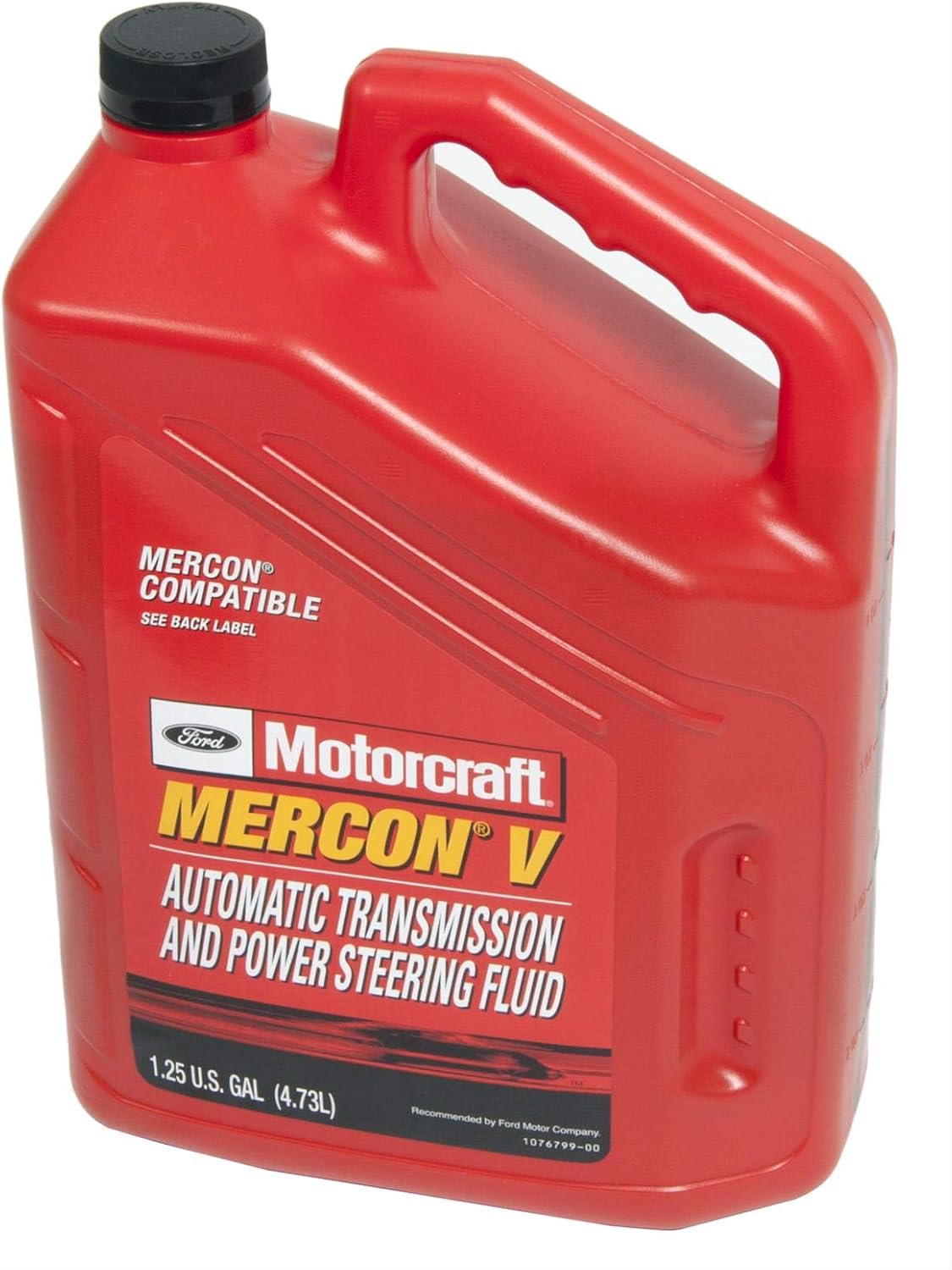
1. Motorcraft (Ford) MERCON V Automatic Transmission and Power Steering Fluid, 5 Quart
Best Overall Transmission Fluid
| Material | Synthetic |
|---|---|
| Liquid Volume | 5 Liters |
| Viscosity | 5W |
| Unit Count | 160.0 Fluid Ounces |
This 5-quart Motorcraft MERCON V jug is a factory-recommended synthetic transmission and power steering fluid designed for Ford applications calling for MERCON V or MERCON. It is used for routine transmission service and power steering top-offs, offering stable shifting across a wide temperature range thanks to hydroprocessed base oils and performance additives. The formula resists thermal breakdown and oxidation, helps prevent gum and sludge, and provides wear protection while inhibiting rust and corrosion. The fluid is dyed red to make leak spotting easier and can double as an ISO 46/SAE 20W hydraulic oil for some industrial uses. Important limitations: do not use it in systems that require MERCON SP, MERCON LV, CVT chain-type fluids, Motorcraft premium ATF variants, FNR5, or Type-F ATF, and avoid using it in transfer cases specified for MERCON ATF. For preventive service on a Ford F-450 that specifies MERCON V, this product delivers the expected factory-quality protection and shift performance.
Best for: Buyers who want a single, factory-recommended fluid that balances protection and smooth shifting for routine transmission and power steering maintenance on Ford trucks.
Less Ideal for: Do not choose this fluid if your vehicle specifies MERCON SP, MERCON LV, a CVT-specific fluid, FNR5, Type-F ATF, or if you need a specialty transfer case fluid.
- Factory-recommended formula for Ford vehicles requiring MERCON V or MERCON
- Synthetic, hydroprocessed base oils provide good high- and low-temperature shift performance
- Designed to resist oxidation, thermal breakdown, and formation of gum and sludge
- Also suitable as an ISO 46/SAE 20W hydraulic oil in compatible industrial applications
- Not compatible with MERCON SP, MERCON LV, CVT chain-type fluids, FNR5, Type-F ATF, or certain transfer case specifications
Verdict: Choose this when you want a single transmission fluid that balances compatibility, protection, and smooth shifting for most maintenance jobs.
2. Valvoline MaxLife Multi-Vehicle Full Synthetic ATF 1 Quart
Best Budget Transmission Fluid

| Brand | Valvoline |
|---|---|
| Item Form | Liquid |
| Material | Synthetic |
| Liquid Volume | 1 Quarts |
| Flash Point | 394 Degrees Fahrenheit |
Valvoline MaxLife Multi-Vehicle ATF is a full synthetic transmission fluid designed for routine top-offs and scheduled changes in a wide range of light-duty vehicles, including many trucks. It delivers improved thermal stability and viscosity control compared with conventional fluids, which helps maintain consistent shifting and reduce wear over time. The formula includes conditioning agents to help maintain seal elasticity and reduce the chance of leaks, plus frictional enhancements that promote smoother gear engagement. In practice this fluid is easy to use for DIY maintenance: pour from the quart bottle during a drain-and-fill or to top the F-450's transmission between services. It is not a factory-specific fluid for every Ford heavy-duty application, so for modified or high-torque uses you should follow Ford's service recommendations or choose a fluid specified for heavy-duty commercial duty cycles. For routine service on a Ford F-450 used mostly for highway and light towing, this product offers sensible protection at a lower cost than many specialty fluids.
Best for: Buyers who need an affordable, reliable ATF for routine service or top-offs on a Ford F-450 that sees primarily highway driving and light towing and who prioritize cost-effective maintenance over vehicle-specific specialty fluids.
Less Ideal for: Drivers who use their F-450 for heavy commercial towing, severe duty cycles, or who must meet a specific Ford transmission fluid specification should choose a Ford-recommended heavy-duty fluid instead.
- Full synthetic formula gives better thermal and viscosity stability than conventional ATF.
- Multi-vehicle formulation covers most light-duty automatic and many CVT applications.
- Additives help maintain seal elasticity to reduce leaks over time.
- Quart bottle is convenient for DIY drain-and-fill or top-off jobs.
- Not explicitly specified for heavy-duty or high-torque Ford commercial duty cycles relevant to some F-450 uses.
Verdict: Pick this when you need a low-cost fluid for routine top-offs or scheduled changes and OEM-level performance isn't required.
3. Motorcraft MERCON LV Automatic Transmission Fluid (1 qt)
Best MERCON LV Transmission Fluid

| Viscosity | 10w |
|---|---|
| Flash Point | 421 Degrees Fahrenheit |
| Unit Count | 16.0 Fluid Ounces |
| Material | MERCON LV |
Motorcraft MERCON LV is formulated to meet Ford specifications for transmissions that require MERCON LV fluid and is presented in a handy one-quart bottle for service or top-off. It is designed to deliver stable shifting across a wide temperature range, resist oxidation and shear, and help prevent transmission shudder thanks to its high-viscosity-index base oils and targeted additives. The fluid is dyed red for easy leak spotting and is suitable for electronically controlled automatic transmissions, many transfer cases and newer power steering systems called out for MERCON LV. Important limitations: do not use it in applications that require other Mercon types (for example MERCON V, SP, ULV) or specialty fluids like Type F, FNR5 or Continuously Variable Chain Type fluids. Confirming the correct spec for your F-450 transmission before filling is essential.
Best for: Buyers who need a factory-specified MERCON LV fluid for routine service or repairs and want a product designed to preserve factory shift feel and clutch operation.
Less Ideal for: Drivers seeking a universal transmission fluid for mixed-spec vehicles or those whose transmission requires a different Mercon type or a specialty fluid should look elsewhere.
- Built to Ford/Motorcraft specifications for MERCON LV applications
- Formulated for stable shifting and reduced transmission shudder
- Good thermal, oxidation and shear stability for longer fluid life
- Dyed red for quick leak detection and easier maintenance
- Not compatible with transmissions specifying other Mercon types or specialty fluids
Verdict: Use this label if you need a MERCON LV‑spec fluid to match Ford transmission requirements and preserve clutch/shift characteristics.
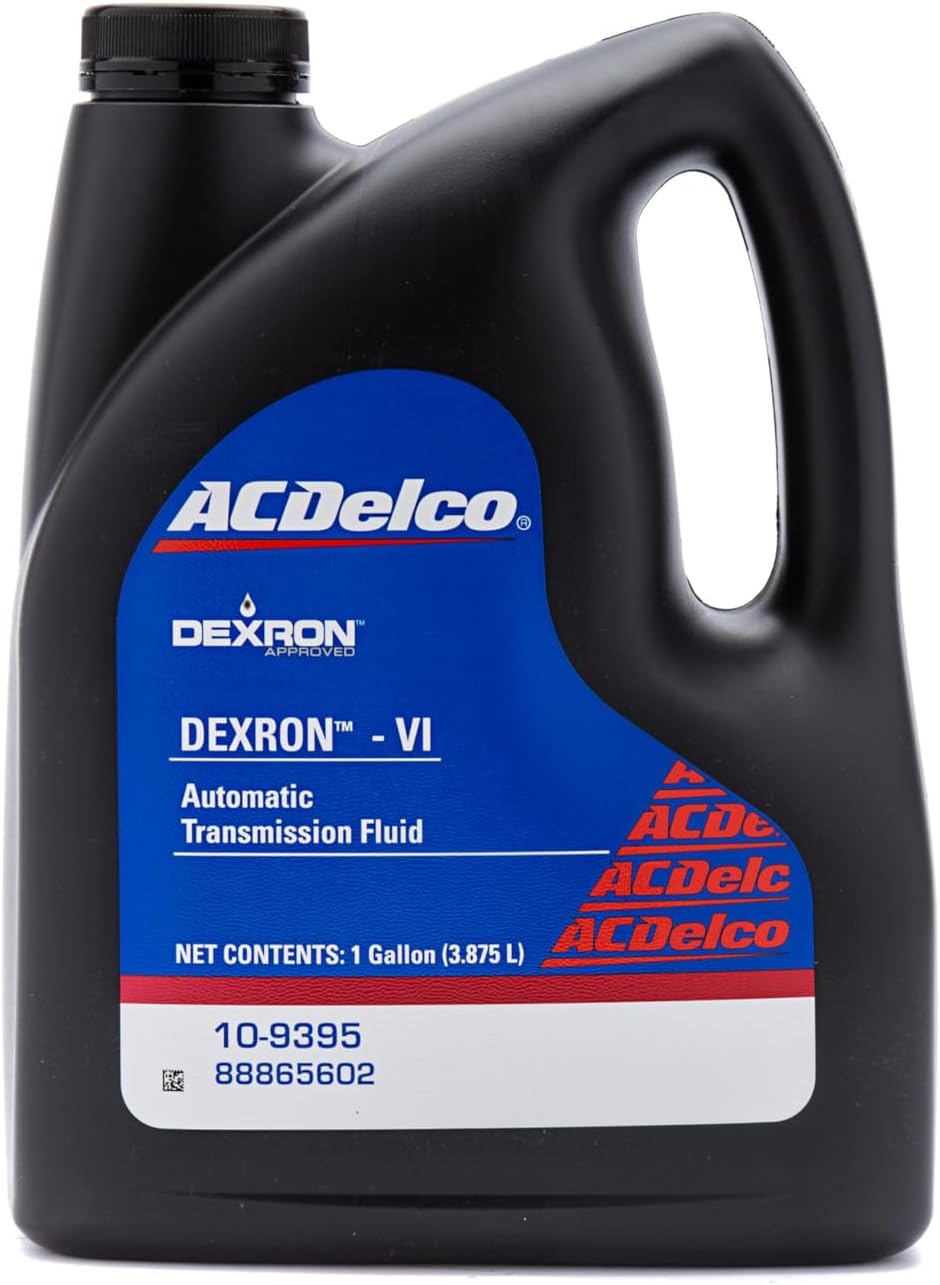
4. ACDelco Dexron‑VI Automatic Transmission Fluid, 1‑Gallon
Best Dexron VI Transmission Fluid
| Liquid Volume | 1 Gallons |
|---|---|
| Viscosity | 1 |
| Flash Point | 180 Degrees Celsius |
| SAE J300 Viscosity Grade | 5W-40 |
ACDelco Dexron‑VI is a transmission fluid formulated to meet Dexron‑VI performance for vehicles that call for that spec. It is typically used as a service fill when the manufacturer specifies Dexron‑VI, and it is backward compatible with earlier Dexron formulations, making it useful for transmissions originally designed around Dexron‑III or II(E). Notable features include improved friction durability, better viscosity stability, and enhanced oxidation and aeration control compared with older Dexron fluids. In practical use this translates into more consistent shift feel across a wide range of temperatures, reduced foaming under heavy load, and potential for longer fluid life and extended drain intervals. The product is labeled as not suitable for CVT or dual‑clutch transmissions, so it should only be used in automatics calling for Dexron‑VI. The factory alignment and GM licensing also make it a straightforward choice when maintaining a Ford F‑450 that specifies Dexron‑VI, offering a direct, OEM‑grade replacement fluid without exotic additives or special‑application caveats.
Best for: A buyer who needs a factory‑grade Dexron‑VI replacement for servicing a Ford F‑450 automatic transmission and values stable friction characteristics and longer fluid life.
Less Ideal for: Do not use this if your vehicle requires a CVT or DCT specific fluid or if the manufacturer specifies a non‑Dexron fluid for the F‑450 drivetrain.
- Meets Dexron‑VI specification and is licensed by GM
- Improved oxidation resistance and viscosity stability versus older Dexron fluids
- Designed to reduce aeration and foam for more consistent shift performance
- Backward compatible with vehicles that previously used Dexron‑III or II(E)
- Not formulated for CVT or dual‑clutch transmissions
Verdict: Select this when you need a Dexron VI‑compatible fluid that provides improved oxidation resistance and stable friction for newer and older designs.
5. Valvoline DEXRON VI / MERCON LV Full Synthetic ATF, 1 Gallon
Best Full‑Synthetic Gallon Transmission Fluid

| Material | Synthetic |
|---|---|
| Liquid Volume | 1 Gallons |
| Flash Point | 356 Degrees Fahrenheit |
| Item Form | Oil |
This Valvoline Dexron VI / Mercon LV ATF is a full‑synthetic transmission fluid designed to meet General Motors Dexron VI and Ford Mercon LV requirements and comes in a one‑gallon container suitable for a full drain and refill. It uses synthetic base stocks and advanced additives to resist heat, reduce wear, and limit deposits so shifts stay smooth under heavy loads and towing. The formula advertises improved thermal and viscosity stability for longer fluid life and enhanced anti‑shudder friction characteristics that help maintain consistent gear engagement. For a Ford F‑450 used for towing or heavy duty work, the fluid’s higher temperature resistance and anti‑wear chemistry give better protection during prolonged highway pulls and stop‑and‑go hauling. The product is fully back‑serviceable to older Dexron specs, which helps when replacing a range of past fluids. One practical limitation is that a gallon may still require purchasing multiple bottles for complete flushes on larger transmissions or if a full factory‑capacity refill is needed after a drain and fill service on some heavy‑duty boxes.
Best for: Buyers who prioritize extended protection and thermal stability for heavy use and towing and who want enough fluid to perform a drain and refill on a large truck transmission.
Less Ideal for: People who only drive lightly and never tow or those who need specialty transmission fluids not covered by Dexron/Mercon LV specifications.
- Meets Dexron VI and Mercon LV specifications and is licensed by GM for compatibility.
- Full‑synthetic base stocks with additives for improved thermal stability and reduced wear.
- Enhanced anti‑shudder and frictional properties for smooth, consistent shifts.
- Sold in a 1‑gallon bottle convenient for drain and refill services.
- One gallon may be insufficient for complete refills or flushes on some heavy‑duty transmissions without buying multiple bottles.
Verdict: Choose a full‑synthetic gallon when you want extended protection, better thermal stability, and enough fluid for a full drain and refill.
6. Ford Genuine XT-1-QF Type‑F Automatic Transmission and Power Steering Fluid, 1 Quart
Best Type F High‑Friction Transmission Fluid

| Brand Name | Ford |
|---|---|
| Unit Count | 32 Fluid Ounces |
| Viscosity | 10w |
| SAE J300 Viscosity Grade | 10W |
This genuine Ford XT-1-QF Type‑F fluid is a high‑friction ATF intended for older Ford automatic transmissions and many power steering units. It delivers the original friction characteristics that help older clutch packs and bands engage crisply, which is useful if you are restoring shift feel or need faster engagement under load. The fluid resists foaming and offers protection against rust, corrosion, wear, and deposits, and its lower viscosity makes it suitable for some hydrostatic drives and equipment that call for Type‑F. Important limits are that this is not appropriate for modern transmissions specifying MERCON LV, MERCON V, or MERCON SP, so it should only be used where Type‑F is specified. For F-450 owners maintaining older or Type‑F‑specified gearboxes, this product provides factory-quality compatibility; for newer transmissions follow the manufacturer service spec instead.
Best for: Buyers who need the original high‑friction behavior in older Ford transmissions or equipment and prioritize authentic shift feel and reliable clutch engagement.
Less Ideal for: Owners of newer Ford transmissions or anyone whose vehicle manual calls for modern MERCON specifications should choose a fluid matched to those requirements instead.
- Factory-formulated Type‑F friction characteristics for crisp clutch engagement
- Resists foaming and helps protect against rust, corrosion, wear, and deposits
- Lower viscosity suitable for some power steering units and hydrostatic drive applications
- Not compatible with transmissions that require MERCON LV, MERCON V, or MERCON SP specifications
Verdict: Pick Type F when you require a high‑friction formulation for older transmissions or applications that need quicker clutch engagement and original friction characteristics.
7. Doc's Diesel DEXRON VI Full Synthetic Transmission Fluid Service Kit for Ford 6R140 (2011–2019)
Best Transmission Fluid + Filter Service Kit

| Brand | Doc's Diesel |
|---|---|
| Model | DEX 6 |
| Fluid type | Dexron VI full synthetic |
| Includes | 2 gallons fluid and Filter Kit DF-320 |
| Fitment | Ford 6R140 2011-2019 (6.7L Powerstroke) |
This Doc's Diesel kit bundles two gallons of Dexron VI full synthetic transmission fluid with a direct-fit filter (DF-320) tailored for the 6R140 transmission used in 6.7L Powerstroke F-250 through F-550 trucks from 2011–2019. It is designed to simplify a drain-and-fill or filter service by matching the correct ATF spec and replacement filter so you do not need to cross-reference parts. The full synthetic Dexron VI fluid should provide stable friction characteristics, good temperature resistance, and cleaner operation compared with older conventional fluids. The included filter is a precision direct-fit replacement, which speeds up DIY or shop service and reduces the chance of fitment mistakes. The kit is practical for owners who follow factory maintenance intervals and prefer a matched set for routine service. Limitations are typical of small kits: two gallons may not be enough for a full fluid capacity if a complete fluid change or torque converter refill is required, so confirm required volume before starting the job.
Best for: Owners who want a matched fluid-and-filter kit that simplifies routine transmission service and reduces parts-compatibility hassles when maintaining a Ford 6R140-equipped 6.7L Powerstroke truck.
Less Ideal for: Technicians or owners performing a full-system overhaul or a torque-converter refill who need the vehicle's entire transmission capacity in fluid and therefore require larger volume kits or additional fluid.
- Kit includes Dexron VI full synthetic ATF matched to the 6R140 transmission specification
- Direct-fit transmission filter (DF-320) provided to simplify replacement and ensure correct fit
- Two-gallon supply useful for common service jobs and quick DIY maintenance
- Designed specifically for Ford 6.7L Powerstroke trucks with the 6R140 transmission, reducing compatibility guesswork
- Two gallons may be insufficient for a complete drain-and-refill including torque converter, requiring additional fluid purchase
Verdict: Use a fluid-and-filter service kit when you want a matched set that simplifies DIY transmission maintenance and ensures correct filter and fluid compatibility.
Choosing the Right Ford F-450 Transmission Fluid: Key Factors to Consider
Ford Specification and Compatibility
Confirming that a fluid meets the Ford transmission specifications for the F-450 is the first step because the wrong chemistry can impair clutch materials and seal compounds. Ford heavy-duty transmissions often call for specific ATF formulations; using fluids without the correct approvals can void warranties and accelerate wear.
Compatibility matters beyond a label. Look for documented approvals or cross-reference tables from reputable manufacturers that explicitly list the F-450 or the specific Ford transmission family used in that model. If you run a mixed-service vehicle fleet or have aftermarket transmission components, double-check compatibility with those parts before switching fluids.
Viscosity and Shear Stability
Viscosity affects hydraulic pressure, shift timing, and torque converter coupling. In heavy-duty use such as towing, a fluid with strong shear stability will retain its viscosity after prolonged mechanical stress and high temperature. Fluids that thin out under shear can cause slippage, delayed shifts, and increased wear.
When evaluating options for an F-450, prefer formulations that publish viscosity index or shear-resistance characteristics and that maintain recommended operating viscosity across the vehicle's typical temperature range. For severe duty, prioritize fluids engineered to resist viscosity loss under high load.
Thermal Oxidation Resistance
High operating temperatures during towing or extended pulls promote oxidation, which leads to varnish, deposits, and additive depletion. A fluid with strong thermal oxidation resistance will retain its protective properties longer and reduce the frequency of fluid changes.
Check for laboratory data or specification claims about high-temperature stability and oxidation control. Fluids designed for heavy-duty applications often include enhanced antioxidants and dispersants to keep internal surfaces clean and preserve hydraulic performance under repeated heat cycles.
Frictional Properties and Shift Quality
Friction modifiers and additive balance determine shift feel, clutch engagement, and slip control in automatic transmissions. For an F-450 used in towing, predictable and consistent shift quality under load improves drivability and reduces stress on drivetrain components.
Choose fluids that specify their frictional performance characteristics and that are known to work with wet clutch packs and torque converters common in heavy-duty Ford transmissions. Avoid formulations that advertise dramatic changes to shift firmness unless you specifically want a firmer or softer shift characteristic.
Seal Compatibility and Leak Prevention
Transmission seals and gaskets can degrade if exposed to incompatible chemistries, leading to leaks and premature service. Fluids designed for Ford heavy-duty transmissions typically include seal conditioners to maintain elasticity and prevent hardening or swelling.
When selecting a fluid for the F-450, ensure it lists compatibility with typical transmission elastomers or Ford-specified materials. This is especially important if the vehicle is older or has undergone prior repairs with nonstandard components that might react to certain additive packages.
Service Interval Guidance and Maintenance Practicality
How often a fluid needs replacement affects total cost of ownership and downtime. Some heavy-duty ATFs offer extended drain intervals backed by laboratory or field data. Others recommend more frequent changes, particularly after intensive towing.
Consider manufacturer guidance for drain intervals under severe duty, as well as the ease of performing a fluid change or pan drop on the F-450. Also factor in whether the fluid is compatible with common flush procedures and whether it requires a filter change or additional service steps to maximize longevity.
Why Transmission Fluid Matters for Heavy Towing
Towing a heavy load raises transmission temperatures and multiplies mechanical stress inside the gearbox and torque converter. The right fluid reduces wear by maintaining hydraulic pressure, protecting friction surfaces, and preventing thermal breakdown.
For the Ford F-450, which routinely operates under high payloads and trailer loads, selecting a fluid tailored to sustained heat and torque demands preserves shift performance and reduces the risk of costly repairs.
- Maintains consistent hydraulic pressure for reliable shifts
- Protects clutches and bands from slippage during high torque events
- Reduces varnish and deposits that degrade valve bodies and solenoids
ATF Types and Chemistry Differences
Automatic transmission fluids come in multiple chemistries and additive blends. For heavy-duty Ford transmissions you will mainly encounter conventional ATF formulations and upgraded synthetic blends. Synthetics tend to offer better shear and thermal stability, while some conventional blends can be optimized for compatibility with older seals.
Understanding the chemistry helps you balance cost, performance, and maintenance intervals. Choose a chemistry aligned with Ford-recommended specifications and the vehicle's service profile.
- Conventional ATF: broadly compatible, usually lower cost
- Synthetic ATF: improved high-temperature resistance and shear stability
- Additive packages define frictional behavior, antiwear protection, and seal conditioning
Signs Your F-450 Needs a Fluid Service
Watch for delayed or harsh shifts, slipping under load, or unusual transmission noise; these often indicate fluid degradation or contamination. Dark, burnt-smelling fluid on dipstick or drain samples is another signal that the fluid's antioxidant package has been exhausted.
Regular inspection after heavy towing cycles is especially important. If you notice decreased towing performance or higher-than-normal transmission temperatures, consider a fluid change and inspect the filter and pan for debris.
- Delayed or harsh shifts during acceleration or tow
- Visible discoloration or burnt odor in drained fluid
- Presence of metallic particles or excessive clutch material in the pan
How Fluid Choice Affects Maintenance Practices
Different fluids have different recommended service intervals and may call for specific change procedures. Some modern synthetics support extended drain intervals, but heavy towing often shortens those intervals. Always follow Ford's severe-duty recommendations when in doubt.
A fluid change may also be an opportunity to replace the transmission filter, inspect the cooler lines, and verify torque converter condition. Proper maintenance paired with the right fluid helps keep service costs and downtime predictable.
- Match fluid change intervals to towing frequency and operating temperatures
- Inspect filter and cooler during service for early signs of trouble
- Record fluid type and date to maintain consistent future servicing
Temperature Management and Auxiliary Coolers
High transmission temperatures accelerate fluid breakdown. For F-450 owners who tow frequently or run heavy loads, an auxiliary transmission cooler can reduce peak temperatures and extend fluid life. Cooler sizing and routing should be appropriate for the vehicle's towing profile.
When adding cooling capacity, ensure the chosen fluid benefits from lower operating temperatures. Better thermal control reduces oxidation, preserves frictional additives, and supports longer, more consistent shift performance.
- Auxiliary coolers lower peak fluid temperatures during long tows
- Reduced operating temperature preserves additive life
- Cooling upgrades should complement the selected fluid's capabilities
How We Chose the Best Ford F-450 Transmission Fluid
We focused on fluids that meet or exceed the Ford specifications applicable to F-450 transmissions and that address the demands of heavy-duty towing and commercial use. Our selection criteria emphasized thermal stability under sustained high load, friction control for consistent shift timing, shear resistance to maintain viscosity under stress, and corrosion protection for long-term component life. We also considered compatibility with wet clutches and torque converter requirements, seal conditioning to prevent leaks, and the availability of manufacturer or specification documentation supporting use in heavy-duty Ford transmissions.Exclusions: We excluded fluids lacking clear specification claims for Ford heavy-duty transmissions, products intended solely for light-duty passenger cars, and any formulations without published viscosity and shear data. We did not include multipurpose oils that do not explicitly list automatic transmission or heavy-duty ATF approvals.In practice we prioritized fluids with documented performance in high-heat towing scenarios, stable additive packages that reduce sludge and varnish risk, and formulations that preserve shift feel across temperature ranges. Where possible we favored options with clear guidance for fluid-change intervals and those compatible with common service practices for the F-450.
Our full evaluation process is outlined in our review methodology.
FAQ
How often should I change transmission fluid in a Ford F-450 used for frequent towing?
It depends on towing frequency and load, but heavy towing usually warrants more frequent service than normal intervals. Follow Ford's severe-duty recommendations and inspect fluid condition regularly after long or frequent tows.
Can I switch between different types of ATF mid-service?
Mixing fluids is generally not recommended because incompatible additive packages can alter friction properties and harm seals. If you must switch, perform a proper flush and follow manufacturer guidance for compatibility.
Will a synthetic transmission fluid help if I do a lot of highway towing?
Synthetic fluids often offer better thermal and shear stability, which can help maintain consistent shifts under sustained highway towing. However, ensure the synthetic meets Ford specifications and is suitable for the vehicle's transmission type.
What are the signs of transmission fluid overheating in the F-450?
Overheating signs include a burnt smell from the fluid, darker fluid color, increased shift harshness, or transmission temperature warnings if the vehicle is equipped with them. Persistent overheating should prompt inspection of coolers and fluid selection.
Does changing to a higher-performance ATF change shift firmness?
Some higher-performance ATFs have different friction characteristics that can change shift firmness. This effect varies by formulation; choose a fluid whose friction profile aligns with your preference and that is compatible with Ford specifications.
Should I replace the transmission filter when changing fluid on an F-450?
Yes. Replacing the filter during a fluid service helps remove accumulated debris and ensures the new fluid circulates through a clean system, which is especially important after heavy towing or long service intervals.
Final Verdict
When selecting transmission fluid for a Ford F-450, prioritize fluids that meet the relevant Ford heavy-duty specifications and that offer strong thermal and shear stability for towing. Match frictional properties to your desired shift feel and verify seal compatibility, especially for older trucks or vehicles with aftermarket components.Balance drain interval expectations against towing frequency and consider cooling upgrades if you routinely operate under sustained high loads. Following these guidelines will help you choose a fluid that supports reliable shifting, reduces wear, and keeps the F-450 working effectively in heavy-duty service.
