

Note: This article contains affiliate links. If you click on these links and make a purchase, I may earn a small commission at no extra cost to you. This helps support my research and content. Read my full affiliate disclosure here.
When you drive a Ford F-450 you need engine oil that handles heavy towing, long idling periods, and extended service intervals. The right oil keeps compression stable, reduces wear on high-stress components, and supports cooling under load. This guide reviews five top-rated engine oils suitable for the F-450 and explains the key tradeoffs between viscosity choices, synthetic versus conventional formulations, and high-mileage considerations.Each shortlisted option was chosen for its ability to meet Ford's service requirements and to perform under the F-450's typical duty cycles. Below you will find the criteria we used to evaluate candidates and practical advice to help you pick the best oil for your driving habits and maintenance plan.
Top Picks at a Glance
| Best Overall Engine Oil The best all-around oil balancing protection, compatibility, and performance | Motorcraft 5W-30 Engine Oil 5-Quart Jug |  |
| Best Budget Engine Oil A low-cost oil that still meets essential protection standards | Motorcraft 15W-40 Engine Oil (1 qt) |  |
| Best Premium Engine Oil Higher-end formulation with advanced additives and extended protection life | Motorcraft SAE 10W-30 Super Duty Diesel Motor Oil 5-Quart Jug |  |
| Best Full Synthetic Engine Oil 100% synthetic base stocks for maximum stability and protection | Mobil 1 Turbo Diesel Truck Full Synthetic 5W-40 Motor Oil, 1 Gal |  |
| Best High-Viscosity Engine Oil Thicker oil grades for heavy loads, older engines, or high temperatures | Valvoline Premium Blue 15W-40 Diesel Engine Oil 5‑Gallon Pail |  |
1. Motorcraft 5W-30 Engine Oil 5-Quart Jug
Best Overall Engine Oil
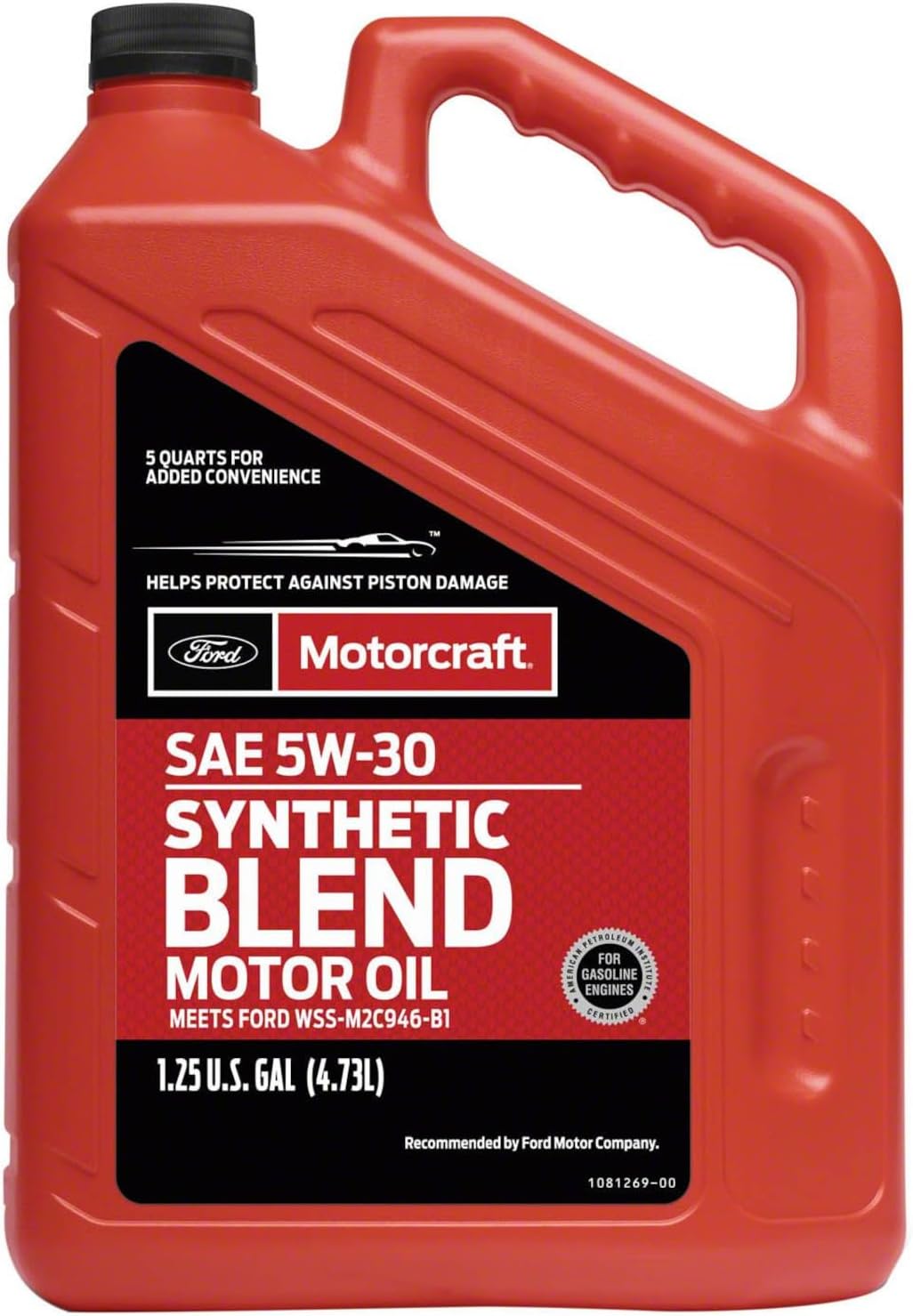
| Viscosity | 5W-30 SAE Grade |
|---|---|
| Size | 5-Quart Jug |
| Vehicle Service Type | Car, SUV, Truck, Van |
| Flash Point | 446 Degrees Fahrenheit |
This Motorcraft 5W-30 jug is a straightforward, full‑service engine oil intended for everyday engine protection and maintenance. It provides a stable 5W‑30 viscosity for typical temperature ranges, with detergent and additive chemistry formulated to control deposits and keep oil passages clean during normal driving. Packaged in a five‑quart jug, it is convenient for DIY fluid changes and matches factory fluid weight recommendations for many gasoline engines. The product description emphasizes manufacturer testing and compatibility with Ford and Lincoln vehicles, which suggests factory‑replacement fit and serviceability. Practical benefits include easy pour packaging, predictable viscosity performance, and formulation aimed at long life between oil changes under standard use. Limitations are that the listing does not specify modern synthetic base or API/ILSAC certifications on the label, so users who require a particular synthetic blend or exact spec compliance for heavy towing or extended drain intervals should confirm compatibility with their engine before use.
Best for: DIY owners who perform routine oil changes on daily‑driven trucks and want a factory‑branded 5W‑30 that aligns with common service recommendations and simplifies maintenance.
Less Ideal for: Drivers seeking a clearly labeled full synthetic oil for extended drain intervals, heavy towing, or specific modern performance certifications should consider oils that list those specs explicitly.
- Factory‑brand formulation tuned for Ford and Lincoln applications
- 5W‑30 viscosity suited to a wide range of everyday temperatures
- 5‑quart jug is convenient for DIY oil changes
- Detergent/additive package aimed at controlling deposits and maintaining engine cleanliness
- Listing does not explicitly state synthetic vs conventional base or specific API/ILSAC certifications
Verdict: The best all-around engine oil for DIY mechanics, offering the right blend of wear protection, detergent performance, and viscosity stability for typical automotive use.
2. Motorcraft 15W-40 Engine Oil (1 qt)
Best Budget Engine Oil

| SAE J300 Viscosity Grade | 15W-40 |
|---|---|
| Container Type | Bottle |
| Compatible with Vehicle Type | Car |
| Liquid Volume | 1 quarts |
This Motorcraft 15W-40 oil is a straightforward, factory-branded conventional motor oil supplied in a one-quart bottle. It is intended for routine engine protection where a thicker 15W-40 viscosity is appropriate, offering medium-to-high film strength that helps reduce wear in older or higher-mileage engines and under heavier loads. Typical use is regular oil changes for Ford vehicles that recommend or accept 15W-40, especially when operating with higher oil temperatures or carrying heavier loads. The product emphasizes factory fit and function for Ford and Lincoln models, and its simple formulation provides reliable detergent performance and basic protection without the specialized additives found in premium synthetic blends. Limitations are that it is not a synthetic or full synthetic blend so it will not deliver the extended drain intervals, improved cold-flow properties, or the high-temperature shear resistance of premium oils; buyers should follow manufacturer oil change intervals and spec guidance for the F-450 application.
Best for: Cost-conscious owners looking for a basic, reliable engine oil that provides plain-vanilla wear protection for heavier-duty use or higher-mileage Ford trucks.
Less Ideal for: Drivers seeking extended drain intervals, improved cold-start flow, or the extra high-temperature stability of synthetic formulations should consider synthetic options instead.
- Factory-branded formulation matched to Ford/Lincoln engineering expectations
- 15W-40 viscosity provides stronger film for older or heavily loaded engines
- Available in a convenient one-quart bottle for single-point top-offs or small services
- Conventional oil without synthetic additives limits high-temperature and cold-start performance
Verdict: The best budget engine oil for cost-conscious buyers who need reliable basic wear protection and detergent performance without premium additives or high-end specs.
3. Motorcraft SAE 10W-30 Super Duty Diesel Motor Oil 5-Quart Jug
Best Premium Engine Oil

| SAE J300 Viscosity Grade | 10W-30 |
|---|---|
| Compatible with Vehicle Type | Power Stroke Diesel Engines, Truck |
| Flash Point | 464 °F |
| Liquid Volume | 1.25 gallons |
This Motorcraft 10W-30 Super Duty diesel oil is formulated for modern Power Stroke diesel engines in Ford Super Duty trucks and for other heavy-duty diesel applications. It meets multiple manufacturer specifications including Ford WSS-M2C171-F1, Cummins CES 20086, Detroit Diesel 93K222, Volvo VDS-4.5, Mack EOS-4.5 and API CK-4, so it is designed to control soot, protect against wear and deposits, and resist high-temperature oxidation. The additive package includes elevated phosphorus for wear protection and is said to protect exhaust aftertreatment systems like particulate filters while still working in older engines on higher-sulfur fuel. In practice this jug is convenient for top-offs and routine servicing and gives peace of mind when you need factory-quality fit and compatibility for Power Stroke-equipped Ford trucks. It is a single-viscosity-grade offering tailored to diesel engines rather than gasoline engines with catalysts, so buyers should match viscosity recommendations and drain-interval expectations to their engine and service conditions.
Best for: Buyers who prioritize factory-recommended, heavy-duty protection for Power Stroke diesel engines and want a premium OEM-aligned oil for demanding towing or commercial use.
Less Ideal for: Drivers seeking multi-use oil for gasoline engines with catalytic converters or those who need a different viscosity for colder climates should consider other oils.
- Meets a broad set of diesel specifications including Ford WSS-M2C171-F1 and API CK-4 for fleet-grade protection
- Formulated for soot control and protection of particulate filters in modern diesel engines
- Premium additive content with elevated phosphorus for improved wear protection
- Sold in a 5-quart jug convenient for servicing full-size Super Duty trucks
- Viscosity and formulation are specific to diesel engines and not suitable for gasoline engines with catalytic converters
Verdict: The best premium engine oil for owners willing to pay more for superior additive packages, longer drain intervals, and top-tier protection under harder driving conditions.
4. Mobil 1 Turbo Diesel Truck Full Synthetic 5W-40 Motor Oil, 1 Gal
Best Full Synthetic Engine Oil

| SAE J300 Viscosity Grade | 5W-40 |
|---|---|
| Compatible with Vehicle Type | Truck |
| Container Type | Jug |
| Liquid Volume | 3800 Milliliters |
Mobil 1 Turbo Diesel Truck 5W-40 is a full synthetic diesel engine oil engineered to protect turbocharged truck engines across a wide temperature range. In practice it is used as a drain-replacement oil for diesel pickups and heavy-duty truck applications, offering improved low-temperature pumpability for easier starts and high-temperature oxidative stability to limit deposits. Notable features include a 5W-40 viscosity grade suitable for hot climates and heavy loads, formulations aimed at reducing sludge and high-temperature deposits, and compatibility with modern low-emission diesel designs. For a DIY mechanic working on a Ford F-450, this oil gives consistent cold starts and robust film strength under towing or hauling, plus the potential for extended drain intervals in well-maintained engines. Limitations are that its diesel-focused additive package is optimized for diesel engines rather than gasoline-only powertrains and that recommended drain intervals should follow vehicle manufacturer guidance rather than assuming maximum extension.
Best for: DIY mechanics who service a diesel Ford F-450 and prioritize maximum thermal stability, deposit control, and reliable protection under heavy loads and varied temperatures.
Less Ideal for: Drivers with gasoline-only engines or those who follow short OEM drain intervals regardless of oil type should consider a gasoline-specific or shorter-interval oil instead.
- Full synthetic formulation for strong thermal and oxidative stability
- 5W-40 grade balances cold-start pumpability with high-temp protection
- Additive package designed to reduce sludge and high-temperature deposits
- Suitable for turbocharged and modern low-emission diesel engines
- Formulation is diesel-focused and not optimized for gasoline‑only engines
Verdict: The best full synthetic engine oil for DIY mechanics who want maximum thermal stability, reduced deposits, and consistent protection across a wide temperature range.
5. Valvoline Premium Blue 15W-40 Diesel Engine Oil 5‑Gallon Pail
Best High-Viscosity Engine Oil

| Viscosity grade | 15W-40 |
|---|---|
| Liquid Volume | 5 gallons |
| Compatible with Vehicle Type | Truck |
| Viscosity Level | Medium to High |
Valvoline Premium Blue 15W-40 is a high-viscosity diesel engine oil designed to protect modern diesel engines under heavy loads and elevated temperatures. It is formulated for engines with emissions equipment such as EGR and DPF and carries approvals and recommendations for a wide range of heavy-duty engine specs including Cummins and Detroit Diesel. In practice this oil maintains a thicker lubricating film at operating temperature, helping control wear in high-load duty cycles and in engines with larger internal clearances. The formulation emphasizes oxidation resistance and TBN retention to support extended drain intervals and strong shear stability to keep the grade stable during service. Sold in a 5‑gallon pail, it is convenient for fleet servicing or owners who perform their own maintenance. Limitations include that it is a diesel-specific heavy-duty formulation rather than a light-duty gasoline motor oil, so it is not intended for gasoline-only engines or where a lower-viscosity factory recommendation applies.
Best for: Ford F-450 owners who run heavy towing, hauling, or long highway duty and need a thicker, durable oil that supports modern diesel emissions systems and extended drain intervals.
Less Ideal for: Drivers who operate primarily light-duty gasoline engines, short-trip urban use with frequent oil changes, or those required to follow a lower-viscosity factory oil specification.
- High 15W-40 viscosity film strength suitable for heavy loads and high operating temperatures
- Formulated for modern emissions systems including EGR and DPF
- Strong oxidation resistance and TBN retention to support longer drain intervals
- Shear-stable formulation helps maintain grade under severe service
- Large 5‑gallon pail convenient for fleet maintenance or DIY bulk changes
- Diesel-focused formulation not intended for gasoline-only engines
Verdict: The best high-viscosity engine oil for situations where a thicker grade is needed to maintain oil film strength under heavy loads, high operating temperatures, or in engines with larger clearances.
Choosing the Right Ford F-450 Engine Oil: Key Factors to Consider
Viscosity Grade and Operating Conditions
Viscosity determines how the oil flows at cold start and at normal operating temperature. For the F-450, choosing the right viscosity grade helps maintain oil pressure during heavy towing and prevents excessive thinning at high engine temperatures.
Cold-weather starts require lower cold-cranking viscosity so the oil circulates quickly, while hot-weather or heavy-load operation benefits from a thicker film at temperature to protect bearings and cam lobes. Check your owner's manual guidance for recommended grades and consider your typical use. If you tow heavy loads frequently, favor a grade that retains film strength under high thermal stress.
Synthetic Versus Conventional Formulations
Synthetic oils generally offer better thermal stability, lower volatility, and improved shear resistance than conventional oils. For an F-450 used in towing or commercial work, synthetics can maintain protective viscosity under prolonged high-temperature operation, reducing oil consumption and deposit formation.
Conventional oils may be acceptable for light-duty or infrequent towing scenarios and can be less costly, but they often require shorter drain intervals. Factor in your service habits and how hard you push the truck when deciding between synthetic and conventional options.
Additive Package and Engine Protection
The additive package controls detergency, corrosion protection, anti-wear performance, and oxidation resistance. For the F-450, a robust detergent system helps keep pistons, rings, and oil passages clean during long hours of operation and heavy loads.
Anti-wear additives like zinc dialkyldithiophosphate or modern alternatives protect high-pressure contacts such as camshafts and lifters. Oxidation inhibitors extend oil life under heat, while dispersants keep soot and combustion byproducts suspended so they are removed at the next oil change.
High-Mileage Considerations
If your F-450 has significant miles on the engine, high-mileage formulations can help condition seals and reduce leaks while offering detergents tuned to older engines. These oils may contain seal conditioners and additives that help maintain compression and reduce oil consumption in worn engines.
However, high-mileage oils are not a substitute for mechanical repair. They can provide temporary improvements in sealing and reduce minor leaks, but if wear is severe, replacing worn components will be necessary for long-term reliability.
Service Interval and Oil Longevity
Longer drain intervals can save time and maintenance costs, but only if the oil is formulated and approved for extended service. For F-450 owners who put heavy miles on their trucks, selecting an oil with proven oxidation stability and extended-drain recommendations can reduce downtime.
Balance extended intervals with real-world conditions. Severe service such as frequent towing, short-trip city driving, or dusty environments may still require more frequent changes despite the oil's rated longevity.
Compatibility With Emissions and Aftertreatment Systems
Some F-450 engines use exhaust aftertreatment systems that are sensitive to certain oil chemistries and sulfur content. Oils formulated for modern diesel engines often meet low-ash or mid-ash requirements to protect particulate filters and catalytic devices.
Choosing an oil that meets the vehicle's emissions-related specifications helps avoid premature clogging of aftertreatment components and ensures the engine runs within emissions design parameters. Verify the oil meets Ford and industry approvals relevant to your engine type.
Matching Oil Choice to Your F-450's Typical Duty Cycle
Your daily use should drive the oil choice. Owners who tow heavy trailers or use the truck for commercial hauling will want oils prioritized for high-temperature film strength and oxidation resistance. For occasional light-duty use, a more general-purpose synthetic can provide ample protection with fewer compromises.
Consider environmental conditions too. Cold winters favor oils with strong low-temperature pumpability, while hot climates demand resistance to viscosity breakdown. If your work alternates between extremes, choose an oil grade and formulation that offers a balanced performance profile.
- Frequent heavy towing: choose oils with high-temperature shear stability.
- Predominantly highway miles: look for low volatility and oxidation inhibitors.
- Short-trip city driving: prioritize detergency to keep combustion byproducts dispersed.
Preparing for an Oil Change on the F-450
When changing oil on a Ford F-450 follow the vehicle service manual for capacity and filter specifications. Use the correct viscosity grade and ensure the replacement filter matches OEM flow and bypass characteristics to maintain oil pressure and filtration efficiency.
Warm the engine briefly before draining to help oil flow, and always inspect the drained oil for abnormal metal particles or excessive soot. Those signs can indicate underlying engine wear or combustion issues that may need attention beyond routine maintenance.
- Confirm oil capacity and filter type from the service manual.
- Warm the engine to operating temperature for easier draining.
- Inspect used oil for metal flakes, milky appearance, or heavy soot.
Cold-Weather Strategies for Start-Up Protection
Cold starts produce most engine wear because oil is thicker until it warms. Selecting an oil with suitable low-temperature viscosity reduces wear at start-up by improving oil flow to bearings and hydraulic components. For F-450 owners in cold regions, consider a grade and formulation recommended for low ambient temperatures.
Also, consider block heaters or battery maintenance to reduce cranking time. While oil choice helps, reducing the time the engine runs without full oil pressure is an important part of protection in subfreezing conditions.
- Use lower cold-start viscosity grades when recommended by the manual.
- Combine oil selection with battery and heater strategies to minimize cranking.
Managing Oil Consumption and Monitoring Oil Health
High oil consumption can indicate wear or the need for a different formulation. Track oil consumption between changes and inspect for leaks or burning. If consumption increases, a switch to a different viscosity or a high-mileage formula may reduce usage temporarily, but mechanical inspection is advisable if the trend continues.
Modern oils often have improved volatility control which reduces top-off frequency. Use oil analysis or look for cloudiness, metal content, and viscosity changes in drained samples to judge when an oil no longer provides adequate protection.
- Record oil levels regularly to spot rising consumption.
- Consider oil analysis for fleets or heavy-duty users to catch early wear.
Impact of Fuel Type and Exhaust Systems on Oil Selection
Diesel and gasoline engines have different contaminant profiles. If your F-450 is diesel-powered, soot levels and acid byproducts influence the additive needs of the oil. Oils formulated for diesel applications include stronger dispersant packages to manage soot and prevent thickening.
Additionally, aftertreatment systems can be sensitive to ash content. Select oils that comply with the emissions-related specifications for your engine so that the particulate filter and catalytic systems remain functional and avoid premature service needs.
- Diesel F-450s require oils rated for soot control and acid neutralization.
- Ensure oil ash levels and approvals match your engine's aftertreatment requirements.
How We Chose the Best Ford F-450 Engine Oil
We applied practical, vehicle-focused filters to narrow the field to oils that work well in a Ford F-450. First, we required compatibility with Ford diesel and gasoline service categories that apply to the F-450 engine options and verified each oil meets or exceeds the relevant industry and manufacturer viscosity and performance specifications. Second, we prioritized oils with proven thermal stability and shear resistance to handle heavy towing, long climbs, and extended idling common to F-450 use.Third, we assessed additive chemistry relevant to this class of truck, including detergent and dispersant strength, anti-wear agents, and oxidation inhibitors that preserve oil life under load. Fourth, we looked at extended-drain capability and OEM-recommended service intervals so owners can balance maintenance frequency and protection. Finally, we excluded specialty racing blends and any formulation that does not meet Ford-recommended viscosity grades or service approvals. The result is a focused shortlist based on compatibility, load-handling performance, longevity, and protective additives.
Our full evaluation process is outlined in our review methodology.
FAQ
How often should I change the oil in my Ford F-450?
It depends on engine type and usage. Follow the service interval in your owner's manual for normal service, but if you tow frequently or operate under severe conditions, shorten intervals. Monitoring oil condition and consumption helps determine if more frequent changes are needed.
Can I switch between synthetic and conventional oil in my F-450?
Yes, you can generally switch between formulations as long as the oil meets the recommended viscosity and service specs. When changing, consider replacing the filter and checking for leaks. If your truck has an older engine with minor leaks, monitor seals after switching.
What viscosity is best for towing with the F-450?
Use the viscosity grades recommended in the owner's manual, then favor oils with strong high-temperature shear stability for frequent towing. Heavier-duty usage benefits from oils that maintain film strength under prolonged high loads.
Are high-mileage oils worth using in an older F-450?
High-mileage oils can help condition seals and reduce minor leaks while offering detergency tuned for older engines. They can be a useful stopgap for worn engines but do not replace necessary repairs for significant wear.
Will a different oil affect my F-450's emissions system?
Potentially. Oils with incompatible ash content or additive packages can impact particulate filters and catalytic devices. Always choose oils that meet the emissions and service approvals specified for your engine to avoid adverse effects.
Final Verdict
Choose oil for your Ford F-450 by balancing the truck's duty cycle, the engine's age, and the operating environment. For heavy towing and commercial use prioritize thermal stability, anti-wear protection, and formulations that support extended drains. For mostly highway or light use, focus on low volatility and good detergency.Weigh the tradeoffs between synthetic performance and conventional cost, and always adhere to the Ford-recommended viscosity and service approvals. Regular oil checks and following appropriate service intervals will deliver the best long-term protection for your F-450.
