

Note: This article contains affiliate links. If you click on these links and make a purchase, I may earn a small commission at no extra cost to you. This helps support my research and content. Read my full affiliate disclosure here.
If you plan to tow with a 2018–2024 Toyota Camry, choosing the right trailer hitch matters more than you might expect. The correct hitch provides a secure connection point, preserves vehicle handling, and ensures you do not exceed the car's towing limits. Whether you need a hitch for a bike rack, cargo carrier, or light trailer, the options shortlisted here focus on fitment, rated capacity, and installation practicality.This guide covers six top trailer hitches selected for the Camry's frame and bumper layout. We evaluate each option for compatibility, weight ratings, and ease of installation so you can match a hitch to how you plan to use the vehicle. Read on for the decision factors that matter and answers to common owner questions before you pick a hitch.
Looking for other parts? See all Toyota Camry parts & accessories.
Top Picks at a Glance
| Best Overall Trailer Hitch A versatile, reliable hitch balancing strength, fit, and installation ease | CURT 11576 Class 1 Trailer Hitch (1-1/4" Receiver) |  |
| Best Budget Trailer Hitch An affordable, functional hitch offering dependable towing with basic features | ALMULOO 1.25 Inch Class 1 Trailer Tow Hitch Receiver (vehicle-specific) |  |
| Best Compact Trailer Hitch Low-profile hitch that preserves clearance while providing standard towing capability | Gelacie Class 1 1.25" Trailer Hitch Receiver (vehicle-specific) |  |
| Best Heavy-Duty Trailer Hitch Reinforced, thicker-gauge hitch built for higher towing and tongue loads | CURT Class 2 1-1/4" Trailer Hitch Receiver (Model 12343) |  |
| Best 1-1/4-Inch Receiver Trailer Hitch Specifically sized 1-1/4-inch receiver hitch for light-duty towing and accessories | CURT Class 1 Trailer Hitch 1-1/4-Inch Receiver for Toyota Camry |  |
| Best Corrosion-Resistant Trailer Hitch Corrosion-protected hitch with coatings or stainless parts for long-lasting finish | CURT Class 1 Trailer Hitch with Ball Mount (1-1/4" Receiver) |  |
CURT 11576 Class 1 Trailer Hitch (1-1/4" Receiver)
Best Overall Trailer Hitch

| Maximum Towing Capacity | 2000 Pounds |
|---|---|
| Pull Force | 2000 Pounds |
| Automotive Fit Type | Vehicle Specific Fit |
| Material Type | Carbon Steel |
| Finish Type | Gloss, Powder-Coated |
The CURT 11576 is a custom-fit Class 1 trailer hitch made to integrate neatly with the rear valance of compatible Toyota Camry and Avalon models. It provides a 1-1/4-inch receiver for bike racks, cargo carriers, and small trailers and is rated for up to 2,000 pounds GTW and 200 pounds tongue weight. Construction uses carbon steel with a powder-coated finish for corrosion resistance, and the main body is concealed to preserve a factory look. Typical installation is straightforward for a DIYer with jack stands and basic tools though some trimming of the heat shield or plastic undercovers and enlargement or drilling of a couple frame holes may be required. The hitch comes with mounting hardware and is tested to SAE J684 standards, so it performs well for light-duty towing and hitch-mounted accessories. The low-profile receiver is a plus for appearance, but the small receiver size and low capacity limit use to bikes, cargo carriers, and very light trailers rather than heavier towing tasks.
Best for: Drivers of 2018–2024 Toyota Camry looking for a reliable, vehicle-specific light-duty hitch that balances ease of install, solid build quality, and enough towing capacity for bike racks, cargo carriers, and small trailers.
Less Ideal for: Drivers who need to tow heavier trailers, haul large loads, or who require a 2-inch receiver for larger hitch accessories should look at higher-capacity hitch classes.
- Custom vehicle-specific design for a close, factory-like fit
- Rated 2,000 lb gross trailer weight for light towing and accessory loads
- Concealed main body and low-profile receiver preserve rear appearance
- Powder-coated carbon steel construction for durability and rust resistance
- Includes necessary mounting hardware and meets SAE J684 testing
- Not suitable for medium or heavy towing due to 1-1/4" receiver and 2,000 lb limit
- Installation can require drilling/enlarging frame holes and trimming underbody panels
Verdict: The best all-around trailer hitch that balances fitment, towing capacity, build quality, ease of installation, and value for this vehicle owners.
ALMULOO 1.25 Inch Class 1 Trailer Tow Hitch Receiver (vehicle-specific)
Best Budget Trailer Hitch

| Automotive Fit Type | Vehicle Specific Fit |
|---|---|
| Maximum Towing Capacity | 2000 Pounds |
| Finish Type | Powder Coated |
This ALMULOO trailer tow hitch is a vehicle-specific Class 1 receiver designed to bolt onto compatible Camry and related sedan frames to add basic towing and cargo-carrying capability. Installed with the supplied hardware, the 1.25-inch receiver lets you carry small trailers, bike racks, or cargo carriers while the powder-coated steel construction helps resist rust and everyday wear. It is rated for 2,000 pounds gross trailer weight and 200 pounds tongue weight, which covers light-duty towing like small utility trailers, cargo boxes, or motorbike haulers. The bolt-on design simplifies mounting for an experienced DIYer, though professional installation is recommended to ensure correct torque and alignment. Expect a straightforward, no-frills receiver that expands utility without major vehicle modification, but it is not intended for heavier trailers, and its slim 1.25-inch size limits compatible hitch accessories compared with larger receivers.
Best for: Budget-minded Camry owners who need a simple, factory-quality replacement hitch for occasional towing or cargo carriers and prefer an affordable bolt-on install that gets the job done without extras.
Less Ideal for: Drivers who plan to tow heavy trailers, haul large loads regularly, or require a 2-inch receiver and higher towing capacity should look at heavier-duty hitch options.
- Vehicle-specific fit for a direct bolt-on installation to supported sedan models
- 2,000 lb towing and 200 lb tongue weight rating suitable for light trailers and cargo carriers
- Powder-coated steel finish improves corrosion resistance for long-term use
- Includes installation hardware and manual for a complete kit
- 1.25-inch receiver limits compatibility with larger hitch accessories and heavier towing
- Not designed for medium or heavy towing tasks where a higher class receiver is required
Verdict: The most cost-effective trailer hitch option that provides reliable fit and basic towing capability for Camry owners who prioritize price and straightforward installation over extra features.
Gelacie Class 1 1.25" Trailer Hitch Receiver (vehicle-specific)
Best Compact Trailer Hitch

| Compatible with Vehicle Type | Car |
|---|---|
| Maximum Towing Capacity | 2000 Pounds |
| Pull Force | 2000 Pounds |
| Material Type | Alloy Steel |
| Finish Type | Powder Coated |
This Gelacie Class 1 trailer hitch is a bolt-on receiver designed to add light-duty towing and accessory capability to compatible 2018–2024 Toyota Camry and 2019–2025 Lexus ES models and the 2019–2022 Avalon. It provides a 1.25-inch receiver opening for bike racks, small camping trailers, and cargo carriers, and is rated for a 2000 lb gross towing capacity with a 200 lb tongue weight for typical small-trailer tasks. Constructed from alloy steel with a black powder-coat finish, the hitch aims for durability and corrosion resistance in regular use. Installation includes hardware and a manual but requires drilling and some trimming of bumper components on certain models, so professional installation is worth considering if you prefer a clean fit and factory-like finish. The hitch is vehicle-specific, so it aligns with the Camry-focused article goal by targeting sedans that need occasional towing or accessory mounting rather than heavy hauling.
Best for: Drivers of 2018–2024 Toyota Camry who prioritize a low-profile, space-saving hitch for occasional light towing or bike/motorcycle racks and who want maximum ground clearance and minimal visual impact while keeping standard 1.25-inch receiver functionality.
Less Ideal for: Drivers who plan to tow heavy loads or frequently haul large trailers should choose a higher-class hitch or a vehicle with a stronger tow rating instead.
- Vehicle-specific fit for the listed Camry and Lexus sedan model years
- 1.25-inch receiver supports common bike racks and small cargo carriers
- 2000 lb towing capacity and 200 lb tongue weight suitable for light trailers and motorcycle racks
- Alloy steel construction with powder-coat finish for durability and rust resistance
- Includes installation hardware and an assembly manual
- Installation may require drilling and trimming of bumper components for a proper fit
Verdict: A low-profile, space-saving trailer hitch designed for drivers who want minimal visual intrusion and maximum ground clearance while retaining standard towing function.
CURT Class 2 1-1/4" Trailer Hitch Receiver (Model 12343)
Best Heavy-Duty Trailer Hitch
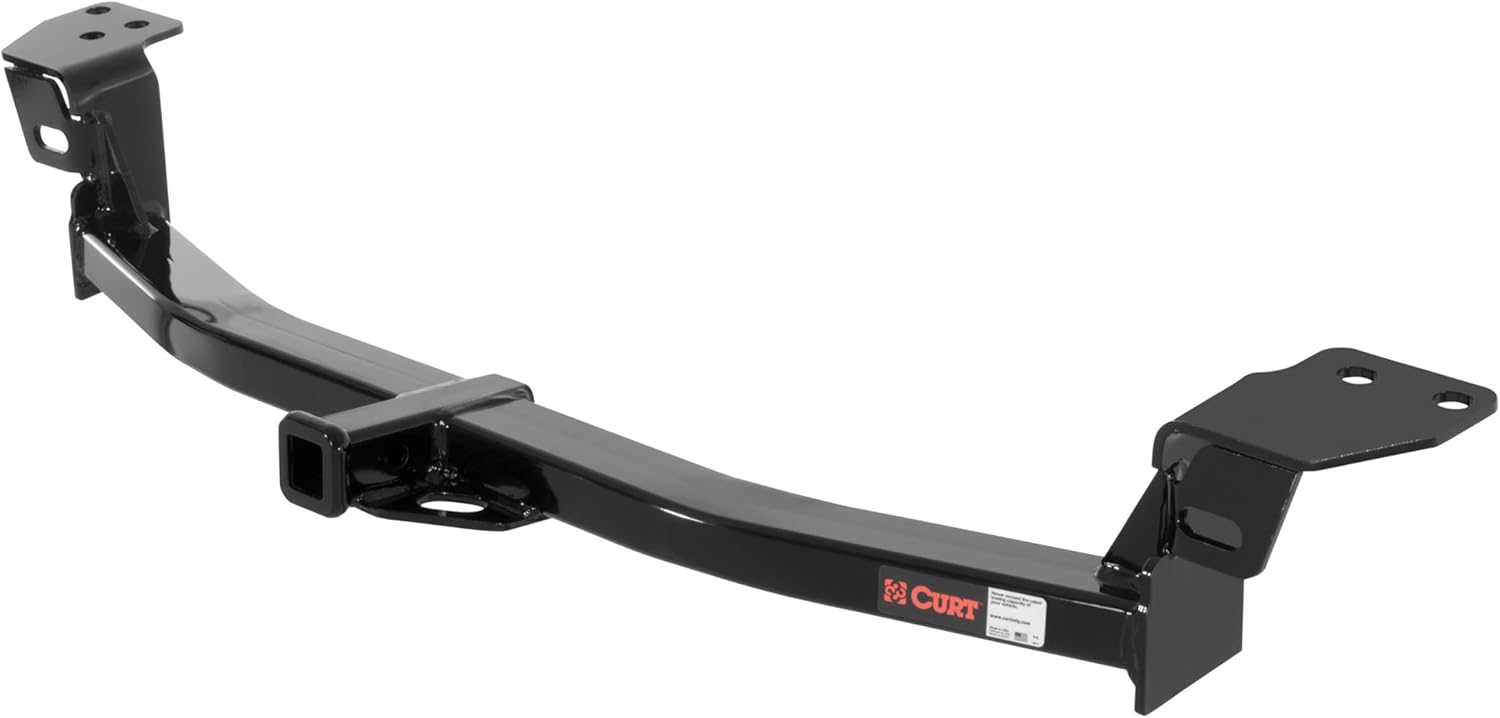
| Receiver size | 1-1/4 inch |
|---|---|
| Gross trailer weight | 3,500 lb |
| Tongue weight | 350 lb |
| Material | Carbon Steel |
| Finish | Gloss powder-coated |
The CURT Class 2 hitch is a custom-fit receiver engineered for Camry and ES350 models to add towing or cargo-carrying capability without major body modification. It installs using existing mounting points and a 1-1/4 inch receiver accepts standard ball mounts, bike racks, or cargo carriers. Made from carbon steel with robotic welding and a high-gloss powder-coat finish, the hitch is built to resist rust and handle light-duty towing tasks up to a 3,500 lb gross trailer weight and 350 lb tongue weight. In practice it provides a low-profile, mostly hidden attachment that keeps the factory look while adding useful functionality. Installation is straightforward for someone comfortable working under a car and reviewers commonly report a bolt-up fit, though a few users note tight holes or clearance work around exhaust hangers on certain model years. Because it is rated and tested to SAE standards, the hitch is a reliable option for routine hauling, bikes, or small trailers when kept within the stated capacity limits.
Best for: Buyers of 2018–2024 Toyota Camry who prioritize a heavier-duty, vehicle-specific hitch for regular towing or frequent use and want a durable, factory-quality installation that supports higher tongue and trailer loads.
Less Ideal for: Those who need high-capacity towing or plan to regularly haul heavy trailers should choose a higher-class hitch or a vehicle better suited for heavy towing.
- Vehicle-specific design for a close, factory-style fit
- Rated for 3,500 lb gross trailer weight and 350 lb tongue weight
- Durable carbon steel construction with powder-coat finish for corrosion resistance
- Accepts common 1-1/4 inch hitch-mounted accessories
- Some model years may require extra effort to align bolts or manipulate exhaust hangers during installation
- Limited to light-duty towing and accessory loads; not suitable for heavy trailers
Verdict: A stronger, thicker-gauge trailer hitch intended for users who need higher towing or tongue-weight capacity and greater long-term durability under frequent or heavier loads.
CURT Class 1 Trailer Hitch 1-1/4-Inch Receiver for Toyota Camry
Best 1-1/4-Inch Receiver Trailer Hitch
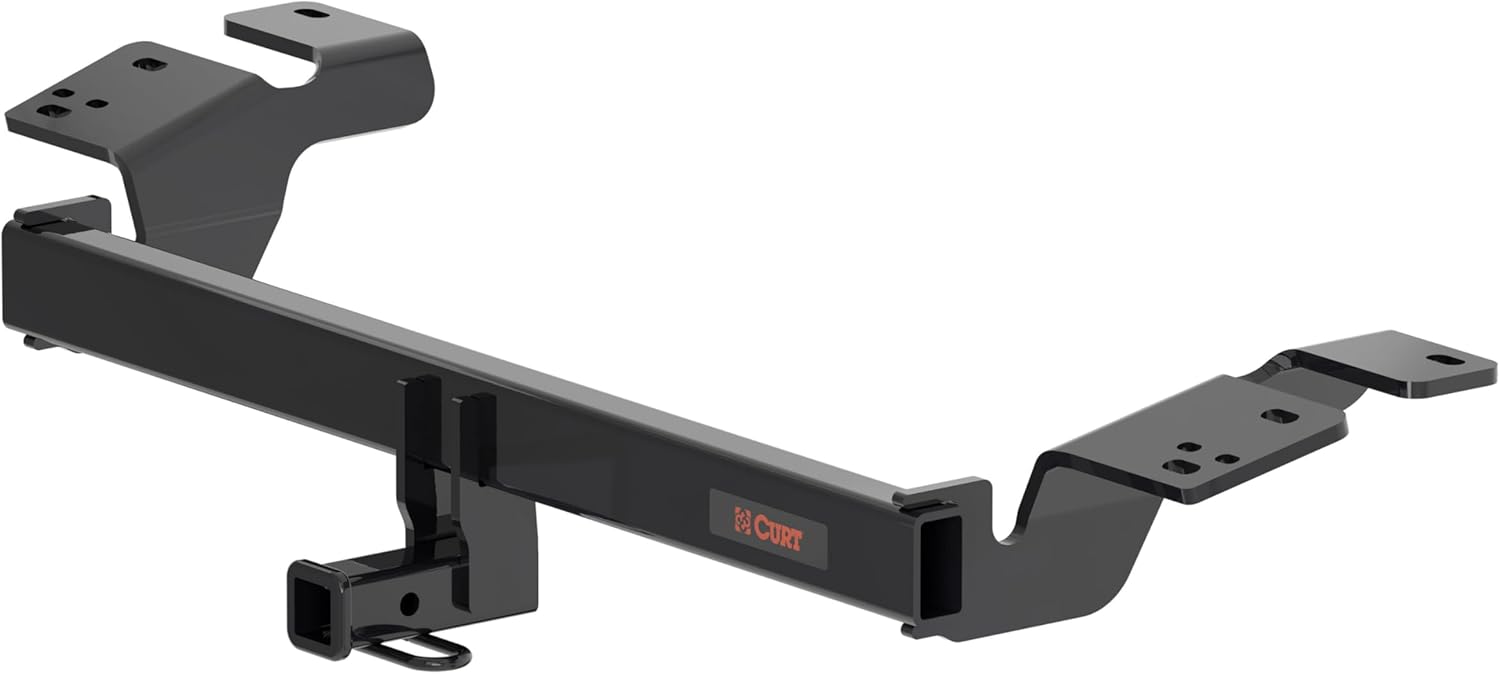
| Maximum Towing Capacity | 2000 Pounds |
|---|---|
| Pull Force | 2000 Pounds |
| Automotive Fit Type | Vehicle Specific Fit |
| Material Type | Carbon Steel |
| Finish Type | Powder Coated |
This CURT Class 1 trailer hitch is a custom-fit rear receiver designed to add light-duty towing and hitch-mounted accessories to compatible Toyota Camry model years. It installs to factory mounting points and supplies a 1-1/4-inch receiver tube sized for ball mounts, bike racks, and cargo carriers. Built from welded carbon steel with a liquid A-coat plus powder coat finish, the hitch resists rust and chips for long-term use. CURT rates it for up to 2,000 pounds gross trailer weight and 200 pounds tongue weight, so it is best for small utility trailers, bike racks, and lightweight cargo carriers rather than heavy loads. The kit includes mounting hardware and is tested to SAE J684 standards, giving buyers confidence in its engineering. Some reviewers note installation can be tricky on newer Camry underbodies and may require enlarging holes or reinforcement, so professional installation or moderate fabrication skills could be necessary for a clean fit. If you need a simple, factory-style way to add light towing capability or hitch accessories to an eligible Camry, this hitch covers the basics reliably.
Best for: Buyers who specifically need a 1-1/4-inch receiver on a 2018–2024 Toyota Camry for light-duty towing or hitch-mounted accessories and who prioritize a vehicle-specific, easy-to-install aftermarket hitch built for bike racks, cargo carriers, or small trailers.
Less Ideal for: Drivers who plan to tow heavy trailers, carry very large loads, or who want a hitch that guarantees simple bolt-on installation without any possible underbody adjustments should consider heavier-class hitches or professional-fit options.
- Vehicle-specific design for a closer fit to the Camry underbody
- Durable welded carbon steel construction with dual-coat corrosion protection
- Includes mounting hardware and meets SAE J684 testing standards
- Standard 1-1/4-inch receiver works with common bike racks, cargo carriers, and small ball mounts
- Rated for light-duty towing only, not suitable for medium or heavy trailers
- Some installs on recent Camry model years may require hole modification or reinforcement
Verdict: A hitch built around the 1-1/4-inch receiver specification favored for light-duty towing and common Camry accessories, ideal for buyers who need that specific receiver size.
CURT Class 1 Trailer Hitch with Ball Mount (1-1/4" Receiver)
Best Corrosion-Resistant Trailer Hitch

| Receiver size | 1-1/4" x 1-1/4" |
|---|---|
| Gross trailer weight | 2,000 pounds |
| Tongue weight | 200 pounds |
| Material | Carbon Steel |
| Finish Type | Gloss, Powder-Coated |
This CURT Class 1 trailer hitch is a custom-fit receiver assembly that attaches to the vehicle frame to add a 1-1/4" x 1-1/4" hitch on compatible Toyota Camry models. It includes a ball mount that can be installed in rise or drop positions for level towing and is intended for light-duty tasks like towing small trailers or carrying hitch-mounted cargo carriers and bike racks. The hitch is made from carbon steel and finished with a multi-step corrosion-resistant coating to resist rust, chips, and UV exposure for long-term durability. CURT says the assembly is tested to SAE J684 standards and comes with the necessary installation hardware for a direct-fit installation that preserves a discreet, factory-integrated appearance. Limitations are its Class 1 rating: a 2,000 pound gross trailer weight and 200 pound tongue weight mean it is not suitable for heavier trailers or towing needs that exceed those limits, and the product ships without a trailer ball installed.
Best for: Drivers of 2018–2024 Toyota Camry models who tow occasionally or add hitch-mounted cargo and prioritize long-term rust resistance in wet or salted-road climates, seeking a factory-fit hitch with heavy protective coatings for low-maintenance durability.
Less Ideal for: Drivers who plan to tow medium or heavy trailers, carry very heavy hitch-mounted loads, or need higher tongue weight capacity should choose a higher-class hitch instead.
- Vehicle-specific, frame-mounted design for a precise fit and concealed, factory-integrated look
- Rated for light towing and compatible with hitch-mounted accessories for added cargo flexibility
- Durable multi-step corrosion-resistant finish for long-term rust and chip protection
- Includes ball mount and all necessary installation hardware for straightforward installation
- Class 1 capacity limits towing to light loads and smaller trailers
Verdict: A hitch with premium coatings, galvanization, or stainless components for buyers who value long-term rust protection in wet or salted-road environments.
Choosing the Right 2018-2024 Toyota Camry Trailer Hitch: Key Factors to Consider
Fitment and Compatibility
A hitch must be explicitly designed for the 2018–2024 Toyota Camry to ensure correct alignment with the frame mounting points and bumper profile. Factory reinforcements and hole locations vary by model year and trim, so a precise fit reduces the need for drilling or cutting and prevents stress concentrations that could damage the vehicle.
Compatibility also includes whether the hitch clears exhaust components, spare-tire wells if present, and any rear sensors or bumper trim. Confirming fitment limits installation time and preserves factory appearance while ensuring the hitch sits solidly against the vehicle structure for safe towing.
Weight Rating and Tongue Weight
Match the hitch's Gross Trailer Weight (GTW) and tongue weight (TW) ratings to your intended loads. Camry owners commonly tow light trailers, cargo carriers, and bike racks, so verify the hitch's rated capacity aligns with those uses and with the vehicle manufacturer's towing limits.
Under-rating leads to premature wear and overloading risks, while over-rating without matching vehicle capability provides a false sense of security. Pay attention to both maximum trailer weight and allowable tongue weight, since excessive tongue load can affect steering and braking stability.
Receiver Size and Accessory Compatibility
The receiver opening determines what accessories you can use. A 2-inch hitch receiver is the most common choice for light towing and a wide range of ball mounts, cargo carriers, and bike racks. Confirm the receiver class (for example, Class III) to ensure accessory compatibility and safe load distribution.
If you plan to use specialized carriers or adapters, check pin diameter and the availability of anti-rattle hardware. Receiver geometry also affects how close accessories sit to the rear bumper and whether they will interfere with vehicle operation or sensors.
Corrosion Resistance and Material Quality
Hitches are exposed to road salt, water, and road debris, so durable materials and finish matter for long-term reliability. Look for solid steel construction with a robust powder coat or e-coating to resist rust. Thicker metal and welded joints add structural longevity and reduce the chance of fatigue in high-stress areas.
Corrosion protection is particularly important if you keep the Camry in regions with winter road treatments. A well-protected hitch preserves mounting integrity and reduces maintenance over the life of the vehicle.
Installation Complexity and Required Modifications
Installation effort ranges from simple bolt-on jobs to fittings that require trimming the bumper valance or removing heat shields. Assess whether you plan a DIY install or will have a shop perform the work. Bolt-on hitches that use existing factory holes are easier and faster to fit, while designs that necessitate drilling or cutting increase cost and risk.
Also consider clearances for tools and whether you will need an assistant, lifts, or specialized hardware. Simpler installations reduce hitch installation cost and downtime for the vehicle.
Noise, Rattle, and Vibration Control
A well-designed hitch minimizes movement between the receiver and ball mount to prevent noise and wear. Anti-rattle devices, tight pin fits, and properly torqued fasteners reduce squeaks and protect the vehicle's rear fascia.
Excess vibration can accelerate hardware loosening and create an irritating driving experience. Consider designs that accommodate anti-rattle inserts or include dampening features to keep the hitch secure and quiet during normal driving and towing.
Understanding Class and Receiver Types
Trailer hitches are organized by receiver size and class to indicate typical use cases. For the 2018–2024 Toyota Camry, a 2 inch hitch receiver is the most versatile option, providing compatibility with common ball mounts, bike racks, and cargo carriers without excessive bulk.
Receiver class describes structural capability. Choosing the right class depends on the loads you plan to move and on matching the hitch rating to the Camry's towing specifications rather than selecting the highest-rated hitch available.
- 2 inch receivers suit most light towing and aftermarket accessories.
- Higher class ratings increase capacity but also add weight and may require different mounting points.
- Confirm both the receiver size and the pin diameter to match accessories.
Preparing Your Camry for Installation
Before installing a trailer hitch, inspect the rear underbody for factory attachment points, corrosion, and any aftermarket modifications. Gather the required tools, a torque wrench, and hardware specified in the installation instructions.
If the hitch requires trimming of the bumper valance, mark cuts precisely and test-fit the hitch to minimize cosmetic errors. For anyone planning a DIY install, make sure to account for clearance, jack stands or a lift, and an assistant for alignment of heavy parts.
- Check for any rear sensors or heat shields that may need temporary removal.
- Have anti-seize on bolts and follow torque specs to prevent loosening.
- Test-fit accessories to ensure they do not obstruct exhaust tips or bumper trim.
Corrosion Prevention and Long-Term Care
Regularly inspect the hitch for surface rust, chipped coatings, or loose fasteners. Address small spots of corrosion promptly by cleaning the area and applying appropriate rust-inhibiting paint or touch-up coatings.
If you live in a region with salted roads, rinse the hitch undercarriage after winter drives. Lubricate the pin and moving surfaces and replace worn anti-rattle devices to maintain a quiet, secure connection.
- Touch up scratched paint quickly to stop rust propagation.
- Tighten fasteners after the first few hundred miles of towing to ensure they have not settled.
- Consider a protective cover for the receiver when not in use to keep out debris and moisture.
Matching Hitch Capacity to Your Towing Needs
Decide what you will tow now and in the near future. Light trailers, single-bike racks, and cargo carriers place different demands on tongue weight and overall trailer mass. Use the lower of the hitch rating and the vehicle manufacturer's towing limit as your practical maximum.
Include tongue weight in your planning. A full cargo carrier or two bikes can add significant downward force on the hitch and can affect handling more than the trailer weight alone.
- Calculate combined load: trailer weight plus cargo plus tongue weight.
- If you plan to carry heavy roof loads, factor them into overall vehicle weight distribution.
- Consider weight distribution equipment only if you approach higher allowable limits.
Practical Tips for Using Hitch Accessories
Choose accessories that match the receiver size and pin diameter. High-quality hitch pins, tight-fitting adapters, and purpose-built carriers reduce movement and wear. For bike racks and carriers that extend away from the bumper, monitor sway and clearance to avoid contact.
When using adapters or shank extenders, recognize that they can change leverage on the hitch and reduce effective capacity. Use rated components and avoid stacking adapters whenever possible.
- Use anti-rattle devices and locking pins to secure accessories.
- Test clearance with the tailgate and exhaust at full articulation if towing or hauling long loads.
- Store removable accessories when not in use to protect the vehicle's rear finish.
Still looking for the perfect fit?
Select your Toyota Camry configuration to see the most relevant Trailer Hitches recommendations
How We Chose the Best 2018-2024 Toyota Camry Trailer Hitch
We prioritized products that specifically fit the 2018–2024 Toyota Camry and that match the vehicle's unibody frame and bumper clearances. Evaluation centered on concrete, vehicle-relevant criteria: measured tongue weight and gross trailer weight capacity, receiver class and compatibility with standard accessories, corrosion protection and material quality, attachment method and required body modifications, and real-world installation complexity for DIYers and professional shops.We also considered useful design details such as center-to-center hole spacing, whether the hitch requires trimming of the bumper valance, and how the hitch interacts with factory exhaust routing. Exclusions included hitches that lacked explicit fitment for the 2018–2024 Camry, designs requiring major structural modification, or units with unlisted or ambiguous weight ratings. The goal was to identify options that balance safe towing capacity, clean integration with the Camry's rear end, and predictable installation effort.Practical tests and owner reports informed judgments on ease of alignment, bolt pattern reliability, and corrosion resistance when available. We did not factor in brand loyalty or price alone; instead, we focused on measurable fitment and performance attributes that affect safety and convenience for Camry owners.
Our full evaluation process is outlined in our review methodology.
FAQ
What receiver size should I pick for a 2018–2024 Camry?
Most Camry owners choose a 2 inch receiver because it supports a wide range of bike racks, cargo carriers, and light trailers. Confirm the hitch class and pin size to match accessories and expected loads.
Can I install a trailer hitch on my Camry myself?
Many hitches for the Camry are bolt-on and feasible for competent DIYers with basic tools, a torque wrench, and safe vehicle support. More complex installs that require trimming or drilling are better handled by a professional installer.
How do I know the hitch will not exceed my Camry's towing limits?
Compare the hitch's gross trailer weight and tongue weight ratings with the vehicle manufacturer's towing specifications. Use the lower of the two limits as your operational maximum and account for cargo and passenger weight.
Will a hitch affect my Camry's rear sensors or bumper trim?
Properly designed hitches clear factory sensors and trim, but some installations may require temporary removal or minor trimming of the bumper valance. Verify fitment notes in the hitch documentation before purchase.
How should I care for the hitch to prevent rust?
Inspect the hitch periodically for chipped coatings or surface rust, rinse undercarriage after exposure to road salt, touch up paint as needed, and keep fasteners torqued to specification to prevent loosening.
Does adding a hitch change my Camry's handling?
The hitch itself has minimal effect, but heavy tongue loads and trailers can alter steering, braking, and suspension behavior. Stay within rated tongue weight limits and adjust driving habits when towing.
Final Verdict
When choosing a trailer hitch for a 2018–2024 Toyota Camry, prioritize proper fitment, rated capacity, and installation practicality. Match the receiver size and class to the accessories and loads you plan to use, and ensure the hitch rating does not exceed the vehicle's towing limits.Opt for corrosion-resistant construction and a design that minimizes noise and vibration. Consider the installation complexity in your decision—bolt-on hitches reduce time and risk—then select the option that balances security, capacity, and ease of use for confident towing.
Explore More:
- Check out all Toyota Camry parts & accessories
- Explore Other Accessories
- Browse all Accessories
