

Note: This article contains affiliate links. If you click on these links and make a purchase, I may earn a small commission at no extra cost to you. This helps support my research and content. Read my full affiliate disclosure here.
If you own a 2002-2006 Toyota Camry and need to add towing or cargo-hauling capability, choosing the right trailer hitch matters for safety and reliability. A properly matched trailer hitch gives you secure mounting, preserves vehicle ground clearance, and prevents undue stress on the Camry's frame and suspension.This guide covers the top shortlisted trailer hitches compatible with the 2002-2006 Camry, explaining the criteria we used to evaluate them, including weight ratings and ease of installation. Read on to understand the practical tradeoffs so you can pick the correct hitch for your towing needs.
Looking for other parts? See all Toyota Camry parts & accessories.
Top Picks at a Glance
| Best Overall Trailer Hitch A reliable, well-rounded hitch balancing fit, strength, and corrosion protection | Draw-Tite 36336 Class 2 Trailer Hitch, 1-1/4" Receiver |  |
| Best Budget Trailer Hitch An affordable, no-frills receiver offering safe fitment and basic durability | Gelacie Trailer Hitch for 1997–2006 Lexus ES330 / 1997–2006 Toyota Camry / 1995–2004 Toyota Avalon |  |
| Best Premium Trailer Hitch A heavy-duty, precision-built hitch with superior finish and long warranty | CURT 12339 Class 2 Trailer Hitch with 1-1/4" Receiver |  |
| Best 1-1/4-Inch Receiver Trailer Hitch A compact, lighter-duty receiver suited for small couplers and accessories | CURT Class 2 1-1/4" Trailer Hitch Receiver (Model 12343) |  |
| Best Low-Profile Trailer Hitch A discreet, bumper-hugging design that minimizes scraping and improves aesthetics | CURT 11576 Class 1 Trailer Hitch — 1-1/4-Inch Receiver |  |
| Best Complete Trailer Hitch Kit An all-in-one package including hardware and wiring for installation-ready towing | CURT Class 2 Trailer Hitch Bundle with Wiring for 2002–2006 Toyota Camry |  |
Draw-Tite 36336 Class 2 Trailer Hitch, 1-1/4" Receiver
Best Overall Trailer Hitch

| Maximum Towing Capacity | 3500 Pounds |
|---|---|
| Automotive Fit Type | Vehicle Specific Fit |
| Material Type | Alloy Steel |
| Finish Type | Powder Coated |
The Draw-Tite 36336 is a bolt-on Class 2 trailer hitch built to fit particular Toyota and Lexus models from the 1990s and 2000s, including 2002–2006 Camry applications. It provides a 1-1/4 inch receiver for bike racks, cargo carriers, and light trailers up to the listed 3,500 lb gross trailer weight when used as a weight-carrying hitch. The unit is made from all-welded alloy steel with a black powder coat to resist corrosion and arrives with a hardware kit and instructions for a no-weld installation. Real-world buyers note the hitch hides cleanly under the bumper and gives a stable mounting point for racks. Installation typically requires two people and some hand tools; some owners report chipped paint out of the box and occasional missing hardware so check parts before you start. This hitch is not rated for use with weight-distribution systems and may require drilling a hole or using the supplied U-bolt on certain frames during install.
Best for: Drivers of 2002–2006 Toyota Camry looking for a dependable, vehicle-specific trailer hitch that balances ease of bolt-on installation, solid towing capacity for light-duty loads, and long-term corrosion resistance without needing specialized installation or weight-distribution setups.
Less Ideal for: Drivers who need weight-distribution towing, plan to tow heavy loads beyond the rated capacity, or prefer a plug-and-play install with no chance of needing additional drilling or hardware modifications.
- Vehicle-specific CAD-matched design for a close fit to listed models
- All-welded alloy steel construction with powder coat for long-term durability
- Includes installation hardware and instructions for bolt-on fitting
- 1-1/4 inch receiver is well suited for bike racks and cargo carriers
- Not suitable for use with weight-distribution systems
- Some units arrive with chipped paint or damaged packaging
- Installation can be heavy and is easier with a helper and basic tools
Verdict: The best all-around trailer hitch for most owners who want a reliable, vehicle-specific hitch that balances fitment, strength, corrosion protection, and ease of installation.
Gelacie Trailer Hitch for 1997–2006 Lexus ES330 / 1997–2006 Toyota Camry / 1995–2004 Toyota Avalon
Best Budget Trailer Hitch

| Compatible vehicles | 1997–2006 Lexus ES330; 1997–2006 Toyota Camry; 1995–2004 Toyota Avalon; 1999–2003 Toyota Solara |
|---|---|
| Material Type | Alloy Steel |
| Finish Type | Powder Coated |
| Automotive Fit Type | Vehicle Specific Fit |
This Gelacie trailer hitch is a vehicle-specific receiver designed to bolt to the frame of 1997–2006 Toyota Camry and compatible Lexus ES330, Avalon, and Solara model years without welding or drilling. Constructed from high-strength alloy steel with a black powder-coat finish, it provides a corrosion-resistant mounting point for light towing, bike racks, or cargo carriers while helping protect the rear structure from low-speed impacts. The package includes mounting hardware and instructions so a competent DIYer or a shop can complete installation with basic hand tools. Because it is a single-piece receiver intended for passenger cars, expect towing to be limited to lighter loads compared with full-frame truck hitches and confirm vehicle tow ratings before use. The hitch’s powder coat improves longevity but exposed edges and mounting hardware will still need occasional inspection in harsh climates. For owners seeking a simple, factory-style hitch for occasional towing or accessory carrying on the 2002–2006 Camry, this is a practical choice.
Best for: Practical Toyota Camry owners (2002–2006) who want an affordable, vehicle-specific receiver for occasional towing, bike racks, or cargo carriers and prioritize correct fit and straightforward bolt-on installation over premium features.
Less Ideal for: People who plan frequent heavy towing, carry large trailers, or need a high-capacity hitch should look for a product rated specifically for higher tongue and gross trailer weights.
- Vehicle-specific fit for the listed Camry and related sedan years simplifies installation and alignment.
- Powder-coated alloy steel construction offers corrosion resistance and durable strength for light towing and rack use.
- Bolt-on installation with included hardware avoids welding or drilling.
- Includes a complete hitch and hardware kit so no additional parts are required for mounting.
- Designed for passenger sedans so towing capacity will be lower than hitches for trucks or SUVs.
- No listed load ratings in the product details so you must verify your vehicle’s towing limits separately.
Verdict: The best low-cost trailer hitch option for most buyers who need a safe, simple receiver with correct fit and basic durability without extra features or high price.
CURT 12339 Class 2 Trailer Hitch with 1-1/4" Receiver
Best Premium Trailer Hitch

| Material Type | Carbon Steel |
|---|---|
| Finish Type | Powder Coated |
| Included Components | Class 2 Hitch |
| Weight Capacity (GTW/TW) | 3,500 lb GTW / 300 lb TW |
The CURT 12339 is a custom-fit Class 2 receiver hitch made for select Camry, Avalon and Lexus ES model years and is aimed at light towing and carrying hitch-mounted accessories. It installs under the rear bumper and provides a 1-1/4-inch receiver tube for ball mounts, bike racks and cargo carriers. Constructed from carbon steel with a liquid A-coat plus black powder coat, the hitch resists rust and road wear and is tested to SAE J684 standards for safety. CURT rates this hitch for 3,500 lb gross trailer weight and 300 lb tongue weight, so it is best for small utility trailers, cargo carriers and non-heavy boat trailers. Installation can be handled by a confident DIYer with basic hand tools, a jack and a second person to help manage the unit weight; some models require drilling or slight modification to access certain frame holes. If you need a heavy-duty towing solution this is not the right choice, but for daily drivers that need occasional towing or extra cargo capability it offers a reliable, vehicle-matched option.
Best for: Buyers of 2002–2006 Toyota Camry who want a durable, factory-quality Class 2 hitch that stands up to regular towing and outdoor exposure and who prioritize long-term corrosion resistance and precise fit over the lowest upfront cost.
Less Ideal for: Drivers who need to tow heavy loads regularly or who require a 2-inch receiver and higher tongue weight should choose a higher-class hitch designed for heavier duty use.
- Custom-fit design for specific Camry/Avalon/ES model years for better alignment and fit
- 1-1/4-inch receiver supports common light-duty ball mounts and hitch accessories
- Durable dual-coat finish (liquid A-coat plus powder coat) for corrosion and chip resistance
- Engineered and tested to SAE J684 for safety and backed by a limited lifetime parts warranty
- Not rated for heavy towing beyond the 3,500 lb GTW and 300 lb TW limits
- May require drilling or minor modification on some vehicle years during installation
Verdict: A higher-end trailer hitch offering thicker steel, superior finishes, tighter tolerances, and longer corrosion warranties for buyers willing to pay for extra durability and refinement.
CURT Class 2 1-1/4" Trailer Hitch Receiver (Model 12343)
Best 1-1/4-Inch Receiver Trailer Hitch
| Receiver tube | 1-1/4 inch |
|---|---|
| Gross trailer weight | 3,500 lbs |
| Tongue weight | 350 lbs |
| Material type | Carbon Steel |
| Finish type | Powder-Coated, Gloss |
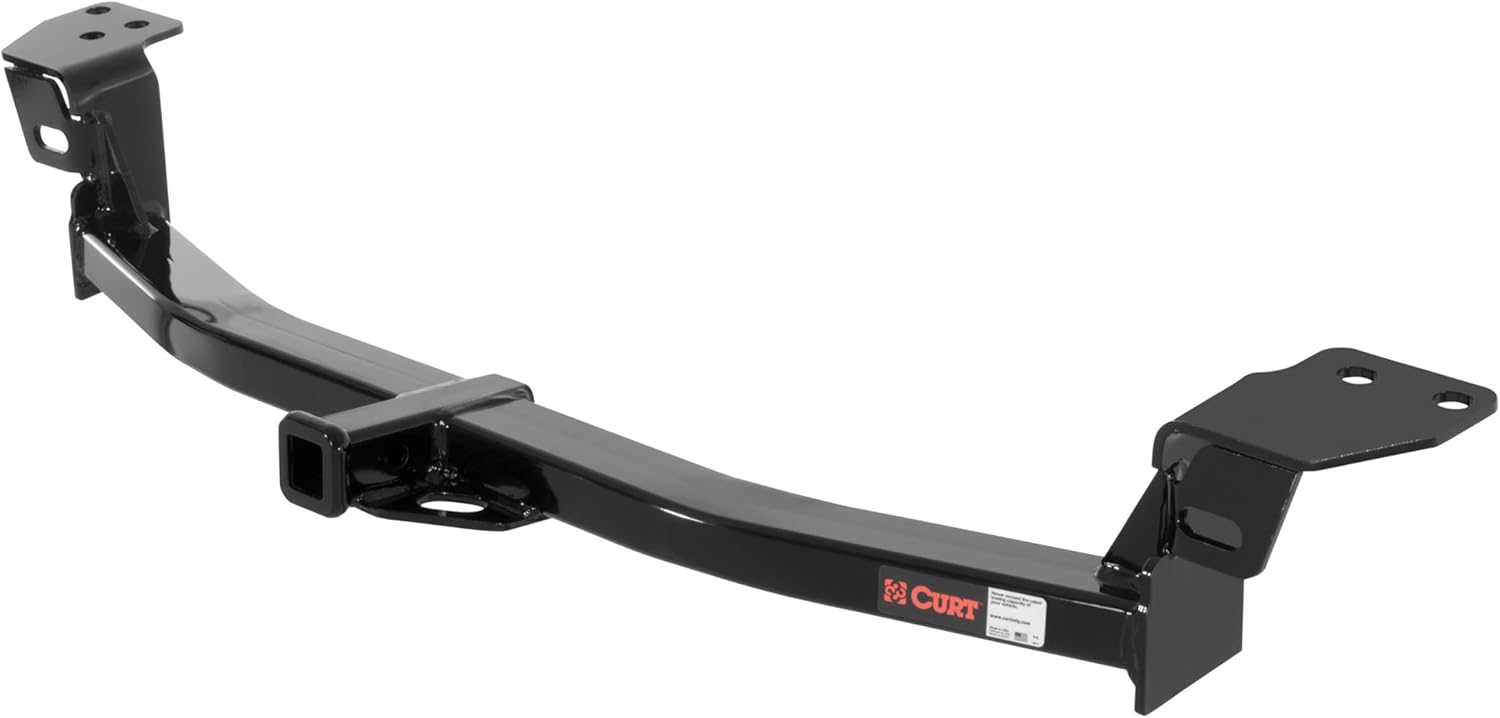
The CURT Class 2 hitch provides a custom-fit receiver solution for compatible Camry and ES350 model years, giving you a 1-1/4" receiver for ball mounts, bike racks, or cargo carriers. It is engineered from carbon steel with robotic welding and a durable powder-coat finish to resist rust and stand up to regular use. Rated for 3,500 lb gross trailer weight and 350 lb tongue weight, this hitch covers most light towing jobs such as small utility trailers, fishing-boat trailers, and popup campers, and it is commonly used to add a hitch-mounted cargo or bike carrier. Installation is bolted on and typically does not require drilling, though some users report tight hole alignment that can need minor adjustments or temporary lowering of exhaust hangars during fitment. The hitch is tested to SAE J684 and comes with a finish warranty; its strong build and vehicle-specific design make it a practical upgrade for owners who need occasional towing or extra cargo capacity, but expect basic underbody work during installation and verify compatibility with your exact year and trim before buying.
Best for: Buyers of 2002–2006 Toyota Camry who need a compact, lighter-duty receiver for occasional towing or mounting bike racks and cargo carriers and who prioritize a custom-fit, factory-quality hitch that preserves vehicle aesthetics.
Less Ideal for: If you need heavy-duty towing capacity or a larger 2" receiver for heavier trailers or commercial use, choose a higher-class hitch or different receiver option instead.
- Vehicle-specific design for a close fit to listed Camry and ES350 models
- 3,500 lb GTW and 350 lb tongue weight rating suitable for light towing and carriers
- Carbon steel construction with powder-coat finish for durability and corrosion resistance
- Bolted installation that typically avoids drilling when vehicle alignment matches
- Some model years or vehicles may require temporary lowering of exhaust hangars or minor alignment work during installation
Verdict: A trailer hitch with a 1-1/4-inch receiver opening tailored to owners who need a compact, lighter-duty receiver that matches small couplers and accessories common on sedans.
CURT 11576 Class 1 Trailer Hitch — 1-1/4-Inch Receiver
Best Low-Profile Trailer Hitch

| Maximum Towing Capacity | 2000 Pounds |
|---|---|
| Pull Force | 2000 Pounds |
| Compatible with Vehicle Type | Car |
| Material Type | Carbon Steel |
| Finish Type | Gloss, Powder-Coated |
This CURT Class 1 hitch provides a factory-style, low-profile receiver for select Toyota Camry and Avalon models, intended mainly for light towing and hitch-mounted accessories. It installs using vehicle-specific mounting points and includes the necessary hardware, and many owners report a snug, nearly hidden fit behind the rear valance once trimmed and installed. Built from carbon steel with a powder-coat finish and tested to SAE J684, it delivers a practical 2,000 lb gross trailer weight and 200 lb tongue weight for bike racks, cargo carriers, small utility trailers, and lightweight campers. Installation can require drilling or enlarging frame holes and some trimming of heat shields or plastic undercovers, so expect a few hours and basic tools or a shop if you prefer. The compact 1-1/4-inch receiver keeps the rear appearance clean but limits it to light-duty uses compared with larger hitches.
Best for: Drivers of 2002–2006 Toyota Camry who want a discreet, factory-like hitch that stays tucked up close to the bumper for occasional light towing, bike racks, or cargo carriers while minimizing visual impact and ground clearance issues.
Less Ideal for: Drivers who need to tow heavier trailers, haul large loads, or require a 2-inch receiver and higher towing capacity should choose a heavier class hitch instead.
- Vehicle-specific design for a near-factory fit and concealed main body
- Rated 2,000 lb gross trailer weight and 200 lb tongue weight for light towing and accessories
- Durable carbon steel construction with powder-coat finish to resist rust
- Includes mounting hardware and is tested to SAE J684 safety standard
- 1-1/4-inch receiver limits towing to light loads and some accessories
- Installation may require drilling frame holes and trimming underbody panels
Verdict: A low-profile trailer hitch that tucks close to the bumper for a cleaner look and reduced ground-scraping while still providing a proper receiver for light towing and cargo carriers.
CURT Class 2 Trailer Hitch Bundle with Wiring for 2002–2006 Toyota Camry
Best Complete Trailer Hitch Kit

| Pull Force | 2000 Pounds |
|---|---|
| Material Type | Alloy Steel |
| Finish Type | Powder Coated |
| Automotive Fit Type | Vehicle Specific Fit |
This CURT bundle combines a Class 2 trailer hitch and a compatible wiring harness designed specifically for 2002–2006 Toyota Camry models. The hitch is made from alloy steel with a powder-coated finish, so it installs as a fixed, durable receiver for light towing tasks like small trailers, cargo carriers, or bike racks. The included wiring simplifies electrical hookup for lights and brakes, avoiding a separate purchase and reducing installation steps. With a 2000-pound pull rating this kit covers most everyday towing needs for compact sedans without requiring heavy-duty components. Installation typically involves bolting the hitch to factory mounting points and routing the wiring to the vehicle connector, which a competent DIYer can handle with basic tools; professional installation is an option for tighter clearances or wiring integration. Limitations are its modest towing capacity that rules out heavier trailers and the vehicle-specific design which only fits the listed Camry years, so it is not suitable for larger towing demands or other vehicles.
Best for: Camry owners who want a single, installation-ready towing solution that includes both the hitch and wiring harness so they can bolt in a factory-style trailer setup without sourcing parts separately.
Less Ideal for: Drivers who need to tow heavy trailers, haul large loads, or who plan to use the hitch on a different vehicle should look at higher-capacity or universal options.
- Vehicle-specific fit for 2002–2006 Toyota Camry simplifies installation and alignment
- Powder-coated alloy steel construction resists corrosion and provides long-term durability
- Includes wiring harness so trailer lighting and signals work without a separate adapter
- 2000-pound rated pull suits light trailers, cargo carriers, and bike racks
- 2000-pound capacity limits use to small trailers and light loads only
- Bundle fits only 2002–2006 Camry models and is not adaptable to other vehicles
Verdict: A full kit-style trailer hitch that includes mounting hardware and a wiring harness or plug kit for buyers who prefer a one-purchase solution for installation-ready towing on their vehicle.
Choosing the Right 2002-2006 Toyota Camry Trailer Hitch: Key Factors to Consider
Towing Capacity and Weight Ratings
A trailer hitch's weight rating determines what you can tow and how safely the load transfers to the Camry's frame. For a 2002-2006 Camry, establish the vehicle's maximum tongue weight and gross trailer weight limits first; the hitch should meet or exceed these values with a margin for safety. Using a hitch rated below the vehicle's capability can overload the hitch during braking or cornering and increase wear on mounting points.
Look for hitches with clearly stamped tongue weight and gross trailer weight numbers and choose one that leaves room for the weight of cargo, trailer tongue load, and any accessories such as bike racks. If you anticipate towing frequently or near the Camry's limits, prefer a hitch with higher safety margins and verify that other vehicle systems—brakes, cooling, and suspension—are up to the task.
Hitch Class and Receiver Size
Hitch class and receiver size affect what accessories and trailers you can use. Many Camry owners select a Class II or a compact Class III option depending on towing needs. A 2-inch hitch receiver is common and versatile for standard ball mounts and larger accessories, while narrower receivers limit your accessory choices.
Confirm the receiver size matches the accessories you plan to use, such as cargo carriers or bike racks. Keep in mind that higher classes often have beefier cross tubes and mounting plates that distribute load better across the frame, which can be beneficial even on a sedan when towing heavier loads within the vehicle's capability.
Fitment and Vehicle Mounting
A trailer hitch designed for the 2002-2006 Camry should mount to the factory points without cutting or altering structural components. Proper fitment reduces installation time and preserves original vehicle integrity. Hitches that use existing threaded holes or bolt-on brackets are typically faster and less invasive to install.
Check how the hitch interacts with the bumper and exhaust routing. A well-designed hitch will avoid contact with the exhaust and will not require trimming of the bumper cover on the Camry. Also consider whether any included reinforcement plates align with the Camry's frame rails to spread loads across more metal rather than concentrating stress on a single point.
Corrosion Protection and Durability
Road exposure means hitches are vulnerable to corrosion, which can weaken welds and mounting points over time. For the Camry, choose a hitch with a durable finish such as powder coat over properly treated steel and with welds that are continuous and smooth. Some hitches include additional undercoating or rust-inhibiting hardware for longer life.
Durability also covers the quality of fasteners and plated hardware. Look for hardened bolts, lock washers, and hardware rated for automotive use. Regular inspection and touch-up of scratched coatings will extend service life, but starting with a robust corrosion-resistant finish reduces maintenance needs.
Installation Complexity and Required Tools
Installation effort impacts both the time you spend and whether you can install the hitch yourself. For 2002-2006 Camry owners, the simplest hitches install using hand tools, require minimal underbody access, and utilize existing mounting holes. Instructions that include torque specifications and hardware diagrams simplify the process.
Consider whether special tools like torque wrenches, lift equipment, or drilling are necessary. Avoid options that mandate frame welding or permanent modifications, especially if you prefer to keep the vehicle reversible to factory condition. If you plan to pay for professional installation, factor that labor into your decision alongside the hitch design's installability.
Compatibility With Accessories and Clearances
Think about the accessories you might use with the hitch, such as ball mounts, bike racks, or cargo carriers, and whether the chosen receiver size and drop/rise configurations will work. Clearance from the ground and the Camry's rear bumper matters for both approach angle and parking situations.
A hitch that places the receiver too low may reduce ground clearance and increase the chance of bottoming out on driveways. Verify how the receiver aligns with common accessory heights so you do not need additional adapters that reduce tongue weight capacity. Also check that the hitch does not obstruct sensors or trunk access on the Camry.
What Hitch Class Works Best for a 2002-2006 Camry
Sedans like the 2002-2006 Camry are typically fitted with light-duty hitches that balance strength and minimal intrusion. Class II or compact Class III hitches are common choices because they provide adequate capacity for most small trailers, cargo carriers, or bike racks without requiring extensive vehicle modifications.
When deciding on class, match the hitch rating to your planned use. For occasional light towing or heavy cargo carriers, a higher-capacity Class III style with a 2-inch receiver can add versatility. For very light-duty needs, a lower-profile Class II hitch may suffice and keep the receiver tucked closer to the bumper.
- Class II: lower profile, suitable for light loads and small cargo carriers
- Class III (compact): offers higher capacity and a 2-inch receiver for more accessories
- Receiver height affects accessory fit and ground clearance
Preparing Your Camry Before Installation
Before installing a trailer hitch, inspect the vehicle's underside and mounting points for rust, damage, or previous repairs. Clean the area where the hitch will mount so hardware seats against bare metal if the manufacturer recommends that. Verify that the exhaust routing and heat shields are intact and will not interfere with the hitch.
Gather required tools and read the hitch instructions fully. If the hitch requires torqueing to specific values, have a calibrated torque wrench available. If you are unsure about any step or lack required tools, consider a professional installation to ensure safe mounting.
- Inspect frame rails and attachment points for corrosion or damage
- Clean mounting areas and remove debris for proper seating
- Confirm torque specs and have a torque wrench ready
Installation Tips to Make the Process Smoother
Work with the assistance of a second person when aligning the hitch to the Camry's mounting holes. This reduces strain on mounting hardware and speeds up alignment. Loosely install bolts first to allow slight adjustments, then torque to the specified values in a cross pattern where applicable.
Use thread-locking compound only if specified and avoid over-tightening bolts which can strip existing threads. If the hitch includes anti-rattle fittings or locking pins, test accessory fitment before final torqueing so you can confirm clearances and alignment.
- Hand-thread bolts before final tightening to avoid cross-threading
- Torque bolts to manufacturer specifications in the recommended sequence
- Test-fit accessories and check for bumper or exhaust interference
Maintenance and Safety Checks After Mounting
After installation, perform a visual and physical check of all hardware after the first 100 miles and again periodically. Re-torque bolts if specified in the hitch instructions, and inspect the coating for chips or rust. Pay attention to any unusual noises, looseness, or movement while towing or carrying loads.
Also confirm electrical connector routing for trailer lights if wiring is installed. Ensure bulbs, connectors, and grounds are secure so that trailer lighting functions reliably. Regular maintenance extends hitch life and keeps towing operations safer.
- Re-check hardware torque after initial use and at regular intervals
- Inspect for coating damage and touch up paint to prevent rust
- Verify trailer electrical connections for consistent operation
Accessory Considerations for the Camry Receiver
Choosing accessories like ball mounts, bike racks, or cargo carriers depends on receiver size and hitch rise/drop. A 2-inch receiver offers the most options and is widely supported by accessories that maintain weight rating when used without excessive adapters. If you plan to carry bikes or bulky cargo, ensure the accessory does not block trunk access or lights.
Also consider hitch-mounted accessories' tongue weight and how it affects rear suspension sag on the Camry. Use weight-distributing solutions or supplemental supports for heavier loads to preserve handling and braking performance.
- Prefer a 2-inch receiver for accessory compatibility
- Check tongue weight limits for combined accessory and cargo weight
- Avoid stacking multiple adapters that reduce effective capacity
Still looking for the perfect fit?
Select your Toyota Camry configuration to see the most relevant Trailer Hitches recommendations
How We Chose the Best 2002-2006 Toyota Camry Trailer Hitch
Our selection focused on practical factors that matter to 2002-2006 Toyota Camry owners who want dependable towing or cargo-carrying function. We prioritized fitment accuracy, requiring designs that bolt to the Camry's factory mounting points without major body modifications. Structural capacity was a core filter, so only hitches with clear load ratings and appropriate safety margins for common light-duty towing tasks were considered.We evaluated corrosion resistance and finish because hitches on a daily-driver sedan face road salt and moisture. Ease of installation was another key criterion, including whether the design needs only hand tools, uses existing holes, and has straightforward alignment. Hardware quality and included mounting brackets or reinforcement plates were checked to ensure long-term durability.We excluded any options that required permanent frame welding, custom fabrication, or changes that would compromise vehicle structure. Also removed were hitches lacking published weight ratings or those not clearly specified for the 2002-2006 Camry. Final picks balanced structural safety, straightforward installability, and corrosion protection.
Our full evaluation process is outlined in our review methodology.
FAQ
Can a 2002-2006 Toyota Camry safely tow a small trailer?
Often yes, within the vehicle's published towing limits. The hitch must have a matching weight rating and you should account for tongue weight and gross trailer weight. Verify the Camry's own towing recommendations and ensure the braking and cooling systems are adequate for your planned loads.
Is a 2-inch hitch receiver necessary for the Camry?
A 2-inch receiver is not always necessary but offers broader accessory compatibility and higher capacity if you plan to tow or use larger carriers. For very light-duty uses, a narrower receiver may be acceptable, but a 2-inch receiver provides more flexibility.
How hard is it to install a trailer hitch on a 2002-2006 Camry?
Installation difficulty depends on the hitch design. Many bolt-on hitches for this Camry use existing holes and can be installed with common hand tools and a torque wrench by a competent DIYer. Some installations are easier with a lift or jack stands and a helper for alignment.
Will adding a hitch affect my Camry's fuel economy?
There can be a small effect on fuel economy, especially when towing or carrying heavy loads, due to increased weight and altered aerodynamics. A well-fitted hitch without towing attached has minimal impact, but towing will increase fuel consumption proportional to load and driving conditions.
Do I need to modify the Camry's bumper to fit a hitch?
Most hitches designed for 2002-2006 Camry mount without permanent bumper modification. Some models may require minor trimming of an inner bumper cover for clearance, but full cutting or permanent alteration is generally avoidable with properly designed bolt-on hitches.
How often should I inspect the hitch and mounting hardware?
Inspect the hitch and hardware after the first 100 miles of use and then at regular intervals depending on usage—typically every few months for frequent towing, or seasonally for light use. Look for loose bolts, rust, and coating damage.
Final Verdict
When fitting a trailer hitch to a 2002-2006 Toyota Camry, prioritize a hitch that matches the vehicle's towing capacity, mounts to factory attachment points, and offers corrosion-resistant construction. Balance receiver size and class with the accessories and trailers you plan to use, and consider installation complexity when deciding between a DIY job and professional fitment.Ultimately, focus on verified weight ratings, proper installation torque, and regular inspections to keep towing safe. Choosing a hitch that aligns with these priorities will give you reliable performance and the flexibility to carry or tow within the Camry's limits.
Explore More:
- Check out all Toyota Camry parts & accessories
- Explore Other Accessories
- Browse all Accessories
