

Note: This article contains affiliate links. If you click on these links and make a purchase, I may earn a small commission at no extra cost to you. This helps support my research and content. Read my full affiliate disclosure here.
If you plan to tow with a 2013-2017 Honda Accord, picking the right trailer hitch makes the difference between safe, predictable towing and frequent frustration on the road. The wrong hitch can compromise towing capacity, interfere with ground clearance, or complicate installation. This guide covers six shortlisted trailer hitches that fit the 2013-2017 Accord chassis, focusing on load capacity, receiver size, and ease of install to help you choose the right option for your needs.Each recommendation is selected for compatibility with the 2013-2017 Accord and rated on crucial practical factors like weight rating and mounting methods. Read on to find the hitch that balances strength, installation simplicity, and the accessories you will need for confident towing.
Looking for other parts? See all Honda Accord parts & accessories.
Top Picks at a Glance
| Best Overall Trailer Hitch The best all-around hitch balancing fit, strength, and ease of install | CURT 11681 Class 1 Trailer Hitch (1-1/4" Receiver) |  |
| Best Budget Trailer Hitch A low-cost hitch that delivers safe towing without extras | Rigid Hitch Class I 1-1/4" Receiver Hitch (RT-509) |  |
| Best Premium Trailer Hitch Higher-end materials, finish, and corrosion resistance for long life | CURT 11085 Class 1 Trailer Hitch, 1-1/4-Inch Receiver |  |
| Best Heavy-Duty Trailer Hitch Built for higher tongue weight and repeated heavy towing duty | CURT Class 1 Trailer Hitch 1-1/4-Inch Receiver (fits select Accord) |  |
| Best Low-Profile Trailer Hitch A discreet, low-drop design that keeps rear clearance and appearance | CURT Class 1 Trailer Hitch 1-1/4" Receiver for Select Honda Accord |  |
| Best Easy-Install Trailer Hitch Designed for straightforward bolt-on installation with basic tools | maXpeedingrods 1-1/4" Trailer Hitch Receiver for Honda Accord 2013–2017 |  |
1. CURT 11681 Class 1 Trailer Hitch (1-1/4" Receiver)
Best Overall Trailer Hitch

| Receiver opening | 1-1/4" |
|---|---|
| Gross trailer weight (GTW) | 2,000 lbs. |
| Tongue weight (TW) | 200 lbs. |
| Material Type | Alloy Steel |
| Finish Type | Powder-Coated Gloss |
The CURT 11681 is a custom-fit Class 1 hitch built for specific Honda Accord model years to add a small receiver without major modification. It provides a 1-1/4" receiver opening and is rated for 2,000 lb gross trailer weight and 200 lb tongue weight, making it suitable for bike racks, cargo carriers, and small utility trailers. Construction uses high-strength alloy steel with precise welding and a powder-coated high-gloss finish to resist corrosion. Installation is typical for a vehicle-specific hitch: CURT supplies mounting hardware and fish wires, but expect some trimming or heat-shield adjustment and moderate effort to work around exhaust hangers; an extra set of hands helps for alignment. Notable benefits include the slim, factory-like fit and tested safety to SAE J684 standards, but the smaller receiver limits compatibility with 2" accessories and heavier towing. For DIY installers comfortable working under the car, this hitch delivers reliable light-duty performance with a clean, durable appearance.
Best for: Buyers who want a rugged, factory-like hitch for a 2013–2017 Honda Accord that balances build quality and straightforward bolt-on installation for light towing and hitch-mounted cargo.
Less Ideal for: If you need 2" receiver compatibility or plan to tow heavier trailers frequently, choose a larger class hitch or a vehicle and hitch rated for higher capacities.
- Vehicle-specific design for a close, factory-style fit
- Rated 2,000 lb GTW and 200 lb tongue weight suitable for bike racks and small trailers
- High-strength alloy steel construction with powder-coat finish for corrosion resistance
- Includes necessary mounting hardware and fish wires for bolt-in installation
- 1-1/4" receiver limits use of common 2" accessories and heavier tow loads
Verdict: The best all-around trailer hitch that balances solid build quality, broad compatibility, straightforward installation, and reliable towing performance for most DIY installers.
2. Rigid Hitch Class I 1-1/4" Receiver Hitch (RT-509)
Best Budget Trailer Hitch

| Maximum Towing Capacity | 2000 Pounds |
|---|---|
| Pull Force | 2000 Pounds |
| Material Type | Carbon Steel |
| Finish Type | Powder Coated |
| Receiver Opening | 1-1/4 inch |
This Rigid Hitch Class I receiver is a straightforward, vehicle-specific hitch designed for light towing tasks on the 2013–2017 Honda Accord. It installs without drilling and includes the correct ball mount, pin, clip, and installation hardware, so you get a complete basic setup. The powder-coated carbon steel construction feels solid and resists surface corrosion in typical use. With a 1-1/4 inch receiver opening and a 2,000 lb gross trailer weight rating, it is best suited for hauling small trailers, bikes, or personal watercraft. Installation typically requires temporarily lowering the exhaust and minor heat shield modification; some users report needing to access frame rail openings for square nuts. The hitch crosstube is visible under the bumper, which is normal for this class. It is an economical, no-frills solution that keeps costs and complexity down, but it is limited to light loads and does not suit heavier towing needs or accessories that require larger receiver sizes.
Best for: Buyers who need a low-cost, dependable hitch for occasional light towing on a 2013–2017 Accord and prioritize simple installation and factory-style fit over heavy-duty capacity.
Less Ideal for: Anyone who plans to tow heavy trailers, use large accessories, or needs a 2 inch receiver should choose a higher-capacity hitch instead.
- Vehicle-specific fit for 2013–2017 Accord simplifies installation planning
- Includes ball mount, pin, clip, and installation hardware so no extra parts are needed
- Powder-coated carbon steel construction provides durable, corrosion-resistant finish
- No drilling required for a cleaner install and faster fitment
- Rated for light towing only with a 2,000 lb GTW and 200 lb tongue weight limit
Verdict: The best budget trailer hitch for buyers who want a dependable, no-frills unit that meets basic towing needs while keeping purchase and installation costs down.
3. CURT 11085 Class 1 Trailer Hitch, 1-1/4-Inch Receiver
Best Premium Trailer Hitch

| Receiver opening | 1-1/4-inch |
|---|---|
| Gross trailer weight | 2,000 lbs. |
| Tongue weight | 200 lbs. |
| Material | Carbon Steel |
| Finish | Bonderite undercoat + powder coat |
The CURT 11085 is a custom-fit Class 1 trailer hitch designed to add light towing and hitch-mounted cargo capability to compatible Honda Accord and TSX models. It installs under the rear bumper and provides a standard 1-1/4-inch receiver for bike racks, cargo carriers, or small utility trailers. Notable features include precision welding, a concealed main body for a factory-integrated look, and a co-cured Bonderite undercoating plus high-gloss powder coat to resist rust and chips over time. CURT rates this hitch for 2,000 lb gross trailer weight and 200 lb tongue weight, which is suitable for bike racks, small trailers, and cargo carriers but not heavy towing. Installation is achievable for DIYers with basic tools though some models may require trimming heat shields or lowering exhaust during fitment; the package includes mounting hardware. The build quality and corrosion protection make this a durable, more refined choice among light-duty hitches, but buyers should confirm vehicle-year compatibility and follow weight limits closely to avoid overstressing the system.
Best for: Buyers who prioritize long-term corrosion resistance and a factory-integrated look for a 2013–2017 Accord while adding dependable light towing or hitch-mounted cargo capacity.
Less Ideal for: Drivers planning to tow heavy trailers, carry large tongue loads, or those who need a 2-inch receiver for heavier accessories should look at higher-class hitches instead.
- Vehicle-specific design for a precise, OEM-like fit
- Co-cured Bonderite undercoating plus powder coat for enhanced corrosion resistance
- Concealed main body delivers a cleaner, less obtrusive appearance
- 1-1/4-inch receiver works with common bike racks and cargo carriers
- Includes necessary mounting hardware and is engineered to SAE J684 testing standards
- Limited to light-duty towing with 2,000 lb GTW and 200 lb tongue weight
Verdict: The best premium trailer hitch for buyers willing to pay more for superior materials, refined finishes, higher corrosion resistance, and longer-term durability.
4. CURT Class 1 Trailer Hitch 1-1/4-Inch Receiver (fits select Accord)
Best Heavy-Duty Trailer Hitch

| Maximum Towing Capacity | 2000 Pounds |
|---|---|
| Pull Force | 2000 Pounds |
| Material Type | Carbon Steel |
| Finish Type | Gloss, Powder-Coated |
This CURT Class 1 hitch is a custom-fit, light-duty receiver engineered to add basic towing and cargo-carrying ability to compatible Accord models. It installs under the rear bumper using the supplied mounting hardware and provides a 1-1/4-inch receiver tube for ball mounts, bike racks, or small cargo carriers. The hitch is built from carbon steel with a dual-coat finish that combines a liquid A-coat and black powder coat for corrosion resistance, and it is tested to SAE J684 standards for the listed 2,000 lb GTW and 200 lb tongue weight. In practice this makes it a solid choice for occasional towing of small utility trailers, kayaks, or lightweight teardrop campers and for securely mounting hitch accessories. Expect a straightforward fit where the hitch is listed as compatible, though some installers report difficulty fishing bolts in tight underbody spaces if you do not have a lift or the right tools. Importantly, this is a light-duty Class 1 hitch and is not intended for heavy loads or frequent high-capacity towing demands.
Best for: Buyers who want a factory-style, bolted hitch to add a bike rack, cargo carrier, or tow very small trailers occasionally on a 2013–2017 Accord and who prioritize a custom fit and corrosion protection.
Less Ideal for: Drivers who regularly tow heavy trailers, haul large loads, or require a high-capacity hitch for frequent heavy towing should choose a higher class hitch or a truck-based solution instead.
- Vehicle-specific design for a closer factory-style fit
- Rated for 2,000 lb gross trailer weight and 200 lb tongue weight for light towing tasks
- Durable dual-coat finish for rust, chip, and UV resistance
- Includes mounting hardware and a standard 1-1/4-inch receiver compatible with common accessories
- Class 1 capacity limits use to light-duty towing and accessory carrying
- Installation can be challenging under a vehicle without a lift due to hard-to-reach bolt locations
Verdict: The best heavy-duty trailer hitch for users who need extra strength and rigidity for frequent, high-load towing and heavier trailers.
5. CURT Class 1 Trailer Hitch 1-1/4" Receiver for Select Honda Accord
Best Low-Profile Trailer Hitch

| Receiver opening | 1-1/4 inches |
|---|---|
| Gross trailer weight | 2,000 lbs |
| Tongue weight | 200 lbs |
| Material | Carbon Steel |
| Finish | Powder-coated gloss |
This CURT Class 1 hitch is a custom-fit rear receiver designed for select 2013–2017 Honda Accord models to add light towing ability or carry hitch-mounted accessories with a low visual profile. It mounts to OEM points and includes the required hardware so installation is straightforward for a competent DIYer or installer. The 1-1/4-inch receiver accepts bike racks, cargo carriers and small ball mounts while the 2,000 lb gross trailer weight and 200 lb tongue weight rating keep loads within light-duty limits. Fabricated from high-strength carbon steel with precise welding and a powder-coated gloss finish, the hitch resists rust and road wear and keeps a discreet appearance under the bumper for improved rear clearance. The low-profile tube and vehicle-specific design help maintain the Accord’s factory lines and reduce protrusion compared with larger hitches. The main limitation is its light towing capacity and smaller receiver size, so it is not appropriate for heavier trailers or larger cargo loads where a larger class hitch would be required.
Best for: Buyers who prioritize a discreet, factory-like hitch that preserves rear clearance and is intended mainly for bike racks, cargo carriers, or light trailers on a 2013–2017 Accord.
Less Ideal for: Drivers who need to tow heavier trailers or regularly haul large loads should choose a higher-class hitch with a larger receiver and greater weight ratings.
- Vehicle-specific design for a precise, low-profile fit
- 1-1/4-inch receiver compatible with bike racks and small cargo carriers
- 2,000 lb GTW and 200 lb TW rating for light towing and accessory use
- Durable carbon steel construction with powder-coated gloss finish for corrosion resistance
- Not intended for medium or heavy towing due to the Class 1 capacity
Verdict: The best low-profile trailer hitch for owners who want minimal visual impact and improved rear clearance while retaining full towing capability.
6. maXpeedingrods 1-1/4" Trailer Hitch Receiver for Honda Accord 2013–2017
Best Easy-Install Trailer Hitch
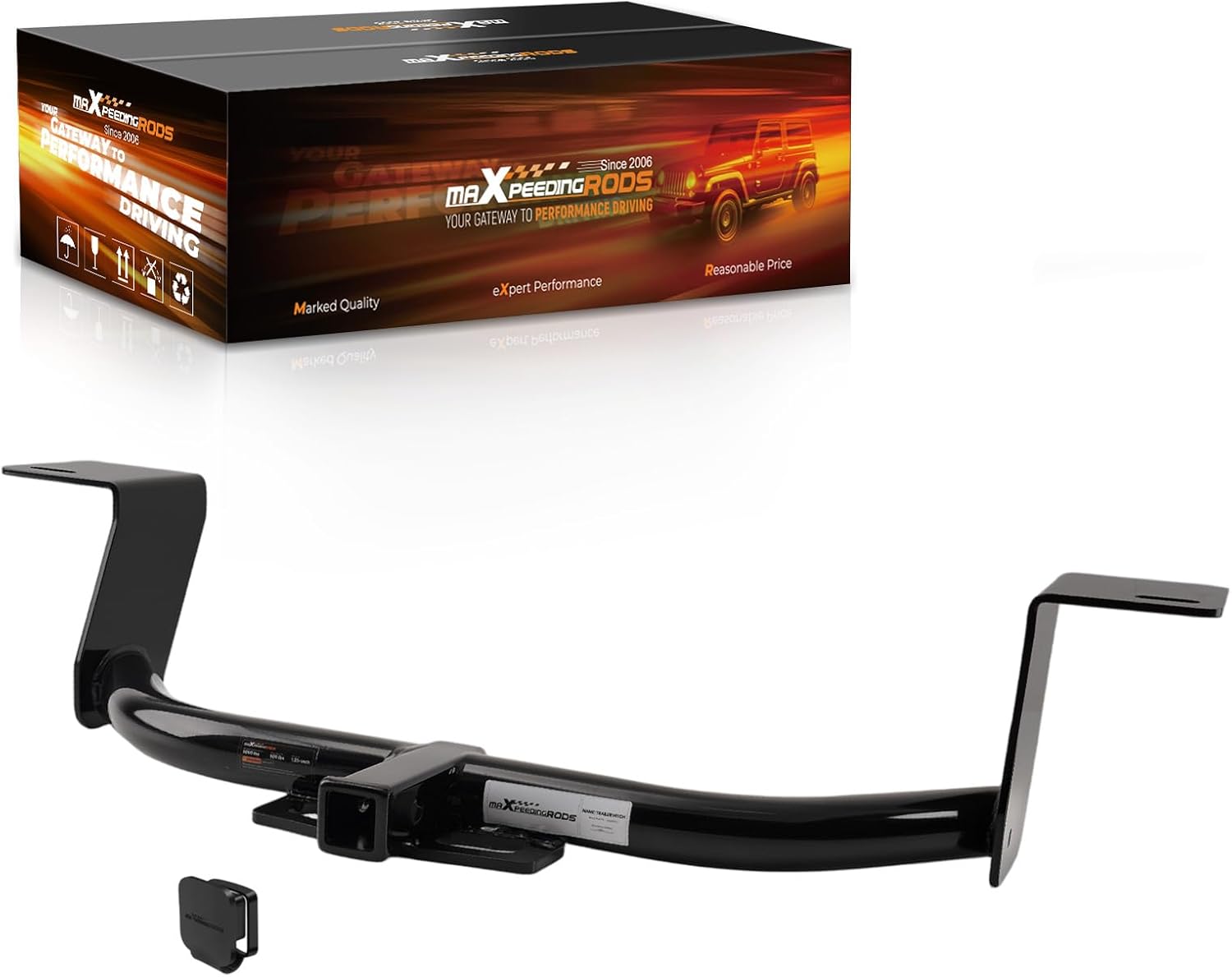
| Receiver size | 1.25 inches |
|---|---|
| Gross trailer weight | 2000 lb |
| Tongue weight | 300 lb |
| Fitment | Honda Accord Coupe/Sedan 2013–2017 |
This maXpeedingrods 1.25" trailer hitch is a straightforward bolt-on receiver made for 2013–2017 Honda Accord coupe and sedan models. It is constructed from heavy-duty steel with a powder-coated finish to resist rust and provides a class 2 towing rating useful for small trailers, cargo carriers, or bike racks. The design includes a rubber hitch cover to keep debris and moisture out of the receiver tube when not in use. Installation is intended as a DIY-friendly process that uses the vehicle's existing mounting points and common hand tools, so a typical enthusiast with basic mechanical skills can complete the fitment in a garage without specialized equipment. The hitch's stated gross trailer weight and tongue weight limits (2000 lb GTW, 300 lb TW) set clear towing boundaries for safe use. Buyers should note this is a vehicle-specific receiver for the stated Accord years and is not designed for heavy towing or commercial use, and professional installation can still be advisable if you are not comfortable with underbody work or torque specifications.
Best for: DIYers who want a simple, vehicle-specific hitch that installs with basic hand tools and limited garage time and who plan to use light towing accessories or small trailers.
Less Ideal for: People who need high-capacity towing, plan to tow large trailers regularly, or who prefer a universal hitch for multiple vehicles should consider heavier duty alternatives.
- Vehicle-specific bolt-on fit for 2013–2017 Honda Accord minimizes modifications and simplifies installation
- Heavy-duty steel construction with powder-coated finish resists corrosion for longer service life
- Includes rubber hitch cover to protect the receiver tube from dirt and moisture
- Class 2 towing rating suitable for bike racks, cargo carriers, and small trailers
- Not rated for heavy or commercial towing; limited to the listed GTW and TW capacities
Verdict: The best easy-install trailer hitch for DIY mechanics seeking a straightforward bolt-on fit that installs with common hand tools and minimal garage time.
Choosing the Right 2013-2017 Honda Accord Trailer Hitch: Key Factors to Consider
Vehicle Compatibility and Fitment
Confirming fitment to the 2013-2017 Honda Accord is the single most important step. Hitches are engineered to mate with specific frame points and body geometries, so a hitch that lists the Accord 2013-2017 chassis will align with factory mounting locations and avoid interfering with exhaust, bumper valances, or trunk components.
Fitment also affects the visible appearance and ground clearance. A hitch designed for the Accord will preserve bumper lines and minimize how far the receiver protrudes. Always cross-check part numbers and vehicle options to ensure the hitch matches the exact Accord body style and any factory-installed accessories.
Weight Ratings and Tow Capacity
Trailer hitch tongue weight and gross towing weight ratings determine what you can safely tow and carry on a ball mount. Choose a hitch with ratings that meet or exceed what you plan to tow, while staying within the Accord's own towing limits specified by the vehicle manufacturer.
Underrating can lead to overloaded components, while overrating a hitch does not increase the car's towing capacity beyond what the Accord permits. Pay attention to both tongue weight and gross trailer weight ratings because small trailers and heavy cargo load the tongue differently.
Receiver Size and Hitch Class
Receiver opening size—commonly 1.25 inch or 2 inch—determines which ball mounts and accessories you can use. Many owners prefer a 2 inch hitch receiver for versatility with larger ball mounts, bike racks, and cargo carriers. Hitch class (such as Class II or Class III) indicates typical load ranges and construction characteristics.
Selecting the correct receiver size and class ensures compatibility with the towing gear you plan to use and avoids improper adapter usage that can reduce capacity or increase wear.
Mounting Design and Installation Complexity
Hitches attach to the Accord using different mounting designs—bolt-on to factory frame points, flange brackets, or in some cases, requiring trimming of trim pieces. Bolt-on designs that use existing threaded holes typically reduce install time and the chance of error.
Consider installation complexity in relation to your skill level and whether you will DIY or hire a shop. More complex installs increase labor time and can raise hitch installation cost. Verify included hardware, instructions, and whether drill holes or cutting are necessary.
Corrosion Resistance and Material Quality
Hitch hardware is exposed to road salt, water, and debris, so finish quality and steel thickness matter for long-term durability. Look for hitches with corrosion-resistant coatings such as powder coat or epoxy finishes and solid welds at mounting points.
Higher-quality materials and finishes reduce maintenance and extend service life, which is especially important if you tow seasonally or live in areas with harsh winters.
Accessory Compatibility and Usability
Think beyond the hitch itself to the accessories you will use: ball mounts, hitch pins, wiring adapters, and cargo carriers. A receiver that accommodates common accessory sizes and provides standard pin hole spacing makes it easier to swap gear.
Also consider whether the hitch design blocks access to trunk drains, spare tire tools, or the vehicle jack. Practical usability in daily life matters as much as raw capacity when choosing a hitch for your Accord.
Which Receiver Size Is Best for a 2013-2017 Accord
The most common receiver choice for practical towing on the Accord is the 2 inch receiver because it supports a wider range of ball mounts, cargo carriers, and accessory interfaces. A 2 inch receiver typically pairs with a Class III-rated hitch, which offers stronger construction and higher weight ratings than smaller receivers.
If your towing needs are light—such as occasional small trailer use or a single-bike platform—you may be able to use a smaller 1.25 inch receiver, but that limits accessory options. Consider what attachments you will use most often before committing to a receiver size.
- 2 inch receiver: more versatile for towing and accessories
- 1.25 inch receiver: lighter-duty, fewer accessory choices
- Match receiver to expected towing and accessory use
Wiring and Electrical Considerations
Proper trailer wiring is essential for safety and legal compliance. The Accord may require a vehicle-specific wiring harness that taps into brake lights, turn signals, and running lights. Some wiring solutions are plug-and-play and mount near the hitch, while others need splicing into the tail light circuitry.
When planning a wiring install, confirm harness compatibility with the hitch mounting location and whether you need a relay or converter for your trailer's bulb types. Check that the harness routing avoids hot exhaust components and moving parts to prevent damage.
- Prefer vehicle-specific plug-in harnesses for easier install
- Verify if a converter or relay is needed for multi-function trailers
- Ensure wiring routing stays clear of high-heat areas
Installation Options: DIY Vs Professional
Many Accord owners can install a bolt-on hitch at home with basic hand tools and a friend to help lift and align the assembly. Bolt-on kits that reuse factory holes reduce drilling and save time. If the hitch requires drilling, trimming, or working under the car, plan for a safe workspace and appropriate tools.
Hiring a professional can be sensible if you lack garage space, a lift, or the time. Professionals will also handle torque specs, corrosion protection on exposed bolt threads, and routing of wiring harnesses to factory standards.
- DIY install: check torque specifications and included hardware
- Professional install: faster and ensures vehicle warranty concerns are addressed
- Factor in local labor rates when deciding where to install
Maintaining Your Hitch and Preventing Corrosion
Regularly inspect the hitch for chipped paint, surface rust, and loose hardware. Clean salt and grime from welded areas and recoat exposed steel with rust-inhibiting paint or touch-up materials when needed. Lubricate moving parts such as hitch pins and locks to prevent seizing.
Tighten mounting hardware after the first short trips following installation and again periodically. Maintaining clean, dry connections and using anti-seize on fasteners where appropriate helps preserve fit and prevent galling during future removal or adjustment.
- Inspect for rust and damaged finishes at least twice a year
- Retorque bolts after initial break-in period and periodically
- Use protective coatings on exposed steel and lubricate pins
Common Accessory Choices for the Accord
Decide in advance whether you will carry a bike rack, cargo carrier, or tow a trailer because accessories influence receiver size and weight distribution. Many users choose a low-profile ball mount for occasional towing and a hitch-mounted cargo tray for weekend gear.
Pay attention to accessory-rated tongue weight to avoid overloading the rear of the vehicle. Using a weight-distributing setup is rarely needed for small trailers with the Accord, but properly matching the accessory to the hitch rating remains critical.
- Bike racks and cargo carriers require compatible receiver size and rated tongue weight
- Check accessory tongue weight against hitch tongue weight capacity
- Consider locking hitch pins for security if you leave accessories mounted frequently
Still looking for the perfect fit?
Select your Honda Accord configuration to see the most relevant Trailer Hitches recommendations
How We Chose the Best 2013-2017 Honda Accord Trailer Hitch
We vetted candidate hitches against criteria that matter to 2013-2017 Honda Accord owners who tow occasionally or regularly. Primary evaluation factors included verified vehicle fitment to the 2013-2017 Accord frame, published tongue and gross trailer weight ratings, and the receiver size and class to match common towing tasks. We prioritized mounting design and hardware completeness because ease of install and a secure attachment point reduce the risk of vibration, misalignment, or frame damage.Corrosion protection and material quality were considered to ensure long-term durability in typical driving conditions. We also checked whether the hitch required body modification, drilling, or cutting of bumper components, since simpler installs save time and reduce installation cost. Product documentation and manufacturer-specified installation instructions were used to confirm fit and required tools.Excluded from consideration were hitches without clear Accord-specific fitment data, those with unclear weight ratings, and any options needing extensive vehicle modification beyond standard mounting points. The result is a shortlist focused on safe, practical hitch options that balance load capacity, installation complexity, and long-term reliability for the 2013-2017 Accord.
Our full evaluation process is outlined in our review methodology.
FAQ
Do I need a special hitch for the 2013-2017 Accord sedan?
Often a vehicle-specific hitch designed for the 2013-2017 Accord sedan will provide the best fit and preserve bumper appearance. Universal hitches may require modification and can interfere with trim, so choose a kit that lists compatibility with the Accord 2013-2017 chassis.
Can I install the trailer hitch myself?
Many owners can install a bolt-on hitch with basic tools and a jack, but installation difficulty depends on the hitch design. If the kit requires drilling or trimming, or if you lack tools and a safe workspace, professional installation is advisable.
What receiver size should I get for common tow needs?
A 2 inch receiver is the most versatile choice for the Accord because it fits a wider range of ball mounts and accessories. For very light-duty accessory use a 1.25 inch receiver may suffice, but it limits options.
How do I know the hitch's weight rating is appropriate?
Compare the hitch's tongue weight and gross trailer weight ratings to the weight of your trailer and cargo, and ensure those numbers do not exceed the vehicle manufacturer's towing limits for the Accord. Always use the lower of vehicle or hitch ratings as your operational limit.
Will adding a hitch affect fuel economy or handling?
A hitch itself adds modest weight and minimal aerodynamic drag, so effects on fuel economy are usually small. However, towing heavy trailers or carrying large cargo carriers will increase drag and weight, which can noticeably affect fuel use and handling.
How do I route trailer wiring on the Accord?
Use a vehicle-specific wiring harness when possible and route the cable along factory harness paths or secure it to the underside with clips. Keep wiring clear of moving suspension components and hot exhaust parts to avoid damage.
Final Verdict
Prioritize fitment and rated capacity when choosing a trailer hitch for a 2013-2017 Honda Accord. Confirm the hitch matches the Accord mounting points, provides the receiver size you need, and carries adequate tongue and gross trailer weight ratings for your intended loads. Balance installation complexity against cost and your mechanical ability: bolt-on designs minimize labor and reduce installation risk.Choosing a hitch with solid corrosion protection and straightforward accessory compatibility will provide the most dependable service. Focus on correct match for the vehicle and realistic towing needs, and you will have a safe, practical towing setup for your Accord.
Explore More:
- Check out all Honda Accord parts & accessories
- Explore Other Accessories
- Browse all Accessories
