

Note: This article contains affiliate links. If you click on these links and make a purchase, I may earn a small commission at no extra cost to you. This helps support my research and content. Read my full affiliate disclosure here.
If you own a 2001-2006 Chevrolet Silverado 2500 HD and plan to tow regularly, picking the right trailer hitch matters for safety, capability, and ease of use. Hitches differ in tongue weight, gross trailer weight capacity, mounting style, and compatibility with the truck's frame. Choosing an appropriately rated hitch helps prevent sway, reduces wear on the truck, and keeps towing maneuvers predictable.This guide shortlists the top 5 trailer hitches that fit the 2001-2006 Silverado 2500 HD. We evaluated options based on structural strength, fitment accuracy, installation complexity, and long-term corrosion protection to help you narrow choices before checking specific product listings. Read on to compare the key features and decide which hitch suits your towing needs.
Top Picks at a Glance
| Best Overall Trailer Hitch The top all-around hitch balancing strength, fitment, and ease of use | CURT Class 5 Xtra Duty Trailer Hitch 2" Receiver (15302) |  |
| Best Budget Trailer Hitch A low-cost hitch that meets basic towing needs without extras | Gelacie Class 3 2" Trailer Tow Hitch Receiver for 2001–2010 Silverado/Sierra 2500–3500 |  |
| Best Premium Trailer Hitch A higher-end hitch with superior materials, finish, and features | CURT Commercial Duty Class 5 Trailer Hitch 2-1/2-Inch Receiver (15703) |  |
| Best Heavy-Duty Trailer Hitch A rugged, high-capacity hitch built for very demanding towing loads | A-Premium Gooseneck Hitch System — 2-5/16" Ball, 30,000 lb Capacity |  |
| Best Class IV Trailer Hitch A Class IV-rated hitch offering a common high-capacity towing specification | CURT Class 4 Trailer Hitch 2-Inch Receiver (Model 14108) |  |
1. CURT Class 5 Xtra Duty Trailer Hitch 2" Receiver (15302)
Best Overall Trailer Hitch

| Gross trailer weight capacity | 16,000 lbs |
|---|---|
| Tongue weight capacity | 2,400 lbs |
| Receiver opening | 2 in x 2 in |
| Finish type | Liquid A-coat with carbide black powder coat |
| Mounting hardware | Grade 8 |
This CURT Class 5 Xtra Duty hitch is built for serious towing on compatible 2001–2006 Silverado 2500 HD and Sierra 2500 HD trucks with a 6-foot bed. It provides a 2" receiver and a robust welded main body engineered to handle heavy trailers such as toy haulers, dump trailers, and small yacht trailers. The hitch is tested to SAE J684 standards and offers very high capacities (16,000 lb gross trailer weight and 2,400 lb tongue weight), plus higher ratings when used with weight distribution. Installation is straightforward for a DIY mechanic since it is a vehicle-specific fit and ships with grade-8 mounting hardware. CURT’s multi-stage cleaning, liquid A-coat and carbide black powder coat finish improve corrosion resistance for long-term service in road and weather exposure. The trade-offs are that this is a large, heavy assembly requiring at least two people to install and it is designed only for the specified Silverado/Sierra 2500 HD 6-foot-bed application, so fitment must be confirmed before purchase.
Best for: Buyers who want a rugged, long-lasting hitch that lets a hands-on DIY mechanic tow heavy loads from a 2001–2006 Silverado 2500 HD or Sierra 2500 HD with a 6-foot bed and prioritize proven build quality and high capacity.
Less Ideal for: Drivers who need a universal or multi-vehicle hitch solution or those with compact trucks, short-bed configurations, or who cannot handle heavier installation hardware should look elsewhere.
- Very high towing capacity suitable for heavy trailers and weight-distributing setups
- Vehicle-specific design simplifies alignment and installation for compatible trucks
- Durable corrosion protection from liquid A-coat plus carbide black powder coat
- Includes grade-8 mounting hardware for a strong, secure fit
- Built and tested to SAE J684 standards for on-vehicle safety validation
- Heavy, bulky assembly that typically requires two people and basic tools to install
Verdict: The best all-around trailer hitch offering the ideal mix of build quality, towing capacity, installation simplicity, and long-term reliability for most DIY mechanics.
2. Gelacie Class 3 2" Trailer Tow Hitch Receiver for 2001–2010 Silverado/Sierra 2500–3500
Best Budget Trailer Hitch

| Compatible Vehicle Type | Truck |
|---|---|
| Maximum Towing Capacity | 6000 pounds |
| Pull Force | 6000 pounds |
| Finish Type | Powder Coated |
| Automotive Fit Type | Vehicle Specific Fit |
This Gelacie Class 3 trailer hitch is a straightforward bolt-on 2-inch receiver built to restore or add towing capability to compatible Silverado and Sierra 2500/3500 models. It installs using the included hardware and follows a vehicle-specific fit pattern, so it is typically used to tow trailers, haul cargo carriers, or attach accessories like bike racks. The hitch is made from steel and finished with powder coat to resist corrosion, and it carries a 6,000 pound gross towing rating with a 600 pound tongue rating, which covers most medium-duty towing tasks for these trucks. Because the design is simple and direct, you get a no-frills solution that focuses on load capacity and durability rather than extras like integrated wiring or decorative trim. Limitations are typical of budget-focused parts: fit and finish may not match premium factory replacements and you may prefer professional installation to ensure correct torque and alignment for heavy towing.
Best for: Buyers who want a dependable, affordable towing receiver for a 2001–2006 Silverado 2500 HD that covers common medium-duty towing tasks without extra features.
Less Ideal for: Shoppers seeking a premium-matched factory replacement, integrated wiring, or decorative styling should look at higher-end options.
- Vehicle-specific fit for 2001–2010 Silverado and Sierra 2500/3500 trucks
- Rated 6,000 lb gross towing weight and 600 lb tongue weight suitable for medium-duty towing
- Durable steel construction with powder-coat finish for corrosion resistance
- Includes installation hardware and assembly manual for bolt-on mounting
- Budget fit and finish may not match higher-end factory-quality hitches
Verdict: The best budget trailer hitch for buyers who need a dependable, no-frills towing solution that keeps initial cost low while still meeting safety and capacity requirements.
3. CURT Commercial Duty Class 5 Trailer Hitch 2-1/2-Inch Receiver (15703)
Best Premium Trailer Hitch

| Pull Force | 18000 Pounds |
|---|---|
| Material | Carbon Steel |
| Finish Type | Powder Coated |
| Automotive Fit Type | Vehicle Specific Fit |
| Position | Rear |
This CURT Commercial Duty Class 5 hitch is built for heavy towing on full‑size, commercial pickup trucks and is intended as a long‑lasting factory‑replacement style receiver for the specified Silverado and Sierra models. It provides a 2-1/2-inch receiver opening that accepts ball mounts, pintle hooks, winch mounts and other heavy accessories, and it is rated at 18,000 lb gross trailer weight with 2,700 lb tongue weight capacity. The hitch is constructed from carbon steel, ships with grade‑8 hardware, and features a liquid A-coat plus carbide black powder coat finish for enhanced rust resistance in tough outdoor use. Installation is vehicle-specific so it mounts cleanly to the frame of compatible years, giving a refined, durable fit compared with generic universal hitches. The trade-offs are that this is a specialized, heavy assembly that requires proper vehicle fitment and professional or at least experienced installation, and its size and weight make it less convenient for casual users who rarely tow. For owners who need maximum towing capacity and long service life, this hitch delivers a premium, work‑grade solution.
Best for: Buyers who prioritize maximum towing strength, long service life, and superior corrosion protection for frequent heavy hauling on 2001–2006 Silverado 2500/3500 trucks.
Less Ideal for: Casual tow users who seldom pull heavy trailers or anyone wanting a lightweight, universal hitch that is easy to remove and store.
- High towing capacity rated to 18,000 lb GTW and 2,700 lb tongue weight
- 2.5‑inch receiver accepts heavy‑duty ball mounts, pintles, winches and other commercial accessories
- Durable steel construction with liquid A-coat plus carbide black powder coat finish for superior corrosion resistance
- Includes grade‑8 mounting hardware for a secure, vehicle‑specific installation
- Heavy and bulky unit that typically requires two people or a lift to install
- Vehicle-specific fitment limits use to the listed Silverado and Sierra model years
Verdict: The best premium trailer hitch for users willing to pay more for superior corrosion resistance, heavier-duty construction, refined fit, and longer expected service life.
4. A-Premium Gooseneck Hitch System — 2-5/16" Ball, 30,000 lb Capacity
Best Heavy-Duty Trailer Hitch
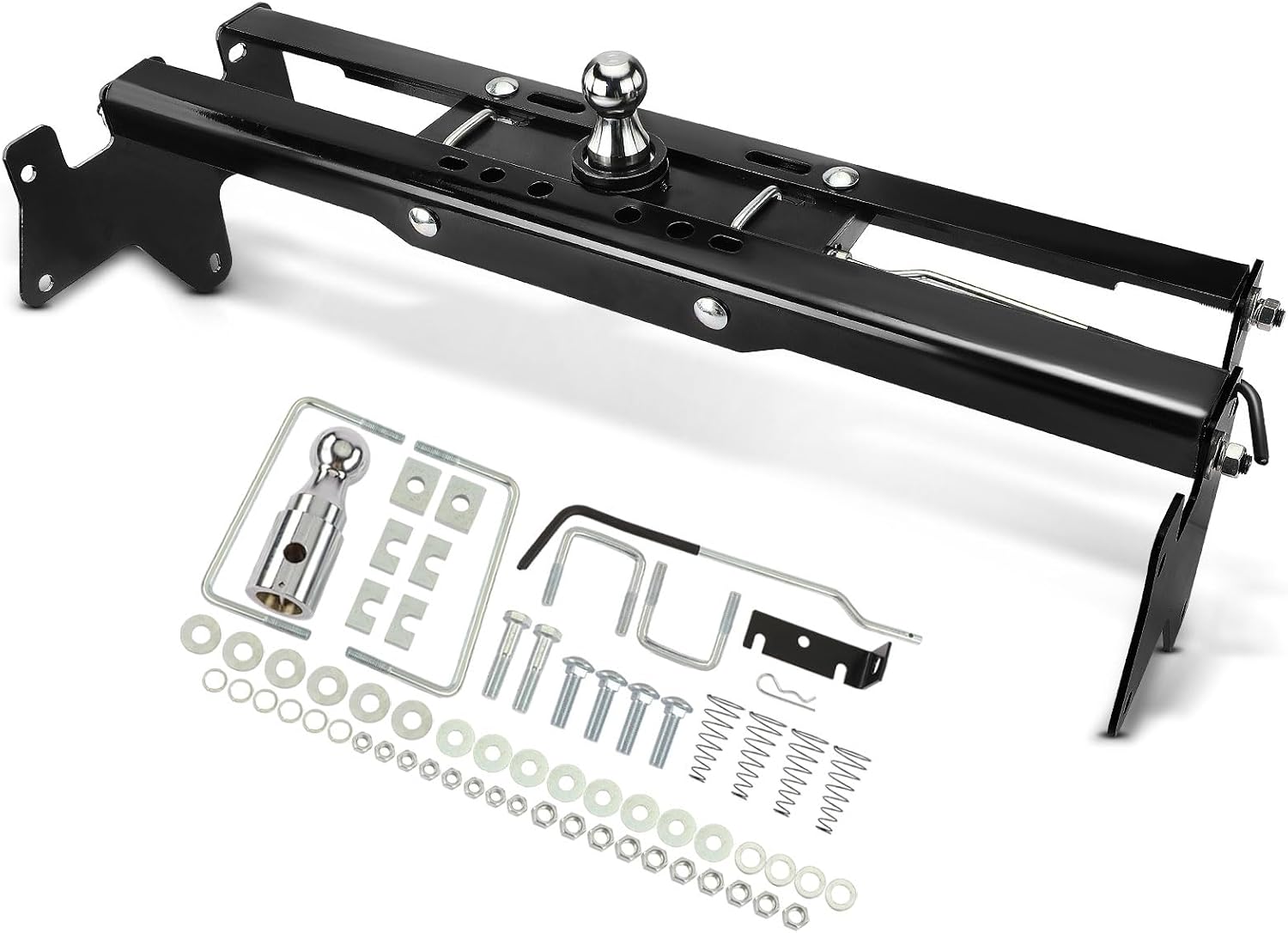
| Ball size | 2-5/16" |
|---|---|
| Tongue weight | 7,500 lbs |
| Gross towing weight | 30,000 lbs |
| Fitment | Selected Chevrolet Silverado/GMC Sierra 2500/3500 model years and engines |
This A-Premium gooseneck hitch is built to handle heavy towing: the removable 2-5/16" ball and reinforced hitch assembly are rated for a 30,000 lb gross trailer weight and 7,500 lb tongue weight, making it suitable for large gooseneck trailers and frequent tow cycles. It mounts under the truck bed and stores the ball when not in use, keeping the bed clear and simplifying hookup. The kit includes installation hardware sized for late 1990s and 2000s Silverado and Sierra 2500/3500 models in the listed engine configurations, which helps streamline installation for those trucks. Practical benefits include high capacity for heavy loads, a stowable ball for daily utility, and a factory-style mount location that preserves bed layout. Limitations to note are that fitment is specific to the stated Chevrolet and GMC model years and engine combos, so confirmation of vehicle compatibility is essential, and professional installation may be required for proper torqueing and safety when towing near the upper limits of the rating.
Best for: Buyers who need a heavy-duty, factory-style gooseneck solution for frequent towing of very large trailers on the specified Silverado/Sierra trucks and prioritize maximum rated capacities and a stowable ball.
Less Ideal for: Do not choose this if you need a hitch for other vehicle makes or model years outside the specified fitment or if you only tow light loads where a simpler receiver hitch would suffice.
- High gross towing rating of 30,000 lb suitable for heavy gooseneck trailers
- Generous 7,500 lb tongue weight capacity for heavy cargo loads
- Removable 2-5/16" ball that stores in the hitch to keep the bed usable
- Includes installation kit and hardware tailored to the listed Silverado/Sierra fitment
- Compatibility limited to the specific Chevrolet and GMC model years and engine configurations listed
- May require professional installation to ensure safe towing at high capacities
Verdict: The best heavy-duty trailer hitch for towing heavier trailers or frequent tow cycles, prioritizing maximum rated tongue weight and gross towing capacity with reinforced components.
5. CURT Class 4 Trailer Hitch 2-Inch Receiver (Model 14108)
Best Class IV Trailer Hitch

| Receiver tube | 2-inch x 2-inch |
|---|---|
| Gross trailer weight | 10,000 lbs |
| Tongue weight | 1,000 lbs |
| Weight distribution capacity | 12,000 lbs |
This CURT Class 4 trailer hitch is a custom-fit receiver for select Chevrolet Silverado 2500 HD and 3500 model years, engineered to give a factory-quality mounting point for towing. It installs in place of the bumper or on the frame using the included hardware and presents a standard 2-inch by 2-inch receiver that accepts common accessories like ball mounts, cargo carriers and hitch-mounted racks. Notable features include a 10,000 lb gross trailer weight rating with a 1,000 lb tongue weight rating and compatibility with weight-distributing systems up to 12,000 lb GTW, which makes it suitable for large campers, boats and heavy-duty utility trailers. CURT’s co-cured liquid A-coat plus powder coat finish improves corrosion resistance for long-term use on road salt and in wet climates. The hitch is made from carbon steel with precise welding for strength, and each design is tested to SAE J684 standards. The main limitations are vehicle-specific fitment—buyers must confirm this model fits their exact year and configuration—and the hitch’s finish may show normal wear over many seasons despite the dual coating.
Best for: Buyers who need a heavy-duty, vehicle-specific Class 4 hitch for towing large trailers from a 2001–2006 Silverado 2500 HD or 3500 and prioritize higher rated towing capacity with standard accessory compatibility.
Less Ideal for: Drivers who do not tow heavy loads often or who need a universal hitch that fits multiple vehicle models should consider lighter classes or multi-vehicle hitch options.
- High towing capacity with 10,000 lb GTW and 1,000 lb TW ratings
- Accepts standard 2-inch receiver accessories for broad compatibility
- Vehicle-specific design for a precise fit and straightforward installation
- Durable dual-coat finish for improved resistance to rust, chipping and UV damage
- Fitment limited to specific Silverado/Sierra 2500 and 3500 model years so verification is required
Verdict: The best Class IV trailer hitch for buyers who need the common heavy-duty class rating that supports higher towing capacities while remaining compatible with standard receiver accessories.
Choosing the Right 2001-2006 Chevrolet Silverado 2500 HD Trailer Hitch: Key Factors to Consider
Gross Trailer Weight Capacity
Gross trailer weight capacity defines the maximum loaded trailer weight a hitch can safely tow. For the 2001-2006 Silverado 2500 HD, matching the hitch rating to the truck's towing limits is essential to avoid overloading the hitch or the vehicle. Choose a hitch with a capacity equal to or greater than the maximum trailer weight you plan to pull, including cargo, fuel, and passengers. Underrated hitches increase risk of structural failure, reduced braking performance, and loss of control.
When planning for occasional heavier loads, consider a margin of safety rather than picking the absolute minimum rating. Also keep in mind that trailer tongue weight is a separate measure; the hitch must support downward force at the coupler as well as horizontal towing loads.
Tongue Weight and Load Distribution
Tongue weight is the downward force the trailer exerts on the hitch and directly affects axle load and steering feel. For a heavy-duty truck like the Silverado 2500 HD, selecting a hitch with an appropriate tongue weight rating prevents sagging, improves braking stability, and maintains proper headlight aim.
If you tow varied loads or heavy trailers, consider hitches compatible with load-distributing systems. Those systems transfer tongue weight across the trailer and tow vehicle axles, improving stability and reducing strain on the hitch and rear suspension. Verify the hitch's tongue weight rating and whether it supports a load-distributing hitch head if your towing needs require it.
Receiver Size and Accessory Compatibility
Receiver size determines which ball mounts, cargo carriers, and other accessories fit the hitch. The 2 inch hitch receiver is common, but heavier trailers often require a 2.5 inch or 3 inch receiver for higher capacities. Choose a receiver size that matches the accessories you plan to use while also meeting the weight demands of your trailers.
Consider whether you want a single receiver or a multi-receiver design for versatility. Also check pin hole diameter and clearance for locking devices. Match the receiver class to accessory weight ratings to avoid accessory failures during use.
Mounting Method and Vehicle Fitment
Hitches mount to the frame using bolts, plates, or a combination of both. For the 2001-2006 Silverado 2500 HD, a hitch that uses existing frame holes or requires minimal drilling will simplify installation and preserve structural integrity. Bolt-on hitches that line up with factory holes generally offer easier installs and allow for future removal without weakening the frame.
Confirm fitment specifics for the Silverado 2500 HD cab and bed configuration because differences in bumper design, factory tow packages, or aftermarket bumpers can affect clearance and mounting. Good fitment reduces rattles and ensures the hitch sits level for predictable towing behavior.
Corrosion Protection and Finish
Exposure to road salt, moisture, and grime can quickly degrade unprotected steel. A durable finish such as multi-stage powder coat or e-coating helps prevent rust and extends the life of the hitch on a truck that may see winter or coastal driving. Look for plated hardware and treated welds as part of the corrosion resistance package.
Long-term protection also lowers maintenance needs and preserves appearance. For trucks expected to see heavy exposure, prioritize hitches with thicker coatings and documented resistance to environmental wear.
Installation Complexity and Hardware
Installation difficulty ranges from simple bolt-on jobs to units requiring trimming or drilling. Many Silverado 2500 HD owners install hitches themselves, so clear instructions, included hardware, and pre-threaded holes can save significant time. Consider whether the hitch requires support tools, lifting equipment, or a second person to position during installation.
Also factor in whether the hitch includes torque specifications and hardware grade. Higher-grade bolts and lock washers reduce the likelihood of loosening. If professional installation is planned, knowing typical labor scope helps estimate installation cost and downtime.
Understanding Receiver Classes and What They Mean
Receiver classes define typical capacity ranges and common receiver sizes. For a 2001-2006 Chevrolet Silverado 2500 HD used for heavy towing, class III and above are often relevant because they support higher gross trailer weights and heavier tongue weights compared with passenger car hitches.
Beyond nominal class labels, review the actual weight ratings stamped on the hitch and match them to your towing plan. A hitch labeled class III with conservative ratings may be a different fit than a heavy-duty class III rated for higher tongue weight. Always prioritize the stamped ratings over class name alone.
- Class III: Common for midsize and heavy-duty towing; often uses a 2 inch receiver.
- Higher classes may use larger receivers and provide greater capacity for heavy trailers.
- Verify stamped gross trailer weight and tongue weight numbers rather than relying solely on class.
Bolt-On Vs. Weld-On Hitches: Pros and Cons
Bolt-on hitches attach using existing or drilled frame holes and are generally easier to install and remove. They preserve the frame and are preferred for owners who want the option to uninstall the hitch later. Bolt-on designs for the 2001-2006 Silverado 2500 HD often align with factory mounting points for a secure fit.
Weld-on hitches can offer a lower profile and very strong attachment but require professional welding and are essentially permanent. For many owners of a Silverado 2500 HD, bolt-on options offer sufficient strength without the permanence and added labor of welding.
- Bolt-On: Easier installation, reversible, suitable for many towing needs.
- Weld-On: Extremely secure but requires welding work and is permanent.
Installation Tips for the 2001-2006 Silverado 2500 HD
Prepare the truck by raising it safely with jack stands and clearing the rear bumper area of underbody panels or spare tire obstructions. Keep the factory mounting points and frame rails clean and free of rust so the hitch sits flush.
Follow torque specifications for grade-rated hardware and double-check alignment before final tightening. If the hitch requires drilling, mark holes precisely and protect surrounding surfaces from metal shavings. For owners installing at home, having an assistant to hold the hitch while aligning bolts can significantly simplify the process.
- Gather necessary tools: torque wrench, sockets, penetrating oil, and safety stands.
- Test-fit accessories like ball mounts to confirm clearance with the bumper and spare tire.
Corrosion Prevention and Maintenance Best Practices
Regularly inspect the hitch for signs of corrosion and touch up chips in the finish to prevent rust spread. Clean mounting surfaces and hardware at least twice a year and apply anti-seize to threads during reassembly if you remove the hitch for seasonal use.
If you frequently drive in salted conditions, consider additional rustproofing treatments for the hitch and bolts. Lubricate moving components such as pivoting ball mounts and check that safety chain loops remain tight and free of significant wear.
- Wash the hitch area after winter or coastal trips to remove salt.
- Repaint or recoat small scratched areas promptly to avoid corrosion.
Accessory Compatibility and Planning Your Towing Setup
Decide in advance what accessories you will use with the hitch, such as ball mounts, hitch-mounted cargo carriers, or weight-distributing heads. Match accessory ratings to the hitch's stamped capacities to avoid weak links in the towing chain.
Consider whether you need additional wiring, brake controllers, or sway control equipment. Planning accessory needs before selecting a hitch helps ensure the receiver size and mounting height provide the clearance and compatibility you require for safe operation.
- Confirm ball mount drop or rise needed to level trailer.
- Check for electrical and brake control routing when fitting heavier trailers.
How We Chose the Best 2001-2006 Chevrolet Silverado 2500 HD Trailer Hitch
We focused on practical, vehicle-specific criteria for the 2001-2006 Chevrolet Silverado 2500 HD and selected hitches that meet real-world towing demands. Key evaluation points included load capacity and tongue weight limits to ensure each hitch can handle typical towing loads for this truck. We examined mounting method and bolt pattern compatibility to ensure reliable frame attachment and straightforward fitment to the Silverado 2500 HD chassis. Corrosion resistance and finish quality were considered to predict service life under road salt and wet conditions. Ease of installation and clear hardware/instructions were weighed because many owners choose to install hitches themselves or want accurate shop estimates. We also checked receiver size and accessory compatibility so the hitch integrates with common towing equipment.Excluded from consideration were hitches that required welding or frame modifications, products with unclear fitment claims for the 2001-2006 Silverado 2500 HD, and any components intended for light-duty trucks only. Our selections favored hitches that balance strength, corrosion protection, and installation practicality for this specific truck.
Our full evaluation process is outlined in our review methodology.
FAQ
Can I install a trailer hitch on my 2001-2006 Silverado 2500 HD myself?
Often you can install a bolt-on trailer hitch yourself if you have basic tools, a torque wrench, and a safe means of supporting the truck. Some installs require a second person to hold the hitch while aligning bolts. If drilling or welding is needed, professional installation is recommended.
What receiver size should I choose for towing with a Silverado 2500 HD?
Choose the receiver size based on the accessories and weight you plan to use. A 2 inch receiver is common for many applications, but heavier trailers may require larger receivers with higher capacity. Match the receiver to the accessory ratings and the hitch's stamped weight limits.
How do I know the hitch will fit my Silverado 2500 HD frame?
Check fitment notes that reference the 2001-2006 Chevrolet Silverado 2500 HD and confirm the hitch mounts to the same frame points used by the truck. Look for hitches that specify bolt-on installation or minimal drilling for this model year range to ensure a secure fit.
Do I need a weight distribution hitch for towing with this truck?
It depends on the trailer weight and tongue weight. For heavier trailers that approach the truck's towing limits, a weight-distribution setup can improve stability and reduce rear sag. For lighter loads, a standard ball mount may be sufficient.
How often should I inspect and maintain my trailer hitch?
Inspect the hitch at least twice a year and before long towing trips. Check for loose bolts, corrosion, and any deformation. Clean and touch up the finish as needed and verify hardware torque after initial use following installation.
Will adding a hitch affect my truck's warranty or frame integrity?
Bolt-on hitches that use factory attachment points typically do not compromise frame integrity when installed correctly. However, welding or improper drilling can affect the frame and may have warranty implications. Follow manufacturer and vehicle guidance to avoid issues.
Final Verdict
Prioritize a hitch whose stamped gross trailer weight and tongue weight ratings meet or exceed the loads you expect to tow with the 2001-2006 Chevrolet Silverado 2500 HD. Balance capacity with receiver size and consider whether you need load distribution for heavier trailers. Also weigh installation complexity and corrosion protection to match how you use the truck.Choosing a hitch that fits the Silverado's frame, offers the right ratings, and includes durable hardware will provide dependable towing performance. With those priorities in mind, you can select a hitch that delivers safety and longevity for routine towing duties.
