

Note: This article contains affiliate links. If you click on these links and make a purchase, I may earn a small commission at no extra cost to you. This helps support my research and content. Read my full affiliate disclosure here.
If you plan to tow a small trailer, mount a bike rack, or add a cargo carrier on a 2005-2009 Subaru Outback, the right tow hitch receiver makes all the difference for safety and convenience. Choosing a receiver that fits the Outback chassis, meets your towing needs, and installs cleanly prevents common headaches such as poor ground clearance, excessive sway, or overloaded wiring. This guide shortlists the top-compatible tow hitch receivers for the 2005-2009 Outback and explains the practical tradeoffs you should weigh.Below you will find the best-fit options selected for this generation of Outback, plus clear buying factors and installation considerations to help you pick the right receiver for your towing plans.
Looking for other parts? See all Subaru Outback parts & accessories.
Top Picks at a Glance
| Best Overall Tow Hitch Receiver A top-performing receiver balancing fit, strength, and finish | CURT Class 2 Trailer Hitch Receiver 12284, 1-1/4-Inch for Select Subaru Legacy and Outback |  |
| Best Budget Tow Hitch Receiver An affordable, no-frills receiver that covers basic towing needs | Gelacie Class 2 Trailer Tow Hitch Receiver, 1.25" Receiver, Vehicle-Specific Fit for 2005–2009 Subaru Outback/Legacy |  |
| Best 1.25-Inch Tow Hitch Receiver Smaller 1.25" receiver for light-duty towing and racks | ALMULOO Trailer Tow Hitch Receiver 1.25-Inch Class 2 for 2005–2009 Subaru Outback/Legacy |  |
| Best Vehicle-Specific Tow Hitch Receiver Custom-fit hitch engineered for an exact OE-style fitment | CURT Class 2 Trailer Hitch 1 1/4" Receiver with 4-Way Wiring Kit for 2005–2009 Outback Wagon |  |
| Best Complete Tow Hitch Kit Receiver bundled with wiring, hardware, or ball mount for a full setup | CURT 12270 Class 2 Trailer Hitch, 1-1/4-Inch Receiver |  |
1. CURT Class 2 Trailer Hitch Receiver 12284, 1-1/4-Inch for Select Subaru Legacy and Outback
Best Overall Tow Hitch Receiver

| Pull Force | 3500 pounds |
|---|---|
| Compatible with Vehicle Type | Passenger Car |
| Automotive Fit Type | Vehicle Specific Fit |
| Material Type | Carbon Steel |
| Finish Type | Gloss, Powder-Coated |
This CURT Class 2 trailer hitch is a bolt-on, vehicle-specific receiver made to fit select Subaru Legacy and Outback models from the specified application years. It installs using the factory mounting points and provides a 1-1/4-inch receiver tube for standard ball mounts, bike racks, or cargo carriers. Constructed from carbon steel with robotic welding and a liquid A-coat plus powder-coat finish, it is built for durability and corrosion resistance in everyday use. The hitch is rated for 3,500 lb gross trailer weight and 300 lb tongue weight, making it suitable for small utility trailers, lightweight boat trailers, pop-up campers, and most hitch-mounted accessories. Because it is a custom-fit design, installation is straightforward for DIYers with basic tools and the result sits cleanly under the bumper. Limitations include the smaller 1-1/4-inch receiver, which restricts heavier towing accessories and larger ball mounts compared with 2-inch class hitches, so it is best for light-duty towing and cargo tasks rather than heavy trailers.
Best for: DIY-minded Subaru owners who need a proven, vehicle-specific receiver for light towing, bike racks, or cargo carriers and want an easy bolt-on installation with solid corrosion protection.
Less Ideal for: Drivers who regularly tow heavy trailers or require a 2-inch receiver for larger hitch accessories should choose a higher-class or 2-inch receiver hitch instead.
- Vehicle-specific design for a clean, bolt-on fit to select Subaru Legacy and Outback
- 3,500 lb gross trailer weight and 300 lb tongue weight suitable for most light-duty towing
- Durable carbon steel construction with liquid A-coat plus powder-coat finish for corrosion resistance
- 1-1/4-inch receiver accepts common ball mounts, bike racks, and cargo carriers
- Tested to SAE J684 safety standard and precisely welded for consistent fit
- 1-1/4-inch receiver limits compatibility with larger towing accessories and heavier trailers
Verdict: The go-to receiver for most DIYers who want a proven balance of fit, towing capacity, corrosion protection, and easy bolt-on installation.
2. Gelacie Class 2 Trailer Tow Hitch Receiver, 1.25" Receiver, Vehicle-Specific Fit for 2005–2009 Subaru Outback/Legacy
Best Budget Tow Hitch Receiver
| Compatible vehicle years/models | 2005–2009 Subaru Outback and Legacy sedans/wagons |
|---|---|
| Receiver size | 1.25 inches |
| Maximum towing capacity | 3500 pounds |
| Material | Alloy Steel |
| Finish | Powder Coated |
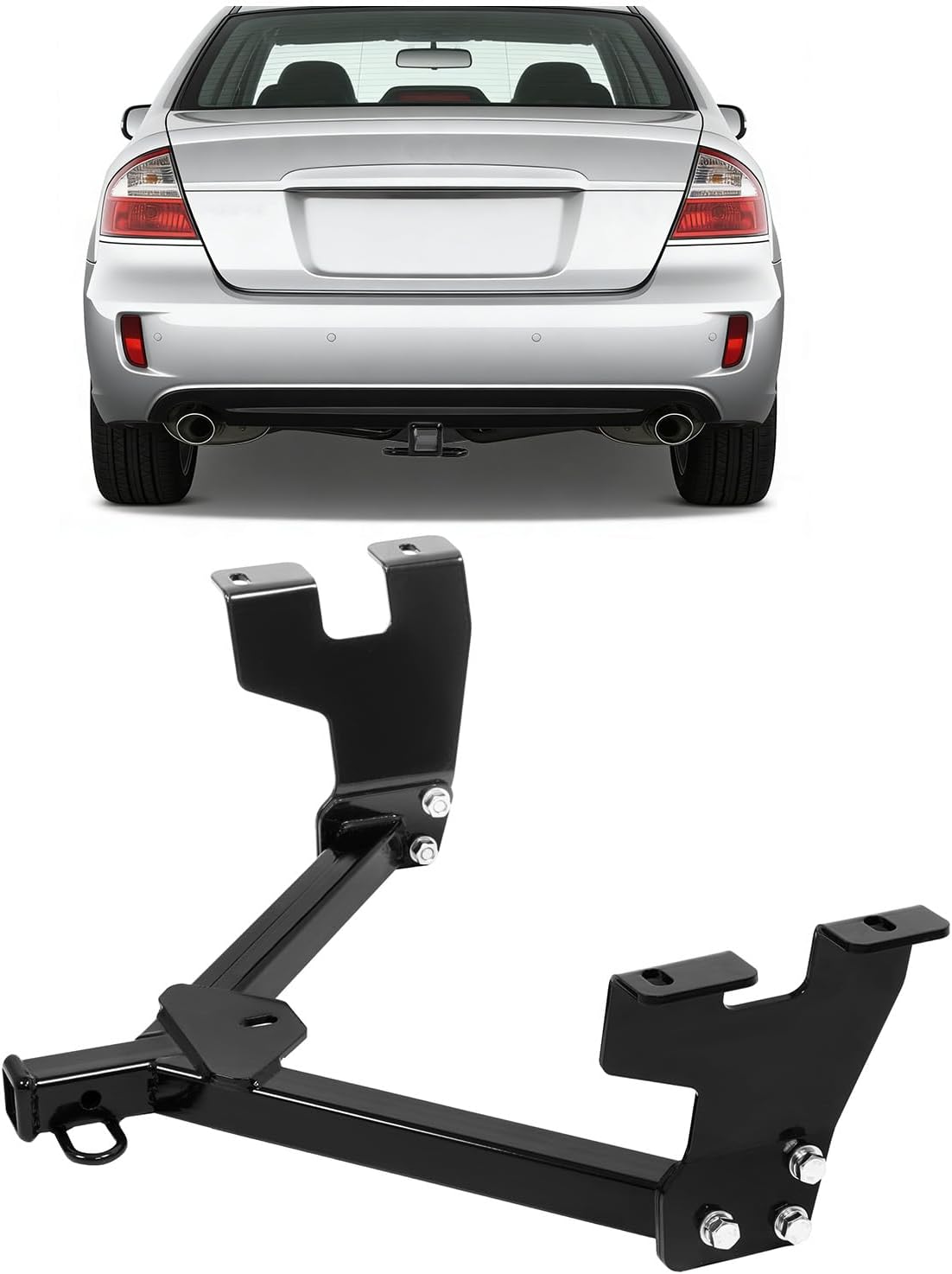
This Gelacie Class 2 trailer hitch restores towing and cargo-carrying capability to 2005–2009 Subaru Outback and Legacy sedans and wagons with a bolt-on installation. It provides a 1.25-inch receiver sized for common small trailers and hitch-mounted accessories and is rated at 3,500 pounds gross towing weight and 300 pounds tongue weight, so it covers light towing and most bike or cargo racks. Built from alloy steel with a powder-coated finish, the hitch is designed to resist corrosion and withstand regular use. The package includes the receiver and an assembly manual and the design uses existing mounting points so no drilling should be required. Expect an economical, no-frills solution that gets a rack or small trailer hooked up quickly; buyers seeking heavier towing capacity, integrated wiring, or a removable/hidden receiver will need a different option. Fitment is vehicle-specific so the hitch aligns with the listed Subaru frames but professional installation is recommended if you are not comfortable with underbody work.
Best for: Buyers who want an affordable, straightforward bolt-on hitch to regain towing or rack capability on a 2005–2009 Subaru without extra features or complexity.
Less Ideal for: Drivers who need higher towing capacity, a hidden or removable receiver, or integrated wiring and electronics should choose a more feature-rich hitch.
- Vehicle-specific bolt-on design for 2005–2009 Subaru Outback and Legacy simplifies installation
- 1.25-inch receiver compatible with common small trailers and hitch-mounted racks
- 3,500 lb gross towing and 300 lb tongue rating suitable for light towing and heavy racks
- Alloy steel construction with powder-coated finish for corrosion resistance
- Designed for light-duty towing only and not suitable for larger trailers or heavy towing tasks
Verdict: Choose this economical receiver when you need a straightforward bolt-on hitch that restores towing or rack capability without extra features.
3. ALMULOO Trailer Tow Hitch Receiver 1.25-Inch Class 2 for 2005–2009 Subaru Outback/Legacy
Best 1.25-Inch Tow Hitch Receiver

| Compatible vehicles | 2005–2009 Subaru Outback and Legacy sedans and wagons |
|---|---|
| Receiver size | 1.25 inches |
| Class rating | Class 2 |
| Maximum towing capacity | 3500 pounds |
| Material | Alloy Steel |
This ALMULOO trailer hitch is a vehicle-specific 1.25-inch Class 2 receiver built for 2005–2009 Subaru Outback and Legacy sedans and wagons. It bolts to the car and provides a compact mounting point for bike racks, small cargo carriers, and light trailers. Constructed from alloy steel with a professional powder-coat, the receiver is designed to resist rust and deliver long-term mechanical strength. The listed 3,500 lb gross trailer weight and 300 lb tongue weight make it suitable for light-duty towing tasks while keeping the hitch profile smaller and less obtrusive than a 2-inch receiver. Installation requires following the included manual and basic hardware; professional installation is recommended if you are not comfortable under the car. The main limitations are the smaller 1.25-inch opening and Class 2 rating, which restrict heavier trailers or high-capacity towing accessories, and the product ships as a single receiver without additional wiring or mounting accessories. For owners who want a low-profile, factory-style receiver for occasional towing or racks, this is a practical option.
Best for: Buyers who need a low-profile, vehicle-tailored hitch for occasional light towing, bike racks, or cargo carriers and who prioritize a smaller receiver over maximum towing capacity.
Less Ideal for: Do not choose this hitch if you plan regular heavy towing, need a 2-inch receiver for larger accessories, or require integrated wiring and electrical towing support.
- Vehicle-specific fit for 2005–2009 Subaru Outback and Legacy sedans and wagons
- Durable alloy steel construction with powder-coated finish for corrosion resistance
- Compact 1.25-inch receiver suited to bike racks and light trailers
- Rated for up to 3,500 lb gross trailer weight and 300 lb tongue weight
- Does not include wiring harnesses or additional mounting hardware
- 1.25-inch opening and Class 2 rating limit heavier towing and larger accessories
Verdict: Pick this 1-1/4" receiver when your towing or rack needs are light-duty and you prefer a more compact, lighter hitch option.
4. CURT Class 2 Trailer Hitch 1 1/4" Receiver with 4-Way Wiring Kit for 2005–2009 Outback Wagon
Best Vehicle-Specific Tow Hitch Receiver
| Receiver size | 1 1/4" |
|---|---|
| Gross trailer weight | 3,500 lb |
| Tongue weight | 300 lb |
| Included components | (1) Trailer Hitch, (1) Wiring Kit |
| Material | Carbon Steel |
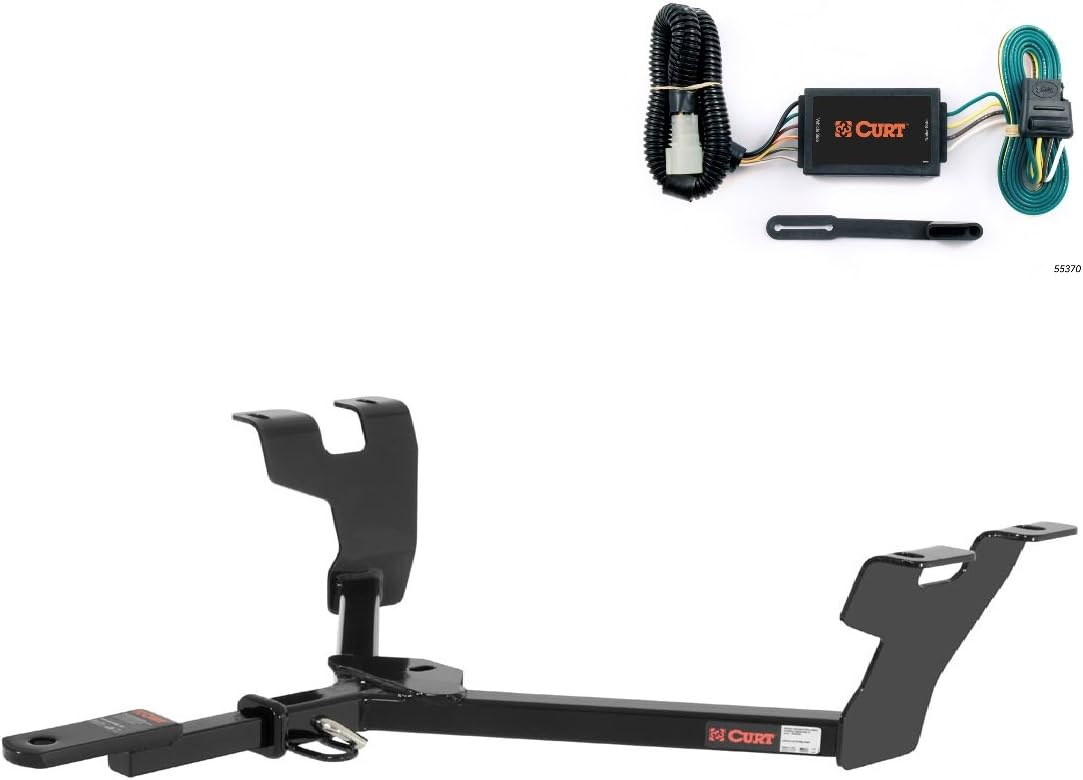
This CURT Class 2 trailer hitch is a direct-fit receiver engineered specifically for 2005–2009 Outback wagons and includes a custom 4-way flat wiring harness. It installs to factory mounting points without drilling for most installations, giving a clean, factory-style fit and simplified DIY or shop installation. The hitch offers a 1 1/4" receiver opening and supports up to 3,500 lb gross trailer weight with 300 lb tongue weight, so it handles small campers, utility trailers, bike racks, and cargo carriers. The plug-and-play wiring kit ties into the vehicle electrical system to power trailer lights and includes a rubber dust cover to protect the connector when not in use. Made from carbon steel with a corrosion-resistant finish and precision welding, it resists rust and chipping during regular use. Buyers should note this is a Class 2, light-duty solution intended for the vehicle specified and not suited for heavier commercial towing or loads above the listed capacities.
Best for: Buyers who want a straightforward, factory-style receiver for a 2005–2009 Outback wagon to enable light towing or rear-mounted accessories with minimal modification and relatively simple installation.
Less Ideal for: Drivers who need higher towing capacity, commercial towing capability, or a receiver for vehicles other than the specified Outback wagon should look at heavier-duty or different-fitment options.
- Vehicle-specific design that mounts to factory points for a clean, OEM-style fit
- Includes custom 4-way flat wiring harness for plug-and-play trailer light connection
- Supports up to 3,500 lb gross trailer weight and 300 lb tongue weight for common light towing
- Carbon steel construction with corrosion-resistant finish and precision welding for durability
- Class 2 capacity limits it to light-duty towing and accessory use, not heavy trailers
Verdict: Opt for a vehicle-specific receiver when you want factory-style fit, simplified installation, and minimized bumper or trim modifications.
5. CURT 12270 Class 2 Trailer Hitch, 1-1/4-Inch Receiver
Best Complete Tow Hitch Kit

| Receiver size | 1-1/4 inches |
|---|---|
| Gross trailer weight | 3,500 lbs |
| Tongue weight | 350 lbs |
| Material | Carbon Steel |
| Finish | Liquid A-coat and black powder coat |
The CURT 12270 is a vehicle-specific Class 2 receiver designed to provide a clean, factory-style tow option for select Subaru Outback models from the mid-2000s. It installs as a bolt-on custom hitch and offers a 1-1/4-inch receiver for ball mounts, bike racks, or cargo carriers. Made from welded carbon steel with a dual-coat finish, it resists rust and road wear for long service life. The hitch is rated for 3,500 lb gross trailer weight and 350 lb tongue weight, which covers small utility trailers, light boat trailers, and common hitch-mounted accessories. Its fitment and testing to SAE J684 give confidence in everyday towing and hauling tasks. The main limitation for buyers seeking a complete tow kit is that this listing is just the hitch; it does not include wiring, a ball mount, or other towing hardware, so you will need to add those items to be fully towing-ready. Installation typically requires basic shop tools or a professional install if you prefer a dealer-quality fit.
Best for: Buyers who want a vehicle-matched, factory-style hitch for a mid-2000s Subaru Outback and plan to supply or add towing hardware separately.
Less Ideal for: Shoppers seeking an out-of-the-box towing solution that includes wiring, ball mount, and hardware should look for a full kit instead of this hitch-only offering.
- Custom-fit design for select Subaru Legacy and Outback models for clean installation
- Rated 3,500 lb GTW and 350 lb TW suitable for light towing and most hitch-mounted accessories
- Durable welded carbon steel construction with a dual-coat finish for corrosion resistance
- 1-1/4-inch receiver accepts standard ball mounts and many hitch accessories
- Product is the hitch only and does not include wiring, ball mount, or installation hardware
Verdict: Buy the complete kit if you want a one-stop solution that includes the hitch plus wiring harness, hardware, or a ball mount so the vehicle is towing-ready.
Choosing the Right 2005-2009 Subaru Outback Tow Hitch Receiver: Key Factors to Consider
Towing Capacity and Tongue Weight
Match the receiver s rated towing capacity and tongue weight to the loads you expect to haul. The Outback has limits on gross combined weight and tongue load, so choosing a receiver with adequate ratings helps avoid overloading the vehicle and preserves handling.
Look at both the maximum trailer weight the receiver is rated for and the tongue weight rating. Some receivers are conservative and pair well with lighter trailers, while others are rated to support heavier class accessories like cargo boxes or bike racks. Selecting a receiver whose tongue weight exceeds the expected load gives a safety margin and reduces strain on the mounting points.
Mounting Method and Fitment
Pay attention to whether the hitch is a bolt-on design, requires drilling, or uses factory mounting points. For 2005-2009 Subaru Outback owners, bolt-on receivers that align with existing holes or frame tabs typically reduce install time and the risk of incorrect alignment.
A receiver that needs significant modification can increase labor and may affect warranty coverage or corrosion protection. Confirm how the hitch interfaces with the Outback s underside, whether trim or bumper removal is required, and if additional brackets or reinforcements are included for a secure fit.
Hitch Class and Receiver Size
Receiver size and hitch class determine what accessories and trailers you can safely attach. Many Outback owners choose a 1.25-inch receiver for lighter loads or a 2-inch receiver if they need more versatility for bike racks and small trailers.
Consider the typical accessories you will use and whether a higher-class receiver is warranted. Class ratings reflect both the receiver s construction and its mounting; ensure the chosen hitch s class aligns with the vehicle s towing limits to prevent overloading the vehicle s frame or drivetrain.
Corrosion Resistance and Coating
Hitches operate under heavy exposure to road grime, salt, and moisture, so coatings and materials matter. Powder-coating, galvanization, and sealed welds all extend service life and reduce the chance of rust-related failure or noisy fittings.
For owners in regions with winter salt or frequent wet conditions, prioritize hitches with thicker protective coatings and corrosion-resistant hardware. Durable finish lowers long-term maintenance and keeps mounting hardware easier to remove if you need to replace accessories or service the hitch.
Ground Clearance and Rear Departure Angle
A hitch that hangs too low can reduce ground clearance on the Outback and make the rear more susceptible to scraping when entering driveways or off-pavement surfaces. Consider the receiver s extension from the bumper and any crossmember placement.
Choose a design that maintains as much clearance as possible while still providing the needed receiver height for your trailers or carriers. Some receivers tuck up closer to the frame and use minimal extension to preserve the Outback s approach and departure angles.
Wiring and Electrical Compatibility
Towing often requires trailer lighting and sometimes electric brakes. Assess how the hitch integrates with the vehicle s wiring and whether a separate wiring harness or connector mount is provided. Many receivers include a convenient bracket or mounting point for a trailer connector.
Plan for wiring that preserves the vehicle s connectors and avoids routing that could pinch or abrade wiring near suspension components. If you intend to tow trailers with brakes, ensure electrical and braking compatibility is accounted for in your overall towing setup.
Understanding Receiver Classes and What They Mean For Your Outback
Receiver classes describe both physical receiver size and the load capacities they are intended to handle. For most 2005-2009 Subaru Outback uses such as bike racks, cargo carriers, and small utility trailers, the common choices are 1.25-inch or 2-inch receivers, with associated class ratings that indicate tongue weight and gross trailer weight limits.
Choosing a higher class than you need can offer versatility, but the vehicle s own chassis and suspension limits remain the governing factor. Think in terms of the accessories you plan to use rather than simply opting for the largest receiver available.
- 1.25-inch receivers: often lighter, less obtrusive, suitable for smaller loads and compact accessories
- 2-inch receivers: more versatile for bike racks, cargo carriers, and small trailers; aligns with many aftermarket accessories
- Class ratings: check both tongue weight and gross trailer weight to ensure compatibility with your Outback
Bolt-On Vs. Drilled Installation: Tradeoffs and Expectations
Installation approaches vary between bolt-on hitches that use existing vehicle holes and designs that require drilling or minor trimming. On the 2005-2009 Outback, bolt-on units generally reduce install time and lower the risk of misalignment or unintended damage.
Drilled installations sometimes allow lower-profile routing or stronger attachment points but increase labor and may complicate future removal. If you prefer an easier DIY install, prioritize bolt-on receivers and check that the required hardware and instructions are included.
- Bolt-on: faster, less invasive, typically preferred for clean installs
- Drill-required: may offer alternate mounting geometry but requires care and proper tools
- Professional fitment: consider professional installation for complex mounts or if drilling is required
Maintaining Your Hitch and Preventing Corrosion
Routine inspection and maintenance extend the service life of a tow hitch receiver. Clean the hitch area periodically, remove trapped debris, and touch up any chips in the finish to slow rust formation.
Use corrosion-resistant hardware and replace any fasteners that show significant pitting. Lubricate the hitch pin and movable parts to keep accessories easy to install and remove.
- Wash the hitch area after exposure to road salt
- Inspect welds and fasteners annually
- Apply anti-seize to bolts if frequent removal is expected
Height and Ball Mount Considerations For Proper Trailer Level
Achieving the correct trailer tongue height is important for stable towing. The receiver height relative to the Outback s rear bumper affects which ball mount drop or rise you need. Check the unloaded vehicle height and anticipated trailer tongue drop to choose a compatible ball mount.
Some receivers sit higher or lower depending on crossmember design; account for that when selecting hitch accessories to keep the trailer level and minimize sway.
- Measure vehicle and trailer tongue heights before buying accessories
- Choose a ball mount with the correct drop or rise to level the trailer
- Consider adjustable mounts for multi-trailer use
Mounting Points For Electrical Connectors and Brake Controls
A practical hitch design will include or provide a place to mount trailer wiring connectors and, if needed, a bracket for brake controller wiring. This keeps wiring secure and reduces the chance of connector damage from road debris or snagging.
Plan routing that keeps wiring away from moving suspension parts and hot exhaust components. If you intend to add a brake controller, ensure there is space and a straightforward wiring path from the receiver area to the vehicle s interior.
- Look for a connector mounting bracket on the hitch or included hardware
- Route wiring along chassis paths and secure with proper clips
- Leave slack for suspension movement and articulation
Still looking for the perfect fit?
Select your Subaru Outback configuration to see the most relevant Tow Hitch Receivers recommendations
How We Chose the Best 2005-2009 Subaru Outback Tow Hitch Receiver
We focused on criteria that matter specifically for 2005-2009 Subaru Outback owners and the common towing tasks those vehicles are used for. Our evaluation emphasized structural fit and mounting style, verifying that mounting points and frame access for this model years are supported. We prioritized rated towing capacity and tongue weight so each receiver can safely handle typical loads for an Outback, including small trailers, cargo carriers, and bike racks.Build quality and corrosion resistance were assessed because roadside exposure and salt can quickly degrade hitch hardware on these wagons. Ease of installation was another key filter: we looked for designs that allow bolt-on fits or minimal drilling given the Outback s unibody/frame layout and available attachment points. Compatibility with common hitch sizes and receiver accessories was considered, including whether the design supports a class 3 style load if rated.We excluded receivers that require extensive vehicle modification, custom fabrication, or that lack clear capacity ratings. We also filtered out options intended only for heavy-duty trucks or that exceed the vehicle s gross vehicle weight limits. The final shortlist balances fit, safety ratings, corrosion protection, and real-world installability for the 2005-2009 Subaru Outback.
Our full evaluation process is outlined in our review methodology.
FAQ
Can my 2005-2009 Subaru Outback tow a small camper with a class 3 receiver?
It depends on the vehicle s gross combined weight rating and the camper s weight. A class 3 style receiver may have the physical capacity, but you must ensure the trailer s gross weight and tongue weight are within the Outback s limits before towing.
Is a bolt-on hitch receiver easier to install on this generation of Outback?
Yes, bolt-on receivers that align with factory holes or existing frame tabs are generally easier to install and require less modification. They typically reduce installation time and are better for DIY installers.
Do I need to worry about reduced ground clearance with a trailer hitch on the Outback?
Some hitch designs extend below the bumper and can slightly reduce ground clearance. Choose a receiver that tucks up close to the frame if you frequently travel steep driveways or off-pavement to minimize scraping risk.
Will adding a hitch require changes to the Outback s electrical system?
Towing lights will require a connector and possibly a wiring harness, but the hitch itself does not alter electrical systems. For trailers with brakes, you may need a brake controller and associated wiring routed from the receiver area to the cabin.
How can I protect the hitch from rust and corrosion?
Regular cleaning, touch-up of protective coatings, and using corrosion-resistant hardware help prevent rust. Rinse the hitch after exposure to salt and inspect welds and bolts annually.
Is professional installation recommended for every hitch on the Outback?
Not always. Bolt-on hitches that fit precisely can often be installed by experienced DIYers. If drilling is required or you are uncomfortable with alignment and torque specifications, professional installation reduces risk.
Final Verdict
Focus first on load ratings and fitment when choosing a hitch for the 2005-2009 Subaru Outback. Prioritize a receiver that meets or exceeds your expected tongue weight and towing capacity while matching the vehicle s mounting points to avoid unnecessary modification. Consider corrosion protection and ground clearance as secondary but important factors, and plan wiring and ball-mount choices so the trailer sits level.Balance the tradeoffs between ease of installation and the flexibility of a higher-capacity receiver. With attention to ratings, mounting method, and proper installation, you can select a hitch that safely handles your typical hauling tasks and lasts for years to come.
Explore More:
- Check out all Subaru Outback parts & accessories
- Explore Exterior Accessories
- Browse all Accessories
