

Note: This article contains affiliate links. If you click on these links and make a purchase, I may earn a small commission at no extra cost to you. This helps support my research and content. Read my full affiliate disclosure here.
Driving a 2011-2019 Ford Explorer through snow and ice exposes you to two main risks: loss of traction and reduced steering control. The right snow chains restore grip for acceleration, braking, and cornering, making winter travel safer and more predictable. This guide gathers the top seven snow chains compatible with the 2011-2019 Explorer's common tire sizes and focuses on fitment, installation ease, durability, and legal fit where applicable.Below you will find our shortlisted snow chains that met practical fitment and usability checks, plus clear advice on choosing and fitting chains for this vehicle. Read on to understand the tradeoffs and pick the best winter traction solution for your Explorer.
Looking for other parts? See all Ford Explorer parts & accessories.
Top Picks at a Glance
| Best Overall Snow Chains The top all-around choice balancing traction, fit, and reliability | SCC Auto-Trac Tire Traction Chain, Set of 2 |  |
| Best Premium Snow Chains Higher-end construction, materials, and features for serious winter use | Coco Bird Heavy Duty Self-Tightening Snow Chains for Light Trucks and Pickups (Set of 2) |  |
| Best Heavy-Duty Snow Chains Reinforced chains built for frequent use and rough winter roads | Arbnic Heavy-Duty Manganese Steel Snow Tire Chains (4WD-110) |  |
| Best Studded Snow Chains Chains with studs or carbide traction for icy surface grip | PONYBRO V-Bar Studded Tire Chains, 2-Pack (14–18 inch) |  |
| Best Easy-Install Snow Chains Designed for fast, tool-free installation and minimal roadside fiddling | LoJok Universal Quick-Install Snow Tire Chains (HKN140) |  |
1. SCC Auto-Trac Tire Traction Chain, Set of 2
Best Overall Snow Chains

| Material Type | Alloy Steel |
|---|---|
| Unit Count | 2.0 Count |
| Manufacturer Warranty Description | 1 year |
| Automotive Fit Type | Universal Fit |
| Compatible with Vehicle Type | Tractor |
The SCC Auto-Trac set uses a patented ratcheting tightening system that automatically tensions the chains while driving, so you can install them without moving or jacking the vehicle. Typical use is seasonal: fit the inside cable, attach the two outside self-tighteners, drive slowly to let the ratchets take up slack, and keep speeds under 30 mph. The manganese alloy steel cross members are shorter and lighter than conventional links, which increases gripping points and reduces impact on the road for smoother operation and longer wear. Its self-tightening design removes the need for extra tensioners and makes on-road adjustment straightforward. Limitations include a recommended speed cap and that these are a Class S-style fitment, so clearance should be checked before use on vehicles with very tight wheel wells or aftermarket suspension. Expect solid braking and starting traction in typical snow and ice conditions but follow vehicle clearance and speed guidance for safe use.
Best for: Drivers who want a reliable, easy-to-install chain that balances traction, durability, and straightforward fitment for routine winter driving on an Explorer from the specified years.
Less Ideal for: Drivers seeking chains for sustained high-speed travel or for vehicles with extreme aftermarket lift or very limited wheel-well clearance should consider alternatives designed for those conditions.
- Self-tightening ratcheting system for fast installation without jacking the vehicle
- Manganese alloy steel cross members for increased grip and improved wear
- No additional chain tensioners required, simplifying setup and removal
- Designed to meet Class S clearance for SUVs and many passenger vehicles
- Maximum recommended speed of 30 mph limits highway use
- Specified as universal/tractor-compatible but requires clearance check on some vehicles
Verdict: The best all-around snow chains that balance reliable traction, durable construction, and straightforward fitment for most drivers who want dependable winter performance.
2. Coco Bird Heavy Duty Self-Tightening Snow Chains for Light Trucks and Pickups (Set of 2)
Best Premium Snow Chains

| Compatible with Vehicle Type | Light Truck, Pickup Truck |
|---|---|
| Automotive Fit Type | Universal Fit |
| Material Type | Carbon Steel |
| Unit Count | 2.0 Count |
These Coco Bird chains are built for heavy winter use on light trucks and pickups and focus on durability and easy deployment. The carbon steel diamond-pattern cross chains increase bite on ice and packed snow while the self-tightening mechanism keeps tension as you drive so you do not need repeated stops to retighten. Installation is straightforward and compact for storage, and the kit includes a housing, gloves, and manual so you can fit them without removing the tire or using a jack. They are intended for moderate speeds when fitted and are best used for emergency winter travel and short stretches on snowy or icy roads rather than continuous highway use. The robust materials and automatic tensioning favor longevity and consistent traction, but the unit weight and heavier build mean they are bulkier to handle and store than minimalist cable-style options. Follow the included instructions and test-fit before needing them on the road.
Best for: Buyers who prioritize long-term durability and maximum traction for occasional winter emergencies on a 2011–2019 Ford Explorer and are willing to invest in a heavier, premium chain system for confidence in severe conditions.
Less Ideal for: Drivers seeking a lightweight, compact solution for infrequent light snow or those who require chains for continuous high-speed highway use should consider other designs.
- Self-tightening design maintains proper tension while driving without repeated manual adjustments
- Diamond-pattern cross chains offer improved traction on ice and packed snow
- Includes installation kit with housing and gloves for easier fitment and storage
- Heavy-duty carbon steel construction built for durability in severe winter conditions
- Heavier, bulkier kit that is less convenient to handle and store than lighter cable-style alternatives
Verdict: The best premium snow chains for buyers who want top-tier materials, superior durability, and enhanced traction performance and are willing to pay more for longevity and confidence in severe conditions.
3. Arbnic Heavy-Duty Manganese Steel Snow Tire Chains (4WD-110)
Best Heavy-Duty Snow Chains

| Material Type | Alloy Steel |
|---|---|
| Unit Count | 4 Count |
| Compatible with Vehicle Type | Truck, Pickup Truck, SUV |
| Manufacturer Warranty Description | 90 days from date of purchase |
These Arbnic chains are built for heavy use and aggressive winter conditions. The 4.5mm manganese steel links and high-temperature carburizing treatment give the kit solid wear resistance and corrosion protection so the chains can handle repeated use on mixed surfaces. Installation is tool-free and designed for quick mounting, which helps when fitting them roadside; the kit includes S-hook adjustments and a compact storage case for trunk carry. On a 2011–2019 Ford Explorer they should be installed on the driven wheels and used at reduced speeds as recommended to avoid damage. Expect noticeably better grip on packed snow and icy stretches, and acceptable performance on muddy or slushy roads, but the thickness and weight mean they are heavier to handle and can be abrasive on bare pavement so they should be removed when roads clear. The product is vehicle-specific in fit guidance, so confirm the 4WD-110 size matches your Explorer tire size before buying.
Best for: Drivers who need rugged, long-lasting traction hardware for frequent winter use and mixed road surfaces on a 2011–2019 Ford Explorer and prioritize durability and reliable grip over lightweight convenience.
Less Ideal for: Drivers who rarely encounter snow or who will only travel short, cleared roads where a lighter traction aid or winter tires would be more convenient.
- Thick 4.5mm manganese steel links offer high wear resistance for frequent heavy use.
- High-temperature carburizing treatment improves strength and corrosion resistance.
- Tool-free quick-mount design makes roadside installation faster and simpler.
- Includes S-hook adjustments and compact storage case for tidy transport and fit tuning.
- Heavier and more abrasive on clear pavement, so chains must be removed promptly when roads improve.
Verdict: The best heavy-duty snow chains for users who need rugged, long-lasting traction hardware that handles frequent use, mixed road surfaces, and tougher winter driving without premature wear.
4. PONYBRO V-Bar Studded Tire Chains, 2-Pack (14–18 inch)
Best Studded Snow Chains

| Compatible wheel diameter | 14–18 inch |
|---|---|
| Material Type | Alloy Manganese Steel |
| Included components | Two chains and installation tools |
| Automotive Fit Type | Universal Fit |
| Compatible vehicle types | Car, Light Truck, SUV |
These PONYBRO V-Bar chains are built for aggressive grip on icy roads and packed snow. The angled V-bar studs bite into ice to improve braking and reduce forward slip while the forged manganese steel links resist abrasion and deformation in cold conditions. Installation uses the integrated CAM self-tightening lock so one person can fit the chains without a jack or extra tools, and the set includes two chains for both drive wheels. In use the chains provide decisive traction on slick surfaces and feel substantially more secure than standard ladder-style chains, though their heavier construction adds stiffness that can transmit more vibration at higher speeds. They are a universal fit for 14 to 18 inch tires, which covers most mid-size SUVs and passenger cars in the Ford Explorer model years specified, but buyers should confirm tire size compatibility before purchase. Expect improved stopping and climbing performance on packed ice at the cost of some ride harshness and the need to remove them on clear pavement to avoid wear.
Best for: Drivers who regularly encounter packed ice and need maximum studded traction and braking control for winter driving on 2011–2019 Ford Explorer tires.
Less Ideal for: Drivers who mostly drive on clear roads or at sustained highway speeds where studded chains cause excess vibration and wear and where a softer, less aggressive chain would be preferable.
- Aggressive V-bar studs deliver strong bite on ice and packed snow.
- CAM self-tightening lock enables one-person, no-jack installation.
- Forged manganese steel links for improved durability in cold, abrasive conditions.
- Includes two chains so both drive wheels can be fitted for balanced traction.
- Stiffer construction can increase vibration and road noise at highway speeds.
Verdict: The best studded snow chains for drivers who frequently encounter packed ice and want maximum bite and braking control from metal studs or carbide pins embedded in the chain.
5. LoJok Universal Quick-Install Snow Tire Chains (HKN140)
Best Easy-Install Snow Chains
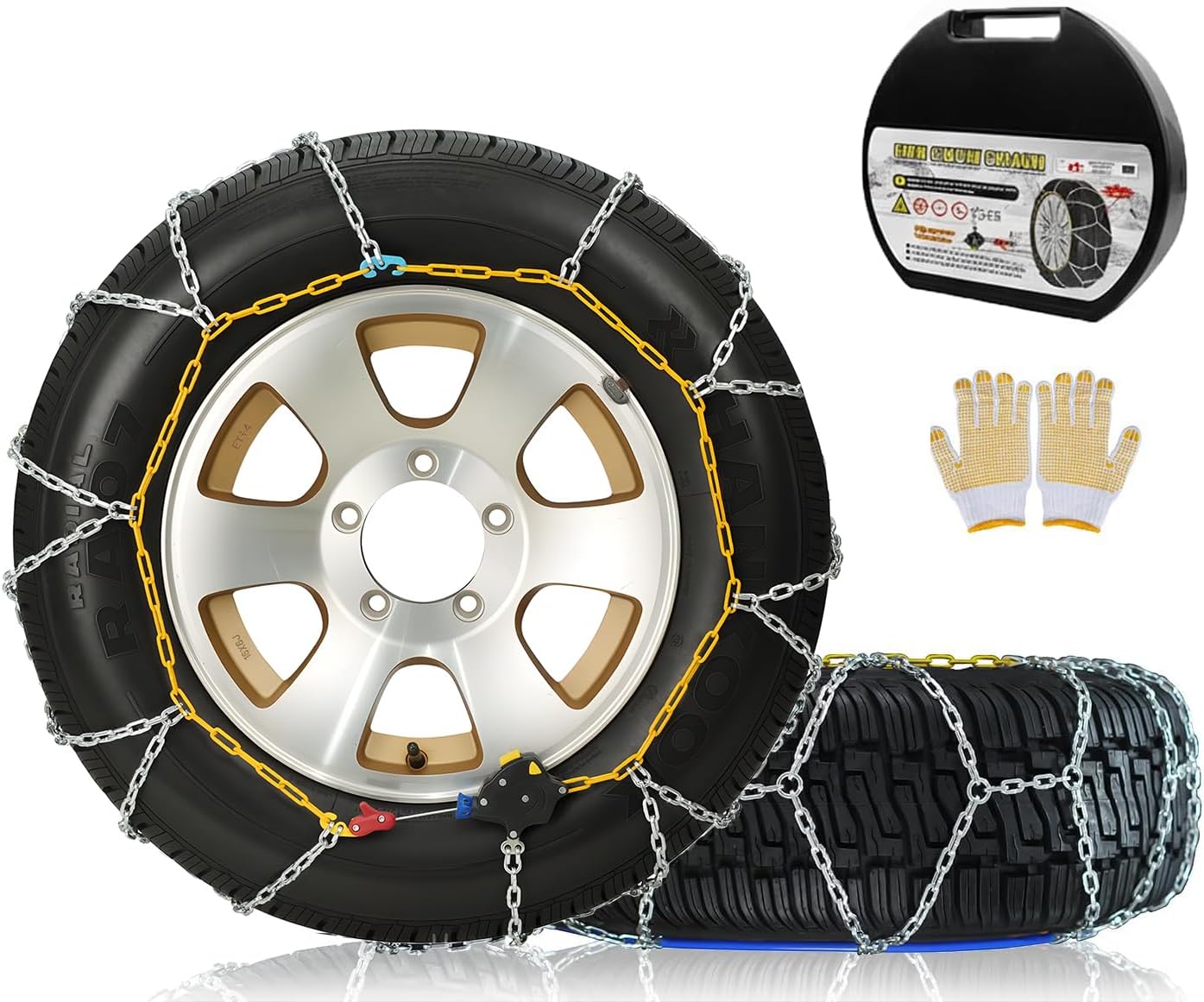
| Material | Alloy Steel |
|---|---|
| Wheel Size | 14 Inches |
| Vehicle Service Type | Car |
| Item Thickness | 0.75 Inches |
| Automotive Fit Type | Universal Fit |
These LoJok snow chains are built for fast roadside deployment when traction is needed immediately. The kit uses a tightening system that the listing says installs in about a minute without special tools or moving the vehicle, making it practical for quick fits in poor weather or low light. Construction is alloy steel with reinforced cross-links, so the chains give aggressive bite on packed snow and ice and feel more durable than thin cable-style alternatives. The set ships with a compact storage case and gloves, which helps keep the pieces organized and simplifies working in cold conditions. Because the product is marketed as universal fit, you will still need to confirm correct sizing for your tires before using them on a 2011–2019 Ford Explorer and practice the install once in a dry setting; fit can vary with tire width and trim. These are reusable emergency chains rather than permanent seasonal chains, so expect quicker installation at the cost of some reduction in long-term highway comfort compared with dedicated, vehicle-specific chain systems.
Best for: Drivers who prioritize rapid, easy roadside deployment of traction aids and want a reusable chain set they can fit quickly in poor weather.
Less Ideal for: Drivers seeking a vehicle-specific seasonal chain for extended highway use or those who require guaranteed fit without any pre-checks should consider model-specific alternatives.
- Quick tightening system intended for one-minute installation without tools
- Heavy alloy steel construction with reinforced cross-links for good snow and ice traction
- Includes gloves and a compact storage case for easier roadside use and transport
- Universal sizing means fit can be less precise than vehicle-specific chains and may require trial fitting
Verdict: The best easy-install snow chains for drivers who need quick, intuitive fitting—often without tools—so they can deploy traction rapidly at the roadside or in low-light conditions.
Choosing the Right 2011-2019 Ford Explorer Snow Chains: Key Factors to Consider
Correct Tire Size and Clearance
Matching chain size to your Explorer's tires is the first and most critical step. Tire diameters and widths vary across trim levels and optional wheel packages for 2011-2019 Explorer models, and an incorrect chain size can leave chains too tight or too loose, causing damage to the tire, wheel well, or suspension components.
Clearance between the tire and the wheel housing or suspension components is equally important. Some aggressive chain designs require more sidewall and inner-fender space and may not fit on Explorers with minimal clearance or aftermarket wheels. Always consult your vehicle manual for manufacturer restrictions and measure actual clearance before choosing a chain. Proper sizing reduces the risk of rubbing, chain breakage, and vehicle damage while ensuring reliable traction when you need it.
Installation Effort and Mechanism
How easy the chains are to install matters because you may need to fit them roadside in cold, windy, or dark conditions. Look for systems that include self-tensioning mechanisms, quick-release buckles, or color-coded components that shorten installation time and reduce fumbling.
Practice a dry run at home to learn the steps and confirm compatibility. Some chains require you to drive a short distance and re-tension the unit, while others have built-in tensioners that eliminate that step. Consider whether the set includes a carrying bag, gloves, and clear instructions, as these small conveniences improve usability and safety during an emergency fit.
Traction Pattern and Performance
Different chain patterns deliver distinct performance characteristics. Ladder-style chains provide straight-line traction and are simple, but they may offer less lateral grip. Diamond or X-patterns increase contact points and improve cornering and braking on packed snow and ice, which is beneficial for an SUV like the Explorer that carries more mass and momentum.
Consider the typical winter conditions you face. For deep, soft snow, wider cross members and aggressive links help. For icy roads, finer, closely spaced links and more contact points improve bite. Balancing traction needs with ride comfort and noise is important because harsher patterns can transmit more vibration into the cabin.
Durability and Material Quality
Durability matters because chain failure or rapid wear can leave you stranded. Look for chains made from hardened steel or treated alloys with robust link construction and reinforced cross members. Corrosion-resistant finishes extend service life, especially if you drive in regions that use road salts.
Pay attention to the thickness of the main links and the method of link connection. Welded junctions typically outlast simple link bends, and thicker cross members resist deformation under the Explorer's weight. A durable set will withstand repeated installations and the stresses of mixed snow, slush, and occasional bare pavement.
Compatibility With Vehicle Features
Certain safety systems or vehicle designs can be affected by traction devices. For the 2011-2019 Explorer, consider whether the chains interfere with anti-lock braking systems, wheel speed sensors, or tire pressure monitoring sensors if those components are mounted near the wheel.
Also verify whether the vehicle manual permits the use of chains on specific axle positions. Some Explorers may recommend chains on drive wheels only. Confirming these restrictions helps avoid warranty or safety issues and ensures the chains function as intended without causing sensor faults or mechanical interference.
Legal and Road Authority Requirements
Some regions require specific types of traction devices or ban certain chain styles on highways. Understanding local winter chain laws where you will drive the Explorer prevents fines and ensures compliance during weather alerts.
Check whether the chains meet any mandated standards for traction devices in your jurisdiction and whether the vehicle's manual restricts their use at particular speeds. Legal requirements can dictate whether lighter cable alternatives are acceptable or whether heavier chain constructions are required for mountain passes or emergency routes.
Common Tire Sizes and Fitment Tips for the Explorer
The 2011-2019 Ford Explorer was equipped with a range of stock tire sizes depending on trim and wheel options. Before buying chains, confirm the tire size stamped on your tire sidewall and compare it to the chain manufacturer sizing chart. Small differences in width or overall diameter can change fitment compatibility.
When checking fitment, measure actual clearance inside the wheel well and behind the spokes. If clearance is tight, favor low-profile, compact chains designed for limited space. If you have aftermarket wheels, re-check clearance even if the tire size is stock because some wheel designs reduce available space.
- Locate tire size in the format P235/65R17 on the sidewall before purchasing.
- Measure available clearance from the tire shoulder to suspension components.
- Practice fitting at home to confirm size and installation sequence.
Practical Installation Sequence
A consistent installation routine reduces stress and mistakes when you need traction quickly. Park on level ground, engage the parking brake, and lay out the chain so orientation is clear. Attach the inner side first when possible, then bring the outer side over the tire and connect tensioners according to the product instructions.
After the initial fit, drive a short distance and then re-check and re-tension the chains if recommended. This step helps seat the chains evenly and prevents loosening that can lead to damage or loss.
- Wear gloves and keep a safe buffer from traffic while installing.
- Follow any vehicle-specific guidance on which axle to chain if instructions differ.
When to Use Chains Versus Other Winter Traction Devices
Chains remain the most effective option for severe winter conditions like deep snow, packed snow, and icy mountain passes, because they provide aggressive bite and braking performance. Lighter alternatives such as cable devices or textile traction aids can be easier to install but typically offer reduced durability and grip under heavy loads.
If your routes include mountain passes with mandatory chain controls, choose a set that meets local standards and provides a balance between traction and reliability. For occasional light snow, consider simpler options but be aware of their limitations on ice.
- Chains offer superior grip on compacted snow and ice compared with most cable or fabric systems.
- Evaluate the severity of your typical winter routes before selecting a device.
Maintenance, Storage, and Longevity
Rinse chains after exposure to road salt and dry them before storage to minimize corrosion. Regularly inspect for worn links, cracked hooks, or stretched components and replace any damaged parts before the next season. Proper maintenance extends service life and prevents in-use failures.
Store chains loosely in a ventilated bag or container and avoid long-term storage while wet. Label the bag with the tire size and vehicle notes so you can quickly retrieve the correct set when winter returns.
- Check tensioners and connection hardware for wear each season.
- Keep a small repair kit and spare links if available.
Driving With Chains Fitted
Drive cautiously with chains installed: reduce speed, avoid sudden maneuvers, and pay attention to noise or unusual vibration which may indicate improper fit. Most manufacturers set a lower maximum speed for chained use to prevent chain and vehicle damage.
Avoid prolonged driving on bare pavement because it accelerates wear and can damage both the chains and your tires. When roads improve, remove chains and store them properly until the next use.
- Keep speed moderate and smooth on acceleration and braking.
- Re-check chain tension after the first few hundred meters of driving.
Still looking for the perfect fit?
Select your Ford Explorer configuration to see the most relevant Snow Chains recommendations
How We Chose the Best 2011-2019 Ford Explorer Snow Chains
We prioritized fitment, installation practicality, durability, legal compliance, and on-road behavior when shortlisting snow chains for the 2011-2019 Ford Explorer. Our selection process started by identifying chain designs that cover the Explorer's common passenger SUV tire sizes and sidewall clearances, then filtered out any options that explicitly require wheel well modifications or are incompatible with vehicles that have limited clearance. We emphasized chain patterns that balance traction and ride smoothness, such as ladder and X-patterns, and favored materials and construction details that resist corrosion and withstand repeated use.We evaluated installation effort by checking whether a product includes tensioning hardware, self-tightening features, and clear, vehicle-specific instructions. Durability criteria included link thickness, alloy finishes, and reinforced cross members. We also considered whether chains meet regional legal requirements for traction devices when used without vehicle modifications. Exclusions included chains intended only for commercial trucks, chains that demand permanent vehicle changes, and cable-style products that do not meet minimum traction expectations for heavier SUVs. The resulting picks reflect a mix of easy-to-fit options and heavier-duty designs suitable for the Explorer's weight and common winter conditions.
Our full evaluation process is outlined in our review methodology.
FAQ
Can I fit snow chains on any wheel size used on the 2011-2019 Explorer?
It depends on the specific tire dimensions and wheel well clearance. You must match chains to the tire size shown on the sidewall and confirm that the chain design fits within the Explorer's clearance limits. Some low-profile or large-diameter wheel and tire combinations may require a compact chain designed for limited space.
Are chains required on all four wheels of the Explorer?
Requirements vary by jurisdiction and by the vehicle's drivetrain. Some areas or conditions call for chains only on drive wheels. Check local regulations and your vehicle manual for guidance. For best stability in extreme conditions, some owners choose to fit chains to all drive wheels when permitted.
How long does it take to install a typical set of chains on an Explorer?
Installation time depends on the chain design and your experience. A practiced user can often fit modern tensioning systems in 5 to 15 minutes per wheel. Expect longer the first few times and allow extra time in cold or roadside conditions.
Will snow chains damage my Explorer if installed correctly?
When properly sized and installed according to both the chain and vehicle instructions, chains should not cause damage. Incorrect sizing, loose connections, or driving at excessive speeds can result in rubbing, broken links, or contact with suspension components, which can cause damage.
Can I leave chains on for long highway stretches?
No. Chains accelerate wear and can break if driven at highway speeds or on bare pavement. Most manufacturers recommend a reduced speed limit and advise removing chains when pavement is clear to avoid damage to both the chains and the vehicle.
Final Verdict
Prioritize correct sizing, adequate clearance, and an installation system you can manage quickly when choosing snow chains for a 2011-2019 Ford Explorer. Durable construction and a traction pattern suited to the type of winter driving you do will reduce the chance of in-use failures and improve safety. Balance installation ease against traction performance based on whether you encounter ice, packed snow, or deep powder most often. With the right set and a practiced install routine, you can restore traction and drive the Explorer more confidently in winter conditions.
Explore More:
- Check out all Ford Explorer parts & accessories
- Explore Wheels & Tires
- Browse all Accessories
