

Note: This article contains affiliate links. If you click on these links and make a purchase, I may earn a small commission at no extra cost to you. This helps support my research and content. Read my full affiliate disclosure here.
If you want to sleep above wet ground, avoid crowded campgrounds, and make remote access easier, a rooftop shelter changes how you camp with your Subaru Forester Wilderness. Choosing the right Subaru Forester Wilderness roof tent matters because it affects load on your roof, vehicle handling, and how quickly you can set up camp.This guide covers the top shortlisted roof tents suitable for the Forester Wilderness and explains the practical tradeoffs that matter to owners. We evaluate candidates on durability, weight and roof-load compatibility, ease of installation and setup, and on-board comfort features. Read on for an overview of what to expect and which features to prioritize before you buy.
Looking for other parts? See all Subaru Forester parts & accessories.
Top Picks at a Glance
| Best Overall Roof Tent A well-rounded rooftop tent with balanced comfort, durability, and features | Naturnest Polaris Plus Hardshell Rooftop Tent (2-Person) |  |
| Best Budget Roof Tent An affordable rooftop tent that covers essentials without breaking the bank | Nice C Inflatable Rooftop Tent with Air Mattress and Ladder |  |
| Best Hard‑Shell Roof Tent Rigid hardshell design for faster setup, lower drag, and long-term durability | Naturnest Sirius 2 XL Hard‑Shell Rooftop Tent |  |
| Best Soft‑Shell Roof Tent Canvas/soft‑fold rooftop tent with roomy interior and traditional tent feel | Overland Vehicle Systems TMBK 3-Person Soft-Shell Rooftop Tent |  |
| Best Quick‑Setup Roof Tent Tents with gas struts or instant‑pop designs for fast one‑person deployment | HEYFUN Adventurer Pro Aluminum Hard‑Shell Roof Top Tent with Built‑In USB and Side Awning |  |
| Best Insulated / Winter Roof Tent Tents with removable thermal liners, thicker fabric, or winter upgrades for cold weather | ARCTWONDER Hard‑Shell Rooftop Tent with Winter Thermal Layer and Solar Panel |  |
| Best Extra‑Large / Family Roof Tent Larger floorplans and higher headroom to fit more people or gear comfortably | Topoak Vision XL Fold-Out Hard Shell Rooftop Tent |  |
1. Naturnest Polaris Plus Hardshell Rooftop Tent (2-Person)
Best Overall Roof Tent

| Occupancy | 2 Person |
|---|---|
| Seasons | 4 Season |
| Water Resistance Technology | Polyester with Waterproof Coating |
| Installation Type | Roof Top |
| Included Components | Ladder and Ladder Bag, Parts and Tools, Shoe Bags, Support Rods |
The Naturnest Polaris Plus is a compact hardshell rooftop tent built for regular overland use and four-season car camping on a vehicle like the Subaru Forester Wilderness. It mounts to crossbars and opens automatically once the latches are released, turning a roof rack into a comfortable elevated sleeping area in about 30 seconds. The reinforced aluminum shell, stainless steel supports, honeycomb insulating panels, and weatherproof fabrics offer strong wind and rain protection and better thermal performance than a typical soft-shell tent. Inside you get a thick 1.97-inch mattress and blackout fabric for improved sleep, plus multiple windows, internal pockets, and included ladder and support rods. The tent also accepts light gear on top using the supplied crossbars for things like a small solar panel. Important compromises are its weight and bulk compared with soft-shell options and the need to confirm your Forester Wilderness crossbar weight rating before mounting, but for someone prioritizing durability, weather protection, and fast setup it delivers a very practical, long-lasting rooftop shelter.
Best for: Campers who want a durable, weather-resistant rooftop tent they can use year-round and set up quickly for regular overland trips and car-camping from a Forester Wilderness.
Less Ideal for: Those seeking the lightest possible roof setup or users who cannot meet the crossbar weight and load requirements of a hardshell rooftop tent.
- Rigid aluminum hardshell and honeycomb panels for strong weather and thermal protection
- Quick automatic pop-up setup that readies the tent in about 30 seconds
- Thick 1.97-inch mattress and blackout fabric for comfortable, private sleep
- Includes ladder, support rods, and crossbars to carry lightweight accessories
- Stainless steel supports and premium components designed for long-term durability
- Heavier and bulkier than soft-shell rooftop tents, which affects roof rack load and fuel economy
Verdict: The pick for readers who want a reliable, well-built rooftop tent that balances build quality, weather protection, and everyday usability for overlanding and car-camping.
2. Nice C Inflatable Rooftop Tent with Air Mattress and Ladder
Best Budget Roof Tent

| Occupancy | 2 Person |
|---|---|
| Seasons | 4 Season |
| Included Components | Air Cushion, Air Pump, Folding Ladder, Repair Kit |
| Material | Oxford |
| Installation Type | Roof Top |
This Nice C inflatable rooftop tent is a budget-oriented roof-top shelter that inflates in minutes using the included pump and mounts to a standard roof rack. It is designed for two people and ships with an inflatable mattress, folding ladder, repair kit, tie-downs, support brackets, and a carry bag so you can camp right away without buying extras. The 420D Oxford and poly-cotton rainfly offer solid waterproofing and wind resistance for mixed-season use, while double-layer mesh doors and panoramic windows give ventilation and light. Setup and teardown are straightforward compared with hard-shell models, and the inflatable frame packs down compactly for storage. Expect a lower price point but be aware the tent relies on air tubes rather than metal frames, so puncture care and periodic inflation checks matter for longer trips. For Forester use, plan mounting to the vehicle's crossbars and allow for ladder positioning on uneven ground.
Best for: Drivers who want an affordable rooftop tent for casual trips that prioritizes quick setup and a usable mattress over rugged, expedition-grade construction.
Less Ideal for: People planning extended off-grid expeditions or heavy snowfall trips should consider more rugged hard-shell or metal-frame options with higher durability and insulation.
- Fast inflation setup with included air pump for quick campsite deployment
- Comes as a complete kit including inflatable mattress, ladder, carry bag, and repair kit
- Waterproof 420D Oxford and poly-cotton rainfly provides decent all-weather protection
- Compact when packed and compatible with standard roof rack crossbars
- Inflatable frame is more vulnerable to punctures than rigid-frame tents
- Requires occasional pressure checks and proper maintenance of air tubes
Verdict: Choose this slot if you need a basic, wallet-friendly rooftop tent that still offers decent weatherproofing and a usable mattress for casual camping trips.
3. Naturnest Sirius 2 XL Hard‑Shell Rooftop Tent
Best Hard‑Shell Roof Tent

| Occupancy | 4 Person |
|---|---|
| Seasons | 4 Season |
| Installation Type | Rooftop tent |
| Water Resistance Level | Waterproof |
| Base | Aluminum |
The Naturnest Sirius 2 XL is a hard‑shell rooftop tent built to mount on a vehicle crossbar system and deliver fast, low‑profile camping for daytime road trips and long highway runs. The clamshell ABS shell opens with gas struts so the tent pops up in seconds and uses a side‑hinged layout to create extra interior headroom; that makes it easy to sit up and move around compared with compact pop‑ups. Materials include a waterproof, blackout polyester shell with YKK zippers, an aluminum base, stainless steel support rods, and a 2‑inch high‑rebound foam mattress for comfortable sleeping. It also has multiple windows with mesh, dual LED light strips, shoe bags and interior pockets, and a vent port for a portable heater or AC. For Forester Wilderness owners the aerodynamic shell helps reduce wind noise and the sturdy mounting approach suits frequent highway use, but the unit is heavy compared with soft tents and requires a roof rack and crossbars rated to carry the tent weight when parked and during installation.
Best for: Drivers who want a durable, low‑profile hard‑shell that opens instantly and tolerates regular highway miles while providing roomy, comfortable shelter for weekend trips or extended overland use.
Less Ideal for: Campers without a heavy‑duty roof rack or those who need the lightest possible setup for frequent solo backpacking or rooftop removal between uses.
- Extremely fast side‑hinged pop‑up deployment via gas struts for quick setup and takedown.
- Hard ABS shell and aluminum base give a low profile that reduces wind noise at highway speeds.
- Waterproof, blackout fabric and full‑season design keep the interior dry and insulated in diverse weather.
- Integrated storage pockets, shoe bags, dual LED lighting and a mattress add practical onboard comfort.
- Sturdy hardware including YKK zippers and a telescoping ladder built for frequent use.
- At about 200 pounds it is substantially heavier than soft tents and needs a strong roof rack and crossbars to mount safely.
- Large footprint may limit access to some steep driveways or low clearances when installed.
- Only one door configuration which may be less convenient depending on vehicle rack placement.
Verdict: For buyers who prioritize a low‑profile, durable hardshell that reduces wind noise, opens quickly, and stands up to frequent use and highway driving.
4. Overland Vehicle Systems TMBK 3-Person Soft-Shell Rooftop Tent
Best Soft‑Shell Roof Tent
| Occupancy | 3 Person |
|---|---|
| Seasons | Spring, Summer, Fall, Winter |
| Water Resistance Technology | 300 Mm |
| Installation Type | Roof Top |
| Material Type | Polyester |
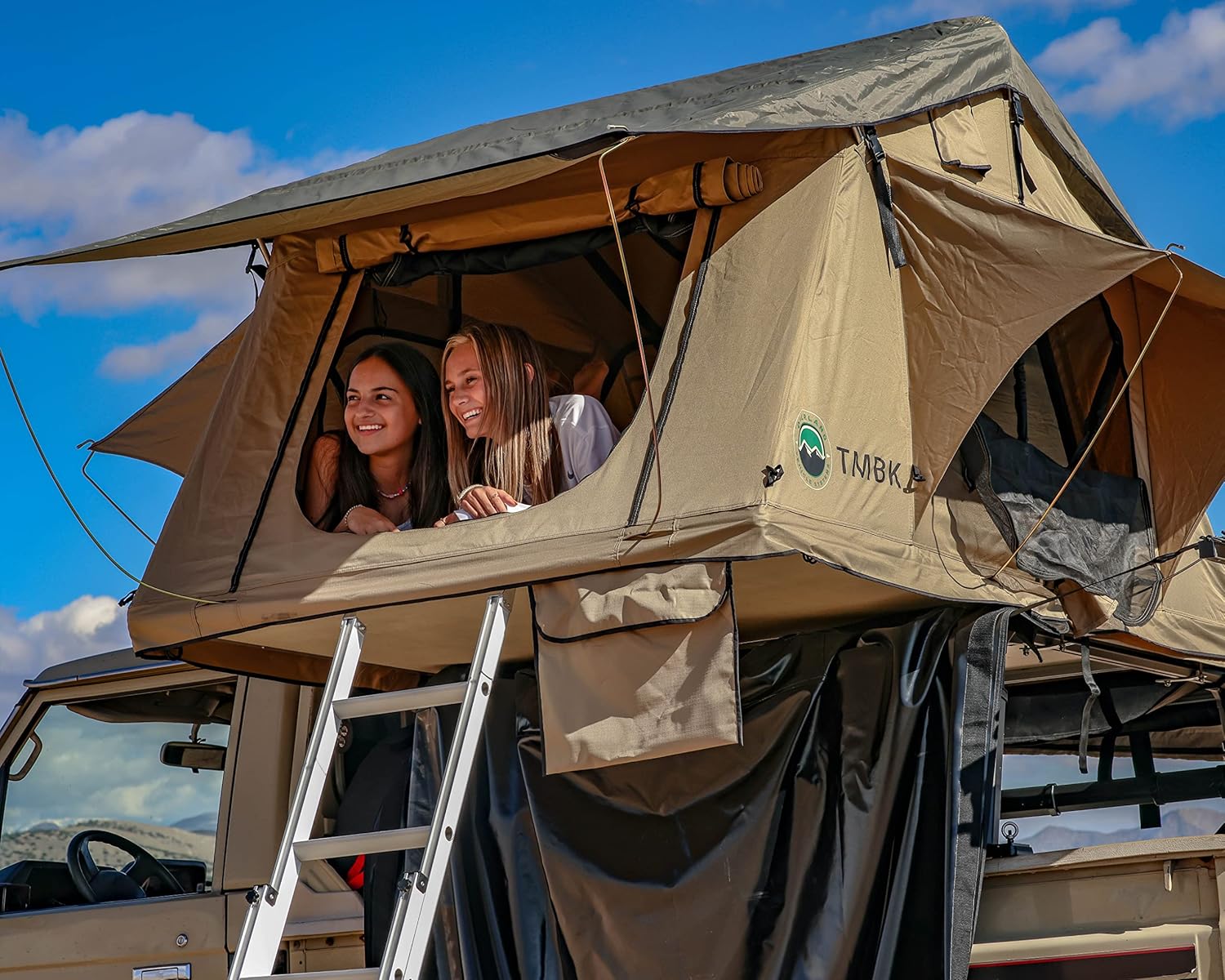
The TMBK 3-person soft-shell rooftop tent turns a Forester Wilderness with a roof rack into a comfortable elevated campsite. It mounts to crossbars and unfolds into a roomy sleeping area with a 2.5-inch high-density foam mattress and insulated aluminum base for better overnight comfort than ground camping. The poly-cotton 600D ripstop body and 420D polyester Oxford rainfly provide breathability and weather protection, and the tent includes mesh windows and a skylight for ventilation and views. Aluminum pole and stake hardware plus a sliding 81-inch ladder keep the setup light enough for frequent use while staying durable in roadside conditions. Because it is a soft-shell design, it packs relatively compactly when closed but still requires checking your Forester's roof load limits and a compatible rack. The tent is well suited for seasonal and four-season trips, though its soft cover will not offer the same hard-side wind resistance or ultra-fast deployment of a clamshell hard-shell model.
Best for: Forester Wilderness owners who prioritize added interior volume, natural ventilation, and a classic canvas feel for multi-season overland trips and weekend car-camping excursions.
Less Ideal for: Drivers who need rapid single-person setup, maximum wind resistance, or who lack a roof rack and prefer a bolt-on, low-profile hard-shell solution.
- Spacious three-person sleeping area with integrated high-density foam mattress for immediate comfort
- Poly-cotton 600D ripstop body and 420D waterproof rainfly balance breathability and weather protection
- Insulated aluminum base improves nighttime insulation compared with simple fabric floors
- Lightweight aluminum poles and stainless hardware reduce corrosion risk on wet trips
- Includes ladder and rainfly so you can camp right away after mounting to a roof rack
- At about 108 lb packed weight it approaches many vehicles' dynamic roof load limits and needs a strong compatible rack
- Soft-shell design is less wind-stable and slower to close than a hard-shell clamshell alternative
Verdict: Select this option when you prefer a lighter, canvas-style rooftop tent that gives extra interior volume and classic ventilation over a rigid shell.
5. HEYFUN Adventurer Pro Aluminum Hard‑Shell Roof Top Tent with Built‑In USB and Side Awning
Best Quick‑Setup Roof Tent
| Occupancy | 3 Person |
|---|---|
| Water Resistance Technology | 0-5,000 mm |
| Included Components | Side awning, 2 rain flies, ladder, mattress, USB outlet, LED strip |
| Assembly Time | 10 Minutes |
| Maximum Load Recommendation | Prepare cross bars supporting at least 165 lbs |
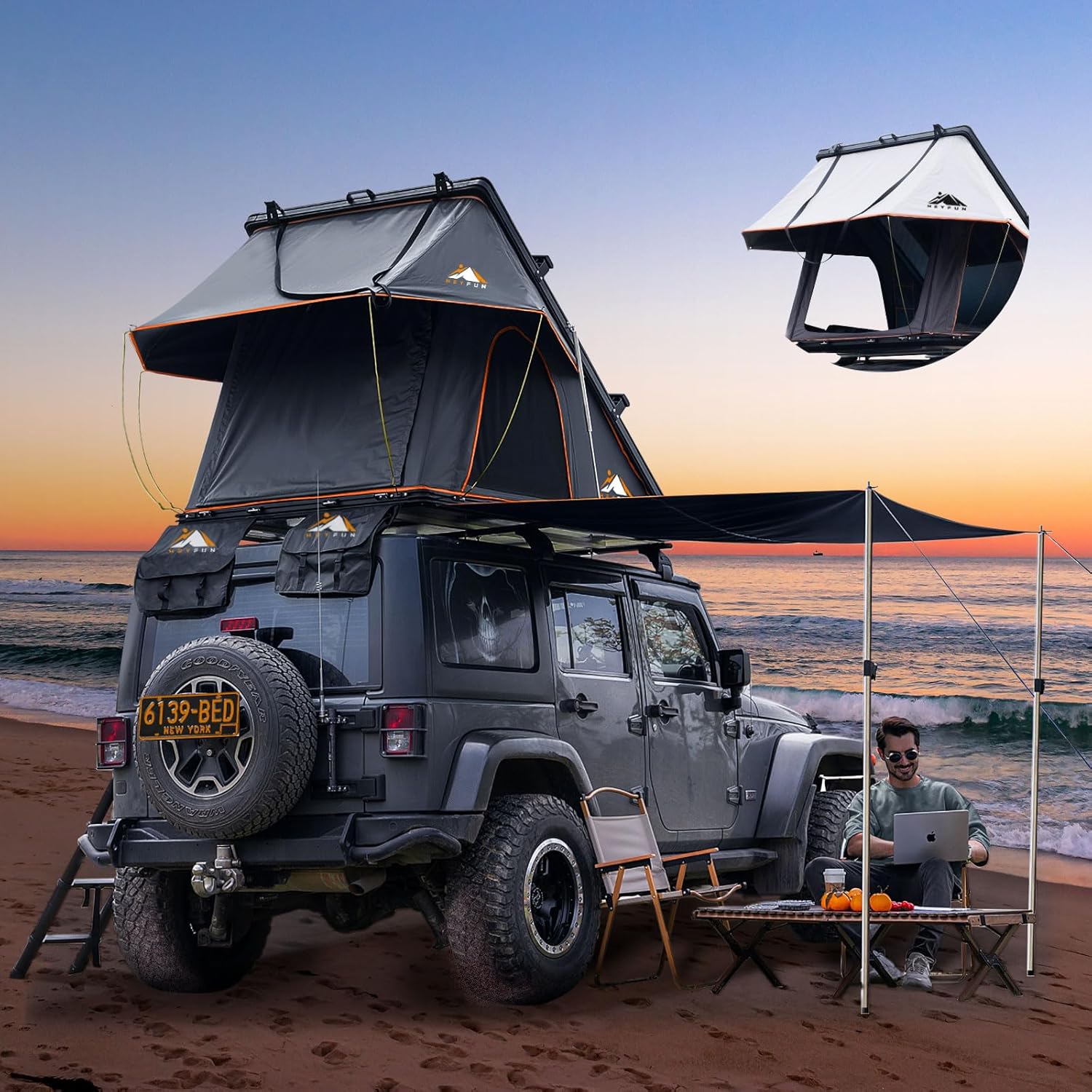
The HEYFUN Adventurer Pro is a hard‑shell rooftop tent designed for fast campsite setup using stainless steel gas struts that hydraulically pop the tent open and closed in about five seconds. It mounts to crossbars and provides a roomy sleeping area for two adults and a child on the integrated three‑layer mattress and flocked floor. Notable features include a built‑in USB outlet and LED strip for low‑light convenience, two rain flies (including a replaceable option), an attachable side awning, and adjustable luggage racks for carrying extra gear. The aluminum base and honeycomb floor aim to keep the platform rigid while offering weather resistance rated up to 5,000 mm and multi‑season performance. Expect quick deployment and teardown, solid ventilation from mesh windows and windproof layers, and plenty of interior storage via 13 pockets. The tent is heavy and requires sturdy roof crossbars rated to support at least 165 lb, and installation involves lifting and aligning a bulky unit. It is best used for overland or weekend trips where fast setup is a priority and vehicle roof load capacity can safely handle the tent.
Best for: Campers who prioritize the fastest possible campsite setup and want a robust, all‑season hard‑shell tent they can deploy in seconds and leave packed on their Forester for frequent weekend trips.
Less Ideal for: People who need the absolute lightest roof solution or who cannot fit high‑capacity crossbars on their vehicle should consider lighter soft‑shell tents or ground tents instead.
- Hydraulic gas struts for near‑instant pop‑up deployment and fast teardown
- Hard‑shell aluminum base and honeycomb floor for rigidity and multi‑season durability
- Includes practical accessories: built‑in USB outlet, LED strip, two rain flies, side awning, and ladder
- Spacious interior with a 3‑layer mattress and 13 storage pockets for organized gear
- Adjustable luggage racks expand carrying capacity for longer trips
- Heavy unit that requires strong crossbars and at least two people to lift into place
- Large closed footprint may limit vehicle clearance and affects fuel economy when mounted
Verdict: This slot is for campers who want a rooftop tent that opens and closes in seconds using hydraulic/gas‑strut or pop‑up mechanisms to minimize campsite setup time.
6. ARCTWONDER Hard‑Shell Rooftop Tent with Winter Thermal Layer and Solar Panel
Best Insulated / Winter Roof Tent

| Occupancy | 2 Person |
|---|---|
| Seasons | 4 Season |
| Material | Aluminum, Polyester |
| Included Components | Winter Thermal Layer, Solar Panel, Ladder, Mattress |
| Water Resistance Technology | 0-5000mm |
This hard‑shell rooftop tent is built around cold‑weather comfort: an added winter thermal layer (canvas plus thermal cotton) insulates the sleeping area and helps retain heat on chilly nights, while a 6 cm mattress and blackout fabric increase overnight comfort. The aluminum shell and reinforced corners give the unit a sturdy, low‑profile mounting that protects the fabric in transit and improves wind resistance. Setup is fast using pressure rods that pop the tent open in seconds and a telescoping ladder that stores with the kit. Useful extras include a solar panel with a 12V outlet for charging devices and multiple storage bags for organizing gear. The tent claims 5000 W/R waterproofing and includes seam tape for weather sealing, so it is suited to wet, cold environments. Trade offs are its large physical weight and package bulk which require a roof rack rated for the load and may affect fuel economy and vehicle handling on longer trips. Fitment and safe use depend on correct rack capacity and proper installation on the Forester Wilderness roof system.
Best for: Drivers who prioritize cold‑weather camping comfort and need a rooftop tent that maintains warmth overnight while offering quick setup and on‑board power for remote trips.
Less Ideal for: People seeking a lightweight, minimalist setup or those without a roof rack rated for heavy loads should consider lighter soft‑shell tents or truck‑bed solutions instead.
- Removable winter thermal layer with inner thermal cotton for improved insulation and reduced interior chill
- Hard‑shell aluminum construction provides durable protection and better wind resistance while driving
- Integrated solar panel and 12V outlet let you recharge devices off‑grid
- Quick pop‑up setup with air pressure rods and included telescoping ladder for one‑person operation
- Waterproof polyester fabric with taped seams and high W/R rating for four‑season weather protection
- Very heavy and bulky, requiring a high‑capacity roof rack and affecting vehicle fuel economy
Verdict: Pick this when you need a rooftop tent engineered for cold‑weather use—extra insulation, thermal liners, and weatherproofing to keep you warm on chilly trips.
7. Topoak Vision XL Fold-Out Hard Shell Rooftop Tent
Best Extra‑Large / Family Roof Tent

| Occupancy | 3 Person |
|---|---|
| Seasons | 4 Season |
| Water Resistance Technology | 5000 |
| Installation Type | Roof Top |
| Number Of Pockets | 5 |
The Topoak Vision XL is a fold-out hard-shell rooftop tent designed to give families a spacious, elevated sleeping area with quick setup. Mounted to a compatible roof rack on a Subaru Forester Wilderness, the tent unfolds in roughly 30 seconds and secures with a ladder and support pole for stable access. Inside, blackout canvas, mesh panels, and an adjustable side rainfly balance privacy, ventilation, and weather protection for varied conditions. Practical touches include storage pockets, three-color LED lighting, an Anderson power connection, and a heater vent to make multi-night family camping more comfortable. The aluminum shell and pole components aim to keep the structure rigid while the Oxford fabric and 300D ripstop rainfly offer waterproofing and UV protection. Buyers should confirm their Forester Wilderness roof rack meets the stated dynamic load requirement and crossbar spacing before purchase, and be prepared for the added roof weight and wind profile when driving. The tent prioritizes quick, comfortable shared sleeping space over the lighter weight and lower center of gravity of ground tents.
Best for: Families or small groups who prioritize interior space and rapid setup for multi-person rooftop sleeping and want a more comfortable elevated camp on weekend trips and overland excursions in a Forester Wilderness.
Less Ideal for: Campers who need the lightest possible setup, those who frequently drive without removing roof weight, or buyers unwilling to confirm roof-rack load capacity and spacing before installation.
- Spacious interior sized for three adults plus a child for family sleeping arrangements
- Fast fold-out hard-shell design enables setup in about 30 seconds
- Waterproof Oxford fabric with 3000+ water resistance rating and UV protection for all-season use
- Built-in conveniences like LED lighting, storage pockets, and an Anderson power connection
- Aluminum shell and poles provide structural rigidity and durability
- Requires a roof rack with sufficient dynamic load capacity and specific crossbar spacing to install safely
Verdict: Ideal for families or groups who want a roomy rooftop tent with increased sleeping area and headroom so multiple occupants can sleep and move comfortably.
Choosing the Right Subaru Forester Wilderness Roof Tent: Key Factors to Consider
Roof Load and Vehicle Limits
Knowing the Forester Wilderness roof load limits is essential because roof tents add both static weight and dynamic forces while driving. Static weight is what sits on the rack when parked and includes the tent, mattress, and any stored accessories. Dynamic load accounts for movement, wind, and road forces during transit. Choosing a tent with a packed weight comfortably below the vehicle's static roof rating preserves ride handling and reduces wear on suspension and roof rails.
Also consider the weight distribution across your crossbars and whether the tent's mounting footprint matches typical Forester Wilderness crossbar spacing. Overloading one side or exceeding a single crossbar's capacity can cause premature failure. Finally, think about the tent's center of gravity when set up; taller tents produce more wind resistance and can affect vehicle stability during travel if not properly secured.
Pack Size and Aerodynamics
The tent's packed dimensions determine how it affects fuel economy and clearance under garages or low branches. A compact pack size reduces aerodynamic drag and lowers the elevation of the roof profile. For the Forester Wilderness, which is designed for light off-road use and often travels on tight forest lanes, a lower profile in transit reduces the likelihood of contact with overhead obstacles.
Aerodynamic shapes and covers that lock down tightly also reduce wind noise. Consider how easily the packed tent can be strapped to common roof-rack crossbars used on the Forester Wilderness and whether the cover material resists UV and road grit over long trips.
Setup Speed and User Effort
Setup time matters in bad weather, late arrivals, or when you want to minimize exposure to insects at dusk. Roof tents vary from quick pop-up designs that open in under a minute to hard-shell models that require more mechanical steps. Faster setups let you stop and sleep sooner, which is helpful on multi-stop adventures common with Forester Wilderness owners.
Also consider how many people are needed to lift and mount the packed tent during installation and whether the tent uses internal gas struts or manual poles for deployment. If you frequently camp solo, prioritize low-effort systems and clear access points that make climbing in and out safer at night.
Weatherproofing and Ventilation
Weather protection determines whether the tent is usable in heavy rain, wind, or colder seasons. Look for durable outer fabrics, taped seams, and a reliable rainfly system that covers entry points. For the Forester Wilderness, which sees varied climates, effective drainage and welded floors are beneficial to keep the sleeping area dry when condensation or rainwater runs down the vehicle roof.
At the same time, ventilation prevents condensation buildup and improves comfort during warm nights. Multiple mesh windows with storm flaps and adjustable vents allow you to balance airflow and protection from insects. Consider whether the tent includes insulating features or an annex option if you plan to camp in lower temperatures.
Sleeping Comfort and Interior Layout
Sleep quality depends on mattress thickness, interior length and width, and usable headroom. Measure the available length to ensure two occupants can sleep comfortably without their feet pressing against doors or the tent wall. A thicker mattress improves insulation and comfort but adds weight and pack size.
Interior layout choices such as eave overhangs, internal storage pockets, and window placement impact usability. If you plan to use the tent as a basecamp for extended trips, look for features that make it livable like an integrated rooflight, removable annex compatibility, and easy access ladders that secure safely to the Forester Wilderness bumper or roof edge.
Mounting System and Compatibility
Mounting hardware determines how the tent secures to crossbars and whether installation requires drilling or special adapters. For the Forester Wilderness, prefer tents that use common clamp-style mounts or T-bolt systems that match aftermarket crossbars. Confirm that the mounting footprint aligns with typical crossbar widths to avoid needing custom brackets.
Also check whether the tent's attachment method allows quick removal for times when you need the roof free for other gear. Corrosion-resistant hardware and secure fasteners help ensure the tent stays attached through rougher backcountry roads.
How Roof Tents Affect Forester Wilderness Handling
Adding a rooftop tent changes vehicle aerodynamics and raises the center of mass, which can affect steering feel and braking distances. On paved roads these effects are usually modest, but on narrow dirt tracks or during high crosswinds you will notice increased body roll if the load is high or improperly balanced.
To minimize handling impacts, distribute weight evenly and keep nonessential gear inside the vehicle rather than on the roof. A lower-profile packed tent reduces wind resistance and can help preserve the Forester Wilderness's intended ride characteristics.
- Balance load across crossbars rather than concentrating it on one side
- Secure all mounting hardware to recommended torque values
- Remove the tent for high-speed or long highway trips if not needed
Installation Checklist for Forester Wilderness Owners
Before fitting a roof tent, verify your Forester Wilderness roof racks and crossbars are rated for the tent's mounting weight and dynamic forces. Gather basic tools such as torque wrenches, non-marring straps, and thread locker to ensure a reliable fit. Inspect crossbars for wear and replace loose hardware before mounting the tent.
During mounting, use a helper and protect painted surfaces with soft straps or foam blocks. After initial installation, drive a short distance and re-torque mounts, then recheck after the first off-road section. Regularly inspect mounting points during longer trips to prevent loosening.
- Confirm static and dynamic roof load capacities
- Use a torque wrench and follow mounting torque specs
- Test-drive and recheck fasteners after initial installation
Accessories That Improve Rooftop Camping
Small accessories can make a big difference in comfort and convenience. Consider a lightweight annex for living space, an insulating mattress topper for cold nights, and a durable ladder that locks securely to the tent. A roof-top awning can expand sheltered outdoor living space without adding much complexity to the setup.
Storage solutions like compression sacks and compact gear organizers help manage gear inside the tent and reduce clutter. Also look for protective covers that resist UV and road grime to extend the life of the tent fabric while stored on the vehicle between trips.
- Annexes for extra sheltered space
- Insulating mattress toppers for colder climates
- Protective covers and ladder stabilizers
Planning Trips With a Roof Tent on Your Forester Wilderness
When planning routes, account for added height and avoid low-clearance areas. Check campsite rules regarding rooftop camping, and factor in longer setup and breakdown times compared with pitching a ground tent. For multi-day off-grid trips, balance water and fuel loads since the roof tent shifts some payload to the vehicle top.
Weather forecasts should guide campsite selection; high winds and heavy snow call for sheltered sites. Practice a couple of trial setups near home to become efficient with your chosen tent before heading into remote locations where time and conditions can be less forgiving.
- Confirm campsite clearance and rooftop camping rules
- Pre-practice setup and teardown near home
- Pack for changing weather and shelter vulnerabilities
Maintaining and Storing Your Roof Tent
Regular maintenance preserves weatherproofing and functionality. After wet trips, fully dry the tent before packing to prevent mold. Clean fabrics with mild soap and water, and avoid harsh detergents that strip waterproof coatings. Inspect zippers and stitching for wear, and treat any abrasions promptly.
When storing, keep the tent in a cool, dry place and avoid prolonged exposure to direct sunlight while packed on the vehicle. Lubricate moving parts and replace damaged mounting hardware to maintain safety margins for every trip.
- Dry thoroughly before packing to avoid mold
- Clean gently and inspect seams and zippers
- Store in a cool, dry place away from UV exposure
Still looking for the perfect fit?
Select your Subaru Forester configuration to see the most relevant Roof Tents recommendations
How We Chose the Best Subaru Forester Wilderness Roof Tent
We selected roof tents for the Subaru Forester Wilderness by focusing on the real constraints and needs owners face when mounting a shelter on this specific vehicle configuration. Primary evaluation criteria included roof-load compatibility and actual packed weight, because the Forester Wilderness has a limited dynamic and static load capacity that affects safety and ride handling. We also judged ease of installation and mounting hardware compatibility with common roof racks and crossbars that fit the Forester Wilderness profile.Durability and weather protection were assessed through material specifications like fabric denier, seam sealing, and frame construction, since these determine longevity in wind and rain. Sleeping comfort and interior layout were considered, including mattress thickness, interior height, ventilation, and annex options for extended use. Practical usability factors such as setup time, carry weight for occasional off-vehicle use, and storage footprint were used to differentiate similarly specified tents.We excluded products that require heavy-duty commercial racks or significant roof modification beyond commonly available crossbars for this vehicle. We also omitted tents whose packed dimensions or weights clearly exceed what a Forester Wilderness roof can safely support. The final list balances usability, safety margins for roof load, and durability for year-round camping.
Our full evaluation process is outlined in our review methodology.
FAQ
Will a roof tent fit on a Subaru Forester Wilderness crossbar system?
Often it will fit, but compatibility depends on the tent's mounting footprint and the crossbar spacing. Confirm the tent's required clamp width and verify your crossbars are rated for the tent's static and dynamic loads before purchase.
How does a roof tent affect fuel economy and range?
A packed rooftop tent increases aerodynamic drag and can reduce fuel economy, especially with taller hard-shell designs. Keeping the tent low-profile in transit and removing it for long highway trips helps limit added fuel consumption.
Can I install a roof tent on my Forester Wilderness by myself?
Installation is often easier with a helper because tents can be heavy and awkward. Some lightweight soft-shell designs allow solo installation, but you should still follow torque specifications and test the mounts on a short drive after fitting.
How do I prevent condensation inside a rooftop tent?
Prevent condensation by maximizing ventilation with mesh windows and roof vents while avoiding direct drafts on sleeping occupants. Use breathable bedding, and if camping in cold conditions, add an insulating layer to reduce temperature differentials that cause moisture buildup.
Is it safe to leave a roof tent mounted while driving off-road?
It is generally safe if the tent and mounts are within the vehicle's rated roof loads and all fasteners are secure. However, on very rough terrain you should check mounts frequently and consider temporarily removing the tent for extended hard off-road use to reduce stress on the roof and racks.
Do roof tents require special insurance or permits?
Roof tents themselves typically do not require special permits, but local campground rules or vehicle height restrictions may apply. Check local regulations and insurance policy terms related to vehicle modifications if you have concerns about liability or coverage.
Final Verdict
When choosing a roof tent for the Subaru Forester Wilderness, prioritize load compatibility, a reasonable packed profile, and straightforward mounting hardware to keep handling predictable and setup stress low. Balance the desire for a plush mattress and headroom with the added weight and wind resistance each feature brings.Focus on tents whose specifications leave a safety margin under your vehicle's roof-load limits and that match your typical camping style. That approach helps you pick a rooftop shelter that is safe, comfortable, and practical for the kinds of adventures the Forester Wilderness is designed to handle.
Explore More:
- Check out all Subaru Forester parts & accessories
- Explore Exterior Accessories
- Browse all Accessories
