

Note: This article contains affiliate links. If you click on these links and make a purchase, I may earn a small commission at no extra cost to you. This helps support my research and content. Read my full affiliate disclosure here.
If you plan to use your Subaru Forester Sport as a basecamp, a roof tent transforms overnight stops into a cleaner, faster camping experience. The right Forester Sport roof tent gives you dry, elevated sleeping and frees up interior cargo for gear. This guide covers the top shortlisted options tailored to the Forester Sport's roof size, load limits, and typical outdoor uses.We evaluate each tent for weather protection, footprint on the roof, mounting compatibility, and ease of setup so you can pick a tent that suits weekend trips or extended overland runs. Read on for the picks and the criteria we used to select them.
Looking for other parts? See all Subaru Forester parts & accessories.
Top Picks at a Glance
| Best Overall Roof Tent Top pick balancing build, comfort, weatherproofing, and ease of use | Naturnest Polaris Plus Hard-Shell Rooftop Tent (2-Person) |  |
| Best Budget Roof Tent Affordable rooftop tent that covers basics without breaking the bank | Nice C Inflatable Rooftop Tent with Air Mattress and Ladder |  |
| Best Hard‑Shell Roof Tent Rigid pop-up shell for faster setup, low profile, and durability | HEYFUN Adventurer Pro Hard‑Shell Rooftop Tent with USB Outlet and Side Awning |  |
| Best Soft‑Shell Roof Tent Canvas-style tent with roomy interior and traditional fold-out design | Overland Vehicle Systems TMBK 3-Person Soft Shell Rooftop Tent |  |
| Best Quick‑Setup Roof Tent Tents with gas struts or inflatable systems that deploy in seconds | Jiadrooe Hard-Shell Rooftop Tent with Adjustable Crossbars (Standard) |  |
| Best All‑Season Roof Tent Heavier‑duty materials, insulation, and sealed seams for year‑round use | ARCTWONDER Hard-Shell Rooftop Tent with Winter Thermal Layer and Solar Panel |  |
| Best Slimline / Low‑Profile Roof Tent Narrow, low‑height tents that reduce wind noise and fit garages | SAN HIMA Hotham Lite Hard‑Shell Rooftop Tent with LED Light and Telescopic Ladder |  |
1. Naturnest Polaris Plus Hard-Shell Rooftop Tent (2-Person)
Best Overall Roof Tent

| Occupancy | 2 Person |
|---|---|
| Seasons | 4 Season |
| Water Resistance Technology | Polyester with Waterproof Coating |
| Installation Type | Roof Top |
| Included Components | Ladder, Parts and Tools, Shoe Bags, Support Rods |
The Naturnest Polaris Plus is a compact hard-shell rooftop tent designed for regular vehicle camping where durability and fast setup matter. It mounts to roof crossbars and opens in seconds using stabilus gas struts and latch releases, turning your Subaru Forester Sport into an elevated two-person sleeping platform. The aluminum shell and honeycomb insulating panels give strong wind and weather protection, and the 1.97-inch mattress plus blackout fabric make sleeping comfortable and dark. Practical features include integrated vents for attaching a heater or cooler, YKK zippers, multiple storage pockets and windows, and the ability to carry lightweight gear on the shell's crossbar area. Expect easy installation on most aftermarket or factory crossbars as long as they meet the tent's weight limits. Trade-offs are its bulk and additional roof weight that affect fuel economy and handling compared with a soft-shell, and the tent requires at least two crossbars and proper load capacity, which may mean extra rack hardware for some Forester setups.
Best for: Drivers who want a dependable, comfortable rooftop sleeping solution for regular camping trips and value solid construction, quick setup, and weather protection for four-season use in a Subaru Forester Sport.
Less Ideal for: People prioritizing lowest possible roof weight, maximum fuel economy, or those who rarely camp and prefer simpler, lightweight ground tents.
- Rigid aluminum hard shell and honeycomb panels for strong weather and wind resistance
- Very fast pop-up setup using gas struts and latch release for single-minute deployment
- Blackout fabric and a 1.97-inch mattress for improved sleep comfort and privacy
- Integrated vents and roof crossbar area allow simple climate control accessories and light gear carrying
- Includes ladder, support rods, and multiple internal pockets for organized camping gear
- Relatively heavy and adds significant roof load which can affect vehicle handling and fuel economy
- Requires at least two roof crossbars with sufficient weight capacity which may need upgraded rack hardware
Verdict: The all-around choice for buyers who want a reliable, comfortable rooftop tent with strong construction, good weather protection, and sensible features for regular vehicle camping.
2. Nice C Inflatable Rooftop Tent with Air Mattress and Ladder
Best Budget Roof Tent

| Occupancy | 2 Person |
|---|---|
| Seasons | 4 Season |
| Included Components | Air Cushion, Air Pump, Folding Ladder, Repair Kit |
| Material | 420D Oxford / Poly-cotton |
This Nice C inflatable rooftop tent is a budget-focused roof-top sleeping solution that inflates in minutes using the included pump. It installs on a standard roof rack and provides a two-person sleeping platform with an included air mattress and folding ladder, so you can turn a roof-mounted rack into a comfortable campsite without extra purchases. The kit includes useful accessories such as a repair kit, shoe bag, tie-down lines, and support brackets so you can stash and transport the tent easily. Its 420D Oxford and poly-cotton panels and seam-sealed construction aim to keep the interior dry in rainy conditions while mesh doors and panoramic windows help with ventilation. Expect a simple pop-up experience and reasonable overnight comfort for short trips, but know that the inflatable frame and lighter materials make it less rugged than heavy-duty hard-shell or high-end soft-shell rooftop tents and may need extra care in prolonged high-wind or extreme conditions.
Best for: Forester owners seeking the lowest-cost rooftop sleeping option that fits a standard roof rack and delivers a usable, weather-protected platform for weekend trips and casual overlanding.
Less Ideal for: Not a good choice for campers who need a heavy-duty, highly wind-resistant rooftop system or plan continuous off-road expeditions where a rigid hard-shell tent would be preferable.
- Fast inflation setup with included air pump for quick deployment
- Includes inflatable mattress and ladder so no additional purchases are required
- Comes with carry bag and repair kit for easier transport and field repairs
- Waterproof materials and seam sealing designed for four-season protection
- Panoramic windows and mesh doors improve ventilation and comfort
- Inflatable tube frame is less durable than metal or composite frames for long-term rough use
Verdict: For shoppers who prioritize a low purchase price and a usable rooftop sleeping platform that still provides basic waterproofing and fitment for a roof rack.
3. HEYFUN Adventurer Pro Hard‑Shell Rooftop Tent with USB Outlet and Side Awning
Best Hard‑Shell Roof Tent
| Occupancy | 3 Person |
|---|---|
| Water Resistance Technology | 0-5,000 mm |
| Base Material | Honeycomb Aluminum |
| Assembly Time | 10 Minutes |
| Included Components | Side awning, 2 rain flies, luggage racks, ladder, USB outlet, LED light strip |
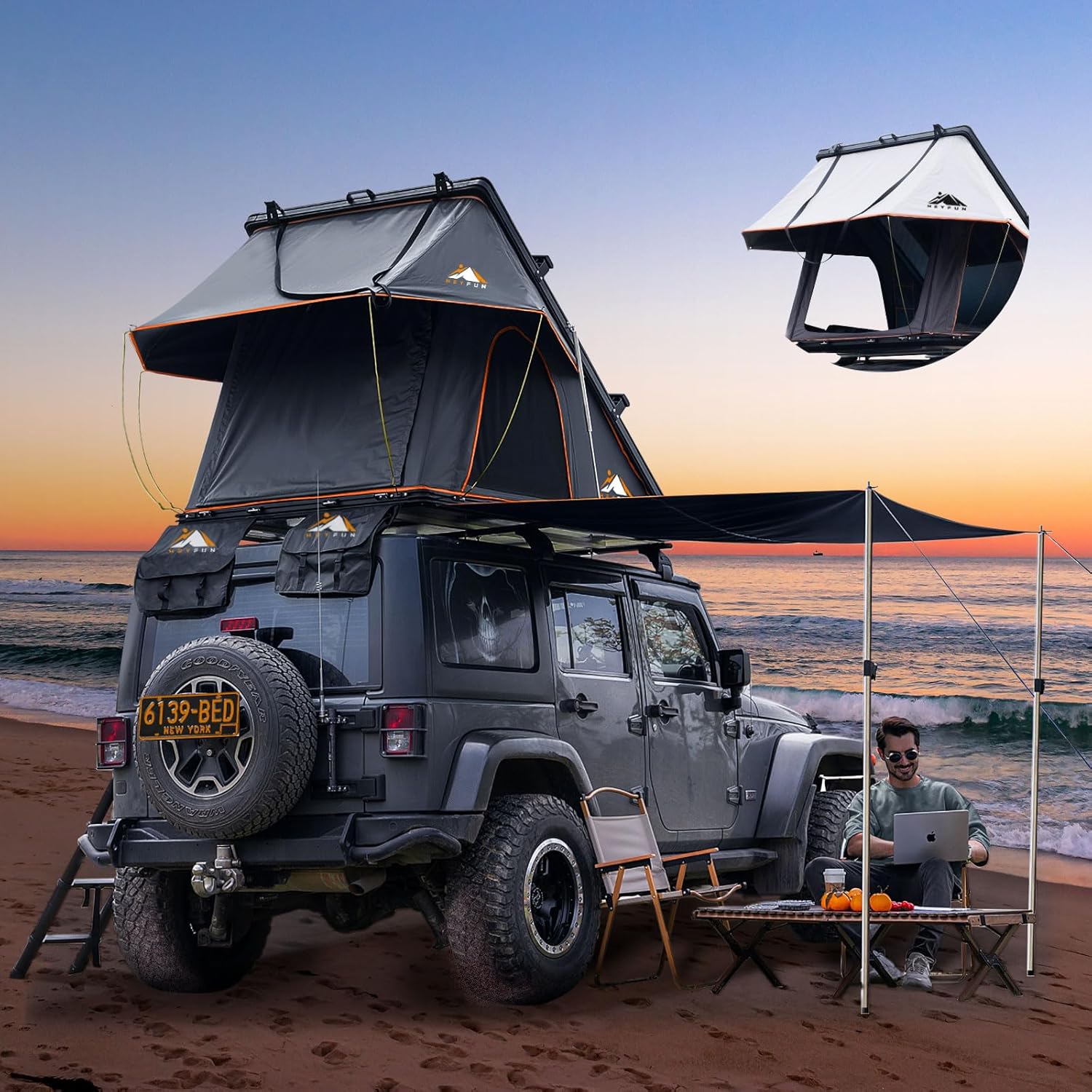
The HEYFUN Adventurer Pro is a hard‑shell rooftop tent built for fast setup and durable, year‑round use. Its hydraulic gas struts let the shell pop open or close in seconds, turning a parked Subaru Forester Sport into a comfortable elevated sleeping area for two adults and a child. The hardshell and honeycomb aluminum floor add rigidity and wind resistance, while the 3‑layer mattress, YKK zippers, and multiple ventilation layers balance comfort and breathability. Included accessories such as a side awning, replaceable rain fly, luggage racks, built‑in USB outlet and LED strip make longer trips more convenient. Practical benefits include quick deployment, solid weather sealing for wet and cold conditions, and plentiful internal storage pockets. Consider that this unit is heavy and requires sturdy cross bars rated to at least 165 lbs, and professional or careful DIY mounting is recommended; it will also add notable roof load and change your vehicle height and aerodynamics despite the streamlined shell. The tent ships preassembled with a ladder and mounting kit but plan for at least two people during installation and occasional airing after wet use to avoid moisture buildup.
Best for: Buyers who prioritize a durable, quick‑deploy hard‑shell tent that performs in high winds and across seasons and want integrated conveniences for longer trips.
Less Ideal for: If you need a lightweight, budget minimalist setup or frequently remove the tent, a soft‑shell or smaller rooftop option would be a better fit.
- Fast hydraulic pop‑up/close for quick campsite setup
- Rigid honeycomb aluminum hard shell and floor that resist wind and provide durability
- Includes practical accessories: side awning, replaceable rain fly, ladder, built‑in USB outlet and LED lighting
- Three‑layer mattress and multiple storage pockets for on‑board comfort and organization
- Designed for true four‑season use with waterproof and UV‑resistant materials
- High unit weight and significant roof load requiring robust cross bars and careful mounting
Verdict: Choose this if you want a durable, aerodynamic hard‑shell tent that opens quickly, reduces drag, and stands up better to high winds and repeated use.
4. Overland Vehicle Systems TMBK 3-Person Soft Shell Rooftop Tent
Best Soft‑Shell Roof Tent
| Occupancy | 3 Person |
|---|---|
| Seasons | Spring, Summer, Fall, Winter |
| Water Resistance Level | Waterproof |
| Fabric Type | Poly Cotton Ripstop |
| Included Components | Ladder, Rainfly, Rooftop Tent |
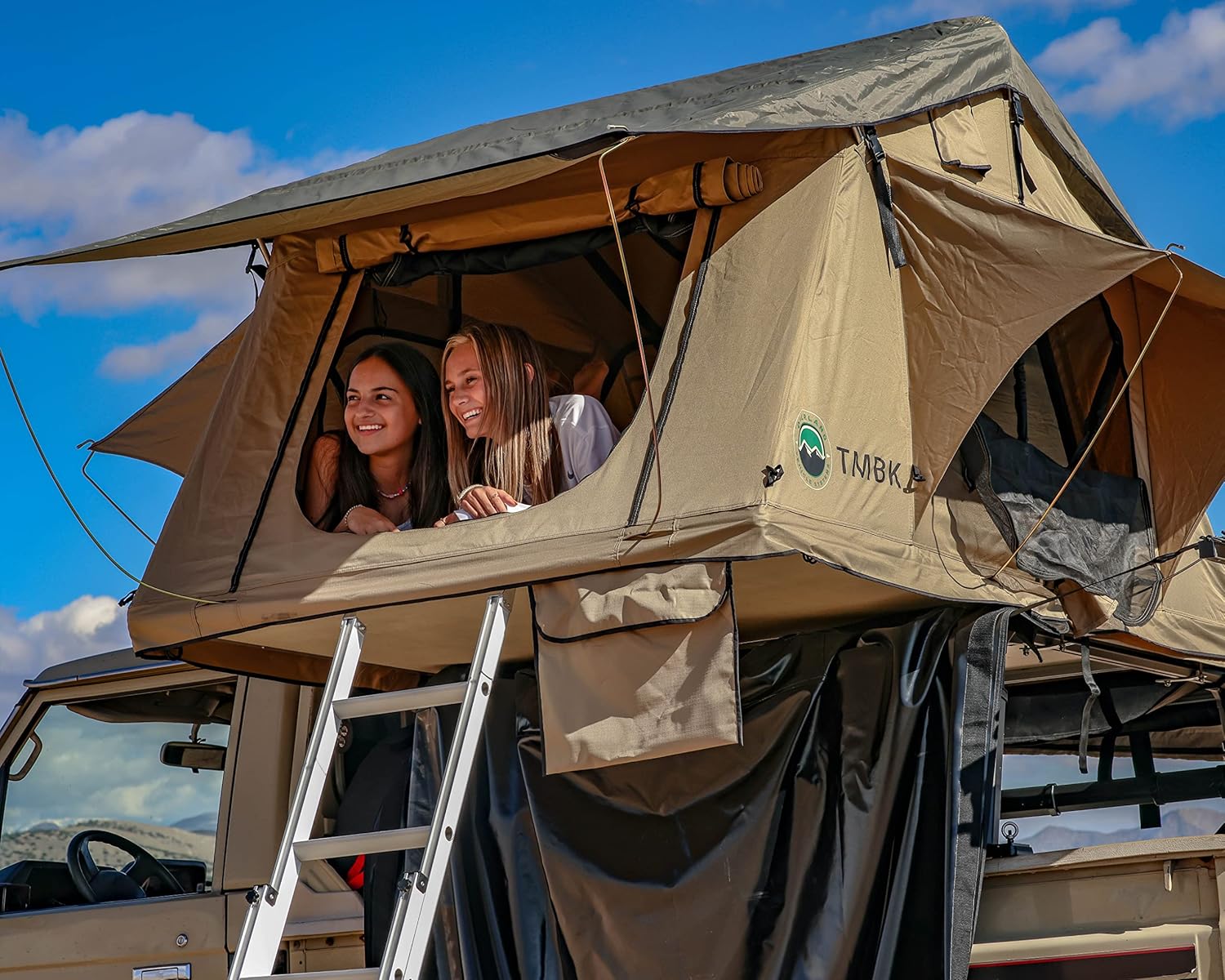
The Overland Vehicle Systems TMBK 3-person soft-shell rooftop tent provides an elevated, canvas-style sleeping space that unfolds onto a roof rack and is sized to sleep three. It uses 600D poly-cotton ripstop for the tent body and a 420D polyester oxford rainfly to balance breathability and weather protection, while an insulated aluminum base and 2.5 inch high-density foam mattress add comfort and thermal isolation from the vehicle roof. Ventilation comes from breathable mesh windows and a skylight that make stargazing and airflow easy on warm nights. Setup is straightforward: mount to compatible crossbars, unfold, extend the included ladder, and clip in support poles; takedown reverses in minutes. Practical strengths are rugged fabric, an insulated base, and included ladder and rainfly so you get a complete rooftop sleep system. Expect a substantial installed weight and a large closed profile that require a Forester Sport roof rack rated for the tent load and reduce fuel economy while fitted.
Best for: Buyers who want a soft-shell, canvas-like rooftop tent that prioritizes internal volume, ventilation, and comfortable sleeping for family or group camping on a Forester Sport with an appropriately rated roof rack.
Less Ideal for: Drivers unwilling to upgrade or verify roof rack load capacity or those who need a lightweight, compact solution for frequent solo trips.
- Canvas-style poly-cotton ripstop body for improved breathability and durability
- 420D polyester oxford rainfly offers solid waterproofing in wet conditions
- Insulated aluminum base and 2.5" high-density foam mattress for nighttime comfort
- Includes ladder and rainfly so no separate accessories are required
- Designed for four-season use with sturdy poles and marine-grade hardware
- Heavy and bulky when installed, increasing roof load and affecting fuel economy
- Closed dimensions and weight require confirming your rack and roof load limits
Verdict: Ideal for buyers who prefer a softer canvas-style tent with larger internal volume and breathable fabric for ventilation and stargazing.
5. Jiadrooe Hard-Shell Rooftop Tent with Adjustable Crossbars (Standard)
Best Quick‑Setup Roof Tent

| Occupancy | 4 Person |
|---|---|
| Seasons | 4 Season |
| Water Resistance Technology | 2000 mm |
| Form Factor | Hard-shell, vehicle-mounted with adjustable crossbars |
| Installation Type | Roof Top |
This hard-shell rooftop tent is built for quick solo setup and everyday overland use on a Subaru Forester Sport. The gas-strut hydraulic lift opens the shell in about 60 seconds, letting one person convert the roof into a sleeping platform without wrestling poles or rainflys. Inside you'll find a 7cm high-density mattress, internal storage pockets and built-in LED lighting for convenience at night. The shell includes two adjustable aluminum crossbars rated for cargo, so you can mount the tent and still carry bikes or gear above the roofline. Weather protection is solid: 280g ripstop waterproof canvas, a nylon floor, an anti-condensation mat and large mesh windows for ventilation keep the interior dry and comfortable in varied conditions. Practical trade-offs are weight and roof load demands; installation and driving dynamics on a Forester will change compared with an empty roof, and the tent is large enough that you should confirm roof-rack capacity before buying. For anyone prioritizing the fastest possible setup, the one-person hydraulic deployment is the standout feature.
Best for: Forester Sport drivers who want the fastest possible single-person camp setup and value a ready-to-use, weatherproof sleeping platform for weekend trips and overland camping.
Less Ideal for: People who need the lightest rooftop solution for fuel economy or who plan frequent fast highway driving with heavy rooftop loads should consider lighter soft-shell tents or different cargo arrangements.
- Gas-strut hydraulic system opens in about 60 seconds for true one-person setup
- Adjustable aluminum crossbars let you keep rooftop cargo options while mounted
- 7cm high-density mattress plus LED lighting and storage pockets for campsite comfort
- Waterproof 280g ripstop canvas with anti-condensation mat and mesh windows for ventilation
- High unit weight increases load on the roof rack and affects vehicle handling
Verdict: Designed for people who value the fastest possible camp setup—options that open or inflate in under a minute for one-person operation.
6. ARCTWONDER Hard-Shell Rooftop Tent with Winter Thermal Layer and Solar Panel
Best All‑Season Roof Tent

| Occupancy | 2 Person |
|---|---|
| Seasons | 4 Season |
| Material | Aluminum, Polyester |
| Water Resistance Technology | 0-5000mm |
| Included Components | Winter Thermal Layer, Solar Panel, Ladder, Mattress |
This ARCTWONDER hard-shell rooftop tent is built for cold, wet conditions and short overland setups. The aluminum top and base give the shell rigidity and better wind resistance while the included winter thermal layer (canvas plus thermal cotton) helps trap heat for colder nights. Setup is fast: gas-assisted pop-up struts let one person open the tent in seconds and the compact closed height improves vehicle clearance. The tent uses waterproof 320g polyester with taped seams and a stated 0-5000mm water resistance, and the package adds a 6 cm mattress, mesh windows, multiple storage bags and a solar panel with a 12V outlet to keep devices charged on multi-day trips. Practical limits include the tent weight and large folded footprint, which require sturdy roof bars and reduce payload capacity, and assembly and roof mounting need careful attention for safe travel. For Subaru Forester Sport owners planning true four-season camping, this tent balances insulation and weather protection against the demands of rooftop load and installation.
Best for: Buyers who prioritize a four-season rooftop tent that stays warmer and drier in cold, wet, or snowy conditions and are prepared to fit a sturdy roof system and handle a heavier load.
Less Ideal for: Drivers who need a lightweight, low-profile solution for frequent solo city trips or who cannot accommodate higher roof loads and large mounting footprints.
- Hard-shell aluminum top and base for improved durability and wind resistance
- Separate winter thermal layer that provides added insulation and privacy
- Waterproof 320g polyester with taped seams and rated 0-5000mm water resistance
- Quick pop-up setup with gas/air pressure rods for one-person operation
- Includes solar panel and 12V outlet plus a 6 cm mattress and storage accessories
- Heavy and bulky when mounted, requiring robust roof racks and reducing payload capacity
- Installation and secure mounting take time and should be professionally checked for highway use
Verdict: Picked for buyers who need a rooftop tent engineered for colder weather, heavy rain, and snow with higher waterproof ratings and thermal features.
7. SAN HIMA Hotham Lite Hard‑Shell Rooftop Tent with LED Light and Telescopic Ladder
Best Slimline / Low‑Profile Roof Tent

| Occupancy | 2 Person |
|---|---|
| Seasons | 4 Season |
| Water Resistance Technology | PU 5,000mm |
| Fabric Type | 420D Double Ripstop Oxford, 280GT Polyester‑Cotton |
| Included Components | Anti‑condensation Mat, LED Strip Light, Shoe Bag, Telescopic Ladder, Crossbars |
The SAN HIMA Hotham Lite is a compact hard‑shell rooftop tent aimed at campers who need a low closed height without giving up comfort. It mounts to factory or aftermarket roof bars and packs down to a very slim profile, which makes it straightforward to keep on a Subaru Forester Sport without hitting low garages or adding excessive wind noise. Setup is fast—the telescopic ladder and pre‑attached support system allow the shell to open in about 30 seconds—and the interior includes a 1.97 inch memory foam mattress, full‑ceiling tri‑color LED lighting, and multiple storage pockets for organized gear. Weather protection is strong: 420D double ripstop fabric, a PU 5,000mm rating, AquaShield coating, and an aluminum honeycomb base help keep the cabin dry and durable in four‑season use. Expect a substantial curb weight that affects fuel economy and roof load considerations on a Forester, and verify your vehicle’s roof load and crossbar specs before installation. The tent’s two‑person layout and slim packed height make it a practical choice when clearance is the main constraint but you still want a robust, weatherproof shelter.
Best for: A Forester Sport owner who prioritizes a slim packed profile and quick, reliable rooftop sleeping for weekend trips and overland runs where garage clearance or reduced wind drag matters most.
Less Ideal for: Drivers who need a very lightweight solution for extended overlanding with strict payload limits or who plan to swap the tent frequently between vehicles may prefer a lighter soft‑shell or smaller model.
- Very low packed height suited to tight garage or low‑clearance parking
- Fast, tool‑free setup with pre‑attached supports and telescopic ladder
- High water resistance and UV50+ protection for true four‑season use
- Built‑in LED lighting and organized storage pockets improve campsite comfort
- Heavy overall weight which requires checking the Forester’s roof load and may reduce fuel efficiency
Verdict: Recommended for owners who need a compact closed height to limit wind drag, fit in tight clearances, or park in garages while still carrying a rooftop tent.
Choosing the Right Subaru Forester Sport Roof Tent: Key Factors to Consider
Roof Load Capacity and Weight
The Forester Sport has defined roof load limits for dynamic and static loads; matching tent weight and occupant load to those limits prevents structural stress and unsafe handling. Consider both the packed weight of the tent and the expected number of sleepers. A heavier tent can offer sturdier construction, but may require upgraded crossbars or a reinforced rack to remain within safe dynamic-load recommendations.
Also think about accessories such as mattresses and annexes. Those add considerable mass and can push you past the vehicle's dynamic limits during transit. Verify manufacturer load ratings and, when in doubt, choose lighter materials or plan to carry heavier gear inside the cabin or cargo area.
Mounting Compatibility and Rack Type
The tent must attach securely to the Forester Sport's crossbars or aftermarket roof rack. Different tents use U-bolts, T-bolts, or clamping plates. Confirm the tent's mounting footprint and hardware range before buying to ensure a safe fit without drilling or permanent changes.
Mounting ease affects setup time and day-to-day usability. Adjustable, tool-free clamps speed installation and are helpful if you remove the tent seasonally. When using non-factory racks, double-check clearance around roof rails, antennae, and the rear hatch to avoid interference.
Packed Dimensions and Vehicle Clearance
A compact packed profile reduces wind noise and drag on the Forester Sport, improving fuel economy and steering feel. Check the tent's closed height to ensure acceptable clearance in garages or low branches. Wide tents may overhang the roofline and affect rear hatch access or visibility.
Consider how the tent sits on the roof: a low-profile hard-shell minimizes aerodynamic penalty but can weigh more, while soft-shell packs smaller but may expose fabric to road grime when stowed. Confirm that the tent will not obstruct the rear hatch or block factory roof accessories.
Setup Time and User Ergonomics
One of the biggest convenience factors is how quickly and easily you can deploy the tent alone. Look for intuitive pop-up mechanisms, gas struts, or simple pole systems that a single person can operate. Mattress thickness, internal storage pockets, and entry steps affect overnight comfort and usability.
Evaluate whether the tent allows convenient entry from ground level or requires climbing awkwardly against the Forester Sport. Consider the included ladder length, its attachment points, and whether it will lean safely against the vehicle without damaging trim.
Weatherproofing and Ventilation
Reliable waterproofing and wind resistance are essential for safe rooftop camping. Inspect tent fabric ratings, seam sealing, and rainfly design. A tent with good airflow options reduces interior condensation during cool nights and high humidity.
Ventilation options like adjustable vents, mesh panels, and covered windows allow you to balance airflow with insect protection. For multi-season use, look for insulated or layered fabrics and designs that reduce drafts while still offering ventilation when needed.
Sleeping Comfort and Internal Layout
Internal mattress size, thickness, and layout determine how restful your nights will be. A tent that suits two sleepers comfortably should still fit within the Forester Sport's roof dimensions without excessive overhang. Mattress material and included bedding platforms play a big role in noise, insulation, and comfort.
Storage pockets, gear pouches, and the ability to add an annex or awning expand usable space at camp. Think about how the internal layout supports real-world sleeping arrangements and whether the tent orientation will interfere with roof accessories or the vehicle's hatch operation.
How Roof Tents Affect Forester Sport Handling
Adding a roof tent changes your vehicle's center of gravity, wind resistance, and loading dynamics. Even compact tents add mass up high, which can increase body roll and alter steering feel, particularly on twisty roads. Be mindful of cornering speeds and adjust tire pressures for the added load when traveling with a tent mounted.
- Drive more conservatively on curves and in high winds.
- Monitor tire pressure and suspension response with the extra weight.
- Distribute additional gear low in the vehicle to offset rooftop mass.
Preparing Your Forester Sport for Roof-Top Camping
Before mounting a tent, inspect the roof rack, crossbars, and attachment points for corrosion, loose fasteners, or damage. Tighten all bolts to manufacturer torque specs and replace worn parts. If you plan frequent tent use, consider upgrading to crossbars rated for higher dynamic loads while staying within vehicle limits.
- Check manufacturer load specs for both dynamic and static ratings.
- Secure loose trim and seal any openings near the roof to reduce leaks.
- Pack heavy gear inside the cabin to keep rooftop weight minimal.
Choosing Between Hard-Shell and Soft-Shell Tents
Hard-shell tents generally close to a rigid, aerodynamic case that reduces wind noise and sheds water quickly. They often open faster but are heavier and bulkier when installed. Soft-shell tents compress smaller and usually cost less weight for similar sleeping volume, but they expose fabrics to road grime and can take slightly longer to set up.For the Forester Sport, the decision hinges on how often you mount the tent and whether you prioritize lower drag or lighter installed weight. If you frequently travel roof-mounted for long distances, a low-profile hard-shell may be worth the tradeoff.
- Hard-shell: quicker setup, better aerodynamics, higher installed weight.
- Soft-shell: lighter packed weight, smaller storage footprint, more exposure to elements.
Accessory Options: Awnings, Annexes, and Storage
Expand a roof tent's livable area with attachable annexes and awnings. Annexes provide ground-level sleeping or storage space and can improve privacy when parked in crowded campgrounds. Awnings create sheltered outdoor living space, useful for cooking or gear organization.Also plan for storage solutions that keep weight off the roof. Rooftop cargo boxes or rear-mounted storage systems can be paired with a roof tent to carry extra gear without overloading crossbars.
- Annexes add versatile enclosed space for gear and changing.
- Awnings increase covered area for cooking or relaxing.
- External storage boxes keep heavy items off the roof and help balance load.
Seasonal Use and Insulation Considerations
If you camp year-round, insulation and draft control matter. Layered fabrics, insulated mattress pads, and draft collars around the hatch and ladder entry can make cool-weather camping more comfortable. Consider condensation management features such as vents you can open without letting insects in.In hot climates, look for reflective outer fabrics and ample mesh panels to maximize airflow. For cold-weather trips, combine a tent with a thicker mattress and an insulated liner to retain heat.
- Use insulated mattress toppers for colder weather.
- Employ mesh panels and vents for hot-weather airflow.
- Consider a skirt or draft seal for added thermal control at the ladder entry.
Still looking for the perfect fit?
Select your Subaru Forester configuration to see the most relevant Roof Tents recommendations
How We Chose the Best Subaru Forester Sport Roof Tent
Our selection focused on tents that fit the Subaru Forester Sport's roof footprint and common roof rack load limits while delivering reliable weatherproofing and practical features for overland use. We prioritized robust materials, straightforward mounting systems compatible with crossbars and common aftermarket racks, and realistic live-load versus static-load ratings relevant to the Forester Sport.Evaluation criteria included: construction and fabric weight, waterproofing and seam sealing, low-profile design and packed dimensions, mounting hardware flexibility for common crossbar types, setup time and user ergonomics, and ventilation/insulation for multi-season use. We excluded any tents whose minimum static load or required rack dimensions exceed the Forester Sport's published rooftop capacity or that demand permanent vehicle modifications.We also screened for tents with clear manufacturer installation guidance and accessible replacement parts to support long-term ownership. Models that prioritized excessive weight without proportional durability, or that lacked credible mounting options for compact SUVs, were omitted.
Our full evaluation process is outlined in our review methodology.
FAQ
Will a roof tent fit on the Forester Sport's factory crossbars?
Often it will, but compatibility depends on the tent's mounting hardware and the crossbar profile. Confirm the tent's clamping range and the crossbar dimensions; adjustable mounting systems increase the chance of a safe fit.
How many people can a typical roof tent for the Forester Sport sleep?
Most compact roof tents for SUVs sleep two to three people comfortably. Actual capacity depends on mattress dimensions and how much gear you store inside the tent during sleep.
Do I need to upgrade my crossbars before buying a roof tent?
You may if the tent plus occupants exceed your current crossbars' dynamic rating. Check both the vehicle roof load and your rack's capacity. Upgrading is prudent when you plan frequent or heavy rooftop loads.
How long does it take to set up a rooftop tent by yourself?
Setup time varies with design. Pop-up or gas-strut systems can be ready in a few minutes, while pole-based soft-shell tents may take 5 to 15 minutes for one person until you get accustomed to the process.
Can I keep the roof tent mounted year-round?
You can, but prolonged exposure to weather and road debris accelerates wear. If you live in an area with heavy snow or strong seasonal storms, consider removing and storing the tent when not in use to prolong its life.
Will a roof tent block the rear hatch from opening?
Most tents are designed to allow hatch operation, but some wider models may restrict how far the hatch opens or require different ladder placements. Verify the tent's overhang and ladder attachment relative to the Forester Sport's hatch clearance.
Final Verdict
For Forester Sport owners, the best roof tent balances low installed weight, secure mounting, and comfortable sleeping space without exceeding vehicle load limits. Prioritize tents that provide clear mounting compatibility with your crossbars, dependable weather sealing, and an ergonomically simple setup that one person can handle.Weigh tradeoffs between hard-shell aerodynamics and soft-shell weight savings based on how often you will travel with the tent mounted. Focus on safe loading practices and realistic expectations about handling changes so you can enjoy elevated camping with confidence.
Explore More:
- Check out all Subaru Forester parts & accessories
- Explore Exterior Accessories
- Browse all Accessories
