

Note: This article contains affiliate links. If you click on these links and make a purchase, I may earn a small commission at no extra cost to you. This helps support my research and content. Read my full affiliate disclosure here.
If you want more ground clearance, room for bigger tires, or a more aggressive stance on your GMC Sierra 1500 2WD, a properly chosen lift kit makes a big difference. The wrong kit can upset ride quality, steering geometry, and towing behavior, so it pays to pick options that match how you use the truck. This guide covers the top shortlisted lift kits for the Sierra 1500 2WD and explains the tradeoffs between suspension height, ride comfort, and installation complexity. We evaluate fitment, ride impact, and installation considerations to help you pick the right kit for hauling, light off-road use, or daily driving. Read on for the picks and practical buying advice.
Looking for other parts? See all GMC Sierra 1500 parts & accessories.
Top Picks at a Glance
| Best Overall Lift Kit The most well-rounded lift kit balancing performance, price, and reliability | Rough Country 3.5" Suspension Lift Kit with Strut Spacers and N3 Rear Shocks |  |
| Best Budget Lift Kit A low-cost lift kit that delivers basic lift without breaking the bank | Maxracing 2" Front Leveling Kit (2-inch) for 2007–2026 Silverado/Sierra 1500 and Similar Models |  |
| Best Premium Lift Kit Higher-end components and finish for long-term durability and performance | ReadyLIFT 4.0" SST Lift Kit for Chevrolet/GMC 1500 (Front 4", Rear 3") |  |
| Best Complete Lift Kit Includes all required parts for a full, out-of-the-box installation | Rough Country 3.5" Suspension Lift Kit with Strut Spacers and N3 Rear Shocks |  |
| Best 2-Inch Lift Kit A specific-height kit offering modest lift with minimal changes | KSP Performance 2" Front Leveling Lift Kit for Silverado/Sierra 1500 |  |
| Best Adjustable Lift Kit Tunable components that let you fine-tune ride height and stance | Aeagle 3" Front & 2" Rear Leveling Lift Kit with Adjustable Upper Control Arms and Ball Joints |  |
| Best Bolt-On Lift Kit Easy-to-install, non-weld kits using existing mounting points | Dynofit 2" Front Leveling Kit — Strut Spacers for Silverado/Sierra 1500 (2007–2026) |  |
1. Rough Country 3.5" Suspension Lift Kit with Strut Spacers and N3 Rear Shocks
Best Overall Lift Kit
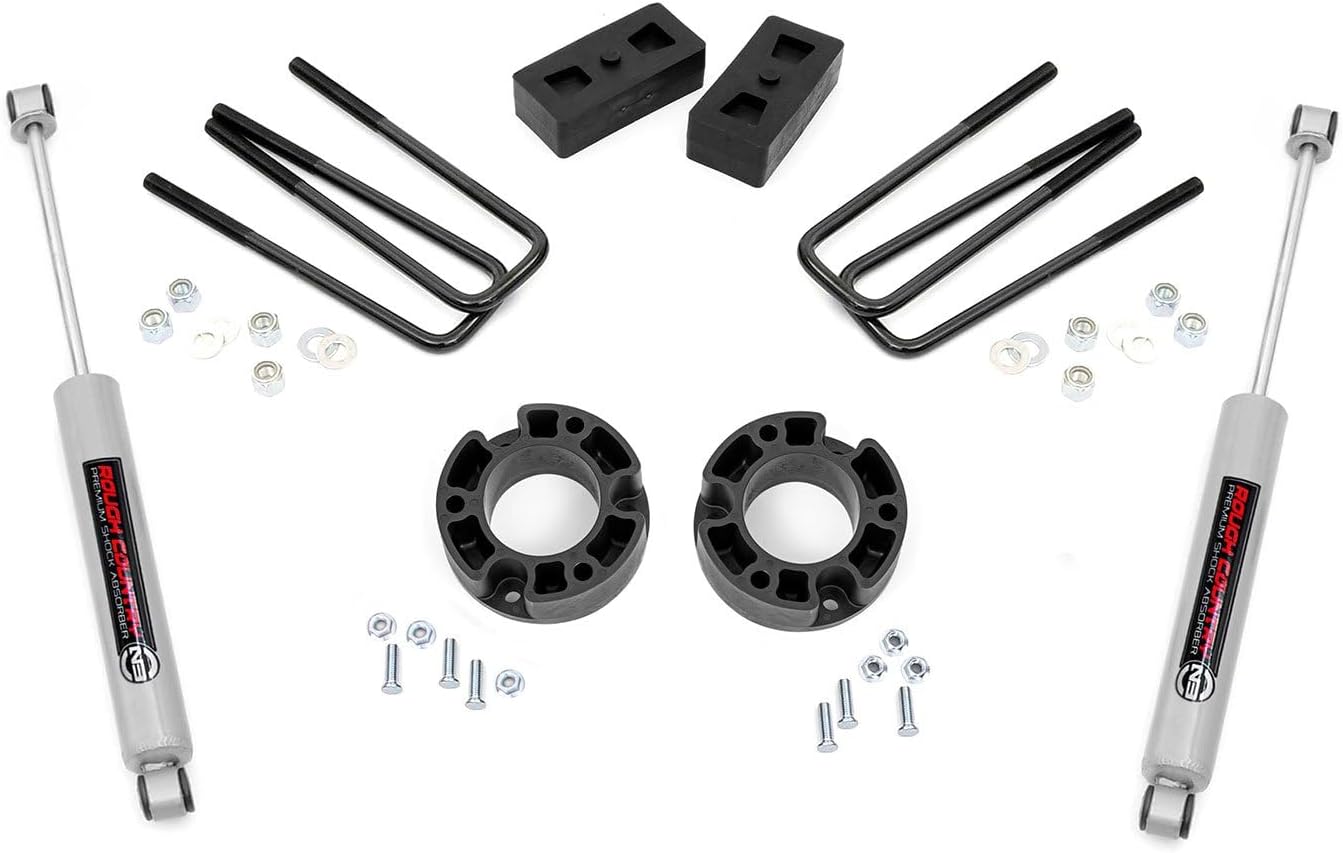
| Fitment | 2007–2013 Chevy Silverado & GMC Sierra 1500 2WD |
|---|---|
| Maximum Lifting Height | 3.5 Inches |
| Included Components | N3 Rear Shocks, Upper Strut Spacers, Lift Blocks, U-Bolts, Hardware |
| Material Type | Alloy Steel, Aluminum, Rubber, Zinc |
This Rough Country kit raises a 2WD Sierra or Silverado about 3.5 inches using front strut spacers, rear lift blocks with U-bolts, and nitrogen-charged N3 rear shocks to deliver a leveled, more capable truck without full suspension disassembly. It is a mostly bolt-on solution aimed at DIYers and shops that want a balance of appearance, clearance, and everyday drivability. The package corrects factory rake, increases approach angles, and the N3 shocks prioritize comfortable daily driving while still handling light off-road use. Installation is straightforward for someone with basic tools but can require minor cutting or drilling and occasional bump stop trimming; some buyers add aftermarket upper control arms to optimize alignment and ball joint angles. The kit is reversible and backed by a limited lifetime replacement policy, making it a practical choice for owners who want a dependable, value-oriented lift rather than an extreme off-road setup.
Best for: Buyers who want a balanced, budget-friendly lift that improves stance and clearance while keeping everyday ride quality and a mostly DIY-installable package.
Less Ideal for: Enthusiasts seeking large travel off-road performance or maximum lift height should consider higher-end multi-inch kits and full suspension replacements instead.
- Bolt-on design that does not require strut disassembly for quicker installs
- Includes N3 nitrogen-charged rear shocks tuned for comfortable daily driving
- Front-to-rear leveling improves stance and ground clearance without a full suspension overhaul
- Reversible setup with lift blocks and hardware so truck can be returned to stock
- May require minor cutting, drilling, or bump stop trimming during installation
Verdict: The best overall lift kit for buyers who want a balanced package of fitment, durability, ride quality, and value for typical DIY installations.
2. Maxracing 2" Front Leveling Kit (2-inch) for 2007–2026 Silverado/Sierra 1500 and Similar Models
Best Budget Lift Kit

| Material | Aluminum |
|---|---|
| Maximum Lifting Height | 2 Inches |
| Auto Part Position | Front |
| Included Components | Installation Guide, Installation Hardware, Strut Spacer |
| Automotive Fit Type | Vehicle Specific Fit |
This Maxracing 2-inch front leveling kit uses billet-aluminum strut spacers and hardware to raise the front of compatible 1500-series trucks about two inches for a level stance and added clearance. It bolts to the existing strut assembly without disassembling the entire strut, so a competent DIYer can install it in roughly 1.5 to 2 hours per side with basic tools. The CNC-machined aluminum construction and anodized finish feel more durable than plastic spacers and preserve ride quality when paired with factory steel lower control arms. The kit works with common larger tire setups and helps avoid fender rubbing when paired with appropriate wheel offsets, though an alignment and possible caster adjustment after installation are recommended. Limitations: it only lifts the front, so rear ride height is unchanged, and it is not compatible with certain factory suspension variants like MagneRide or specific trim packages; some buyers also report needing additional upper control arms for heavy-duty use. Expect to re-torque fasteners after initial miles and to budget for an alignment post-installation.
Best for: Buyers who want the cheapest practical route to a leveled front end with parts sturdy enough for DIY installation and normal driving, prioritizing low upfront cost and a quick, reversible upgrade.
Less Ideal for: Drivers planning heavy off-road use, large lifts, or vehicles with MagneRide or other nonstandard factory suspensions should choose a full suspension replacement or a kit designed for those systems instead.
- CNC-machined aluminum spacers resist crushing and heat better than plastic alternatives
- Simple bolt-on installation that does not require strut disassembly
- Maintains near-factory ride quality when used with factory steel lower control arms
- Adds usable clearance for larger tires and improves vehicle stance
- Front-only lift so rear height and overall suspension geometry may still require additional mods for aggressive setups
Verdict: The best budget lift kit for buyers focused on the lowest reasonable upfront cost while still providing safe, functional lift and usable components for DIY installation.
3. ReadyLIFT 4.0" SST Lift Kit for Chevrolet/GMC 1500 (Front 4", Rear 3")
Best Premium Lift Kit

| Fitment | 2019–2023 Chevy Silverado and GMC Sierra 1500 (select models) |
|---|---|
| Front lift | 4 inches |
| Rear lift | 3 inches |
| Material Type | Alloy Steel, Aluminum, Cast Iron |
This ReadyLIFT SST lift kit raises the front 4 inches and the rear 3 inches using a combination of laser-cut steel strut extensions, CNC-machined aluminum preload spacers, new tubular upper control arms, and OE-style rear lift blocks. It is intended to keep factory-like ride quality on GM trucks with Adaptive Ride Control or standard suspension by preserving driveline orientation and improving ball joint pivot geometry with maintenance-free TCT pivot bushings. The kit supports larger 20×9 wheels and specific 295-series tires without cutting on most 2019–2023 Silverado and Sierra models and includes longer U-bolts and locating ears for the rear blocks to handle towing and payload. Installation is vehicle-specific and engineered to avoid major trimming, but it is not compatible with Trail Boss, AT4/AT4X, or trucks with composite mono-leaf rear springs, and the Auto 4 Hi feature is discouraged. Expect a lifted, more aggressive stance with durable materials and components aimed at heavier use, while fitment limits and some driveline cautions mean careful verification before purchase.
Best for: Buyers who prioritize a durable, refined lift that maintains close-to-factory ride quality under heavier use and want a vehicle-specific kit engineered for towing and larger 20" wheel setups.
Less Ideal for: Owners seeking a universal or multi-vehicle kit, those with Trail Boss/AT4-series trucks, or anyone with composite mono-leaf rear springs should look elsewhere.
- Vehicle-specific design preserves factory ride and suspension geometry
- Heavy-duty laser-cut steel and CNC-machined aluminum parts improve durability under load
- Includes tubular upper control arms with optimized pivot angles for better alignment and handling
- Rear cast iron lift blocks with longer U-bolts support towing and payload
- Accommodates larger 20×9 wheels and specific 295-series tires on supported models
- Not compatible with Trail Boss, AT4/AT4X, or trucks with composite mono-leaf rear springs
Verdict: The best premium lift kit for buyers willing to pay more for superior materials, refined ride tuning, and longer-lasting components under heavier use.
4. Rough Country 3.5" Suspension Lift Kit with Strut Spacers and N3 Rear Shocks
Best Complete Lift Kit

| Fitment | 2007–2016 Silverado & Sierra 1500 |
|---|---|
| Maximum Lifting Height | 3.5 Inches |
| Included Components | Strut spacers, N3 rear shocks, forged upper control arms, differential drop spacers, rear lift blocks, hardware |
| Material Type | Alloy Steel, Aluminum, Rubber, Zinc |
This Rough Country kit is a complete suspension lift package designed to raise a 2007–2016 Sierra 1500 by about 3.5 inches while keeping a factory-like ride. It bundles heavy-duty strut spacers for the front, forged upper control arms with preinstalled POM ball joints, differential drop spacers and fabricated rear lift blocks plus nitrogen-charged N3 rear shocks. In practice the kit gives noticeably more ground clearance and allows larger tires without replacing core components, and the included diff drops help preserve driveline angles. Installation is fairly involved—expect cutting, grinding and a differential drop step—and alignment afterward is required. Several users report missing hardware or fitment nuances (models with leveling struts, Denali Magnetic Ride Control or eAssist are excluded), so check vehicle configuration carefully before buying. The kit is fully reversible and backed by a limited lifetime warranty, making it a solid all-in-one option for buyers who want a single purchase solution for a full-height lift on the Sierra 1500.
Best for: Buyers who want a single, vehicle-specific kit that supplies all major components needed to raise a 2007–2016 Sierra 1500 to full lift height without sourcing extra parts, and who are comfortable with a moderately involved installation process.
Less Ideal for: Drivers seeking a simple bolt-on leveler or those with Sierra models that have Magnetic Ride Control, eAssist, or non-standard suspension setups should consider a different solution.
- Complete package that includes front spacers, rear blocks, differential drops, control arms and shocks
- Forged upper control arms with low-friction POM ball joints for improved articulation and durability
- Nitrogen-charged N3 rear shocks with multi-stage valving for smoother ride control
- Includes differential drop spacers to help maintain driveline geometry after lifting
- Fully reversible design so you can return to factory ride height if needed
- Not compatible with models equipped with Magnetic Ride Control, eAssist, or vehicles that already have leveling struts
- Installation requires cutting/grinding and mechanical experience or a professional shop
- Some buyers report missing hardware or parts that required modification for proper fitment
Verdict: The best complete lift kit for buyers who want a single purchase that includes everything needed for a full-height lift—no extra parts or major modifications required.
5. KSP Performance 2" Front Leveling Lift Kit for Silverado/Sierra 1500
Best 2-Inch Lift Kit
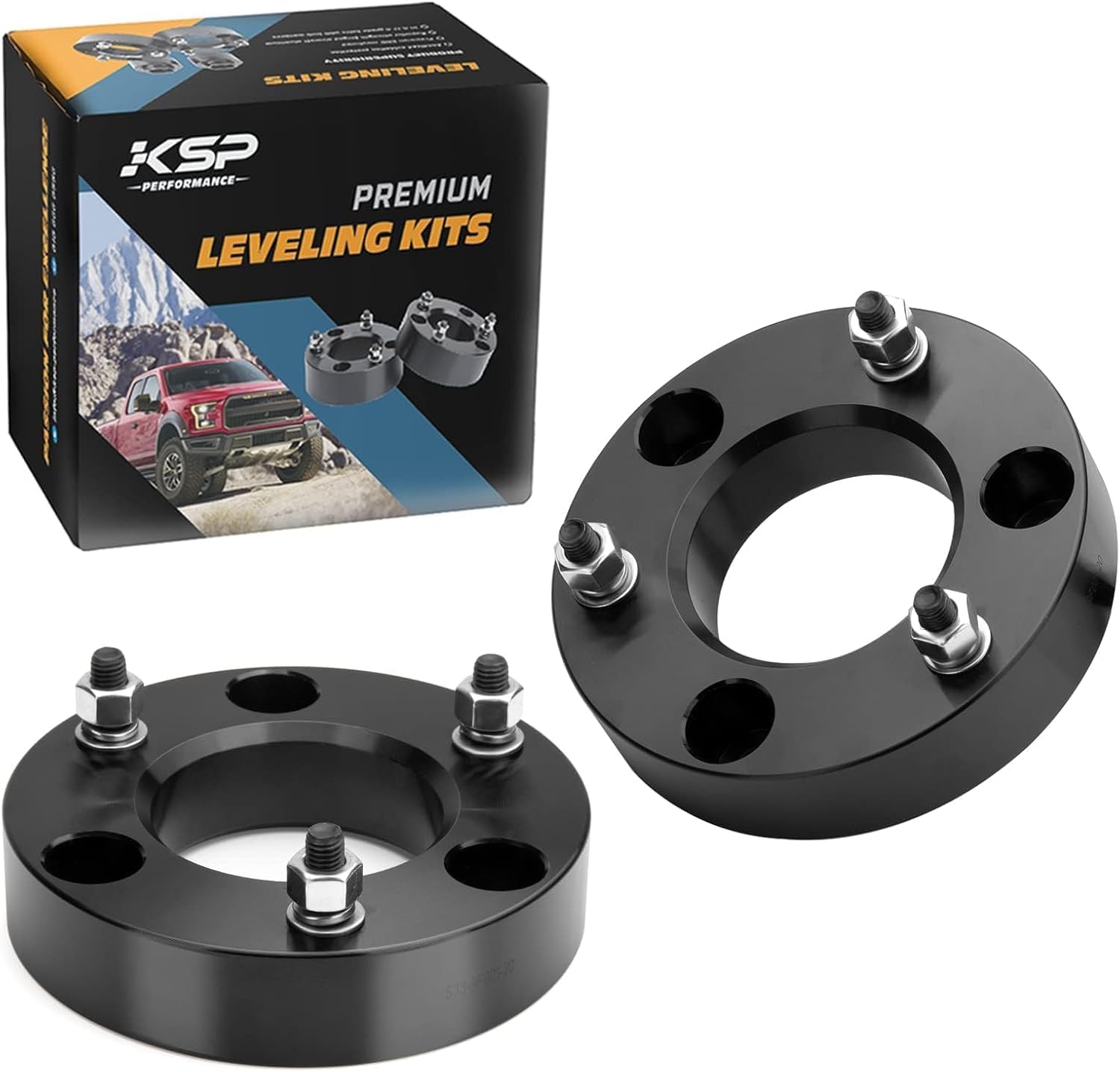
| Auto part position | Front |
|---|---|
| Material | Aluminum |
| Included components | 2pcs aluminum lift spacers |
| Maximum lifting height | 2 Inches |
| Automotive fit type | Vehicle Specific Fit |
This KSP Performance 2" leveling kit lifts the front of 2007–2026 Silverado and Sierra 1500 trucks by approximately two inches using forged aircraft-grade aluminum spacers and hardened 12.9-grade bolts. It installs as a vehicle-specific front spacer set and is intended to change ride height without replacing struts or springs, so many owners can fit it with basic hand tools and a lift or jack stands. The anodized finish and solid fasteners help resist corrosion and the included gaskets and spring washers improve clamping. In practice the kit gives a more aggressive stance and extra clearance for slightly larger tires while usually keeping handling close to stock, but some users report a firmer front ride and the need for longer control arms or shocks if you push beyond moderate lift or tire sizes. Alignment after installation is recommended to restore proper steering geometry. This is a sensible choice when you want a modest, factory-friendly height increase without a full suspension overhaul.
Best for: Buyers who want a modest, factory-friendly front lift that improves stance and tire clearance while keeping most of the stock suspension intact and avoiding a full suspension rebuild.
Less Ideal for: Drivers planning large lifts, heavy off-road use, or who want a plush ride—those buyers should consider full suspension kits or professional suspension upgrades instead.
- Vehicle-specific front spacers designed for 2007–2026 Silverado and Sierra 1500 for direct fitment
- Forged aircraft-grade aluminum construction for strength with anodized corrosion resistance
- Uses 12.9-grade bolts with gaskets and spring washers for secure clamping
- Simple spacer-style design that usually installs without replacing struts or springs
- Gives an aggressive look and extra clearance to run modestly larger tires
- May increase front-end stiffness and change ride quality compared with stock
- Some setups may require longer shocks or upper control arms if larger lifts or tires are used
- Not compatible with Silverado Trail Boss or Sierra AT4 models
Verdict: The best 2-inch lift kit for buyers seeking a modest, factory-friendly ride-height increase that preserves handling and usually avoids major suspension modifications.
6. Aeagle 3" Front & 2" Rear Leveling Lift Kit with Adjustable Upper Control Arms and Ball Joints
Best Adjustable Lift Kit

| Automotive Fit Type | Vehicle Specific Fit |
|---|---|
| Set Name | Front: 3 inches, Rear: 2 inches |
| Included Components | Control Arms Assembly |
| Material Type | Alloy Steel, Carbon Steel |
| Maximum Lifting Height | 3 Inches |
This kit combines 3-inch front and 2-inch rear leveling spacers with adjustable upper control arms that include replaceable ball joints, giving you height flexibility without replacing the whole suspension. It is supplied as a vehicle-specific package and includes the control arms, ball joints, front and rear leveling lifts, U-bolts and mounting hardware for a direct install on compatible 2019–2022 models. The alloy and carbon steel components have an anti-corrosion coating to resist rust, and the adjustable control arms allow fine tuning of front ride height and alignment to reduce bump steer after lifting. Practical benefits include a quicker visual stance correction, preserved wheel geometry when dialed in, and the ability to set ride height within the 2–4 inch control arm range. Limitations include mixed feedback on bushing durability and the fact that pucks and spacers change suspension geometry less than a full suspension lift, so extreme off-road use or larger tire fits may require additional components or professional alignment work.
Best for: Buyers who want to dial in front ride height and alignment after a modest lift and prefer a mostly bolt-on solution that keeps suspension geometry adjustable without swapping major components.
Less Ideal for: Drivers seeking heavy off-road lifts, large tire clearances, or a long-travel suspension should consider a full suspension lift or more heavy-duty components instead.
- Vehicle-specific kit with matching front 3" and rear 2" spacers for a leveled stance
- Adjustable front upper control arms with replaceable ball joints let you fine tune ride height and alignment
- Anti-corrosion coating on steel parts helps resist rust for longer service life
- Includes necessary hardware such as U-bolts and mounting bolts for a more complete install
- Some users report premature cracking or failure of control arm bushings under heavy use
Verdict: The best adjustable lift kit for buyers who want flexibility to dial in ride height, leveling, or corner balancing without swapping major components.
7. Dynofit 2" Front Leveling Kit — Strut Spacers for Silverado/Sierra 1500 (2007–2026)
Best Bolt-On Lift Kit

| Compatible vehicles | 2007–2026 Silverado/Sierra 1500 2WD/4WD (excludes Trail Boss/AT4) |
|---|---|
| Maximum Lifting Height | 2 Inches |
| Material | Aluminum |
| Included Components | Front strut spacers, lug nuts |
This Dynofit leveling kit uses CNC-machined billet aluminum strut spacers to raise the front of a Silverado/Sierra 1500 by about 2 inches. It installs as a simple bolt-on to the existing strut assembly, so a mechanically inclined DIYer can typically complete both sides in 1.5–2 hours with basic hand tools. The forged, black-anodized finish resists corrosion and the kit ships with lug nuts and hardware for a complete front install. Benefits include improved ground clearance, reduced fender rubbing with larger tires, and a more aggressive stance while retaining near-factory ride quality because the suspension geometry is preserved. Expect to need a professional front-end alignment after installation to correct camber and toe. This kit does not require cutting or welding but does alter control-arm angles slightly; heavier-duty suspension changes or models with specific off-road packages may need different components. The manufacturer offers a 24-month after-sales promise and recommends contacting support if fitment issues arise.
Best for: DIY mechanics who want a quick, factory-style front lift using existing mounting points and minimal fabrication, aiming to level the truck and fit slightly larger tires without changing ride feel.
Less Ideal for: Drivers seeking large lifts, heavy-load commercial use, or owners of models with specialized off-road packages who need full suspension components rather than simple spacers.
- True bolt-on strut spacers that use factory mounting points for a straightforward install
- CNC-machined billet aluminum construction with black anodized finish for corrosion resistance
- Raises the front approximately 2 inches to increase clearance and improve stance
- Includes necessary hardware such as lug nuts for a more complete installation package
- Designed only for compatible Silverado/Sierra 1500 models and excludes Trail Boss and AT4 variants
Verdict: The best bolt-on lift kit for DIY mechanics who prioritize straightforward installation using factory mounting points and minimal cutting or welding.
Choosing the Right GMC Sierra 1500 2WD Lift Kit: Key Factors to Consider
Lift Height and Intended Use
Lift height determines how much clearance you gain and what tire sizes you can run. Small lifts around 1.5 to 2.5 inches often allow modestly larger tires and a subtle stance improvement while preserving near-factory ride and steering geometry. Larger lifts beyond 3 inches create more clearance and room for significantly larger tires but usually require additional suspension geometry corrections and may affect driveline angles.
Match the height to your use. For on-road commuting with occasional dirt roads, a modest lift keeps comfort and handling predictable. If you plan regular trails or rockier terrain, a taller suspension lift provides capability but increases complexity. Remember that higher lifts also raise the center of gravity, which can change rollover characteristics and require re-tuning of shocks and anti-sway components.
Component Type and Design
Lift kits come in different designs such as spacer-style lifts, replacement coil springs, coil spring lift kit assemblies, strut or shock-based systems, and full suspension conversion kits. Spacer-style or leveling kits are simpler and retain much of the factory suspension, which can be good for cost and ease of installation. Replacement coil spring systems and full suspension kits change spring rates and travel and often offer a more integrated ride and improved handling off-road.
Consider whether the kit includes matched shocks or requires new dampers. A kit that does not address damping will likely need upgraded shocks to control motion at the new ride height. Also check whether the design requires additional components like control arm drops, track bar relocation, or brake line extensions to maintain safe and reliable operation.
Ride Quality and Handling
A lifted Sierra will respond differently to bumps, steering inputs, and weight transfer. How a kit alters spring rates and damping directly influences ride comfort and handling. Some kits are tuned to retain a smooth on-road ride at moderate lift heights, while others prioritize articulation and wheel travel for off-road performance at the expense of highway comfort.
Think about whether you tow, carry heavy loads, or frequently drive on highways. Kits that stiffen the rear springs or change rear geometry can affect load-carrying and trailer stability. Look for systems that give clear guidance on shock valving or include matched dampers sized for the lifted height to preserve predictable handling.
Installation Complexity and Required Modifications
Installation ranges from simple bolt-on spacer kits to complex full-suspension installs that may require alignment, control arm replacement, and specialized tools. Spacer and leveling kits can often be installed with basic shop equipment and reasonable mechanical skill. Full coil spring replacements or long-arm kits typically need a professional installation, press tools, and careful alignment.
Account for related work such as wheel alignment, driveshaft angle checks, and potential trimming of fender liners or bumpers. Some kits require weld-in brackets or drilling, which increases labor time and may affect resale considerations. Verify whether welding or frame modification is necessary before committing.
Tire Fitment and Wheel Offset
One of the main reasons owners fit a lift kit is to run larger or wider tires. The chosen lift height interacts with wheel offset and backspacing to determine clearance at the fenders, control arms, and steering components. When planning an upgrade, consider the maximum tire diameter and width compatible with the lifted suspension and the need for rubbing prevention under full articulation.
Also factor in wheel offset changes to avoid interference with brake calipers and inner suspension. Some kits require modest changes in wheel offset or the use of wheel spacers to achieve the desired stance while maintaining safe clearance. Confirm recommended tire sizes from the kit documentation and allow margin for variations in tire models.
Maintenance, Warranty, and Long-Term Ownership
Lifting a truck changes load paths and service intervals for several components. Expect more frequent checks on control arm bushings, track bars, ball joints, and driveline CV or U-joints depending on the lift type. Metal coatings, greaseable fittings, and replaceable wear items improve long-term serviceability.
Check warranty coverage and whether the kit manufacturer provides guidance on maintenance. Consider whether replacement parts are widely available and whether the kit uses standard hardware and fasteners. A widely supported kit makes future repairs easier and helps maintain the truck's usability over time.
Matching Lift Height to Tire Goals
Decide what tire diameter and width you want before selecting a lift. A small leveling lift typically allows one to two wheel sizes up from stock with minimal trimming, while larger lifts open the door to much bigger off-road tires. Use the kit maker's published tire recommendations as a baseline and add a safety margin to account for tire sidewall growth under load.
Also consider whether you will stick with all-terrain or opt for aggressive mud-terrain tires. Larger, chunkier tires can require increased suspension articulation and may transfer more vibration to the cab, so ensure the kit supports the tire type you prefer.
- Measure current clearances before buying.
- Confirm recommended maximum tire diameter from the kit documentation.
- Factor wheel offset and backspacing into tire fitment plans.
On-Road Comfort Vs Off-Road Articulation
Evaluate how you split time between highway driving and trail use. Kits designed for off-road articulation prioritize travel and wheel control, often using longer control arms and different spring rates. Those setups can feel firmer on pavement.
If you need a daily driver that still handles occasional dirt roads, pick a kit with a moderate lift and matched shock tuning that preserves steering response and reduces bump steer.
- Choose matched shock and spring packages when possible.
- Consider adjustable shocks if you frequently switch between load states.
Brake and Steering Considerations After a Lift
Lifting changes leverage on steering components and can affect brake line routing. Check that the kit includes necessary brake line extensions or gives instructions for safe installation. Steering geometry changes may require track bar relocation or different drag link angles to avoid premature wear.
Ensure your chosen kit addresses brake clearance for larger wheels and tires, and plan for a professional alignment after installation to correct camber and toe changes.
- Verify included brake line hardware or extension requirements.
- Anticipate a full steering and suspension alignment post-install.
Budgeting for Installation and Ancillary Parts
The headline cost of a lift kit is only part of the total. Budget for installation labor, alignment, new shocks if not included, possible control arms or sway-bar links, and any required braking or driveline adjustments. Some kits are sold as partial solutions and will need add-on parts to be road-legal or safe under load.
If you plan to install at home, factor in tool rental for spring compressors, press tools, and torque equipment. For professional installs, get a detailed labor estimate that lists expected additional parts so there are no surprises.
- Ask for a written labor and parts estimate before scheduling installation.
- Include alignment and test drives in the installation scope.
Legal and Insurance Implications
Local vehicle regulations sometimes limit allowable lift heights or require certification for altered suspension systems. Check state and local rules for maximum bumper or headlamp heights and any inspection requirements that apply to modified trucks. Changes to vehicle height may also affect insurance coverages in some policies.
Keep records of the kit components and installation receipts. That documentation helps if you need to demonstrate compliance or address questions from insurers or inspectors.
- Confirm local lift height regulations before purchasing.
- Retain installation and component documentation for record keeping.
Still looking for the perfect fit?
Select your GMC Sierra 1500 configuration to see the most relevant Lift Kits recommendations
How We Chose the Best GMC Sierra 1500 2WD Lift Kit
We started by prioritizing fitment specifically for the GMC Sierra 1500 2WD and then narrowed candidates by evaluating the attributes that most affect real-world ownership. Key evaluation criteria included demonstrated chassis compatibility and clear fitment documentation for the 2WD configuration, the effect on ride quality across common lift heights, and how each kit alters steering and alignment needs. We also assessed the components included versus required extras, such as control arm drops, track bar brackets, brake line extensions, and sway-bar links, to judge installation scope.Durability and corrosion resistance were next: materials, coatings, and warranty coverage were considered because lifted Sierra trucks often see increased exposure to road salt and off-road hazards. We reviewed available guidance on necessary suspension geometry corrections and whether the kit allows retention of factory steering and braking performance. Lastly, we considered owner-reported longevity and typical maintenance implications.Excluded items: short-term or unverified one-off modifications, kits without clear 2WD fitment documentation, and options that required extensive frame cutting or full-frame modifications. The result is a list focused on practical, serviceable lift kits that balance daily drivability with the intended lift outcome.
Our full evaluation process is outlined in our review methodology.
FAQ
How much lift can I add without changing driveshaft angles on a Sierra 1500 2WD?
It often depends on the specific driveline layout and the lift type. Small lifts and leveling kits generally maintain acceptable driveline angles, while larger suspension lifts beyond 3 inches may require driveshaft modifications or additional geometry corrections. Check the kit documentation and plan for a driveshaft inspection after installation.
Will a lift kit affect towing capacity or handling when hauling a trailer?
Lifting changes suspension geometry and load distribution, which can influence towing behavior. Moderate lifts that preserve spring rates and include suspension corrections tend to keep towing characteristics close to stock, but taller lifts can affect trailer sway and hitch angles. Account for these changes when towing and consider professional advice for trailer setups.
Can I install a lift kit on my Sierra 1500 2WD at home?
Some spacer-style or leveling kits are intended for competent DIY mechanics with the right tools. Full coil-spring replacements, long-arm kits, or installs requiring welding are better handled by professionals. Always follow safety protocols and allow for an alignment and post-install inspection.
Do I need new shocks when I lift my Sierra 1500 2WD?
In many cases you do. Lifting changes travel and damping requirements, so matched or longer shocks are often recommended to maintain control and prevent topping out. Some kits include shocks, but if they do not, plan to add properly rated dampers for the lifted height.
Will lifting my truck require changes to brakes or ABS components?
Larger wheels and altered suspension geometry can require brake line extensions or rerouting to maintain safe braking. ABS sensors typically remain functional, but ensure sensor wiring and brackets are not strained by the lift. Consult the kit documentation for specific brake hardware needs.
How long does a typical lift kit installation take?
Installation time varies by kit complexity. Simple spacer or leveling kits may be completed in a few hours, while full suspension installs can take a day or more in a professional shop. Factor in additional time for alignment and any required fabrication or parts on the day of installation.
Final Verdict
Choosing the right lift kit for a GMC Sierra 1500 2WD means balancing tire goals, ride quality, and installation complexity. Prioritize a kit that documents 2WD fitment, includes or specifies matched damping, and addresses steering and brake clearances. Consider how often you tow, the type of terrain you will tackle, and whether you want a daily driver or off-road-focused setup.Accept the tradeoffs between larger lifts and increased maintenance or modification needs. When you match lift height, component type, and installation plan to your use case, you will get the intended performance without unnecessary surprises. Use the evaluation criteria above to narrow choices and plan installation and alignment to keep the truck safe and predictable.
Explore More:
- Check out all GMC Sierra 1500 parts & accessories
- Explore Suspension & Steering
- Browse all Accessories
