

Note: This article contains affiliate links. If you click on these links and make a purchase, I may earn a small commission at no extra cost to you. This helps support my research and content. Read my full affiliate disclosure here.
A properly chosen lift kit can transform a Dodge Dakota 4WD, opening up room for larger tires, improving approach angles, and letting you tackle rough trails with more confidence. For many Dakota owners, the right lift balances additional clearance with acceptable on-road behavior and correct suspension geometry. This guide collects the top shortlisted lift kits that fit the Dodge Dakota 4WD and explains the benefits and tradeoffs you should expect.We evaluated options that cover common lifting goals from modest leveling to multi-inch suspension lifts. Below you will find the top picks and clear criteria to help you decide which kit matches your driving needs and modification plans.
Looking for other parts? See all Dodge Dakota parts & accessories.
Top Picks at a Glance
| Best Overall Lift Kit The top all-around lift kit balancing performance, fit, and value | WULF 3" Front/Rear Lift Kit with Extended Shocks for 1997–2004 Dodge Dakota 4×4 |  |
| Best Budget Lift Kit A low-cost kit that improves ride height without breaking the bank | maXpeedingrods 3" Front & Rear Lift Kit for Dodge Dakota 4WD (1987–2004) |  |
| Best Premium Lift Kit Higher-end materials, refined engineering, and superior ride quality | RTZ 4" Lift Kit for Dodge Dakota 4WD with Adjustable Front Torsion Keys and Nitrogen Gas Shocks |  |
| Best 2-Inch Lift Kit A modest lift height that improves clearance with minimal changes | TSS 2" Rear Lift Blocks with U-Bolts for 1997–2004 Dodge Dakota 4×4 |  |
| Best Complete Lift Kit Includes all necessary components for a full, bolt-on installation | WULF 1"–3" Front / 2" Rear Leveling Lift Kit with Extended Shocks for 1997–2004 Dodge Dakota 4×4 |  |
| Best Heavy-Duty Lift Kit Built for tougher off-road use and heavier loads without compromise | Supreme Suspensions 3" Front and 3" Rear Lift Kit for 1987–2004 Dodge Dakota 4WD |  |
1. WULF 3" Front/Rear Lift Kit with Extended Shocks for 1997–2004 Dodge Dakota 4×4
Best Overall Lift Kit

| Brand Name | WULF Suspensions |
|---|---|
| Included Components | Torsion Keys, Blocks, Shocks, U bolts |
| Material Type | Steel |
| Maximum Lifting Height | 3 inches |
| Auto Part Position | Front, Rear |
This WULF lift kit raises a 1997–2004 Dodge Dakota 4×4 by adjusting the front torsion keys 1 to 3 inches and adding a 3-inch rear block lift, with extended nitro gas shocks front and rear and all required hardware. Typical installation for a competent DIYer involves replacing torsion keys up front, fitting the rear angled steel blocks with U-bolts, and swapping in the longer shocks; the included shocks and dust boots simplify matching components. The steel construction and powder-coated rear blocks promise durability for street and light off-road use, while zinc-plated U-bolts help resist corrosion. Because the kit packages front and rear components together, you get a balanced lift height and matched dampers that maintain reasonable ride quality compared with mixed aftermarket parts. Limitations include the need to set torsion keys correctly for even ride height and possible alignment and driveline checks after installation, and this kit is specific to 4×4 Dakotas so it is not a universal solution.
Best for: DIY mechanics and enthusiasts who want a single kit that lifts both axles, includes matched shocks and hardware, and prioritizes a balanced ride and durability for street and light off-road use.
Less Ideal for: Drivers seeking large lifts for serious off-road use or those who need a bolt-in leveling kit for 2WD vehicles should look elsewhere; this is designed only for 4×4 Dakotas and limited to moderate ride height increases.
- Complete package including front torsion keys, rear lift blocks, extended nitro gas shocks, U-bolts and hardware
- Matched front and rear shocks with dust boots for improved damping and component protection
- Steel construction and powder-coated/zinc-plated hardware for corrosion resistance and durability
- Requires torsion key adjustment and a proper alignment after installation which can add time and potential shop costs
Verdict: The best all-around lift kit that balances ride quality, durability, parts completeness, and ease of installation for most DIY mechanics and enthusiasts.
2. maXpeedingrods 3" Front & Rear Lift Kit for Dodge Dakota 4WD (1987–2004)
Best Budget Lift Kit

| Fitment | Dodge Dakota 4WD 1987–2004 with 8.25" rear axle |
|---|---|
| Lift height | 3 inches front and rear |
| Torsion keys | Forged steel |
| Hardware included | Extended U-bolts and mounting hardware |
This maXpeedingrods lift kit raises a Dodge Dakota 4WD about 3 inches using forged steel torsion keys up front and lift blocks with extended U-bolts at the rear. It is installed using existing factory mounting points, so no custom fabrication is required; the kit includes the U-bolts and hardware you need for a straightforward bolt-on install. The forged torsion keys offer greater durability than cast replacements and the powder-coated finish helps resist corrosion. Functionally the kit increases ground clearance, levels the truck stance, and creates room for larger tires, making it a practical choice for mild off-road use or an improved truck appearance. Limitations are that it is a basic leveling/lift kit rather than a full suspension overhaul, so it will not improve damping, ride comfort, or off-road articulation by itself, and alignment and potential driveline checks are recommended after installation.
Best for: Buyers who want an affordable, bolt-on way to raise and level a Dodge Dakota for light off-road use or to fit bigger tires while keeping installation simple and inexpensive.
Less Ideal for: Drivers seeking a complete suspension performance upgrade, improved ride damping, or heavy-duty off-road capability should choose a more comprehensive suspension kit with replacement shocks and control arms.
- 3-inch lift front and rear gives noticeable ground clearance and a level stance
- Forged steel torsion keys for improved strength over cast replacements
- Uses factory mounting points for simpler bolt-on installation
- Includes extended U-bolts and necessary hardware so no additional parts are typically required
- Does not include shocks or control arm upgrades so suspension feel and articulation are unchanged
- Not a full suspension kit so heavier off-road use may require additional components
Verdict: The best budget lift kit for buyers who need a reliable height boost and basic component coverage while keeping upfront costs and installation complexity low.
3. RTZ 4" Lift Kit for Dodge Dakota 4WD with Adjustable Front Torsion Keys and Nitrogen Gas Shocks
Best Premium Lift Kit
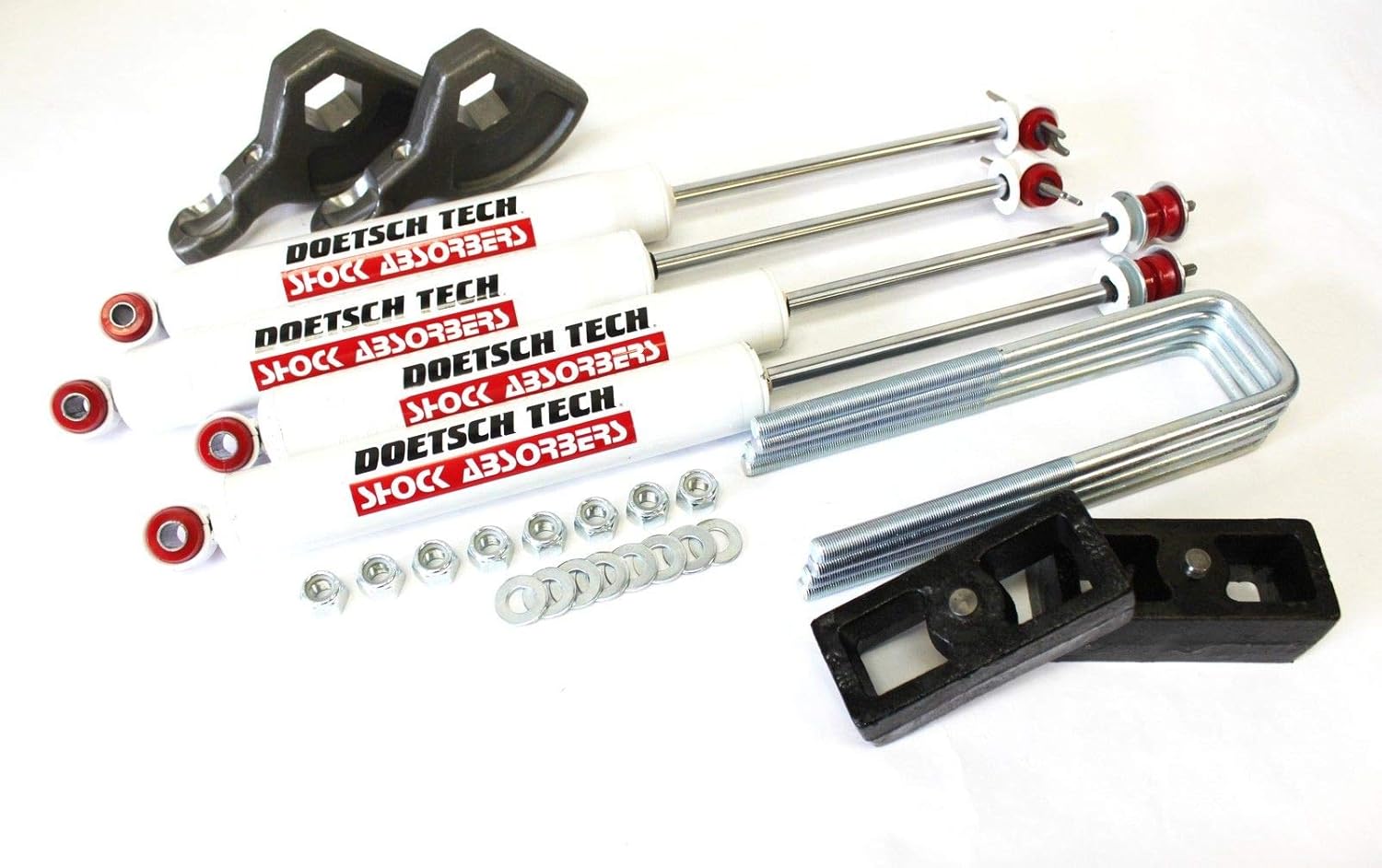
| Fitment | 1997–2004 Dodge Dakota 4WD |
|---|---|
| Front lift | 1–3 inches adjustable |
| Rear lift | 4 inches |
| Includes | Forged torsion keys, rear lift blocks, nitrogen gas shocks |
This RTZ lift kit is a bolt-on, vehicle-specific package for Dodge Dakota 4WDs that combines re-indexable forged torsion keys up front with fabricated steel rear lift blocks and a matched set of nitrogen gas charged shocks. Install is intended to be direct drop-in with no cutting or welding; a professional alignment after fitting is recommended. The forged front keys allow 1–3 inch adjustable lift, which makes it easier to dial front ride height for clearance or stance, while the solid tapered rear blocks and zinc-plated u-bolts provide a durable 4 inch rear raise. Including premium gas-charged shocks helps retain better control and ride quality compared with basic shock replacements. This kit is built from steel components with corrosion-resistant coatings for long life, but it will not fit vehicles with air leveling systems and proper professional installation is advised due to suspension safety. Overall it suits owners who want a heavy-duty, OEM-style lift solution that emphasizes durability and on-road stability over budget or quick bolt-on spacers.
Best for: Buyers who prioritize durable, heavy-duty components and improved on-road handling for a lifted Dodge Dakota 4WD and are willing to invest in a premium, vehicle-specific kit.
Less Ideal for: Drivers seeking the lowest-cost or temporary spacer-style lifts, or owners of Dakotas with air/automatic leveling systems should look for other solutions.
- Vehicle-specific design for 1997–2004 Dodge Dakota 4WD simplifies fitment and reduces modification.
- Forged adjustable torsion keys provide 1–3 inch front lift with stronger, long-lasting construction.
- Fabricated tapered steel rear blocks and zinc-plated u-bolts designed to resist corrosion and handle heavy loads.
- Includes nitrogen gas charged shocks matched to the lift for improved control and drivability.
- Bolt-on installation without cutting or welding preserves factory suspension geometry when installed correctly.
- Will not fit Dakota models equipped with automatic leveling systems.
- Professional installation and alignment are recommended, so DIY costs may be higher.
Verdict: The best premium lift kit for buyers willing to pay more for top-grade components, improved handling, and long-term durability under heavy use.
4. TSS 2" Rear Lift Blocks with U-Bolts for 1997–2004 Dodge Dakota 4×4
Best 2-Inch Lift Kit

| Automotive Fit Type | Vehicle Specific Fit |
|---|---|
| Included Components | Blocks, U-Bolts |
| Material Type | Alloy Steel |
| Maximum Lifting Height | 2 inches |
| Auto Part Position | Rear |
This TSS rear lift kit is a straightforward solution to raise the back of a 1997–2004 Dodge Dakota 4×4 by two inches. It includes alloy steel blocks sized to fit the leaf springs and comes with U-bolts for clamping, so the kit is installed where the rear axle meets the springs to achieve a modest lift. Because it is a vehicle-specific lift, the kit preserves the truck s factory geometry and does not require extensive modifications or new shocks, making it practical for DIY installation or a quick shop job. The alloy steel construction promises durability for typical road and light off-road use. Limitations are inherent to block-style lifts: they only raise the rear, so front-to-rear ride height and suspension balance remain unchanged without complementary front adjustments, and they do not improve suspension travel or handling compared with more comprehensive lift systems.
Best for: Buyers who want a modest, factory-friendly rear lift that is easy to install and preserves stock suspension geometry for daily driving and light trail use.
Less Ideal for: Drivers seeking improved suspension travel, full vehicle leveling, or aggressive off-road capability should consider multi-component lift kits instead.
- Vehicle-specific fit for 1997–2004 Dodge Dakota 4×4 for straightforward compatibility
- Includes U-bolts so the kit is a complete rear-block replacement for mounting
- Alloy steel blocks offer durable material for everyday and light off-road use
- Modest 2-inch lift preserves factory ride geometry and limits changes to driveline angles
- Raises only the rear axle so overall stance and suspension balance may still require front adjustments
Verdict: The best 2-inch lift kit for buyers who want a modest, conservative ride-height increase that preserves factory geometry and ease of installation.
5. WULF 1"–3" Front / 2" Rear Leveling Lift Kit with Extended Shocks for 1997–2004 Dodge Dakota 4×4
Best Complete Lift Kit

| Set Name | 3" Front 2" Rear Leveling Lift Kit w/ Shocks |
|---|---|
| Automotive Fit Type | Vehicle Specific Fit |
| Included Components | Torsion Keys, Blocks, U-bolts, Shocks |
| Material Type | Alloy Steel, Steel |
| Manufacturer Warranty Description | Manufacturer Lifetime Warranty |
This WULF kit is a single-package leveling and lift solution for 1997–2004 Dodge Dakota 4×4 models that combines adjustable torsion keys up front with rear lift blocks, U-bolts and matched extended nitro gas shocks. Installation is aimed at owners who want to correct rake or gain modest ground clearance without sourcing separate components since the kit ships with hardware and shock dust boots included. The adjustable front torsion keys let you dial in between about 1 and 3 inches of lift, while the rear cast steel blocks and zinc-plated U-bolts provide a straightforward 2-inch raise. Matched extended shock absorbers maintain damping for the altered ride height, but the kit is targeted at mild lifts and not heavy-duty off-road use or payload-heavy trucks. Expect basic compatibility for 4×4 Dakotas only and plan for professional alignment after installation. Build materials are steel/alloy, which should be durable when installed correctly, but some buyers report fit and finish variability that may require extra time to fit.
Best for: Buyers who want a single-package, vehicle-specific lift that supplies the brackets, shocks and hardware needed to level or modestly raise a 1997–2004 Dodge Dakota 4×4 without sourcing separate parts.
Less Ideal for: Those seeking large lift heights, heavy-load commercial use, or robust off-road suspension upgrades should look for more heavy-duty or purpose-built kits.
- Complete kit includes torsion keys, rear lift blocks, U-bolts, shocks and basic hardware for a single-package install
- Adjustable front torsion keys allow 1 to 3 inches of front lift to tune ride height
- Matched extended nitro gas shocks replace factory units to preserve damping at the higher ride height
- Materials specified as alloy steel and steel for structural components
- Designed for modest lifts and not intended for heavy-duty off-road loads or significantly increased payloads
- Some buyers may encounter fit or finish variability that requires additional fitting or adjustment
Verdict: The best complete lift kit for buyers who want a single-package solution that supplies all brackets, shocks, and hardware needed for a proper lift without sourcing extra parts.
6. Supreme Suspensions 3" Front and 3" Rear Lift Kit for 1987–2004 Dodge Dakota 4WD
Best Heavy-Duty Lift Kit

| Compatible vehicles | 1987–2004 Dodge Dakota 4WD (8.25" rear axle; V6 or AWD V8 only) |
|---|---|
| Front lift height | Adjustable 1" to 3" |
| Rear lift height | 3.0" |
| Material type | Alloy Steel |
This Supreme Suspensions kit is a complete 3" front and 3" rear lift solution built around forged, cold-rolled torsion keys and heavy-duty rear lift blocks to give a Dodge Dakota 4WD extra ground clearance and room for larger tires. Installation is aimed at experienced DIYers and includes a torsion bar unloading tool, high-strength 9/16" U-bolts, and hardware to replace factory torsion keys and add rear blocks; front lift is adjustable from 1" to 3" by re-indexing the keys. The hardened steel components and powder coating target durability under aggressive off-road use and heavy loads, while the included U-bolts and re-indexed design help maintain pinion angle and ride quality. Expect a 2–4 hour install for someone comfortable with suspension work and a wheel alignment afterward. Limitations: fitment is specific to 1987–2004 Dodge Dakota 4WD with the 8.25" rear axle and V6 or compatible AWD V8 configurations, and it will not fit V8 non-AWD models, so confirm axle and drivetrain before buying.
Best for: Buyers who plan aggressive off-roading or carry frequent heavy loads and prioritize reinforced, factory-style suspension components built for long-term rugged use.
Less Ideal for: Casual drivers seeking a modest visual lift or owners of Dakota configurations outside the specified axle and drivetrain setup should consider alternative leveling kits or model-specific options.
- Forged cold-rolled MAX-torsion keys provide stronger front torsion support than stock keys.
- Complete kit includes torsion bar unloading tool and all hardware for a DIY installation.
- Precision-machined rear lift blocks and heavy-duty 9/16" U-bolts designed for off-road and heavy-load durability.
- Adjustable front lift (1"–3") lets you tune ride height and level without additional parts.
- Fitment is narrowly limited to Dakota 4WD models with an 8.25" rear axle and will not work on V8 non-AWD trucks.
Verdict: The best heavy-duty lift kit for buyers planning aggressive off-road use or frequent heavy loads who prioritize reinforced components and long-term ruggedness.
Choosing the Right Dodge Dakota 4WD Lift Kit: Key Factors to Consider
Lift Height and Intended Use
The amount of lift you choose directly influences what you can do with your Dakota. A small 1 to 2 inch lift or leveling kit is often enough to fit slightly larger tires and improve truck stance while preserving near-stock driving dynamics. Larger suspension lifts in the 3 to 6 inch range increase ground clearance and make serious off-road obstacles easier to clear, but they also change steering geometry and may require additional drive-line or brake modifications.
Consider how you use the truck day to day. If you mostly drive on pavement with occasional trails, a modest lift that keeps suspension travel and alignment close to factory settings usually provides the best compromise. If you regularly trail ride, rock crawl, or carry heavy gear, prioritize a taller suspension lift that provides extra travel and durability even though it can require more extensive installation and tuning.
Component Type and Design
Lift kits can include coil spring spacers, replacement coil springs, new control arms, torsion key adjusters, strut extensions, or complete suspension packages with shocks and blocks. Each approach changes the character of the truck differently. Coil spring spacers are a lower-cost way to add lift but can impose higher spring rates or reduce suspension travel. Replacement coil springs designed for lifted ride height generally provide better ride and wheel control.
Full suspension lift kits that include matched shocks and revised control arms address geometry and damping comprehensively, improving both off-road performance and on-road stability. Pay attention to whether the kit corrects front-end caster and pinion angle or whether it relies on existing components, because incomplete kits often lead to handling compromises.
Tire Clearance and Wheel Fitment
A primary reason owners lift a Dakota is to fit larger tires. The combination of lift height, wheel backspacing, and tire size determines whether tires will rub on fenders, control arms, or suspension components. Understand the maximum tire diameter and width each lift height will safely accept and what wheel offsets are recommended.
If you plan aggressive tire-and-wheel setups, factor in whether trimming or fender rolling will be necessary and whether the lift kit includes or requires longer brake lines, sway bar drop brackets, or extended bump stops to prevent contact. A kit that documents tire-fitment ranges specific to the Dodge Dakota 4WD reduces guesswork and helps avoid costly rework.
Ride Quality and Handling Changes
Any lift alters the truck's center of gravity, suspension geometry, and ride dynamics. Expect some change in on-road behavior as height increases. Kits that include matched shocks and properly tuned spring rates will generally preserve a comfortable ride and predictable handling. Kits that only add spacers or require reuse of factory shocks can lead to a harsh or bouncy ride and accelerated wear on components.
Also consider steering feel; changes in caster and track width can introduce pull or vagueness unless corrected. Look for kits that specify geometry correction or provide adjustable components so you can fine-tune alignment after installation.
Installation Complexity and Required Modifications
Installation difficulty varies widely. Some kits are bolt-on and can be completed in a weekend with basic tools, while others require professional alignment, press work, or even welding. Full suspension lifts often need more labor and may require upgraded brake lines, drive-shaft adjustments, or relocation brackets. Factor in whether you will install the kit yourself or have it professionally installed.
Be realistic about the tools and shop ability needed. Kits that supply comprehensive hardware and clear instructions reduce installation risk. Also consider the potential need for alignment, wheel balancing, and post-install inspection to ensure safe operation.
Durability, Corrosion Protection, and Serviceability
A lift kit for a truck will be exposed to harsh conditions, so construction quality and protective finishes matter. Look for robust materials such as high-strength steel and corrosion-resistant coatings on brackets and hardware. Sealed or serviceable components make future repairs easier, and replaceable bushings reduce long-term maintenance costs.
Consider the availability of replacement parts and whether the kit allows for future upgrades like stronger control arms or improved shocks. Kits that use common fastener sizes and standard components are easier to maintain over time, especially if you plan heavy off-road use.
Understanding Lift Options for the Dodge Dakota 4WD
Lift solutions vary from simple leveling spacers to comprehensive suspension packages. For the Dodge Dakota 4WD, the best option depends on your goals: modest ground clearance and tire fitment, or a more capable off-road setup with improved suspension travel. Each approach affects handling, required supporting modifications, and the truck's overall geometry.
When evaluating kits, review what is included. Some packages cover shocks, control arm revisions, and brake-line brackets, while others focus only on springs or torsion adjustments. Choosing a solution that aligns with your intended use reduces later surprises and additional purchases.
- Leveling and spacer kits: low cost, limited suspension change
- Spring or coil replacement: better ride and travel management
- Full suspension kits: comprehensive geometry and damping control
Matching Lift Height to Tire Size
Choosing a target tire size before selecting a kit helps ensure compatibility. Small increases in diameter require less lift, while aggressive tire-and-wheel combos need more space and may force changes to wheel offset. For safe installation, confirm the kit's documented tire clearance ranges and whether wheel backspacing recommendations are provided.
Also plan for added components that may be needed when stepping up multiple tire sizes, such as extended brake lines, different bump stops, or changes to fender liners.
- Measure current tire and wheel dimensions before shopping
- Keep a spare plan for necessary trimming or accessory changes
Maintenance and Long-Term Ownership Considerations
Lifting a Dodge Dakota 4WD changes maintenance patterns. Higher ride heights can place more load on steering and suspension bushings, accelerating wear. Regular inspections of fasteners, control-arm bushings, and shock mounts help catch issues early. If you drive in corrosive climates, pay attention to rust protection on mounting brackets and hardware.
Think about spare parts and serviceability. Kits that use standard parts and have widely available replacement components make repairs easier and less expensive over time.
- Schedule alignment and suspension checks after installation
- Inspect for abnormal tire wear patterns after the first few hundred miles
Legal, Safety, and Insurance Notes
Modifying suspension height can have legal and safety implications depending on local regulations. Confirm permissible lift heights and any inspection requirements before altering your truck. Also ensure that the final build maintains safe headlight aim and that bumpers and lighting remain compliant with applicable rules.
From a safety perspective, higher centers of gravity can affect rollover propensity and emergency handling. Make conservative driving adjustments after a lift and have a professional alignment performed to restore proper steering geometry.
- Verify local vehicle height regulations prior to installation
- Update registration or inspection paperwork if required by law
Cost Factors Beyond the Kit Price
Total cost of a lift project includes more than the kit itself. Expect alignment labor, potential shock replacement, brake-line extensions, drive-shaft or CV joint work if angles change significantly, and new tires and wheels. If you are not installing the kit yourself, shop labor adds to the total.
Budget for post-install adjustments such as wheel balancing, corner weights, and possible trimming or fender work. Investing in quality components upfront often reduces ongoing maintenance and secondary modification costs.
- Include alignment and inspection fees in your budget
- Anticipate additional parts if the kit does not include bump-stop or brake-line modifications
Still looking for the perfect fit?
Select your Dodge Dakota configuration to see the most relevant Lift Kits recommendations
How We Chose the Best Dodge Dakota 4WD Lift Kit
Our selections focused on criteria that matter specifically to Dodge Dakota 4WD owners who plan suspension lifts. We prioritized proven fitment and kit completeness, including whether a kit supplies the components needed to maintain correct geometry after lifting. Ride quality and handling influence daily drivability, so we weighed designs that limit vibration and steering wander while adding height. Durability and corrosion resistance matter for trucks exposed to mud, rocks, and winter salt, so materials, finishes, and fastener quality were important.Installation complexity and required additional parts were considered so buyers understand labor and potential extra purchases. Tire fitment potential and maximum safe tire size were assessed to help match lifts to owners who plan larger tires. Finally, we looked at warranty coverage and the presence of replacement or upgrade paths, which affect long-term ownership. We excluded kits without clear Dodge Dakota 4WD fitment information, incomplete component packages that require extensive aftermarket sourcing, and options that rely on significant frame modification. Our short list reflects kits that balance fitment, durability, ride quality, and predictable installation needs.
Our full evaluation process is outlined in our review methodology.
FAQ
How much lift can I put on a Dodge Dakota 4WD without changing drive-line components?
It often depends on the specific lift design and your vehicle's condition. Small lifts and leveling kits usually do not require drive-line changes, while larger suspension lifts may alter pinion angle enough to need drive-shaft adjustments or replacement. Consult kit documentation and plan for alignment and inspection after installation.
Will a lift kit affect my Dakota's alignment and tire wear?
Yes. Most lifts change caster, camber, or toe enough to require a professional alignment. If the lift does not correct geometry or you skip alignment, you can expect uneven tire wear and degraded handling. Schedule an alignment immediately after installation.
Can I install a lift kit for my Dodge Dakota 4WD at home?
Some kits are designed for competent DIY installers and come with clear instructions and all necessary hardware. However, full suspension kits may require specialized tools, a press, or welding and are best handled by a professional. Be realistic about your tools, experience, and the time required.
Do I need new shocks with a lift kit?
Often yes. As you increase ride height, factory shocks may no longer provide adequate travel or damping. Kits that include matched shocks typically offer better ride quality and reduced wear. If your chosen kit does not include shocks, plan to source properly rated shocks to suit the new ride height.
How will a lift kit change my truck's center of gravity and handling?
Raising the ride height increases the center of gravity, which can make the vehicle feel less stable in emergency maneuvers. Handling changes are typically manageable when the kit preserves proper geometry and uses appropriate springs and shocks, but expect different body roll and steering feel compared with stock.
What should I check after installing a lift kit on a Dodge Dakota 4WD?
After installation, inspect all fasteners for torque, verify brake-line routing and clearance, confirm bump-stop positions, and have a professional alignment done. Also test-ride the truck to listen for unusual noises and re-check hardware after the first few hundred miles.
Final Verdict
When lifting a Dodge Dakota 4WD, prioritize a kit that matches your driving priorities: modest lifts preserve daily comfort, while full suspension kits offer better off-road performance and durability. Balance desired tire size with the kit's documented clearance and whether the package corrects suspension geometry.Plan realistically for installation labor and ancillary parts like shocks, brake-line brackets, or alignment service. Choosing a well-documented, complete kit reduces surprises and helps you get the most out of the lift for both trail use and everyday driving.
Explore More:
- Check out all Dodge Dakota parts & accessories
- Explore Suspension & Steering
- Browse all Accessories
