

Note: This article contains affiliate links. If you click on these links and make a purchase, I may earn a small commission at no extra cost to you. This helps support my research and content. Read my full affiliate disclosure here.
If you want better ground clearance, room for larger tires, or a more capable off-road stance, choosing the right lift kit for your 2026 Jeep Gladiator matters. The right kit changes how the truck rides, steers, and handles load while preserving factory fitment and driveline geometry on the 2020-present (JT) Gladiator.This guide covers our five shortlisted lift kits that fit the Gladiator's frame and suspension layout. We evaluate each option for ride quality, installation complexity, and compatibility with larger tires and accessories. Use the sections below to decide which tradeoffs work best for your driving and off-road goals.
Looking for other parts? See all Jeep Gladiator parts & accessories.
Top Picks at a Glance
| Best Overall Lift Kit The best all-around lift kit balancing performance, quality, and value | AEV 2" Spacer Lift for 2020–2026 Jeep JT Gladiator (excl. Mojave) with ProCal SNAP |  |
| Best Budget Lift Kit A low-cost option that improves height without breaking the bank | BIG DAVE'S 2" Front Spring Spacer Leveling Kit for Jeep Wrangler JK/JL and Gladiator JT |  |
| Best Premium Lift Kit A higher-end kit with superior materials, tuning, and long-term durability | Mopar 2" Lift Kit for Jeep Gladiator |  |
| Best Complete Lift Kit A full kit that includes all necessary components for a proper install | ReadyLIFT 69-6025 2.5" SST Lift Kit for Jeep JT Gladiator |  |
| Best Heavy-Duty Lift Kit Built with thicker components and reinforced hardware for rugged use | Freedom Offroad 4" Front and Rear Lift Springs for Jeep Gladiator JT (2020–2024) |  |
1. AEV 2" Spacer Lift for 2020–2026 Jeep JT Gladiator (excl. Mojave) with ProCal SNAP
Best Overall Lift Kit

| Fit years | 2020-2026 Gladiator (JT) LHD & RHD |
|---|---|
| Lift height | 2 inches |
| Includes | coil spacers, bump stop extensions, sway bar end links, shock extension brackets, driveshaft carrier bearing spacer, ProCal SNAP |
| Material Type | Polyurethane |
This AEV 2" Spacer Lift is a simple, manufacturer-focused solution for Gladiator owners who want bigger tires and extra clearance without swapping coil springs or replacing factory shocks. The kit supplies polyurethane front and rear coil spacers with integrated isolators and locating tabs, bump stop extensions, extended sway bar end links, shock extension brackets and a driveshaft carrier bearing spacer. Because it uses shock extensions rather than replacement shocks, the factory ride quality is preserved and installation is more straightforward for experienced DIYers. AEV includes a ProCal SNAP module that plugs into the OBDII port to recalibrate the speedometer and TPMS thresholds after fitting larger tires. The design is tailored to the JT Gladiator and supports up to 37" tires on high-flare Rubicon-style configurations while avoiding Mojave models. Limitations include that it is a spacer-style lift rather than a full suspension overhaul, so it does not add significant load-carrying capacity or the articulation benefits of longer-travel suspensions.
Best for: Buyers who want the easiest path to larger tires and improved ground clearance while keeping factory ride characteristics and a relatively DIY-installable package.
Less Ideal for: Drivers seeking serious off-road articulation, heavier load capability, or a full suspension rebuild should consider a multi-component suspension system instead.
- Preserves factory coil springs and shocks for comfortable, familiar ride quality
- Includes ProCal SNAP for straightforward speedometer and TPMS recalibration
- Integrated isolators and locating tabs on spacers improve spring alignment and fit
- Comprehensive kit supplies bump stop extensions, sway bar links, shock extensions and driveshaft spacer for a complete installation
- Made in the USA with components engineered for the Gladiator chassis
- Spacer lift does not increase suspension travel or heavy-load capacity like a full suspension kit
Verdict: The best all-around lift kit for most buyers, offering a balanced combination of ride quality, durability, components, and ease of installation for DIY mechanics.
2. BIG DAVE'S 2" Front Spring Spacer Leveling Kit for Jeep Wrangler JK/JL and Gladiator JT
Best Budget Lift Kit
| Maximum Lifting Height | 2 Inches |
|---|---|
| Auto Part Position | Front |
| Automotive Fit Type | Vehicle Specific Fit |
| Set Name | 2 |
| Manufacturer | Mountain Science LLC |
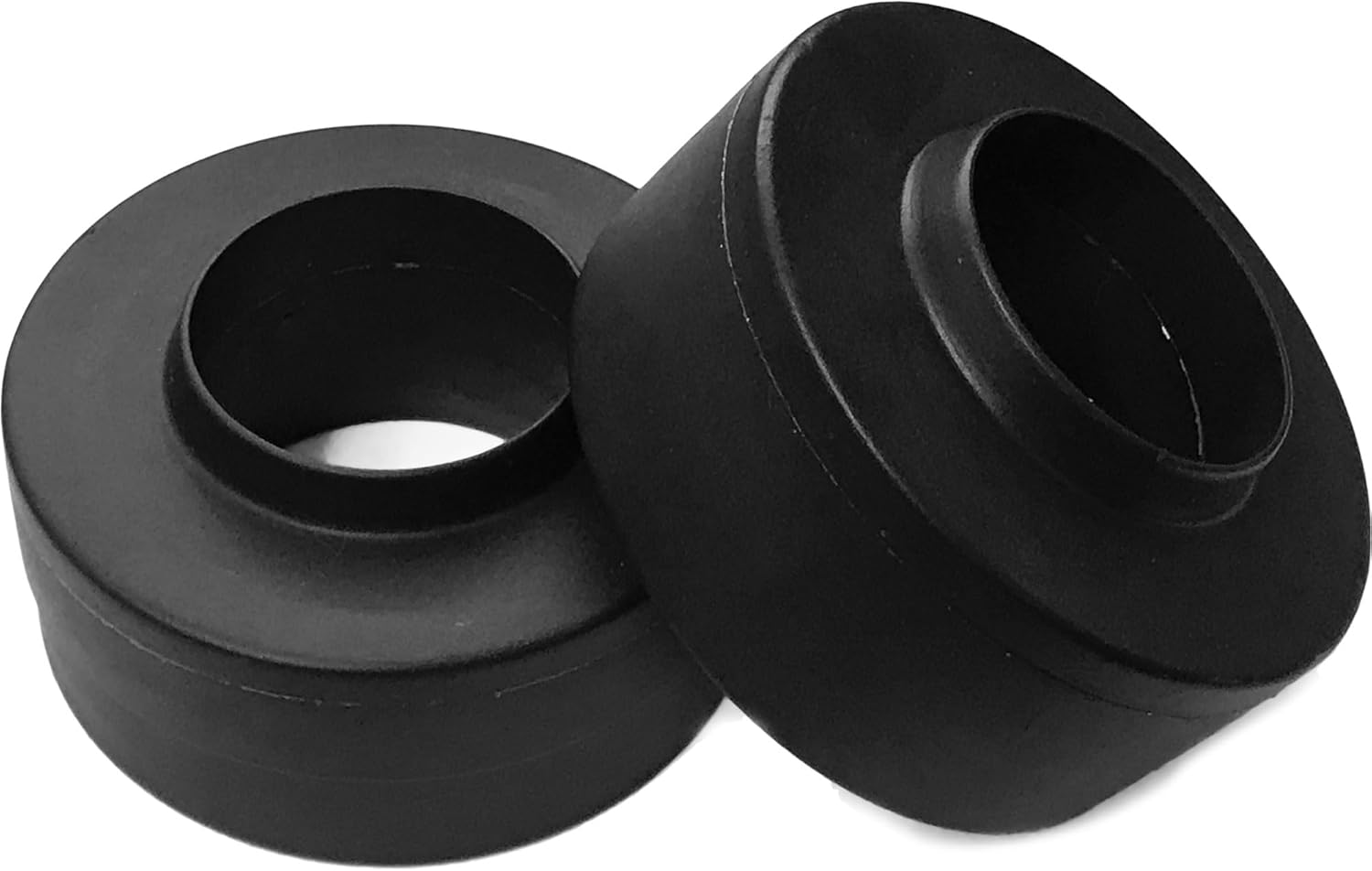
This kit is a simple, cost-focused solution to add 2.0 inches of front ride height to select Jeep Wranglers and the Gladiator JT. Each kit includes two semi-rigid urethane spacers that slip between the factory coil spring isolator and the frame, so installation requires no cutting or permanent changes and can be completed with basic tools in two to four hours. The spacers are made in the USA and are sized to fit the listed models, providing a straightforward way to correct front rake or gain modest clearance for slightly larger tires. Because these are spacer-style lift components they do not change suspension geometry or improve articulation, so expect the factory shocks and alignment to remain the limiting factors for on- and off-road performance. The product comes with a five-year U.S. warranty and is appropriate for buyers wanting a low-cost, reversible lift with minimal mechanical complexity rather than a full suspension upgrade.
Best for: Buyers who want an inexpensive, reversible way to level the front of their Gladiator or Wrangler with minimal installation time and no major mechanical work.
Less Ideal for: Drivers seeking increased suspension travel, significant off-road performance improvements, or a comprehensive lift with matched shocks and alignment services should consider a full suspension kit instead.
- Adds a measurable 2.0 inch front lift to level stance without cutting or welding
- Installs quickly with basic hand tools and no permanent modification
- Made from semi-rigid urethane for impact absorption and consistent fit
- Vehicle-specific fit for Jeep Wrangler JK 2007–2018, JL 2018–2026 and Gladiator JT 2020–2026
- Backed by a five-year U.S. warranty
- Does not alter suspension geometry or improve off-road articulation or damping
Verdict: The best budget lift kit for cost-conscious shoppers who want a reliable height increase and acceptable component quality while keeping overall expense and installation complexity low.
3. Mopar 2" Lift Kit for Jeep Gladiator
Best Premium Lift Kit

| Brand Name | Mopar |
|---|---|
| Automotive Fit Type | Vehicle Specific Fit |
| Material Type | Alloy Steel, Aluminum |
| Maximum Lifting Height | 2 inches |
This Mopar 2" lift kit raises a Jeep Gladiator by two inches using vehicle-specific components made from alloy steel and aluminum. It is intended as a direct-fit solution that preserves factory ride geometry while providing additional ground clearance for larger tires or light off-road use. Typical installation replaces driveline-related suspension components with factory-quality pieces that integrate with existing mounting points, so mechanics familiar with Gladiator suspension can complete the job without extensive modification. The use of alloy steel and aluminum helps keep the assembly durable yet relatively light, and the kit’s factory-origin design reduces the need for aftermarket adjustment of alignment or steering links. Limitations are its modest lift height, which suits mild-to-moderate off-road upgrades but will not replace a long-travel or heavy-duty suspension overhaul for extreme rock crawling or very large tires.
Best for: Buyers who want a refined, factory-compatible 2-inch ride height increase for a Gladiator and prioritize durability and minimal vehicle modification over maximum lift.
Less Ideal for: Drivers planning large tire conversions, heavy-duty off-road competition, or those seeking a dramatic suspension redesign should look at more aggressive aftermarket systems.
- Vehicle-specific design for the Jeep Gladiator that fits factory mounting points
- Constructed from alloy steel and aluminum for strength and corrosion resistance
- 2-inch lift provides extra ground clearance without major handling changes
- Factory-quality components reduce the need for extensive alignment or additional parts
- Only provides a modest 2-inch lift, not suitable for major tire upgrades or extreme off-road builds
- Limited component detail provided, so buyers may need shop guidance for full install requirements
Verdict: The best premium lift kit for buyers willing to pay more for top-tier components, refined suspension tuning, and long-term durability for frequent or demanding use.
4. ReadyLIFT 69-6025 2.5" SST Lift Kit for Jeep JT Gladiator
Best Complete Lift Kit

| Maximum Lifting Height | 2.5 Inches front / 2.0 Inches rear |
|---|---|
| Auto Part Position | Rear (kit includes front and rear spacers) |
| Material | Alloy Steel |
| Automotive Fit Type | Vehicle Specific Fit |
The ReadyLIFT 69-6025 SST lift kit raises the JT Gladiator 2.5 inches up front and 2.0 inches in the rear using laser-cut 1/4-wall tube coil spring spacers that bolt onto the existing suspension. It is intended as a simple, budget-friendly way to gain clearance and fit larger tires without replacing springs or shocks, keeping the factory ride characteristics. The kit includes front and rear spacers plus bump stop extensions and all necessary hardware for a bolt-on installation, so it installs quickly and minimizes garage time. Because it retains factory shocks, drivers get a familiar on-road feel while still gaining off-road capability and allowable tire sizes up to 37 inches on Rubicon and 35 inches on other trims when paired with appropriate wheels. The main limitation is that this is a spacer-style lift rather than a full shock-and-spring replacement, so extreme off-road use or heavy aftermarket tires and wheels may eventually benefit from upgraded shocks, long-arm kits, or additional geometry-correcting components.
Best for: Buyers who want a single, mostly complete lift solution that installs quickly and preserves factory ride quality while allowing larger tires and more ground clearance.
Less Ideal for: Drivers planning extensive suspension modification, heavy loads, or extreme off-road travel who need upgraded shocks, control arms, or full suspension regeometry.
- Bolt-on design that uses factory shocks and springs for an easier, quicker install
- Includes front and rear spacers plus bump stop extensions and hardware for a complete kit
- Proven 2.5" front / 2.0" rear lift that allows significantly larger tire fitment on Gladiator trims
- Laser-cut 1/4-wall tube construction for durable, vehicle-specific fitment
- Does not include replacement shocks or long-arm suspension components for heavy-duty off-road use
Verdict: The best complete lift kit for customers who want a single purchase that includes shocks, springs, brackets, and hardware so the vehicle is ready to lift without sourcing extra parts.
5. Freedom Offroad 4" Front and Rear Lift Springs for Jeep Gladiator JT (2020–2024)
Best Heavy-Duty Lift Kit

| Auto Part Position | Front, Rear |
|---|---|
| Material Type | Alloy Steel |
| Maximum Lifting Height | 4 inches |
| Unit Count | 4 Count |
These Freedom Offroad lift springs replace the Gladiator's factory coils with a matched set of two front and two rear springs to raise the truck roughly 4 inches and allow larger tires. They are sold as a set of four and use alloy steel construction intended for heavier use than stock springs. Typical use is for owners fitting up to 37 x 12.5 tires and seeking additional ground clearance without changing spring type. The package includes an installation guide and is vehicle-specific for Gladiator JT models; installation will require standard suspension disassembly and alignment afterward. The springs provide straightforward lift with minimal complexity compared with full bracket or long-arm kits, which keeps installation simpler but means this set does not include reinforced control arms, upgraded brackets, or heavy-duty mounting hardware required for extreme load or aggressive off-road geometry. Buyers should plan to pair these springs with stronger suspension components if they expect heavy towing, regular trail abuse, or large wheel travel demands.
Best for: Buyers who want a relatively simple, vehicle-specific spring lift to fit larger tires and gain clearance on a 2020–2024 Gladiator without a full suspension overhaul.
Less Ideal for: Drivers planning heavy towing, frequent aggressive trail use, or those who need reinforced brackets and upgraded control arms should choose a complete heavy-duty lift system instead.
- Vehicle-specific matched set for front and rear to achieve a consistent 4" lift
- Alloy steel construction aimed at heavier-duty use than factory springs
- Allows clearance for up to 37" x 12.5" tires without changing spring type
- Includes installation guide and is sold as a complete four-piece set
- Does not include reinforced brackets, beefed-up control arms, or upgraded mounting hardware required for full heavy-duty suspension builds
- Lift is spring-only so additional suspension upgrades are needed for increased travel or heavy-load durability
Verdict: The best heavy-duty lift kit for owners who need stronger brackets, beefier control arms, and reinforced mounting hardware to withstand heavy loads, off-road abuse, or regular trail use.
Choosing the Right 2026 Jeep Gladiator Lift Kit: Key Factors to Consider
Lift Height and Tire Compatibility
Lift height determines how much clearance you gain and what tire sizes you can run. A modest 1-2 inch lift may only allow slightly taller tires without rubbing, while a 3-3.5 inch or greater suspension lift often creates room for significantly larger tires and more aggressive tread patterns.
When choosing a lift for the Gladiator, consider the real-world result after wheel offset and tire width are accounted for. Taller lifts may require adjustments to steering components, brake lines, and sway bar links. Also evaluate how the lift height affects approach, departure, and breakover angles for your typical trails or off-road terrain.
Suspension Design and Ride Quality
Different kits change suspension behavior in different ways. Coil spring lift kits and spacer-type kits preserve much of the factory spring rate, while complete suspension kits replace springs and shocks for a redesigned ride. The Gladiator's weight and intended use—daily driving versus heavy off-road work—should guide whether you favor comfort or control.
Shock absorber selection matters. Kits that include tuned shocks or allow use of upgraded dampers will typically offer better control under load and during articulation. Pay attention to how a kit affects NVH, steering feedback, and highway stability, since a lift can magnify body roll or alter handling if springs and dampers are not well matched.
Fitment and Compatibility
Accurate, vehicle-specific fitment is essential to avoid unexpected fabrication. For the 2020-present (JT) Gladiator, look for kits engineered for the JT chassis that use factory mounting points and provide clear instructions for any required additional components. Kits that rely on universal parts or generic brackets can introduce alignment and durability problems.
Check whether a kit requires modifications such as trimming fenders, changing bump stops, or relocating brake lines. Also confirm compatibility with factory or aftermarket bumpers, winches, and skid plates if you plan to keep or install those items.
Installation Complexity and Required Parts
Installation difficulty ranges from bolt-on spacer kits that a competent DIYer can handle with basic tools to full suspension overhauls that need a lift, alignment equipment, and sometimes specialized presses. Assess your comfort level and the availability of a reputable shop for installs beyond your skillset.
Many kits list recommended additional parts: extended brake lines, new sway bar end links, track bar brackets, or adjustable control arms. Factor the time and cost of those items and whether the kit includes them or they must be purchased separately.
Driveline and Alignment Impacts
Raising the ride height changes driveshaft angles and suspension geometry. On the Gladiator, excessive angles can cause vibration, accelerated wear, or the need for longer driveshafts or CV upgrades. A well-engineered kit will minimize these effects or provide corrective components such as adjustable control arms or track bar relocation brackets.
After installation, a full alignment is usually required. Changing caster, camber, and toe beyond factory ranges can negatively affect tire wear and steering. Ensure the kit allows correct alignment specs or includes adjustable components to regain safe geometry.
Intended Use and Long-Term Durability
Decide whether you need the lift mainly for occasional trail clearance, frequent off-road punishment, or visual stance with larger tires. Heavy off-road use demands stronger components and corrosion-resistant finishes. For daily-driven Gladiators, prioritize kits that balance comfort with robust hardware.
Consider warranty coverage and the availability of replacement parts. Simpler mechanic-friendly designs are often easier to service in the long term than intricate custom setups, especially if you travel or use the Gladiator in remote areas.
Understanding Lift Types for the Gladiator
Lift kits come in several forms that interact differently with the Gladiator's coil-sprung suspension. Coil spring lifts replace or reposition the springs, creating a controlled increase in ride height and often improving articulation when paired with appropriate shocks. Spacer-style lifts use spring spacers to raise ride height while keeping the stock springs in place; these are simpler installs but may change spring preload and ride feel.
Long-arm suspension kits relocate control arm mounting points and provide greater wheel travel and stability on rough terrain. They are more involved to install and typically recommended for owners planning serious off-road use or larger tire setups. Each lift type affects steering, alignment, and driveline angles in distinct ways, so match the kit type to your intended use.
- Coil spring lift kit: controlled ride and articulation
- Spacer lift: simpler, less costly, potential ride tradeoffs
- Long-arm kit: maximum travel and off-road capability
Planning Tire and Wheel Changes
A major reason owners install lift kits is to run larger tires. When upgrading tires on the Gladiator, account for overall diameter, section width, and wheel offset. Taller tires affect speedometer readings, gear ratios, and fuel economy. Wider tires can introduce rubbing at full lock or during suspension compression if wheel offset is not correct.
Confirm clearance at the fender, control arms, and track bar. You may need minor trimming or different wheel backspacing to avoid contact. Also evaluate whether aftermarket fender flares or trimmed inner liners will be necessary for aggressive tire-and-wheel packages.
- Measure expected tire diameter versus stock to estimate lift needed
- Check wheel offset and backspacing to prevent rubbing
- Anticipate possible need for fender or liner modifications
Road and Trail Performance Tradeoffs
Lifting a Gladiator alters on-road dynamics. Higher center of gravity can increase body roll in corners and change braking behavior. Properly matched springs and shocks help preserve predictable handling. If the Gladiator is your daily driver, choose a kit that balances comfort with control rather than a purely aggressive off-road setup.
On trails, a well-engineered kit improves clearance and suspension articulation, which helps maintain traction over obstacles. For frequent off-roaders, prioritize components rated for repeated impacts and variable articulation rather than minimal, cosmetic lifts.
- On-road: expect subtle changes to handling; tune damping for comfort
- Off-road: prioritize articulation and durable hardware
Corrosion Resistance and Materials
Exposure to mud, salt, and water can quickly degrade suspension components. Look for kits that use powder-coating, zinc plating, or stainless hardware to resist corrosion, especially if you live in a region with road salt or use the Gladiator in wet, muddy conditions.
Metallurgy matters for strength and longevity. Forged brackets and thicker-walled tubing generally endure impacts better than thin stamped parts. Durable bushings and sealed bearings will lower maintenance and noise over time.
- Prefer powder-coated or plated finishes for longevity
- Check for heavy-gauge steels and reinforced brackets
- Sealed joints and quality bushings reduce maintenance
Legal and Warranty Considerations
Modifying the suspension can have legal implications depending on local vehicle codes that regulate ride height and bumper/lighting placement. Confirm that the planned lift conforms to state or regional rules to avoid registration or inspection issues.
Lift installations can interact with factory warranties. While a lift itself may not void unrelated components, improper installation or consequential failures could complicate warranty claims. Keep installation records and use qualified shops if you want better documentation.
- Check local ride height and lighting laws before finalizing a kit
- Keep receipts and alignment reports for warranty records
- Consider professional installation to preserve documentation
Still looking for the perfect fit?
Select your Jeep Gladiator configuration to see the most relevant Lift Kits recommendations
How We Chose the Best 2026 Jeep Gladiator Lift Kit
We prioritized lift kits that specifically address the Gladiator's frame and suspension characteristics for the 2020-present (JT) model run. Primary evaluation criteria included fitment accuracy to factory mounting points, impact on suspension geometry and alignment, and whether the kit preserves driveline angles to avoid vibration under load. Ride quality was judged by design type and how the kit interacts with the Gladiator's weight and damping characteristics. We also graded installation complexity and the typical tools or additional parts required, since many owners tackle installation themselves or opt for professional shops. Ground clearance gains and the practical allowance for larger tires were assessed to ensure advertised lift heights translate to usable tire sizes without excessive trimming.Exclusions: we excluded any kits that required major frame modification, extensive cutting of factory components, or that lacked clear vehicle-specific fitment data for the 2020-present (JT) Gladiator. We also set aside one-off or highly custom builds that would not be practical for typical owners. The result is a focused list emphasizing dependable fitment, predictable handling, and realistic installation pathways.
Our full evaluation process is outlined in our review methodology.
FAQ
How much lift can I put on a 2026 Jeep Gladiator without driveline problems?
It often depends on the specific kit design and whether it includes corrective components. Small lifts under 2 inches usually keep driveline angles close to stock, while larger lifts may require adjustable control arms or driveshaft modifications to avoid vibration and premature wear.
Can I install a lift kit on my Gladiator at home?
You can install some spacer-style or basic coil kits at home if you have the right tools and experience. More complex kits, long-arm conversions, or jobs that require reaming, pressing, or driveline work are best handled by a shop with alignment equipment and lift capability.
Will a lift kit affect my Gladiator's towing or payload capacity?
A lift by itself does not change the truck's rated tow or payload figures, but it can alter handling and suspension geometry under load. For heavy towing or payload use, choose a kit that maintains proper sag characteristics and consider upgraded springs or helper components to preserve safe handling.
Do I need an alignment after installing a lift kit?
Yes. Any suspension height change typically requires a full alignment to correct caster, camber, and toe. Some kits include adjustable arms that help reach proper alignment specs, but a professional alignment is recommended after installation.
How do I decide between a lift kit and a leveling kit for my Gladiator?
A leveling kit is a modest, cost-effective way to even out front-to-rear rake and gain a small amount of clearance. If you want substantial tire clearance or greater off-road travel, a true suspension lift is the better choice. Consider usage, desired tire size, and how much geometry change you are willing to manage.
What maintenance should I expect after installing a lift kit?
Expect more frequent inspections of control arm bushings, track bar mounts, and driveshaft U-joints, especially during the break-in period. Check fasteners for torque retention, monitor tire wear patterns, and plan on periodic alignments if you do a lot of off-road driving.
Final Verdict
Prioritize fitment and intended use when choosing a lift for your 2026 Jeep Gladiator. Small, spacer-style kits work for modest tire upgrades and maintain a near-stock ride, while full suspension or long-arm kits deliver greater travel and durability for serious off-road use. Always factor in installation complexity, alignment needs, and the potential need for corrective components to preserve driveline health.Decide first on the lift height and tire goals, then match kit type and component quality to your driving routine. That approach will help you select a solution that balances daily drivability with the off-road capability you want.
Explore More:
- Check out all Jeep Gladiator parts & accessories
- Explore Suspension & Steering
- Browse all Accessories
