

Note: This article contains affiliate links. If you click on these links and make a purchase, I may earn a small commission at no extra cost to you. This helps support my research and content. Read my full affiliate disclosure here.
If you own a 2004-2012 Chevrolet Colorado and are planning to lift it for off-road driving, larger tires, or a more aggressive stance, picking the right lift kit matters. The wrong choice can harm ride quality, create alignment headaches, or lead to fitment issues with brakes, drive axles, and steering components. This guide covers seven shortlisted lift kits that fit the 2004-2012 Colorado and explains the tradeoffs between ground clearance, ride comfort, and installation complexity. We evaluate each option on fitment, durability, and how it affects handling and tire clearance to help you decide which kit aligns with your goals.
Looking for other parts? See all Chevrolet Colorado parts & accessories.
Top Picks at a Glance
| Best Overall Lift Kit The best all-around lift kit balancing performance, fit, and reliability | ReadyLift 69-3075 2.5" Front / 1.5" Rear SST Hybrid Lift Kit |  |
| Best Budget Lift Kit A low-cost lift kit that delivers solid performance for the price | YHTAUTO Leveling Lift Kit (Front 1–3" / Rear 2") for Chevrolet Colorado & GMC Canyon 2004–2012, 4WD |  |
| Best Premium Lift Kit Higher-end components and refined ride quality for serious buyers | Tuff Country 4" Front Lift Kit (no shocks) for Chevy Colorado 2004–2012 |  |
| Best Complete Lift Kit Includes all necessary components for a full, bolt-on installation | ReadyLift 69-3070 SST Lift Kit 2.25" Front / 1.5" Rear for Chevy Colorado |  |
| Best 2-inch Lift Kit A common moderate-height option that balances clearance and drivability | TSS 2" Front and Rear Lift Kit with Coil Spacers and Shackles for 2004–2012 Chevy Colorado/GMC Canyon 2WD |  |
| Best Heavy-Duty Lift Kit Built for durability and heavier loads or demanding use cases | BST BSSP 1.5"–2" Rear Add-A-Leaf Lift Kit for 2004–2012 Chevy Colorado / GMC Canyon |  |
| Best Compact Lift Kit A minimal, lower-profile kit focused on simplicity and fitment | YHTAUTO 1–3 Inch Front Adjustable Torsion Key Leveling Kit (Set of 2) |  |
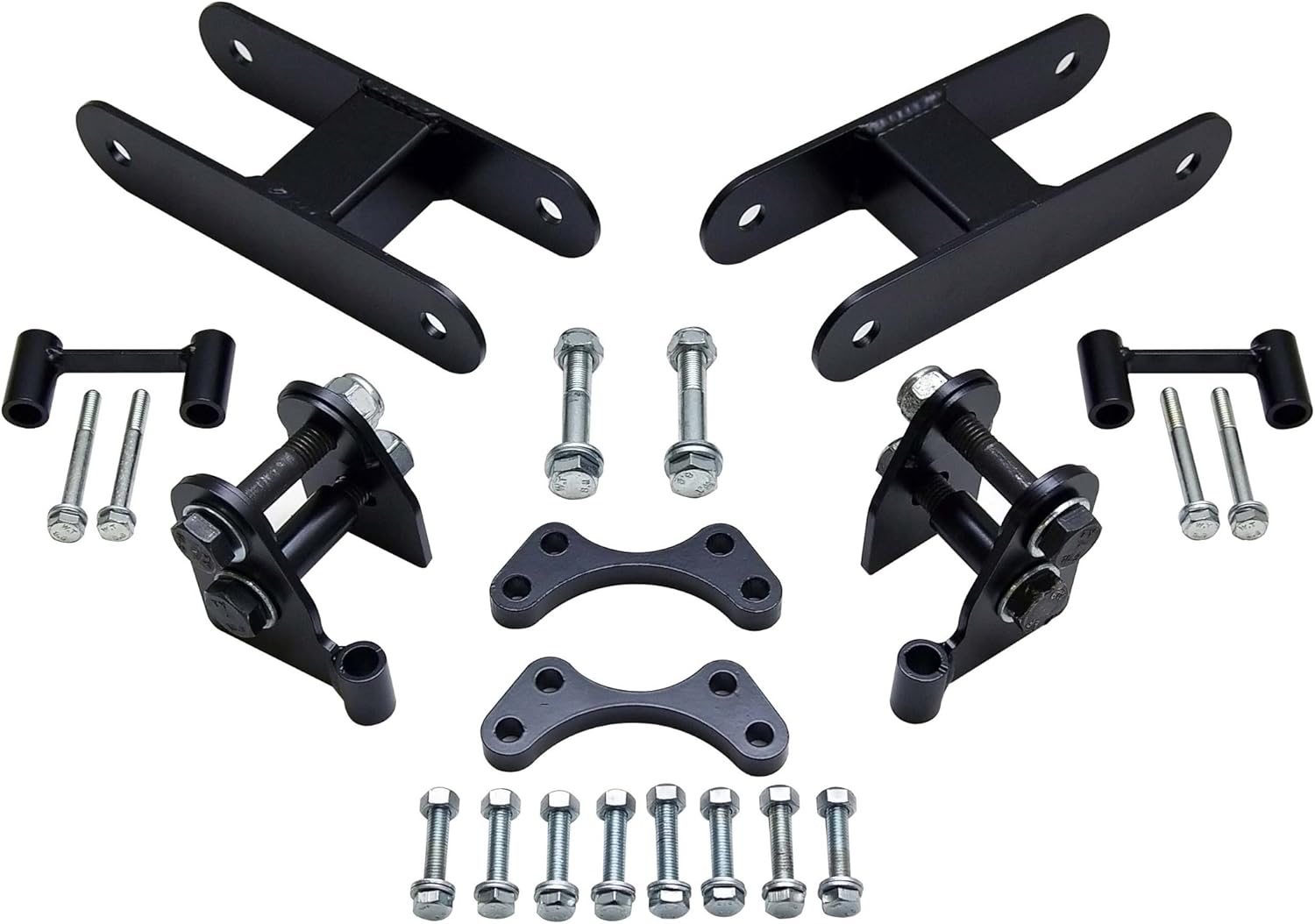
1. ReadyLift 69-3075 2.5" Front / 1.5" Rear SST Hybrid Lift Kit
Best Overall Lift Kit
| Automotive Fit Type | Vehicle Specific Fit |
|---|---|
| Included Components | Leveling Kit |
| Material Type | Steel |
| Maximum Lifting Height | 2.5 inches |
This ReadyLift SST hybrid kit gives a modest, truck-friendly lift by combining 2.5 inches of front lift via bolt-together lower strut extensions with 1.5 inches of rear lift using new leaf spring shackles and steel shock mount extensions. It is designed for 2WD coil-spring Colorado/Canyon trucks and keeps the rear shock length and position stock to preserve a factory-like ride while opening clearance for up to 30-inch tires. Notable hardware includes plate steel ball joint spacers to prevent spring-to-arm contact and zinc-plated class 10.9 bolts; all steel parts are powder-coated for corrosion resistance. Installation is straightforward for a capable DIYer with basic tools because the kit uses bolt-on components and comes with detailed instructions and all necessary hardware. The result is a leveled, more aggressive stance with minimal impact on everyday driving and towing. Buyers should expect a mild change in vehicle geometry and should verify alignment after install; the kit does not include shock upgrades or components for heavy off-road demands.
Best for: People who want a factory-friendly, modest lift for a 2004–2012 Colorado that improves stance and tire clearance while preserving everyday ride comfort and easy installation.
Less Ideal for: Drivers seeking major off-road travel, heavy load-carrying suspension upgrades, or a large multi-inch lift should consider more comprehensive kits with shock and control arm changes.
- Front and rear components are complete and bolt-on for relatively simple DIY installation
- Keeps rear shock position and length stock to maintain a factory-like ride while lifting
- Steel construction with powder-coat finish and zinc-plated hardware for durability
- Allows fitment of up to 30 inch tires for more aggressive wheel and tire choices
- Does not include upgraded shocks or components aimed at heavy off-road use
Verdict: The best all-around lift kit for most buyers, offering the ideal mix of ride quality, parts completeness, durability, and straightforward installation for typical DIY installs.
2. YHTAUTO Leveling Lift Kit (Front 1–3" / Rear 2") for Chevrolet Colorado & GMC Canyon 2004–2012, 4WD
Best Budget Lift Kit

| Automotive Fit Type | Vehicle Specific Fit |
|---|---|
| Auto Part Position | Front |
| Material Type | Alloy Steel |
| Maximum Lifting Height | 3 inches |
This YHTAUTO leveling lift kit uses replacement torsion keys with shock brackets to raise the front by 1 to 3 inches and the rear by 2 inches on 2004–2012 Chevrolet Colorado and GMC Canyon 4WD trucks. It is a bolt-on, vehicle-specific solution intended to provide extra clearance for larger tires and a more level stance while keeping the truck's factory ride quality. The kit is made from alloy steel and includes high-strength 12.9 grade bolts and a powder-coated finish for corrosion resistance. Installation is straightforward for a competent DIYer and requires only basic tools, though a professional alignment is recommended after fitting. Expect a solid, budget-friendly option that improves ground clearance without swapping springs or shocks. The kit does not add premium features like adjustable damping or full suspension components, so it is best for drivers who want a simple lift and larger tire fitment rather than a performance suspension upgrade.
Best for: Cost-conscious Colorado or Canyon owners who want a straightforward, factory-styled lift to fit larger tires and improve ground clearance without replacing major suspension parts.
Less Ideal for: Buyers seeking a full performance suspension, adjustable ride tuning, or significantly greater lift heights should consider more complete kits with new springs and shocks.
- Vehicle-specific fit for 2004–2012 Colorado and Canyon simplifies installation
- Solid alloy steel construction with powder coat resists rust and corrosion
- Includes high-strength 12.9 grade bolts for durable fastening under load
- Bolt-on torsion keys and shock brackets let you lift without replacing springs or shocks
- Provides only leveling hardware, not a full suspension upgrade with adjustable components
Verdict: The best budget lift kit for cost-conscious buyers who want a reliable, safe lift with reasonable components and straightforward installation without premium features.
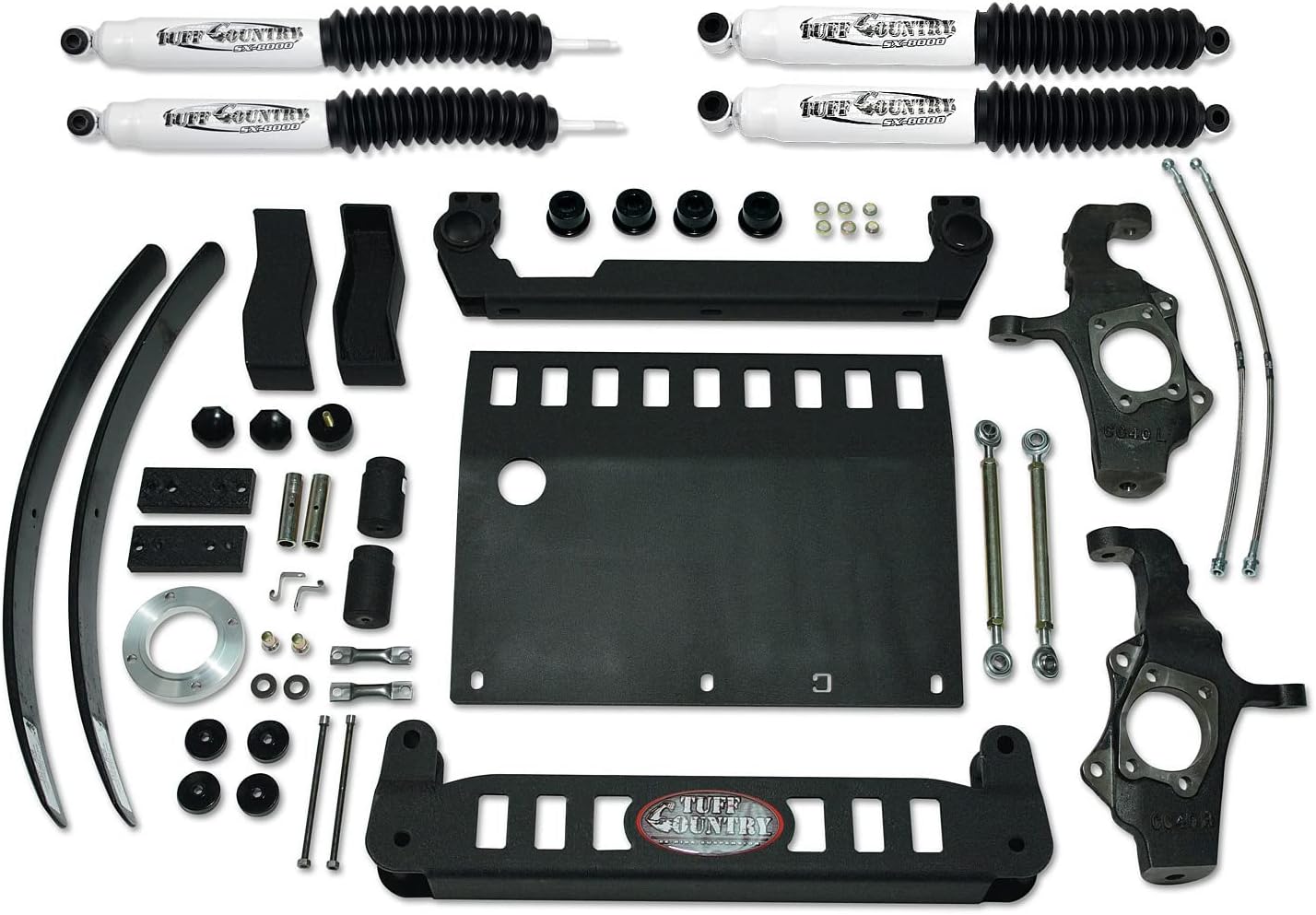
3. Tuff Country 4" Front Lift Kit (no shocks) for Chevy Colorado 2004–2012
Best Premium Lift Kit
| Lift Height | 4" |
|---|---|
| Average Install Time | 10 to 12 Hours |
| Recommended Tire Size | 31" x 10.5" |
| Rim Backspacing | 4.5" or less (max wheel width of 8 inches) |
This Tuff Country front lift kit raises the front of a 2004–2012 Chevrolet Colorado by four inches using vehicle-specific components intended to preserve ride quality while increasing ground clearance. It is typically used by owners who want taller ride height for larger tires or improved off-road approach angles while retaining a comfortable on-road feel. The kit is sold without shocks so buyers commonly pair it with upgraded dampers to match driving expectations. Notable features include a design that replicates factory ride characteristics and recommended tire and wheel parameters to avoid fitment issues. Practical benefits are clearer: it keeps steering geometry and ride comfort close to factory behavior compared with generic spacers, and it supports up to 31-inch tires when wheels meet the specified backspacing. Important limitations are that shocks are not included so additional cost and time are required to finish the suspension, and installation can take 10 to 12 hours and may need alignment and possible control arm or bump stop adjustments for best results.
Best for: Buyers who prioritize a refined, factory-like ride and durable, vehicle-specific lift hardware and are prepared to add matching shocks for best performance.
Less Ideal for: Shoppers seeking an all-in-one lift kit with included shocks or a quick, inexpensive spacer-only solution should look elsewhere.
- Vehicle-specific front kit preserves closer-to-factory ride feel compared with generic lift blocks
- Designed for 4-inch lift with clear recommended tire and rim guidance to reduce fitment guesswork
- Supports up to 31" x 10.5" tires when paired with appropriate wheels
- Includes components intended for safe, effective installation and improved chassis geometry over simple spacer lifts
- Does not include shocks or dampers so buyers must purchase compatible shocks separately
- Installation is moderately time-consuming with a 10 to 12 hour estimated labor time
Verdict: The best premium lift kit for buyers willing to pay more for superior materials, improved damping, longer-lasting components, and a more refined on- and off-road ride.
4. ReadyLift 69-3070 SST Lift Kit 2.25" Front / 1.5" Rear for Chevy Colorado
Best Complete Lift Kit

| Maximum Lifting Height | 1.5 inches |
|---|---|
| Included Components | Front torsion keys, rear shackles, shock extensions |
| Material Type | High Carbon Steel |
| Automotive Fit Type | Universal Fit |
The ReadyLift 69-3070 SST Lift Kit is a bolt-on leveling and lift solution designed specifically for torsion-bar Colorado pickups from 2004 to 2012. It uses adjustable torsion keys up front to gain 2.25 inches and new rear leaf spring shackles to add 1.5 inches in the back, preserving a slight rear rake for towing and hauling. The kit includes shock extensions so stock shocks can remain in place, and installation is straightforward for a competent home mechanic or a shop, typically taking 2 to 3 hours. Because the system is designed to work without cutting, welding, or additional modification, it minimizes extra parts and shop time compared with piecemeal lift approaches. The lift is sized for up to 32-inch tires while keeping the factory ride characteristics. Limitations are that this kit is for torsion-bar models only and does not include full replacement shocks or extended components needed for much larger tire upgrades, so buyers planning a major off-road build will need additional upgrades.
Best for: Buyers who want a single, mostly complete lift package to level and slightly raise a 2004–2012 Colorado with torsion bars while keeping the factory ride and minimizing extra parts or shop time.
Less Ideal for: Enthusiasts planning a large off-road build, larger-than-32-inch tires, or owners of coil-spring 2WD Colorado trucks should choose a different kit or add full replacement shocks and extended components.
- Bolt-on design with no cutting or welding required for torsion-bar Colorado trucks
- Includes torsion keys, rear shackles, and shock extensions to minimize extra purchases
- Maintains factory ride feel while providing modest lift for up to 32" tires
- Relatively quick install time of about 2 to 3 hours for experienced installers
- Does not include full-length replacement shocks, which may be needed for larger tire or heavy off-road use
- Compatible only with torsion-bar equipped Colorado/Canyon models and not coil-sprung 2WD trucks
Verdict: The best complete lift kit when you want a single package that includes shocks, brackets, hardware, and alignment-friendly parts to minimize additional purchases and shop time.
5. TSS 2" Front and Rear Lift Kit with Coil Spacers and Shackles for 2004–2012 Chevy Colorado/GMC Canyon 2WD
Best 2-Inch Lift Kit

| Automotive Fit Type | Vehicle Specific Fit |
|---|---|
| Included Components | shackles, coil spacers |
| Material Type | Aluminum, Steel |
| Auto Part Position | Front |
| Maximum Lifting Height | 3 inches |
This TSS lift kit provides a modest, factory-friendly lift for 2004–2012 Chevy Colorado and GMC Canyon 2WD trucks by using 6061 billet aluminum coil spacers up front and adjustable powder-coated steel shackles in the rear. Installation keeps the factory coil springs and most suspension geometry intact, so the truck gains about 2 inches of clearance without needing extensive component swaps. The billet spacers are lightweight and corrosion-resistant, while the adjustable shackles let you dial in rear lift between roughly 2 and 3 inches to balance stance and load carrying. Typical use is for drivers who want improved tire clearance and a slightly more commanding ride height for light off-road use or to fit larger tires while preserving a near-factory on-road feel. Limitations include that this is a spacer-and-shackle kit only, so it will not correct caster or alignment changes that come with larger lifts and it is intended for 2WD coil-spring models only. Buyers should plan for a proper alignment after installation and be aware that more aggressive off-road use may require additional suspension upgrades.
Best for: Buyers who want a moderate, factory-friendly 2-inch height increase to improve ground clearance and fit slightly larger tires without major suspension modification.
Less Ideal for: Drivers seeking a full suspension rebuild, extensive off-road capability, or who own 4WD models should look at more comprehensive lift systems instead.
- Vehicle-specific fit for 2004–2012 Chevy Colorado and GMC Canyon 2WD models
- 6061 billet aluminum front coil spacers resist corrosion and add lightweight strength
- Adjustable rear shackles allow fine tuning of rear lift between approximately 2 and 3 inches
- Preserves factory coil springs and most suspension geometry for a factory-like ride
- Does not address alignment or caster changes that can accompany lifted suspension
- Not a complete suspension overhaul so heavy off-road use may reveal limitations
Verdict: The best 2-inch lift kit for buyers seeking a moderate, factory-friendly ride height increase that improves clearance and tire fit without major geometry changes.
6. BST BSSP 1.5"–2" Rear Add-A-Leaf Lift Kit for 2004–2012 Chevy Colorado / GMC Canyon
Best Heavy-Duty Lift Kit

| Automotive Fit Type | Vehicle Specific Fit |
|---|---|
| Auto Part Position | Rear |
| Material Type | Alloy Steel |
| Maximum Lifting Height | 2 Inches |
| Manufacturer Warranty Description | 1 year |
This BST BSSP add-a-leaf kit is a straightforward way to restore or raise the rear ride height on 2004–2012 Chevy Colorado and GMC Canyon trucks by about 1.5 to 2 inches. The kit includes left and right add-on leafs, extended alignment pins, isolator pads, and hardware to bolt onto the existing leaf pack without drilling or cutting. Constructed from CNC laser cut alloy steel with a black powdercoat, it is intended to add load-carrying capacity and reduce rear sag when towing or running larger tires. Installation is simple for someone comfortable with suspension work, but you must confirm at least 1/2 inch of thread remains on the factory U-bolts or plan to replace them. Because this is an add-on leaf solution, it is a relatively affordable reinforcement but will not match a full replacement multi-leaf pack or purpose-built heavy-duty springs for extreme loads; expect firmer ride characteristics and limited maximum lift compared with larger kits. For routine towing and rough-road reinforcement, it provides a durable, bolt-on upgrade specific to the listed model years.
Best for: Buyers who want a durable, vehicle-specific rear reinforcement to reduce sag and handle moderate towing or larger tires without a full spring replacement, and who prefer a bolt-on solution they can install with basic suspension tools.
Less Ideal for: Drivers planning to carry consistently extreme loads, run very large tires, or seek maximum lift should consider full multi-leaf replacements or purpose-built heavy-duty springs instead.
- Vehicle-specific fitment for 2004–2012 Colorado/Canyon rear suspension
- Bolt-on installation with included alignment pins and hardware requires no drilling
- CNC laser-cut alloy steel with powdercoat for corrosion resistance
- Adds 1.5–2 inches of rear lift to reduce sag under load
- Provides limited lift and reinforcement compared with full replacement heavy-duty spring packs
Verdict: The best heavy-duty lift kit for owners who need stronger components and reinforcement to handle towing, heavier tires, or frequent rough-road use without premature wear.
7. YHTAUTO 1–3 Inch Front Adjustable Torsion Key Leveling Kit (Set of 2)
Best Compact Lift Kit

| Automotive Fit Type | Vehicle Specific Fit |
|---|---|
| Auto Part Position | Front |
| Material Type | Alloy Steel |
| Maximum Lifting Height | 3 inches |
This YHTAUTO torsion-key leveling kit uses two adjustable keys to raise the front ride height 1 to 3 inches on compatible Colorado and Canyon trucks and H3 4WD models. It is a compact, bolt-on solution that replaces the factory torsion keys so installers gain extra clearance for slightly larger tires without changing shock geometry or adding bulky spacers. Made from alloy steel with a powder-coated finish, the keys are designed to resist corrosion and withstand normal road loads. Installation is straightforward for anyone with basic tools and torsion-bar experience and usually only requires minor adjustments and a post-install alignment. Because it is a minimal lift that preserves factory ride and dampening, the kit keeps handling close to stock while giving a subtle rugged look. It is not a full suspension overhaul, so buyers wanting bigger lifts, major clearance gains, or re-tuned ride characteristics will need a different kit and additional components.
Best for: Buyers seeking a low-profile, easy-to-install front leveling solution that maintains near-stock handling while adding modest tire clearance for daily-driven 2004–2012 Colorado or Canyon trucks.
Less Ideal for: Drivers who want large lifts, significant off-road travel, or a complete suspension redesign should choose a full lift kit with matched shocks and rear components instead.
- Compact bolt-on design that uses the factory torsion bars for a simple install
- Adjustable 1–3 inch lift range to fine-tune front ride height
- Alloy steel construction with powder coat for corrosion resistance
- Preserves factory ride quality and handling while providing added tire clearance
- Limited to front-end lift only and does not increase suspension travel or rear height
Verdict: The best compact lift kit for buyers who prefer a minimal, lower-profile lift solution that keeps stock-like handling and simplifies installation with fewer parts.
Choosing the Right 2004-2012 Chevrolet Colorado Lift Kit: Key Factors to Consider
Lift Height and Intended Use
Lift height determines how much extra tire clearance and ground clearance you get and directly affects handling, ride quality, and the need for additional modifications. Smaller lifts, in the 1 to 2.5 inch range, are often suitable for modestly larger tires and improved approach angles without major changes to suspension geometry. Taller lifts, 3 inches and up, increase the likelihood you will need track bar relocation, extended brake lines, drive shaft modifications, or a reindexed pinion angle to avoid vibration.
Choose a lift height that matches your primary use. If you mainly drive on pavement with occasional light trails, a conservative lift preserves ride comfort and alignment stability. If you spend serious time off-road or plan to run much larger tires, a taller, well-engineered kit that addresses geometry is appropriate. Always plan for how lift height affects things like bump steer, sway bar angles, and CV or u-joint loads.
Suspension Type and Components
Different lift kits change the suspension in different ways: spacer kits, coil spring lifts, control arm replacements, and full suspension systems all have distinct tradeoffs. Coil spring lift kits replace or re-index the front coils to achieve height while often keeping stock damping. Control arm and crossmember upgrades can restore or improve suspension geometry after a taller lift.
A suspension lift kit that includes matched shocks and springs typically offers better ride and handling than a spacer-only approach, especially for off-road use. Consider whether the kit includes updated shocks tuned for the new ride height or if you will need to buy compatible dampers separately. Also check if the kit affects rear suspension components and whether rear blocks or new springs are required to maintain level stance and load capacity.
Fitment, Clearance, and Tire Compatibility
Not all lifts create the same tire clearance. Bolt-on kits will state compatible wheel backspacing, offset ranges, and tire sizes that fit without rubbing during full suspension travel and steering lock. If you plan to run wider or taller tires, verify turning clearance around the inner fender, control arms, and sway bar links.
Consider wheel offset and backspacing changes needed to avoid interference with brake lines, rotors, and hub assemblies. Also account for fender trimming or minor modifications some users accept. Proper fitment information prevents surprises during installation and avoids daily driving issues like rubbing while turning or during compression.
Ride Quality and Handling Effects
Lifting the Colorado changes center of gravity and suspension kinematics, which can affect body roll, braking response, and steering feel. Kits that include matched springs and shocks are easier to tune for a balanced on-road and off-road ride. Spacer lifts tend to preserve stock spring rates but can leave dampers working outside their intended travel range, causing harshness or early wear.
Think about how you use your truck. If you carry weight or tow, choose components that maintain load-carrying capacity and avoid overly soft springs that sag under payload. For frequent highway driving, prioritize kits that minimize highway wander and keep steering geometry within safe tolerances.
Installation Complexity and Required Modifications
Installation ranges from simple bolt-on kits that a skilled DIYer can handle to full suspension conversions requiring specialized tools and alignment. Kits may require additional parts like extended brake lines, sway bar drop brackets, track bar relocation brackets, or extended u-joint spacers. Some lifts change driveline angles enough to need driveshaft work or CV joint attention.
Budget time and tools realistically. If you plan to have a shop install the kit, ask what additional labor or parts are typically needed for the Colorado. If you are doing it yourself, ensure you have a service manual, torque specs, and a plan for alignment after installation.
Durability, Materials, and Corrosion Resistance
Lift kits are exposed to road grime, salted roads, and off-road debris. Look for heavy-gauge steel components, robust welds, and finishes like powder coat or corrosion-resistant plating to extend service life. Rubber bushings versus polyurethane choices also influence long-term durability and NVH. Polyurethane bushings resist deformation but can transmit more noise and vibration.
Pay attention to tie-in points such as crossmembers and control arm mounts. Reinforced brackets and well-designed hardware reduce the risk of premature fatigue. Consider whether replacement bushings or maintenance items are available as service parts for the kit.
How Lift Height Affects Drive Axles And Braking
Raising the Colorado alters driveshaft and axle angles and can impose extra stress on u-joints and CV joints. Small lifts usually keep driveline angles within factory tolerances, but taller lifts may require re-indexing of pinion angles, longer driveshaft components, or additional support to prevent vibrations at highway speeds. Brake line routing and ABS sensor wiring should also be checked to ensure adequate slack through full suspension travel.
When considering braking, remember that increased tire diameter changes effective final drive and braking leverage. Larger tires can make braking distances longer under heavy loads, so ensure your brake system is in good condition and plan for a possible upgrade if you increase tire size substantially.
- Verify driveshaft angle changes for lifts over 2.5 inches
- Check brake line length and ABS sensor routing after installation
- Larger tires increase rotational mass and can affect braking performance
Wheel And Tire Selection For A Lifted Colorado
Choosing the right wheels and tires is as important as the lift itself. Wheel backspacing and offset determine where the tire sits relative to suspension components and the fender. For the 2004-2012 Colorado, common sensible combinations will balance width and diameter to fit without inner fender trimming while preserving steering clearance.
Tire choice affects traction, ride comfort, and noise. Aggressive off-road tires offer traction and sidewall durability but often ride harsher and are louder on pavement. Consider load rating and speed rating when selecting tires for a lifted Colorado, particularly if you carry cargo or tow.
- Measure available clearance with full lock and compression
- Choose wheel offsets that maintain adequate hub-to-fender gap
- Prioritize appropriate load and speed ratings for vehicle use
DIY Versus Professional Installation
Some Colorado lift kits are bolt-on and achievable for an experienced DIYer with a jack, stands, torque wrench, and alignment access. However, many kits require precise torque sequencing, control arm torque specifications, and a post-install alignment to ensure safe handling. If you lack specialty tools or alignment equipment, professional installation reduces the risk of installation errors.
Factor in the time to re-check fasteners after initial break-in miles and consider whether the kit requires frame drilling, rivet nut installation, or suspension geometry adjustments. If you plan to do it yourself, prepare a checklist of parts, torque specs, and a plan for a professional alignment immediately after installation.
- Confirm whether the kit requires drilling or specialized tools
- Plan for a professional alignment after installation
- Budget time for follow-up checks and fastener re-torque
Maintaining Factory Safety Systems After A Lift
Lifting a vehicle can affect ABS sensors, traction control calibration, and rollover mitigation systems if suspension geometry changes significantly. For the Colorado, ensure sensor wires and modules have adequate slack and are not placed near hot or moving parts. If the lift changes wheel speed readings due to tire size, the vehicle may need recalibration for stability systems.
If the kit requires cutting or relocating wiring, use proper grommets and strain reliefs. Keep serviceability in mind so maintenance does not become more difficult after the lift.
- Inspect ABS and sensor wire routing after lift
- Use proper grommets and anchors when relocating wiring
- Verify stability control behavior with different tire sizes and loads
Common Mistakes To Avoid With Colorado Lifts
One frequent mistake is choosing a lift height without accounting for necessary geometry corrections. Installing a spacer-only front lift while leaving rear ride height stock can lead to poor handling and excessive bump steer. Another error is neglecting wheel backspacing and ending up with tires that rub at full lock or bind under compression.
Underestimating the need for upgraded shocks is also common. Stock dampers may not have enough travel or proper valving for the new ride height, which degrades ride and control. Plan the lift as a system that includes springs, shocks, and any needed brackets or link extensions.
- Avoid mixing front spacer lifts with no rear adjustments
- Do not forget to check wheel offset and tire clearance
- Replace or upgrade shocks when they are not matched to new ride height
Still looking for the perfect fit?
Select your Chevrolet Colorado configuration to see the most relevant Lift Kits recommendations
How We Chose the Best 2004-2012 Chevrolet Colorado Lift Kit
We focused on lift kits that explicitly cover the 2004-2012 Chevrolet Colorado and examined their specifications for fitment, suspension geometry, and tire clearance. Primary evaluation criteria included lift height accuracy and how the kit alters suspension geometry, because those affect alignment and driveline angles. Ride quality and damping behavior were assessed next, since shocks or strut changes determine on-road comfort and off-road control. Durability and materials were considered, emphasizing corrosion resistance and the use of hardened mounting points where applicable. Installation complexity and parts completeness were evaluated to determine whether the kit requires additional components such as track bar brackets, brake line extensions, or drive shaft modifications. Finally, we checked compatibility with common wheel and tire packages for the Colorado and any required alignment or re-torque steps after installation.We excluded kits that lack clear application for the 2004-2012 Colorado, require extensive custom fabrication, or do not provide necessary hardware for safe installation. Kits that only target leveling without addressing rear ride height or geometry corrections were deprioritized. The result is a group of options that span modest to more substantial lifts while keeping the vehicle's steering, brakes, and stability considerations in mind.
Our full evaluation process is outlined in our review methodology.
FAQ
Will a lift kit for this Colorado affect my alignment?
Yes. Any lift that changes suspension geometry will require a professional alignment. Track width, camber, and toe can shift after installation, so plan for an alignment with adjustable components if needed.
Can I install a lift kit myself on a 2004-2012 Colorado?
It depends on the kit and your mechanical skill. Bolt-on kits with complete hardware can be DIY-friendly for experienced home mechanics, but many installations require an alignment and may need specialized tools or bracket fabrication.
How much larger tires can I run after lifting my Colorado?
Tire size depends on lift height, wheel offset, and fender clearance. Modest lifts often accommodate one to two inch increases in diameter, while bigger lifts can allow more. Check the kit's stated tire fitment and verify clearance for full turn and suspension travel.
Will lifting my Colorado require brake or driveshaft upgrades?
Larger lifts can necessitate brake line extensions, ABS sensor relocations, or driveshaft/driveline adjustments if angles change significantly. Smaller lifts typically do not require driveshaft work but still need brake line and wiring checks.
Does a lift kit change towing or payload capacity?
The suspension components you choose can affect payload and towing behavior. Some lift setups reduce payload capacity if softer springs are used. Verify spring rates and load ratings to keep towing performance within safe limits.
How soon should I re-check fasteners after installation?
It is common to re-check torque on critical suspension fasteners after the first 100 to 200 miles. Vibrations and settling can loosen hardware, so a follow-up inspection is a practical safety step.
Final Verdict
When choosing a lift kit for a 2004-2012 Chevrolet Colorado, prioritize fitment and how the kit affects suspension geometry and driveline angles. Match lift height to your intended use so you do not create unnecessary handling or braking compromises. Choose kits that include or recommend matched shocks and address necessary hardware such as track bar brackets or brake line extensions to avoid unexpected additional work.Weigh the tradeoff between ride comfort and off-road capability, and plan for professional alignment and follow-up inspections after installation. With the right combination of lift, shocks, and tire selection, you can improve clearance and capability while preserving safe, predictable handling.
Explore More:
- Check out all Chevrolet Colorado parts & accessories
- Explore Suspension & Steering
- Browse all Accessories
