

Note: This article contains affiliate links. If you click on these links and make a purchase, I may earn a small commission at no extra cost to you. This helps support my research and content. Read my full affiliate disclosure here.
If you own a 1997-2003 Ford F-150 and want a cleaner, more functional stance, a leveling kit is one of the simplest upgrades you can make. The right kit raises the front to match the rear, improving ground clearance for the bumper and grille while preserving handling and towing capability when fitted correctly. This guide focuses on the top shortlisted leveling kits specifically for the 1997-2003 F-150, explaining how each option balances ride quality, fitment, and durability. Below you will find the top picks followed by practical buying guidance and installation considerations to help you choose the right kit for your truck.
Looking for other parts? See all Ford F-150 parts & accessories.
Top Picks at a Glance
| Best Budget Leveling Kit A low-cost option that provides basic lift without extra frills | TORCH Off Road 3" Front Torsion Key Leveling Kit for 1997–2003 Ford F150 4×4 |  |
| Best Premium Leveling Kit Higher-end materials, refined fitment, and longer-lasting components | Rough Country 3" Suspension Lift Kit with N3 Shocks for 1997–2003 Ford F-150 |  |
| Best Torsion Key Leveling Kit Uses torsion keys to raise the front with minimal parts and tools | QSA 2" Forged Adjustable Torsion Leveling Keys |  |
| Best Spacer Leveling Kit Top-mounted spacers/strut extensions for simple lift and geometry retention | ECCPP 3" Front Leveling Kit Billet Aluminum Strut Spacers for 1997–2003 Ford F-150 / 1997–2002 Expedition (2WD) |  |
| Best Heavy-Duty Leveling Kit Reinforced components built to withstand rougher use and loads | PROYONGOO 3.5" Front Lift Spindles Steering Knuckle Set for 1997-2003 Ford F150 2WD |  |
TORCH Off Road 3" Front Torsion Key Leveling Kit for 1997–2003 Ford F150 4×4
Best Budget Leveling Kit

| Auto Part Position | Front |
|---|---|
| Maximum Lifting Height | 3 Inches |
| Included Components | Torsion Keys |
| Automotive Fit Type | Vehicle Specific Fit |
This TORCH Off Road torsion key kit provides a simple, low-cost way to level a 1997–2003 Ford F150 4×4 by lifting the front roughly 3 inches. It replaces the factory torsion keys with pre-shaped keys designed to preload the torsion bars and raise the front end without changing shocks or springs. The kit ships with the torsion keys and installation stickers and is intended for DIY installation using common hand tools and heat/hammer techniques many owners use to remove factory keys. Practical benefits include quick visual leveling, no cutting or welding, and a lifetime warranty backed by the brand. Important limitations are that it only addresses front ride height and can alter suspension geometry, which may increase strain on ball joints, tie rods, and CV joints if the truck already has worn suspension components. Fitment is limited to torsion-bar front suspension models in the specified years, and some users report fitment and installation difficulty, so plan for extra time or a shop install if you are not comfortable working on torsion bars.
Best for: Cost-conscious DIY Ford F150 owners with torsion-bar front suspension who want an inexpensive, straightforward way to lift the front a few inches without replacing springs or shocks.
Less Ideal for: Drivers seeking a full suspension upgrade for heavy loads, serious off-road use, or those unwilling to accept potential added wear who should consider a complete lift or professional alignment and component upgrades.
- Provides approximately 3 inches of front lift for a level stance
- Vehicle-specific bolt-on design intended for 1997–2003 Ford F150 4×4 torsion bar models
- Includes torsion keys and installation stickers for a straightforward parts package
- Lifetime warranty and dedicated customer service from the manufacturer
- Alters suspension geometry and can accelerate wear on steering and driveline joints if supporting components are aged
- Some users report difficult installation and occasional fitment issues with the key casting
Verdict: The best budget leveling kit gives reliable front lift at the lowest reasonable price while keeping parts and installation simple for cost-conscious DIYers.
Rough Country 3" Suspension Lift Kit with N3 Shocks for 1997–2003 Ford F-150
Best Premium Leveling Kit

| Maximum Lifting Height | 3 Inches |
|---|---|
| Included Components | (4) Premium N3 Shock Absorbers, 2" Lift Blocks, Hardware, Lifted Spindles, U-Bolts |
| Automotive Fit Type | Vehicle Specific Fit |
| Material Type | Alloy Steel, Aluminum, Rubber, Zinc |
This Rough Country 3" lift kit is a complete, vehicle-specific package for 1997–2003 F-150 2WD trucks that raises the truck, levels the stance, and includes N3 shock absorbers for improved ride control. The kit is built to be bolt-on with no cutting or drilling, so it is commonly used by DIYers and shops to gain ground clearance, fit up to 32-inch tires, and correct the factory nose-down rake. Notable items include lifted spindles, 2" rear blocks, U-bolts, and premium N3 shocks that aim to preserve on-road comfort while adding off-road capability. The practical benefits are straightforward: easier trail access, a more aggressive look, and a single-package upgrade that replaces multiple individual purchases. Important limitations are fitment exclusions for heavy duty payload models with seven-lug hubs and the mixed reports on long-term component finish and hardware fitment that suggest careful inspection during install and routine post-install checks. Some users also report alignment or driveline issues if supporting components are not inspected or refreshed.
Best for: Buyers who want a factory-quality, vehicle-specific leveling lift that combines shocks and suspension components in a single bolt-on kit and prioritize a durable, finished look and long-term performance.
Less Ideal for: Shoppers who need lift solutions for heavy duty payload or seven-lug hub F-150s or those seeking the absolute highest-end materials and fitment tolerances without inspecting and refreshing related front-end components.
- Vehicle-specific design for 1997–2003 Ford F-150 2WD simplifies fitment and installation
- Includes N3 shock absorbers to improve ride control and stability over rough roads
- Bolt-on kit requires no cutting or drilling, making it accessible for experienced DIY installation
- Allows clearance for up to 32-inch tires and levels front-to-rear stance in one package
- Does not fit Heavy Duty Payload (seven-lug) models
- Some customers report inconsistent hardware fitment and variable component finish quality
Verdict: The best premium leveling kit prioritizes top-tier materials, precision fitment, and durability for buyers willing to pay more for long-term performance and finish.
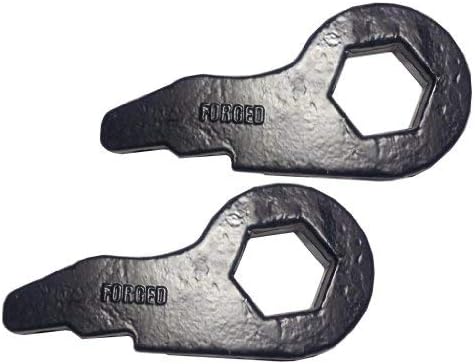
QSA 2" Forged Adjustable Torsion Leveling Keys
Best Torsion Key Leveling Kit
| Auto Part Position | Front |
|---|---|
| Material Type | Alloy Steel |
| Maximum Lifting Height | 2 Inches |
| Included Components | Installation hardware |
These forged adjustable torsion keys let you lift and level the front end of compatible 1997–2003 Ford F-150 and 1997–2002 Expedition 4WD trucks without replacing springs or control arms. Installation is a bolt-up process that rotates the torsion bar with included hardware to raise the front 1 to 3 inches, with the manufacturer recommending not to exceed about 2.5 inches and a stated maximum of 2 inches. The alloy steel construction and black powder coat provide corrosion resistance and durability for daily driving and light-duty hauling. Because the kit reuses factory components it keeps ride characteristics close to stock compared with swapping to a different spring or strut setup, and it is a straightforward DIY job for someone comfortable working with suspension parts. Limitations are that it only alters front ride height so rear adjustments may be needed for a balanced stance, and extreme lift settings can make the front ride stiffer and increase stress on related components, so stay within the recommended range.
Best for: DIY mechanics who want a simple, factory-friendly way to level the front of a 1997–2003 F-150 or 1997–2002 Expedition while keeping most stock suspension components and ride behavior.
Less Ideal for: Drivers seeking large lift heights, off-road suspension upgrades, or a complete front suspension overhaul should look at dedicated lift kits or upgraded springs and shocks instead.
- Direct bolt-in design that reuses factory suspension components for easier DIY installation
- Forged alloy steel construction with powder coat for strength and corrosion resistance
- Adjustable lift between 1 and 3 inches to fine tune front ride height
- Includes installation hardware so no separate parts are required
- Only raises the front so matching rear adjustments are required for an even stance
Verdict: The best torsion key leveling kit is the ideal choice for DIY mechanics who want a straightforward, factory-friendly front lift solution that reuses existing suspension components.
ECCPP 3" Front Leveling Kit Billet Aluminum Strut Spacers for 1997–2003 Ford F-150 / 1997–2002 Expedition (2WD)
Best Spacer Leveling Kit

| Fitment | 1997–2003 Ford F-150 2WD; 1997–2002 Ford Expedition 2WD |
|---|---|
| Lift height | 3 inch front |
| Material | 6061-T6 billet aluminum |
| Bolts | Heat-treated 10.9 grade |
This ECCPP 3 inch front leveling kit is a top-spacer style lift that installs on coil-spring struts for 1997–2003 F-150 and 1997–2002 Expedition 2WD models. It replaces the strut top with a machined 6061-T6 aluminum spacer and uses heat-treated 10.9 bolts, so installation is a straightforward bolt-on job that typically takes a couple of hours and does not require preloading or cutting factory components. In use the kit levels the factory rake, gives extra fender clearance for larger tires, and preserves the vehicle's original ride and steering characteristics better than heavier lift methods. The billet construction and anodized finish resist corrosion while keeping weight down. Buyers should note that a 3 inch spacer can affect front-end alignment and may require an alignment after installation; some users have downsized to thinner spacers to correct alignment issues. The kit is limited to front coil-spring suspensions and will not fit torsion-bar or non-compatible drivetrains.
Best for: Buyers who want a simple, bolt-on top-spacer solution that preserves suspension geometry and delivers a predictable front lift for fitting larger tires while retaining factory-like ride and steering.
Less Ideal for: Drivers who need a complete suspension overhaul, those with torsion-bar front suspension, or anyone seeking multi-vehicle compatibility or adjustable ride-height control.
- Bolt-on top-spacer design requires no cutting or permanent modification to factory struts
- Machined 6061-T6 billet aluminum construction is strong and lightweight with anodized corrosion resistance
- Includes heat-treated 10.9 grade bolts for a complete install and simpler fitting
- Maintains original ride and steering feel better than heavier lift methods while providing fender clearance
- Can introduce alignment issues at the full 3 inch height and may require additional alignment or different spacer height
- Only compatible with front coil spring strut suspension on specified 2WD models and not suitable for torsion-bar setups
Verdict: The best spacer leveling kit suits buyers who prefer a clean, bolt-on top-spacer approach that maintains suspension geometry while providing predictable lift.
PROYONGOO 3.5" Front Lift Spindles Steering Knuckle Set for 1997-2003 Ford F150 2WD
Best Heavy-Duty Leveling Kit

| Fitment | 1997-2003 Ford F150 2WD |
|---|---|
| Lift Height | 3.5 Inches |
| Position | Front Upper |
| Included Components | Left and Right 3.5" Lift Spindles Set |
These 3.5-inch lift spindles replace the front upper steering knuckles to lift the nose of 1997–2003 Ford F-150 2WD trucks without changing springs or shocks. Installation is a direct replacement for the factory knuckles and the kit includes left and right spindles sized to provide a 3.5-inch front lift. In practice they are used by owners wanting a level stance, extra front clearance, or to fit larger tires while keeping factory suspension geometry. The spindles are described as built to meet factory-quality standards and reviewers report straightforward installation and solid fitment when compared to original parts. Practical benefits include improved approach angle for light off-road use and simpler installation versus full spring or control-arm lift kits. Limitations are that these spindles only lift the front, do not change rear ride height or load capacity, and any towing, alignment, or braking differences from the lift will require setup or stronger components if you plan heavy-duty use beyond mild off-road driving.
Best for: Buyers who need a simple, bolt-in front lift to level a 1997–2003 F-150 2WD for mild off-road use or to fit larger tires and who prioritize a factory-style replacement over complex suspension modifications.
Less Ideal for: Drivers who regularly carry very heavy payloads, tow heavily, or need increased rear ride height or full heavy-duty suspension upgrades should consider complete lift or reinforcement systems instead.
- Direct-replacement design for a straightforward swap with factory steering components
- Provides a clear 3.5-inch front lift to level the truck and allow larger tires
- Reviewed installation reports indicate good fit and ease of installation for DIYers and shops
- Built to meet or exceed factory-spec claims for durability and steering responsiveness
- Only lifts the front axle so a rear solution is needed for a fully level or load-capable setup
- Not a full heavy-duty reinforcement kit; users carrying very heavy payloads may need upgraded suspension and braking components as well
Verdict: The best heavy-duty leveling kit is engineered with beefed-up hardware and stronger materials for users who expect tougher conditions, heavier payloads, or more aggressive use.
Choosing the Right 1997-2003 Ford F-150 Leveling Kit: Key Factors to Consider
Fitment and Compatibility
Ensuring the leveling kit is explicitly designed for the 1997-2003 Ford F-150 matters because suspension mounting points and stock ride heights vary across those model years. A proper fit reduces the chance of interference with the lower control arms, sway bar links, brake lines, and ABS sensor wiring. Always verify year-range compatibility and whether the kit is intended for specific OEM front suspension packages or trim levels.
Fitment also governs whether factory shocks can be retained or must be replaced with longer units. Some kits work with stock shocks up to a small lift height, while others require front shock extensions or aftermarket shocks. Incorrect compatibility can lead to poor handling, premature wear, or even safety issues, so confirming fitment details for your exact F-150 year is essential before buying.
Lift Height and Intended Use
Choose a lift height that matches how you use the truck. Small front lifts are aimed at correcting factory rake and improving bumper clearance without altering drivability. Larger front lifts may allow for bigger tires but increase stress on suspension components and often require additional modifications.
Consider whether you tow, carry heavy loads, or plan to install larger tires. A modest leveling kit can maintain factory handling while providing a more level stance. If you plan more extreme off-road use or significantly larger tires, a different suspension approach may be required, so pick a kit whose stated lift height suits your use case.
Materials and Corrosion Resistance
Materials and finish affect how a kit holds up over time under road salt, mud, and weather. Components manufactured from stamped steel, CNC-machined billet aluminum, or forged alloys perform differently under load and exposure. Corrosion-resistant coatings, zinc plating, or powder coating extend service life and reduce binding during removal or adjustment.
Bolts, washers, and hardware should be grade-rated and ideally include antimicrobial finishes. Poor-quality metals or thin coatings may lead to rusted parts that are difficult to disassemble later. For vehicles driven in wet or salted conditions, prioritize kits with proven protective finishes and replaceable hardware.
Effect on Ride Quality and Handling
Even modest front lifts change suspension geometry and can affect steering feel, bump compliance, and alignment. The best kits minimize negative impacts by maintaining proper control arm angles and allowing correct caster and camber adjustments. Some designs use tapered spacers that keep the stock spring perch angle, while others rely on replacement strut assemblies.
Consider how much you value factory ride comfort versus a firmer, sportier feel. If you do most of your driving on paved roads or tow frequently, choose a kit that preserves the stock ride and handling balance. Kits that push geometry outside recommended ranges can create torque steer, uneven tire wear, or a vague steering feel.
Installation Complexity and Required Parts
Installation ranges from a simple top-strut spacer swap to more involved processes that require spring compressors, new shock absorbers, or minor trim removal. Know whether the kit is a bolt-on solution that can be completed with basic tools or if it requires specialty tools and alignment afterward.
Also check which additional parts are commonly required, such as extended sway bar links, bump stop extensions, or front shock upgrades. If you prefer a DIY install, prioritize kits marketed for easy bolt-on installation with clear instructions. For higher lift heights or kits that alter geometry significantly, plan for professional installation and a post-install alignment.
Warranty and Support
A clear warranty and accessible customer support reduce risk when modifying a core suspension component. Warranty length and what it covers—material defects, hardware failure, or finish corrosion—matter for long-term ownership. Some manufacturers help with replacement hardware or provide installation guidance and technical diagrams.
Consider the availability of replacement parts if a component fails years after purchase. Good documentation and support channels can save time and expense in troubleshooting fitment or addressing post-install issues. When dealing with suspension components, a solid warranty offers peace of mind and signals higher manufacturing confidence.
How a Leveling Kit Changes Your F-150's Stance and Clearance
Raising the front of a 1997-2003 Ford F-150 evens the truck's rake, giving a squarer visual profile and more clearance for the front bumper and grille. Even a modest lift of one to three inches reduces the chance of scraping over steep driveways or while loading equipment with a front-mounted winch or bumper.
Beyond looks, raised front height can prevent contact between oversized tires and the inner fender during full turn or compression. However, any change in height alters suspension geometry, so consider how that affects tire contact patch and steering dynamics before committing to a specific lift amount.
- Improves approach angle for low obstacles and steep driveways
- Allows for a small increase in tire diameter without trimming
- Can reduce front bumper scraping when hauling loads
Common Types of Leveling Kits for the 1997-2003 F-150
Leveling kits generally fall into a few categories: strut or coil spacers that sit on top of the spring perch, replacement strut or coil assemblies designed to raise the ride height, and torsion key adjustments for pickup trucks equipped with torsion bar front ends. Each solution has tradeoffs in ride quality, complexity, and long-term durability.
For the 1997-2003 F-150, coil spring spacers and longer bump-stop-friendly strut spacers are common because they provide a straightforward way to correct rake while minimizing changes to factory geometry. Select the type that aligns with your mechanical comfort level and performance expectations.
- Top-perch spacers: simple, often compatible with stock shocks
- Replacement coils/struts: best when changing ride characteristics
- Torsion key adjustments: common on certain F-150 front setups
Installation Tips Specific to 1997-2003 Models
Before starting work, gather model-year-correct hardware and review any year-specific service bulletins for front-end service on 1997-2003 F-150 trucks. Jack the truck securely and support it on stands, and take care to release spring tension safely if your kit requires spring removal or compression.
After installation, a professional alignment is recommended to correct toe and caster settings altered by the lift. Inspect brake line routing and ABS sensor wires for adequate slack throughout suspension travel. Finally, test drive progressively to confirm there are no clearance issues and to bed in new components.
- Use correct spring compressors and follow torque specs
- Check bump stop clearance through full wheel travel
- Plan for post-install alignment and test driving
Tire Size Considerations and Clearance Planning
A common reason to install a leveling kit is to run slightly larger tires while avoiding rubbing. On the 1997-2003 F-150, small increases in tire diameter are usually viable with modest front lifts, but full clearance depends on wheel offset, backspacing, and specific tire width and profile.
Measure wheel-to-fender distances with the truck loaded and unloaded to understand real-world clearance. Remember that aggressive tire tread and wider tires will need more room than stock rubber, and mud-terrain tread blocks can contact inner fenders under compression.
- Mock-fit tires to check clearance before finalizing lift height
- Consider wheel offset changes along with tire size
- Account for suspension droop and full compression travel
Maintaining Alignment and Steering After a Level
Even small front lifts can affect caster and toe angles, creating uneven tire wear or altered steering feel. After any leveling kit installation, a full alignment is essential to restore proper steering geometry and prevent premature tire wear.
If the kit changes control arm angles enough to require adjustment, inspect ball joints, tie rods, and idler arm wear. Re-check alignment after a few hundred miles to ensure settings remain stable as bushings and new components seat in.
- Schedule alignment immediately after installation
- Re-check alignment after initial break-in miles
- Monitor tire wear for signs of persistent geometry issues
When to Choose a Simple Spacer Vs a Full Suspension Replacement
Simple spacers work well when your goal is a modest stance correction and improved clearance without changing ride character. They are typically faster to install and less expensive, but they offer limited height and may not be ideal for heavy-duty use or large tires.
A full replacement coil or strut assembly is preferable when you want to alter ride height significantly or change damping characteristics. Replacement assemblies also address shock travel and can accommodate heavier loads, but they increase complexity and cost. Choose based on desired lift, intended use, and long-term goals for the truck.
- Spacers: quick, low-complexity, limited height
- Replacement struts/coils: better for larger lifts or load-carrying
- Consider future upgrades before choosing the initial solution
Still looking for the perfect fit?
Select your Ford F-150 configuration to see the most relevant Leveling Kits recommendations
How We Chose the Best 1997-2003 Ford F-150 Leveling Kit
We evaluated contenders for this list using criteria that reflect real-world needs for 1997-2003 Ford F-150 owners. Primary fitment and compatibility were confirmed for the Tacoma-era F-150 chassis from 1997 through 2003, including correct bump stop and sway bar clearance specifications. Ride quality and handling impact were assessed by looking at suspension geometry changes, recommended front shock compatibility, and whether the kit retains factory ride characteristics. Durability and materials were weighted heavily, favoring steel or billet components, corrosion-resistant coatings, and hardware that withstands road salt and heavy use. Installation complexity and required tools were considered to reflect options suitable for a DIY owner versus those best left to a shop. Finally, value and support were considered through warranty coverage and availability of replacement parts. We excluded lift kits that exceed modest front lift heights, full suspension overhauls, and spacers that invalidate essential suspension travel or require extensive cutting or frame modifications.
Our full evaluation process is outlined in our review methodology.
FAQ
Will a leveling kit affect towing capacity?
A modest leveling kit typically does not change the truck's rated towing capacity, but it can alter tongue weight distribution. Monitor handling when towing and verify hitch setup. For heavy towing, ensure suspension changes do not negatively impact control or braking.
Do I need new shocks when installing a leveling kit on my 1997-2003 F-150?
It depends on the kit height and design. Small top-perch spacers often allow you to keep stock shocks, while larger lifts may require longer shocks or shock extenders. Check the kit instructions to confirm whether shock replacement is recommended.
How long does installation usually take for a front leveling kit?
For a straightforward spacer kit, a competent DIYer can complete both sides in a few hours. Replacement coils or strut assemblies can take longer and may require a spring compressor or alignment afterward. Plan additional time for safety checks and a post-install alignment.
Will a leveling kit increase fuel consumption?
A small lift that corrects rake has minimal effect on aerodynamics and fuel economy. Larger lifts and larger tires can increase rolling resistance and drag, which may lower fuel efficiency. Expect minor changes unless the lift is substantial.
Are there common pitfalls to watch for on 1997-2003 F-150s?
Common issues include not accounting for sway bar link length or bump stop interference and failing to confirm shock compatibility. Also be mindful of brake line routing and ABS sensor slack. Addressing these during installation prevents binding and premature wear.
Final Verdict
A leveling kit is a practical way to improve the stance and front clearance of a 1997-2003 Ford F-150 without a full suspension overhaul. Prioritize fitment and compatibility for your model year, pick a lift height that matches how you use the truck, and consider materials and ride impacts. Plan for proper installation and a post-install alignment to preserve handling and tire life. With the right choices, you can achieve a balanced look and better clearance while keeping everyday drivability intact.
Explore More:
- Check out all Ford F-150 parts & accessories
- Explore Suspension & Steering
- Browse all Accessories
